





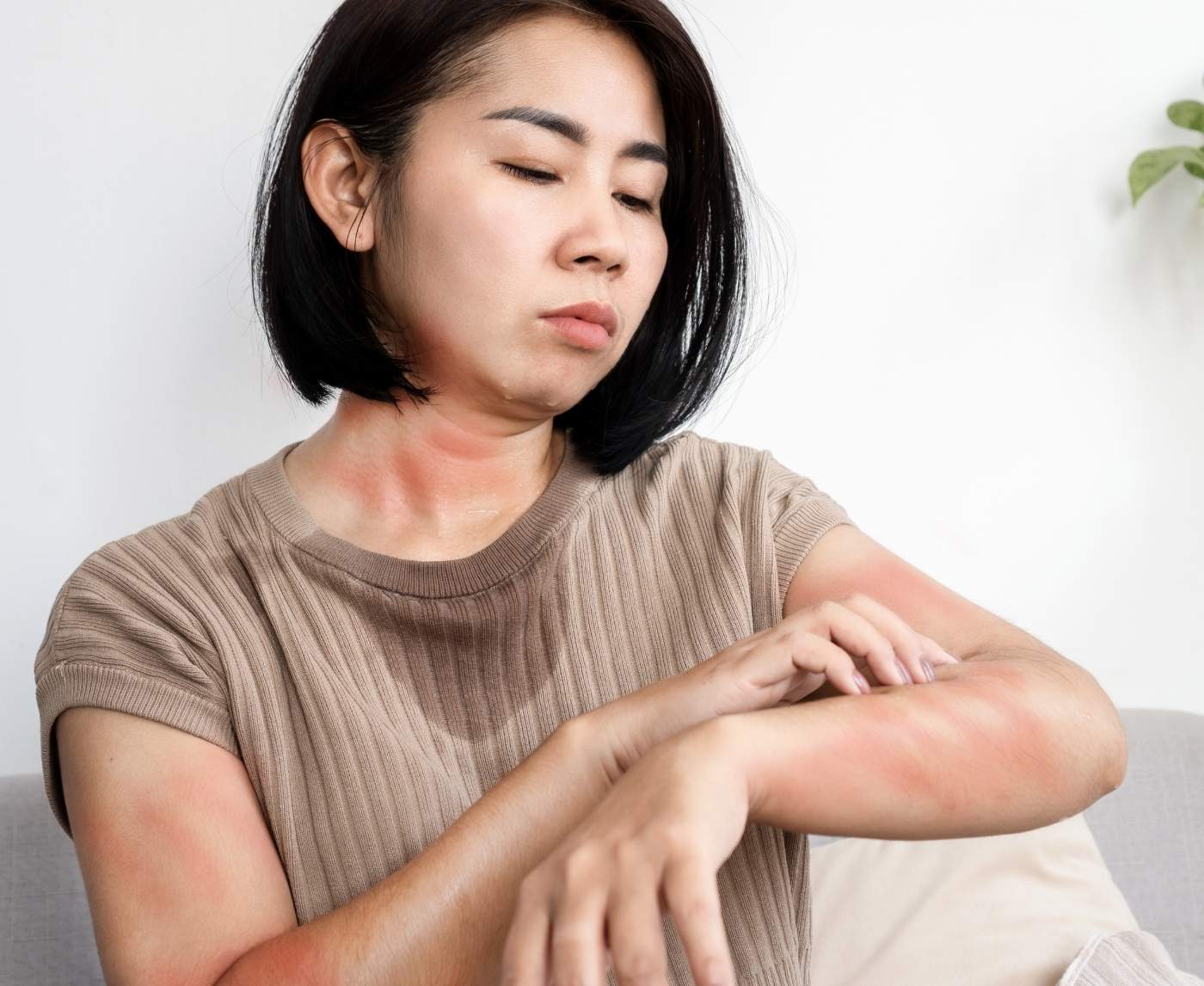

Quick Answer: Red spots on your palms can be a sign of secondary syphilis, especially if they appear weeks after possible exposure and aren’t itchy or painful. While many rashes are harmless, a palm-and-sole rash is unusual enough that STD testing is strongly recommended.
This Isn’t Just Dry Skin, Why Palms and Soles Matter
Dermatologists are trained to pay attention when a rash shows up on the palms or soles because not many everyday skin conditions prefer those locations. Eczema usually clings to flexor surfaces. Heat rash likes sweaty creases. Allergic reactions often spread randomly across the torso. But a rash that deliberately involves the hands and feet raises different questions.
One infection that famously causes this pattern is secondary syphilis. After initial infection, which may or may not include a painless sore that many people never notice, the bacteria spread through the bloodstream. Weeks later, the body reacts. That reaction can look like red or copper-colored spots across the palms and soles. They often do not itch. They often do not hurt. And that’s what makes them easy to dismiss.
A 28-year-old patient once described it this way: “If it had itched, I would’ve taken it seriously. But it just looked like I touched something weird.” He had no genital sores that he could remember. No dramatic symptoms. Just a rash that felt out of place. His diagnosis came after someone casually mentioned that palm rashes are unusual and worth checking.
According to guidance from the Centers for Disease Control and Prevention, secondary syphilis can include a diffuse rash that frequently involves palms and soles, sometimes accompanied by mild flu-like symptoms that people ignore or misattribute. The key detail is timing. These rashes often appear several weeks after exposure, not immediately after sex. That delay creates false reassurance.
What a Syphilis Rash Actually Looks Like
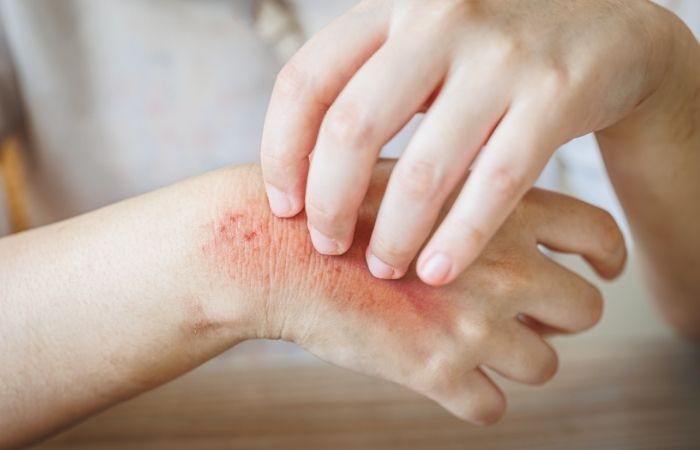
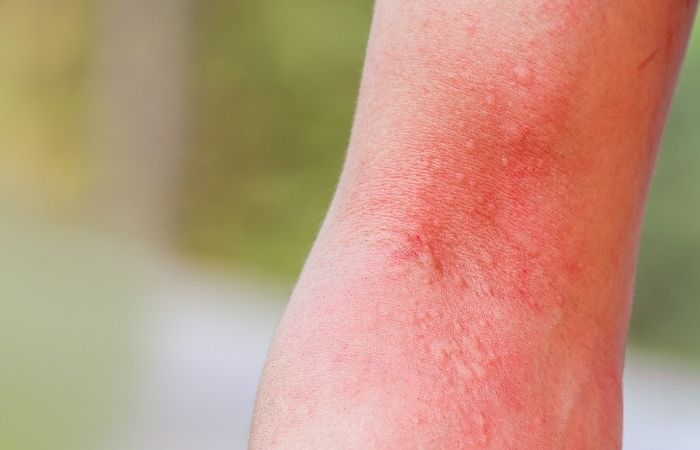
When people search “what does syphilis rash look like,” they expect something dramatic. The truth is less cinematic. The rash can appear as flat red spots, sometimes slightly raised, sometimes copper-toned. It may be faint. On darker skin tones, it can appear deeper brown or purplish rather than bright red. It does not usually blister. It rarely oozes. And in many cases, it does not itch at all.
Another reason this rash gets missed is that it can be symmetrical. Both palms. Both soles. Sometimes scattered across the trunk as well. That symmetry makes it feel less like a localized infection and more like a skin reaction. But the systemic nature is exactly what distinguishes secondary syphilis from simple contact irritation.
People often ask how long a syphilis rash lasts. It can linger for weeks. It can fade and reappear. It can quietly resolve even without treatment, but that does not mean the infection is gone. The bacteria continue to live in the body unless treated with appropriate antibiotics.
| Feature | Typical Pattern | Why It’s Missed |
|---|---|---|
| Location | Palms and soles, often symmetrical | Unusual location leads people to assume allergy |
| Itch Level | Often not itchy | No discomfort means low urgency |
| Pain | Usually painless | No alarm signal from the body |
| Color | Red, copper, brownish on darker skin tones | Can resemble dry skin or mild irritation |
| Timing | Appears weeks after exposure | Delay disconnects rash from sexual event |
This pattern is distinctive enough that clinicians are trained to look for it during a full-body exam. But outside a medical setting, it’s easy to rationalize away.
People are also reading: What If That Cold Sore Isn’t a Cold Sore at All?
Could It Be Something Else?
Not every red spot on your hands is an STD. Stress can trigger hives. Viral infections can cause temporary rashes. Hand-foot-and-mouth disease, though more common in children, can appear in adults. Drug reactions sometimes create diffuse redness. Even certain autoimmune conditions can involve the palms.
The key is context. Did the rash appear after a new medication? After a hiking trip? After a fever? Or did it show up quietly weeks after unprotected sex? Bodies don’t operate in isolation from timelines. And timelines matter more than panic.
| Condition | Itchy? | Systemic Symptoms | Typical Timing |
|---|---|---|---|
| Secondary Syphilis | Usually no | Possible mild fever, fatigue | Weeks after exposure |
| Allergic Reaction | Usually yes | Swelling, hives | Hours to days after trigger |
| Heat Rash | Often yes | None | During heavy sweating |
| Viral Rash | Sometimes | Fever, sore throat | During active illness |
Notice how secondary syphilis stands out not because it screams, but because it whispers. It doesn’t demand scratching. It doesn’t blister dramatically. It just appears, calm and symmetrical, as if nothing is wrong.
That subtlety is exactly why people delay testing. And delay allows the infection to move quietly into later stages.
The Sore You Never Saw, How Secondary Syphilis Sneaks Up
One of the most confusing parts of a palm rash linked to syphilis is that many people swear they never had a genital sore. They Google “syphilis without sore” at 1:12 a.m., scrolling through images that don’t look like anything they remember. The truth is uncomfortable but important: the first stage of syphilis can be so mild, so painless, and so hidden that it goes completely unnoticed.
The initial lesion, called a chancre, is often small and painless. It can appear inside the vagina, inside the rectum, on the cervix, or in the mouth. It heals on its own within weeks. No burning. No dramatic warning. Just a quiet entrance followed by silence. That silence tricks people into thinking nothing happened.
Then weeks later, the red spots show up on the palms. Or the soles. Or both. Sometimes there’s mild fatigue. Maybe swollen lymph nodes. Maybe a sore throat that felt like seasonal allergies. By the time the rash appears, the bacteria have already moved beyond the original entry point. That’s why the rash feels disconnected from the sexual event that caused it.
A patient once described it this way: “I thought if I didn’t see anything downstairs, I was in the clear. I didn’t know the second stage was a thing.” That gap in knowledge is common. Secondary syphilis symptoms are less talked about than the primary sore, even though they’re often the moment people finally notice something is wrong.
Check Your STD Status in Minutes
Test at Home with Remedium7-in-1 STD Test Kit
 For Men & Women
 Results in Minutes
 No Lab Needed
 Private & Discreet
Order Now $129.00 $343.00
For all 7 tests
What About HIV Rash or Other STDs?
When red spots appear on the hands, fear tends to expand outward. Suddenly it’s not just syphilis. It’s HIV. It’s “whole body rash STD.” It’s worst-case scenario thinking spiraling at speed. Let’s ground this.
An acute HIV rash typically appears during early infection and is often accompanied by fever, sore throat, swollen glands, and body aches. It usually spreads across the trunk and face rather than concentrating on the palms and soles alone. It can itch slightly, but not always. The bigger difference is that HIV rashes rarely present as isolated, symmetrical palm-and-sole findings without other systemic illness.
Gonorrhea and chlamydia do not usually cause palm rashes. They target mucosal surfaces like the cervix, urethra, rectum, or throat. Herpes causes painful blisters, not flat copper spots. Trichomoniasis causes discharge, not symmetrical hand lesions. When palms are involved without blisters, syphilis climbs higher on the list.
That doesn’t mean panic. It means pattern recognition. Medicine is less about drama and more about patterns lining up.
| Infection | Common Rash Pattern | Palms/Soles Involved? | Other Typical Clues |
|---|---|---|---|
| Secondary Syphilis | Flat red or copper spots | Yes, commonly | Mild fever, fatigue, lymph node swelling |
| Acute HIV | Diffuse body rash | Rarely isolated to palms | Fever, sore throat, flu-like illness |
| Herpes | Painful fluid-filled blisters | No | Tingling, burning before outbreak |
| Gonorrhea/Chlamydia | Rare skin involvement | No | Discharge, pelvic pain, burning urination |
The purpose of comparison is not to self-diagnose with certainty. It’s to understand which direction the evidence leans so you can make a testing decision grounded in logic instead of fear.
Timing Changes Everything
If the rash appeared two days after sex, syphilis becomes less likely. Secondary syphilis does not show up overnight. It usually develops several weeks after exposure. That window period is one of the most misunderstood parts of STD testing.
Imagine this timeline. You have unprotected sex on June 1. You feel fine. By June 10, you test out of anxiety. The result is negative. You breathe. But secondary syphilis typically appears between three and six weeks after exposure. If red spots show up on June 28, the earlier negative test doesn’t necessarily mean you’re in the clear. It may simply have been too early.
This is where strategic retesting matters. Testing at the right time makes things more accurate and stops the mental rollercoaster of false reassurance followed by renewed panic.
If you’re unsure where you fall on the timeline, discreet at-home options can help bridge that uncertainty. You can explore testing choices directly through STD Rapid Test Kits, including targeted screening that checks for infections like syphilis without requiring a clinic visit. When your brain is loud, clarity matters.
When the Rash Is Quiet but Your Anxiety Isn’t
There’s a specific kind of stress that comes from symptoms that don’t hurt. Pain at least gives you direction. A non-itchy rash on your hands after sex creates ambiguity. You can function normally. You can go to work. But every time you glance down, it’s there.
One woman described standing in line at a coffee shop staring at her palms instead of the menu. “I kept thinking everyone could see it,” she said. No one else noticed. But she couldn’t unsee it. That hyper-awareness is common when sexual health and shame intersect.
This is where testing becomes less about catastrophe and more about control. Even if the rash turns out to be harmless, ruling out secondary syphilis changes the emotional temperature immediately. You move from guessing to knowing.
For those who prefer privacy, a Syphilis Rapid Test Kit allows you to check discreetly at home. Results come quickly, and if positive, you can move directly into treatment planning with a healthcare provider. If negative, you gain grounded reassurance instead of spiraling speculation.
People are also reading: I Got an STD, and the Shame Was Worse Than the Symptoms
If It Is Syphilis, Here’s What Actually Happens Next
Let’s say you test. Let’s say the result comes back positive for syphilis. Your stomach drops for a second. That reaction is human. But here’s the part that rarely gets enough airtime: secondary syphilis is treatable. Straightforwardly treatable. This is not a lifetime diagnosis when caught and managed appropriately.
The standard treatment is an antibiotic injection prescribed by a healthcare provider. In early stages, a single dose is often enough. The bacteria do not resist in dramatic ways when treated correctly. What matters most is timing and follow-up, not blame or shame.
One man I spoke with described sitting in his car after seeing his positive result. “I thought my life was over,” he admitted. Forty-eight hours later, he had received treatment and scheduled follow-up blood work. The rash faded over the next few weeks. His biggest regret wasn’t the diagnosis. It was waiting because he felt embarrassed.
Untreated syphilis can progress to later stages that affect the nervous system and heart, but that progression takes years. A palm rash is a signal, not a sentence. It is the body saying, gently but clearly, that now is the moment to act.
Why People Delay Testing (And Why That Delay Matters)
The most common reason people hesitate isn’t access. It’s denial dressed up as logic. “It doesn’t itch.” “I feel fine.” “Maybe it’s just stress.” All of those thoughts are understandable. None of them change biology.
Secondary syphilis can resolve on its own visually. The rash may fade. That disappearance can falsely reassure you. But the bacteria remain in the body unless treated. The infection simply moves into a latent phase where symptoms disappear but long-term risk continues quietly in the background.
This is where the no-nonsense part comes in. A rash on the palms and soles is unusual. When something unusual happens in the body, investigation is not overreaction. It is maintenance. Just like checking a strange noise in your car before it becomes engine failure, testing is about prevention.
If you’re weighing whether to test, consider this perspective: uncertainty lasts longer than a fingerstick. Peace of mind, whether it comes from a negative result or a clear treatment plan, is faster than weeks of mental replay.
When It’s Urgent, And When It’s Just Responsible
There are moments when a palm rash shifts from “probably should test” to “do this now.” If you are pregnant, immunocompromised, or experiencing neurological symptoms like vision changes or severe headaches, evaluation should not wait. Those scenarios deserve direct medical care.
For everyone else, urgency is less about panic and more about clarity. Testing within the appropriate window period ensures accuracy. If your possible exposure was more than three to six weeks ago and you now have a rash on your palms or soles, that timing aligns closely with secondary syphilis patterns. That alignment is reason enough to act.
If exposure was recent, testing now and scheduling a follow-up test later may provide layered reassurance. Strategic timing reduces false negatives and unnecessary spirals.
The Emotional Side No One Talks About
There’s a quiet shame that can attach itself to visible symptoms. Hands are public. We shake them. We text with them. We hold them up in meetings. A rash there feels exposed, even if no one else notices.
But sexually transmitted infections are not moral verdicts. They are biological events. Humans connect. Skin touches skin. Microorganisms move. The difference between someone who experiences long-term complications and someone who doesn’t often comes down to one simple action: testing.
It’s worth saying clearly: you can be careful and still get an STD. Condoms reduce risk significantly, but they don’t eliminate skin-to-skin transmission entirely. Syphilis spreads through direct contact with infectious sores, and those sores can exist in places condoms do not cover. This is about probability, not character.
Putting It All Together, A Calm Plan
If you’re staring at red spots on your palms right now, take a breath. Look at the timing. Think about exposure history. Notice whether there were earlier symptoms that seemed small at the time. Then move from speculation to action.
Testing for syphilis is simple. Treatment is straightforward. Follow-up blood tests confirm resolution. And partner notification, while uncomfortable, protects everyone involved from unknowingly moving the infection forward.
There is something deeply stabilizing about replacing “what if” with data. Whether you choose a clinic or an at-home option from STD Rapid Test Kits, the outcome is the same: information replaces fear.
FAQs
1. Okay, be honest, is a rash on my palms automatically syphilis?
No. It’s not automatic. Bodies do weird things sometimes. But here’s the nuance: palms and soles are unusual real estate for a rash. When they’re involved, doctors perk up. If the rash is symmetrical, non-itchy, and showed up weeks after possible exposure, syphilis moves higher on the list. It’s not about panic. It’s about probability.
2. If it doesn’t itch or hurt, why would it be serious?
Because infections don’t need to be dramatic to matter. Secondary syphilis is almost famous for being calm. No burning. No screaming pain. Just quiet red or copper spots. The lack of discomfort is exactly why people wait. And waiting is what allows infections to progress silently.
3. I never saw a sore. Doesn’t syphilis always start with one?
It does start with one, but you don’t always see it. The first-stage sore can hide inside the vagina, rectum, or mouth. It can be small. It can heal before you ever think to look. A lot of people only find out something happened when the second stage shows up on their hands or feet.
4. How fast would this rash appear after sex?
Not overnight. If you had sex on Saturday and noticed spots on Monday, that timing doesn’t match secondary syphilis. The rash typically appears several weeks after infection. That delay is what disconnects the symptom from the memory of the encounter. It feels random, but biologically, it’s not.
5. What if it fades on its own?
It might. That’s the tricky part. The rash can disappear without treatment. But the bacteria don’t pack up and leave just because the skin clears. They move into a quieter phase. Think of it less like a storm passing and more like the eye of the storm. Calm doesn’t always mean cured.
6. Could stress really cause red spots on my palms?
Stress can trigger hives or flare eczema, sure. But stress rashes usually itch. They don’t tend to show up symmetrically on both palms and both soles weeks after a specific sexual encounter. If there’s a timeline and a pattern, testing beats guessing.
7. Does HIV cause this kind of rash?
Acute HIV can cause a rash, but it usually comes with fever, sore throat, swollen glands, and that “I feel like I got hit by a truck” flu vibe. It’s rarely just neat little palm spots by themselves. When palms are specifically involved without heavy flu symptoms, syphilis is more classically associated.
8. If I test positive, am I going to have this forever?
No. Early syphilis is treatable with antibiotics. Full stop. The sooner you catch it, the simpler the treatment and follow-up. This is not a lifelong management situation when addressed early. It’s a medical problem with a medical solution.
9. Is it irresponsible to wait a few days and see what happens?
A day or two to arrange testing? That’s reasonable. Weeks of hoping it disappears because you’re embarrassed? That’s where risk increases. There’s a difference between scheduling responsibly and avoiding reality.
10. I feel embarrassed even considering testing. Is that normal?
Completely. Sexual health still carries social weight it shouldn’t. But here’s the investigator truth: bacteria don’t care about shame. They respond to antibiotics. Testing isn’t confession. It’s maintenance. The same way you’d check a weird mole or persistent cough, you check this.
If the test is negative, can I finally relax?
If you’re within the proper window period and the result is negative, yes, breathe. If exposure was recent, your provider may recommend a follow-up test to confirm. Either way, you’re moving forward with data instead of anxiety. That’s always the healthier position.
You Deserve Answers, Not Assumptions
Red spots on your palms are not something to ignore. They are also not something to catastrophize. They are information. And information becomes power when you respond calmly and directly.
If you’re ready to replace uncertainty with clarity, consider a discreet at-home screening option like the Syphilis Rapid Test Kit. Quick results. Private process. Real answers.
Whatever the outcome, acting early protects your health and your partners. That’s not fear. That’s responsibility.
How We Sourced This Article: This guide integrates current recommendations from the Centers for Disease Control and Prevention, World Health Organization guidance on sexually transmitted infections, and peer-reviewed clinical literature on secondary syphilis presentation. Additional insights were drawn from real patient case patterns commonly described in dermatology and infectious disease practice.
Sources
2. World Health Organization – Syphilis
3. Mayo Clinic – Syphilis Symptoms and Causes
4. StatPearls – Secondary Syphilis Overview
5. Planned Parenthood – Syphilis Information
6. DermNet NZ – Syphilis (Cutaneous Features)
About the Author
Dr. F. David, MD is a board-certified infectious disease specialist focused on STI prevention, diagnosis, and treatment. He blends clinical precision with a grounded, sex-positive approach to help patients make informed decisions without shame.
Reviewed by: L. Morgan, PA-C | Last medically reviewed: September 2025
This article is only for information and should not be taken as medical advice.


