







Quick Answer: STD stigma continues to cause emotional damage long after a diagnosis. Many people report that shame, not the infection, is the most painful part. But you are not broken, and you are not alone.
Why the Diagnosis Isn’t Always the Hardest Part
Most STDs are treatable or manageable. That’s the scientific truth. But the emotional aftermath? That’s a whole other thing. For many, the real pain doesn’t begin until after the meds kick in. It starts with the questions: Who will love me now? Should I have known better? Am I “that kind of person”? These aren’t medical issues.They are echoes of a culture that still connects sex with morality and STDs with failure.
Consider this: A qualitative study published in the Journal of Adolescent Health in 2022 indicated that young adults with chlamydia or genital herpes often felt more shame than those with more visible, chronic conditions like diabetes or asthma. Why? Because those kinds of situations don't come with whispers, rumors, or warnings to "be careful who you trust."
Shame isn’t just a side effect, it’s a symptom of the culture we live in.
Micro-Scene: “I Didn’t Even Tell My Best Friend”
Andre, 27, had been in a monogamous relationship when he got the news. A routine STI screen turned up a positive for HPV. His partner had tested negative months earlier, and things between them hadn’t exactly been stable. But it wasn’t the breakup that hit hardest. It was the silence that followed. He told no one. Not his brother. Not his closest friend from college. Not even his therapist at first.
“I thought about it every time I looked in the mirror,” he said. “Not because I felt sick, but because I felt dirty. I couldn’t explain it. I knew better. But shame doesn’t care about logic.”
Andre’s story isn’t rare. In fact, data shows that the psychological toll of an STD diagnosis can often be worse than the physical one. According to the Sexually Transmitted Diseases journal, over 65% of individuals with a positive test result report feeling “less worthy of love” in the months following diagnosis, even when their condition was asymptomatic or curable.

People are also reading: Trichomoniasis Is Easy to Miss, and Easier to Spread
What Shame Really Costs Us
Shame doesn’t just make people feel bad, it makes them sick. Fear of judgment delays testing. Fear of rejection blocks disclosure. Fear of being labeled causes people to suffer in silence, often letting treatable infections progress into long-term health issues.
Let’s look at what this cycle actually looks like in numbers and human behavior.
| Behavior | Stigma-Driven Response | Health Impact |
|---|---|---|
| Symptoms after unprotected sex | Delays testing for weeks due to fear of judgment | Spreads infection unknowingly; worsens own condition |
| Positive result for chlamydia | Tells no partners, avoids follow-up | Partners remain untreated; risk of reinfection increases |
| Diagnosed with herpes | Internalizes shame, avoids future dating | Increased rates of depression, isolation, anxiety |
Table 1. The Shame Spiral in Action: Real-world outcomes when stigma shapes behavior.
STDs aren’t inherently damaging to your identity. But shame is. And when that shame makes people quiet, the whole system suffers: people don't get diagnosed, treated, or helped with their feelings.
Where the Stigma Starts, and Why It Persists
The shame that comes with STDs runs deep. In the past, STDs were linked to moral panic, propaganda during wartime, and strict views on sex. People used to think that syphilis was a punishment from God. In the 1980s, HIV became a symbol of queerness and was used as a weapon against already marginalized groups. People made fun of herpes in sitcoms and stand-up routines.
And we’ve never really recovered. Even now, sex ed in many U.S. states leans heavily on abstinence-only models that use fear to push compliance. “Don’t catch something” becomes the message. Not “protect yourself.” Not “get tested early.” Just: “Don’t be one of them.”
That “them” becomes people like Jenna. Like Andre. Like millions of others walking around with something completely common, often asymptomatic, and still completely misunderstood.
According to the CDC, one in two sexually active people will get an STD by age 25. And yet many still believe it “won’t happen to them.” The shame isn't just outdated, it's statistically irrational.
Check Your STD Status in Minutes
Test at Home with Remedium7-in-1 STD Test Kit

 For Men & Women
 Results in Minutes
 No Lab Needed
 Private & Discreet
Order Now $129.00 $343.00
For all 7 tests
“Is Anyone Going to Want Me Now?”
Noura, 31, was diagnosed with genital herpes after a brief relationship ended. She didn’t blame the guy, he hadn’t known either. But the voice in her head wasn’t so kind. Every potential partner after that felt like a risk, a test, a conversation she couldn’t bear to have.
“It felt like I lost my sexual identity,” she said. “Not because anyone rejected me. I rejected myself first.”
Sexuality and shame are deeply linked. But what Noura didn’t know at the time, and what she now tells others, is this: there is a large, growing community of people navigating life with STDs openly, confidently, and without apology. Online forums, dating apps with disclosure filters, and entire Reddit threads exist for people like her. And the stories inside are often filled with relief, support, even humor.
STD shame thrives in silence. But connection is its antidote.
Why the Mental Health Impact Is So Often Ignored
You won’t find an ICD code for “STD-induced shame spiral.” But you’ll find the symptoms everywhere. Panic attacks. Sleepless nights. Intrusive thoughts. For some, it starts the moment they feel the bump. For others, it’s the silence afterward, the way friends change the subject, or how partners hesitate when they hear the words “I have something to tell you.”
A 2023 paper published in the International Journal of STD & AIDS reported a 42% increase in depressive symptoms among individuals within six months of their first STD diagnosis. Women, LGBTQ+ individuals, and those without strong social support systems were most affected. But rarely is this part of the treatment plan. Antibiotics get handed out. Emotional wounds don’t.
One of the most painful consequences of STD stigma isn’t the diagnosis, it’s the aftermath of feeling like your worth has been permanently downgraded.
Table Talk: STD Stigma Across Different Communities
Stigma doesn’t hit everyone the same. Cultural, gender, and social dynamics shape how people experience, express, or hide their diagnosis. Here’s how different groups report the weight of shame in both data and narratives.
| Community | Common Shame Triggers | Typical Emotional Response |
|---|---|---|
| Young Women (18–30) | Fear of being labeled promiscuous; blame from partners | Withdrawal, self-blame, secrecy from friends/family |
| Men Who Have Sex with Men | Association of STDs with HIV panic and dating rejection | High disclosure anxiety, fear of being unmatchable |
| Black & Latinx Communities | Stigma from religious/cultural norms; fear of gossip | Increased silence, delay in testing or seeking treatment |
| Non-monogamous / polyam individuals | Fear of confirming stereotypes or losing community trust | Overexplaining, hyper-responsibility, shame despite safety |
Table 2. How STD stigma manifests in different populations, based on peer-reviewed data and narrative reports.
These aren’t personal failures. These are social patterns. But naming them is the first step toward breaking them.
Callout: You Are Not Alone, and You Are Not Your Diagnosis
If your thoughts are racing, if your stomach has been in knots for days, if you’re afraid to Google one more thing, pause. You deserve to know what’s going on with your body, but you also deserve peace of mind. And there are tools that make both possible.
Getting tested doesn’t mean you’ve done something wrong. It means you care about your health and the health of others. That’s something to respect, not hide.
If you’re unsure where to start or need a private, no-judgment option, this at-home combo test kit can give you answers in minutes, without anyone knowing but you.
Your body is not a crime scene. And this moment doesn’t define your whole story.
“When I Finally Told Someone, Everything Changed”
Kayla, 24, waited nearly a year after her HSV-2 diagnosis to tell someone who wasn’t a doctor. It was a friend from college she trusted deeply. She expected the worst: disgust, pity, distance. Instead, her friend blinked and said, “Me too.” They talked for two hours. Cried. Laughed. Shared symptoms. Swapped dating stories.
“It didn’t fix everything,” Kayla later said. “But it was the first time I felt like I could breathe again.”
Disclosure doesn’t always go perfectly. But silence almost never feels better. Whether it’s a friend, therapist, partner, or online forum, finding one safe person to hold space for your story can shift the entire shame narrative.
You don’t have to announce your status to the world. But you do deserve to stop carrying it like a secret scar.
Why “Dirty” Is the Real Lie
The language we use around STDs reveals everything. “Clean” tests. “Dirty” secrets. We don’t talk this way about strep throat. We don’t call people with the flu “unclean.” And yet, when it comes to sexually transmitted infections, some of the most common, treatable conditions out there, we turn into moral judges.
This framing isn’t accidental. It’s the result of decades of sex-negative messaging, fear-based education, and media that has reduced infections to punchlines or horror stories. It’s why people Google phrases like “herpes ruined my life” or “is chlamydia embarrassing” instead of just asking, “How do I take care of myself right now?”
The truth? You can have an STD and be kind. Be smart. Be worthy. Be sexy. Be loved. Be everything you were before, and more, because now you’re armed with knowledge and empathy.
Testing Isn’t Just Medical, It’s Emotional
Think about the moment someone decides to get tested. It rarely happens in a vacuum. It’s usually after a hookup they’re unsure about. Or a partner confesses to cheating. Or a strange itch appears right before a weekend trip. The body is one thing. The brain is another.
That decision, whether to walk into a clinic, order a kit, or even Google “STD test near me”, comes with baggage. What if they judge me? What if I can’t handle the result? What if I really am the thing I’m afraid of?
But testing is not confession. Testing is care. For yourself. For the people you love. For the people you might love next.
That’s why at-home options matter. Because they remove one layer of shame: the fear of beingseen. With discreet kits like the STD Rapid Test Kits line, people can take control in their own space, on their own time. And that autonomy? That’s the opposite of shame. That’s power.
People are aslo reading: I Thought It Was Just a UTI, Now I Can’t Get Pregnant
Public Health Isn’t Just About Infections, It’s About Information
STD stigma doesn’t just hurt feelings. It hurts outcomes. When people avoid testing, hide symptoms, or ghost partners because of shame, infections spread further and faster. The CDC estimates that nearly 20% of new STI cases each year come from people who didn’t know they were infected. Not because they were careless, but because they were afraid to know.
Doctors can treat gonorrhea. Antibiotics can clear up chlamydia. Antivirals can manage herpes. But there’s no prescription for fear. And until we name the emotional price of stigma, we’ll keep paying it.
Let’s look at what’s at stake.
| Behavior Driven by Shame | Public Health Consequence |
|---|---|
| Skipping regular testing due to embarrassment | Infections that aren't diagnosed are on the rise, especially among young adults. |
| Not telling partners out of fear of rejection | Reinfection cycles; erodes trust in sexual networks |
| Withholding diagnosis from healthcare providers | Missed opportunities for contact tracing and treatment |
Table 3. How individual shame compounds into community-level harm.
When we treat STDs like personal failures, we ignore their reality: they are common, contagious, and largely preventable. But prevention requires honesty. And honesty requires a culture that doesn’t punish people for being human.
“I Thought I Deserved This, Until I Learned I Didn’t”
Malik, 35, grew up in a religious household where sex before marriage was considered shameful. When he tested positive for syphilis after his first real relationship, he spiraled. Not just because he was sick, but because he thought it confirmed everything he’d been warned about.
“I felt like it was karma. Like God was punishing me,” he said. “It took me a long time to realize this wasn’t about morality. It was biology.”
It wasn’t until a free clinic counselor reframed his diagnosis as “an opportunity to reset your health” that he began to let go of the blame. Malik got treated. He got informed. He got tested again, negative. But what mattered most? He got his self-respect back.
Stories like Malik’s are the quiet revolution. The ones where the healing comes not just from meds, but from the moment someone realizes: this isn’t who I am. It’s just something I had. And I handled it.
Check Your STD Status in Minutes
Test at Home with Remedium8-in-1 STD Test Kit
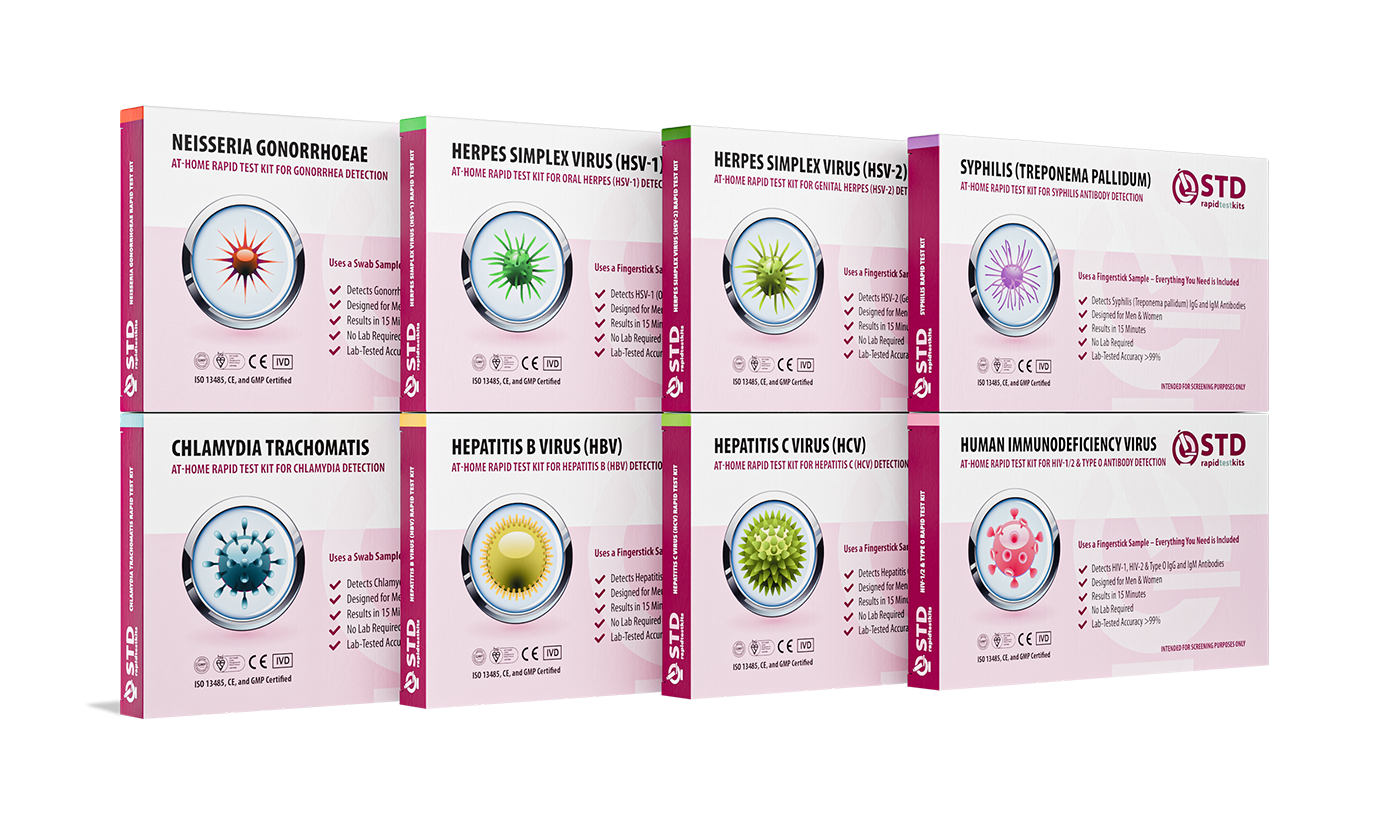 For Men & WomenResults in MinutesNo Lab NeededPrivate & Discreet
Order Now $149.00 $392.00
For all 8 tests
When You’re Ready to Talk, And When You’re Not
You don’t owe anyone your medical history. But hiding something out of fear is different than choosing privacy from a place of peace. If you’re not ready to disclose, that’s okay. Take your time. Find your language. Practice with a friend. Read other people’s stories. Breathe.
When the time comes, your voice might shake. You might stumble. But the people who matter won’t run. And if they do? That’s not your shame to carry.
Whether it’s a one-time hookup, a long-term partner, or just a question you’ve been too afraid to ask, you have a right to information, care, and dignity.
FAQs
1. Is STD shame really still a thing in 2025?
Unfortunately, yes, and it's sneakier than you'd think. Even in a world with queer sex ed TikToks and at-home test kits, the shame is baked into our language, our dating apps, our jokes. It’s the silence after disclosure. The “clean” comments on Hinge. The weird look someone gives you after you mention “testing.” So yeah, it's alive, and we’re not done fighting it.
2. Can I still have sex after getting diagnosed with an STD?
100% yes. It might take a minute to rebuild confidence, but once you know how to protect yourself and your partner, there’s no reason to shut down your sex life. In fact, many people report that post-diagnosis sex is better, more communicative, more honest, and way more intentional.
3. Do I have to tell everyone I’ve ever slept with?
No, this isn’t a full-scale confession booth situation. You only need to tell partners who may have been exposed during a relevant window. For treatable infections like chlamydia or gonorrhea, that might just mean your last few partners. For something like herpes, the convo depends on recurrence, type, and your relationship to the person.
4. Why do people keep using the word “clean” for STD status?
Ugh, this one. It's outdated, it’s harmful, and it implies that anyone who tests positive is “dirty.” No one says they’re “clean” from strep throat. Let’s drop the purity complex and start saying what we actually mean: “I was recently tested,” “I’m on treatment,” or “Here’s my status.” That’s real talk.
5. What if someone ghosts me after I tell them?
Then they did you a favor. Seriously. Anyone who disappears at the first sign of honesty probably isn’t ready for real intimacy, sexual or emotional. It might sting in the moment, but it saves you time, energy, and awkward brunches with people who don’t deserve your vulnerability.
6. I can’t stop obsessing over my diagnosis. Is that normal?
Incredibly. The brain loves to loop on things that feel taboo or scary. You might go from “I’m fine” to “No one will ever touch me again” in five seconds flat. Deep breaths. Shame thrives in silence and secrecy, talking to someone, even anonymously online, can break that loop.
7. Are there people who actually understand this stuff?
Yes! Communities like Reddit’s r/Herpes, support groups, therapists who specialize in sex positivity, even TikTok creators who talk about STDs with zero shame. You're not weird. You're not alone. You're just in a chapter most people don’t post about, but lots of people live through.
8. How do I even bring up STD status in a new relationship?
Keep it real, keep it simple. Something like, “I want to be upfront because I care about trust, I have [X], it’s managed, and I know how to keep both of us safe.” You’d be amazed how many people appreciate honesty and respond with empathy, or even say, “Me too.”
9. Is herpes actually a big deal?
Medically? Usually not. Most people with HSV-1 or HSV-2 don’t even know they have it. Socially? The stigma can feel like a punch in the gut. But the more you learn, the smaller it feels. It’s skin-to-skin contact. It’s manageable. And it absolutely does not make you any less dateable, lovable, or whole.
10. How do I stop feeling like I messed up my life?
Start here: You didn’t. You’re navigating something millions of people deal with. This is not the end of anything. It’s the beginning of you seeing yourself with more compassion. The real glow-up is when you realize this doesn’t change your worth, it just changes what you know about your health.
You’re Still You, Maybe Even Stronger
If you're reading this with a knot in your chest or tears in your eyes, you’re not broken. You’re human. Every scar tells a story, and this one, if you let it, can become a turning point. Not the end. Not the worst chapter. Just one that taught you how strong, how tender, and how worthy you really are.
Don't stay quiet. Don't let shame take over. You deserve to know what's going on, be cared for, and have a way to move forward.
Order a discreet at-home combo test if you're ready to take back control, quietly, confidently, and on your own terms.
How We Sourced This Article: We combined current guidance from leading medical organizations with peer-reviewed research and lived-experience reporting to make this guide practical, compassionate, and accurate.
Sources
1. Planned Parenthood – STDs, Safer Sex & Support
2. Relationships Between Perceived STD‑Related Stigma, STD‑Related Shame, and STD Testing
3. Psychological Health and Well‑Being in Patients with Sexually Transmitted Infections
4. Global Perspectives on the Burden of STIs and the Impact of Stigma
5. Stigma Associated with Sexually Transmitted Infections: A Global Review
6. Syndemic Mental Health Vulnerabilities Among People Living with STIs
7. Psychiatric Disorders and Their Relationship to STDs
About the Author
Dr. F. David, MD is a board-certified infectious disease specialist focused on STI prevention, diagnosis, and treatment. He blends clinical precision with a no-nonsense, sex-positive approach and is committed to expanding access for readers in both urban and off-grid settings.
Reviewed by: K. Dela Cruz, RN | Last medically reviewed: November 2025
This article is for information only and should not be used as medical advice.


