





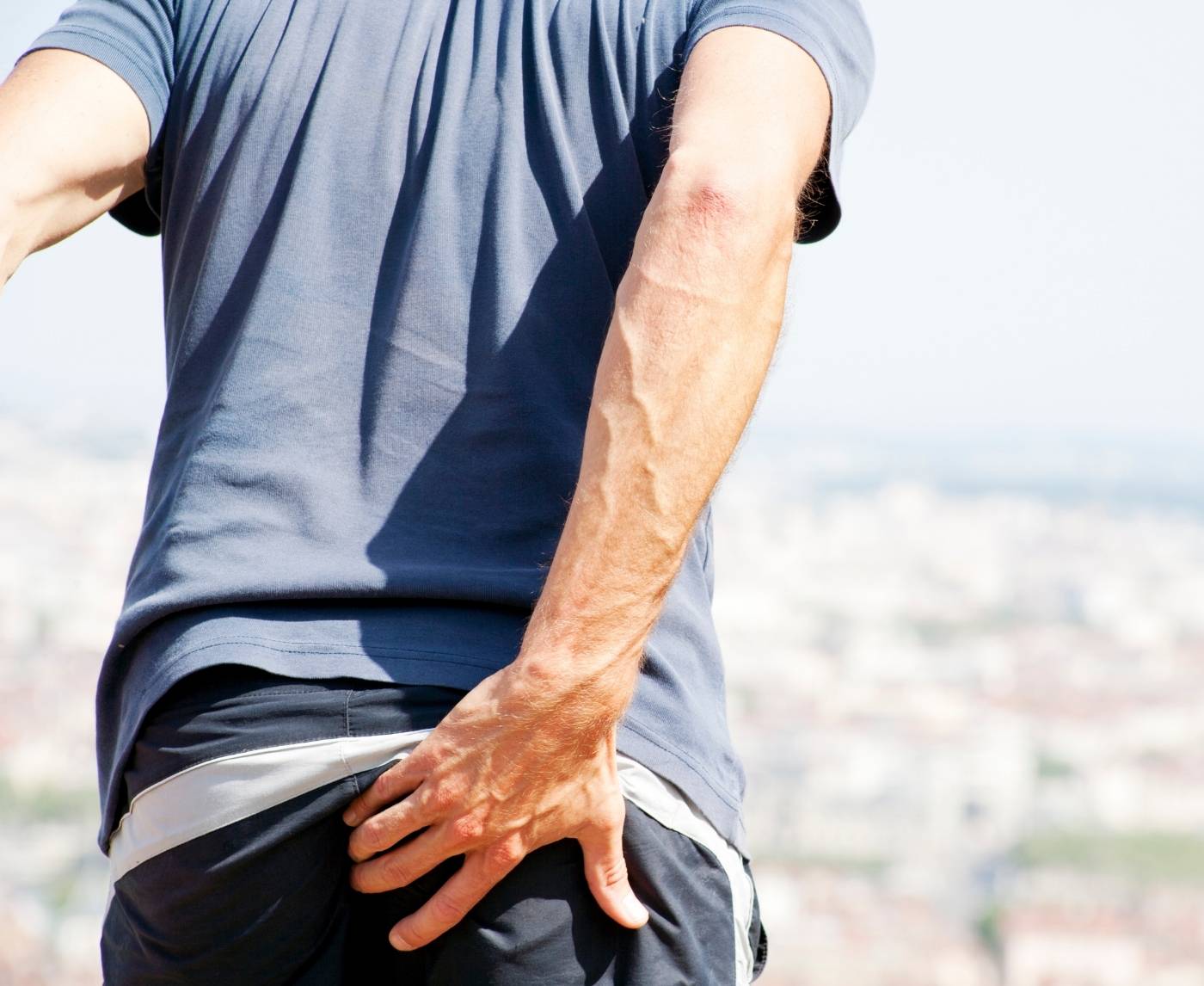

Quick Answer: Rectal chlamydia is a common but often missed form of chlamydia that can occur in men and women, sometimes without anal sex and often without symptoms. It requires a rectal swab test, urine tests alone can miss it.
This Isn’t Just About Anal Sex
Let’s clear something up immediately. You can have rectal chlamydia even if you don’t identify as someone who “has anal sex.” Bodies are not that tidy. Fluids travel. Fingers move. Oral-to-anal contact happens. And in women especially, studies show rectal infections can occur even when anal penetration isn’t reported.
That’s not a morality statement. It’s anatomy. The rectum and vaginal canal sit close together. Bacteria like chlamydia can spread from one site to another through shared fluids or cross-contamination. The Centers for Disease Control and Prevention notes that site-specific testing matters because infections can exist in one area of the body and not another.
A urine test checks the urethra. A vaginal swab checks the cervix. Neither automatically checks the rectum.
And that’s where people get missed.
What Rectal Chlamydia Actually Feels Like (If It Feels Like Anything)
Here’s the uncomfortable truth: many cases of rectal chlamydia are asymptomatic. No discharge. No dramatic pain. No “something is definitely wrong.” That silence is part of why it spreads so easily.
But when symptoms do show up, they tend to mimic other common issues, which is why people Google “anal itching STD” or “STD that feels like hemorrhoids.”
| Symptom | Possible with Rectal Chlamydia | Often Mistaken For |
|---|---|---|
| Rectal discharge (mucus or pus) | Yes | Irritation, infection, hygiene issue |
| Anal itching | Yes | Hemorrhoids, yeast, skin irritation |
| Rectal pain or soreness | Sometimes | Hemorrhoids, fissures |
| Bleeding during bowel movement | Possible | Hemorrhoids |
| No symptoms at all | Very common | Assumed “I’m fine” |
Notice what’s missing from that table? A flashing neon sign. Rectal chlamydia doesn’t usually announce itself dramatically. It blends in. It hides behind more familiar explanations.
“I thought it was just irritation from shaving,” one patient told me. “It never crossed my mind it could be an STD because I didn’t think I’d done anything ‘risky.’”
Risk isn’t always loud. Sometimes it’s just untested.

People are also reading: I Gave My Partner Herpes From a Cold Sore, Here’s What I Wish I Knew
Why So Many Cases Get Missed
Here’s where the investigative side of this conversation kicks in. Rectal chlamydia is missed for three main reasons: testing gaps, symptom silence, and assumptions about behavior.
Many clinicians screen based on reported behavior. If a patient doesn’t explicitly report receptive anal sex, a rectal swab might not be offered. That means women, especially straight women, are frequently under-tested rectally. Research has found rectal chlamydia in women who did not report anal intercourse at all.
Second, people assume a negative urine test means a negative everything. It doesn’t. Infections are site-specific. You can test negative in urine but positive in the rectum. It’s not rare. It’s just rarely discussed.
Third, stigma silences honesty. If someone feels embarrassed describing what happened, they may not request full testing. And no one deserves to miss a diagnosis because they felt awkward for 30 seconds.
If you’re reading this and thinking, “Wait. My doctor never offered a rectal swab,” you’re not alone. And you’re not foolish. The system just isn’t always proactive.
How Testing Actually Works (And What Urine Misses)
Testing for rectal chlamydia typically uses a nucleic acid amplification test, often called NAAT or PCR. These are highly sensitive tests that detect the genetic material of chlamydia. But they only detect it where the sample is taken.
A urine test checks urethral infection. A vaginal swab checks cervical infection. A rectal swab checks rectal infection. They are separate sites.
| Test Type | Body Site Tested | Can It Detect Rectal Chlamydia? |
|---|---|---|
| Urine test | Urethra | No |
| Vaginal/cervical swab | Cervix | No |
| Rectal swab | Rectum | Yes |
This is why someone can walk away thinking, “My STD panel was negative,” when in reality only one site was checked.
If you want comprehensive screening, you have to ask for it, or use a test that allows for multi-site sampling. At STD Rapid Test Kits, discreet at-home testing options are available so you can choose the right sample type without an awkward waiting room conversation.
Testing isn’t an admission of guilt. It’s a form of clarity. And clarity is powerful.
How Common Is Rectal Chlamydia, And Who’s Actually at Risk?
If you picture rectal chlamydia as rare, fringe, or limited to one community, that assumption is part of the problem. Public health surveillance shows that rectal infections are common among men who have sex with men, but they are also found in heterosexual men and women, especially when multi-site testing is actually performed.
In several screening studies, a significant percentage of women who tested positive for genital chlamydia also had rectal infection. What startled researchers wasn’t just the overlap, it was that some women had rectal infection even when they did not report anal intercourse. That means relying only on behavior-based screening can leave infections untreated.
Risk is not about identity. It’s about exposure and biology. Fluids do not ask for labels.
One 26-year-old woman told me, “I had a standard STD panel every year. When I finally asked for a rectal swab out of curiosity, it came back positive. I felt blindsided. I thought I’d been responsible.” She had been responsible. She just hadn’t been fully tested.
Check Your STD Status in Minutes
Test at Home with Remedium6-in-1 STD Test Kit
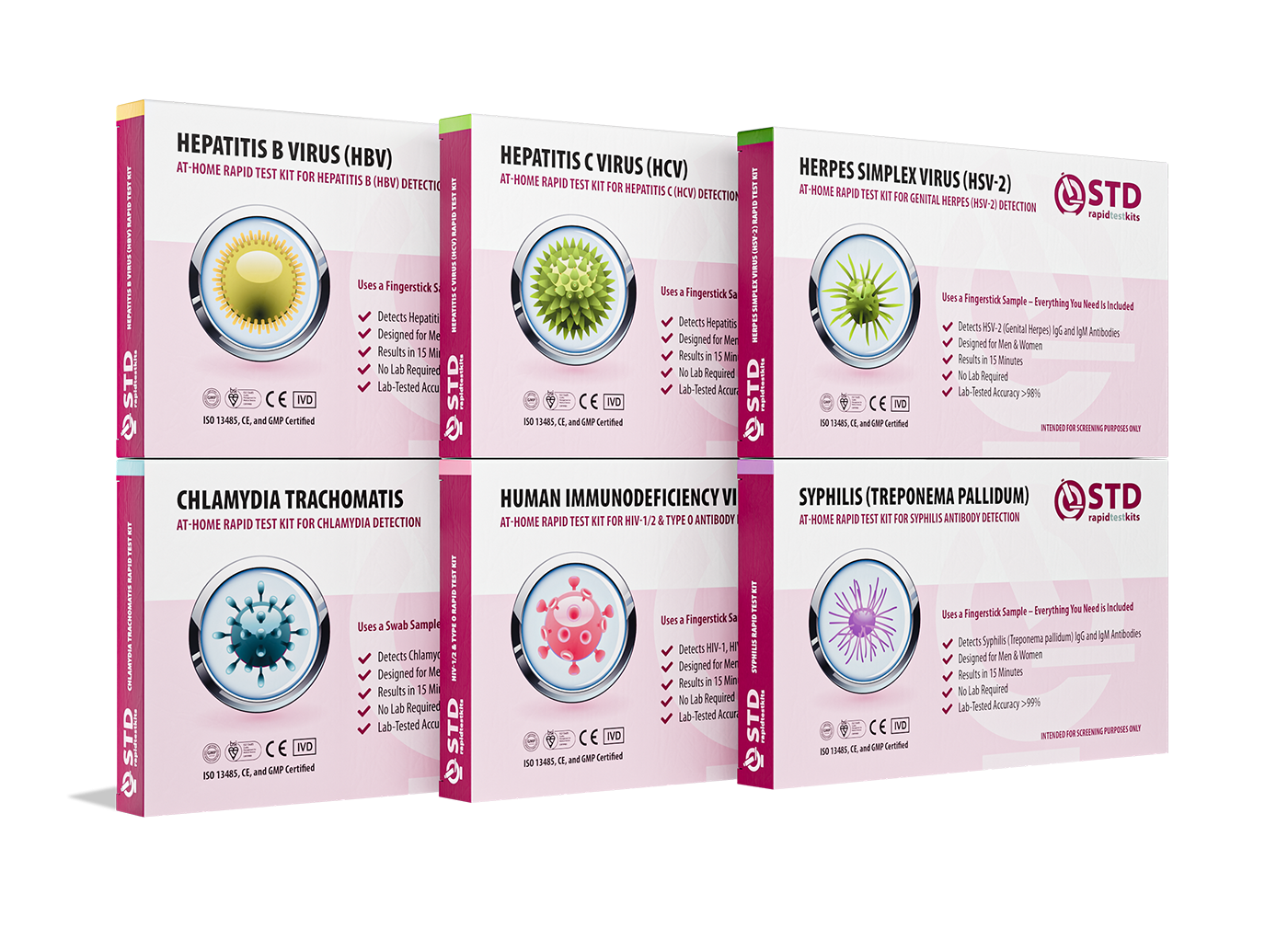
 For Men & Women
 Results in Minutes
 No Lab Needed
 Private & Discreet
Order Now $119.00 $294.00
For all 6 tests
What Happens If Rectal Chlamydia Goes Untreated?
This is where we stay calm and factual. Most cases of chlamydia, including rectal infections, are treatable with antibiotics. When caught early, complications are uncommon. But untreated infection can persist, spread, and increase inflammation.
Chronic rectal infection may cause ongoing discomfort, discharge, or proctitis, an inflammation of the rectal lining. More quietly, untreated infection at any site can increase susceptibility to acquiring or transmitting other sexually transmitted infections, including HIV. In women, concurrent untreated genital infection can raise the risk of pelvic inflammatory disease, which can affect fertility.
None of that is meant to scare you. It’s meant to underline something important: early detection makes this simple. Delayed detection complicates it.
“I ignored it because it didn’t hurt that much,” another patient admitted. “By the time I went in, I was just tired of not knowing.” The exhaustion of uncertainty is real. Testing is often less stressful than wondering.
The Reinfection Loop No One Explains
There’s another piece people miss: reinfection and autoinoculation. If rectal chlamydia goes untreated while genital infection is treated, or vice versa, bacteria can potentially re-seed between sites. That means someone may complete antibiotics, test negative in urine later, and still carry infection rectally.
This is one reason comprehensive site testing matters both before and after treatment in certain cases.
| Scenario | Why It Matters | Suggested Follow-Up |
|---|---|---|
| Positive genital test, no rectal test performed | Rectal infection may be missed | Consider rectal screening |
| Persistent rectal symptoms after treatment | Possible reinfection or incomplete clearance | Retest after recommended interval |
| New sexual partner after treatment | Risk of new exposure | Routine rescreening |
| Tested early after exposure | Window period may affect accuracy | Repeat test at 2–3 weeks |
Guidelines often recommend retesting for chlamydia about three months after treatment due to reinfection risk. That’s not because treatment fails frequently, it’s because exposure can recur, especially if partners were not treated at the same time.
If you’re unsure whether you were fully screened, or you’re between partners and want clarity, discreet at-home options like the Combo STD Home Test Kit allow you to test privately and proactively. Peace of mind isn’t dramatic. It’s strategic.
“But I Don’t Have Symptoms”, The Most Common Last Words
Silence is the defining feature of rectal chlamydia. Many infections produce no noticeable signs at all. That doesn’t make them harmless. It makes them invisible.
Public health experts often describe chlamydia as a “silent infection.” That silence is precisely why screening guidelines exist. It’s also why stigma is dangerous, because when people assume “I would know,” they delay testing.
A 32-year-old man told me, “I only got tested because my partner did. I felt completely normal. I was shocked when mine came back positive rectally.” He wasn’t reckless. He was asymptomatic.
There is nothing shameful about being surprised by an STD test result. What matters is what you do next.

People are also reading: Taking Herpes Pills Daily? What They Actually Do (and Don’t)
So Who Should Consider Rectal Testing?
Anyone who has had receptive anal exposure, including through penetration, toys, fingers, or oral-to-anal contact, should consider site-specific testing. But it doesn’t end there. Women diagnosed with genital chlamydia may benefit from rectal screening even if anal sex was not reported, because studies show concurrent infection can occur.
If you’ve tested positive before, changed partners, experienced unexplained rectal symptoms, or simply never had a rectal swab done, it’s reasonable to ask for one. Responsible sexual health is about information, not confession.
If you prefer to skip the clinic conversation entirely, you can explore confidential testing options at STD Rapid Test Kits. Your results are private. Your timeline is yours. Your body deserves thorough care.
Case Study: “My Test Was Negative… Until It Wasn’t”
Jordan, 29, thought he was being proactive. He had a new partner, felt a little irritation after sex, and went to urgent care. They ran a urine test for chlamydia and gonorrhea. It came back negative. He exhaled.
But the irritation didn’t fully go away. It wasn’t dramatic, just a dull soreness and occasional discharge he chalked up to hemorrhoids. Two months later, his partner tested positive. This time, Jordan asked specifically for a rectal swab.
It came back positive for rectal chlamydia.
“I wasn’t irresponsible,” he said. “I just didn’t know to ask the right question.”
This is what most people miss. Testing is only as thorough as the sites you check. Jordan didn’t fail. The screening process simply wasn’t comprehensive.
When Should You Test for Rectal Chlamydia?
Timing matters. If you test too early after exposure, even highly sensitive NAAT tests may not detect infection. If you test too late without symptoms, you may have been unknowingly carrying and transmitting it.
Rectal chlamydia typically becomes detectable about 7 to 14 days after exposure. Testing before one week may produce a false negative. Testing after two weeks improves accuracy significantly.
| Time Since Exposure | What to Expect | Recommended Action |
|---|---|---|
| 0–5 days | Infection may not yet be detectable | Wait before testing unless severe symptoms |
| 7–14 days | Most infections detectable | Ideal window for first test |
| 3 months after treatment | Check for reinfection | Routine rescreening advised |
If symptoms appear earlier, such as discharge, rectal pain, or bleeding, seek evaluation regardless of timing. Severe pain or fever warrants urgent care.
If you’re within that 7–14 day window and don’t want to sit in a clinic explaining your sex life, you can order a discreet Chlamydia Rapid Test Kit and take control from home. Clarity shouldn’t require embarrassment.
Myths That Keep People From Getting Tested
Myth 1: “I would definitely know if I had it.”
No. Many rectal infections are asymptomatic. Silence does not equal safety.
Myth 2: "Rectal STDs only affect gay men."
False. Anyone exposed to infected fluids can develop rectal chlamydia. Orientation does not create immunity.
Myth 3: “If my urine test is negative, I’m clear everywhere.”
Also false. Infections are site-specific. A negative urethral result says nothing about the rectum.
Myth 4: “If I didn’t have anal sex, I can’t have rectal chlamydia.”
Transmission pathways are more complex than we like to admit. Bacteria can spread through cross-contact, shared fluids, and anatomical proximity. This isn’t about semantics. It’s about biology.
Check Your STD Status in Minutes
Test at Home with Remedium7-in-1 STD Test Kit
 For Men & WomenResults in MinutesNo Lab NeededPrivate & Discreet
Order Now $129.00 $343.00
For all 7 tests
Why Women Are Often Underdiagnosed
Rectal chlamydia in women is frequently overlooked. Screening guidelines historically focused on genital infection. Unless anal sex is disclosed, rectal testing may not be offered. But multiple studies have found rectal infection in women who tested positive genitally, and even in some who denied anal intercourse.
This matters because untreated rectal infection can contribute to reinfection of the genital tract. Treating one site but not the other creates a loop.
“No one told me I could have it there too,” said Alina, 24. “I felt stupid for not knowing. But how would I have known?”
You don’t know what you’re never taught to look for. That’s not stupidity. That’s a systems gap.
What to Do If You Test Positive
First: breathe. Rectal chlamydia is treatable. Standard antibiotic regimens are effective when taken as prescribed. Follow your healthcare provider’s instructions carefully and complete the full course, even if symptoms improve quickly.
Second: inform current partners so they can be tested and treated. Reinfection is common when partners remain untreated.
Third: schedule a retest approximately three months after treatment. Not because you did something wrong, but because reinfection rates are high enough that guidelines recommend it.
If you’re managing this privately, at-home options from STD Rapid Test Kits allow you to retest discreetly and confirm clearance. Your results are yours alone.
FAQs
1. “Can you really get rectal chlamydia if you didn’t have anal sex?”
Short answer? Yes. Longer answer? Bodies are messy and fluids travel. Oral-to-anal contact, shared toys, fingers, and simple anatomical proximity, especially in women, can allow chlamydia to reach the rectum. It’s not about labels. It’s about exposure. If bacteria get there, infection can happen.
2. “Wouldn’t I definitely feel it?”
Not necessarily. Rectal chlamydia is often quiet. No fireworks. No dramatic pain. Sometimes just mild itching you blame on toilet paper. Sometimes absolutely nothing. The absence of symptoms is common, which is why testing exists in the first place.
3. “It just feels like hemorrhoids. How do I know?”
You don’t, not by sensation alone. Hemorrhoids, fissures, irritation, and rectal STDs can overlap. Discharge, mild bleeding, soreness during bowel movements, all can blur together. If it lingers or doesn’t behave like a typical hemorrhoid flare, that’s your cue to test rather than guess.
4. “My urine test was negative. Doesn’t that mean I’m clear?”
It means your urethra tested negative. That’s it. Infections are site-specific. A urine sample cannot detect rectal chlamydia. Think of it like checking one room in a house and assuming the whole place is empty. If the rectum wasn’t swabbed, it wasn’t checked.
5. “Okay… so when is the right time to test?”
Usually 7 to 14 days after exposure gives the most reliable results. Testing too early can miss it. Testing at two weeks catches most infections. And if anxiety is eating at you before that? Plan the test. Put it on the calendar. Having a timeline calms the spiral.
6. “Is this dangerous, or just uncomfortable?”
Most cases are treatable and straightforward when caught early. Untreated, though, rectal infection can cause ongoing inflammation and increase risk of transmitting other STDs like HIV. This isn’t about panic, it’s about preventing something simple from becoming complicated.
7. “Why didn’t my doctor mention rectal testing?”
Sometimes providers screen based on reported behavior. If anal exposure isn’t discussed, rectal testing may not be offered. That doesn’t mean anyone failed you intentionally, but it does mean self-advocacy matters. You’re allowed to ask for site-specific testing. It’s your body.
8. “If I test positive, does that mean I did something reckless?”
No. It means you had exposure. That’s it. STDs are about contact, not character. Rectal chlamydia is common, especially because it’s often asymptomatic. The responsible move isn’t avoiding sex forever. It’s testing, treating, and moving forward informed.
9. “Do I need to tell my partner?”
Yes, and it doesn’t have to be dramatic. A simple, calm message works: “Hey, I tested positive for chlamydia. It’s treatable, but you should get tested too.” Most people respond better to honesty than secrecy. And treating partners prevents that exhausting reinfection loop.
10. “Can I just wait and see if it goes away?”
That’s a gamble. Symptoms may fade or never show up, but the bacteria can remain. Antibiotics clear it. Waiting prolongs uncertainty and risk. When the solution is straightforward, guessing rarely pays off.
“Is it weird that I feel embarrassed?”
Not weird. Human. We’re taught to associate STDs with shame. But infection is biology, not morality. If anything, testing is a sign of maturity. You’re not reckless for being sexually active. You’re responsible for checking in on your health.
You Deserve Thorough Testing, Not Partial Answers
Rectal chlamydia isn’t rare. It isn’t shameful. And it isn’t limited to one kind of body or one kind of relationship. What makes it dangerous isn’t drama, it’s invisibility.
If you’ve ever assumed a negative urine test meant you were fully cleared, you’re not naive. You were just missing information most people aren’t given. Now you have it.
Don’t sit in uncertainty. Don’t rely on partial screening. Take back control of your sexual health with discreet, site-specific options from this at-home combo STD test kit or explore full testing choices at STD Rapid Test Kits. Your results are private. Your clarity is powerful.
How We Sourced This Article: This guide combines current recommendations from major public health authorities, peer-reviewed research on multi-site chlamydia infection, and lived-experience reporting to address real-world testing gaps. We reviewed clinical guidelines on site-specific NAAT testing, reinfection rates, and rectal screening practices.
Sources
1. CDC Sexually Transmitted Infections Treatment Guidelines – Chlamydia
2. World Health Organization – Chlamydia Fact Sheet
4. Planned Parenthood – Chlamydia Information
5. Mayo Clinic – Chlamydia Symptoms and Causes
6. CDC (MMWR) – Sexually Transmitted Infections Treatment Guidelines, 2021
About the Author
Dr. F. David, MD is a board-certified expert in infectious diseases who works to stop, diagnose, and treat STIs. He combines clinical precision with a candid, sex-positive approach to help readers make informed, stigma-free health decisions.
Reviewed by: L. Ramirez, MSN, APRN | Last medically reviewed: February 2026
This article is only meant to give you information and should not be used instead of medical advice.


