Rapid STD Test vs Lab Test: Cost, Speed, and Privacy Compared
Rapid at-home kits return answers in minutes; lab tests offer the highest analytical sensitivity, especially in the early days after exposure. The right choice depends on timing, symptoms, and how much privacy and turnaround speed matter for your situation. This guide walks through cost, speed, privacy, and accuracy so you can match the test to the moment.



- Rapid at-home STI tests return a result in roughly 15 to 30 minutes; lab-processed tests typically take one to five days, with PCR or NAAT offering the highest analytical sensitivity for bacterial infections like chlamydia and gonorrhea.
- The right choice depends less on which test is 'better' and more on timing: how long ago the exposure was, whether symptoms are present, and how much privacy you need.
Published: October 2025 | Last updated: May 2026 | Editorial review and quality control: Martina N.
Which test should I choose, rapid or lab?
Choose a rapid at-home test if you are past the relevant window period, have no symptoms, and want speed and privacy. Choose a lab test when you have active symptoms, a very recent exposure, a confirmed-positive partner, or need a clinician to prescribe treatment in the same visit. For routine screening, either path works.
Most people don't compare STD testing methods out of academic curiosity. They compare them because something just happened. A condom broke. A new partner didn't mention their status. A familiar symptom feels slightly unfamiliar this time. The mind asks several questions at once: how long until results, can the test be wrong, is a home kit reliable enough for what I actually need?
A rapid at-home test gives you a result in roughly fifteen minutes from your bathroom. A lab-processed panel takes two to five days but uses molecular methods that can pick up infections the rapid kit might miss. Both can be the right answer. Which one fits your situation depends on three questions: when the exposure happened, whether you have symptoms, and how sure you need to be before your next move. This guide walks through cost, speed, privacy, and accuracy so you can match the tool to the moment.
This article is published by stdrapidtestkits.com, which sells at-home STI testing kits. We recommend products based on fit-for-purpose for your concern, not commercial benefit. We sell genital swab tests and fingerstick blood tests for the most common STIs; we don't sell pharyngeal swabs, rectal swabs, or lab-processed mail-in panels, and we say so plainly when that's what your situation calls for.
Key Takeaways
- Rapid at-home STI tests return a result in roughly 15 to 30 minutes; lab-processed tests typically take one to five days, with PCR or NAAT offering the highest analytical sensitivity for bacterial infections like chlamydia and gonorrhea.
- The right choice depends less on which test is 'better' and more on timing: how long ago the exposure was, whether symptoms are present, and how much privacy you need.
How Rapid Tests, Lab NAAT, and Clinic Blood Panels Differ
Three main testing categories use different chemistry and answer slightly different questions about your body.
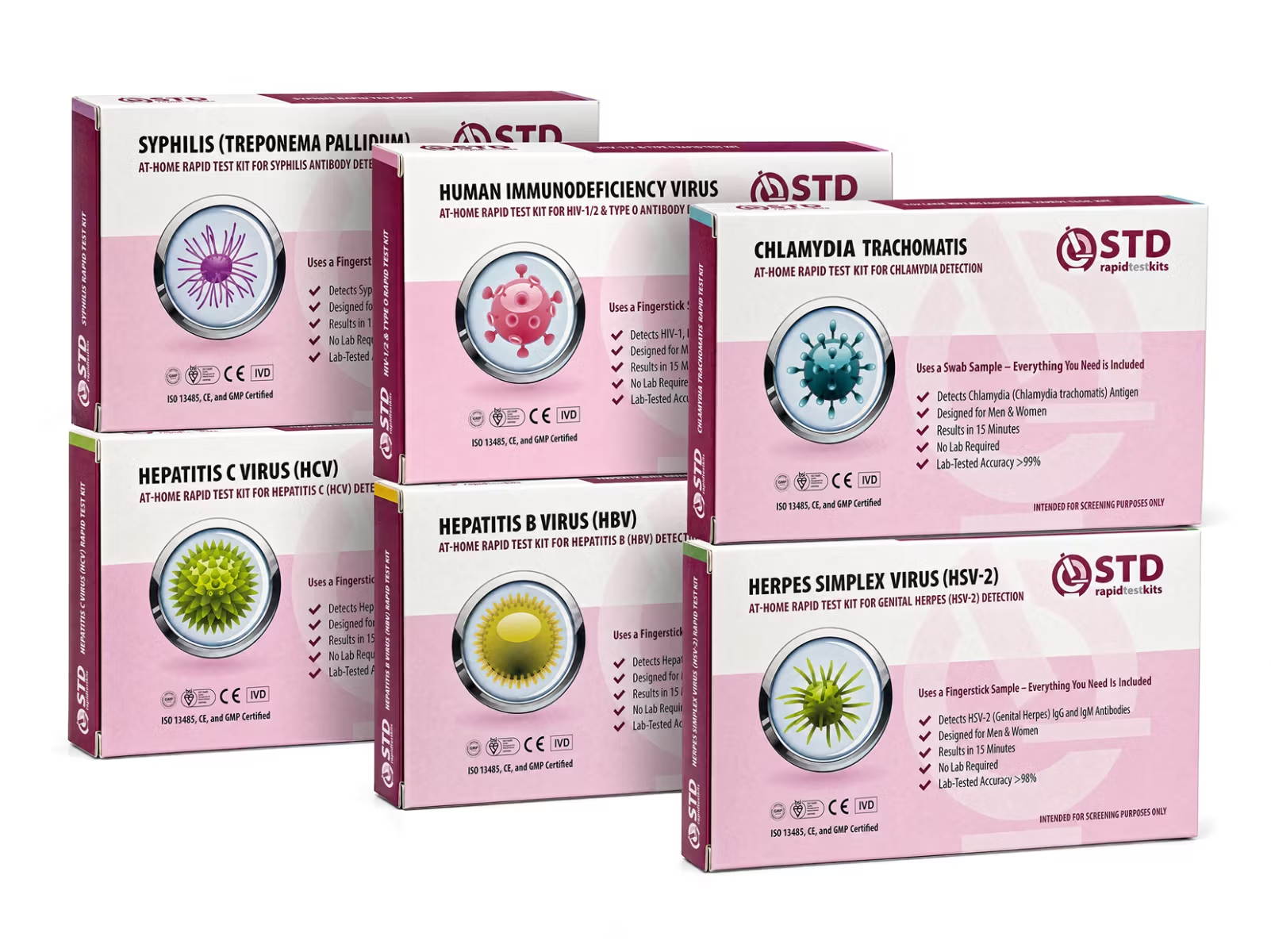
At-home rapid lateral-flow tests. These are the strips and cassettes you collect a sample for in your bathroom. They use the same chemistry as a home pregnancy test or a COVID-19 antigen kit. Either a self-collected swab (for chlamydia, gonorrhea, and trichomoniasis or HPV in our women-validated kits) or a fingerstick blood drop (for HIV, syphilis, hepatitis B and C, and the herpes panels) reacts with antibodies bound to the strip, and a colored line tells you the result. Most kits return a reading in 10 to 20 minutes. They detect either antibodies your immune system has produced against an infection, or antigens (proteins from the pathogen itself).
Lab-processed NAAT and PCR. Nucleic acid amplification tests look for the actual DNA or RNA of the infection, not your immune response. A clinic or a mail-in service collects your sample, then ships it to a certified lab where the genetic material is amplified and detected. Per the CDC's STI treatment guidelines, lab NAAT is the analytical gold standard for chlamydia and gonorrhea testing. Results typically take one to five days, depending on the lab and your location.
Clinic blood panels. These sit between the two. Blood is drawn at a clinic and run on lab equipment, but the underlying chemistry can be similar to a rapid antibody test. Common for HIV, syphilis, and hepatitis B and C. Results are often same-day if the clinic has on-site analyzers; otherwise one to three days.
Lateral-flow rapid tests and lab NAAT are complementary technologies, not interchangeable equivalents. Lab NAAT has higher analytical sensitivity, especially for early or low-organism-load infections. Rapid lateral-flow trades some sensitivity for speed, privacy, and avoiding the cost of a clinic visit. Mail-in kits blur the categories: you collect a sample at home, ship it to a certified laboratory, and get a lab-processed result without sitting in a waiting room. Sample collection feels home-based; the actual chemistry happens in a lab.
Cost: What You Actually Pay
Pricing varies more than most people expect. Public health departments often offer free or low-cost STI testing through programs funded by federal, state, and local public health agencies; the trade-off is wait times and limited hours. Private clinics and urgent care can run several hundred dollars per visit when billed without insurance. At-home STI test kits are typically the most predictable line item because you see the price before you buy.
Insurance changes the picture, sometimes for the better, sometimes not. Preventive STI screening is covered by many commercial plans, but billing creates an explanation-of-benefits statement that may arrive in the mail. For young adults on a parent's plan, that paperwork is its own concern. The table below shows realistic ranges, not marketing claims.
| Testing Option | Average Cost Without Insurance | Insurance Coverage Likelihood | Hidden or Additional Costs |
|---|---|---|---|
| At-home rapid single test | $25 to $60 | Rarely covered | Expedited shipping |
| Mail-in lab panel (multi-STI) | $99 to $249 | Sometimes reimbursable | Return-shipping delays |
| Private clinic testing | $150 to $400+ | Often covered | Office-visit and follow-up fees |
| Public health clinic | Free to $50 | Subsidized | Longer wait times |
Speed: Minutes vs Days
Speed is the single sharpest difference between rapid and lab testing. A rapid kit produces a readable result inside the same hour you open the box. A lab test, whether collected at home and mailed or collected at a clinic, has to travel to a lab and queue behind other samples. That usually means one to five total days, sometimes longer when labs are busy.
For many people, the emotional gap between 'tonight' and 'next Tuesday' is the most consequential variable in the whole comparison.
| Testing Method | Sample Collection Time | Processing Time | Total Time to Results |
|---|---|---|---|
| At-home rapid | 5 to 10 minutes | 10 to 20 minutes | Under 30 minutes |
| Mail-in lab | 10 to 15 minutes | 1 to 3 lab days | 2 to 5 days total |
| Clinic lab test | Visit time varies | 1 to 3 lab days | 1 to 4 days typical |
Window Periods Matter More Than the Test You Pick
Rapid tests can be very reliable when used correctly and at the right time. Lab NAAT and antigen/antibody assays are generally more sensitive in the earliest days after exposure because they amplify and detect very small amounts of viral or bacterial material, while lateral-flow rapid tests need a measurable level of antibody or antigen to produce a visible line. That's where the analytical-sensitivity gap shows up most.
The piece that rarely gets explained: accuracy isn't only a property of the test, it's also a property of timing. Every infection has a window period, the stretch between exposure and when a test can reliably detect it. Test inside that window and a negative result might just mean your body hasn't produced enough markers yet, not that you are in the clear.
Window periods vary by infection and by test method. For HIV, fourth-generation antigen/antibody lab tests using a venous blood draw detect most infections by about 18 to 45 days post-exposure per CDC HIV testing guidance; rapid finger-stick antigen/antibody tests have a wider 18 to 90 day window, and at-home rapid HIV tests that detect antibodies only typically require 23 to 90 days. For chlamydia and gonorrhea, NAAT detection is generally reliable within roughly one to two weeks of exposure per the CDC STI treatment guidelines, with peak reliability after day 14. Syphilis antibody seroconversion typically takes three to six weeks, with confirmatory testing reliable at six to twelve weeks per CDC STI testing guidance. For HSV-2 and hepatitis B and C, window periods typically range from four to twelve weeks per NHS guidance on STIs, with confirmatory testing reliable around week 12.
Clinicians commonly see the same pattern repeat: someone tests at day three or day five, gets a clean result, then develops symptoms a week later, and a follow-up at day fourteen confirms an infection that was already incubating. A rapid test taken three months after a possible exposure can be very reliable, and a lab test taken five days after exposure can still miss something.
| Infection or Test Type | Earliest Reliable Detection | Peak Reliability |
|---|---|---|
| Chlamydia | 7 to 14 days | Day 14 or later |
| Gonorrhea | 7 to 14 days | Day 14 or later |
| Trichomoniasis | 7 to 28 days | Day 14 or later |
| HIV (lab 4th-gen Ag/Ab, venous draw) | 18 to 45 days | Week 6 to Week 12 |
| HIV (rapid finger-stick Ag/Ab) | 18 to 90 days | Day 90 or later |
| HIV (rapid Ab-only test) | 23 to 90 days | Day 90 or later |
| Syphilis (antibody) | 3 to 6 weeks | Week 6 to Week 12 |
| HSV-2 (IgG antibody) | 4 to 12 weeks | Week 12 or later |
| Hepatitis B and C | 4 to 10 weeks | Week 12 or later |

How Symptoms Change the Calculation
Symptoms shift the math. If you have unusual discharge, burning when you urinate, a sore that wasn't there a few days ago, lower abdominal pain, or unexplained pelvic discomfort, the question stops being 'how soon can I test?' and becomes 'where can I get the most accurate test today?'
Two reasons. First, active symptoms suggest the infection has progressed enough that NAAT will detect organism DNA easily, so a same-day clinic visit yields a near-definitive answer. Second, antibody-based rapid tests rely on your immune response, which may still be building during early symptom onset. A negative rapid test in someone with active genital symptoms isn't reassuring, especially in the first week.
Symptoms also point clinicians toward additional tests not commonly bundled in routine screening. Sores or vesicles get a viral PCR or culture for HSV. Pelvic pain gets a workup for pelvic inflammatory disease, which can complicate untreated chlamydia or gonorrhea. Per Mayo Clinic's STI overview, unusual rashes (especially on the palms or soles) should prompt a syphilis workup. None of those require fancy equipment in the moment, but they do require a clinician's eyes and a lab. HPV cervical screening is another example where a clinic visit earns its keep; we sell an at-home HPV swab validated for vaginal self-collection (women only), but cervical cytology and clinician-collected HPV testing remain the standard for cervical cancer screening.
HSV in particular often needs a swab-based viral PCR or culture for accurate identification, which is a clinic-administered test. Our at-home herpes blood tests measure systemic seroconversion (antibodies that develop weeks after infection), not active local lesions. For an active sore or vesicle, a clinic visit gives the immediate answer; the home antibody panel can confirm the type later once seroconversion has occurred.
Privacy and Paper Trails
Privacy is rarely the loudest reason someone tests, and often the most important. The clinic waiting room, the clipboard at intake, the receptionist asking for insurance details: these steps are mildly uncomfortable for some people and a hard barrier to care for others. Searches for 'discreet STD testing' or 'confidential STD testing' usually come from people trying to protect a relationship, a housing situation, a job, or simply their peace of mind. Wanting control over personal health information is a reasonable preference, and the medical-system shame spiral has done more damage to STI screening rates than almost any other single factor.
At-home testing removes the visible step entirely. No waiting room, no time off work, no explanation-of-benefits statement landing in the mail for a parent or partner to read. Results stay on the device in your hand. Clinic testing can also be confidential, especially through public health programs: the NHS lists free and confidential sexual health clinics for U.K. residents, and U.S. public-health departments offer similar pathways. Insurance billing still creates paper trails, though, and that's the failure mode that surprises young adults on family policies the most.
Mail-in lab kits offer a middle ground. Sample collection happens at home with the same privacy as a rapid test, but the sample ships to a certified lab and the result comes back through a secure dashboard or HIPAA-compliant email a few days later. Either way, the question to ask yourself: do you want medical supervision at the point of testing, or full control over who knows you tested?
Side-by-Side: All Three Paths Compared
Rather than framing this as better versus worse, the comparison reads more clearly when each path is described by what it actually offers. The table below summarizes the four factors people weigh most heavily.
At-Home Rapid vs Mail-In Lab vs Clinic Lab
| Factor | At-Home Rapid Test | Mail-In Lab Test | Clinic Lab Test |
|---|---|---|---|
| Speed to result | Result in minutes | 2 to 5 days total | 1 to 4 days typical |
| Early-detection sensitivity | Moderate, depends on infection and window | High (NAAT or 4th-gen antigen/antibody) | Very high (NAAT or 4th-gen antigen/antibody) |
| Privacy | Maximum control, no clinic visit | High, sample collected at home | Depends on insurance billing |
| Clinician access at the moment of testing | None until you choose to seek care | Telehealth follow-up often included | Immediate consultation |
| Best fit | Routine screening, peace of mind | Lab-grade accuracy without a visit | Symptomatic exposure, complex cases |
How rapid, mail-in lab, and clinic lab testing compare across the four most common decision factors.
When to Retest After a Rapid Negative
A negative rapid test isn't always the final answer. Whether you should retest depends on three things: when you tested relative to exposure, whether you have any symptoms, and how high-risk the original encounter was.
- If you tested within the window period for the infection of concern, retest at the post-window mark. For chlamydia and gonorrhea, that means day 14 or later. For HIV with a fourth-generation antigen/antibody test, around day 45 for a venous draw or day 90 for a rapid finger-stick. For syphilis, six to twelve weeks.
- If symptoms develop after a negative rapid result, don't wait. Move to a clinic or order a NAAT-based mail-in panel.
- If the exposure was particularly high-risk (broken condom, partner recently tested positive, exposure to bloodborne pathogens), plan two follow-ups: one at the post-window mark, another at 30 to 45 days, especially for HIV.
- If you've recently started antibiotics for a suspected infection, hold off on retesting until at least three to four weeks after finishing the course. Testing during or immediately after treatment can produce confusing results, including false negatives from cleared organisms or misleading positives from lingering DNA fragments.
Retesting when a result falls inside the window period is exactly how the window-period math is meant to work. The first test wasn't wrong; it was early.
If any symptoms appear (discharge, burning when you urinate, new sores, pelvic pain) after a negative rapid result, do not wait for the window to close. Move to a clinic NAAT the same day. Symptomatic evaluation cannot wait on window-period math, and a clinician can rule in or rule out non-STI causes that need different treatment.
If a Rapid Test Comes Back Positive
A positive rapid result starts a clinical process. The next steps are confirmation, treatment, and partner notification, in that order.
Confirm with a lab test when you can. Rapid lateral-flow tests have very good specificity (low false-positive rate), but lab NAAT or a confirmatory antibody panel is the standard next step before starting treatment. Most telehealth services and many urgent care clinics will confirm with a NAAT and prescribe treatment in the same encounter. For HIV and syphilis, confirmatory testing is mandatory because treatment decisions depend on it.
Treatment is usually straightforward. Bacterial STIs (chlamydia, gonorrhea, syphilis) are cured with short courses of antibiotics, often one or two doses. Per CDC clinical guidance for STIs, treatment regimens are well-standardized and accessible through primary care, online clinics, and urgent care. Viral infections (HIV, herpes) are managed long-term, and modern HIV treatment makes the infection both manageable and non-transmissible when viral load is suppressed.
Partner notification matters. Most states allow anonymous partner-notification tools (websites and apps that send a notification message without naming you), which can make the conversation easier. Notification matters because untreated bacterial STIs can cause infertility, chronic pelvic pain, and increased HIV transmission risk. You'd want a partner to do the same for you.
Many telehealth services (Planned Parenthood Direct, Wisp, Nurx, and similar) and most state-level public health programs can prescribe STI treatment after a confirmed positive without an in-person visit. If you're outside the U.S., your country's national STI service typically offers a similar pathway, often free of charge. The pathway from a positive rapid result to treatment is shorter and lower-friction than most people expect.
The Bottom Line on Trust
Rapid STD tests are trustworthy when used correctly and at the right point in the window period. Lab tests are trustworthy because of higher analytical sensitivity and clinician oversight. What's never trustworthy is testing too early and treating a negative result as proof of zero risk.
Trust comes from understanding window periods, retesting when biology calls for it, and confirming any positive result through a clinician before starting treatment or notifying partners. The most accurate test in the world doesn't help if you avoid taking it; the fastest test in the world doesn't help if you take it before the body could possibly show the infection. Pick the test you'll actually follow through on, time it correctly, and confirm a positive before acting on it. The World Health Organization's STI fact sheet notes that many infections are asymptomatic, so routine screening, even when nothing feels wrong, is part of normal sexual healthcare.
When to trust the result
- A negative result you can trust: you tested after the kit's stated window period closed, you followed the sample-collection instructions, and you read the result inside the timing window printed on the cassette.
- A negative result to recheck: you tested inside the window period, you had a known recent high-risk exposure, or symptoms are active. Plan a follow-up lab test after the window closes.
- Any positive result: treat as preliminary and confirm with a clinician-ordered lab test before starting antibiotics or notifying partners. Per CDC screening guidance, confirmation is part of the standard pathway, not a sign that the rapid test was wrong.
Many STDs don't cause symptoms, so the only way to know for sure is to get tested.
Pick the Right Test for Your Situation
Past the relevant window period with no symptoms
Yes: An at-home rapid kit is a reliable first step. Confirm any positive result with a clinician-ordered lab test before treatment or partner notification.
Active symptoms, or exposure within the last two weeks
Yes: Go to a clinic for a same-day NAAT or antigen/antibody test. Do not rely on a rapid antibody kit today; molecular methods detect early infections that lateral-flow chemistry can miss in the first one to two weeks.
Unsure whether the window has fully closed
Yes: Test at home now for baseline information, then book a confirmatory lab test for after the latest possible window date so you have a backup plan if the timing math is off.
A quick decision framework. Always confirm any positive rapid result with a clinician-ordered lab test before treatment.
FAQs
- Are rapid at-home STD tests as accurate as lab tests?
- Rapid lateral-flow tests and lab NAAT or antigen/antibody assays use different chemistry, so they are not interchangeable. Lab NAAT is generally more sensitive in the earliest days after exposure for bacterial infections like chlamydia and gonorrhea, and fourth-generation lab antigen/antibody tests detect HIV earlier than older rapid antibody tests. Once enough antibody or antigen is present (often three months for HIV antibody rapid tests, around two weeks for bacterial swab kits), many rapid tests perform within a few percentage points of lab assays. Timing matters more than test brand.
- Are at-home rapid STD tests FDA-cleared and reliable?
- Many at-home rapid tests sold in the U.S. are FDA-cleared, including HIV antibody tests and several lateral-flow chlamydia and gonorrhea kits. Reliability depends on three things: the specific kit's clearance status, whether you collected the sample correctly, and whether you tested past the window period. They are not perfect; lab NAAT remains the gold standard for definitive diagnosis. Used in the right window with proper technique, rapid kits are a useful screening tool.
- A faint line on the test, is that positive or negative?
- On most lateral-flow rapid tests, a faint line in the test region is still interpreted as positive, but it should be confirmed by a lab test before treatment or partner notification. Reading the cassette outside the instructed window, in poor lighting, or on a dried strip can also create artifacts. The right next step is a confirmatory lab test, ideally a NAAT or a clinician-ordered serology, depending on the infection.
- Should I take an STD test while I'm on antibiotics?
- Generally no for bacterial-infection NAATs. Antibiotics start clearing bacterial infections quickly, which can produce a false negative on a NAAT, and lingering DNA fragments can sometimes produce misleading positives. Wait until at least three to four weeks after finishing your course before retesting, unless your provider specifically requests an interim test. Viral and treponemal tests (HIV, syphilis, HSV) are not affected by routine antibiotics.
- Can I test too early even at a clinic?
- Yes. Every infection has a window period and a lab cannot override biology. Per CDC guidance, NAAT detection for chlamydia and gonorrhea is usually reliable within one to two weeks of exposure; fourth-generation HIV antigen/antibody lab tests detect most infections by about 18 to 45 days. If exposure was very recent, a clinician may recommend an initial test now and a follow-up after the relevant window closes.
- I'm on my parents' or partner's insurance. Will clinic testing show up on the bill?
- Insurance plans frequently send an explanation-of-benefits statement to the policyholder. It may not list the exact diagnosis, but it can show that a clinic visit occurred and roughly what category of testing was done. People worried about visibility on a shared plan sometimes choose to pay out-of-pocket, use a public health clinic with sliding-scale fees, or test at home, where no insurance is billed at all.
- Will my home test results stay private?
- Yes. At-home test kits do not report results to insurance, your family doctor, or any public-health database unless you specifically share them. Kits arrive in unmarked packaging. Mail-in lab services use encrypted dashboards or HIPAA-compliant email. The only exception is mandatory public-health reporting in some jurisdictions for specific infections like HIV and syphilis, which kicks in only after a clinically confirmed diagnosis, not a self-administered home result.
- Which path should I actually choose tonight?
- The deciding variable is how long ago the exposure was, not which test reads faster. Two weeks or less since exposure, or any active symptoms: go directly to a clinic NAAT or antigen/antibody test, since rapid antibody-based kits can miss early infections that lab molecular tests will catch. Past the relevant window and no symptoms: an at-home rapid kit is a reasonable first step. Unsure about the timing or whether the window has fully closed: order the at-home kit for tonight to get baseline information, and book a confirmatory lab test for after the latest possible window date so you have a backup plan if the math is off.
This guide summarizes current public-health guidance from the U.S. Centers for Disease Control and Prevention, the World Health Organization, the UK National Health Service, and Mayo Clinic on STI testing methods, window periods, and screening intervals. Cost ranges are drawn from publicly listed U.S. clinic, mail-in lab, and at-home retailer pricing. Specific window periods and accuracy figures come from the cited sources below; product-level performance numbers should be checked against each manufacturer's data sheet. We do not provide clinical diagnosis; for symptoms that concern you, see a licensed provider.
- U.S. Centers for Disease Control and Prevention. STI treatment guidelines, including recommended testing methods, NAAT as the analytical standard for chlamydia and gonorrhea, and screening intervals.
- U.S. Centers for Disease Control and Prevention. HIV testing overview, including window periods for fourth-generation lab antigen/antibody (18 to 45 days for venous draw), rapid finger-stick antigen/antibody (18 to 90 days), and rapid antibody-only tests (23 to 90 days).
- World Health Organization. Sexually transmitted infections (STIs) fact sheet covering global epidemiology, asymptomatic infection prevalence, and screening recommendations.
- U.S. Centers for Disease Control and Prevention. Getting tested for STIs, including descriptions of healthcare-provider testing, at-home self-tests, mail-in self-collection kits, and syphilis confirmatory testing windows.
- U.S. Centers for Disease Control and Prevention. Provider-facing STI clinical guidance referenced for treatment regimens, confirmatory testing, and partner-notification practices.
- U.K. National Health Service. Sexually transmitted infections (STIs) overview covering symptoms, testing pathways, window periods for viral STIs including HSV and hepatitis, and access to confidential sexual health clinics.
- Mayo Clinic. Sexually transmitted diseases (STDs) symptoms, causes, and testing overview, including secondary syphilis rash distribution (palms and soles).