
Published: October 2025 | Last updated: May 2026 | Editorial review and quality control: Martina N.
PrEP works when the medication is in your system and the rest of your sexual health is being watched alongside it. That second part is the schedule nobody really explains until you're already at your first appointment, holding a paper printout of lab orders and wondering why you need so many tubes drawn.
The short version: HIV testing every three months, bacterial STI screening every three to six months depending on what your sex life looks like, and a kidney check once or twice a year. Those three rhythms keep PrEP both safe and effective. This guide walks through each one, what to do if you fall off the rhythm, and how at-home testing can fill the gaps when a clinic visit isn't realistic.
Key Takeaways
- The CDC recommends HIV testing every 3 months while on PrEP, with bacterial STI screening every 4 to 6 months based on risk and a kidney function check every 6 to 12 months.
- PrEP only prevents HIV. Routine chlamydia, gonorrhea, and syphilis screening is built into the schedule because those infections are often silent.
What the CDC Actually Requires (And Why It's Not Optional)
PrEP is highly effective at preventing HIV when taken correctly. It only stays safe long-term if two things are confirmed on a regular basis: that you remain HIV-negative, and that your body is tolerating the medication well. That is where the testing schedule comes in.
HIV testing every three months is the anchor of PrEP monitoring per the CDC's PrEP clinical guidance. The reason is biological, not behavioral. If someone acquired HIV during inconsistent PrEP use and stayed on the medication without knowing, the virus could develop resistance to the two-drug regimen. That outcome is rare, but quarterly testing exists to catch it within weeks rather than months.
The full monitoring rhythm is layered across HIV detection, bacterial STI surveillance, kidney function checks, and a baseline hepatitis B status. Think of it less like surveillance and more like maintenance, similar to checking your car's oil or replacing a smoke detector battery.
| Test or Check | Before Starting PrEP | Every 3 Months | Every 6 to 12 Months |
|---|---|---|---|
| HIV test | Required | Required | Continue quarterly |
| Chlamydia & gonorrhea screening | Recommended | Recommended for higher-risk individuals | At least annually for everyone on PrEP |
| Syphilis screening | Recommended | Recommended | Continue per individual risk |
| Kidney function (creatinine) | Required | Not routinely required | Every 6 to 12 months |
| Hepatitis B screening | Required at baseline | Not routinely required | As clinically indicated |
How often do you actually need to test on PrEP?
HIV testing every 3 months is non-negotiable while you're actively prescribed PrEP. The CDC recommends bacterial STI screening at least every 4 months for gay and bisexual men and at least every 6 months for all other sexually active people on PrEP. Kidney function checked every 6 to 12 months. Most clinics bundle the whole panel into one quick visit.
Why Every 3 Months? The Science Behind the Schedule
Three months isn't arbitrary. It aligns with the detection window of modern HIV assays and the pharmacology of the PrEP medications themselves. Per the CDC's HIV testing guidance, lab-based fourth-generation antigen-antibody tests can detect infection as early as 18 days after exposure, with most infections detectable within 45 days. Quarterly testing leaves a safety buffer wide enough to catch a breakthrough infection before it can drive antiretroviral resistance.
The behavioral health side matters too. Regular appointments create scheduled space for honest conversation about new partners, shifts in condom use, symptoms you might have ignored, and whether PrEP is still the right prevention strategy at all. Prevention adapts to your life rather than sitting fixed.
Side effects also tend to show up in patterns rather than single events. Mild nausea or headache during the first month is common and usually resolves. Quarterly check-ins give your provider enough data points to tell normal adaptation apart from something that needs attention.
Lab-based fourth-generation antigen/antibody tests: 18 to 45 days from exposure. Rapid antigen/antibody fingerstick tests: 18 to 90 days. Nucleic acid tests (NAT/RNA): 10 to 33 days. The three-month PrEP testing rhythm sits comfortably outside the upper bound of the lab-based test, which is what most monitoring uses.
STD Testing While on PrEP: What Else Gets Checked (And How Often)
This is the part people sometimes misunderstand. PrEP protects against HIV. It does not protect against chlamydia, gonorrhea, syphilis, or any other bacterial or viral STI. STD testing on PrEP is part of the schedule by design, not an optional add-on.
If you're sexually active with new or multiple partners, especially without condoms, the CDC's screening recommendations support frequent bacterial STI screening alongside HIV testing. If your risk pattern is lower, every six months is often sufficient. The frequency is individualized. Your provider adjusts it based on your actual behavior, not assumptions about your identity.
Many of these infections are asymptomatic. A reader can have no discharge, no rash, and no pain whatsoever and still be carrying chlamydia or gonorrhea. Routine screening catches infections early, prevents complications like pelvic inflammatory disease or epididymitis, and protects partners from onward transmission.
Throat and rectal swabs may be added depending on your sexual practices. If you've had oral sex, a throat swab matters. If you've had receptive anal sex, rectal screening matters. Urine testing alone can miss infections living quietly elsewhere, and pharyngeal gonorrhea is one of the most common silent infections in PrEP cohorts. Honest conversations at follow-ups help your provider order the right test for the right anatomical site.
| Infection | Why Screening Matters | Typical Test Type | Recommended Frequency on PrEP |
|---|---|---|---|
| Chlamydia | Often asymptomatic; untreated infection can affect fertility | Urine or swab (NAAT in lab; rapid swab at home) | Every 4 to 6 months |
| Gonorrhea | Can infect throat, rectum, or genitals without symptoms; rising drug resistance | Urine or swab (NAAT in lab; rapid swab at home) | Every 4 to 6 months |
| Syphilis | Painless early sores; progresses silently if untreated | Blood test (RPR/treponemal) | Every 3 to 6 months based on risk pattern |
| Hepatitis B | Baseline status determines whether you need the vaccine series | Blood test (HBsAg, anti-HBs, anti-HBc) | Baseline; follow-up per clinical guidance |
| Hepatitis C | Risk is elevated among people on PrEP per CDC guidance | Blood test (antibody, with confirmatory RNA) | At least annually |
Per the CDC's PrEP clinical guidance: screen gay and bisexual men taking PrEP for bacterial STIs (chlamydia, gonorrhea, syphilis) at least every 4 months. Screen all other sexually active people on PrEP for bacterial STIs at least every 6 months. HIV testing remains every 3 months for everyone on PrEP, regardless of identity or risk pattern.
What Happens If You Miss a PrEP Follow-Up?
Life gets messy. Deadlines pile up, you move cities, insurance switches over. Suddenly it's been four or five months instead of three. If you missed a PrEP testing appointment, the path forward is simple: schedule labs as soon as possible before your next refill.
Most providers require a current negative HIV test before renewing the prescription. Requiring updated labs before a refill is the safety protocol that prevents resistance from developing in the rare breakthrough case, not an administrative formality. If you have been off your doses and may have had exposures during the gap, testing matters even more before restarting daily dosing. Some clinicians will repeat HIV testing after another two to four weeks as a confirmation window, depending on your exposure history.
If clinic access is the barrier, at-home options can bridge the gap. A discreet test confirms your status while you book the clinic follow-up your provider needs for the actual refill.
Schedule labs before your next refill. Most providers require a current negative HIV test to renew the prescription, so the lab work has to come first either way. An at-home rapid kit can confirm interim status while you arrange the clinic visit.
At-Home Testing vs Clinic Monitoring While on PrEP
Some people prefer the structure of a clinic visit. Some people value the privacy of testing at home. Your situation, insurance, comfort level, and timing all factor in. Most PrEP users end up using both at different points.
| Factor | Clinic Testing | At-Home Testing |
|---|---|---|
| Privacy | Insurance claims may appear on EOBs | Discreet shipping and private results |
| Speed | Appointment dependent; lab turnaround 1 to 3 days | Rapid kits give results in 15 to 20 minutes |
| Comprehensiveness | Full panel including kidney function (creatinine) | Targeted single or combo STI screening |
| Best for | Routine quarterly monitoring and prescription refills | Bridging missed visits or private interim screening |
| Cost pattern | Usually covered by insurance with provider visit | Flat per-kit cost; no insurance involvement |
If You Test Positive for an STI While on PrEP
Testing positive for chlamydia, gonorrhea, or syphilis while on PrEP is not a failure of the medication. It means PrEP did exactly what it's designed to do (prevent HIV) and routine screening caught the other infection early, when treatment is straightforward. The first step is to take a breath, then read your provider's instructions before reacting.
Most bacterial STIs are treated with antibiotics. Chlamydia clears with doxycycline. Gonorrhea is treated with an injectable ceftriaxone regimen, with the exact dose updated periodically as resistance patterns shift. Syphilis is treated with benzathine penicillin, with the number of doses depending on the stage of infection. All three are curable. The key variables are timing and partner notification, since the sooner treatment begins, the lower the risk of complications and reinfection.
This site sells at-home rapid test kits for the STIs discussed in this article, so the product recommendation below is for the specific bridge-the-gap use case readers ask about most.
What If the HIV Test Comes Back Positive?
If an HIV test returns positive while on PrEP (rare when medication is taken consistently), your provider will transition you immediately to a full three-drug antiretroviral treatment regimen. Modern HIV treatment is highly effective. People living with HIV who start treatment promptly and stay adherent achieve undetectable viral loads, which means they cannot sexually transmit HIV to partners. Life expectancy with treated HIV is now comparable to people without HIV.
The reason quarterly testing exists is to ensure that on the rare occasion this happens, the window between detection and treatment is days, not months.
Modern antiretroviral therapy can suppress HIV to an undetectable viral load, at which point sexual transmission to partners does not occur. Life expectancy on consistent treatment is now comparable to people without HIV. Early detection through quarterly testing is what makes this outcome reliable.
How Long Can You Stay on PrEP?
There's no maximum duration. As long as your HIV risk is ongoing and your kidney function stays within normal range, PrEP can continue indefinitely.
Kidney function monitoring (a serum creatinine measurement, usually reported as estimated glomerular filtration rate or eGFR) catches the small subset of patients whose kidneys are sensitive to tenofovir disoproxil fumarate, the older of the two oral PrEP formulations. For most healthy adults the effect is minimal and reversible if the medication is changed or stopped. The newer formulation, tenofovir alafenamide, has a gentler kidney profile and is an option for patients who develop borderline labs on the original regimen.
Some people use PrEP seasonally, during periods of higher-risk dating. Others stay on it for years. The decision is not moral and not permanent. It's responsive to your life stage, relationship status, and comfort level.
There is no fixed maximum time on PrEP. As long as your HIV risk continues and kidney function (eGFR) stays in the normal range, the medication can continue indefinitely. Patients with borderline kidney labs can usually switch from tenofovir disoproxil fumarate to tenofovir alafenamide rather than stopping prevention.
Real-Life Scenarios: What Testing Looks Like Day to Day
Guidelines are helpful. Real life is messier than a PDF from a government website. Below is what the PrEP testing schedule actually looks like across different exposure patterns, because the same baseline rhythm hits differently depending on what your sex life looks like right now.
Testing frequency is about exposure patterns, not identity. The CDC builds flexibility into recommendations because sexual networks, condom use, and partner transparency vary widely.
| Scenario | HIV Testing | STD Screening | Notes |
|---|---|---|---|
| Multiple partners, condomless sex | Every 3 months (required) | Every 3 to 4 months at all anatomical sites | Add throat and rectal swabs based on practices |
| New relationship, partner status unknown | Every 3 months | Every 4 to 6 months | Consider baseline testing for both partners together |
| Monogamous relationship, both tested | Every 3 months while on PrEP | Can extend to 6 to 12 months if risk stays low | Reassess if relationship agreements change |
| No sexual activity for several months | Every 3 months while prescribed | Can defer STD screening | Discuss pausing PrEP with your provider |
| Missed doses plus recent exposure concern | Test immediately, then again at week 4 | Screen based on exposure site | Provider may add hepatitis C screening |

Window Periods Still Matter, Even on PrEP
One subtle misconception: being on PrEP changes how HIV tests work. PrEP does not make you instantly detectable or instantly invisible on a test. It dramatically reduces the risk of infection in the first place when taken consistently.
Per the CDC's HIV testing guidance, lab-based fourth-generation antigen-antibody tests can detect infection as early as 18 days after exposure, with most infections detectable by 45 days. Rapid fingerstick antigen-antibody tests can take up to 90 days for some patients to read positive. By testing every three months, the PrEP schedule covers any potential breakthrough with enough margin that treatment can start before the virus establishes itself.
The same logic applies to bacterial STIs. Chlamydia and gonorrhea are usually detectable within one to two weeks of exposure. Syphilis takes longer, often three to six weeks, for the body to produce the antibodies that blood tests detect. If you test very soon after a specific encounter, your provider may recommend a follow-up test in three to four weeks to close the window.
Building a Sustainable Testing Routine
Quarterly testing works best when it stops feeling like an event. Put the next lab date in your calendar before you leave the current appointment. Anchor it to something predictable: the start of a financial quarter, a rent payment cycle, seasonal changes, or even your haircut schedule. Routine lowers anxiety by making uncertainty predictable.
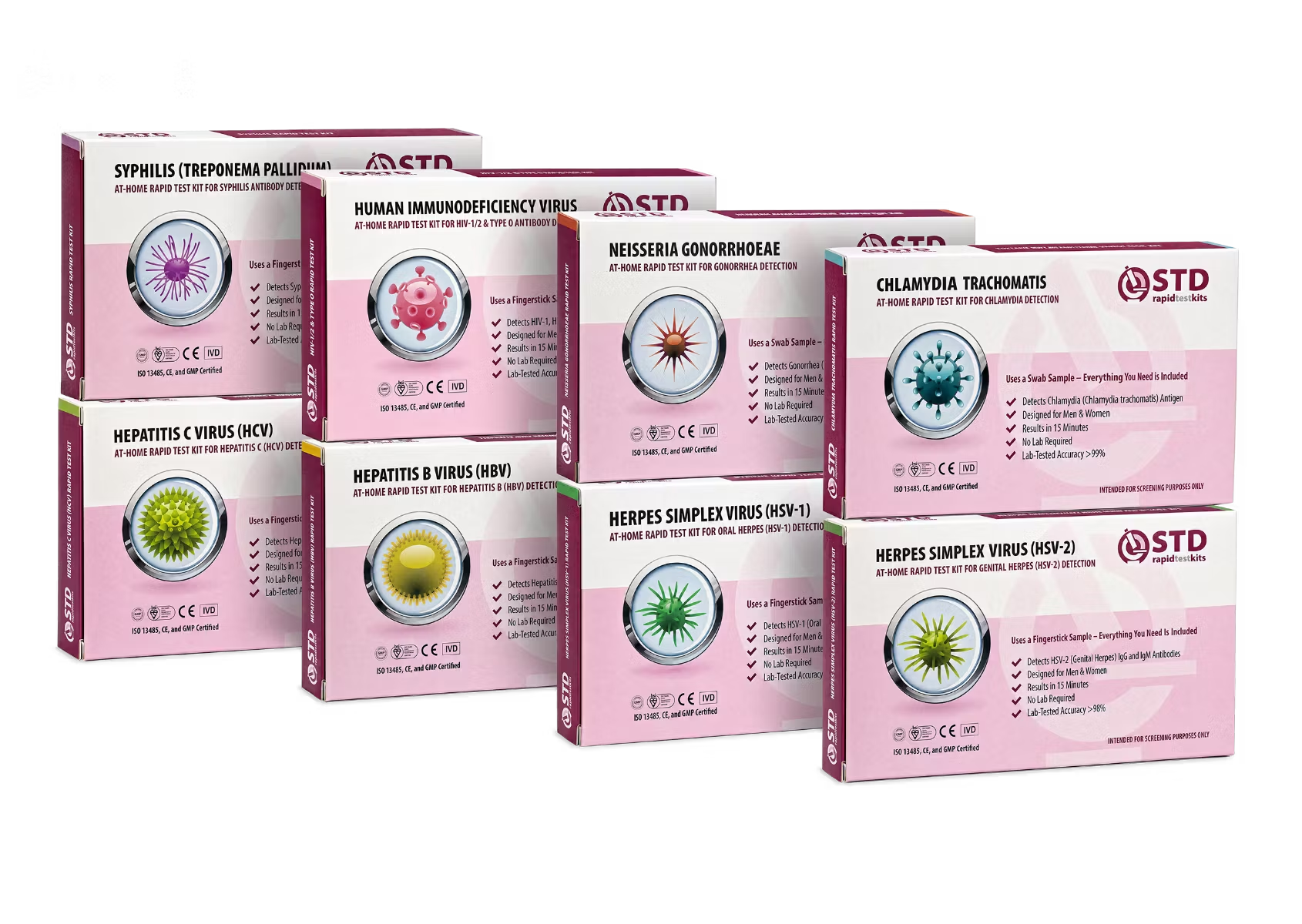
For the periods when clinic access is harder (travel, between jobs, insurance transitions), combining professional follow-ups with private at-home screening helps keep the rhythm intact. A combination at-home STD kit can confirm bacterial and bloodwork status privately and quickly. Use the result as bridging data, then close the loop with a clinic visit for the kidney panel and the HIV test that supports prescription renewal.
Three concrete habits that keep PrEP testing on track
- Book your next lab appointment before you leave the clinic, while the receptionist is still in front of you.
- Set a phone reminder one week before the appointment and one day before, to absorb scheduling churn.
- Keep a rapid at-home kit in a drawer for gap weeks (travel, insurance transitions, missed appointments) so you can confirm status while you reschedule.
You Deserve Protection Without Panic
Being on PrEP is a deliberate prevention choice. The testing schedule that comes with it is the maintenance system that keeps the protection strong: HIV testing every three months, STD screening every four to six months based on risk, and kidney function checked every six to twelve months.
If staying on track feels overwhelming, set automated reminders and keep a rapid at-home kit in a drawer for gap weeks. Keep conversations honest with your provider, even when the questions feel awkward. Prevention is about staying in control of the information your body would otherwise keep quiet.
HIV test every 3 months. Bacterial STI screen every 4 to 6 months based on risk. Kidney function (eGFR) every 6 to 12 months. Stay inside those three rhythms and PrEP does its job.
Frequently asked questions about PrEP testing
- Do I really have to test every 3 months on PrEP, even if I feel fine?
- Yes. The quarterly HIV test confirms the protection is still working and catches any rare breakthrough before it can drive resistance. Early HIV infection is often silent, which is exactly why the schedule runs on a fixed interval rather than waiting for symptoms to appear.
- What if I haven't had sex in several months?
- If your risk has genuinely paused (no partners, no exposures), some providers will adjust the STD screening interval. HIV testing every three months remains standard while you're actively prescribed PrEP. If you're not sexually active at all, talk to your provider about pausing PrEP entirely rather than stretching the testing rhythm.
- Can PrEP affect my HIV test results?
- Modern fourth-generation HIV tests remain accurate during PrEP use. The schedule runs quarterly because, in the rare breakthrough scenario, catching it within weeks rather than months is what allows treatment to start before resistance can develop.
- What if I missed my 3-month appointment and kept taking my pills?
- Schedule testing as soon as you can. Most providers won't refill without updated labs, but being a few weeks late is a scheduling issue, not a clinical emergency. The clinic can usually fit you in within days. If clinic access is the barrier, a rapid at-home HIV test can confirm status while you book the follow-up your refill requires.
- Do I really need throat or rectal swabs? That feels like a lot.
- If you've had oral or anal sex, yes. Pharyngeal gonorrhea and rectal chlamydia are often completely asymptomatic, and urine-only testing will miss them. Skipping those sites is like locking the front door but leaving the back door wide open.
- What if I test positive for an STI while on PrEP? Did something go wrong?
- No. PrEP only prevents HIV. A positive chlamydia, gonorrhea, or syphilis result usually means routine testing caught the infection early, which is exactly what the schedule is designed to do. Treatment is typically a short course of antibiotics, and most bacterial STIs are fully curable.
- How long can I realistically stay on PrEP?
- As long as your HIV risk continues and your kidney labs stay healthy. Some people use PrEP for a season. Others for a decade. There's no fixed maximum duration stamped on responsible prevention.
- What's the simplest way to stay on schedule without stressing about it?
- The leverage point is the booking moment itself. Most scheduling failures happen in the gap between thinking 'I should book that' and actually booking it, so closing that gap before you walk out of the current visit removes about 80 percent of the friction. For weeks when travel or insurance switches derail the plan anyway, a rapid at-home kit lets you confirm status privately while you sort the clinic visit your refill requires.
- U.S. Centers for Disease Control and Prevention. PrEP clinical guidance covering the quarterly HIV testing requirement, bacterial STI screening intervals (every 4 months for gay and bisexual men; every 6 months for all sexually active persons), and kidney function monitoring.
- U.S. Centers for Disease Control and Prevention. HIV testing overview, including detection windows by assay generation (lab antigen/antibody 18-45 days; rapid antigen/antibody 18-90 days; NAT 10-33 days).
- U.S. Centers for Disease Control and Prevention. STI screening recommendations, including anatomical-site (oral/rectal) screening guidance for sexually active populations.
- U.S. Centers for Disease Control and Prevention. STI treatment guidelines covering current first-line regimens for chlamydia, gonorrhea, and syphilis.
- HIV.gov. Pre-Exposure Prophylaxis (PrEP) overview for patients, including who it is for and how it fits into broader HIV prevention.
