Published: October 2025 | Last updated: May 2026 | Editorial review and quality control: Martina N.
The 2025 UNAIDS World AIDS Day report does not soften the picture. Titled Overcoming Disruption, Transforming the AIDS Response, it tells the world that years of falling funding and tightening laws are pulling apart the global response to HIV. Some of the gains made over two decades have slowed. In several countries, they have reversed.
If PrEP has gotten harder to find where you live, or you have noticed a local testing van disappear, this report puts your experience inside the global picture. Below is what it says, what it leaves out, and how it should change your own decisions about testing and prevention in 2026.
Key Takeaways
- The UNAIDS 2025 World AIDS Day report names three forces working against HIV services at the same time: funding cuts, criminalization laws in over 130 countries, and disrupted PrEP and testing supply chains.
- Self-testing is one of the few growing pieces of the response, but every positive result still needs confirmatory testing and a path to care, which is the part the report says is now fragile in many regions.
Why This Year's Report Lands Differently
Every World AIDS Day comes with a UNAIDS report. The 2025 edition is the one that does not try to soften the picture. UNAIDS calls it the most significant setback to the global HIV response in decades, naming three pressures stacked on top of each other: international funding falling below pre-pandemic levels, anti-LGBTQ+ and anti-sex-work laws spreading in dozens of countries, and supply lines for prevention tools that no longer reliably reach the people who need them.
WHO data covering 2024 counts roughly 1.3 million new HIV infections globally and about 630,000 HIV-related deaths in that single year, with 40.8 million people living with HIV worldwide (WHO HIV fact sheet, 2025). About 87% of people with HIV know their status and 77% are on antiretroviral treatment. Progress on each of those numbers slowed in 2024 compared with the prior decade, and several countries that had recorded steady year-on-year declines in new infections logged their first uptick in years (UNAIDS 2025 World AIDS Day report).
Roughly 1.3 million new HIV infections globally and 630,000 HIV-related deaths in 2024, with 40.8 million people living with HIV worldwide (WHO HIV fact sheet, 2025). About 87% of people with HIV know their status and 77% are on antiretroviral treatment, the first time those gains have measurably slowed in over a decade.
What Is Being Cut: PrEP, Testing, and Peer Support
The report goes line by line through what is disappearing. Oral PrEP, the daily pill that lowers HIV risk substantially when taken consistently, has had supply disruptions in dozens of low- and middle-income countries. Injectable PrEP options that started rolling out in 2024 are reaching far fewer people than initial plans projected. Partner services, the work clinicians do to notify and offer testing to sexual contacts of a new diagnosis, have lost staff and budget in several regions.
Community testing has taken a particularly hard hit. Mobile vans, evening clinics, and peer-led drop-in centers, the parts of the system that meet people outside business hours and outside formal clinics, are operating part-time or have closed entirely. The CDC describes how PrEP works and how often it should be paired with testing in its current guidance (CDC, How PrEP Helps Prevent HIV). The UNAIDS report's point is that the infrastructure delivering both of those things is the part now hollowing out.
That matters because peer-led testing was often the only entry point for people who do not feel safe in formal clinic settings. When peer testers stop showing up, the people they reached do not show up at clinics instead. They stop testing.
The table below, drawn from the UNAIDS 2025 World AIDS Day Report, summarizes the service disruptions UNAIDS documents and the populations most affected.
| Service Type | Reported Status in 2025 | Populations Most Affected |
|---|---|---|
| Oral PrEP access | Supply disrupted in 38+ countries | Young women, MSM, transgender individuals |
| Injectable PrEP rollout | Far behind projected uptake | High-risk groups in low- and middle-income regions |
| Mobile and peer HIV testing | Suspended or reduced in 24+ regions | Rural populations, sex workers, key-population networks |
| Community drop-in centers | Closed or part-time hours | LGBTQ+ youth, people who use drugs |
| Partner-notification services | Staff cuts in multiple regions | Newly diagnosed and their sexual contacts |
Criminalization Is the Other Half of the Crisis
The report names more than 130 countries that criminalize some aspect of HIV-related behavior. Same-sex relationships, sex work, drug use, and in some jurisdictions HIV transmission itself, are treated as crimes that can lead to fines, prison, or worse. In several countries with already restrictive laws, the past two years brought new ones.
UNAIDS calls the pattern a double bind: legal barriers push people out of services, then the absence of those people in clinic records is used to argue demand is low, which is then used to justify further cuts. Outreach teams have stopped working in districts where police harassment escalated. Some health workers have refused care citing personal beliefs. Trans-affirming centers have lost public grants and either closed or shifted to out-of-pocket models that most patients cannot afford.
That pattern changes where clinics can operate, who they can serve, and whether someone with symptoms or a recent exposure walks through the door at all. UNAIDS's central recommendation is decriminalization of consensual adult behavior and legal protection for community-led services. Public-health programs operating in restrictive legal environments report higher loss-to-follow-up rates than peers in less restrictive jurisdictions, a pattern the 2025 report documents across multiple regions.
Same-sex relationships, sex work, drug use, or HIV transmission itself remain criminal offenses in more than 130 jurisdictions (UNAIDS 2025 World AIDS Day Report). In each, the prospect of arrest is itself a deterrent to testing and treatment, before any clinical barrier ever appears.
When the System Fails, Communities Still Respond
Alongside the bleak data, the report documents what people are doing without official permission. Networks of HIV-positive parents have organized informal PrEP education after local clinics closed. Queer-owned bookstores and barbershops stock self-testing kits as a regular offering. Volunteer-run channels on Telegram, WhatsApp, and Discord receive anonymous requests for test kits and mail them out in unmarked envelopes.
These efforts are not formal programs. They have no procurement pipeline, no data system, and no guarantee of continuity if a single organizer burns out. UNAIDS is careful to call this what it is: a patchwork response filling a gap left by an eroding formal system, rather than a substitute for it. Volunteers run out of supplies. Police interest can shut a network down.
The report's framing of this informal layer is two-sided. It is genuinely lifesaving for the people it reaches, and it is fragile. Because most of this work happens off the books, it generates no data that policymakers can point to when budgets come up again.
Resilience, investment and innovation combined with global solidarity still offer a path to end AIDS.
Self-Testing: Real Upside, Real Limits
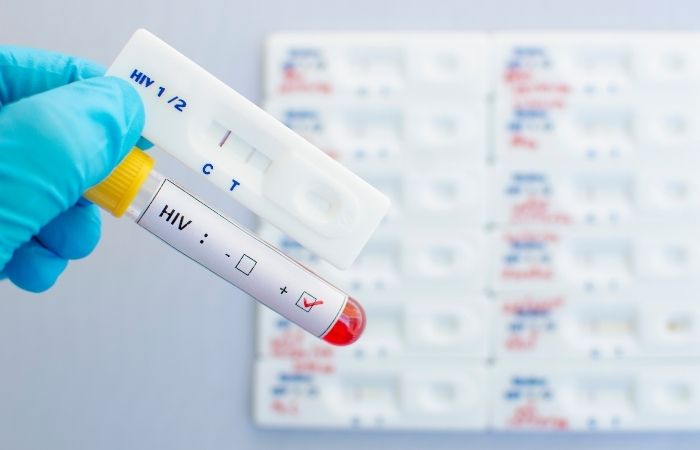
One of the more hopeful threads in the report is the steady rise of HIV self-testing. In regions where local policy supports it, uptake has climbed each year. Rapid lateral-flow kits return a result in about 15 to 20 minutes from a fingerstick blood sample or an oral swab, at home, without explaining yourself to a provider. For people who avoid clinics because of cost, stigma, distance, or fear of legal exposure, self-testing genuinely changes access.
The report names one limit clearly. A positive self-test is the start of a process, rather than the end of it. The kit cannot link a person to confirmatory testing, treatment, or partner notification on its own. In places where formal services have weakened, a positive result can leave someone stranded with a high-stakes answer and no obvious next step.
UNAIDS recommends that any rollout of self-testing be paired with at least one form of linkage: a hotline number printed on the kit, a text service, a telehealth pathway, or a referral list to community organizations that can confirm and connect to care. Where that pairing exists, uptake has climbed in step with availability. Where linkage is missing, the report notes regions where self-test sales rose while clinic-confirmed diagnoses fell, a signal that positive results are not always reaching care. Table 2 below outlines the regional pattern.
| Region | Self-Test Availability | Formal Linkage to Care | Report Outlook |
|---|---|---|---|
| Sub-Saharan Africa | High in urban areas, growing in rural | Variable by country | Cautiously optimistic where policy supports it |
| Latin America | Moderate and expanding | Mostly informal or community-led | Needs policy support |
| North America | Wide availability online and in stores | Limited in low-income and rural areas | Stalled by stigma and cost |
| Asia-Pacific | Mixed, country by country | Improving via NGO-led efforts | Promising but fragile |
| Eastern Europe and Central Asia | Limited, often informal | Frequently disrupted by legal environment | High concern |
When to Test, and How to Think About Window Periods
Testing too early after a possible exposure is a real risk, and the report repeats the point. The body needs time to produce enough antibodies, or enough viral protein, for a test to detect HIV. That gap is the window period, and it depends on which test you use.
The CDC publishes specific ranges. Rapid antibody tests are typically reliable between 23 and 90 days after exposure. Rapid antigen and antibody tests, the fourth-generation type, can detect HIV between 18 and 90 days. Laboratory antigen and antibody tests work between 18 and 45 days. Nucleic acid tests, the most sensitive, can pick up infection as early as 10 to 33 days (CDC, HIV Testing).
For most people using an at-home rapid antibody test after a possible exposure, the practical advice is: a negative result before three weeks is not a final answer. Test again at six weeks. If the exposure was high-risk, or if symptoms appear in the first month (fever, swollen lymph nodes, rash, sore throat), retest at 12 weeks for full confidence. Anyone already taking PrEP follows a different rhythm: routine HIV testing as recommended by their provider, typically every one to three months while on prophylaxis (CDC PrEP page).
Retesting is the standard practice that the math of detection asks for. The 2025 report flags that more people now have to keep that schedule on their own, without the clinic appointments that used to anchor it.
Disclosure: this site sells the at-home rapid kits described below. The editorial guidance above is independent of any purchase.
If You Test Positive and Your Usual Clinic Is Gone
The single hardest scenario the report describes is the one where someone gets a positive self-test result and the system they would have called no longer exists. UNAIDS lays this out as the central failure point in regions where formal services have eroded.
A few practical things stay true no matter where you are. A positive rapid HIV test is a screening result, rather than a final diagnosis. Every positive needs confirmatory testing through a clinic, telehealth provider, or laboratory before treatment decisions begin. Modern antiretroviral therapy, taken consistently, lowers viral load to undetectable levels in most people within a few months. Undetectable viral load means the virus cannot be transmitted sexually, a finding now summarized in public-health communications as U equals U.
If your usual local resources are not available, the report's recommendation is to widen the search before giving up. Telehealth HIV care now exists in many countries, sometimes funded by NGOs and routed through web search rather than physical signage. Reddit forums, regional WhatsApp groups, and LGBTQ+ community organizations in nearby cities often maintain lists of providers actively taking new patients. Confirmatory follow-up may take a few extra steps, but it remains accessible in most places if you give yourself time to look.
Do not stop at the screening result. Confirm, link to care, and start treatment as soon as confirmation is done.
Can the World Still End AIDS by 2030?
For two decades, the global goal has been to end AIDS as a public-health threat by 2030. That phrasing has a specific meaning: cut new infections to a level the world can sustain, get everyone living with HIV onto effective treatment, and dismantle the legal barriers that keep people from care. UNAIDS does not declare the 2030 goal dead in the 2025 report, but it stops describing the world as on track to meet it.
Several targets were already behind schedule before the pandemic. COVID-19 disrupted clinic visits and supply chains. The funding pullback that followed never fully reversed. The current legal and political environment in dozens of countries layers a new obstacle that the original plan did not factor in.
What the report does instead is push for a transformation of the response itself. That means rebuilding services from the community up, funding them with continuity in mind rather than year-to-year crisis budgeting, and treating human-rights protections as core infrastructure rather than soft talking points. UNAIDS frames the path as still open if those conditions hold, while acknowledging that recovering the lost momentum will take years of consistent investment.
That distinction matters for readers: the 2030 question lives in international budgets and ministries, while the individual choices that affect HIV outcomes, testing within a window period, staying current on PrEP, talking with partners about recent results, work the same way they did in 2019.
What This Report Means for You
The next time you need testing, PrEP, or partner services, those services may be harder to find than they were two years ago. That is the practical takeaway of the report for any individual reader.
What still works is the basic playbook. If you have had a possible exposure, test within the window period for the kit you are using and follow up at six to 12 weeks for full confidence. If you are eligible for PrEP and have a way to get it, do not let inertia delay the start. If you have a regular partner, a routine conversation about recent testing is worth more than any new product. If you do test positive, confirm, breathe, and find a provider; treatment in 2026 is genuinely effective and supports a full life.
The system around HIV care is more fragile than it was in 2019. The basic decisions a person can make to protect their own health, however, have not changed much. The 2025 UNAIDS report asks readers to know that the system is under pressure and to act accordingly: test on time, look harder when local options shrink, and pass good information along to anyone who might be putting off a decision they cannot afford to delay.
Frequently Asked Questions
- Has HIV prevention actually gotten worse in 2025 and 2026?
- In measurable ways, yes, according to the UNAIDS 2025 World AIDS Day report. International funding for HIV programs has fallen below pre-pandemic levels, PrEP supply has been disrupted in dozens of countries, and community-led testing has been reduced or paused in many regions. UNAIDS describes the change as the most significant setback to the global HIV response in decades, even as treatment for people already in care continues to work well.
- My local PrEP clinic closed. What are my options?
- Start with telehealth. PrEP can often be prescribed via video visit, with labs done at a local draw site and pills mailed to your address. National LGBTQ+ health organizations, online community forums, and state or city health departments maintain referral lists for providers still taking new patients. The CDC's current guidance covers both daily oral PrEP and the longer-acting injectable option (<a href="https://www.cdc.gov/hiv/prevention/prep.html" target="_blank" rel="noopener">CDC PrEP page</a>), and most telehealth services follow that protocol.
- Are at-home HIV tests accurate?
- Reliable when used correctly, with caveats. At-home rapid HIV tests are lateral-flow immunoassays designed for self-use, a different technology from laboratory NAAT testing, and they work well as screening tools once you are past the window period. A positive at-home result should always be confirmed at a clinic or laboratory before any treatment decisions. A negative result inside the window period does not rule out infection and needs to be retested later.
- How long after a possible exposure should I test?
- For a standard at-home rapid antibody test, wait at least 23 days before testing and retest at six weeks if you want stronger confidence. By test type, the CDC's published window periods are: NAT 10 to 33 days; antigen/antibody lab test 18 to 45 days; rapid antigen/antibody test 18 to 90 days; antibody-only rapid test 23 to 90 days (<a href="https://www.cdc.gov/hiv/testing/" target="_blank" rel="noopener">CDC HIV testing page</a>). If symptoms appear in the first month, or the exposure was high-risk, a final retest at 12 weeks is worth it.
- What does the UNAIDS report mean for someone not in a key population?
- More than you might expect. The report's central point is that when services for the most affected groups erode, the broader system loses capacity that everyone else relied on too. Mobile testing, community clinics, and after-hours services all came from the same infrastructure. If you live in a region where those services are now thinner, the practical effect is fewer convenient ways to test, longer waits at remaining clinics, and more administrative friction.
- Why does the report focus so much on laws and criminalization?
- Because in more than 130 countries, some aspect of HIV-related behavior is criminalized: same-sex relationships, sex work, drug use, or HIV transmission itself. When identity or behavior is illegal, people stop testing and stop seeking care because doing so could expose them to arrest. UNAIDS frames this as a structural problem in the response itself, rather than a side issue. Public-health programs cannot reach people who have a legal reason to avoid them.
- If I test positive, what do I do first?
- Confirm before anything else. A positive at-home rapid test is a screening result, not a diagnosis. Schedule a confirmatory test through a clinic, telehealth provider, or community organization. Once confirmed, antiretroviral therapy works extremely well: most people on consistent treatment reach an undetectable viral load within a few months, which means the virus cannot be transmitted sexually. Connect with a clinician who can manage your specific situation, and give yourself the time to ask questions.
- UNAIDS. 2025 World AIDS Day Report, Overcoming Disruption, Transforming the AIDS Response. Released November 25, 2025; describes funding, criminalization, and service-disruption findings cited throughout this article.
- UNAIDS. 2025 Global AIDS Update, AIDS, Crisis and the Power to Transform. Companion mid-year analysis with the underlying epidemiological and programmatic data.
- World Health Organization. HIV fact sheet (2025). Source for the 40.8 million people living with HIV, 1.3 million new infections, and 630,000 HIV-related deaths in 2024.
- U.S. Centers for Disease Control and Prevention. HIV Testing overview, including specific window-period ranges for rapid antibody, rapid antigen and antibody, laboratory antigen and antibody, and nucleic acid (NAT) tests.
- U.S. Centers for Disease Control and Prevention. How PrEP Helps Prevent HIV. Source for daily oral PrEP and longer-acting injectable PrEP guidance referenced in the testing-frequency and access sections.
- U.S. Centers for Disease Control and Prevention. HIV Basics, the agency's general landing page on HIV transmission, treatment, and U equals U.
