Published: August 2025 | Editorial review and quality control: Martina N.
Getting an HPV result at a prenatal visit can land like a small earthquake. The pap comes back abnormal, or the provider mentions HPV in passing, and suddenly the pregnancy feels less routine and more like something to worry through. For most people in this exact situation, the diagnosis changes very little about how the pregnancy will go.
HPV is the most common sexually transmitted infection in the United States. The CDC notes that the majority of sexually active people will acquire some strain of HPV at some point, and most never know they had it (CDC STI treatment guidelines, HPV). Pregnancy didn't cause the infection. Prenatal care just happens to include cervical screening, which is when it tends to get picked up.
Key Takeaways
- Vertical transmission of HPV from parent to baby is rare, and most pregnancies with HPV proceed normally with vaginal delivery still on the table.
- Treatment of HPV-related cervical changes is usually deferred until after delivery; the focus during pregnancy is monitoring, not procedures.
Why an HPV Result at a Prenatal Visit Feels Heavier Than It Is
Getting this news might land at the start of a first pregnancy, after years between pap smears, or inside a relationship that is still building trust, and all of those settings shape how the result feels even when the clinical picture is manageable. The label can carry shame, second-guessing, and the urge to scan recent history for explanations, even when the biology is much less personal than it sounds.
Public-health context helps. HPV is so common that most sexually active adults will carry a strain at some point. Most clear it without ever knowing it was there. Pregnancy doesn't transform a routine virus into a dangerous one. It just means screening happened, and screening, by design, finds things that were already present.
This article is for anyone who has just been told about HPV during pregnancy and wants a calm map of what comes next: what it can mean for the body, the baby, the birth plan, and the months after delivery. It is summary, not personal medical advice. Anything specific should go through the OB-GYN who knows the full prenatal picture.
Most HPV-positive pregnancies end with a planned vaginal birth and a healthy baby. Prenatal screening found something that was already there, not something new, and the standard plan focuses on monitoring rather than urgent treatment.
Understanding HPV: Types, Symptoms, and What Pregnancy Changes
HPV is not one virus. It is a family of more than 150 related viruses, and they don't all behave the same way. Some strains cause genital warts (most commonly types 6 and 11). Others, called high-risk strains (notably 16 and 18), are linked over time to cervical cell changes and cervical cancer (National Cancer Institute, HPV and Cancer). The strain category drives whether the conversation with the OB-GYN is about monitoring, treatment, or simple watchful waiting.
Pregnancy itself shifts the immune environment. The body softens its immune response so it does not attack the developing fetus. One side effect is that dormant infections, including HPV, can become visible. Existing warts may multiply. A pap that was normal pre-pregnancy can show low-grade abnormalities. This is the immune system temporarily standing down, rather than the virus becoming more aggressive.
| HPV Type | What May Show Up in Pregnancy | Practical Risk to Baby |
|---|---|---|
| Low-risk (types 6, 11) | Genital warts may enlarge or multiply | Very low; vaginal delivery is usually still appropriate |
| High-risk (types 16, 18, others) | May show as abnormal cervical changes on pap | Extremely rare transmission; concern is long-term cervical health, not the baby |
| Inactive or latent | No visible symptoms, no active shedding | None |
Can You Pass HPV to Your Baby? The Real Risk Breakdown
This is usually the first browser search after the diagnosis: can the baby catch HPV during birth? The answer, almost always, is no in any meaningful way. According to patient guidance from the American College of Obstetricians and Gynecologists (ACOG), vertical transmission from a pregnant parent to a newborn does occur at low rates, but it almost never causes symptoms in the child. Babies born to parents with high-risk HPV or visible genital warts are typically completely healthy.
The rare outcome people sometimes read about is recurrent respiratory papillomatosis, in which HPV causes warts to grow in a child's airway. This is exceptionally uncommon. It is associated with low-risk HPV types 6 and 11, not with the high-risk strains that show up as cervical cell changes on a pap, and it is not a reason to choose a cesarean over a vaginal delivery in the absence of other indications.
A cesarean is sometimes recommended for HPV reasons only when genital warts are so large they physically obstruct the birth canal or would bleed heavily during a vaginal delivery. That is a narrow, anatomical decision, not a default policy for anyone HPV-positive. Most pregnancies with HPV end with a planned vaginal birth, exactly as they would have without the diagnosis.
Can I pass HPV to my baby?
In nearly every case, no. Vertical transmission of HPV is uncommon, and even when the virus is detected in newborns, symptoms are extremely rare. Recurrent respiratory papillomatosis (warts in a baby's airway) is the worst-case outcome and is exceptionally unusual. Standard practice is to plan a vaginal delivery unless warts physically obstruct the birth canal.
When You Might Need Monitoring or Treatment
Most HPV in pregnancy does not need active treatment. The default is to monitor. If the pap is abnormal, the OB-GYN may recommend a colposcopy, a closer in-office look at the cervix with magnification. Per ACOG patient guidance on HPV in pregnancy (acog.org), colposcopy itself is safe during pregnancy, and when the colposcopy looks reassuring or shows only low-grade changes, biopsy and treatment are usually deferred until after delivery.
For genital warts, the calculus is similar. Small, asymptomatic warts are often left alone until postpartum, when the immune system rebounds and many regress on their own. Larger or symptomatic warts can be treated during pregnancy using methods that are considered safe in this setting, such as cryotherapy (freezing) or careful surgical removal. Harsh chemical options like podophyllin are avoided because of fetal-safety concerns.
| Situation | Usual Approach During Pregnancy |
|---|---|
| Abnormal pap during prenatal care | Colposcopy to assess cervical cells; biopsy only if specifically indicated |
| Visible genital warts causing symptoms | Cryotherapy or surgical removal; harsh topicals avoided |
| HPV detected, no symptoms, no abnormal cells | Routine monitoring; postpartum follow-up pap |
Can Pregnancy Make HPV Worse?
Sometimes the picture gets temporarily noisier. Pregnancy hormones and a softer immune response can let dormant HPV resurface. New warts may appear. An old pap that read normal can come back with low-grade abnormalities. Those changes look alarming on paper and tend to be much less alarming in context.
Most of these pregnancy-related cell changes regress on their own after delivery, as the immune system returns to its non-pregnant baseline. The National Cancer Institute notes that the large majority of HPV infections clear within one to two years (NCI, HPV and Cancer). Pregnancy is one slice of that timeline, not a separate disease state.
The catch is that monitoring still matters. Deferred is not ignored. Postpartum follow-up confirms whether the changes resolved on their own or need further attention.
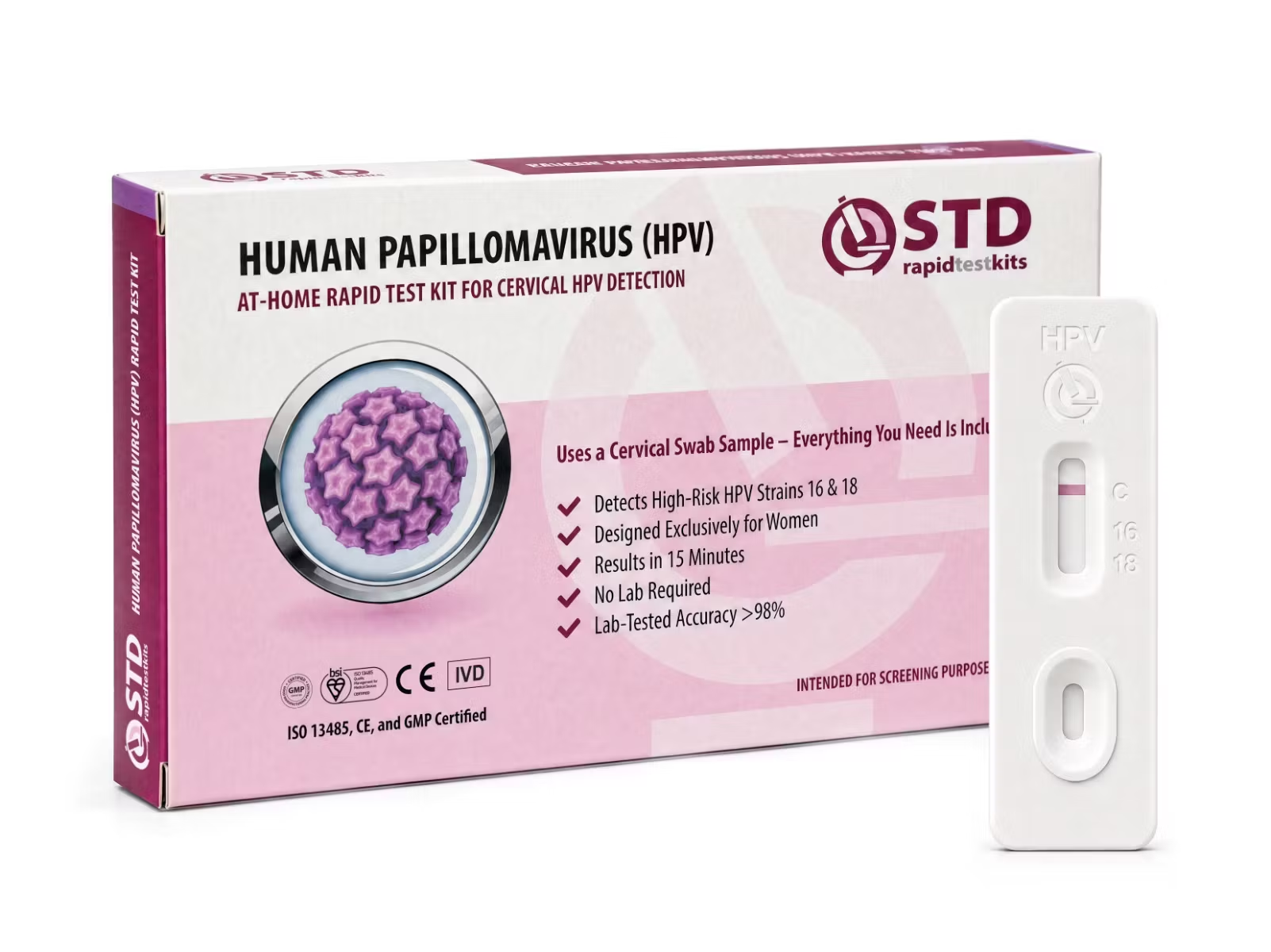
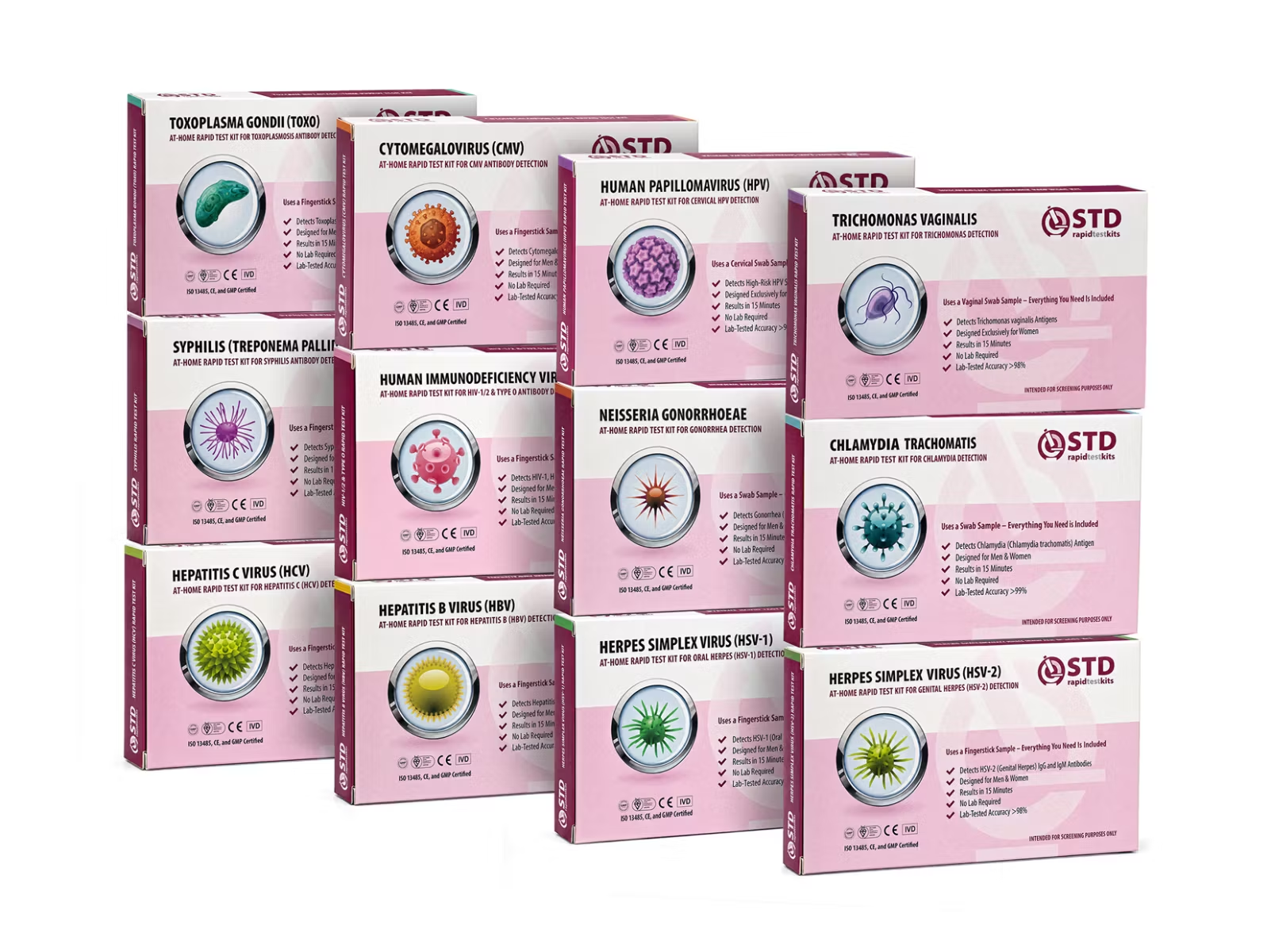
This site is stdrapidtestkits.com, which sells at-home rapid STI tests, including the HPV home kit described below. We recommend products based on fit for the reader's concern, not commercial benefit.
When the Pap Smear Comes Back Abnormal: What That Conversation Usually Sounds Like
Clinicians describe a pattern that plays out in prenatal clinics every week. A first-time parent comes in around 10 to 12 weeks for the routine pap. A few days later the office calls back: high-risk HPV detected, mild cervical changes (ASCUS or LSIL). The room often gets very quiet on the phone.
What happens next is usually less dramatic than the call sounds. The provider schedules a colposcopy, often around 12 to 16 weeks, to confirm that the changes are low-grade. If the lesions look minor, biopsy and treatment are deferred to after delivery. Vaginal birth stays on the plan. A follow-up pap goes on the calendar for roughly six to twelve weeks postpartum. Many of those follow-up paps come back normal, because the underlying changes were pregnancy-related and resolved naturally.
The reason this pattern is so common is structural, not personal. Cervical screening during pregnancy catches things that would have been caught anyway, just on a different schedule.
How to Talk to Your Partner Without Spiraling
HPV brings emotional baggage. Some of it is fear. Some of it is the assumption that a positive result means recent exposure. The biology is less neat than that. HPV can stay dormant for years, sometimes a decade or more, before becoming detectable. The question of who gave it to whom is rarely answerable, and the search usually causes more harm than it resolves.
What partners actually need to know is functional, not forensic. There is no routine HPV screening test for people without a cervix, which means a partner with a penis usually cannot be tested in a clinically meaningful way. If they have visible warts or symptoms, those can be assessed and treated; otherwise the recommendation is the same one that applied before pregnancy, which is to keep up with their own primary-care screening.
"My prenatal pap came back showing HPV. It is really common, most people who have it never know, and the OB-GYN already has a plan. I wanted to be upfront so we can ask questions together."
Breastfeeding, Vaccines, and Long-Term Care After Delivery
Breastfeeding is safe with HPV. The virus does not transmit through breast milk. Even with active warts or cervical changes, nursing is not considered risky for the baby. The only exception is the unusual scenario of warts on the breast itself, in which case the provider may suggest pumping from that side until it resolves.
The HPV vaccine is a different question. It is not given during pregnancy as a precaution, even though available safety data are reassuring (WHO Global Advisory Committee on Vaccine Safety, HPV vaccines). The CDC recommends the HPV vaccine for eligible people through age 26, with shared clinical decision-making for vaccination through age 45 for those who weren't vaccinated earlier (cdc.gov). It is safe and offered postpartum for eligible people, including during breastfeeding. The vaccine does not clear an existing infection. What it can do is protect against strains a person hasn't yet been exposed to.
Retesting After Delivery: The Quiet Part Nobody Mentions
Postpartum follow-up is where loose ends get tied. Most OB-GYNs schedule a repeat pap somewhere between six and twelve weeks after birth, or sometimes a little later if the pregnancy was complicated. The point is to see what is left after the immune system finishes recalibrating.
If the original abnormality was low-grade, the follow-up pap usually shows resolution or further improvement. If it doesn't, the next step is typically another colposcopy, this time with biopsy if appropriate, since the pregnancy-specific reason to defer is no longer in play.
Long-term, regular paps and HPV co-testing remain the backbone of follow-up care. The cervix is one of the few cancers that public-health systems can routinely catch in a precancerous, fully treatable state, which is why providers keep the screening schedule active for years after a positive result.
| Postpartum Scenario | Typical Retest Timing |
|---|---|
| HPV-positive, pap normal | Repeat pap and HPV co-test 6 to 12 months after delivery |
| Low-grade cervical changes during pregnancy | Repeat pap 6 to 12 weeks postpartum, then annual monitoring |
| High-grade changes during pregnancy | Colposcopy with biopsy and treatment planning after delivery |
What If You Still Test Positive After Pregnancy?
HPV can linger. A follow-up pap that still shows the virus is not a sign of failure. It is the natural curve of an infection that, for most people, takes one to two years to clear, with some types taking longer. The persistence itself is not the danger; uncontrolled, undetected cell changes are. Showing up for follow-up is what catches anything that is moving in the wrong direction.
If abnormalities persist, the provider may recommend a colposcopy and biopsy, and in some cases a procedure called LEEP (loop electrosurgical excision procedure) or cryotherapy to remove abnormal cells. These are preventive procedures with high success rates, done before the situation becomes urgent. They exist precisely so that high-risk HPV does not turn into something more serious later.
HPV is so common that nearly all sexually active people will get the virus at some point in their lives. Most HPV infections (9 out of 10) go away by themselves within two years.
You Deserve Answers, Not Assumptions
An HPV result during pregnancy is a clinical signal, one the care team is already equipped to manage. Most pregnancies in this situation are uneventful, most babies are born healthy, and most cervical changes that show up during prenatal care either resolve on their own or are handled cleanly after delivery. The plan is monitoring, follow-up, and routine vaccination conversations on the back end.
If a quieter postpartum sexual-health check would help, an at-home kit is one private option alongside clinic-based screening. It does not replace the OB-GYN visits that catch the things screening was designed to catch.
Next steps
- Keep the postpartum pap appointment that your OB-GYN sets, usually six to twelve weeks after birth.
- Ask about HPV vaccine eligibility at that visit; it is offered postpartum, including during breastfeeding.
- Consider an at-home HPV self-swab kit for monitoring between scheduled clinic visits.
FAQs
- Can I pass HPV to my baby?
- Transmission to a newborn during birth is uncommon, and even in the rare cases where the virus is detected, clinical symptoms almost never follow. Recurrent respiratory papillomatosis is the extreme outlier, not the expected outcome. Vaginal birth stays on the standard plan unless warts physically obstruct the canal.
- Will my HPV require a C-section?
- Usually not. A cesarean is sometimes recommended for HPV reasons only when genital warts physically obstruct the birth canal or would bleed heavily during a vaginal delivery. Simply being HPV-positive, including with a high-risk strain, does not change a typical delivery plan.
- Can I breastfeed if I have HPV?
- Yes. HPV does not transmit through breast milk. Even with active cervical disease or genital warts, breastfeeding is considered safe. The only narrow exception is warts on the breast itself, in which case a provider may suggest pumping from that side until it clears.
- Will HPV get worse during pregnancy?
- It can look worse temporarily. Pregnancy softens the immune response, so dormant HPV may resurface, warts may grow or multiply, and a previously normal pap may show low-grade changes. Most of this regresses after delivery as the immune system returns to baseline.
- Does my partner need to be tested?
- There is no routine HPV screening test for people without a cervix, so a partner with a penis usually cannot be tested in a clinically meaningful way. They should keep up with their own primary-care screening, and any visible warts or symptoms can be evaluated separately. A calm, blame-free conversation is more useful than a search for the source.
- Can I get the HPV vaccine while I am pregnant?
- The HPV vaccine is not given during pregnancy as a precaution, even though existing safety data are reassuring. It is safe and recommended postpartum for eligible people, including during breastfeeding. The vaccine does not clear an existing infection, but it can protect against strains a person has not yet been exposed to.
- Does HPV increase the risk of miscarriage?
- Current evidence does not show a meaningful link between HPV and miscarriage. The OB-GYN may monitor cervical changes more closely, but HPV itself is not considered a pregnancy-loss risk factor.
- Should I tell future providers I had HPV during pregnancy?
- Yes. It helps them track the screening schedule and confirm whether any pregnancy-related cell changes resolved or persisted. It is a useful piece of medical history, not a confession, and providers integrate it routinely into long-term cervical care.
How we sourced this article: Our article was constructed based on current advice from leading public-health and medical organizations, including the U.S. Centers for Disease Control and Prevention, the American College of Obstetricians and Gynecologists, the National Cancer Institute, and the World Health Organization. We then translated that guidance into plain language for someone reading after a prenatal appointment. We are an editorial team, not a clinical practice; this is summary, not personal medical advice.
- U.S. Centers for Disease Control and Prevention. STI Treatment Guidelines, Human Papillomavirus (HPV) infection. Used for general HPV epidemiology, transmission, and clinical management framing.
- U.S. Centers for Disease Control and Prevention. Used for current HPV vaccine recommendations, routine vaccination age range, postpartum eligibility, and breastfeeding compatibility.
- National Cancer Institute. HPV and Cancer. Used for natural-history figures, clearance rates, and high-risk strain context.
- American College of Obstetricians and Gynecologists (ACOG). Used for pregnancy-specific colposcopy, biopsy, and delivery recommendations regarding HPV infection.
- World Health Organization. Global Advisory Committee on Vaccine Safety, HPV vaccines. Used for pregnancy-and-vaccine safety framing.
