





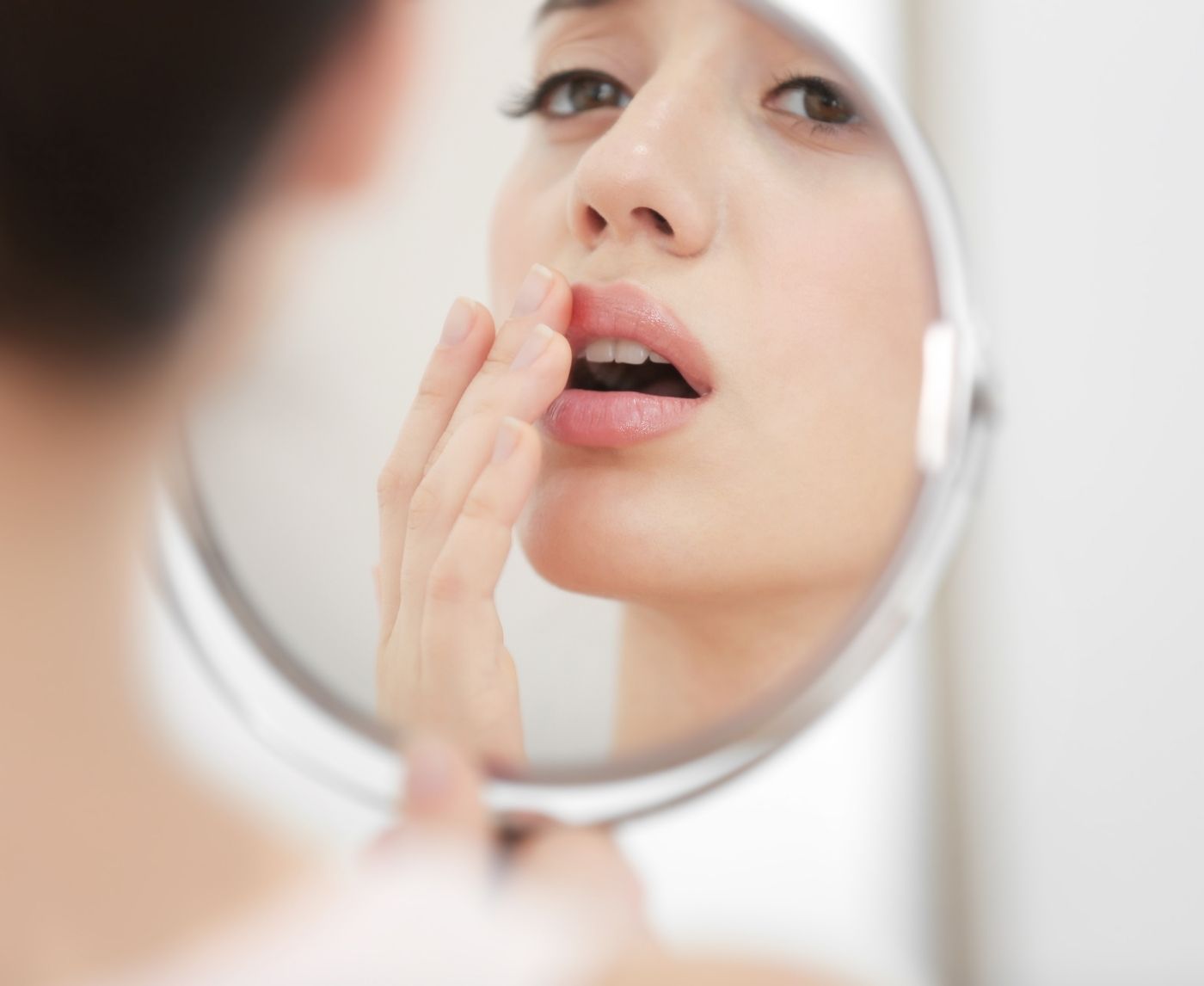

Quick Answer: A cold sore is usually caused by HSV-1, which is very common and not always sexually transmitted. Testing is rarely needed unless symptoms are unusual or you're concerned about genital transmission.
The First Tingle: When Symptoms Show Up Without Warning
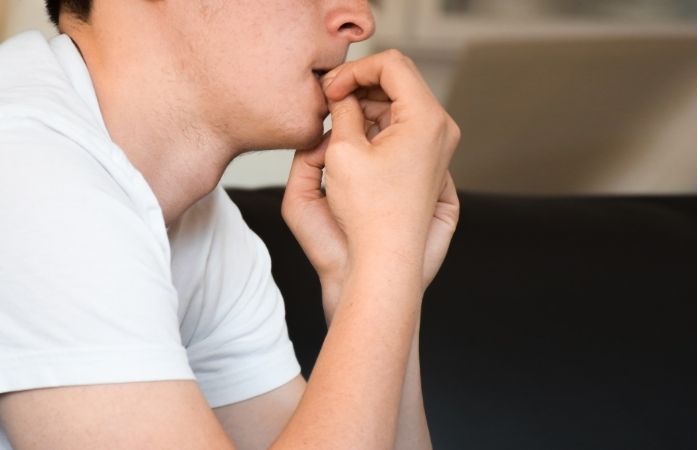
Picture this: one evening, you’re on your couch after a long day. Your skin feels tender near your lip. There’s a faint itch. You might ignore it, think it’s nothing. A few hours later, a small blister leaks, then crusts. Ten days pass. It heals, maybe slower than expected, maybe not. And then the real itch starts, not on your skin, but in your mind. What did this mean?
This is a textbook cold sore cycle. Dermatologists call it herpes labialis. It’s usually triggered by the herpes simplex virus type 1, HSV-1. Once inside the body, the virus never leaves. It lies dormant in your nerves, flaring only when your immune system gets distracted: stress, a cold, your period, too much sun. ([Mayo Clinic])
So if this is your first sore ever, it doesn’t necessarily mean you were recently infected. You may have carried the virus for years, decades even, without knowing. It’s that common.
Let’s Talk Numbers: Why It’s Not “Just You”
Roughly 64% of people under 50 globally carry HSV-1. ([WHO]) In the U.S., the figure hovers around 50% to 80% depending on the study. ([Hopkins Medicine]) Most people never notice symptoms. Others get a cold sore once a year. A few get them monthly. And many, like you, have no idea what’s happening the first time it appears.
Across the globe, exposure is even higher. In many developing countries, almost every adult has it by age 30. This isn’t new. It isn’t rare. What is rare is the honest conversation around it. That’s what we’re here for.
And if you’ve never had a cold sore before? That doesn’t mean you were “clean.” It just means your body hadn’t flared yet.
People are also reading: Can Oral Sex Cause Gonorrhea in the Throat? Signs, Risks, and Prevention
“Wait, Is This an STD?”: Why the Answer Isn’t So Simple
Let’s clear up a tricky bit of vocabulary. A cold sore is typically caused by HSV-1. And HSV-1 is not always sexually transmitted. Most people get it as kids, from a shared spoon, a parent’s kiss, a cousin’s lip balm. But here’s the twist: HSV-1 can also be transmitted during oral sex, and it can cause genital herpes. ([CDC])
This doesn’t make your cold sore “dirty.” But it does mean that it’s connected to the herpes family, and herpes sits at the awkward intersection of everyday virus and lifelong stigma. We label herpes as an STD when it affects the genitals. But the same virus on your lip? Suddenly it’s “just a cold sore.” It’s an inconsistency born of culture, not science.
Here’s the clinical reality: you might not need to get tested. But you might still want to, for clarity, for peace of mind, or for future partner conversations. And that’s entirely valid.
Check Your STD Status in Minutes
Test at Home with RemediumGenital & Oral Herpes Test Kit
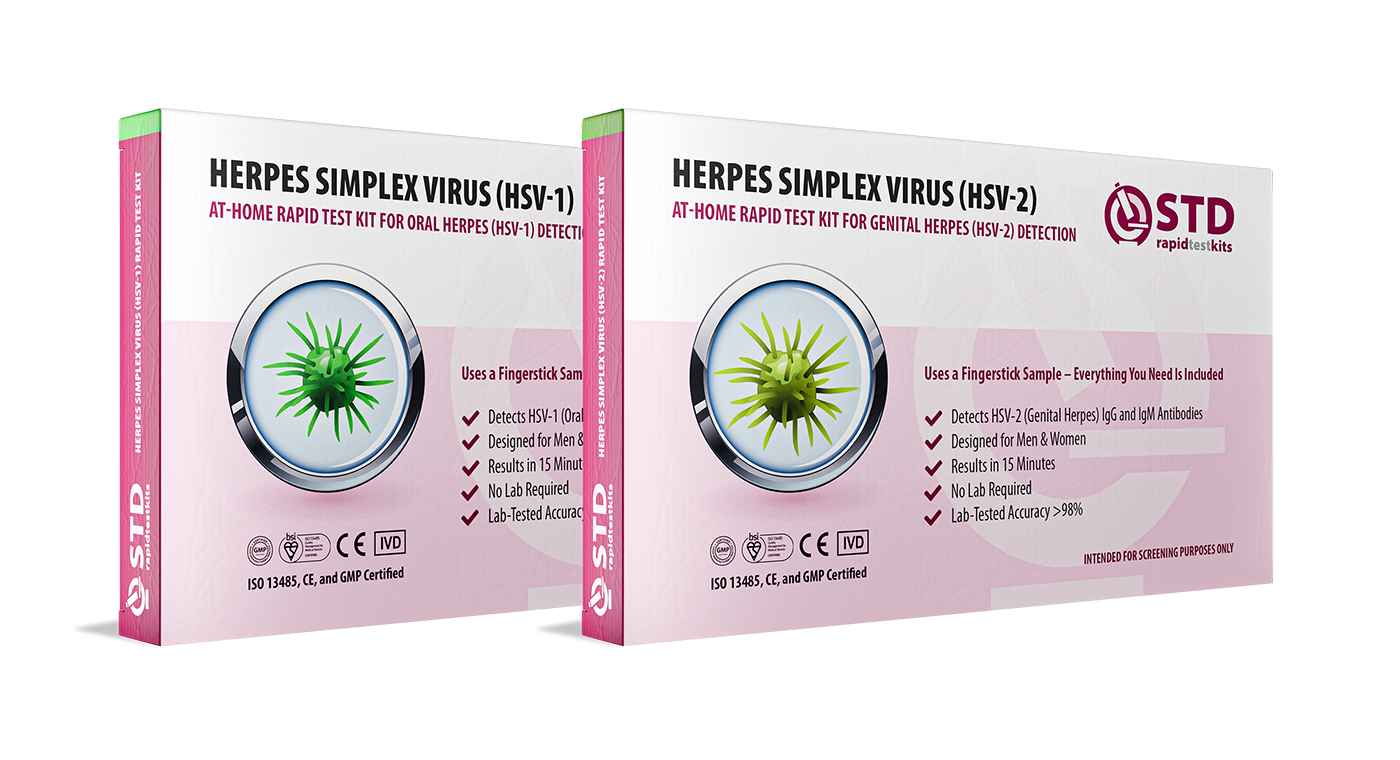
 For Men & Women
 Results in Minutes
 No Lab Needed
 Private & Discreet
Order Now $75.00 $98.00
For all 2 tests
What If This Is the First Time I’ve Ever Had a Cold Sore?
That question, why now?, keeps a lot of people up at night. You might be in your late twenties, thirties, even forties. You’ve had partners. Maybe you’ve been tested. Maybe you thought this stuff didn’t apply to you.
But here’s the thing: HSV-1 doesn’t care how old you are or how careful you’ve been. It can show up decades after exposure. Stress hormones rise, your immune system dips, and boom, your first visible cold sore. It doesn’t mean you were reckless. It doesn’t mean you’re dirty. It just means your body finally reached the threshold to trigger a flare.
That’s what happened to Ty, 33. He was in a monogamous marriage. No symptoms, ever. Then during a high-stress job transition, he felt a “pinprick of pain” on his lip. Within hours it blistered. He thought it was a burn from soup. Two days later, the fever came. His doctor swabbed the lesion: HSV-1.
“I kept saying, ‘But I’ve never cheated. I don’t even kiss people outside my partner.’”
He hadn’t cheated. He wasn’t infected “recently.” He’d likely had the virus for decades, passed on unknowingly by a relative in childhood. It was just the first time it made itself visible. And when it did, it hijacked his sense of identity and safety.
This is more common than people admit. And it’s why herpes, especially HSV-1, is so misunderstood. Because it doesn’t follow the rules of “clean vs dirty,” or “promiscuous vs safe.” It follows biology. And biology is complicated, not moral.
Testing: Should You Even Bother?
Here's the gritty truth: most people with a cold sore don’t need to get tested. A healthcare provider can often confirm HSV-1 by looking at it. If it’s your first-ever outbreak, and you’re within the first few days of symptoms, a swab test might be helpful, but only if the sore is open. Once it scabs over, the virus is harder to detect via culture. ([Testing.com])
Blood tests? They’ll only tell you if you’ve ever been exposed, not when, not where (mouth or genitals), and not if the current sore is even related. They detect antibodies, which develop slowly after first infection. That means if this really is your first outbreak, a blood test might come back negative at first, even if you have herpes.
So why test at all? It depends.
If you’re anxious, if you’ve had recent oral or sexual exposure, if your partner has HSV-2 or is immunocompromised, or if you're about to start a new relationship, you may want answers. Just know what you’re testing for, and what a test can actually tell you. Because clarity can empower, but confusion can spiral.
If you’re looking for a discreet, no-judgment way to check, at-home testing is an option. A combo STD test kit can check for multiple infections, including herpes, without a clinic visit. Just follow the instructions, send your sample, and wait for secure results. You get answers without awkward conversations or waiting rooms. That in itself can be a kind of relief.
People are also reading: Revolutionizing STD Prevention: The Rise of At-Home STD Testing Kits
Oral vs Genital: What Happens If It Spreads?
Here’s where things get real. HSV-1 doesn’t just stay in the mouth. If you perform oral sex while you have a cold sore, or even during the invisible “shedding” phase, you can transmit HSV-1 to your partner’s genitals. This isn’t rare. In fact, HSV-1 now accounts for up to 50% of new genital herpes cases in some regions.
So yes, cold sores can be sexually transmitted, even if you didn’t get them that way. That’s why communication matters. If you know you have HSV-1, even if it’s oral only, it’s worth sharing with new partners. Especially before oral sex.
This doesn’t mean you have to give a TED talk about your lips. It can be simple, respectful, and still sexy. Try: “Hey, just a heads up, I get cold sores now and then. I’m not contagious right now, but I want to keep you safe.” That’s health literacy in action. That’s care, not shame.
Okay But... What If This Changes How Someone Sees Me?
This is the hardest part for many people, not the sore itself, but the identity shift. The internal panic: Am I infectious now? Will they still want me? Does this make me one of “those” people?
This is where we say it loud and clear: you are still lovable, still desirable, still worthy. Cold sores don’t erase that. Neither does herpes.
The stigma around herpes, especially HSV-2, has been manufactured through decades of fear-based public health messaging. In reality, herpes is one of the most common infections on the planet. If you have it, you’re in the majority. It just doesn’t always make itself known.
The first outbreak often comes with shame. But future ones come with perspective. You learn your triggers. You recognize the signs. You manage it like any chronic skin condition. And you get to decide how and when to share that information, with partners, with friends, or with no one at all.
Herpes doesn’t define you. How you respond to it does.
Order Now $33.99 $49.00 Check Your STD Status in Minutes
Test at Home with Remedium
Oral Herpes Test Kit For Men & WomenResults in MinutesNo Lab NeededPrivate & Discreet
Managing It, Without Making It Your Whole Personality
Most people with HSV-1 only get occasional cold sores, maybe once a year, maybe less. Some don’t get another for decades. For others, stress or sunlight may bring them on more often. Either way, the flare-ups can be managed.
Antivirals like valacyclovir can be taken daily for suppression, or just during outbreaks. Over-the-counter creams can help during the first 24–48 hours of symptoms. Ice can numb the area. Sunscreen on your lips (yes, really) can prevent flare-ups from UV exposure. And knowing your body’s rhythms, when you’re run down, when you’re vulnerable, lets you prepare for and possibly prevent future sores. ([Cedars-Sinai])
But beyond the physical, there’s the mental load. And it’s okay if it takes time to rebuild confidence. Some people choose to disclose to partners early. Others wait until there’s a deeper connection. Either way, the right people won’t flinch. They’ll appreciate the honesty, and respect the trust you’ve placed in them.
This doesn’t make you high-risk. It makes you informed. And being informed is sexy.
The Sex Talk, Cold Sores and Consent
You’re about to hook up. Clothes are off. Kissing’s involved. You remember last week’s sore, now gone. Do you say something? Does it ruin the moment?
Here’s the truth: talking about herpes doesn’t have to kill the vibe. It can be part of a consent-forward, grown-up, compassionate sex life. Just like talking about condoms, birth control, or STI testing. It’s all part of the same conversation.
Cold sores aren’t the boogeyman. But they do matter when it comes to oral sex. HSV-1 can be spread even when there are no symptoms, though risk is highest during visible outbreaks. Telling someone you carry it, even if it’s just oral, isn’t just about avoiding blame. It’s about offering them real choice. That’s what sexual autonomy is all about. ([Planned Parenthood])
If you need a script, keep it casual and clear: “Just so you know, I get cold sores sometimes, oral herpes. It’s not active right now, and I’m on meds when I need to be. Just wanted to be upfront.” No drama. No shame. Just human reality.
If they’re the right partner, they won’t run. They’ll probably say something like, “Thanks for telling me. I appreciate that.”
People are also reading: How STDs Increase the Risk of HIV Transmission
FAQs
1. Can a cold sore be my first symptom of herpes?
Yes. Many people experience their first cold sore years after being exposed to HSV-1, often due to stress or immune changes.
2. Is a cold sore considered an STD?
Not usually. Most cold sores come from nonsexual contact in childhood, though they can be sexually transmitted through oral sex.
3. Can I get tested for a cold sore?
Yes, but timing matters. A swab test must be done while the sore is fresh. Blood tests detect antibodies but can't tell you where the infection is.
4. Is it possible for me to spread HSV-1 to someone's private parts?
Yes. During an outbreak or shedding period, oral HSV-1 can spread to the genitals during oral sex.
5. What sets HSV-1 apart from HSV-2?
HSV-1 usually causes problems in the mouth, and HSV-2 usually causes problems in the genitals. But both kinds can spread to either area by touching the mouth or genitals.
6. Should I tell my partners about my cold sore?
It's morally right to tell someone before oral sex, especially if you can see an outbreak happening or just after it happens.
7. Can herpes be cured?
No, but antiviral drugs can help stop outbreaks, speed up healing, and lower the risk of spreading the virus.
8. Is it possible to get herpes from kissing?
Yes. HSV-1 spreads from person to person through contact with the mouth, especially when cold sores are present.
9. How long does a cold sore stay around?
Most outbreaks go away in 7 to 14 days. If treatment starts early, it can make the illness last less time.
10. Will I always get cold sores?
Not always. Some people get sick a lot, while others only get sick once in their life. It depends on the person and their immune system.
You Deserve Answers, Not Assumptions
If you’re sitting with uncertainty, shame, or a flood of Google tabs open in the middle of the night, you’re not alone. A cold sore can feel like a betrayal, especially if you’ve never had one before. But you haven’t failed. You’re not broken. You’re just human, dealing with a virus that most of the world already carries.
What matters now is clarity. Whether you choose to get tested, talk to a partner, or just breathe through the fear, you have options. You have control. And you’re allowed to ask questions without judgment.
Don’t wait and wonder, get the clarity you deserve. This at-home combo test kit checks for the most common STDs discreetly and quickly.
Sources
2. Johns Hopkins – HSV-1 and HSV-2
3. World Health Organization – Herpes Simplex Virus
4. SELF – The Herpes Symptom Most People Miss


