
Published: November 2025 | Last updated: May 2026 | Editorial review and quality control: Martina N.
Pregnancy turns ordinary body sensations into urgent questions, and burning when you pee is one of the most common. Sometimes it is nothing more than a hormonal shift, a few hours short on water, or a uterus pressing on your bladder at thirty-two weeks. Sometimes it is a urinary tract infection that needs prompt antibiotics. Occasionally, uncomfortable as it can feel to consider, it is a sexually transmitted infection that pregnancy did not somehow shield you from.
This guide walks through the difference: when painful urination is part of pregnancy's normal background hum, when it is flagging a UTI, when it is pointing toward an STI, and what testing looks like at each stage. The line between waiting it out and calling your provider today is real, and it is drawn by specific symptoms rather than by gut feeling.
Key Takeaways
- Painful urination during pregnancy can be benign (hormone-driven bladder pressure, mild dehydration) or signal an active infection. The pattern, not the sensation alone, tells the difference.
- Persistent burning, fever, flank pain, or unusual discharge during pregnancy is not a wait-and-see situation. Same-day evaluation by your OB provider is standard of care.
When discomfort outgrows ordinary pregnancy
Pregnancy changes your urinary system almost immediately. Hormones relax smooth muscle. Blood volume rises by roughly fifty percent across the pregnancy. The kidneys filter more fluid. By the time the uterus rises out of the pelvis, the bladder is already working overtime, and frequent urination has become a near-universal pregnancy experience.
Frequency is not the same as pain. You can urinate every hour without true discomfort and still be inside the range of normal. The moment urination becomes sharp, burning, or paired with pelvic heaviness that feels off in a way you struggle to describe, your body is asking for a closer look. The goal here is to help you read that signal accurately without dismissing it and without catastrophizing it.
Clinicians who run prenatal clinics see the full spectrum: women who delayed care because they assumed their symptom was "just pregnancy," and women who called the office about what turned out to be uncomplicated bladder pressure. Both responses are understandable, and knowing what each pattern actually looks like is what beats gut feeling.
Two questions sort most cases:
- Has the discomfort lasted longer than 24 to 48 hours, or has it gotten worse?
- Is it paired with fever, unusual discharge, back pain under the ribs, or pelvic pain?
Two yeses point toward infection rather than ordinary pregnancy irritation, and that is a same-day call to your prenatal provider.
Why pregnancy itself can cause mild urinary discomfort
Start with what can be normal. Progesterone, the hormone that holds the pregnancy together, relaxes the smooth muscle of the urinary tract. That relaxation slows urine flow slightly and can make the bladder feel like it never quite finishes the job. Slower flow paired with mild dehydration can create a pressure-or-stinging sensation without any infection at all.
The mechanical contribution is just as real. Your uterus grows forward and upward through the second trimester, and the third trimester brings the baby's presenting part down onto the bladder. The bladder cannot fully empty. That incomplete emptying produces a stinging sensation right at the end of urination, especially in the third trimester, and the cause is mechanical rather than infectious.
Vaginal tissue sensitivity is the third common piece. Pregnancy increases blood flow to the urethra and vulva, which makes those tissues more reactive to friction, soap residue, hygiene products, or recent intercourse, per general obstetric guidance. Mild burning that follows one of those triggers and resolves within twenty-four to forty-eight hours is most often benign.
Here is how that benign pattern compares to a concerning one:
| Feature | Typical Pregnancy Irritation | Concerning Infection Pattern |
|---|---|---|
| Duration | Brief, intermittent | Persistent or worsening over days |
| Pain Level | Mild stinging or pressure | Sharp burning or significant pain |
| Fever | Absent | May be present |
| Urine Appearance | Clear or pale yellow | Cloudy, bloody, or strong odor |
| Additional Symptoms | None or mild pelvic pressure | Back pain, discharge, abdominal pain |
UTIs: the most common cause of true painful urination in pregnancy
Urinary tract infections are more common during pregnancy than at almost any other point in adult life. Roughly two to ten percent of pregnancies are complicated by asymptomatic bacteriuria or symptomatic UTI, depending on the population studied (StatPearls, Urinary Tract Infection in Pregnancy). The relaxed urinary tract discussed earlier makes it easier for bacteria to ascend from the urethra into the bladder. Add slightly higher urinary glucose levels and slowed flow, and you have a more permissive environment for bacterial growth.
UTIs in pregnancy are not just uncomfortable. Untreated, they can progress to pyelonephritis, a kidney infection that raises the risk of preterm labor, sepsis, and other complications, with reported rates of bacteremia around 7.5 percent and sepsis around 13 percent in pregnant patients with pyelonephritis (StatPearls, UTI in Pregnancy). This is why obstetric providers routinely screen urine at prenatal visits, even in women who feel fine. Catching asymptomatic bacteriuria early prevents the most dangerous complications down the line.
A symptomatic UTI typically feels like burning throughout urination, urgency that persists even when little urine comes out, and lower abdominal cramping. Some patients describe it as the urinary equivalent of a paper cut. Unlike simple pregnancy irritation, UTI discomfort tends to intensify rather than fade. Cloudy urine, a stronger odor, or visible blood can accompany the burning. Fever or back pain under the ribs shifts the situation from urgent care to same-day evaluation (NHS, Urinary Tract Infections).
Sexually transmitted infections during pregnancy
Pregnancy does not act as a force field against sexually transmitted infections. If you are sexually active, particularly with a new or untreated partner, infections like chlamydia and gonorrhea remain possible, and both can present with painful urination as the primary symptom. Frequently, an STI in pregnancy is asymptomatic entirely, which is exactly why first-prenatal-visit screening is the standard of care (CDC STI Treatment Guidelines).
Clinicians who counsel pregnant patients commonly hear some version of "that is not even on the table for me." The reality is more complicated. Bacterial STIs are quite treatable in pregnancy with antibiotics that have well-established safety profiles, and early detection protects the baby from neonatal complications. Screening exists for a reason, and a positive result is something your provider can act on quickly and safely. Avoidance of testing is what causes most preventable harm.
Untreated chlamydia or gonorrhea during pregnancy is associated with preterm rupture of membranes, low birth weight, and infection of the newborn at delivery, including conjunctivitis and pneumonia (WHO, Sexually Transmitted Infections fact sheet).
| Symptom Pattern | UTI | STI (Chlamydia / Gonorrhea) | Normal Pregnancy Changes |
|---|---|---|---|
| Burning with urination | Common | Possible | Mild, brief stinging possible |
| Vaginal discharge | Uncommon | More likely; may be yellow or green | Increased but typically odorless |
| Pelvic pain | Mild lower abdomen | Possible deeper pelvic pain | Pressure rather than sharp pain |
| Fever | Possible if advanced | Rare in early infection | No |
| Needs antibiotics | Yes | Yes | No |
When it is absolutely not safe to ignore
There are moments when waiting it out is the wrong move. Painful urination paired with fever, shaking chills, back pain under the ribs, nausea or vomiting, or contractions is not a self-care situation. Those combinations can signal pyelonephritis or another complication that needs prompt evaluation, and pregnancy compresses the timeline on which those conditions can escalate.
Burning paired with unusual discharge, particularly yellow, green, or foul-smelling discharge, also deserves prompt evaluation rather than home observation. The same applies to burning that worsens day over day rather than fading. Even when raising the topic at a prenatal visit feels embarrassing, providers would much rather test for something treatable than miss it.
One of the most common fears is, "could this cause a miscarriage?" Simple bladder irritation does not. Untreated severe infections can increase risk, which is exactly why catching them early matters. Testing during pregnancy is protective, not invasive, and same-day evaluation is the right reflex when red-flag symptoms appear.
Disclosure: stdrapidtestkits.com sells rapid at-home STI test kits. The product recommendations linked in this article point to our own catalog and are selected based on fit for the reader's concern.
- Fever above 100.4 °F (38 °C) with urinary burning
- Shaking chills or back pain under the ribs (possible kidney infection)
- Yellow, green, or foul-smelling vaginal discharge with burning
- Severe abdominal pain, contractions, or vaginal bleeding
- Decreased fetal movement at any gestational age beyond 24 weeks
Safe testing during pregnancy
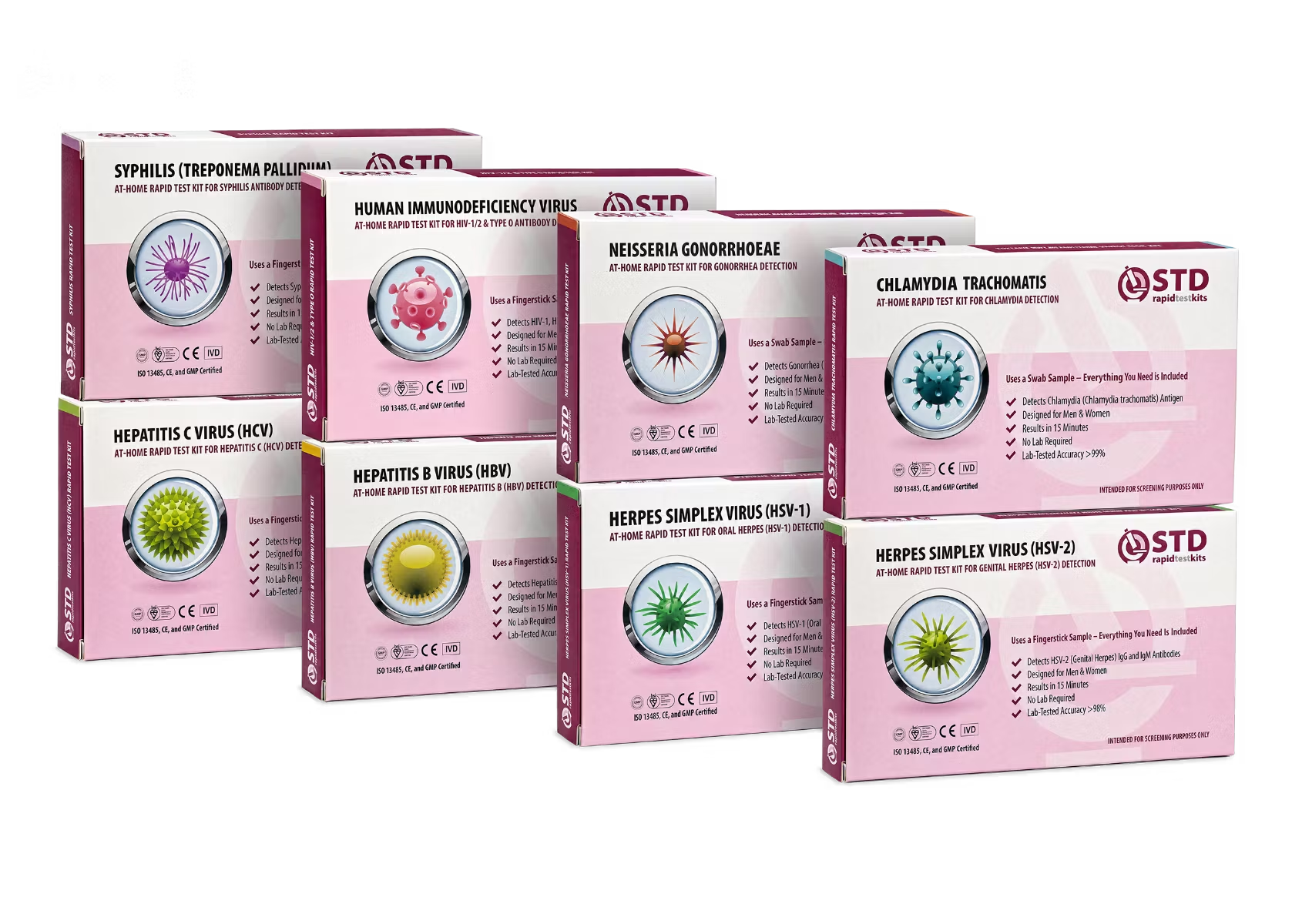
Both urine cultures for UTIs and standard screening tests for chlamydia, gonorrhea, syphilis, HIV, and hepatitis B are safe during pregnancy. In the United States and most of Europe, providers automatically test for these infections at the first prenatal visit, and many test again in the third trimester for patients at increased risk (CDC STI Treatment Guidelines).
If symptoms start suddenly between scheduled visits, you do not have to sit with the worry. Most OB practices will see you for same-day urine testing or arrange a same-day urine culture by mail-in or in-clinic sample. Vaginal swabs for STIs can also be performed at any prenatal visit.
It helps to be precise about test technology, because pregnant readers are often confused by the mix of options. The laboratory tests your prenatal clinic uses for chlamydia and gonorrhea are typically nucleic acid amplification tests (NAATs), which detect bacterial DNA directly. At-home rapid kits use lateral-flow immunoassay chemistry instead, which detects antigens or antibodies on a strip. The two are complementary rather than equivalent.
- Lateral-flow rapid kit (at home): 15 to 20 minute result. Detects antigens or antibodies on a strip. Good for a fast directional answer when you need to decide whether to push for an urgent appointment.
- NAAT (lab through your prenatal clinic): Higher analytical sensitivity. Detects bacterial DNA directly. Required to confirm any positive at-home result before treatment, and the right tool when an early at-home screen is negative but symptoms persist.
First trimester versus third trimester: timing changes the story
Painful urination at eight weeks does not mean the same thing as painful urination at thirty-two weeks. Timing changes physiology, pressure patterns, and the complications providers worry about most.
In the first trimester, the uterus is still tucked low in the pelvis. Hormones are surging. Blood flow is rising rapidly. Burning sensations early on are more often tied to hormonal shifts, dehydration (often driven by nausea limiting fluid intake), or an early urinary tract infection. Concentrated urine alone can irritate the urethra enough to feel like a UTI.
By the third trimester, the mechanics shift dramatically. The uterus is heavy and forward. The baby's head may press directly onto the bladder. Emptying becomes incomplete, and incomplete emptying raises UTI risk again. What felt like harmless pressure at fourteen weeks can evolve into something that needs treatment by thirty-four weeks. Pressure and infection can also coexist, which is why later-pregnancy burning is worth a urine culture even when bladder pressure is the obvious culprit.
| Trimester | Common Non-Infectious Causes | Infection Risk Profile | Clinical Priority |
|---|---|---|---|
| First (0-13 weeks) | Hormonal sensitivity, dehydration | UTI risk increased over baseline | Screen early, treat promptly |
| Second (14-27 weeks) | Growing uterine pressure | Stable but ongoing UTI risk | Monitor persistent symptoms |
| Third (28+ weeks) | Bladder compression, incomplete emptying | Higher risk of ascending kidney infection | Act quickly if pain or fever appears |
When it really is just irritation
Sometimes the burning shows up once, maybe twice, and then disappears entirely. The trigger is often mundane: dehydration, friction from intercourse, or irritation from a new soap or laundry detergent. Mild urethral irritation often resolves quickly once the trigger is removed, and aggressive hydration can speed that resolution along.
If discomfort fades within a day, no fever appears, urgency feels mild rather than punishing, discharge looks and smells normal, and there is no back pain, observation is reasonable. Hydration alone often reverses the symptom when concentrated urine was the underlying cause.
The line is whether you keep thinking about it. If every walk toward the bathroom comes with a small dread, that is a pattern rather than an isolated event, and patterns deserve testing, particularly when a missed infection during pregnancy carries risk for two people.
The risk of ignoring a true infection
Untreated urinary tract infections can ascend from the bladder to the kidneys. Pyelonephritis in pregnancy is associated with hospitalization, dehydration, sepsis, and in some cases preterm contractions, with bacteremia reported in roughly 7.5 percent of cases and sepsis in about 13 percent (StatPearls, UTI in Pregnancy). The picture sounds dramatic in print, and severe complications are uncommon, but they are also largely preventable when bladder infections are caught and treated early. That is why prenatal urine screening is routine even when patients feel fine.
Untreated chlamydia or gonorrhea during pregnancy can increase the risk of premature rupture of membranes, preterm birth, low birth weight, and infection of the newborn during delivery. Babies exposed during birth can develop ophthalmia neonatorum (a serious eye infection) or pneumonia (WHO, STI fact sheet). Again, this is not a reason to panic. It is a reason to test and treat. Many patients delay care because they feel embarrassed about discharge or partner history, and the testing itself is what resolves both the worry and the underlying condition. Infections are medical conditions, not moral verdicts.
For the pregnant patient:
- Ascending kidney infection (pyelonephritis) with risk of hospitalization, dehydration, or sepsis
- Preterm contractions or preterm labor triggered by infection
- Premature rupture of membranes from untreated bacterial STI
For the newborn:
- Conjunctivitis (ophthalmia neonatorum) from gonorrhea exposure at delivery
- Pneumonia from chlamydia exposure at delivery
- Low birth weight associated with untreated bacterial STI
Each of these is preventable when infection is caught and treated, which is the whole point of routine prenatal screening.
Discharge and burning together
Pregnancy increases vaginal discharge as a normal physiologic change. The discharge becomes milky, odorless, and more abundant. That alone can confuse the picture when you are also dealing with urinary discomfort.
Burning paired with discharge that changes color, develops a strong or fishy odor, or causes itching is more likely to point toward an infection. The category could be a yeast infection, bacterial vaginosis, trichomoniasis, or a chlamydia or gonorrhea infection. Sensation alone cannot distinguish between them, which is why self-diagnosing from internet symptom lists tends to backfire. A urine sample plus, when needed, a vaginal swab can produce clarity in hours rather than days of guessing.
If your discharge has shifted from "more of the same" to "clearly different," raise it at your next appointment, or call between appointments if it is paired with burning, fever, or pelvic pain.
- Color shift to yellow, green, or grey
- Strong, fishy, or foul odor
- Itching or burning of the vulva alongside the urinary burning
- Frothy, cottage-cheese, or thick clumpy texture
- Any blood-tinged discharge outside of expected light spotting
How to avoid false reassurance
One of the most common pitfalls in pregnancy is testing very early after exposure and treating a negative result as final. UTI symptoms typically align well with infection on a urine culture, but for STIs, there is a window period between exposure and a reliably positive test. Chlamydia NAAT can usually detect infection within roughly one to two weeks of exposure for most patients, according to CDC guidance, but earlier sampling can miss true infections.
If symptoms persist despite a negative early test, retesting is reasonable. A single negative result should never override your lived experience of worsening pain, particularly during pregnancy when the cost of a missed infection is higher. If an early urine culture was negative but symptoms persist, request a repeat at the 48 to 72 hour mark rather than accepting the first result as final.
Follow-up testing plan when an early test is negative
- Negative urine culture but symptoms persist or worsen: ask your provider for a repeat culture at 48 to 72 hours.
- Possible STI exposure with a negative early screen: plan a confirmatory test at the two-week mark with your prenatal provider.
- Persistent burning with negative urine and STI screens: ask about a vaginal swab to check for yeast, bacterial vaginosis, or trichomoniasis.
All pregnant women should receive screening for HIV, syphilis, hepatitis B, and chlamydia at the first prenatal visit, with rescreening in the third trimester for those at increased risk.

When to call today rather than tomorrow
Call your prenatal provider the same day if painful urination is paired with any of the following: fever, shaking chills, severe back or flank pain, vomiting, contractions, vaginal bleeding, or decreased fetal movement later in pregnancy. Those combinations are not "wait and see" situations. Pyelonephritis and septic complications move quickly, and prompt evaluation prevents most of the worst outcomes.
Even without those red flags, persistent burning lasting more than forty-eight hours deserves evaluation. So does any change in vaginal discharge that is paired with burning, especially if the discharge looks yellow, green, or different from the milky baseline of normal pregnancy discharge. When in doubt, lean toward calling rather than enduring.
If your prenatal practice does not offer same-day urine testing, urgent care or an emergency department can run a urinalysis quickly. Bring the office's number with you so they can coordinate any treatment with your obstetric provider.
Putting it together
Painful urination during pregnancy lives in an uncomfortable gray area between normal body changes and conditions that need treatment. The difference is rarely dramatic at first: a degree more burn than yesterday, a bit more urgency, urine that looks slightly cloudier when you check.
You do not need to diagnose yourself. You need information. If symptoms are mild and fleeting, hydration and short observation are reasonable. If they persist, worsen, or bring new symptoms with them, testing is the responsible next step. A urine culture from your OB clinic is fast and definitive for UTIs. STI screening at the first prenatal visit is standard, and additional swabs can be added at any point if symptoms suggest infection.
For situations where you want a discreet first look between appointments, an at-home rapid screen can give you a directional answer in fifteen to twenty minutes. It does not replace your prenatal clinic, and any positive result needs laboratory confirmation, but it can shorten the gap between worry and a clear next step. The results and the decisions that follow them belong to you.
Pregnancy asks you to look after two lives at once, and asking questions when something feels off is a normal part of good prenatal care.
Frequently asked questions
- Is mild burning when I pee actually normal during pregnancy?
- Sometimes. A brief sting at the end of urination, particularly later in pregnancy when the baby's head is pressing on the bladder, can be a mechanical effect rather than an infection. The line is duration and pattern. If the burning resolves with hydration and does not return, observation is reasonable. If it keeps showing up, gets sharper, or pairs with fever or unusual discharge, it deserves evaluation.
- How quickly can a UTI become serious during pregnancy?
- Faster than most people realize. A bladder infection can climb to the kidneys within a few days if it is left untreated. That does not mean it always will, but the timeline is shorter in pregnancy than outside it. If burning turns into fever, back pain under the ribs, chills, or nausea, skip the wait-and-see approach and call your provider the same day.
- Could this be an STI even though I am pregnant?
- Yes. Pregnancy does not reduce the chance of acquiring chlamydia, gonorrhea, or other sexually transmitted infections. Painful urination is sometimes the only symptom of an STI in pregnancy, and many cases are entirely asymptomatic. Most bacterial STIs are treatable with antibiotics that have well-established safety profiles in pregnancy, and early treatment protects the baby.
- What if I am embarrassed to bring this up at my prenatal appointment?
- Prenatal providers screen for these issues by design. Discussing burning, discharge, partner concerns, or anything else related to your urinary or reproductive health is a routine part of obstetric care. The only response that prolongs harm is silence; raising the topic gets you tested and, if needed, treated.
- Can dehydration alone cause it to burn?
- Yes. Concentrated urine is genuinely irritating to the urethra, particularly when pregnancy hormones have already increased tissue sensitivity. If your urine is dark yellow and you have been undereating fluids because of nausea, hydrating aggressively for a day will often resolve the symptom on its own. If burning continues despite hydration, get a urine sample tested.
- Does painful urination mean something is wrong with my baby?
- In most cases, no. Mild irritation or even an early UTI caught and treated promptly is not associated with harm to the baby. The risks come from infections that are ignored or allowed to spread, particularly pyelonephritis or untreated bacterial STIs. Routine testing exists specifically to prevent that escalation.
- What if my urine test is negative but it still burns?
- Sometimes the source of the burning is vaginal rather than urinary. Yeast infections, bacterial vaginosis, trichomoniasis, and hormone-related tissue sensitivity can all mimic UTI symptoms. If discomfort persists after a negative urine culture, ask your provider about a vaginal swab, and consider STI testing if there has been a possible exposure within the relevant window period.
- Can I wait until my next scheduled prenatal visit?
- It depends on the trajectory. Mild and improving symptoms can often wait. Stable but lingering symptoms warrant a phone call to your clinic for guidance. Worsening symptoms, especially burning paired with fever, flank pain, or a discharge change, should not wait. Pregnancy compresses how long it is safe to delay treatment for an active infection.
How we sourced this article: Our editorial team summarised current obstetric and infectious-disease guidance from leading public-health organisations, including the U.S. Centers for Disease Control and Prevention, the U.K. National Health Service, the World Health Organization, and the National Institute of Child Health and Human Development, alongside peer-reviewed reference material on urinary tract infection in pregnancy. The article was reviewed by a licensed clinician for clinical accuracy. It is summarised guidance, not a substitute for personalised prenatal care.
- U.S. Centers for Disease Control and Prevention. STI Treatment Guidelines, including the Special Populations section on screening recommendations during pregnancy.
- U.K. National Health Service. Urinary Tract Infections (UTIs): symptoms, causes, when to seek care.
- Habak P.J., Griggs R.P. Jr. Urinary Tract Infection in Pregnancy. StatPearls (NCBI Bookshelf). Used for asymptomatic bacteriuria and pyelonephritis complication-rate figures cited in this article.
- World Health Organization. Sexually Transmitted Infections (STIs) Fact Sheet, including pregnancy and neonatal complications of untreated chlamydia and gonorrhea.
- National Institute of Child Health and Human Development (NICHD). Pregnancy Complications.
