






Quick Answer: Most people with herpes never have symptoms, or they confuse them with minor skin issues. If you’ve ever had oral sex, kissed someone with a cold sore, or had genital contact without a condom, you could carry herpes without knowing it.
This Isn’t Rare, It’s Reality
Herpes has a PR problem. It’s seen as dirty, shameful, or the punchline of bad sex-ed jokes. But the actual science paints a much different picture. Herpes is staggeringly common, so much so that the idea of “everyone has herpes” isn’t hyperbole. It’s epidemiological math.
Consider this: HSV-1, which often causes cold sores but can also infect genitals, affects nearly 70% of people worldwide before age 50. HSV-2, the “classic” genital herpes virus, is less widespread but still prevalent. Together, they infect billions. Yet most carriers have no idea.
Why? Because asymptomatic herpes is the rule, not the exception. In multiple large-scale studies, including this JAMA publication, over 80% of herpes-positive individuals reported no recognizable symptoms at all. Many never notice their first outbreak, or they mistake it for an ingrown hair, a heat rash, or irritation from a new partner or product.
When that first bump fades, so does suspicion. But the virus stays, nested in nerve cells, waiting for a trigger. And that’s when it spreads.
When Herpes Hides in Plain Sight
Natasha, 33, had been in what she thought was a monogamous relationship for over a year when she developed what felt like a paper cut after sex. It stung in the shower but healed quickly. She didn’t think much of it. A year later, during a routine STD panel, she tested positive for HSV-2 antibodies. She had never had “real” symptoms. Her partner insisted he hadn’t cheated. Herpes had just been there, quiet, dormant, spreading without anyone knowing.
This isn’t rare. The herpes virus can live silently in the body for years. For HSV-1, most people are infected in childhood through non-sexual contact, think shared utensils or kisses from relatives. It doesn’t always cause visible cold sores. But it can still transmit through oral sex and end up in a new, genital location.
HSV-2 tends to infect through genital-to-genital contact. Condoms help reduce the risk, but because herpes can shed from skin areas not covered by condoms, they’re not a guarantee. And because shedding often happens when no symptoms are present, many people pass the virus without ever realizing they’re contagious.
Here’s where things get blurry. A cold sore isn’t “just” a cold sore if it spreads to a partner’s genitals. And genital herpes isn’t always painful or visible. That blurry line leads to confusion, missed diagnoses, and delayed testing.
| Herpes Type | Usual Location | Transmission Method | Symptomatic Rate |
|---|---|---|---|
| HSV-1 | Mouth (can be genital) | Kissing, oral sex, shared items | ~20–30% develop visible cold sores |
| HSV-2 | Genitals (rarely oral) | Genital contact (skin-to-skin) | ~10–25% recognize symptoms |
Table 1. Overview of Herpes Virus Types, Transmission, and Visibility
People are also reading: Lesbian STDs 101: Myths, Symptoms, and How to Get Tested Without Being Dismissed
Why Doctors Miss It (And Why You Might, Too)
Here’s the kicker: even when people suspect herpes, the healthcare system often fails to confirm it. Many providers still won’t test for herpes unless you have visible sores. And even then, they may dismiss your symptoms as something else, especially if you don’t fit a certain profile or if you’re a woman or queer person describing discomfort that doesn’t look “typical.”
Herpes testing isn't standard in most STD panels unless you ask for it specifically. And even if you do, it matters how you test. Blood antibody tests can show past exposure but can’t tell you when you were infected or who gave it to you. Swab tests only work when there’s an active lesion, so if your outbreak was mild or healed quickly, you might miss the testing window entirely.
This creates a gap between infection and information, a space where stigma festers and people unknowingly spread the virus to partners who also may never know they carry it.
And yes, false negatives can happen. Especially early on. That’s why knowing when to test is just as important as knowing what to test for. We’ll break that down next.
Check Your STD Status in Minutes
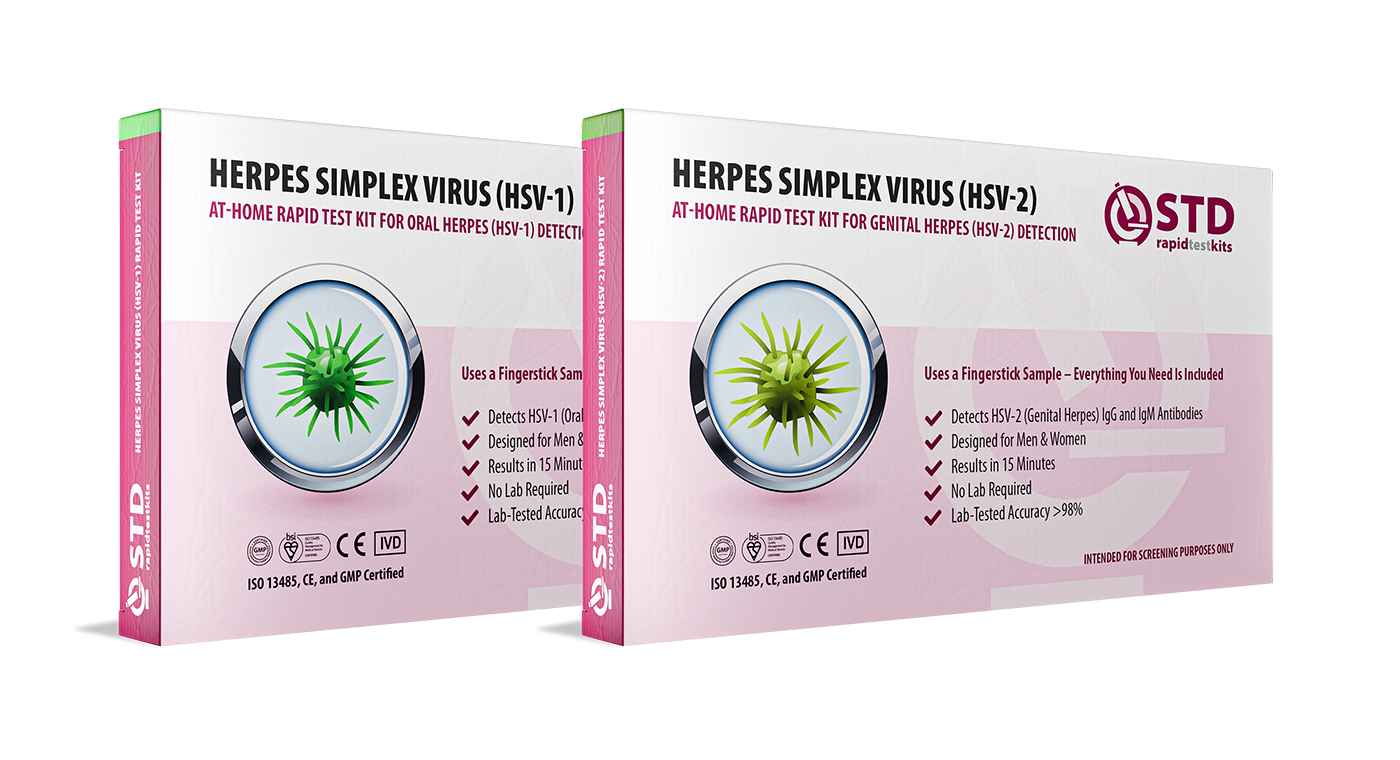
Test at Home with RemediumGenital & Oral Herpes Test Kit
 For Men & Women
 Results in Minutes
 No Lab Needed
 Private & Discreet
Order Now $75.00 $98.00
For all 2 tests
How Herpes Slips Through the Cracks
It’s easy to assume herpes comes with red flags, painful sores, fever, maybe even a warning from a past partner. But that’s not reality for most people. Instead, herpes often behaves like a ghost infection: undetectable by feel, unknowable without a test.
Marcus, 27, didn’t realize he had anything to worry about. He’d been careful, mostly used condoms, and got tested before each new relationship. But the clinic never included herpes unless he asked. Why would they? He’d never had a sore. Then a casual partner tested positive. That led to questions, a specific request for a blood test, and a positive HSV-2 result. He had never known. His only “symptom” had been a tingling that came and went around stressful times. He thought it was razor burn.
This is what makes herpes so different from other STDs. It’s not about being reckless or unlucky. It’s about biology. The virus can shed through microscopic skin breaks, during sex, kissing, or even cuddling with active lesions nearby. And it doesn’t wait for symptoms to appear before it becomes contagious. In fact, shedding can occur even when the infected person has no idea they’re infected at all.
Herpes is most contagious during visible outbreaks, but it can still transmit when the skin looks totally normal. The only way to know for sure? Testing. But even testing comes with caveats.
Testing for Herpes: Why, When, and How
There are two main ways to test for herpes: a swab of an active lesion, or a blood test that looks for antibodies. Both have strengths, and serious limitations. Let’s break them down clearly.
| Test Type | When to Use It | Detects | Limitations |
|---|---|---|---|
| Swab Test (PCR or culture) | When there’s an active sore | HSV-1 or HSV-2 directly | Useless without visible symptoms |
| IgG Blood Test | 4–12 weeks after potential exposure | Antibodies to HSV-1 and HSV-2 | Cannot determine location or timing |
Table 2. Types of Herpes Tests and What They Actually Tell You
If you’ve had unprotected sex, kissed someone with a visible cold sore, or even shared personal items, and you're wondering about herpes, you deserve clear answers. And here's the truth: a rapid test won’t always catch a new infection. Antibodies take time to build. Most people won’t test positive for 4 to 12 weeks after exposure.
That’s why retesting is often essential. A negative blood test at week 3 doesn’t mean you’re herpes-free. It just means your immune system hasn’t made enough antibodies to show up on the test yet. That’s not a failure, it’s biology. But it also means you may need to wait and retest later.
If your gut says something’s off, itching, tingling, a weird bump that went away fast, it’s worth asking for the test, even if a provider doesn’t bring it up. And if you want clarity from home, there are discreet test kits that let you check without facing judgment.
STD Rapid Test Kits offers several options, including Herpes 1 & 2 test kits that can help you take that first step. Whether you're checking out of curiosity or confronting a fear, testing is care, not a confession.
What Happens If You Do Test Positive?
First, take a breath. A herpes diagnosis is not the end of anything. You can still have sex, love, babies, and a completely healthy life. What it does mean is that you now know something that was probably true for a while, and that knowledge puts you in control.
Kelly, 41, found out she had HSV-1 genitally after a pap smear flagged a potential outbreak. She’d never had symptoms. She felt devastated at first, replaying every partner, every kiss. But her doctor reassured her: most people with herpes live normal lives without outbreaks or only experience mild flare-ups triggered by stress, illness, or friction. Herpes doesn’t mean you’re dirty or broken. It means you’re human, and now, you’re aware.
If you do test positive, it helps to learn your triggers. Some people have no recurrences. Others notice tingling before an outbreak, or they get flare-ups during their period, after sun exposure, or during stressful weeks. Antiviral medications like valacyclovir or acyclovir can reduce symptoms, lower the chances of transmission, and make you feel more confident. Daily suppressive therapy is an option, especially for those in new relationships or those with frequent outbreaks.
And yes, you should tell partners. But you can do it on your terms. Disclosure doesn’t have to be a dramatic scene, it can be a calm conversation rooted in facts. Many people already have herpes, even if they don’t know it. Framing the discussion around care, not fear, helps shift the narrative.
And if you’re not sure how to start that talk? We’ve got you covered in another article.
People are also reading: STD Scared? Gen Z Is Skipping Clinics, and Going Online Instead
But I Don’t Feel Anything, Isn’t That Proof I’m Fine?
This might be the most dangerous herpes myth of all: “If I had it, I’d know.” It’s not just wrong, it’s what allows the virus to keep spreading. The idea that STDs always scream their presence is outdated and misleading. In reality, herpes often arrives in whispers, if at all.
Derrick, 22, had a one-night stand after a college party. He used protection but skipped oral. A few weeks later, he noticed nothing unusual, no rash, no pain, no fever. Months passed. Then he saw a Reddit thread describing someone’s “paper cut herpes,” and it struck a nerve. Could that minor skin split he'd dismissed have been something more?
He ordered an at-home kit and tested positive for HSV-2. He cried. Not because of symptoms, he still didn’t really have any, but because no one had ever told him that herpes could look like nothing at all.
This is how stigma wins. It teaches us to associate herpes with punishment, dirtiness, or visible decay. So when it shows up quietly, we deny it. But silence is not safety. And a lack of pain is not a clean bill of health.
Check Your STD Status in Minutes
Test at Home with RemediumGenital Herpes Test Kit
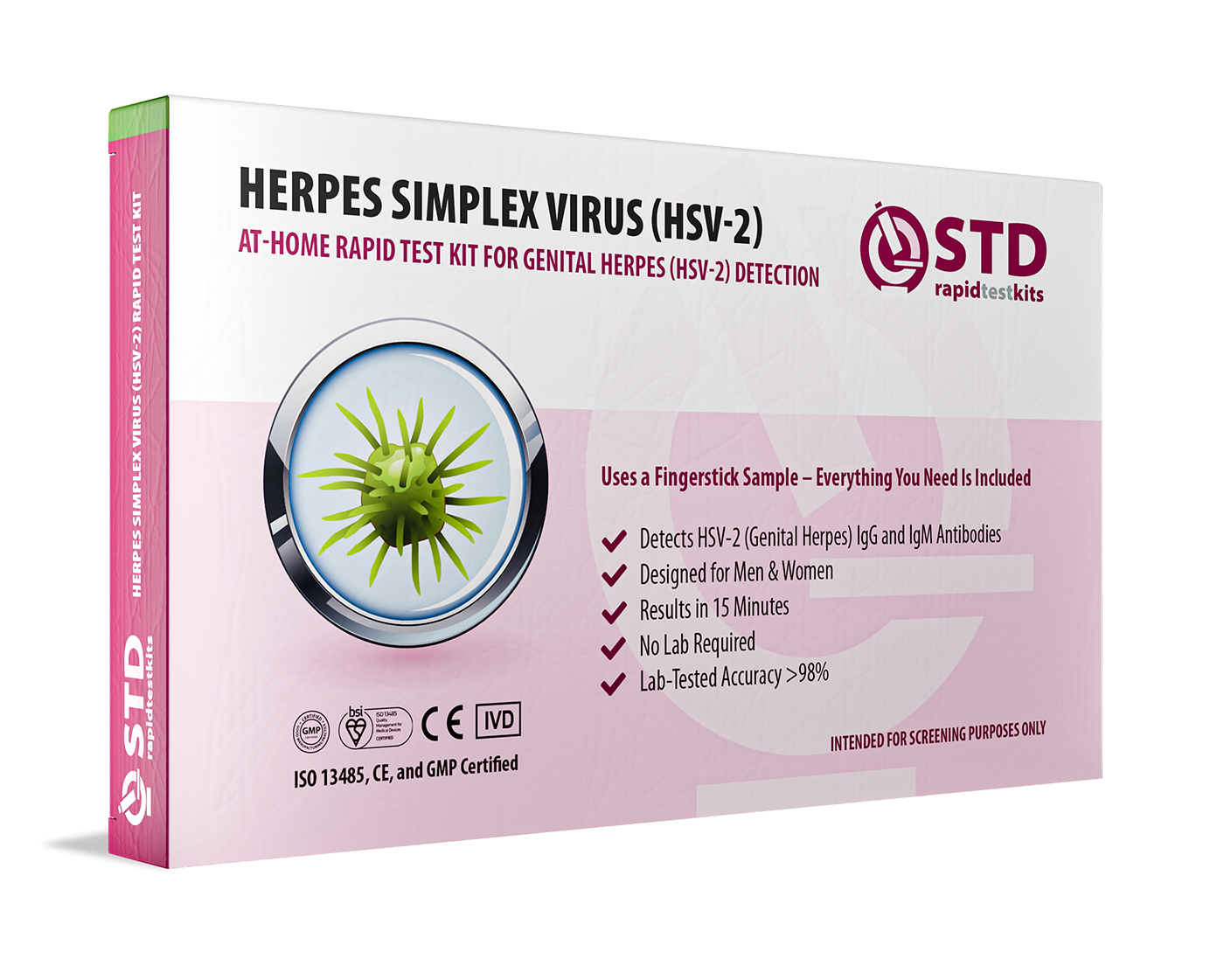 For Men & WomenResults in MinutesNo Lab NeededPrivate & Discreet
Order Now $45.99 $49.00
Stigma Keeps People from Testing, And That Spreads the Virus
If herpes were just a virus, it wouldn’t be so scary. After all, cold sores are considered annoying but normal. Yet when those same sores migrate to the genitals, the narrative shifts. Suddenly it’s not just a virus, it’s a moral judgment.
That stigma makes people avoid testing. It keeps doctors from offering herpes tests proactively. It keeps partners from asking the awkward questions. And it isolates the people who do test positive, who think they must be the only ones.
But herpes doesn’t care if you’re a good person. It doesn’t care if you’re queer, straight, monogamous, or exploratory. It doesn’t wait until you’ve had “enough” partners. It spreads through human intimacy. That’s it.
The only way to break that cycle? Normalize the truth. Herpes is everywhere. Most people will carry it by adulthood. The scary part isn’t the virus, it’s the shame around it. And the best weapon against shame is knowledge.
Testing isn’t about paranoia. It’s about awareness. If you’ve ever had a cold sore, you have herpes. If you've had oral sex, you’ve been exposed. If you’ve ever kissed someone casually or shared lip balm in middle school, you might carry it already. The only question is: do you want to know?
FAQs
1. Can I really have herpes and never know it?
Absolutely. In fact, that’s the most common scenario. Most people with herpes either don’t get symptoms or mistake them for something else, an ingrown hair, a heat rash, even friction from a hookup that got a little intense. Just because it’s quiet doesn’t mean it’s not there.
2. How early can I test for herpes after a hookup?
It takes time for your body to build antibodies, so if you test too soon, you might get a false negative. Aim for at least 4 weeks post-exposure for a blood test, but know that accuracy really kicks in between weeks 8 and 12. If you test at week 3 and it’s negative, that’s not a final answer, it’s a “come back later and check again.”
3. Do I need to have a visible sore to get tested?
Nope. If you’ve got a visible bump or blister, a swab test can be super useful. But if there’s nothing to swab, don’t panic. A blood test can still tell you if you’ve ever been exposed to HSV-1 or HSV-2. Just make sure enough time has passed since your last risk moment so the results are accurate.
4. My partner has herpes but I’ve never tested positive, how?
Herpes is sneaky. It doesn’t always spread, especially if your partner is on suppressive meds, using condoms, or avoiding contact during outbreaks. It’s also possible you were exposed but haven’t developed detectable antibodies yet. Or maybe you do carry it and just haven’t tested at the right time. Herpes plays the long game.
5. Is it true that most people have herpes?
Yes, and it’s time we started saying that out loud. HSV-1 affects most of the world by age 50. That’s cold sores, folks. HSV-2 is less common, but still very present. Together? We’re talking billions of people. Herpes isn’t rare, it’s just rarely talked about honestly.
6. Can I pass herpes even if I feel totally fine?
Yes, and that’s what makes it such a shadowy virus. It can shed from your skin when you feel 100% normal. That’s called asymptomatic shedding. No symptoms, no warning, just quiet transmission. It’s not your fault, but it’s why disclosure and protection matter.
7. What does herpes feel like the first time?
Everyone’s different. For some, it’s unmistakable, painful blisters, flu-like symptoms, swollen glands. For others, it’s a tiny red spot or a bit of itchiness that lasts a day. Some people never notice anything at all. That first outbreak can be dramatic, or barely a blip.
8. Is there any point in getting tested if there’s no cure?
Yes. Testing isn’t just about “curing”, it’s about knowing. If you test positive, you can take meds to reduce outbreaks and lower the risk to your partners. You can make choices that protect both of you. And you stop wondering, which honestly might be the biggest relief of all.
9. How do I tell someone I have herpes?
With honesty and confidence. Say it early enough that it’s not a surprise, but not as an apology. Try: “Before we take things further, I want to share something about my health. I have herpes, it’s super common, I manage it, and I care about keeping us both safe.” If they freak out? That’s about them, not you.
10. Can I still have sex if I have herpes?
Of course. Herpes doesn’t cancel your sex life. You might adjust a few things, talking with partners, using protection, being mindful of your triggers, but you can absolutely have fun, connected, satisfying sex. People with herpes do it every day. You’re not broken. You’re just informed.
You Deserve Answers, Not Assumptions
Getting tested doesn’t change your worth. It doesn’t rewrite your past. What it does is anchor your future in truth, so you can love, touch, and connect without guessing.
Herpes isn’t about who you are. It’s about what you carry, and most people carry it silently. If you’re ready to find out, you don’t need to go to a clinic or explain your story to anyone. This at-home combo test kit checks for the most common STDs discreetly and quickly. You can order from your phone and test in your bathroom. No questions, no judgment, just clarity.
Peace of mind isn’t just a possibility, it’s a test away.
How We Sourced This Article: We combined current guidance from leading medical organizations with peer-reviewed research and lived-experience reporting to make this guide practical, compassionate, and accurate.
Sources
1. Planned Parenthood – Herpes Overview
3. Sexually Transmitted Diseases Treatment Guidelines – Herpes – CDC
4. Herpes Simplex Virus – Fact Sheet – WHO
5. Current Concepts for Genital Herpes Simplex Virus Infection – PMC
6. Herpes Simplex Type 1 – StatPearls/NCBI Bookshelf
7. Viral Shedding 1 Year Following First-Episode Genital HSV-1 Infection – JAMA 2022
8. Herpes (HSV-1 & HSV-2) – Johns Hopkins Medicine
About the Author
Dr. F. David, MD is a board-certified infectious disease specialist focused on STI prevention, diagnosis, and treatment. He blends clinical precision with a no-nonsense, sex-positive approach and is committed to expanding access for readers in both urban and off-grid settings.
Reviewed by: M. Tran, RN, MPH | Last medically reviewed: November 2025
This article is meant to give you information, not to give you medical advice.


