
Published: August 2025 | Last updated: May 2026 | Editorial review and quality control: Martina N.
The hardest part about a symptom you cannot see is what your brain does in the silence. You feel a buzz around the anus, you check for sores, you find nothing, and the loop starts. Is it herpes? Is it stress? Is it nothing? The information below is built to slow that loop down. Herpes does sometimes announce itself with tingling and only tingling, especially in the first hours of a recurrence. Far more often, that sensation has a quieter cause.
This guide walks through what prodrome actually feels like, which timelines matter for testing, which other conditions create the same buzz, and how to decide whether a test today will give you a meaningful answer or a misleading one.
Key Takeaways
- Tingling, buzzing, or pins-and-needles around the anus can be the prodrome phase of a herpes outbreak that appears hours to days before any visible sore, but the same sensations arise far more often from friction, hemorrhoids, yeast, or anxiety.
- Herpes blood antibody tests need several weeks after exposure to become reliable, so testing within the first few days of a worrying encounter can return a falsely reassuring negative result.
What Herpes Prodrome Actually Feels Like
Before a herpes outbreak, many people feel something clinicians call a "prodrome." The word sounds technical; the meaning is simple. Nerves are warning the skin that something is about to surface.
The sensation varies. Some describe pins and needles. Others call it a dull burning or an itch that sits deeper than the surface, almost electric. The herpes simplex virus lives in nearby nerve cells between outbreaks, settling into the sacral ganglia at the base of the spine after the initial infection. When the virus reactivates, it travels along those nerve pathways toward the skin. Movement along the nerve is what creates the sensation before anything visible appears.
Patients often describe the feeling as the body whispering before it starts shouting. That subtle quality is exactly what makes prodrome unsettling around the anus, where the area is already sensitive and prone to everyday irritation. According to the World Health Organization fact sheet on herpes simplex virus, hundreds of millions of people worldwide live with HSV-2, and many do not recognize their early warning sensations until after a couple of outbreaks.
Localized buzzing or pins-and-needles in one specific spot, often described as deeper than a surface itch and sometimes electric, arising before any visible change to the skin. Diffuse irritation across a wider area is far more consistent with friction, yeast, or contact reactions than with prodrome.
No Blisters Yet? Why Tingling Comes First
With anal herpes, visible sores do not always appear immediately. Most published clinical guidance describes the incubation window for a recognizable first-episode outbreak as roughly two to twelve days, though many people do not have a clear first outbreak for months or even years after exposure. Tingling can begin hours or even a couple of days before any blister forms. In recurrent outbreaks, that early nerve sensation may be the only warning the body offers.
This is where anxiety spikes. You examine with a flashlight, stretch to see better, and still find nothing visible. The brain insists, "Maybe it is too early." Sometimes that is the case. Other times the tingling never turns into anything visible at all.
Not every nerve sensation equals a viral outbreak, though. The anal area has a dense supply of sensory nerves, and friction, sweat, shaving, hemorrhoids, yeast overgrowth, and ordinary stress can all create similar buzzing, itchy, or burning feelings.
Can tingling around the anus really be herpes if I do not see any sores?
Yes, it can. The early nerve-warning phase of a herpes outbreak, called prodrome, often shows up as tingling, buzzing, or pins-and-needles hours to a few days before any sore forms. The same sensation also comes from friction, hemorrhoids, yeast, or anxiety far more often than from herpes. Testing separates possibility from probability, and the most reliable result comes from a blood antibody test taken several weeks after a possible exposure, when seroconversion is established.
Anal Tingling: Herpes or Something Else?
The hardest part about diagnosing symptoms around the anus is overlap. Tingling alone does not equal herpes; certain patterns simply push the suspicion in one direction or another. The table below summarizes the most common causes of anal tingling and how each typically behaves over time.
| Condition | Typical Sensation | Visible Changes | Progression Pattern |
|---|---|---|---|
| Herpes prodrome | Tingling, nerve-like buzzing, mild burning in one specific spot | May develop into small fluid-filled blisters in the same spot | Tingling precedes sores by hours to days |
| Hemorrhoids | Pressure, aching, itching | Swollen veins, sometimes bright-red bleeding after a bowel movement | Worsens with bowel movements or straining |
| Yeast or candida overgrowth | Intense itching, surface irritation | Redness, sometimes white discharge or scale at the edge | Gradual worsening without a fluid-filled blister stage |
| Friction or chafing | Surface burning or chafing | Red, raw, sometimes glossy skin | Improves quickly with rest and barrier cream |
What These Patterns Look Like in Reference Photos
The descriptions in the table above become easier to use when paired with visual examples. The figures below show the same morphologies on neutral skin sites: the vesicle cluster pattern of herpes, the surface inflammation of contact dermatitis, and the rawness of friction-related irritation. The patterns translate directly to perianal skin, where photographing for medical reference is harder to do discreetly.
How Soon After Exposure Does Anal Herpes Start?
For a first-time infection, most published clinical guidance describes the incubation window for a recognizable first outbreak as roughly two to twelve days, though some people do not see a clear first outbreak for months or even years after exposure. Tingling can occur shortly before sores develop, often in the same exact spot where the eventual cluster appears. In recurrent outbreaks, prodrome sensations may begin a day or two before any visible lesion. The timeline below sets reasonable expectations for the people who do experience an early outbreak.
| Stage | Timeframe | What You Might Feel |
|---|---|---|
| Initial exposure | Day 0 | No symptoms yet; the virus has not had time to replicate |
| Incubation period | Days 2 to 12 | Possible tingling or mild localized discomfort |
| Active outbreak | 1 to 3 days after the tingling starts | Blisters, sores, tenderness; sometimes flu-like symptoms in a first outbreak |
| Healing phase | Days 7 to 14 | Sores crust over and resolve; mild nerve sensitivity can linger briefly |
Stress, Anxiety, and Phantom Tingling
Not everyone follows the textbook timeline. Some people never notice prodrome at all. Others only ever feel tingling without sores becoming visible. The body does not always read the script in order, and one common reason is the nervous system itself.
Anxiety can cause tingling. When a person is stressed, the body releases hormones that increase nerve sensitivity. Muscles tighten. Blood flow shifts. Subtle sensations that would normally go unnoticed become loud. It is common for someone to develop tingling moments after reading about herpes symptoms; the sensation is real, the cause is the nervous system, not the virus.
This context is not a dismissal of any reader's concern. Tingling that follows a new sexual encounter, tingling that fades when your attention shifts, and tingling that arrives minutes after reading about herpes are all common patterns that rarely signal active infection on their own.
- Friction or chafing from sex without adequate lubrication, tight clothing, or vigorous wiping.
- Hemorrhoids, which often cause pressure and itching that nerves read as tingling.
- Yeast or candida overgrowth, especially after a course of antibiotics.
- Pelvic floor tension, which can radiate nerve sensations into the anal area.
- Anxiety and hyper-awareness, which amplify any baseline nerve sensation in a sensitive area.
When Tingling Is More Likely to Be Herpes
Patterns matter more than single sensations. Clinical concern rises when several specific signals line up at the same time. For someone with a confirmed previous diagnosis who recognizes the pattern, prodrome is easier to identify. For a first-time experience of anal tingling with no visible lesions, guessing alone will only increase stress; testing is what creates ground under your feet.
- Tingling shows up in the exact same spot where blisters later appear.
- Tingling is accompanied by flu-like symptoms during a possible first outbreak (fever, body aches, swollen groin lymph nodes).
- Painful urination, swollen lymph nodes, or tenderness in the groin arrive alongside the anal nerve sensations.
- The pattern repeats over time: prodrome, then tenderness, then a small clustered sore, especially in the same spot each time.
What It Feels Like Inside the Body (Not Just on the Skin)
Anal herpes is a nerve story as much as a skin story. The virus does not stay on the surface full-time. After the initial infection, it settles into nearby nerve clusters, often the sacral ganglia at the base of the spine. When the virus reactivates, it travels along those nerves back toward the skin.
Because of how the nerves are organized, the sensation can feel internal rather than surface-level. It can buzz like a subtle current under the skin. Since the anus has dense sensory nerves, even minor nerve irritation can feel amplified. Add anxiety to that mix and every sensation becomes louder; the nervous system scans, magnifies, and catastrophizes.
The nerve pathway explains both why a real prodrome feels so unusual and why non-herpes irritation can mimic it so closely. That overlap is why a sensation by itself rarely settles the question; timing, accompanying symptoms, and a properly timed test do.
The sacral ganglia, a nerve cluster at the base of the spine, is where HSV-2 lives quietly between outbreaks. Reactivation sends viral particles back along those same nerves to the skin, which is why prodrome feels like a deep buzz rather than a surface itch.
Testing Windows: Why Timing Changes the Answer
One of the most common mistakes is testing too soon and treating the result as final before the body has had time to respond. Blood tests for herpes detect antibodies, not the virus itself. Those antibodies can take several weeks to develop after exposure, and most lab IgG assays reach reliable detection only by around the twelve-week mark; individual at-home kits state their own validated window in the instructions for use.
If you test within the first few days of tingling, the result may not reflect reality yet. That does not mean you are infected; it means biology has a clock. The table below summarizes the main test types and when each one is informative.
| Test Type | Best Used When | What It Detects | Limitations |
|---|---|---|---|
| Swab and lab PCR | Active sores present | Viral DNA from the lesion | Requires a visible intact lesion to swab; not useful for prodrome-only symptoms |
| Lab IgG blood antibody test | Around twelve weeks after possible exposure | HSV-1 or HSV-2 antibody response | Testing too early can return a false negative; does not localize the infection to anus, mouth, or genitals |
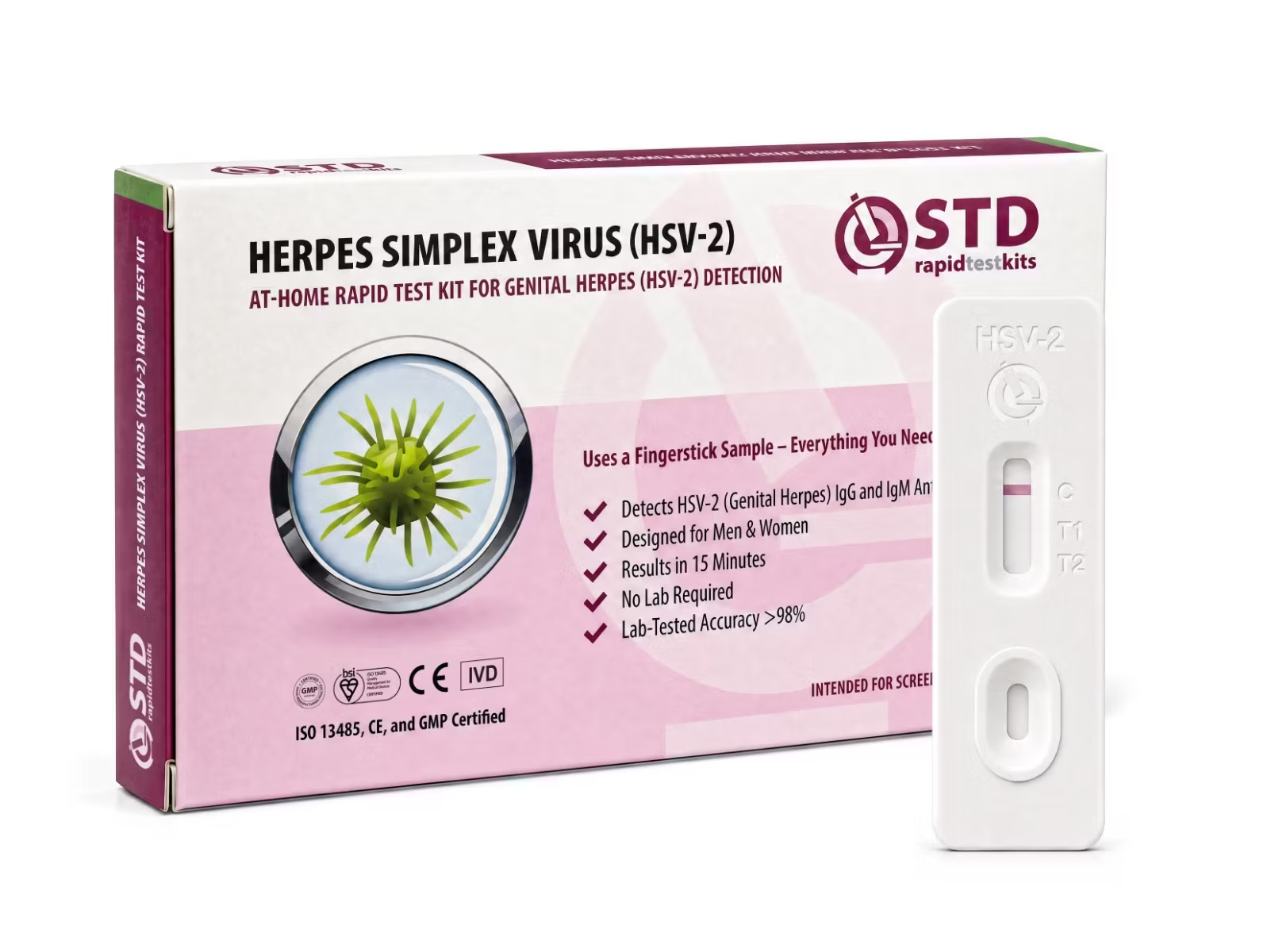
| At-home rapid lateral-flow | After the antibody window stated by the kit | HSV-2 antibodies from a fingerstick blood sample | Lateral-flow chemistry is less sensitive than lab IgG; positive results are worth confirming with a lab test |
Picking the Right Test for Your Situation
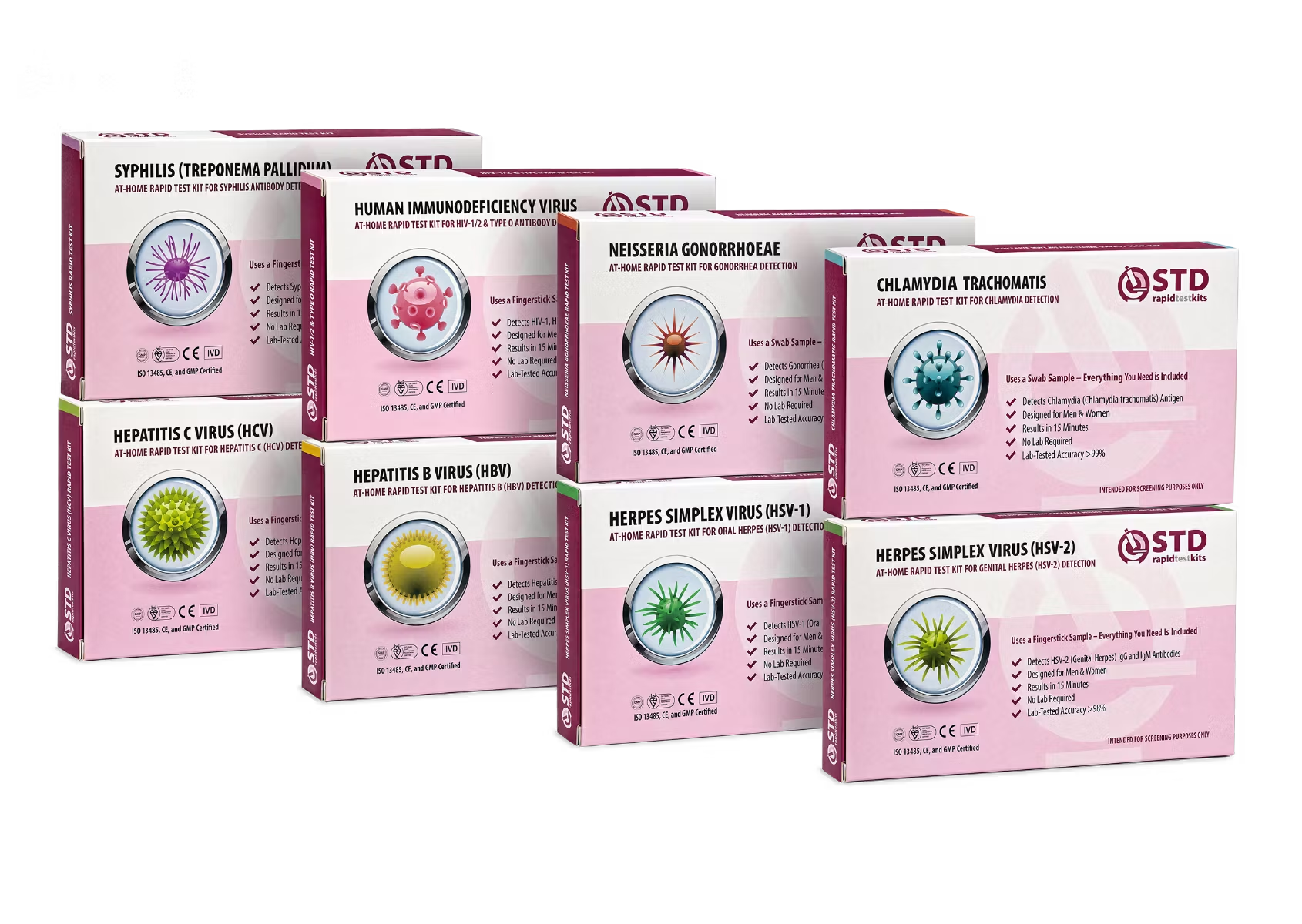
If sores have already appeared, a clinic visit for a swab and PCR test will give the most direct answer about the current outbreak. If only tingling is present with no lesions, the practical question becomes timing: how far you are from the possible exposure determines whether a blood antibody test today will be reliable. The single-infection HSV-2 antibody kit below is the right fit for someone whose worry is specifically herpes; the broader combo kit further down covers an exposure that could have transmitted more than one infection.
The kits below are sold by stdrapidtestkits.com and use rapid lateral-flow chemistry, which is faster and more private than a lab visit and a useful complement to lab confirmation on any positive result.
Living With the Possibility
This is the part most people fear to read. The fear is rarely about pain or health complications. It is about identity. A positive herpes result can feel like a label, like something has shifted permanently. The reality is quieter than the fear.
Herpes is common. Hundreds of millions of people worldwide carry HSV-1 or HSV-2, and many never know it, per the WHO herpes simplex virus fact sheet. The CDC's genital herpes basics page notes that most people with genital herpes do not know they have the infection because symptoms are absent, too mild to notice, or easily mistaken for another skin condition like a pimple or an ingrown hair. Some people never have symptoms. Others have mild outbreaks that become less frequent over time. Antivirals such as valacyclovir and acyclovir are the standard prescription options, used either to shorten individual outbreaks or as daily suppressive therapy to reduce recurrence frequency and transmission risk.
Research and patient-experience literature consistently find that many people date, marry, and build families while managing herpes. A positive result means a few new conversations, not a new identity.
Triggers: Why Tingling Can Happen Again
If anal herpes is confirmed, tingling becomes a familiar signal. Recurrences are commonly tied to stressors the body is already navigating; the virus remains in the body, but it does not control daily life. It responds to biological pressures and quiets down when those pressures do.
Some people feel prodrome once or twice a year. Others barely notice it after the first outbreak. The immune system adapts; over time, many outbreaks become shorter and milder. Understanding personal trigger patterns gives a sense of control that is genuinely useful, not just psychological.
- Major stress or sleep loss.
- Other illness, especially with fever.
- Friction from sex without adequate lubrication.
- Hormonal shifts, including the menstrual cycle.
- Sun exposure (for HSV-1 facial outbreaks).
If It Is Not Herpes: When to See a Provider
Sometimes tingling persists and testing remains negative. That is when the differential widens. Chronic hemorrhoids can create nerve-like discomfort. Pelvic floor tension can radiate sensations into the anal area. Dermatologic conditions can cause intermittent irritation without a dramatic rash.
Clinical evaluation is appropriate if symptoms last more than a few weeks, worsen progressively, or come with bleeding, severe pain, fever, or other systemic illness. Self-diagnosis has limits. Listening to your body includes knowing when to bring a provider in.
Most anal tingling resolves without becoming a lifelong diagnosis. The body is sensitive. It reacts; it heals.
- Symptoms lasting more than a few weeks without improvement.
- Progressive worsening rather than fluctuating discomfort.
- Bleeding from the anus or rectum.
- Severe pain, especially pain that interferes with sitting or bowel movements.
- Fever, chills, or other systemic illness alongside the local symptoms.
- Lesions that do not heal within two to three weeks.
What to Do Right Now
If tingling is the symptom in front of you, three practical steps tend to lower the noise:
- Note the timing. When was the last potential exposure? How many days have passed? This determines whether a test now will be meaningful or premature.
- Limit checking. Inspect once or twice, not every hour. Obsessive checking inflames delicate skin and amplifies anxiety, which itself raises nerve sensitivity.
- Plan, do not panic. If you are past the antibody window, take action. If you are still inside it, mark the calendar for the appropriate retest date. Structure replaces spiraling.
If testing eventually confirms herpes, the diagnosis is manageable. Antiviral treatment, awareness of triggers, and honest conversations with partners are the practical tools that follow.
Information Replaces Fear
Tingling around the anus is a sensation, not a sentence. It can be prodrome, surface irritation, or stress routing through sensitive nerves. The only way to separate possibility from probability is thoughtful timing paired with appropriate testing.
Fear says, "This means my life is ruined." Information says, "Tingling has multiple causes; let me evaluate timing and symptoms."
- Note the date of any possible exposure and count forward to the appropriate testing window.
- Stop the inspection loop. One or two careful checks beat hourly ones; constant inspection makes nerve sensations louder.
- Book or order the right test. A clinic swab if a lesion is visible, a lab IgG or rapid HSV-2 antibody test once the antibody window has passed.
FAQs
- I feel tingling but still do not see any sores. Am I just waiting for the worst?
- Not necessarily. Tingling can be prodrome, but it can also be friction, a tight pelvic floor, anxiety, or heightened body awareness. If it is herpes, sores typically follow within a couple of days during a first outbreak. If several days pass and nothing appears, that is useful information too. Sensations are allowed to be just sensations.
- What does herpes tingling actually feel like?
- Most people describe a localized buzzing or pins-and-needles feeling in one specific spot. It can feel deeper than surface itching, almost as if the nerve itself is humming. It is usually subtle at first. Widespread irritation across the whole area is more often surface skin irritation than classic herpes prodrome.
- Can anxiety really cause tingling around the anus?
- Yes. Stress hormones increase nerve sensitivity, blood flow shifts, and small sensations get amplified. It is common to develop tingling within minutes of reading about herpes symptoms. The sensation is real; the cause is the nervous system, not the virus.
- If I only had anal sex once, what are the odds this is herpes?
- Transmission can happen from a single encounter, especially if a partner has active lesions or is shedding virus asymptomatically. But one encounter does not automatically equal infection. Risk depends on whether protection was used, whether the partner has herpes, and whether visible sores were present. Probability is not destiny; testing after the proper window period provides clarity.
- How long should I wait before testing?
- If sores appear, get them swabbed promptly at a clinic. That is the most direct way to confirm an active outbreak. If only tingling is present and no lesions are visible, lab blood antibody testing is most reliable around twelve weeks after a possible exposure. Testing earlier can return a falsely reassuring negative.
- Is anal herpes worse than herpes elsewhere?
- The virus behaves the same way; the location changes the experience. Anal outbreaks can feel more uncomfortable during bowel movements and may cause deeper nerve sensations. "Different" is more accurate than "worse." Recurrences tend to become milder over time at any site.
- If I have tingling but no pain, does that make herpes less likely?
- Primary outbreaks are often painful, but recurrent episodes can be mild. Some people feel only tingling and tenderness. Others have significant discomfort. Severity varies widely between people and between outbreaks in the same person, which is why comparing your symptoms with other people's stories online is not a reliable diagnostic.
- Can I still have sex if I am just feeling tingling?
- If herpes has been confirmed and prodrome is recognized, the safest choice is to avoid sexual contact until symptoms pass; viral shedding risk is elevated during prodrome and active outbreaks. If herpes is unconfirmed, using condoms and communicating openly with partners reduces risk while testing timing is worked out.
- U.S. Centers for Disease Control and Prevention. Genital herpes basic fact sheet covering symptoms, asymptomatic shedding, and general diagnostic context.
- World Health Organization. Herpes simplex virus fact sheet with global prevalence figures for HSV-1 and HSV-2.
- NHS. Genital herpes overview from the UK national health service with patient-facing guidance on symptoms, outbreak duration, and when to seek care.
- Johns Hopkins Medicine. HSV-1 and HSV-2 condition overview covering the latent nerve-based phase of infection and reactivation patterns.
- Planned Parenthood. Patient-facing herpes overview covering testing, prodrome, and management options.
