
Published: November 2025 | Last updated: May 2026 | Editorial review and quality control: Martina N.
Most people who test positive for gonorrhea expected they wouldn't. They used condoms during penetrative sex, skipped them during oral, felt nothing strange afterward, and assumed that was the end of the story. The result is the most common opening pattern in gonorrhea care: someone who thought they played it safe getting an unexpected call from a partner or a clinic, then trying to retrace what could have gone wrong.
This guide walks through every realistic transmission route, what raises and lowers each risk, and when testing actually catches the infection. The aim is clarity without panic, because most readers searching for this information are dealing with worry, not negligence. By the end you should know which routes the standard safer-sex playbook covers, which ones it leaves wide open, and how to fold testing into your routine without it feeling like a crisis response.
Key Takeaways
- Gonorrhea spreads through oral, vaginal, and anal sex, plus shared sex toys. The bacteria often colonize the throat or rectum without producing any symptoms, which means people transmit it without knowing.
- Condoms cut risk substantially during penetrative sex but don't cover oral routes or shared toys. Layering protection (barriers, dedicated toys per partner, routine testing) closes the gaps that catch people off guard.
Why people who feel fine still test positive
Gonorrhea is famous in clinics for catching cautious people off guard. The most common pattern looks like this: someone uses condoms for vaginal or anal sex, skips them for oral, and walks away assuming they were protected. Weeks later, a partner's test comes back positive, and theirs does too. The bacteria moved through the one route the condom didn't cover.
The reason it surprises people is structural. Most safer-sex education focuses on penetrative sex with condoms, while oral sex, shared sex toys, and brief unprotected contact get treated as edge cases when they're nothing of the sort. According to the CDC's overview of gonorrhea, the bacterium Neisseria gonorrhoeae readily colonizes the throat, rectum, and urethra, and people often have no idea they're carrying it. Many infections produce no symptoms at all, especially at oral and rectal sites.
If you're reading this after a positive result or a worrying conversation, that doesn't make you reckless. It usually means you were missing one or two facts about how the bacteria move, and you'll have those facts by the end of this article.

How the bacteria actually move between people
Gonorrhea is caused by the bacterium Neisseria gonorrhoeae, which is important to get straight: it's a bacterium, not a virus. Antibiotics can clear it, and the body doesn't build the kind of lasting immunity that some viral infections produce, which is why people can be reinfected after successful treatment if exposure happens again.
The bacteria live in the moist linings of the body: the urethra, cervix, rectum, throat, and the conjunctiva of the eye. Transmission happens when those linings make direct contact with infectious fluids or with another colonized surface during oral, vaginal, or anal sex. Pre-ejaculate carries enough bacteria to transmit on its own, which is one reason the pull-out method does nothing to lower gonorrhea risk. The bacteria don't survive well on dry surfaces or outside body heat for long, which is why the toilet-seat fear that gets passed around is unfounded.
What makes the infection difficult to track in real life is that the bacteria can sit in the throat or rectum for weeks, shedding into fluids, without ever producing a symptom the carrier would notice. That's the engine of most transmission chains: people who feel fine, with infections in sites they didn't think to test.
Gonorrhea bacteria require direct mucosal contact to transmit; they don't survive on dry surfaces. Toilet seats, towels, pool water, and shared cutlery aren't realistic transmission routes. The risk is always person-to-person, via infected fluids reaching a mucous-membrane site (urethra, cervix, rectum, throat, or eye).
Every realistic transmission route, ranked by risk
The chart below covers the routes that actually account for new gonorrhea cases, plus a few that get blamed but shouldn't. Risk levels reflect general patterns; individual exposure varies with factors like ejaculation, presence of cuts or sores, and whether the partner has an active untreated infection.
| Exposure route | Transmission risk | What raises the risk |
|---|---|---|
| Unprotected vaginal sex | High | No barrier, untreated partner infection, presence of other STIs |
| Unprotected anal sex | High | Rectal mucosa is thin and easily colonized; receptive partner is at higher risk |
| Receiving oral sex | Medium | Partner has undiagnosed throat gonorrhea (usually no symptoms) |
| Giving oral sex | Low to Medium | Direct contact with infected genital or rectal fluids; ejaculation increases risk |
| Sharing sex toys | Medium | Toys not covered or cleaned between users or between body sites |
| Skin-to-skin near genitals (no penetration) | Low | Possible only if infectious fluids reach mucous membranes |
| Toilet seats, towels, pools, hot tubs | None | The bacteria can't survive long outside the body; this is a persistent myth |
Why so many cases are silent
The hardest fact in gonorrhea epidemiology is how often the infection produces no symptoms at all. The CDC notes that pharyngeal (throat) and rectal infections in particular tend to be silent, and a substantial share of urogenital infections in women also produce nothing detectable. People feel normal, transmit unknowingly, and only learn about the infection when a partner tests positive or a routine screening flags it.
This is the central reason public-health agencies recommend testing on a schedule rather than waiting for symptoms. The CDC's gonococcal-infection treatment guidelines recommend annual screening for sexually active women under 25 and for anyone with new or multiple partners, with more frequent testing (every 3 to 6 months) for men who have sex with men and people with overlapping risk factors. The WHO's STI fact sheet makes the same case at a global scale: asymptomatic carriers drive the bulk of transmission, which is exactly why screening exists as a default rather than a reactive tool.
Practically, this means routine testing isn't a confession of risky behavior. It's the only reliable way to break the silent chains gonorrhea uses to spread.
Most gonorrhea infections in the throat and rectum cause no symptoms but can still be transmitted to sex partners and can lead to serious complications.
Oral sex: the most underestimated route
Pharyngeal gonorrhea, an infection seated in the throat, is the route that catches the most people off guard. The throat almost never produces obvious symptoms when colonized; there's no soreness, no visible inflammation in most cases, just bacteria sitting in the tissue and capable of passing to a partner's genitals during the next oral encounter. A small fraction of pharyngeal cases produce a sore throat or swollen lymph nodes, but most are clinically silent.
This route works in both directions. A throat infection can pass to a partner's genitals during fellatio or cunnilingus. A genital infection can pass to a partner's throat during oral sex. Even rimming and prolonged deep kissing in the presence of open sores or bleeding gums can transfer the bacteria, though kissing alone is a rare and inefficient route compared with the genital pathways.
Standard external condoms protect the penis during oral but do nothing for vulvar or oral surfaces themselves. Dental dams (thin latex squares used as barriers for oral-vulval or oral-anal contact) cover that gap, and almost nobody uses them in real life. If oral sex is a regular part of your sex life, throat exposure belongs in your testing picture, and a clinic NAAT panel can swab the throat directly when you ask for it.
- Throat infection to partner's genitals: the carrier performs oral sex, the bacteria pass from their throat to the receiving partner's urethra, vagina, or rectum.
- Genital infection to partner's throat: the carrier receives oral sex, the bacteria pass from their genital fluids to the giving partner's throat tissue.
Neither direction usually produces visible symptoms, which is why people are surprised when a partner's test comes back positive.
Shared sex toys: the route nobody talks about
Sex toys are a credible transmission route when they're shared between people without a barrier or proper cleaning between uses. The bacteria can survive briefly on toy surfaces, especially porous materials like jelly rubber or untreated silicone, long enough to transfer infectious fluids during the next use.
The risk appears when a toy passes directly between partners mid-session without a barrier change, when it moves between body openings within the same person (vaginal to anal, for example, which can also transfer gut bacteria into sites that aren't built for them), or when it's reused on a different partner days later without thorough cleaning between sessions.
The fix is uncomplicated. Cover toys with a fresh condom for each user, change the condom whenever the toy moves to a different opening, and clean thoroughly with soap and warm water (or with the toy manufacturer's recommended method) between sessions. Body-safe non-porous materials like medical-grade silicone, glass, and stainless steel are easier to disinfect than porous materials and are worth the upgrade if you're sharing toys regularly.
Why condoms aren't a complete shield
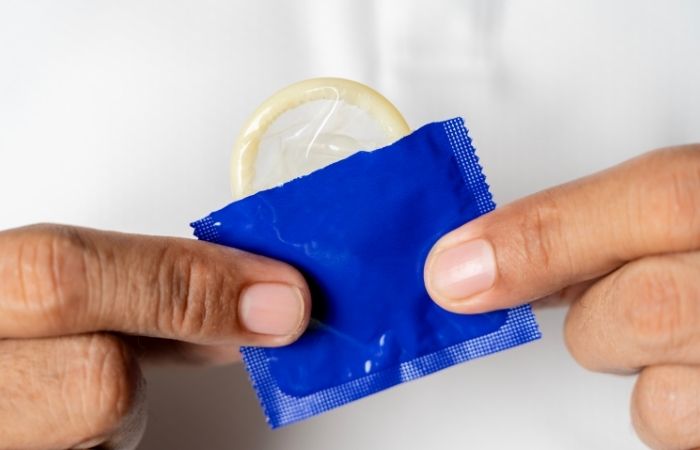
Condoms work. They cut transmission risk substantially when used correctly, and they remain the single most effective barrier against most STIs during penetrative sex. Three real-world gaps explain why they don't fully eliminate gonorrhea risk.
A condom only protects the area it covers. Throat-to-genital and genital-to-throat transmission during unprotected oral sits entirely outside that coverage, as does vulva-to-vulva contact and any rectal exposure that involves more than just the covered penis. Real-world use is also messier than the package directions imply; condoms slip, break, get put on partway through, or get removed before the act ends, all of which create windows of unprotected contact long enough to transmit the bacteria. NHS guidance on gonorrhoea reflects this reality, recommending condoms while noting that barrier methods need to be applied properly and used for every type of sex to be effective. And condoms don't address shared toys, hand-to-genital transfer of infectious fluids, or contact with mucous membranes that aren't covered by the latex.
So layer protection rather than rely on a single tool: condoms for penetrative sex, dental dams for oral when feasible, dedicated toys per partner with fresh barriers between users, and routine testing to catch what slips through despite reasonable precautions.
Incubation vs detection: two different clocks
Two timelines often get confused, and the confusion leads to people testing too early and getting falsely reassured by a negative result.
Incubation is how long after exposure symptoms might appear, if they appear at all. For gonorrhea this is typically 1 to 14 days, with most symptomatic cases showing up between days 2 and 5. Most infections, especially those at the throat and rectum, never produce symptoms during the entire course of the infection, which is why you can't use "I feel fine" as a substitute for a test.
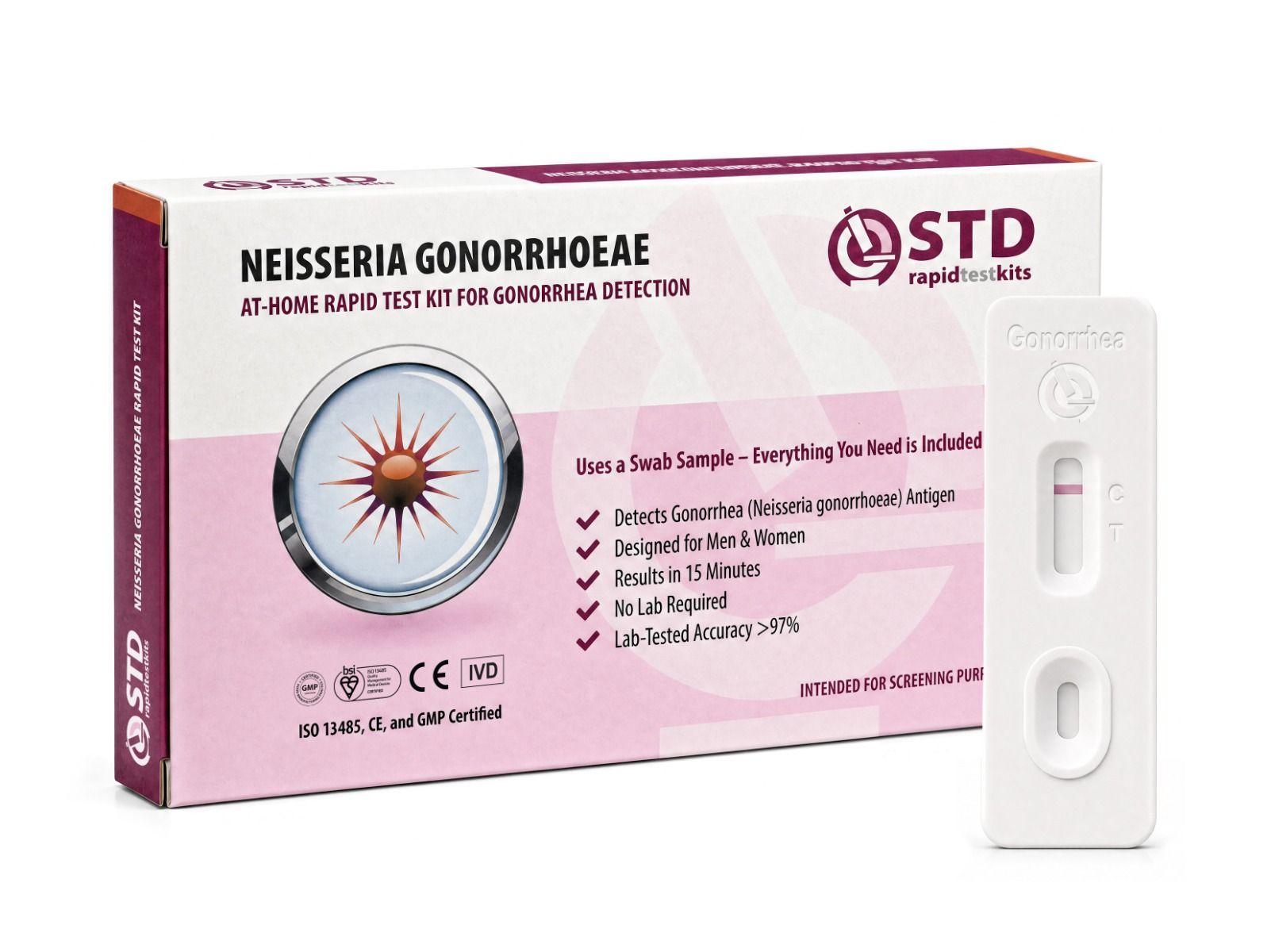
The detection window is how long after exposure a test can reliably find the infection. For laboratory NAAT (nucleic acid amplification testing, the clinical gold standard), the recommended testing window is roughly 7 to 14 days after exposure. Testing earlier than that risks a false negative because the bacterial load hasn't reached detectable levels at the sample site yet, especially at oral and rectal sites where colonization can take a few extra days. At-home rapid lateral-flow tests follow a similar window logic; they screen well after that 7-to-14-day mark and earlier results aren't reliable.
If your exposure was within the last week, schedule the test for the second week. If symptoms develop sooner or the exposure was high-risk (a partner who tested positive, for instance), see a clinician promptly rather than waiting on the window; clinicians can swab and treat empirically while results process.
How accurate are at-home gonorrhea tests, and when should I take one?
At-home rapid lateral-flow tests screen reliably when used after the recommended 7 to 14 day window from exposure; a positive result is worth confirming at a clinic with NAAT, the laboratory gold standard. Test sooner than the window and you risk a false negative regardless of which kit you use, because the bacteria simply haven't reached detectable levels at the sample site yet.
Realistic exposure scenarios
Most readers don't end up in textbook situations. They end up in ordinary ones, and those are the situations that account for the bulk of new infections. Recognizing the pattern in your own situation is half the work of figuring out what to do next.
Scenario 1: oral-only encounters. You went down on a partner without a barrier, or received oral without one. The partner had pharyngeal or genital gonorrhea they didn't know about because their last screening missed the throat. The bacteria went straight to your throat or genitals during the encounter, and you walked away with no warning sign.
Scenario 2: a brief lapse with a condom. You used a condom for most of the act. It slipped, was off briefly, was put on a few minutes in, or came off before the act ended. Even short stretches of unprotected contact are enough exposure for the bacteria to transfer if the partner is colonized.
Scenario 3: shared toys without barriers. You and a partner used the same toy without changing condoms or cleaning between uses, or moved the toy between body sites within the same session. Fluids transferred, and the bacteria came along with them, sometimes without either person realizing the sequence created a transmission risk.
Scenario 4: a partner who genuinely didn't know. Someone tested negative six months ago, has felt fine, has been honest about all of it, and assumed they were clear. They were sincerely mistaken because their test six months ago didn't capture every site, or because they acquired the infection between then and now from a partner who also didn't know. The infection passed quietly with no one acting in bad faith.
All four scenarios involve a body site or a moment that wasn't covered: a throat that wasn't tested, a brief unprotected window during otherwise-protected sex, a toy that wasn't cleaned between uses, or a partner whose last screening missed a site. None require negligence or bad faith from anyone.
What to do if you think you've been exposed
The first move is to wait, then test. If exposure was within the last few days, a test taken immediately may miss the infection because bacterial load is still building. Schedule it for 7 to 14 days post-exposure, with a follow-up two to three weeks out if your initial result is negative but suspicion remains (high-risk exposure, ongoing symptoms, or a confirmed positive partner).
If you have symptoms (burning during urination, unusual discharge, sore throat after oral exposure, rectal discomfort or discharge), don't wait for the window. See a clinician sooner; they'll typically swab the suspected sites and start empirical treatment while results are pending, especially if the clinical picture or exposure history is convincing.
If you test positive, the standard treatment per current CDC guidelines is a single 500 mg intramuscular injection of ceftriaxone (with weight-based dosing for people over 150 kg). Antibiotic-resistant strains of gonorrhea exist and are tracked through CDC surveillance, which is why self-treating or skipping the recommended regimen is not advised; resistance testing tells clinicians which drugs remain effective when first-line treatment fails. Most people are no longer infectious within about a week of treatment. Sexual partners from the past 60 days should be notified and treated, even if they have no symptoms, because the alternative outcome is reinfection from an untreated partner shortly after your own treatment finishes.
Notification can feel daunting. You can do it directly, or use anonymous partner-notification services that send a message on your behalf without revealing your identity. Most US state health departments and many international equivalents run these services; your local health department or the prescribing clinic can point you to the right one.

FAQs
- Can you really get gonorrhea from oral sex?
- Yes, oral transmission is real and underrecognized. Pharyngeal gonorrhea (an infection in the throat) and genital gonorrhea both transmit during oral sex, in either direction. The throat infection in particular usually produces no symptoms, so a partner can pass it without any awareness. Standard condoms protect the penis but not the vulva or oral surfaces; dental dams cover that gap when used.
- Can you have gonorrhea without any symptoms?
- This is extremely common. Throat and rectal infections almost never produce symptoms, and a significant share of urogenital infections in women also produce nothing noticeable. This is the main reason routine STI screening exists as a default rather than something you only do when something feels wrong.
- Do condoms prevent gonorrhea entirely?
- They cut transmission risk substantially during penetrative sex, but they don't cover every site where the bacteria live. Throat-to-genital and shared-toy transmission both sit outside what a standard condom protects. Use them, and combine them with dental dams for oral, dedicated toys per partner, and regular testing.
- Can you get gonorrhea from a toilet seat or towel?
- No, that's an old myth that won't quite die. The bacteria don't survive long on dry surfaces and need direct mucosal contact to transmit. Toilet seats, towels, bedsheets, and pool water are not realistic transmission routes. Save the worry for the routes that actually matter.
- Do I need to tell my partner if I test positive?
- Yes, both for their health and to prevent reinfecting yourself once treatment finishes. You can do this directly or use anonymous partner-notification services in many regions. Per CDC guidance, partners from the past 60 days should be notified and treated, even when they have no symptoms, because untreated partners are the single biggest cause of post-treatment reinfection.
- When can I have sex again after treatment?
- Wait at least seven days after a single ceftriaxone injection, and only resume after any partners have completed their own treatment. If symptoms persist past a week, follow up with the prescribing clinician; persistent symptoms can indicate reinfection or a treatment-resistant strain that needs alternative therapy.
- How soon after exposure should I test?
- For laboratory NAAT tests and at-home rapid lateral-flow tests alike, the recommended window is 7 to 14 days after exposure. Testing earlier risks a false negative because bacterial load is still building at the sample site. If symptoms develop sooner, see a clinician immediately rather than waiting on the test window.
- My partner tested negative and I tested positive. Did they cheat?
- Not necessarily, no. They might have had the infection weeks or months ago and cleared the throat infection without noticing it. Their test might not have sampled the infected site (throat and rectal infections are easy to miss when only urine is sampled). Or one of you was exposed earlier than the relationship and didn't know. Before drawing conclusions, retest at multiple sites and have an honest conversation.
You're not careless. You're better informed now
Most people who get gonorrhea expected they wouldn't. They used some protection, made reasonable assumptions, and got caught by a route they were never told about in any sex-ed class. Knowing the actual transmission paths is what changes what comes next, even though it can't change anything that's already happened.
None of the next steps require becoming a different person about your sex life; they require having the information you should have had earlier and acting on it without shame.
Your next steps
- Test on a schedule, not just after symptoms or a scare. Annual screening is the default for sexually active people under 25 and anyone with new or multiple partners; every 3 to 6 months for higher-risk groups.
- Use barriers for oral sex when feasible. Standard condoms cover the penis; dental dams cover vulval and anal contact during oral.
- Don't share sex toys without a fresh condom per user, and clean toys thoroughly between body sites and between sessions.
- If you test positive, notify partners from the past 60 days and treat together. Partner treatment is what stops the reinfection cycle.
- U.S. Centers for Disease Control and Prevention. About Gonorrhea, including transmission routes, sites of infection, and the asymptomatic nature of pharyngeal and rectal cases.
- U.S. Centers for Disease Control and Prevention. STI Treatment Guidelines, Gonococcal Infections Among Adolescents and Adults. Includes the single 500 mg ceftriaxone regimen, weight-based dosing, the 60-day partner-notification window, and screening frequency recommendations.
- World Health Organization. Sexually transmitted infections fact sheet covering the global STI burden and the central role of asymptomatic transmission.
- NHS. Gonorrhoea clinical overview, including symptoms, transmission routes, treatment, and barrier-method prevention guidance.
- U.S. Centers for Disease Control and Prevention. Annual STI Surveillance, providing US incidence trends for gonorrhea and other reportable STIs.
