
Published: October 2025 | Last updated: April 2026 | Editorial review and quality control: Martina N.
A positive gonorrhea result lands hard. Most people sit with their phone for an hour before they do anything useful with the information. The good news is that the clinical part of this is genuinely simple. Gonorrhea is curable with a single antibiotic injection, the no-sex window is one week, and the only follow-up most people need is a routine retest three months later. The harder parts are the conversations and the waiting. Both have a script, and both get easier when you know what is supposed to happen and when.
What do I do right now after a positive gonorrhea test?
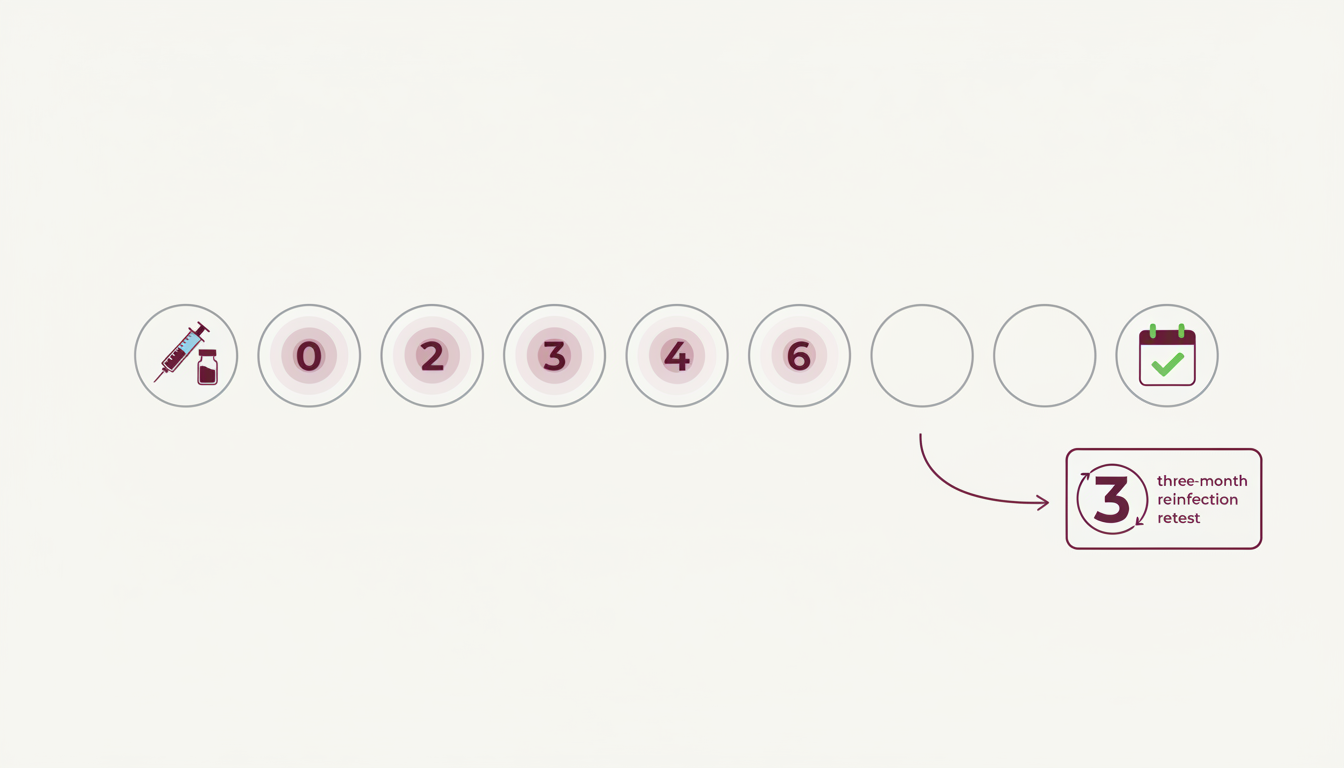
Get a single 500 mg ceftriaxone injection from a clinic or telehealth provider, ideally within a few days. Do not have any sex (oral, vaginal, or anal) for at least seven full days after treatment. Notify any sexual partner from the past 60 days so they can be tested and treated. Retest at three months to catch reinfection.
Key Takeaways
- Gonorrhea is fully curable with a single 500 mg intramuscular ceftriaxone injection per current CDC guidance; oral-only regimens are no longer first-line.
- Retesting at three months matters more than retesting right after treatment; reinfection is the main risk, not treatment failure.
Confirming a positive gonorrhea result
Before you do anything else, look at how the test was done. The two main testing methods have different reliability profiles, and that affects whether your next step is treatment or a second confirmatory swab.
Lab-based nucleic acid amplification tests (NAATs, sometimes called PCR tests) are the gold standard for diagnosing gonorrhea. The CDC's STI treatment guidelines describe NAAT performance as superior to bacterial culture across urogenital and nongenital sites, with very high specificity (CDC STI Treatment Guidelines: Gonococcal Infections). If your result came from a clinic blood draw, a mailed-in lab kit, or a telehealth lab order, it is almost certainly correct. Move on to treatment without retesting.
At-home rapid lateral-flow tests are screening tools. Their specificity is generally high, so a clearly positive line is unlikely to be a false alarm, but they are not perfect. If you used a rapid test, double-check three things before you treat the result as final. The kit was within its expiry date. You read the result inside the time window printed on the instructions, usually 10 to 15 minutes. The control line appeared. A faint test line read after that window can mislead in either direction.
If the result still looks ambiguous, do not just retest with another rapid kit and assume that settles it. Book a clinic NAAT or order a lab-processed swab. The clinical answer wins over two lateral-flow attempts.
| Test type | Reliability | Next step |
|---|---|---|
| Lab NAAT (clinic or mail-in) | Very high; the gold standard | Treat without retesting |
| At-home rapid lateral-flow | High specificity, lower sensitivity | Confirm with a clinic NAAT if the line is faint or ambiguous |
What treatment actually looks like
Treatment is the easiest part. Since 2020, the CDC has recommended a single intramuscular injection of 500 mg ceftriaxone for uncomplicated gonococcal infections in adolescents and adults under 150 kg (2020 MMWR update to gonococcal treatment). For people 150 kg or heavier, the dose increases to 1 g. If chlamydia has not been ruled out, providers add oral doxycycline 100 mg twice daily for 7 days, because chlamydia frequently coexists with gonorrhea and the two are commonly screened together.
You can get the injection at most urgent care clinics, sexual health clinics, primary care offices, and many telehealth services that route you to a partner pharmacy. The visit itself is short. The injection is given in a large muscle (gluteal or thigh) and the soreness usually fades within a day.
If you had symptoms before treatment, expect them to ease over the first 24 to 72 hours. Discharge thins, urinary burning fades. If symptoms persist beyond a week, that is a reason to follow up with a clinician for evaluation, not a reason to repeat antibiotics on your own.
One important caveat: do not take leftover antibiotics from a previous prescription, do not source ceftriaxone outside a licensed clinical workflow, and do not accept an oral-only regimen unless your clinician has a specific reason. Oral azithromycin and oral cefixime are no longer first-line choices because of rising resistance, and the CDC's 2020 update specifically removed dual-therapy with azithromycin from the standard regimen (CDC MMWR 2020 update).
| Scenario | First-line treatment | Notes |
|---|---|---|
| Uncomplicated gonorrhea, under 150 kg | Ceftriaxone 500 mg IM, single dose | Add doxycycline 100 mg orally twice daily for 7 days if chlamydia not ruled out |
| Uncomplicated gonorrhea, 150 kg or above | Ceftriaxone 1 g IM, single dose | Same chlamydia co-treatment with oral doxycycline applies |
| Pharyngeal (throat) gonorrhea | Ceftriaxone 500 mg IM (or 1 g if heavier) | Test of cure recommended 7 to 14 days after treatment |
| Severe cephalosporin allergy | Specialist-directed alternative | Do not self-substitute; consult an infectious disease clinician |
This article is published by stdrapidtestkits.com, which sells at-home STI test kits. We recommend products based on fit-for-purpose for the reader's concern, not commercial benefit. The treatment itself (ceftriaxone) requires a clinician; our kits are screening and follow-up tools, not a replacement for that prescription.
Telling partners
The CDC recommends notifying any sexual partner from the past 60 days, or, if your last sexual contact was more than 60 days ago, your most recent partner. They need testing and, in most cases, presumptive treatment, even if they feel completely fine. Asymptomatic gonorrhea is common, and an untreated partner is the most common reason a treated person ends up reinfected weeks later (CDC partner services guidance).
The conversation does not need to be dramatic. A short, factual message works better than a long apology. Two examples that work:
- "I just tested positive for gonorrhea. You should get tested too. It is treatable with a single shot of antibiotics."
- "Heads up: I got a positive gonorrhea result. Want to let you know so you can get checked. Happy to answer questions if useful."
If direct contact feels unsafe (an abusive ex, a hookup whose name you do not have), most state and local health departments offer anonymous partner notification services. You give them the contact details and they handle the message without naming you. In many U.S. states, your provider can also offer expedited partner therapy: a second prescription for your partner that you hand over directly, without them needing a separate visit.
Staying quiet is the one option that backfires. Untreated partners risk their own complications, and they keep the infection bouncing back to you.
You do not owe an apology or a long explanation. One direct sentence is enough: "I tested positive for gonorrhea. You should get tested too." If face-to-face contact feels unsafe, ask your local health department about anonymous notification or expedited partner therapy, both of which are designed for this situation.
When you can have sex again
Wait at least 7 full days after treatment before any sexual contact, including oral and anal sex. The 7-day window gives the antibiotic time to clear the bacteria and reduces the chance of passing it to a partner who has not been treated. If your partner was treated at the same time, both of you wait the same 7 days. If they were treated later, the clock effectively restarts from their treatment date.
This applies to all forms of sexual contact, not just penetrative sex. Gonorrhea spreads through any contact involving infected mucosa or fluids, including oral-genital and oral-anal contact. Condoms reduce transmission but do not eliminate it during this window, especially for oral or rectal exposures. The cleanest approach is no sexual contact at all until both people clear the 7-day mark.
If symptoms have not fully resolved by day 7, give it a few more days and follow up with your provider rather than assuming the antibiotic failed. Persistent symptoms after a documented adequate treatment are uncommon and usually trigger a clinical workup, not an immediate second course.
The 7-day no-sex rule applies to both partners separately. If your partner was treated later than you, count their seven-day clock from their injection date, not yours. Resuming sex before that second clock finishes is the single most common reason for early reinfection.
Retesting after treatment: test of cure vs reinfection
There are two retesting questions, and they answer different things. Test of cure asks whether the antibiotic actually worked. Retest for reinfection asks whether you have caught it again from a partner or a new exposure. The timing for each is different, and the most common mistake is treating them as the same question.
For uncomplicated genital or rectal gonorrhea, the CDC does not require a test of cure. The 500 mg ceftriaxone regimen is highly effective, and routine post-treatment NAAT can stay positive for weeks because it picks up dead bacterial DNA, which leads to false alarms. The exception is pharyngeal (throat) gonorrhea, where the CDC does recommend a test of cure 7 to 14 days after treatment because pharyngeal infections are harder to clear (CDC test-of-cure guidance).
Retesting for reinfection is a different recommendation, and it applies to nearly everyone. The CDC advises a NAAT 3 months after treatment, regardless of whether you think your partners were treated, because reinfection rates in the months following treatment are high. If 3 months feels far away and you have had new exposures in the meantime, retest sooner.
If you are using an at-home rapid kit for that retest, wait at least 2 weeks past treatment to avoid the same residual-DNA issue that can confuse a NAAT.
| Situation | Recommended retest window | Why |
|---|---|---|
| Uncomplicated genital or rectal gonorrhea, treatment completed | 3 months after treatment | Reinfection screening, not test of cure |
| Pharyngeal (throat) gonorrhea, treatment completed | 7 to 14 days (test of cure) plus 3-month reinfection retest | Throat infections are harder to clear; clinic NAAT preferred |
| Symptoms return after treatment | Return to clinician promptly | Rule out reinfection or, rarely, treatment failure |
| Partner declined or delayed treatment | Avoid sex; retest 2 weeks after any exposure | High reinfection risk if you resume contact |
| Pregnant | Per provider; usually within 1 month and again at 3 months | Pregnancy raises stakes for both partner and infant |
What untreated gonorrhea actually causes
Untreated gonorrhea is rarely a short-term emergency, which is part of why people put off treatment. The damage builds quietly. Knowing what it does helps make the case for not waiting.
In people with a uterus, the bacteria can ascend from the cervix into the uterus and fallopian tubes, causing pelvic inflammatory disease (PID). PID raises the risk of chronic pelvic pain, ectopic pregnancy, and tubal-factor infertility. The WHO gonorrhea fact sheet lists pelvic inflammatory disease and tubal-factor infertility as major complications of untreated infection (WHO gonorrhoea fact sheet).
In people with testicles, untreated infection can cause epididymitis, a painful inflammation of the tube behind the testicle. Severe or recurrent epididymitis can affect fertility.
In rare cases, gonorrhea spreads beyond the genital tract into the bloodstream, a condition called disseminated gonococcal infection (DGI). DGI can cause joint pain and swelling, characteristic skin lesions, and, very rarely, infection of the heart valves or coverings of the brain. It is uncommon but it does happen, and it requires hospital-level intravenous antibiotics.
Untreated gonorrhea also raises the risk of acquiring or transmitting HIV. Active gonococcal infection causes mucosal inflammation that impairs the natural epithelial barrier in the genital tract, which increases susceptibility in both directions during exposure. Research has associated active gonorrhea with a roughly 2 to 5-fold increase in per-exposure HIV acquisition risk; that is a meaningful elevation rather than a guarantee. A new gonorrhea diagnosis is a standard prompt to retest for HIV if your last HIV test was more than three months ago, especially if you have ongoing sexual activity.
One afternoon of treatment averts a much wider downstream risk, even if you feel completely well right now.
- Pelvic inflammatory disease (PID): chronic pelvic pain, ectopic pregnancy, infertility (people with a uterus).
- Epididymitis: testicular pain and swelling, possible fertility impact (people with testicles).
- Disseminated gonococcal infection (DGI): joint pain, skin lesions, rare cardiac or meningeal involvement (any anatomy).
- Increased HIV risk: roughly 2 to 5-fold higher per-exposure acquisition risk during active infection.
Reinfection and the ping-pong loop
Gonorrhea does not produce lasting immunity. Clearing one infection does not protect you from the next, and reinfection in the months following treatment is well documented in published surveillance literature (CDC STI treatment guidelines, reinfection section). The most common reason is a partner who was never treated.
The pattern is mechanical. Person A is treated, person B is not, A and B resume sex, A is reinfected within weeks. Both then test positive again. Avoiding this loop is exactly what the CDC's expedited partner therapy and the 7-day no-sex rule are designed to prevent.
If a partner is unwilling to get tested or treated, that is a serious health-decision boundary, not a relationship test. You can ask for proof of treatment before resuming sex. You can also choose to use barrier methods consistently, with the understanding that condoms reduce but do not eliminate transmission for oral and rectal exposures. Hoping the issue resolves without treatment keeps the reinfection loop running.
If you have several recent partners and the source is unclear, that is normal and not a reason for self-blame. Gonorrhea spreads through asymptomatic carriers all the time. The relevant question is who needs to know now, not who started it.
The most common cause of reinfection is a partner who was not treated. Person A treats. Person B does not. Both resume sex, and A is reinfected within weeks. This is exactly what expedited partner therapy and the seven-day no-sex window are designed to break.
Throat and rectal infections need different testing
Gonorrhea infects the throat (pharyngeal) and rectum (rectal), not just the genitals, and these extragenital infections are typically silent. A throat infection rarely causes a sore throat. A rectal infection rarely causes pain or discharge.
Here is the catch: a urine NAAT or a vaginal/penile swab will not detect a throat or rectal infection. To find pharyngeal gonorrhea you need a throat swab tested by NAAT. To find rectal gonorrhea you need a rectal swab. The CDC recommends extragenital testing based on reported sexual practices, not on symptoms (CDC extragenital screening guidance). If you have given oral sex or had receptive anal sex with the partner involved, ask specifically for those swabs.
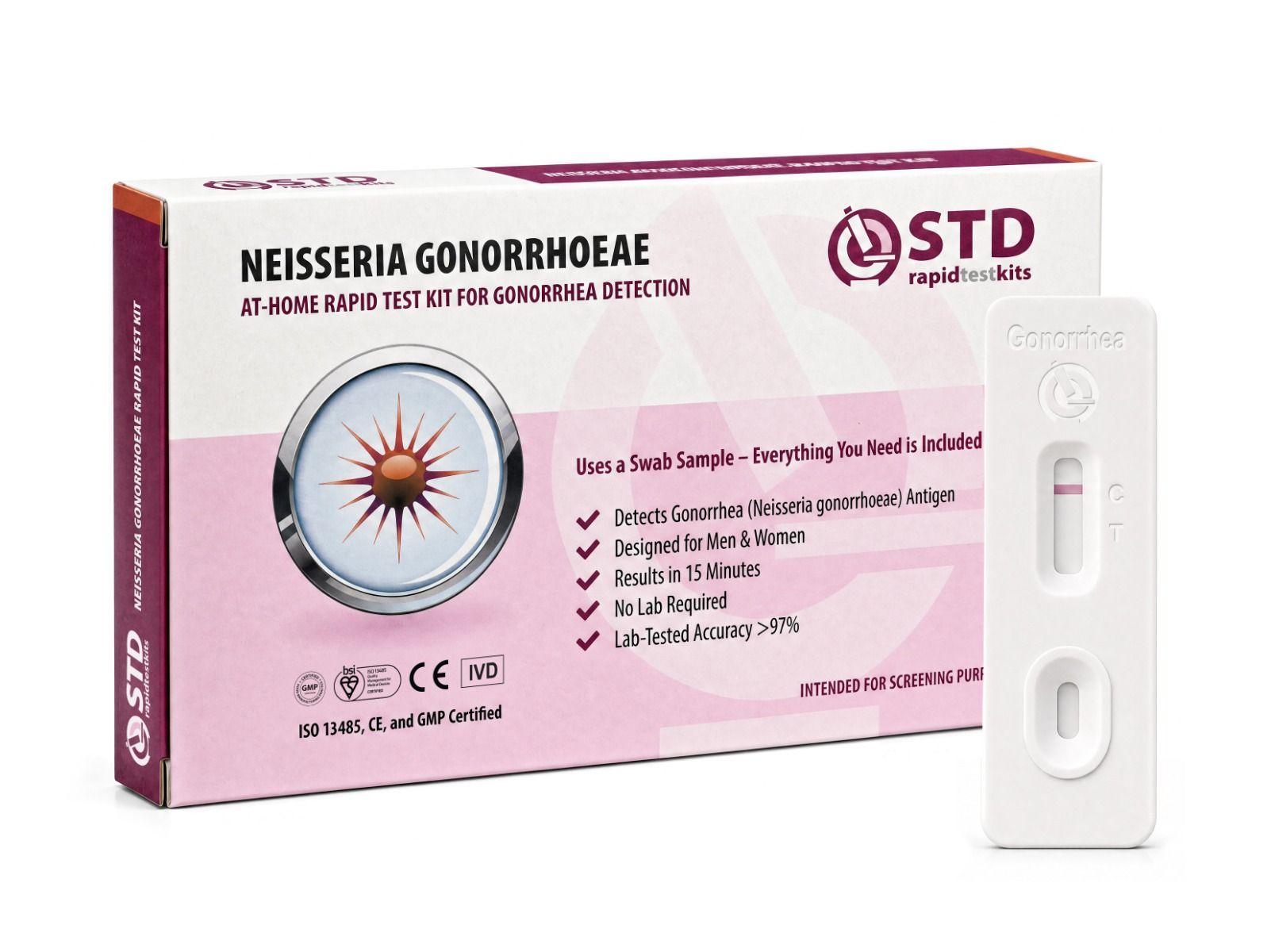
This site does not sell throat or rectal swab tests. Those need to be done at a clinic or via a comprehensive lab panel that includes pharyngeal and rectal collection. If your exposure was oral or anal, that is the right path, and a clinic visit is brief. The at-home rapid kits we sell cover genital infections (vaginal or urethral self-collection) and bloodwork for the panel STIs that frequently co-occur with gonorrhea.
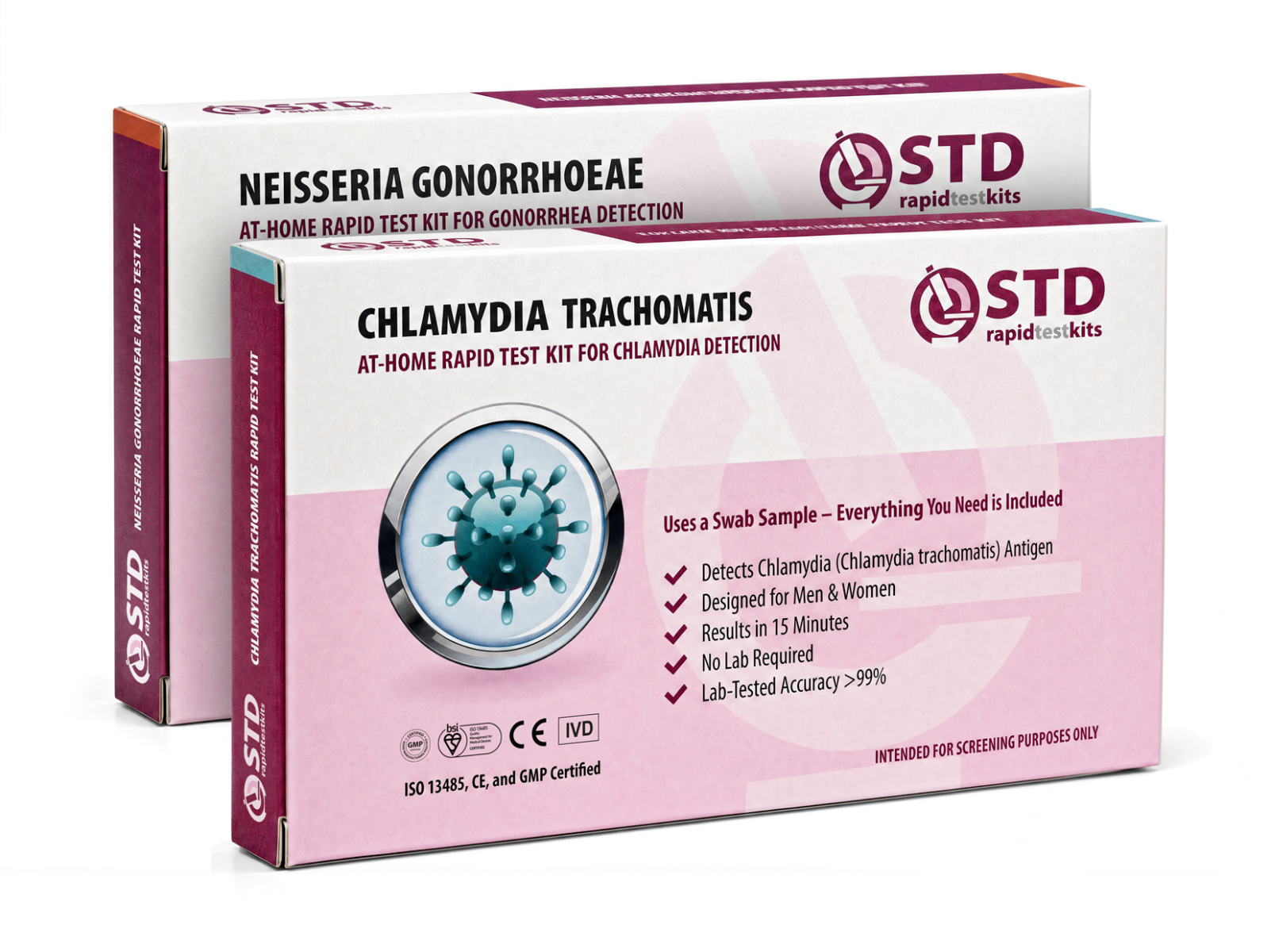
Chlamydia and gonorrhea co-infection is common enough that providers often treat presumptively for both. If you have not been screened for chlamydia recently, the combination kit below covers both with a single self-collected swab.
The emotional weight of a positive result
The clinical part of a gonorrhea diagnosis is almost trivially simple: one shot, wait a week, retest in three months. The emotional part is heavier. People describe rumination about who they got it from, dread about partner conversations, and shame that lingers long after the infection itself clears.
A few things help locate those feelings. First, scale: gonorrhea is one of the most commonly reported notifiable infections in the United States, with hundreds of thousands of new diagnoses each year (CDC STI surveillance). You are statistically very far from alone. Second, gonorrhea is curable, fully and reliably, with a regimen that has been refined over decades. Third, the act of testing, treating, and notifying partners is exactly the responsible behavior public health depends on.
None of that erases the feelings, but it locates them in context. If anxiety, shame, or intrusive thoughts about the diagnosis persist for weeks, that is worth raising with a primary care provider or a therapist. In the United States, the 988 Suicide and Crisis Lifeline is the right first call if any of those thoughts feel unmanageable.
Gonorrhea can be cured with the right treatment. It is important that you take all of the medicine your healthcare provider prescribes to cure your infection. Although medicine will stop the infection, it will not undo any permanent damage caused by the disease.
FAQs
- Can gonorrhea clear up on its own?
- No. Symptoms can fade or never appear, but the bacteria persist and can ascend into the reproductive tract or the bloodstream. Antibiotic treatment is required to clear it.
- How long after the injection am I no longer contagious?
- Seven days after treatment, for both you and your partner. If your partner was treated later, count their seven-day clock from their injection date, not yours.
- I retested a few days after my shot and it still came back positive. Did the treatment fail?
- Almost certainly not. Rapid tests and NAATs can pick up dead bacterial DNA for days to weeks after successful treatment. The CDC does not recommend a routine post-treatment test for genital or rectal gonorrhea. The exception is pharyngeal (throat) gonorrhea, which gets a test of cure 7 to 14 days after treatment.
- Do I really have to tell partners from the past 60 days?
- Yes, that is the standard CDC recommendation. They need testing and, in most cases, treatment, even if they feel fine. Many U.S. states also offer expedited partner therapy, where your clinician can give you a second prescription for your partner without a separate visit.
- Can a single oral antibiotic dose treat gonorrhea instead of the injection?
- No, not as first-line care. Oral azithromycin and oral cefixime regimens are no longer recommended because of resistance. The current first-line treatment is a single intramuscular injection of 500 mg ceftriaxone (1 g if you weigh 150 kg or more).
- Is throat gonorrhea a real thing, and how do I know if I have it?
- Yes, pharyngeal gonorrhea is common and almost always silent. A throat infection rarely causes a sore throat. Standard urine or genital swab tests do not detect it. If you have given oral sex to someone who tested positive, ask for a throat swab specifically.
- Can I be reinfected with gonorrhea?
- Yes. Gonorrhea produces no lasting immunity. The most common cause is a partner who was not treated, which is why the CDC recommends a routine 3-month retest after every gonorrhea diagnosis.
- Will gonorrhea affect my ability to have children?
- Not if it is treated promptly. Long-term untreated infection can cause pelvic inflammatory disease and tubal damage in people with a uterus, and epididymitis in people with testicles, both of which can affect fertility. Single-episode treated infection has no documented fertility impact.
- U.S. Centers for Disease Control and Prevention. STI Treatment Guidelines, 2021: Gonococcal Infections Among Adolescents and Adults. Source for diagnostic test performance, partner notification, the test-of-cure exception for pharyngeal infection, and reinfection guidance.
- U.S. Centers for Disease Control and Prevention. Update to CDC's Treatment Guidelines for Gonococcal Infection, 2020 (MMWR). Source for the current 500 mg ceftriaxone single-dose regimen and the removal of azithromycin from first-line dual therapy.
- World Health Organization. Gonorrhoea (Neisseria gonorrhoeae infection) fact sheet. Source for global burden, complications including PID and tubal-factor infertility, and resistance context.
- U.S. Centers for Disease Control and Prevention. Clinical Care of Gonorrhea (clinical reference). Provider-facing summary of diagnosis, treatment, and follow-up.
- U.S. Centers for Disease Control and Prevention. Sexually Transmitted Infections Surveillance. Source for U.S. case-count context and the relative ranking of gonorrhea among notifiable infections.
- U.K. National Health Service. Gonorrhoea condition page. Plain-language overview of symptoms, testing, and treatment used as a cross-check on phrasing.
