
Published: November 2025 | Last updated: May 2026 | Editorial review and quality control: Martina N.
A sore throat that drags on, a fever that will not quit, swollen glands tucked under the jaw, and a fatigue that feels heavier than any cold. Three completely different viruses can produce this exact picture: acute HIV, mononucleosis caused by the Epstein–Barr virus, and seasonal influenza. The body's alarm signals look almost identical from the outside, which is why people end up searching for differences in the middle of the night and why clinicians lean on timing, careful exam findings, and laboratory tests to tell them apart.
If your symptoms followed a recent sexual exposure, the question of whether this is acute HIV is worth taking seriously rather than dismissing. If you have been kissing a college roommate who is now exhausted, mono moves up the list. If half of your office is out sick during a flu surge, influenza is the obvious starting point. None of these clues are diagnostic on their own, but together they shape what a doctor checks for and which tests get ordered first. Most flu-like episodes turn out to be something straightforward that resolves on its own; the point of this article is to help you recognize the smaller set of situations where it is worth looking further.
Key Takeaways
- Acute HIV, mono, and influenza share early symptoms because the immune system reacts to all three with the same playbook: fever, sore throat, fatigue, and swollen lymph nodes.
- Doctors separate them with three tools: how fast the symptoms appeared after exposure, what the physical exam shows (especially rash and tonsils), and targeted blood or viral tests.
Why These Three Illnesses Get Confused So Often
Lined up side by side, the early symptoms of acute HIV, mono, and influenza overlap to a striking degree. All three trigger an aggressive immune response, and that response is responsible for most of what a sick person actually feels. Fever, achiness, and exhaustion are not signs of the virus itself; they are signs of the cytokines your body releases while it fights the infection.
When someone walks into a clinic with fever, sore throat, swollen glands, and exhaustion, a clinician is essentially looking at a body-wide alarm system that has been triggered. The alarm does not specify the cause. That is why patients frequently search for phrases like "flu-like illness HIV symptoms" or "mono vs HIV symptoms." From a purely physical perspective, the first days of these infections can feel nearly indistinguishable.
| Symptom | Acute HIV | Mono (EBV) | Influenza |
|---|---|---|---|
| Fever | Very common | Very common | Very common |
| Sore throat | Common | Extremely common | Sometimes |
| Swollen lymph nodes | Common | Very common | Less common |
| Extreme fatigue | Common | Very common | Common |
| Body aches | Common | Possible | Very common |
| Rash | Sometimes | Rare | Rare |
The First Clue Doctors Look For: Timing
One of the most powerful diagnostic tools in medicine is surprisingly simple: the timeline. Each virus has its own incubation period, the gap between exposure and the first symptoms. Pinning down that gap usually narrows the suspect list faster than any single physical finding.
According to the CDC's clinical guidance on acute HIV, most people who develop symptoms feel them within two to four weeks of exposure, although the window can stretch up to several weeks longer. Influenza, by contrast, comes on suddenly within days rather than weeks, per the CDC's flu symptom overview. Mono sits at the long end of the three. The MedlinePlus entry on infectious mononucleosis describes a notably longer incubation period than either flu or HIV, often several weeks after exposure, which is one reason mono can feel like it appeared "out of nowhere."
| Infection | Typical Onset After Exposure | Key Timeline Clue |
|---|---|---|
| Acute HIV | 2 to 4 weeks | Often follows a specific sexual or blood exposure |
| Mono (EBV) | 4 to 6 weeks (directional) | Long incubation; exposure can be hard to remember |
| Influenza | Days rather than weeks | Very fast onset, often during a community outbreak |
Subtle Symptom Differences Doctors Pay Attention To
Even though the three illnesses share many headline symptoms, certain patterns can quietly shift the diagnosis. Trained clinicians are watching for these on the way in the door.
The throat exam
Mono tends to produce a dramatic sore throat. Tonsils may become so enlarged that they nearly touch in the middle, and they often pick up thick whitish or grayish patches that can resemble severe strep. Acute HIV, by contrast, usually causes a milder redness without the heavy exudate seen in classic Epstein–Barr infection. Influenza generally produces throat irritation rather than the kind of swelling that makes swallowing painful.
The fatigue pattern
Mono fatigue is famously stubborn. It often lasts for weeks and sometimes months, and it does not improve much with sleep. Flu fatigue is intense but usually shorter, fading as the acute infection clears over roughly a week. Acute HIV fatigue often sits between the two, significant during the acute phase and then easing once seroconversion completes, even though the virus itself does not go away.
The rash clue
A rash during a flu-like illness is the single most useful detail in this differential. Influenza very rarely causes a rash. Acute HIV, however, can produce a faint pink or red rash across the chest, back, or face during seroconversion. It is typically flat (not raised), not itchy, and easy to miss in the mirror. That one finding can swing a doctor's working theory in a different direction entirely.
A flat pink or red rash during a flu-like illness is the one detail that most shifts a clinician toward suspecting acute HIV rather than mono or flu. Neither influenza nor mono routinely produces a rash, so when one appears alongside fever and fatigue it usually changes which test gets ordered first.
The Tests That Settle the Question
Symptoms and exam findings narrow the possibilities, but laboratory tests are what actually settle them. Each of these infections has its own diagnostic pathway, and modern clinics frequently run more than one test in a single visit so they can rule out several possibilities at once.
For HIV, the modern standard is a fourth-generation antigen/antibody test that looks for both the p24 antigen and HIV antibodies. The CDC's acute HIV clinical guidance notes that lab-based fourth-generation tests can detect infection roughly 18 to 45 days after exposure, with viral RNA testing picking up infection earlier. For mono, doctors typically order a Monospot or, when results need to be more reliable, EBV-specific antibody panels per the MedlinePlus mono article. For influenza, rapid antigen tests or PCR confirm the diagnosis quickly.
| Condition | Common Test | What It Detects |
|---|---|---|
| Acute HIV | HIV antigen/antibody combination test | HIV p24 antigen and HIV antibodies |
| Mono | Monospot or EBV-specific antibody panel | Epstein–Barr virus immune response |
| Influenza | Flu PCR or rapid antigen test | Influenza viral particles |
What Acute HIV Actually Feels Like in the First Few Weeks
Acute HIV causes so much confusion because the early infection phase behaves like a textbook viral illness. Clinicians sometimes call this stage seroconversion illness, which simply means the immune system has detected the virus and is starting to produce antibodies against it.
For most people who develop symptoms, they begin somewhere between two and four weeks after exposure. Some people notice only a mild fever and a scratchy throat that they would otherwise ignore. Others describe being flattened: deep body aches, headaches, and an exhaustion that arrives over a day or two and refuses to lift. A faint rash on the trunk, chest, or face is common enough that clinicians treat it as a meaningful clue when it shows up alongside a recent risk exposure.
One important detail many readers miss is that not everyone develops noticeable symptoms during acute HIV. Per the World Health Organization's HIV fact sheet, some people pass through the acute phase with very mild symptoms or with no symptoms at all. That is part of why HIV testing decisions should be based on exposure risk, not solely on how a person feels.
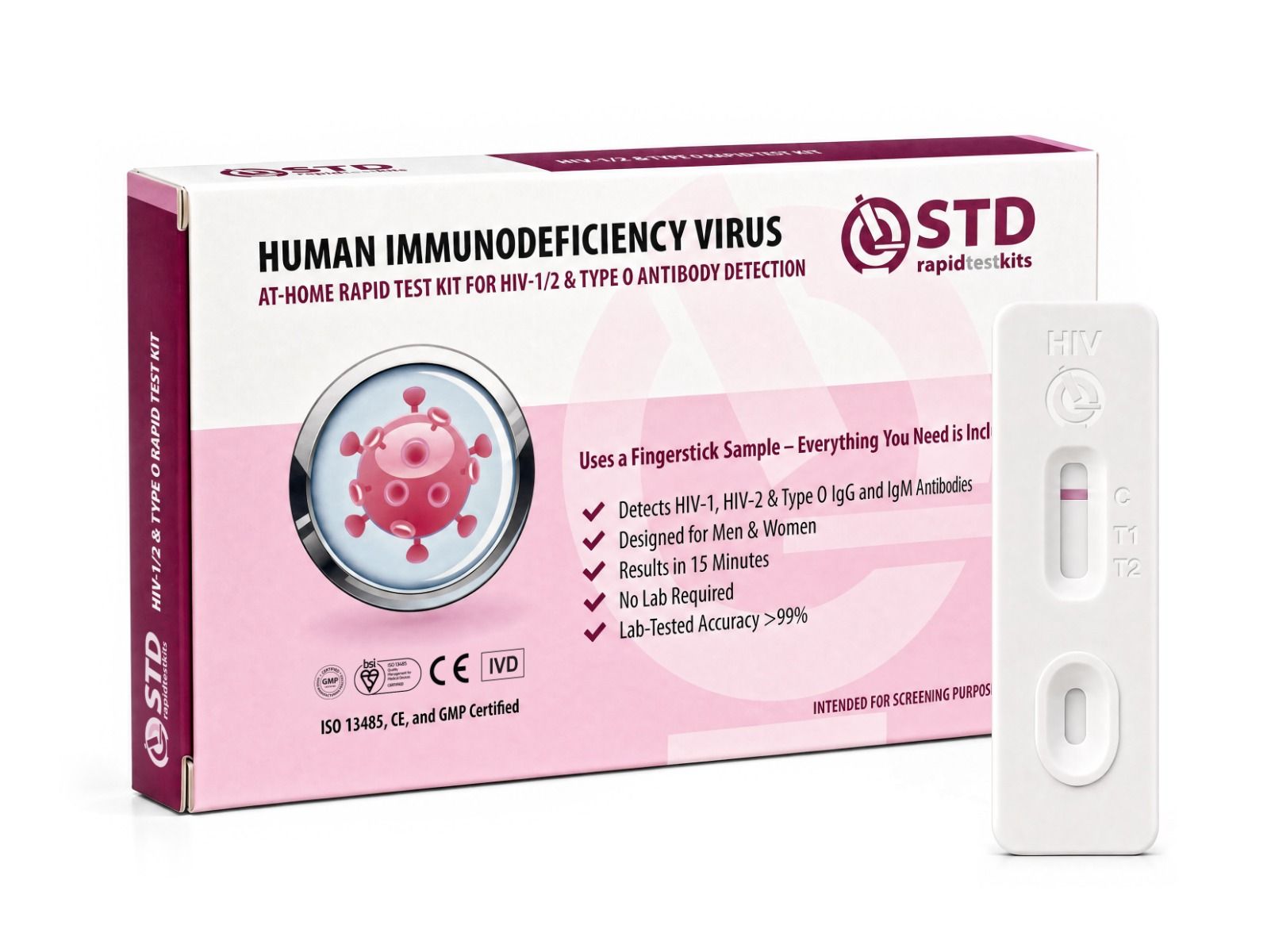
Our site sells rapid at-home HIV test kits; the information above reflects general clinical guidance, not a product endorsement.
Persons with acute HIV infection are highly infectious. Early diagnosis allows linkage to care, supports prevention of further transmission, and enables prompt initiation of antiretroviral therapy.
Mono: The Virus That Loves Your Lymph Nodes
Mononucleosis, almost always caused by the Epstein–Barr virus, has its own clinical fingerprint. Influenza spreads through respiratory droplets and HIV through blood or sexual fluids, but mono tends to travel through saliva, which is why it earned the nickname "the kissing disease."
The transmission route is only part of the picture. The physical findings often add the rest. Mono tends to produce dramatically swollen lymph nodes, particularly along the neck, and the throat exam can be impressive: tonsils enlarged, sometimes coated, and tender to the touch. MedlinePlus notes that an enlarged spleen can be found on exam in mono, which is one reason clinicians often advise avoiding contact sports during recovery.
Fatigue is the symptom that lingers. Instead of fading after a week, mono fatigue often persists for weeks and sometimes months after the fever and sore throat have resolved. That prolonged exhaustion is one of the clearest hints that someone is dealing with mono rather than influenza.
Fatigue that outlasts the fever by weeks is the clearest sign that mono, rather than flu, is what you are dealing with. Influenza usually clears in a week or two; mono can drain energy for months after the obvious symptoms fade.
Influenza: Fast, Intense, and Usually Short
The flu behaves differently from both mono and acute HIV in one obvious way: speed. People often describe feeling completely normal in the morning and being bedridden by evening. Fever spikes quickly, body aches become intense, and fatigue hits hard within hours.
Unlike mono, flu rarely produces dramatic lymph node swelling. Unlike acute HIV, flu almost never produces a rash. The CDC's overview of flu symptoms lists fever, chills, body aches, sore throat, cough, headache, and fatigue as the typical pattern, with most people recovering in a few days to two weeks.
Clinicians also weigh seasonal context. If dozens of patients in the community are testing positive for influenza in the same week, the prior probability that any given fever is flu rises sharply. That does not eliminate other possibilities, but it shapes the order in which tests are run.
Sudden onset, no rash, and no markedly swollen lymph nodes are the combination that points to flu. If symptoms built over a day rather than two weeks, and the throat exam shows irritation but not enlarged tonsils with patches, flu sits at the top of the differential.
How Doctors Narrow It Down During the Physical Exam
Before any test result comes back, a careful physical exam often points to one infection over another. Clinicians examine the throat, lymph nodes, skin, and abdomen, and sometimes feel for an enlarged spleen. Each of these areas can reveal patterns that help separate acute HIV, mono, and influenza.
The findings rarely confirm a diagnosis on their own. What they do is decide which tests should be ordered first, which saves time, anxiety, and money for the patient.
| Exam Finding | What It May Suggest | Why It Matters |
|---|---|---|
| Very enlarged tonsils with white or gray patches | Mono | EBV commonly inflames tonsillar tissue |
| Widespread lymph node swelling | Mono or acute HIV | Both infections activate the immune system broadly |
| Flat pink or red rash on chest, back, or face | Acute HIV | Flu rarely causes a rash |
| Severe body aches with minimal lymph node swelling | Influenza | Classic flu presentation |
| Enlarged spleen on abdominal exam | Mono | Splenomegaly is a hallmark of EBV infection |
The Role of the Immune System in These Symptoms
Something useful to understand about all three illnesses: many of the symptoms a sick person feels are caused by their own immune response, not by the virus itself. When the immune system detects a viral invader, it releases signaling chemicals called cytokines. Cytokines mobilize immune cells, but they also cause fever, muscle aches, swollen lymph nodes, and that flattened, drained sensation.
This is why different viruses can produce such similar early experiences. Whether the cause is influenza, Epstein–Barr, or HIV, the body is using the same defensive playbook. The immune system does not produce a different fever for each virus; it raises the temperature to slow viral replication and activate immune cells regardless of which pathogen is involved.
That shared immune biology is why how quickly symptoms appeared and what the exam shows matter more than the symptom list itself.
Fever, body aches, and swollen lymph nodes are immune-system reactions, not direct effects of the virus itself. That is why early HIV, mono, and influenza can look nearly identical from the outside even though the underlying infections are completely different.
What Happens After the Acute Illness Phase
One of the clearest differences between these three infections shows up after the initial symptoms fade. Influenza usually resolves within a week or two, leaving behind antibodies that prevent reinfection with the same strain for that season. Mono can leave fatigue trailing for weeks, but the Epstein–Barr virus eventually settles into a long-term dormant phase in B cells, generally without causing further symptoms.
HIV behaves differently. Without treatment, the virus continues replicating quietly in immune cells after the acute phase ends. People may feel completely healthy for years during what clinicians call the clinical latency stage, while the virus slowly damages the immune system in the background.
This is why early diagnosis and treatment matter. Modern antiretroviral therapy can suppress HIV before significant immune damage occurs, and per the World Health Organization, people living with HIV who start treatment early can lead long and healthy lives. Sustained suppression also drops the viral load to undetectable, which according to the CDC's HIV basics page means the virus cannot be sexually transmitted, a concept summarized as U=U (undetectable equals untransmittable).
Testing at Home vs Testing at a Clinic
For many people experiencing symptoms, the hardest part is not the illness itself. It is the uncertainty. Waiting for a clinic appointment or for lab results can stretch anxiety over days or weeks, especially when a recent sexual exposure is on someone's mind.
At-home testing does not replace medical care, particularly when symptoms are severe, but it can provide an early layer of clarity. Rapid HIV tests detect antibodies (or antibodies plus the p24 antigen, depending on the kit) from a fingerstick blood sample at home in about 15 minutes. Per the CDC's clinical guidance, a reactive result on any screening test should be confirmed with a follow-up laboratory test, and a negative result during the window period should be repeated once the window has fully passed.
Mono and influenza testing are not typically available as at-home rapid tests in the same way and are usually performed in a clinic. If symptoms are severe (high fever, difficulty swallowing, severe abdominal pain), see a clinician rather than relying on home tests for any of these conditions.
Situations Where Testing Is Worth Doing Right Away
Not every sore throat requires extensive screening. But certain combinations of symptoms and circumstances raise the value of testing quickly, both to get a real answer and to start the right treatment if one is needed.
The patterns below are the ones clinicians and public-health guidance most often flag.
| Situation | Why Testing Is Usually Recommended |
|---|---|
| Flu-like illness within 2 to 6 weeks of a possible HIV exposure | Acute HIV can mimic common viruses |
| Severe sore throat with swollen glands lasting over a week | Mono becomes more likely as duration extends |
| Sudden fever and body aches during a flu surge in the community | Influenza spreads rapidly in clusters |
| Flu-like illness with an unexplained rash on chest, back, or face | Rash is uncommon in influenza and is a notable acute HIV clue |
| Severe headache, stiff neck, or trouble breathing | Could indicate a more serious infection requiring urgent care |
You Deserve Answers, Not Guesswork
Flu-like symptoms can feel deceptively ordinary. A sore throat, swollen glands, and a fever might look like nothing more than a passing virus, and most of the time that is exactly what they are. But when those symptoms follow a recent sexual exposure or a long incubation window that does not fit the flu, the question worth answering is not which virus this feels like; it is which virus it actually is.
Clinicians sort through that uncertainty by focusing on three things: how fast the illness arrived after exposure, what the exam shows (especially the throat, lymph nodes, and skin), and the targeted tests that confirm or rule out each infection. Mono tends to linger with heavy fatigue and dramatic throat swelling. Influenza usually arrives fast and fades within days. Acute HIV can mimic both, which is why testing is the only way to separate them with real confidence. The good news is that early diagnosis of HIV, in particular, dramatically changes the long-term picture and protects partners as well.
If your symptoms could be linked to a recent exposure, the most useful first step is replacing uncertainty with information.
Your decision checklist
- Exposure timing: how many days or weeks since a possible exposure? Days points to flu; two to four weeks raises acute HIV; several weeks fits mono.
- Exam findings: any flat pink rash, white-patched tonsils, or markedly swollen lymph nodes that change the differential?
- Targeted test: HIV antigen/antibody test for HIV, Monospot or EBV antibody panel for mono, or flu PCR or rapid antigen test for influenza.
FAQs
- Can acute HIV really feel like the flu?
- Yes, and that is exactly why clinicians take flu-like symptoms seriously when they appear after a possible exposure. Early HIV infection can cause fever, sore throat, muscle aches, swollen glands, and deep fatigue that closely resembles influenza. The biggest difference is timing. Flu typically shows up within days of catching it. Acute HIV symptoms generally appear about two to four weeks after exposure.
- How do doctors actually tell mono and HIV apart?
- They do not rely on symptoms alone. Mono and acute HIV can look nearly identical during the first week or two, so clinicians usually order blood tests right away. A mono test looks for antibodies to Epstein–Barr virus (Monospot, or a more specific EBV antibody panel). HIV screening uses a combined antigen/antibody test, which detects both the p24 viral protein and antibodies the immune system has begun to produce.
- Do swollen lymph nodes mean HIV?
- Not on their own. Lymph nodes swell anytime the immune system is fighting something, and that includes colds, flu, mono, strep throat, dental infections, and many other conditions. Clinicians look at the pattern, location, and persistence of the swelling alongside other findings. The nodes themselves cannot confirm a diagnosis.
- Is a rash a big warning sign for acute HIV?
- It is a useful clue but not universal. Some people develop a faint pink or red rash on the chest, back, or face during early HIV infection, often alongside fever and fatigue. The rash is usually flat (macular), not itchy, and easy to overlook in the mirror. Many people who have acute HIV never notice a rash, which is why it raises suspicion when present but does not rule HIV out when absent.
- Why does mono make people so exhausted?
- Epstein–Barr virus triggers a strong, prolonged immune response that drains the body's energy for weeks. Many patients say they feel like they are running on half a battery long after the fever has faded. That lingering fatigue is one of the strongest hints clinicians use to distinguish mono from influenza, which usually resolves more quickly.
- Can you have acute HIV symptoms and then feel normal again?
- Yes. After the acute phase passes, many people feel completely healthy for years during what clinicians call the clinical latency stage. The virus is still present and slowly affecting the immune system, which is why testing, rather than how you feel, is the only reliable way to know your status if you have had a possible exposure.
- How soon after exposure can an HIV test detect infection?
- Per CDC guidance, modern antigen/antibody lab tests usually detect HIV around 18 to 45 days after exposure. Nucleic acid (RNA) testing can detect it earlier, sometimes within 10 to 33 days. Rapid antibody tests, including most at-home kits, generally have a longer window. If a first test is performed close to a possible exposure, repeat testing is often recommended once the relevant window has fully passed.
- What is the smartest first step if I am worried about my symptoms?
- Replace guessing with information. If symptoms followed a possible exposure, getting tested is the fastest path from anxiety to a real answer. Most of the time the result will be reassuring; when it is not, early detection makes treatment far more effective. Either way, knowing your status is more useful than waiting for symptoms to explain themselves.
How We Sourced This Article: Our article was constructed based on current advice from the most prominent public health and medical organizations (CDC, WHO, and MedlinePlus) and then molded into simple language based on the situations that people actually experience when fever and sore throat arrive at the wrong time. We reviewed current clinical guidance on acute HIV seroconversion illness, influenza symptom patterns, and Epstein–Barr virus infections so that the differences described here match the differences clinicians actually use in practice.
- U.S. Centers for Disease Control and Prevention. HIV basics: overview of HIV infection, transmission, stages, and U=U messaging.
- U.S. Centers for Disease Control and Prevention. Clinical guidance for acute HIV infection, including testing windows and seroconversion detection.
- U.S. Centers for Disease Control and Prevention. Flu signs and symptoms, including typical onset, duration, and complications.
- World Health Organization. HIV fact sheet: epidemiology, transmission, treatment, and U=U messaging.
- MedlinePlus (U.S. National Library of Medicine). Infectious mononucleosis: signs, diagnosis (Monospot and EBV antibody panels), and possible findings including splenomegaly.
