







Quick Answer: STD testing is recommended even if you have no symptoms, because many common STDs are asymptomatic but still contagious, and can cause long-term damage if undetected.
Why Feeling “Fine” Can Be Misleading
Marcus, 26, had been in what he thought was a monogamous relationship. When it ended, he decided to do the “mature” thing and get tested before moving on. He expected it to be a formality. Instead, his urine test came back positive for chlamydia. “I kept rereading the result like it was a mistake,” he said. “I had zero symptoms. Nothing.”
This isn’t rare. According to the CDC, around 70% of women and 50% of men with chlamydia never show symptoms. For gonorrhea, the rates are similarly stealthy, especially in the throat or rectum. And for herpes, many people are infected for years before realizing they carry the virus.
So what does “asymptomatic” really mean? It doesn’t mean you’re safe. It means the infection is present but isn’t setting off alarms you can hear. You can still pass it to someone else. It can still damage your body, especially your reproductive system. And it can still show up on the right test.
STD Testing Without Symptoms: What Works and What Misses
Let’s get real about what tests can actually detect when you feel totally fine. Some tests look for the DNA of the organism (like NAAT tests for chlamydia and gonorrhea), while others check for antibodies, your body’s response to infection (common with syphilis, HIV, and herpes blood tests).
The accuracy of these tests depends heavily on something called the window period, the time between exposure and when the test can reliably detect the infection. You might test too soon and get a false negative. That’s why feeling fine isn’t a reason to skip testing, but also not a reason to rush it either. Timing matters.
Here’s what that window can look like:
| STD | Can You Be Asymptomatic? | Best Test Type | Window Period |
|---|---|---|---|
| Chlamydia | Yes (very common) | NAAT (urine or swab) | 7–14 days post-exposure |
| Gonorrhea | Yes (especially oral or rectal) | NAAT (urine or swab) | 7–14 days post-exposure |
| Syphilis | Yes (early stages) | Blood test (antibody) | 3–6 weeks post-exposure |
| HIV | Yes (common) | 4th gen Ag/Ab blood test | 18–45 days post-exposure |
| Herpes (HSV-2) | Yes (most people) | Blood test (IgG antibody) | 6–12 weeks post-exposure |
Figure 1. Common STDs that often show no symptoms, and when to test for best results.
Notice that all of these STDs can exist in your body without you knowing. That doesn’t make you dirty or irresponsible. It makes you normal. What matters is what you do next.
People are also reading: This STD Can Still Spread Through “Protected” Sex
When Should You Actually Get Tested?
This part is crucial. Testing too early might give you a false sense of security. But waiting too long can let the infection spread, or lead to irreversible damage, like pelvic inflammatory disease (PID) from untreated chlamydia.
Here’s how to think about it:
If you had a potential exposure, like unprotected sex, a broken condom, a new partner, or any kind of sex with someone whose status you don’t know, here’s the best testing timeline:
| Time Since Exposure | What to Do | Why It Matters |
|---|---|---|
| 0–5 Days | Wait unless symptoms develop | Too early for accurate detection |
| 7–14 Days | Test for chlamydia, gonorrhea | Good window for NAAT detection |
| 3–6 Weeks | Add syphilis, HIV, herpes tests | Antibodies become detectable |
| 6+ Weeks | Retest if needed, confirm results | Accuracy peaks for all major STDs |
Figure 2. When to test after a possible exposure, even if you feel fine.
Lina, 23, tested on day six after a one-night stand. Her rapid test was negative. Two weeks later, she started having light spotting and mild cramps, and a lab test revealed gonorrhea. “I wish I had waited or retested,” she said. “I assumed I was fine because I felt fine.”
Bottom line? If you test early, plan to test again. Testing isn’t a one-time badge, it’s a snapshot in time.
Check Your STD Status in Minutes
Test at Home with Remedium7-in-1 STD Test Kit
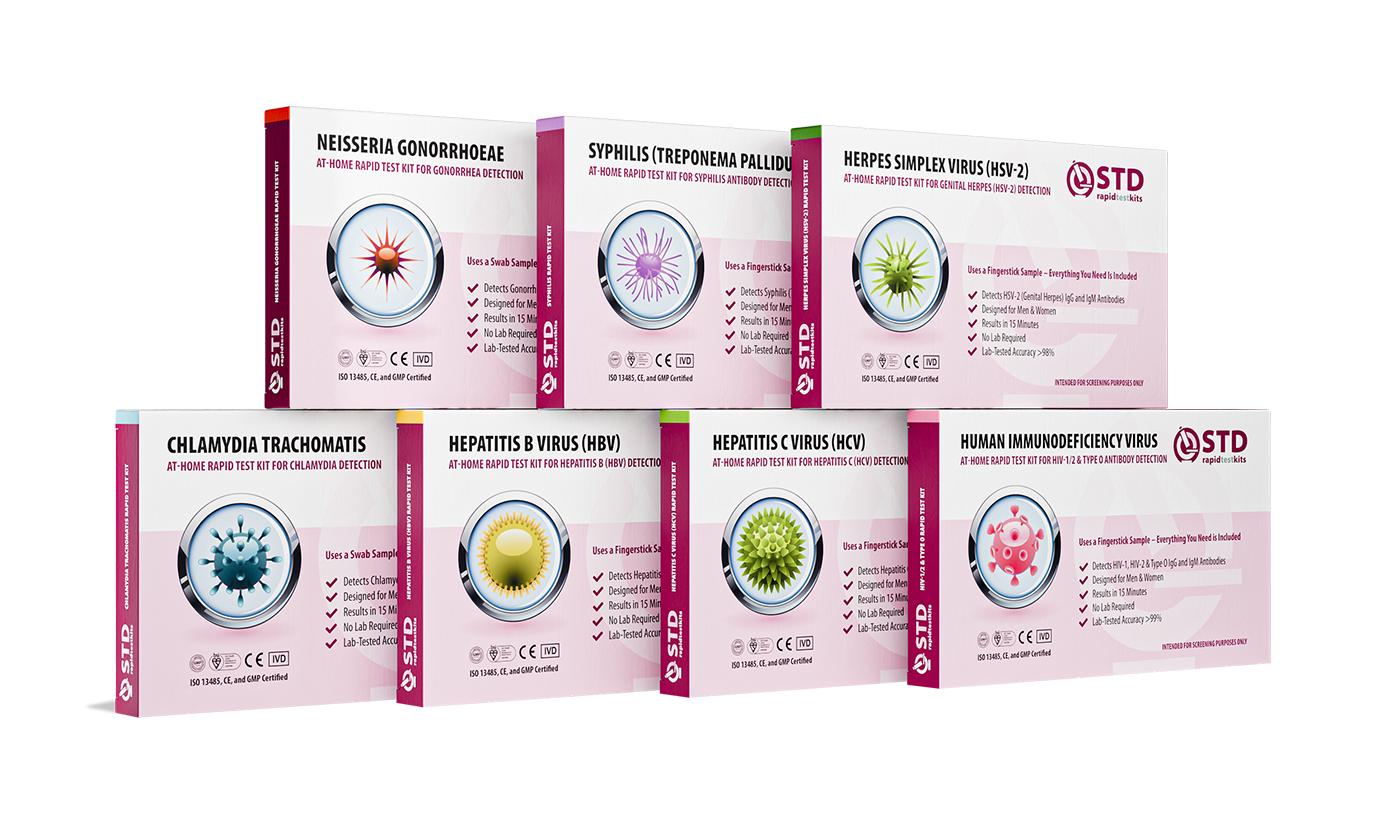
 For Men & Women
 Results in Minutes
 No Lab Needed
 Private & Discreet
Order Now $129.00 $343.00
For all 7 tests
Is At-Home Testing Reliable Without Symptoms?
One of the biggest reasons people avoid STD testing is fear: fear of being seen, judged, or having to explain why they’re there if nothing feels wrong. That’s why at-home testing has exploded in popularity, and it’s a game-changer for people who feel fine but want to be sure.
But how reliable are these tests when you don’t have symptoms? The answer depends on the test type and your timing. Most at-home STD tests are either rapid tests (like lateral flow kits) or mail-in lab kits using NAAT technology or antibody detection. NAAT tests are extremely accurate, especially for chlamydia, gonorrhea, and trichomoniasis, but they still require you to collect your sample correctly and wait for the right time.
Rapid tests, like the kind used for syphilis or HIV, provide fast results but may be less sensitive during early infection. That doesn’t mean they’re worthless. It means they’re one step in a process. A negative doesn’t always mean clear, especially if it’s too soon after exposure.
You can order a discreet test kit from STD Rapid Test Kits and test from home in minutes. It’s private, quick, and doctor-trusted. If your gut says something’s off, even when your body doesn’t, trust that instinct. Testing is how you stop wondering.
The Mental Load of Waiting (and Why Retesting Matters)
Testing negative can feel like a deep breath, but it’s not always the final answer. If you tested too early or if you have ongoing exposure (say, with a new or multiple partners), retesting is often the responsible move.
Consider Devon, 31, who tested for everything two days after a hookup that left him uneasy. “I needed peace of mind,” he said. “But the second I got the negative result, I realized, I didn’t even give the tests time to work.” He retested four weeks later and was positive for HSV-2.
That’s not failure. That’s doing it right. Retesting isn’t about distrust, it’s about accuracy. In clinical settings, providers often recommend a two-step approach: test now, then again at 6 to 12 weeks if you remain at risk or want to be sure. And if you’ve been treated for something like chlamydia or gonorrhea, retesting in three months is standard to make sure there’s no reinfection.
If your head keeps spinning, peace of mind is one test away. This at-home combo test kit checks for the most common STDs discreetly and quickly.
What If You Never Get Tested?
Let’s talk real consequences. Some STDs stay silent for months, or years, and still damage your body. Chlamydia and gonorrhea can both cause infertility in people with uteruses if left untreated. Syphilis can invade the brain and nervous system. HIV can be managed with medication, but only if you know your status early.
Not testing doesn’t make the risk disappear. It just means you’re playing a game you don’t control. You might pass an infection to someone else who does develop symptoms, or who gets pregnant, or who has a compromised immune system.
STDs don’t make you dirty. But ignoring them doesn’t make you clean. Testing is neutral. It’s knowledge. And knowledge is what gives you the power to act, with partners, with providers, with your future self.
What If You Test Positive and Didn’t Have Symptoms?
It’s a gut punch. You feel fine. You test positive. The first instinct might be denial. But the next step is crucial. Most STDs are completely treatable. Some, like herpes or HIV, are manageable with lifelong strategies. None are shameful.
Melanie, 29, ordered a test before going exclusive with her partner. She was shocked when it came back positive for trichomoniasis. “I thought only people with symptoms got it,” she said. “But my partner had no idea he had it either. We both got treated and moved on, but it was a wake-up call.”
Testing positive without symptoms means you likely caught it early. That’s a win. From here, the steps are straightforward:
→ Confirm the result if needed with a clinic.
→ Start treatment right away.
→ Inform any recent partners (you can do it anonymously if needed).
→ Retest in a few weeks or months depending on the infection.
You’ve already done the hardest part, checking. Now you just follow through. That’s how sexual health becomes part of your wellness, not a crisis.
How At-Home Testing Protects Your Privacy
Let’s be honest: for many people, walking into a clinic still feels like a walk of shame. Even if the staff is kind, the waiting room can feel like a fishbowl. At-home testing flips that experience on its head.
Everything from STD Rapid Test Kits arrives in discreet packaging, no branding, no clues, no judgment. You can test from your bathroom, your bedroom, even your car if you’re on a road trip. No awkward conversations. No scheduling. No explaining.
Support is available too. Most reputable test providers offer live chat or follow-up resources. Some include telehealth pathways if you test positive and want prescriptions. Your results are yours to share, or not. You control the next step.
Privacy doesn’t mean secrecy. It means autonomy. And for many people, that’s the difference between testing and not testing at all.
People are also reading: Trichomoniasis Rapid Test Accuracy and Common Mistakes
What “Routine Testing” Really Means
If you’re sexually active, even with one partner, you should be thinking about STD testing as part of your routine, not just something to panic about when something feels off. The CDC recommends annual screening for chlamydia and gonorrhea for all sexually active women under 25, and for older adults with new or multiple partners.
Men who have sex with men, sex workers, trans individuals, and people living with HIV often need more frequent testing, sometimes every 3 to 6 months, depending on risk and local guidelines. But even monogamous couples aren’t off the hook. Testing is how you build trust, not just how you respond to betrayal.
Let’s be blunt: you can feel amazing and still be carrying something you didn’t know about. That’s not failure. That’s biology. Routine testing helps you turn an invisible risk into a known factor, so you can handle it with facts, not fear.
If you’ve had unprotected sex, started a new relationship, ended one, or simply can’t remember the last time you tested, now is a good time. You don’t have to explain it to anyone. Just act on it.
Check Your STD Status in Minutes
Test at Home with Remedium6-in-1 STD Test Kit
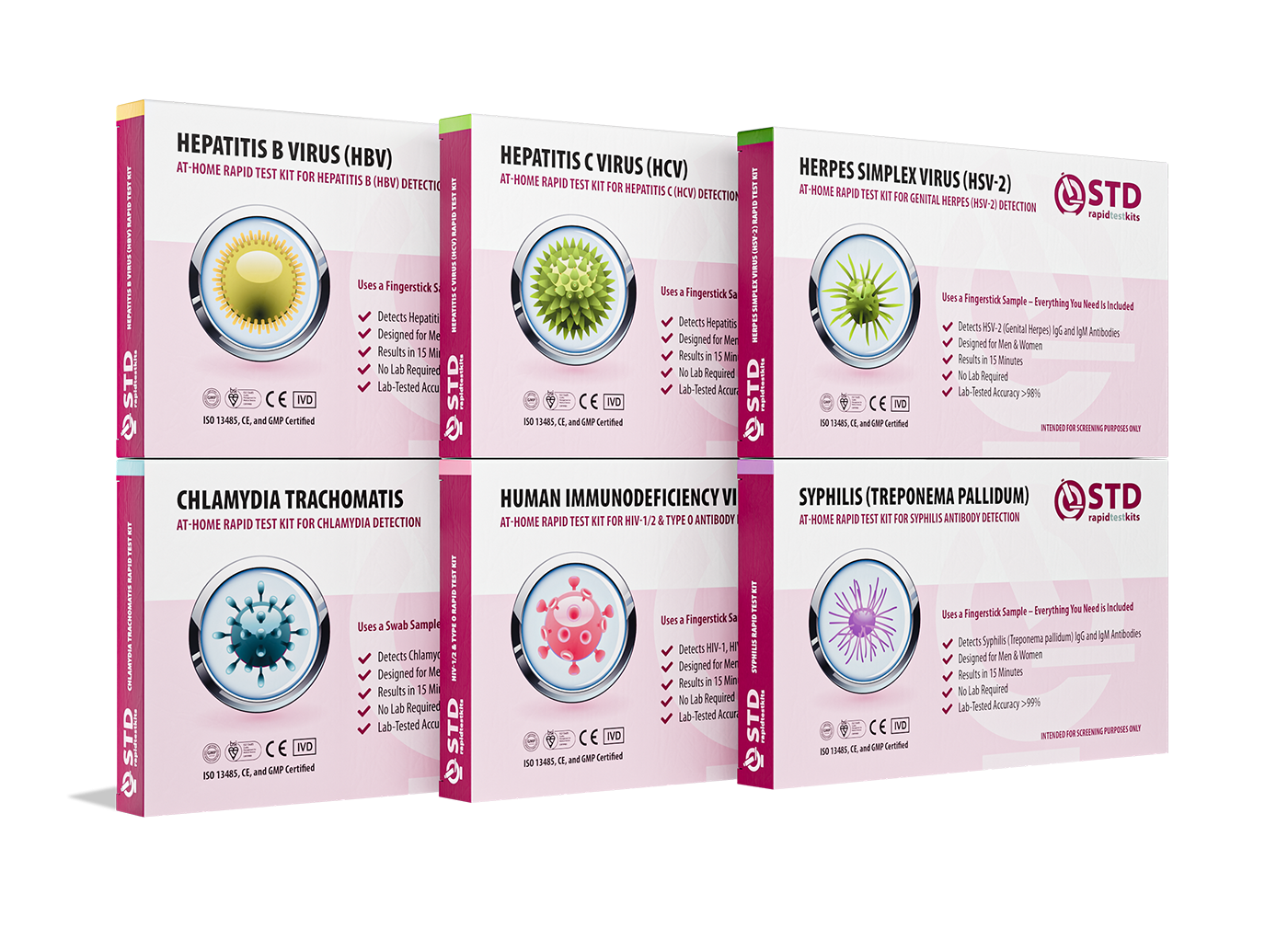 For Men & WomenResults in MinutesNo Lab NeededPrivate & Discreet
Order Now $119.00 $294.00
For all 6 tests
You Can’t Always Trust Your Body’s Silence
There’s a dangerous myth out there: “If I had something, I’d know.” That’s simply not true. Infections don’t owe you symptoms. In fact, the majority of STDs are “silent”, especially early on. And that’s when they’re easiest to treat.
It’s like a carbon monoxide leak. Just because you don’t smell it doesn’t mean it’s not there. And just because your body hasn’t screamed yet doesn’t mean it’s safe to ignore.
Ravi, 34, tested before starting PrEP for HIV. His doctor ran a full panel, and he came back positive for syphilis. “I felt betrayed by my own body,” he said. “But honestly, I’m glad I caught it when I did. It would’ve gone unnoticed otherwise.”
Silence doesn’t mean safety. The only way to know is to test. The only way to be sure is to follow through.
FAQs
1. Can I seriously have an STD and not know it?
Yep, totally possible. Some of the most common infections out there, like chlamydia and herpes, often don’t cause any obvious signs. You might feel completely fine, go about your life, and only find out during a routine test, or when a partner gets diagnosed. That’s not your fault. It’s just how these infections work.
2. How long should I wait to test after a hookup if I feel fine?
Give it a little time. For most STDs, testing too early can miss the infection. A good rule of thumb: wait 7 to 14 days for chlamydia or gonorrhea. For HIV, syphilis, or herpes, you’ll want to wait 3 to 6 weeks, or even longer for some antibody tests. No symptoms doesn’t mean no risk.
3. Do at-home STD tests still work if I don’t have symptoms?
Absolutely. Most home kits are designed to catch silent infections using the same tech as clinics. The key? Timing and following the instructions. No need to wait until something hurts or burns, get ahead of it. You can be proactive without panic.
4. If my test is negative, can I finally relax?
Kinda. A negative result is a relief, but only if you tested at the right time. If you jumped the gun and tested too soon, or you’re still sexually active with new partners, retesting after a few weeks is smart. Think of it like checking your smoke detector twice just to be safe.
5. Can I pass something on even if I’m not showing symptoms?
100% yes. That’s actually one of the main reasons STDs keep spreading, people genuinely don’t know they have one. You could feel perfectly healthy and still carry something like gonorrhea in your throat or herpes on your skin. Testing isn’t just self-care, it’s care for your partners too.
6. Should I get tested even if I’m only with one partner?
Still worth it. Monogamy doesn’t automatically mean no risk, especially if it’s a new relationship or if either of you hasn’t tested recently. Getting tested together can actually build trust and open some honest convos about past experiences. It’s not awkward. It’s mature AF.
7. I’ve never had any symptoms, ever. Why bother now?
Because your body isn’t a loudmouth. A lot of STDs are sneaky. You might go months or years with no symptoms, and then suddenly face fertility issues, chronic pain, or a partner who gets sick. Testing now protects future you from surprise heartbreak.
8. What if I test positive and feel totally fine, should I still get treated?
Yes, no debate. Just because your symptoms are MIA doesn’t mean the infection isn’t active. Untreated chlamydia, for example, can still damage reproductive organs over time. Get treated, finish the course, and give yourself a high five for catching it before it got worse.
9. How often should I test if nothing ever feels “off” down there?
Once a year is a solid baseline if you’re sexually active, even if you feel amazing. More often if you’ve got new partners, multiple partners, or are part of a higher-risk group. Routine testing isn’t dramatic. It’s just part of taking care of yourself like brushing your teeth or getting a pap smear.
10. I’m nervous it’ll make me look guilty if I ask for a test. What should I say?
Flip the script. You’re not being suspicious, you’re being responsible. You could say: “I get tested regularly just to stay on top of things. Want to do it together?” Or: “I’d rather know than guess, even if I feel fine.” That kind of honesty is hot, honestly.
You Deserve Answers, Not Assumptions
If you’ve made it this far, you’re clearly someone who cares, not just about your own health, but about your partners, your future, and your peace of mind. That matters.
STD testing isn’t about catching someone in a lie. It’s not about being “clean” or “dirty.” It’s about information, autonomy, and care. And yes, you should absolutely get tested even if you feel fine.
Don’t wait and wonder, get the clarity you deserve. This at-home combo test kit quickly and discreetly checks for the most common STDs.
How We Sourced This Article: We combined current guidance from leading medical organizations with peer-reviewed research and lived-experience reporting to make this guide practical, compassionate, and accurate.
Sources
1. CDC: STD Facts and Statistics
2. WHO | Sexually Transmitted Infections Fact Sheet
3. Thinking About STI Testing? Here’s What the CDC Recommends
4. About Sexually Transmitted Infections | CDC
5. What to Do About STIs With No Symptoms? Here’s WHO’s Take
6. Chlamydia and Gonorrhea: Screening Recommendation | USPSTF
7. Annual STI Testing Among Sexually Active Adolescents | PMC
About the Author
Dr. F. David, MD is a board-certified infectious disease specialist focused on STI prevention, diagnosis, and treatment. He blends clinical precision with a no-nonsense, sex-positive approach and is committed to expanding access for readers in both urban and off-grid settings.
Reviewed by: N. Aranda, NP, MPH | Last medically reviewed: December 2025
This article is only for informational purposes and should not be used as medical advice.


