Published: September 2025 | Last updated: May 2026 | Editorial review and quality control: Martina N.
The fear of a second diagnosis sits quietly in the back of many minds long after the first one settles. For people living with HIV, cancer is one of those background worries that nobody quite explains in plain language. The short version: HIV does raise the long-term risk of several cancers, and the picture is more nuanced than most headlines suggest. Antiretroviral therapy (ART) has changed the math significantly, and most cancers seen more often in people with HIV are linked to other viruses your immune system has to work harder to control.
This guide walks through what current research says, which cancers actually deserve attention, and how routine screening fits in. It is written for general audiences as a plain-English summary of public-health and oncology guidance, not personal medical advice. If something here matches your situation, the next step is a conversation with your provider, not a self-diagnosis at 2 a.m.
Key Takeaways
- Most cancers that occur more often in people living with HIV are caused by other viruses (HPV, Epstein-Barr virus, human herpesvirus 8, and hepatitis B and C) that an HIV-weakened immune system controls less effectively. The HIV virus itself is not the direct trigger.
- Effective ART sharply reduces the risk of AIDS-defining cancers like Kaposi sarcoma and aggressive lymphomas, but it does not eliminate cancer risk. Routine screening, especially for HPV-related and liver cancers, stays important even at an undetectable viral load.
Why HIV Changes the Cancer Equation
Your immune system does two jobs at once. It fights infections, and it constantly looks for cells that have started behaving strangely. Those misbehaving cells are the early seeds of cancer. Patrol units called natural killer cells and CD8 T cells find and destroy them before they can build up. When HIV begins replicating, it specifically targets the same CD4 helper T cells that coordinate these patrols. The whole defensive choreography gets harder to maintain.
Once antiretroviral therapy gets HIV under control, the immune system rebuilds. CD4 counts climb. The patrols reorganize. That recovery is real, and it explains why ART has dramatically reduced the AIDS-defining cancers that were common in the early years of the epidemic. The rebuild is not perfect, however. Researchers describe a state called persistent immune activation, where low-grade inflammation lingers even with an undetectable viral load. Over decades, that background hum of inflammation seems to make it slightly easier for cancer-prone viruses to settle in tissues and stay there.
The result is a long-term cancer profile that looks like a shifted version of the general population's profile, with extra weight on cancers caused by viral infections and a modest extra weight on cancers driven by chronic inflammation.
CD4 helper T cells: coordinate the broader immune response and direct other immune cells. HIV depletes them directly, which is why CD4 count is the standard tracking number in HIV care.
CD8 T cells: recognize and destroy infected or abnormally behaving cells. Their work depends on CD4 coordination, so CD8 activity is impaired when CD4 counts fall.
Natural killer cells: patrol tissues for cells displaying early cancer signals. Their function is dampened by the chronic inflammation that lingers in HIV, even on effective ART.
Which Cancers Show Up More Often
Researchers track cancer rates in people living with HIV through population studies that match HIV registries against cancer registries. The signal is consistent: a handful of cancers occur several times more often, and almost all of them are linked to viral infections that an unsupported immune system has trouble clearing. The table below shows the cancers most strongly associated with HIV, their linked viruses, and approximate risk multipliers based on the National Cancer Institute's HIV/AIDS Cancer Match Study and related cohort analyses.
| Cancer type | Associated virus | Approximate risk vs. HIV-negative | Notes |
|---|---|---|---|
| Kaposi sarcoma | HHV-8 (KSHV) | Several hundred times higher historically | AIDS-defining; rates dropped sharply with ART |
| Non-Hodgkin lymphoma | Epstein-Barr virus (some subtypes) | About 10 to 25 times higher | Risk tracks immune suppression; reduced by ART |
| Anal cancer | HPV (high-risk types) | About 10 times higher; up to 50 times higher in men who have sex with men (MSM) | Anal Pap screening helps catch precancerous changes |
| Cervical cancer | HPV (high-risk types) | About 3 to 5 times higher | Annual Pap testing recommended |
| Liver cancer (HCC) | Hepatitis B or C | About 3 to 4 times higher | Risk concentrated in those co-infected with hepatitis |
| Lung cancer | None directly (inflammation contributes) | Roughly 2 times higher | Higher even in non-smokers with HIV |
Viral Oncogenesis: When Other Viruses Get the Upper Hand
The phrase viral oncogenesis sounds technical, but the idea is straightforward. Some viruses can change how host cells grow and divide. HPV alters the regulators that tell a cervical or anal cell when to stop multiplying. Epstein-Barr virus can drive certain B cells into uncontrolled growth, which is how it contributes to Burkitt and other lymphomas. Human herpesvirus 8 (HHV-8, also called KSHV) sets off the abnormal blood-vessel growth that becomes Kaposi sarcoma.
Plenty of people carry these viruses and never develop cancer. In a healthy immune environment, infected cells either get cleared or get held in check. HIV-driven immune suppression changes that balance. HPV that would have cleared in two years in most adults can linger and progress to precancerous changes in someone with HIV. HHV-8 that would have caused nothing in a healthy host can produce the purple, brown, or red skin lesions of Kaposi sarcoma when CD4 counts drop. Hepatitis B or C, when present alongside HIV, accelerates the inflammation that leads to liver fibrosis and liver cancer.
Cervical cancer illustrates how the timeline shifts. In HIV-negative women, persistent infection with a high-risk HPV strain typically takes fifteen to twenty years to progress to invasive cancer, with plenty of opportunity for Pap screening to catch precancerous changes. In HIV-positive women, that timeline can compress to five to ten years, and recurrence after treatment is more common. The mechanism is that HPV gets more time and more leverage when the immune system is less able to contain it, not that HIV itself causes the cell changes.
HPV (high-risk types): drives cervical, anal, and some head and neck cancers.
Epstein-Barr virus (EBV): contributes to non-Hodgkin and Burkitt lymphomas, and to some nasopharyngeal cancers.
Human herpesvirus 8 (HHV-8, also called KSHV): the trigger for Kaposi sarcoma.
Hepatitis B and C: raise the risk of liver cancer over time, especially with co-infection alongside HIV.
Undetectable Doesn't Mean Immune
The U=U movement (Undetectable = Untransmittable) is one of the most important shifts in HIV care of the last decade. When ART suppresses the virus below the level standard tests can detect, sexual transmission to a partner becomes vanishingly unlikely. That is a powerful, evidence-backed piece of good news. It does not, however, mean the immune system is operating exactly as it would in someone who never had HIV.
A growing body of research describes a state called residual immune activation. Even with full viral suppression, certain immune cells stay slightly more activated than usual. Inflammatory markers like high-sensitivity C-reactive protein and D-dimer tend to run a bit higher than in HIV-negative peers. The effect is not dramatic, and it does not translate to immediate harm. But over long periods, it appears to be one reason that non-AIDS cancers (the kind not linked to severe immune suppression) have become more common in long-term HIV survivors, even those with excellent ART adherence.
Population studies of cancer trends in people living with HIV across decades of ART use show the same shape. AIDS-defining cancers like Kaposi sarcoma and aggressive lymphomas have dropped sharply. Non-AIDS-defining cancers (lung, liver, anal, certain head and neck cancers) have either held steady or risen, partly because people with HIV are living long enough to develop them, and partly because the immune signaling that controls these cancers may still not be fully normal. ART has dramatically reduced AIDS-defining cancers and extended life by decades. That longevity means people with HIV now face the same age-related cancer screening timeline as the general population, with a few added priorities layered on top.
People with HIV are more likely than the general population to develop several cancers, most of which are linked to other infections, including HPV, Epstein-Barr virus, HHV-8, and hepatitis B and C. Effective HIV treatment with antiretroviral therapy substantially reduces this risk.
Cancer Risk Across the Years
One useful way to think about long-term cancer risk in HIV is in eras. The first few years after diagnosis carry the highest risk of AIDS-defining cancers if ART is delayed or inconsistent. The middle years on stable ART tend to be a period of relative calm, with HPV-related changes (cervical, anal) being the most important screening priority. The decades that follow start to look more like the general aging population's risk profile, with some additions: liver cancer if hepatitis is in the picture, lung cancer at modestly higher rates, and continuing vigilance for HPV-driven cancers.
The simplified timeline below is a rough guide based on longitudinal cohort data. Real risk depends on CD4 count history, ART adherence, age at diagnosis, co-infections, and lifestyle factors like smoking and alcohol use.
| Years on ART | Typical status | Cancer risk pattern |
|---|---|---|
| 0 to 5 years | New diagnosis, ART initiation, CD4 recovery | Highest risk of AIDS-defining cancers if ART is delayed or inconsistent |
| 5 to 10 years | Stable on ART, undetectable | AIDS-defining risk falls sharply; HPV-related changes are the main screening priority |
| 10 to 20 years | Long-term ART, stable immune function | Non-AIDS cancers (anal, liver, head and neck) become more relevant; HPV vigilance continues |
| 20+ years | Long-term suppression and aging | Age-related cancers (lung, prostate, colorectal) rise; inflammation-driven cancers continue |
Screening: What Changes With HIV
Cancer screening guidelines for people living with HIV differ from the general population in a few specific places. Cervical cancer screening is the most clearly different: CDC HIV guidance and federal HIV clinical guidelines recommend Pap testing twice in the first year after HIV diagnosis, then annually, rather than the three-to-five-year intervals used for HIV-negative adults. HPV co-testing is added depending on age and prior results.
Anal cancer screening is where standardization gets thinner. The risk in HIV-positive men who have sex with men is among the highest documented for any cancer subgroup, and anal Pap tests (sometimes followed by high-resolution anoscopy) catch precancerous changes early. Some clinics offer this routinely. Many do not. The ANCHOR study, published in 2022, demonstrated that treating anal high-grade squamous intraepithelial lesions reduces progression to anal cancer in people with HIV, which has pushed more clinics toward offering screening. If yours does not, asking directly is reasonable, not over-asking.
For liver cancer, the major hepatology associations recommend ultrasound surveillance every six months (sometimes with alpha-fetoprotein blood testing) in people with cirrhosis or with chronic hepatitis B, both of which are more common alongside HIV. Lung cancer screening with low-dose CT follows general adult criteria (age 50 to 80, twenty-pack-year smoking history), though there is ongoing research about whether the threshold should be lower in people with HIV given the inflammatory profile.
If your primary care provider does not routinely manage HIV, the screening conversation is worth taking to an HIV-experienced clinician at least annually. They can help match the textbook guidelines to your specific history. (This article is published by stdrapidtestkits.com, which sells at-home rapid STI testing kits. Our home kits screen for viral co-infections like hepatitis and HPV; they do not screen for cancer itself.)
Symptoms Worth Investigating
Early cancers, especially those in people living with HIV, are sneaky precisely because the symptoms overlap with common, harmless things. A rash, a mouth sore, or a swollen lymph node after a cold can all signal something benign, and usually do. Tracking your own baseline makes any meaningful shift easier to notice when it actually happens.
A few specific patterns deserve a non-routine appointment rather than a wait-and-see. A skin lesion that is getting darker rather than lighter, or that has irregular borders, deserves a dermatology look (this could be Kaposi sarcoma or, separately, melanoma). A mouth sore that does not heal in two weeks deserves a dental or ENT review (oral HPV-driven cancers tend to start this way). Rectal bleeding or pain that lasts more than a few weeks deserves attention rather than being shrugged off as hemorrhoids. Unexplained weight loss, drenching night sweats, or persistently swollen lymph nodes that do not shrink after several weeks deserve a same-week appointment.
The hardest patterns to catch are the ones that do not hurt. Liver cancer often shows up first as fatigue, mild upper-abdominal discomfort, or a faint yellowness around the eyes. Lung cancer can present with a persistent dry cough that gets blamed on allergies. Regular check-ins with a provider who knows your history matter because these patterns are easier to spot when someone has been watching the baseline alongside you.
Skin lesion: a spot that is getting darker, has irregular borders, or shows up as a new purple, red, or brown patch. Possible Kaposi sarcoma or, separately, melanoma.
Mouth sore not healing in two weeks: a dental or ENT review; oral HPV-driven cancers tend to start this way.
Rectal bleeding or pain lasting more than a few weeks: ask for an exam rather than assuming hemorrhoids.
Unexplained weight loss, drenching night sweats, or persistently swollen lymph nodes: a same-week appointment is appropriate.
Persistent dry cough, fatigue, or a faint yellowness around the eyes: easy to write off, but worth flagging at your next visit, especially with hepatitis history.
Can Home Testing Help Catch Cancer Risks Sooner?
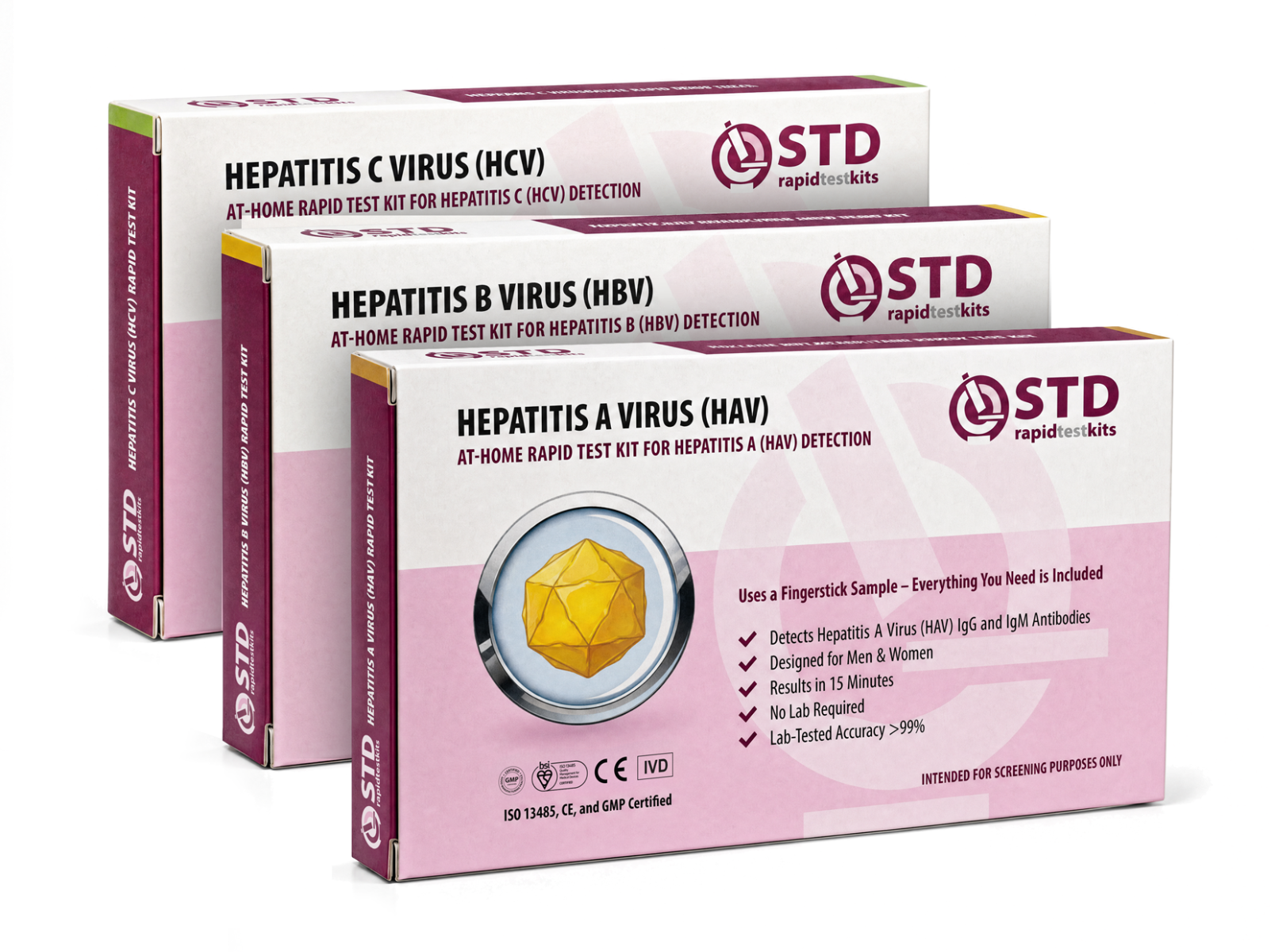
Home rapid tests do not screen for cancer. Cancer screening relies on clinic-based tools like Pap tests, anal Pap tests, ultrasound, low-dose CT, and tissue biopsy when something is suspicious. What home rapid tests can do is help identify viral infections that, left untreated, raise long-term cancer risk. That is the realistic role they play in this picture.
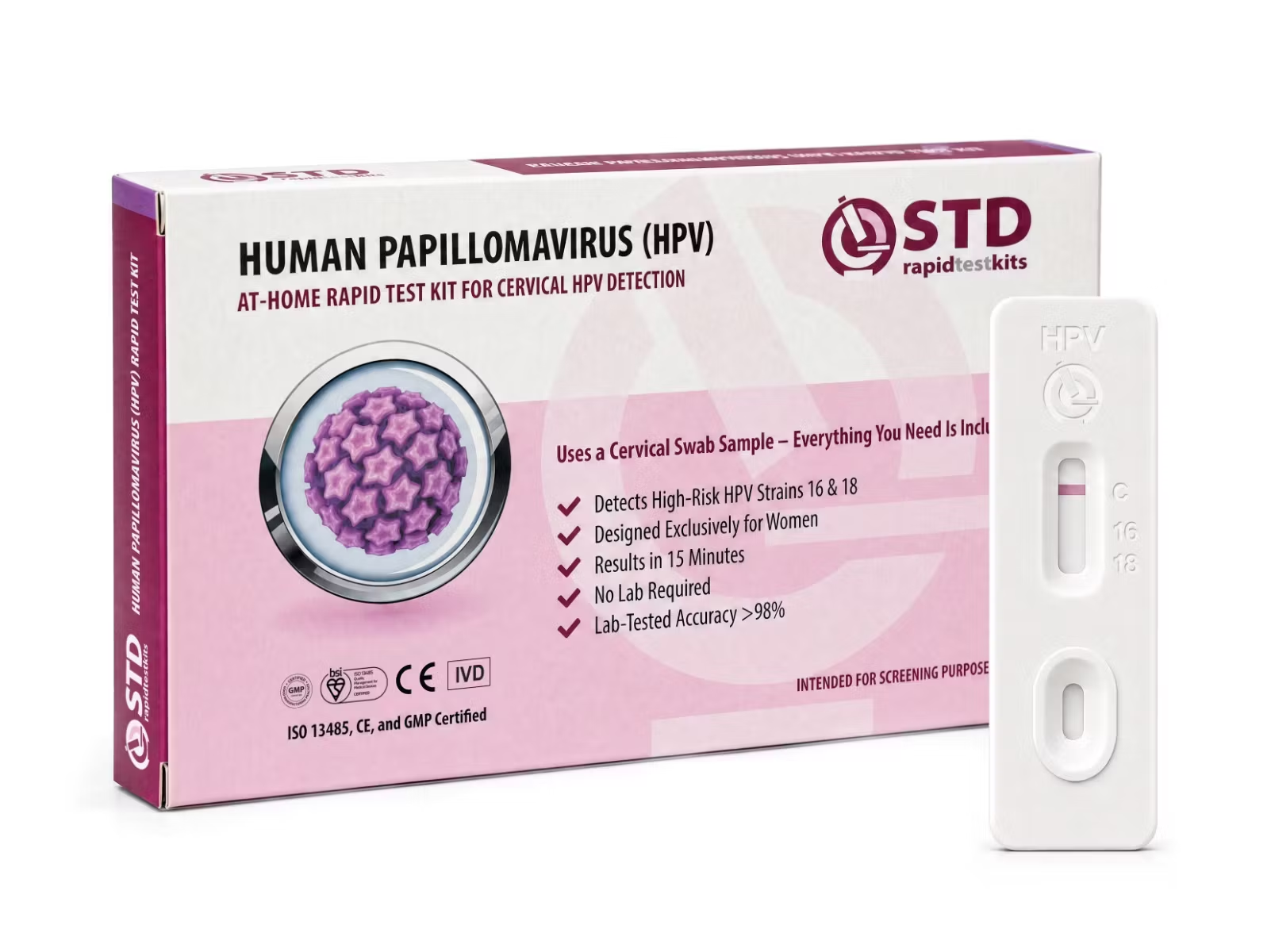
For people living with HIV, the most useful at-home screens are for the viral co-infections that drive cancer risk: hepatitis B and hepatitis C (liver cancer risk), and HPV in those with a cervix (cervical cancer risk). Catching hepatitis B early can mean starting suppressive therapy that reduces long-term liver damage. Catching hepatitis C means accessing direct-acting antiviral cures that, in most people, eliminate the virus entirely. Persistent HPV detected on a vaginal swab can be a prompt to discuss more frequent Pap testing with your provider.

What Home Tests Don't Cover
One realistic caveat applies. At-home HPV swab kits are validated for vaginal self-collection in people with cervixes only. We do not sell a male-compatible HPV home test, and there is currently no home-validated kit for anal HPV swab testing, which is the screening that matters most for HIV-positive men who have sex with men. For anal cancer screening, a clinic visit (anal Pap or high-resolution anoscopy) is the right tool, and that is a conversation to keep having with your provider until it gets scheduled.
Prevention Is Partly About Advocacy
The strongest preventive moves for cancer risk in HIV are the ones that compound. Staying on ART consistently is the foundation. Beyond that, two vaccines do real heavy lifting. The HPV vaccine is recommended routinely through age 26, and the CDC supports shared clinical decision-making for adults aged 27 to 45, which means the conversation is worth having with your provider even if you missed the teen window. The hepatitis B vaccine series, if you have not completed it, is worth scheduling. Both vaccines work best when started before exposure, but they still offer protection against strains you have not encountered.
Lifestyle changes do not replace medical care, but they stack with it. Smoking cessation is the single highest-impact change for lung cancer risk, which is meaningful given that lung cancer rates are modestly elevated in people with HIV regardless of smoking status. Limiting alcohol intake helps both liver cancer risk and overall liver health if hepatitis is in the picture. Treating co-infections matters: chronic hepatitis B and C now have effective therapies, and accessing them is part of long-term cancer prevention.
Advocacy is part of the work too. If a provider tells you that you do not need a certain screening because you are doing fine, and your history says otherwise, it is reasonable to bring printed CDC or NIH guidelines to the next visit. Asking for a referral to an HIV-experienced specialist when you live with HIV is standard of care, not pushy.
Your prevention stack
- Stay on antiretroviral therapy consistently. ART is the foundation everything else builds on.
- Get the HPV vaccine if eligible: routinely through age 26, with shared clinical decision-making for adults 27 to 45.
- Complete the hepatitis B vaccine series; treat hepatitis C if positive, since direct-acting antivirals cure most cases.
- Quit smoking and limit alcohol. Both compound liver and lung cancer risk over time.
- Show up for screenings on schedule: cervical Pap if you have a cervix, anal Pap if high-risk, liver ultrasound if hepatitis is in the picture.
After the Diagnosis, Before the Panic
The first hours after hearing the word cancer in any conversation about your body are loud and quiet at the same time. For people who have already navigated an HIV diagnosis, there is an extra layer: a quiet question of whether this is somehow their fault, whether they missed something, whether the body is finally collecting on a bill. None of those framings reflect what is happening. Cancer does not enforce moral logic.
The practical truth is that most cancers more common in HIV are highly treatable when caught early. Some Kaposi sarcoma lesions regress when ART restores immune function. Early cervical and anal precancers can be removed with outpatient procedures. Liver cancer caught at small size has surgical and ablative options. Hepatitis C, when present, is curable in most cases with eight to twelve weeks of pills. Showing up for screenings, asking your provider about anything new, and treating the viral co-infections that drive risk: these moves widen your treatment options if something does turn up later.
If you are reading this because something in your body has shifted and you are trying to decide whether it is worth a call, please make the call. If you are reading this because someone you love is living with HIV and you want to understand the landscape, the most useful thing you can do is remind them that asking for the screening they need is reasonable, not paranoid.
Book a screening conversation. Ask your HIV provider (or a primary care clinician with HIV experience) to walk through which cancer screenings apply to your specific history: cervix, anal, liver, lung.
Check your vaccine status. Confirm whether you have completed the hepatitis B series and whether HPV vaccination is still on the table for you under shared clinical decision-making through age 45.
Treat any co-infections. If you have hepatitis B or C and have not been on therapy, this is the highest-leverage cancer-prevention move available to you. Direct-acting antivirals cure hepatitis C in most cases.
FAQs
- Can HIV actually turn into cancer?
- No. HIV is not a cancer-causing virus in the direct sense. It weakens the immune system, which makes it harder to control other viruses (HPV, Epstein-Barr virus, HHV-8, hepatitis B and C) that can drive cancer. The cancer risk associated with HIV is mostly the cancer risk of those secondary viruses being given more room to operate.
- If I am undetectable, am I still at risk for these cancers?
- Your risk is much lower than untreated HIV, but it is not the same as someone who never had HIV. Researchers describe persistent low-grade immune activation even at undetectable viral loads. Over decades, this contributes to slightly elevated rates of non-AIDS cancers like lung, liver, and anal cancer. Regular screening matters even when ART is working well.
- Why is anal cancer risk so much higher in HIV?
- The driver is HPV. Anal tissue, like cervical tissue, has cells that high-risk HPV strains can transform when the virus persists. People who have receptive anal sex, including HIV-positive men who have sex with men, have higher rates of persistent anal HPV. HIV-related immune suppression makes that persistence more likely, which is why anal Pap screening is part of HIV care for high-risk groups.
- Is Kaposi sarcoma still something to worry about?
- Less than it used to be, but not eliminated. Kaposi sarcoma rates have dropped sharply since ART became standard. It still shows up in people who are newly diagnosed, who have not started ART, or whose CD4 counts are very low. Unexplained purple, red, or brown skin patches (especially on legs, face, or inside the mouth) should be looked at by a dermatologist.
- Does having HPV while HIV-positive mean I will get cancer?
- No. Most HPV infections clear on their own, even in HIV. The risk is that HPV is more likely to persist in someone with HIV than in someone without, and persistence is what drives cancer over time. Regular Pap testing (and HPV testing where indicated) catches the precancerous changes that matter, and treatment of those changes prevents most cases of cervical and anal cancer.
- Do HIV medications cause cancer over time?
- Today's ART regimens do not appear to cause cancer. Some early antiretrovirals used in the 1990s got scrutiny for various long-term effects, but modern integrase-inhibitor-based regimens have an excellent safety profile in long follow-up. The far bigger cancer driver is poorly controlled HIV, not the medications used to control it.
- What can I do to lower my long-term cancer risk?
- Stay on ART. Get the HPV vaccine if eligible (routinely through 26, with shared clinical decision-making through 45). Complete hepatitis B vaccination. Treat hepatitis C if you have it. Avoid smoking. Limit alcohol. Show up for your screenings: cervical Pap if you have a cervix, anal Pap if you are in a high-risk group, liver ultrasound if hepatitis is in the picture. The compound moves stack up.
- How do I figure out which cancers to screen for?
- Map screening to your own risk. If you have a cervix: annual Pap, with HPV co-testing per current guidelines. If you have receptive anal sex history or are HIV-positive and a man who has sex with men: ask about anal Pap and high-resolution anoscopy. If you have hepatitis B or C: liver ultrasound every six months. If you have a long smoking history: low-dose CT lung screening per general adult criteria. An HIV-experienced clinician can help calibrate.
- U.S. National Cancer Institute. HIV Infection and Cancer Risk fact sheet. Supports the framing of virally linked cancers, the symptom-vigilance context for Kaposi sarcoma and lymphoma, and ART's effect on AIDS-defining cancer rates.
- World Health Organization. Cervical cancer fact sheet. Supports the cervical cancer mechanism, HPV-to-invasive-cancer timeline (15 to 20 years in immunocompetent women, contracting in HIV), and HPV vaccine guidance.
- American Cancer Society. HIV/AIDS and Cancer. Supports the cancer-type list and the broad risk framing in Table 1.
- U.S. Centers for Disease Control and Prevention. HIV Basics and HIV care content. Supports cervical screening cadence in HIV, U=U context, and HPV vaccine eligibility through age 45 via shared clinical decision-making.
- U.S. National Cancer Institute Division of Cancer Epidemiology and Genetics. HIV/AIDS Cancer Match Study. Primary source for the relative-risk multipliers cited in Table 1.
- U.S. Department of Health and Human Services. Clinicalinfo.HIV.gov adult and adolescent opportunistic infections and cancer guidelines. Supports the screening and management recommendations, including cervical Pap cadence and anal cancer screening considerations.
