Published: October 2025 | Last updated: May 2026 | Editorial review and quality control: Martina N.
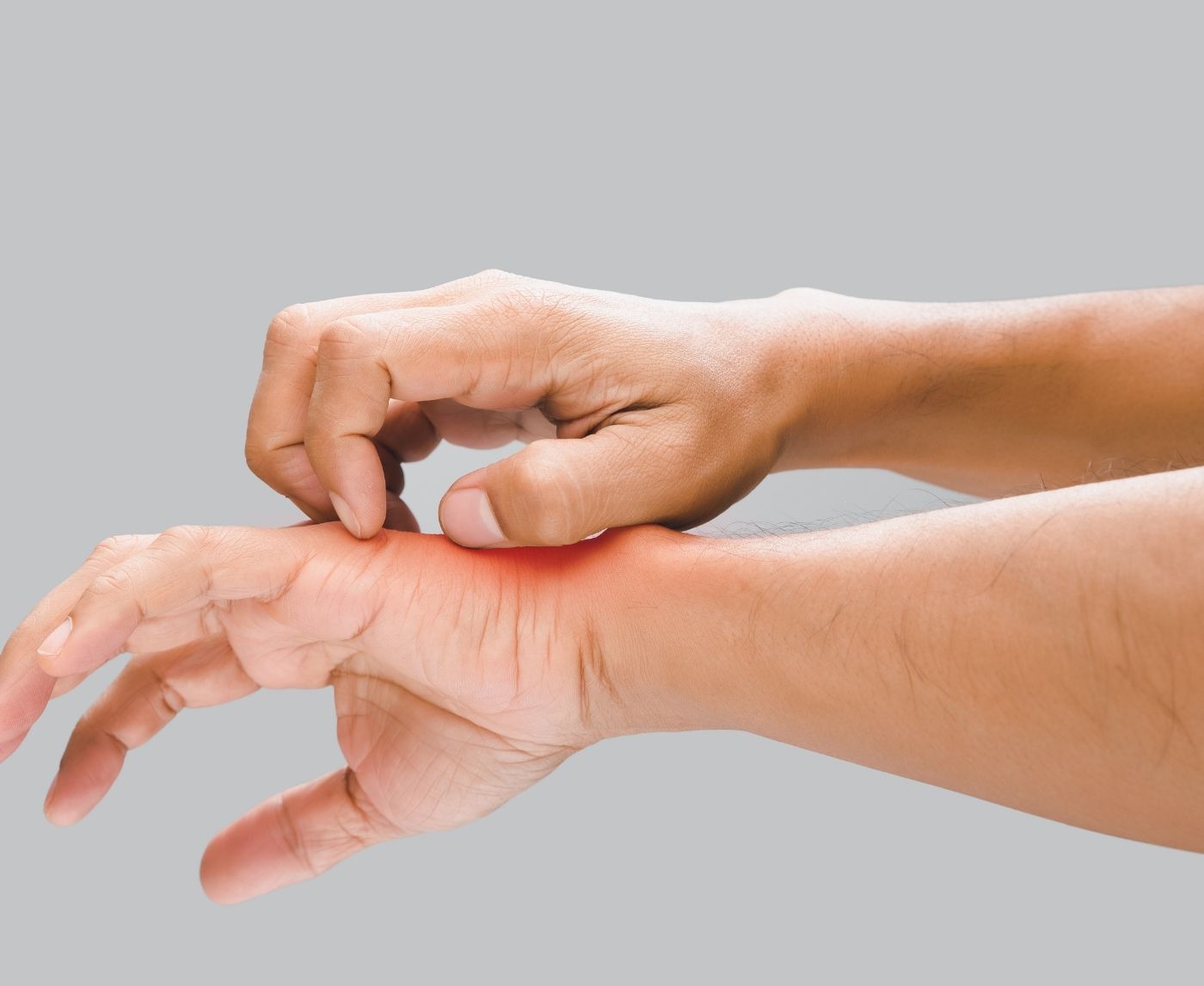
You are lying in bed past midnight, scratching, and replaying everything that happened. Did the condom slip? Was there enough lubricant? Should you have asked more questions? The same itch that barely registered at 3 p.m. feels urgent now. Most of the time, post-sex genital itching that worsens at night turns out to be friction, yeast, contact dermatitis, or scabies rather than a sexually transmitted infection. Pattern recognition matters more than panic, and knowing what each cause actually looks like is what turns a 2 a.m. spiral into a calmer next step.
This guide walks through the common non-STD causes, the rare STD scenarios, the timeline clues that tell them apart, and when testing genuinely makes sense.
Key Takeaways
- Most post-sex genital itching that flares at night is friction, contact dermatitis, yeast, or scabies, not an STD, especially when sores, discharge, and pain are absent.
- If you had unprotected sex, NAAT testing for chlamydia and gonorrhea is typically most accurate from about 7 to 14 days after exposure.
The 2 a.m. spiral: why nighttime itching feels worse
Your body changes after dark. Core temperature drops slightly, the skin loses moisture overnight, and the brain has fewer distractions from subtle sensations. Dermatology and sleep research describe pruritus, the medical term for itch, as having a real circadian rhythm: it tends to intensify in the evening because of normal shifts in cortisol, skin hydration, and attention. What felt like mild irritation at 3 p.m. can feel urgent at midnight.
Now add sex to the picture. The mind is already replaying the encounter. Anxiety has a way of turning ordinary skin sensations into alarms, and stress itself can heighten nerve sensitivity, which means worry can amplify itch perception even when nothing has changed on the skin's surface.
This does not mean the symptoms are imaginary. The nervous system is genuinely on alert, and that alert state can dial up perception of every small signal the skin sends. High alert is a different thing from infection, however, and most readers searching “STD itching but no discharge” at 1 a.m. are reading their body more sensitively than usual rather than detecting a pathogen.
Several normal physiological shifts stack after dark: cortisol drops in the evening (cortisol normally dampens inflammation), skin loses moisture under bedding, body temperature warms locally, and the brain has fewer competing inputs. The signal itself does not necessarily grow; awareness of it does.
What actually causes itching after sex?
Most genital itching after sex traces back to the skin itself reacting to friction, sweat, products, or new contact, not to a sexually transmitted pathogen. The skin of the genital area is thin, well-innervated, and rich in immune cells. Even small disruptions to that barrier can produce itching as part of normal repair.
Consider the physics. Movement, heat, moisture, and prolonged contact all stress the skin barrier. Longer or more vigorous intercourse, especially with limited lubrication, can create micro-abrasions that do not bleed or blister but can itch as they heal. The reaction often intensifies hours later when the body settles down to rest.
Allergic and irritant reactions sit close behind. Latex condoms, flavored or warming lubricants, spermicides, scented soaps, body washes, and laundry detergent residue can all trigger contact dermatitis, the skin reaction Mayo Clinic dermatology guidance describes as delayed-onset and often diffuse. The reaction may not appear immediately, which is why a bloom of itching often shows up in bed, hours after the encounter.
Fungal infections, including jock itch and vaginal yeast, also thrive in warm, moist environments. Falling asleep without showering or changing underwear keeps body heat trapped against delicate tissue, the exact environment Candida prefers. Vaginal yeast infections commonly present with thick white discharge along with the itch, and uncomplicated cases respond well to over-the-counter antifungals.
| Cause | Typical timing | Other clues | Is it an STD? |
|---|---|---|---|
| Friction irritation | Same day or next day | Mild redness, no discharge, fades in 48 hours | No |
| Contact dermatitis (latex, lubricant, soap) | Hours later | Diffuse itching, possible rash on contact area | No |
| Yeast or fungal infection | 1 to 3 days | Thick discharge or white film, defined rash border | No |
| Scabies | Weeks (after first exposure) | Burrows, itching worse at night, spreads to close contacts | Not officially classified as one |
When it could be an STD
Some sexually transmitted infections can cause itching, but isolated itching is rarely their only sign. The body usually adds at least one other clue within a few days.
Herpes (HSV-1 or HSV-2) often starts with localized tingling, burning, or itching before sores appear. The CDC's herpes fact sheet describes the typical outbreak as progressing to clustered fluid-filled blisters or ulcers within a few days of the first prodromal sensation. If a week of broad, mild itching passes with no visible lesions, herpes becomes less likely.
Trichomoniasis, a protozoan infection, can cause itching, particularly in people with vaginas. The CDC's trichomoniasis page notes it usually includes discharge changes (clear, white, yellowish, or greenish), sometimes with a fishy smell, rather than isolated nighttime itching. It rarely presents as pure pruritus.
Pubic lice, sometimes called crabs, do cause intense itching that worsens at night. The NHS notes that lice leave visible adult insects and tiny nits attached to hair shafts, often detectable with a bright light and patience.
Scabies deserves its own section. The mites that cause it spread readily through prolonged skin-to-skin contact, including sexual contact, and the itch they produce is famously worse at night.
Most people with genital herpes have no symptoms or have very mild symptoms.
How to tell the difference between irritation and infection
When itching shows up after sex, the brain wants a fast answer: infection or no infection. The body does not operate in that binary. It operates in patterns, and learning to read those patterns is what separates an anxious night from a useful health decision.
If the itching is diffuse, meaning it covers a broad area rather than one focused spot, and it improves with moisturizer, loose cotton clothing, or a cool compress, irritation becomes far more likely. Skin that looks mildly red but unblistered usually points toward friction, shaving regrowth, or contact dermatitis. These reactions often peak at night and calm during the day.
If the itching pairs with sharp pain, fluid-filled blisters, ulcers, unusual discharge, fever, or swollen lymph nodes in the groin, the equation shifts. Those combinations are worth a test and a clinical evaluation. Pattern-only itching that persists for days without escalating is the much more common scenario, and the much less worrying one.
Bacterial STIs such as chlamydia and gonorrhea rarely cause isolated itching. The CDC's chlamydia fact sheet notes most cases are asymptomatic, and when symptoms do appear they more commonly produce discharge changes, burning with urination, or pelvic and testicular discomfort. So when someone searches for “STD itching but no discharge,” the constellation often turns out to be skin irritation, contact dermatitis, or a yeast imbalance rather than a sexually transmitted infection.
Does itching at night after sex usually mean an STD?
Most of the time, no. Genital itching that worsens at night and shows up without sores, discharge, or pain is far more often a sign of friction, contact dermatitis, yeast imbalance, or scabies. STDs that cause itching almost always bring additional symptoms within several days. Testing is still reasonable when exposure risk is present, but isolated nighttime itching alone is rarely the warning sign people fear.
The timeline tells a story
Picture this scenario. Sex on Friday. By Friday night the area feels itchy. By Saturday morning the itch remains but there are no sores, no discharge, and no pain with urination. By Sunday it is fading. That arc aligns strongly with surface irritation: friction, contact, or a small barrier disruption that the skin heals on its own.
Now picture a different version. Sex on Friday, nothing immediate. On Tuesday, tingling appears in one specific spot. On Wednesday, small clustered blisters show up. That is a different narrative. The pattern is more consistent with a herpes outbreak, and it is the moment when a swab of the active lesion gives the clearest answer.
Timing matters because different infections have different incubation windows. Some show up within days. Others stay silent for weeks. NAAT testing for chlamydia and gonorrhea is typically most reliable from about 7 to 14 days after exposure, while combined HIV antigen-antibody tests reach high sensitivity by roughly 18 to 45 days. Pure pattern recognition without timeline context can therefore produce false reassurance.
| Time after sex | More likely cause | What it usually looks like | Testing urgency |
|---|---|---|---|
| Same day | Friction or product irritation | Mild redness, diffuse itching | Low unless other symptoms appear |
| 1 to 3 days | Yeast or early viral symptoms | Localized tingling, white discharge, defined rash | Moderate; depends on progression |
| 5 to 14 days | Viral or parasitic infection | Clustered blisters, burrow lines, persistent rash | Higher; schedule testing |
| 2 to 12 weeks | Asymptomatic STI window closing | Often no symptoms at all | Test even without symptoms if exposure was real |
Scabies: the nighttime clue people miss
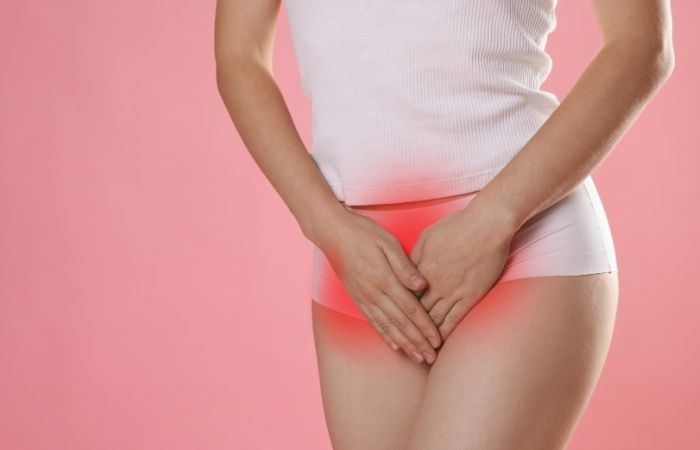
If the itch is truly intense at night and feels almost electric, scabies climbs the differential. The condition is caused by Sarcoptes scabiei var. hominis, a microscopic mite that burrows into the outer skin layer and lays eggs there. According to the CDC's scabies page, symptoms typically take four to eight weeks to develop after a first exposure as the immune system sensitizes to the mites and their waste, which is what produces the characteristic itch.
What makes scabies distinct is its stubbornness and its geography. The itching often spreads beyond the genitals to the wrists, the webs between the fingers, the waistline, or the area under the breasts. Thin gray or pink burrow lines may appear, often only a few millimeters long. Close household or sexual contacts may begin itching at roughly the same time. That shared timing is the giveaway.
Unlike friction irritation, scabies does not fade in two days. It lingers and usually worsens until treated. The CDC describes treatment as a prescription cream, lotion, or pill, with all household and sexual contacts treated at the same time to prevent reinfestation. A clinician's evaluation is required to obtain the prescription.
The itch is sharp, often described as electric, and worst at night. It spreads outside the genitals to the wrists, finger webs, waistline, or area under the breasts. Thin gray or pink burrow lines, a few millimeters long, may appear. A household or sexual contact starts itching around the same time. Friction irritation does none of those things.
Anxiety after sex is real, and it is physical
There is something the post-sex narrative often leaves out. The morning after can carry emotional static, especially after a new, casual, or unprotected encounter. The nervous system replays the scene: was the condom intact, should you have asked more, should you have tested sooner.
Anxiety has measurable physical effects. It raises cortisol acutely, heightens nerve sensitivity, and increases unconscious scratching behavior. The scratching irritates the skin further, irritation triggers more itching, and the loop tightens. Dermatology literature calls this the itch-scratch cycle, and it is a documented physical pattern.
Real symptoms still deserve attention; the emotional layer can amplify them, sometimes substantially. Panic rarely produces clarity. A calmer pattern read often does. Stepping out of the bedroom for ten minutes, drinking some water, and writing down the actual signs (location, duration, presence or absence of sores or discharge) is a more useful diagnostic move than scrolling forum threads at 1 a.m.
Stress raises cortisol, which heightens nerve sensitivity in the skin. People in that state scratch more, often without noticing. Scratching damages the surface barrier, the damage produces inflammation, inflammation produces more itching. The cycle is physical and well-documented in dermatology research.
When to test for an STD after itching
Testing makes sense in a few specific situations. If there was unprotected sex with a new or non-monogamous partner, testing is reasonable even when itching turns out to be irritation. Testing is not an admission of wrongdoing; it is routine sexual health.
The timing matters. For chlamydia and gonorrhea, NAAT testing is typically most accurate around 7 to 14 days after exposure. For HIV, fourth-generation antigen-antibody tests reach high sensitivity by roughly 18 to 45 days, with a window before that during which a negative result is not definitive. For syphilis, antibodies become reliably detectable around 3 to 6 weeks post-exposure. For herpes, swabbing an active lesion gives the clearest answer; blood-based antibody testing can confirm long-standing infection but takes about 12 to 16 weeks to develop reliably after a new exposure.
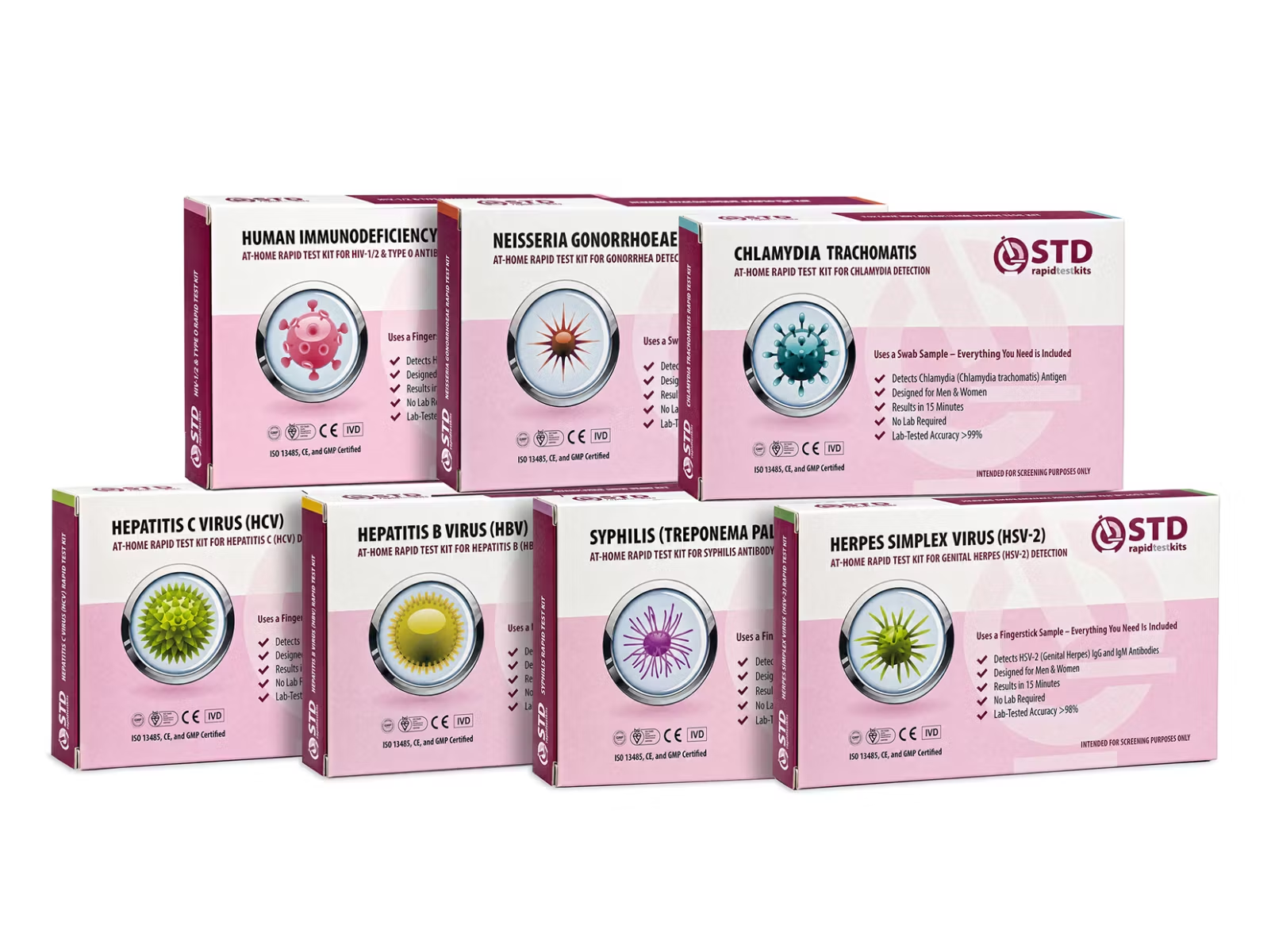
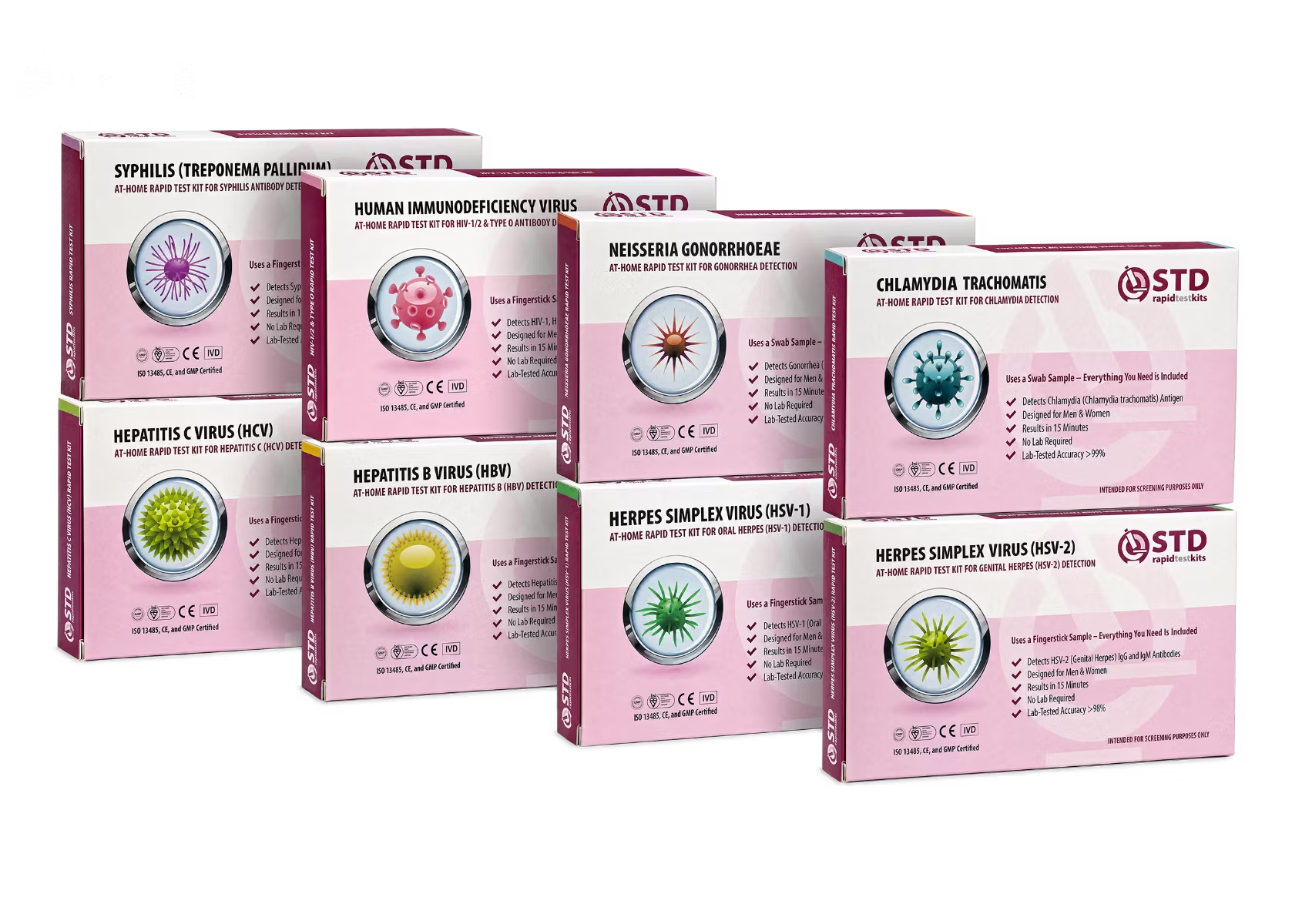
If the itching persists beyond several days, worsens, or evolves into visible lesions, discharge, pain with urination, or fever, the right move is to test rather than wait. A discreet at-home option ordered through STD Rapid Test Kits removes the waiting-room hurdle and lets the result come back on your timeline.
What to do tonight while you wait
If you are reading this in bed, scratching, and spiraling, here is a practical sequence. First, inspect the area in bright light. Look for clustered fluid-filled blisters, open sores, unusual discharge, or thin gray burrow lines. The absence of those visible signs lowers the STD probability substantially.
Second, apply a fragrance-free, non-irritating moisturizer or barrier cream. Avoid harsh soaps, scented body washes, and feminine hygiene products, which can worsen contact dermatitis. Switch to loose cotton underwear. Friction worsens inflammation, and inflammation worsens the itch.
Third, give the body 48 hours. If the itching improves dramatically, surface irritation was the likely cause. If it escalates, spreads, or pairs with new symptoms (lesions, discharge, fever, swelling), that is the moment to test or see a clinician.
Fourth, breathe. The body is resilient. Most post-sex itching resolves within a few days.

What herpes actually feels like (and what it doesn't)
Because the herpes question is what brings many readers here in the first place, it deserves a clear answer. Early genital herpes typically begins with localized tingling, itching, or burning in one specific area, usually within 2 to 12 days of exposure. The sensation intensifies over a few days and produces small, clustered fluid-filled blisters or ulcers. The progression is noticeable; it does not stay vague for long.
Broad, mild, diffuse itching with no clustered lesions after several days is not the classic herpes timeline. The absence of progression is itself a reassuring data point. That said, many people with HSV-1 or HSV-2 have very mild symptoms or none at all, which is why blood antibody testing has a role for people with known exposure even when no lesions appear.
If clustered blisters or ulcers do appear, swabbing the active lesion within 24 to 48 hours gives the clearest diagnostic answer using PCR or viral culture, both standard laboratory methods. Blood antibody tests can confirm long-standing HSV-1 or HSV-2 infection even without visible lesions, but a new infection takes about 12 to 16 weeks after exposure to produce reliably detectable antibodies.
Active lesion present: swab within 24 to 48 hours for PCR or viral culture, the most specific diagnostic method available. No lesion, recent suspected exposure: blood antibody testing is unreliable until 12 to 16 weeks after the exposure event. No lesion, history of suspected past exposure: type-specific blood antibody testing (HSV-1 vs HSV-2 IgG) can confirm long-standing infection.
The role of yeast, sweat, and warmth
Warm, moist environments shift the skin's microbial balance. After sex, especially when sleep follows without showering, sweat and bodily fluids stay in contact with delicate tissue for hours. Candida species, the fungi behind most yeast infections, thrive in exactly those conditions. Mayo Clinic guidance describes vaginal yeast infections as most commonly presenting with thick white discharge, redness, and itching that often peaks at night because of trapped warmth under bedding.
In people with penises, the same warmth can produce balanitis (inflammation of the head of the penis), which can itch, redden, or develop a white film. Uncircumcised men are somewhat more prone because the foreskin holds moisture against the skin.
Yeast typically does not cause ulcers or systemic symptoms. Treatment is straightforward for most uncomplicated infections, and the microbiome shift is part of why not every itch after unprotected sex equals an STD; small balance changes can produce real, temporary discomfort.
Most uncomplicated vaginal yeast infections respond to one of three options: clotrimazole cream (1%, applied for 3 or 7 days), miconazole cream or vaginal suppository (1, 3, or 7-day courses depending on strength), or a single oral 150 mg dose of fluconazole (in regions where it is over-the-counter, otherwise by prescription). If symptoms persist past one full course, recur within two months, or include pelvic pain or fever, see a clinician rather than restarting OTC treatment.
Red flags that shouldn't be ignored
Most nighttime post-sex itching is benign and resolves within a few days. A specific set of signs raise the urgency and deserve immediate attention rather than wait-and-watch:
- Persistent or sharp pain rather than itch
- Open sores, ulcers, or clustered fluid-filled blisters
- Fever, chills, or swollen lymph nodes in the groin
- Thick green or yellow discharge with strong odor
- Severe pelvic, scrotal, or testicular pain
- Pain or blood with urination that does not resolve within a day
These suggest active infection, inflammation, or complications such as pelvic inflammatory disease, a urinary tract infection, or a symptomatic herpes outbreak. At-home testing can still be useful for screening, but those signs warrant a clinician's evaluation, especially when pain, fever, or significant swelling is involved.
Any of those signs is reason to test and see a clinician the same day, not after a few more days of wait-and-watch.
Frequently Asked Questions
- Is itching worse at night after sex usually an STD?
- Most of the time, no. The common culprits are friction, contact dermatitis (often from condom latex, scented lubricant, or new soap), yeast imbalance, and scabies. STDs that cause itching almost always bring additional signs within several days (clustered blisters, discharge changes, burning urination, sores). Isolated nighttime itching that does not progress is more often a sign your skin is reacting than that you are infected.
- If it were herpes, would I know by now?
- In most cases the timeline declares itself. Early genital herpes typically starts with localized tingling, itching, or burning in one spot within 2 to 12 days of exposure, then progresses to small clustered fluid-filled blisters or ulcers. Broad, mild, non-progressing itching that does not become visible sores within a week is rarely the classic herpes presentation. If clustered blisters do appear, a swab within 48 hours gives the clearest diagnostic answer.
- Why does the itch always feel worse at night?
- Several factors stack at night. Cortisol naturally drops in the evening, the skin loses moisture overnight, the body warms under bedding, and the brain has fewer distractions. Dermatology research describes itch as having a real circadian rhythm. The itch itself may not have grown; awareness of it almost certainly has.
- Can anxiety really make me itch more?
- Yes. Stress raises cortisol acutely and amplifies nerve sensitivity. Stressed people also scratch more, often without realizing it, which irritates the skin further and triggers more itching. The itch-scratch cycle is well-documented in dermatology and is a real physical loop, not a psychological tic.
- I had unprotected sex. Should I test anyway?
- Yes, and the trick is timing rather than urgency. Set a reminder for the right window for each infection rather than testing tonight, since most assays need time after exposure to be reliable. Approximate windows: chlamydia and gonorrhea NAAT around 7 to 14 days; HIV fourth-generation antigen-antibody around 18 to 45 days; syphilis antibodies from 3 to 6 weeks; herpes blood antibodies 12 to 16 weeks for a new infection. If clear symptoms develop sooner (sores, discharge, fever), test sooner regardless of the window.
- How do I tell yeast from an STD?
- Yeast typically brings thick white discharge (in people with vaginas) or a white film and redness (in people with penises) along with the itch. It thrives in warmth and moisture, often peaks at night, and responds quickly to over-the-counter antifungals. STDs that itch usually add other signs within a few days such as sores, burning urination, or pelvic pain. The pattern matters more than the itch alone.
- Could it be scabies if the itching is intense at night?
- If the itch is electric-feeling and spreads beyond the genitals to wrists, fingers, waistline, or the area under the breasts (especially when a recent close contact also begins itching), scabies climbs the differential list. The CDC notes scabies spreads via prolonged skin-to-skin contact, including sexual contact, and the itch is famously worse at night. Treatment is a prescription cream, lotion, or pill, and all household and sexual contacts should be treated at the same time.
- When should I stop researching and see someone in person?
- Any combination of open sores or ulcers, thick green or yellow discharge, fever, significant swelling, severe pelvic or testicular pain, or pain with urination that does not resolve within a day. Those signs cross the line from wait-and-watch into evaluate-now. At-home testing can still be useful for screening alongside, but those red-flag symptoms deserve a clinician's eyes.
- U.S. Centers for Disease Control and Prevention. Genital Herpes Fact Sheet: symptoms, prodrome, asymptomatic prevalence, and blood antibody testing limits.
- U.S. Centers for Disease Control and Prevention. Chlamydia Fact Sheet: typical symptoms, asymptomatic rates.
- U.S. Centers for Disease Control and Prevention. Scabies clinical overview: four-to-eight-week sensitization, characteristic itching pattern, prescription treatment.
- U.S. Centers for Disease Control and Prevention. Trichomoniasis Fact Sheet: symptom presentation in people with vaginas, discharge characteristics.
- U.S. Centers for Disease Control and Prevention. HIV Testing: window periods for fourth-generation antigen-antibody assays and rapid tests.
- Mayo Clinic. General reference for yeast infection and contact dermatitis: presentation, triggers, and over-the-counter antifungal treatment.
- U.K. National Health Service. Pubic lice: symptoms, visible nit detection, and management.
