Is the HPV Vaccine Safe and Effective? What the Evidence Shows
Two decades after the first HPV vaccine was licensed, the safety record is long and the cancer data are finally arriving. Here is what monitoring systems have found, which side effects are common, what the fertility and cancer fears rest on, and what the vaccine still leaves to screening.
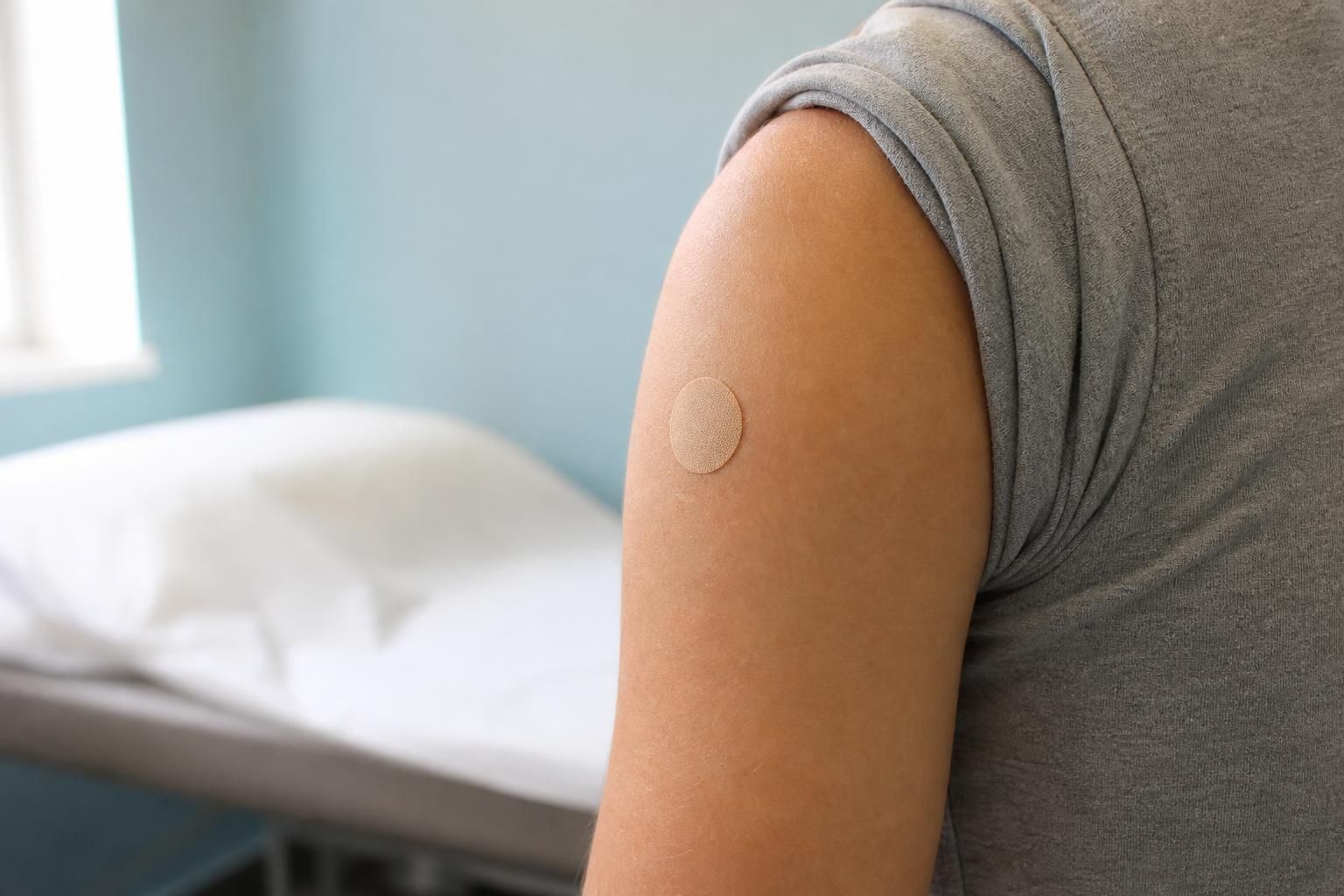



- CDC reports more than 160 studies showing HPV vaccines have a favorable safety profile; the usual side effects are a sore arm, headache and, in teens, fainting.
- Since vaccination began in the US, infections with the HPV types behind most HPV cancers have dropped 88% among teen girls, per CDC.
Published: October 2026 | Last updated: October 2026 | Editorial review and quality control: Martina N.
Yes. The HPV vaccine is one of the most closely watched vaccines in use, and the evidence points the same way on both counts: serious side effects are rare, and in countries that vaccinated early, the cancer-causing HPV infections it targets have dropped sharply. In the most striking data so far, a Scottish national study recorded no cases of invasive cervical cancer in women vaccinated at 12 or 13.
The question keeps coming back anyway, usually because one specific worry, such as fertility, an alarming report online or the vaccine's link to a sexually transmitted infection, feels more vivid than a general reassurance. This article takes those worries one at a time and sets out the safety record and the real-world results side by side, with the source for each figure.
If your question is about the virus itself, such as whether an infection clears on its own, our explainer Does HPV go away? covers that. This piece sticks to the vaccine.
What two decades of safety monitoring found
More than 100 million doses of HPV vaccine were distributed in the United States between June 2006 and December 2017, and safety has been tracked by several systems. The Vaccine Adverse Event Reporting System (VAERS), run jointly by CDC and FDA, collects reports of any health problem after vaccination as an early-warning signal. The Vaccine Safety Datalink (VSD) then checks those signals against medical records from large health systems to see whether a problem actually occurs more often in vaccinated people.
CDC's summary of that work is direct: findings from many monitoring systems and more than 160 studies show HPV vaccines have a favorable safety profile, and the body of evidence "overwhelmingly supports their safety" (CDC, HPV vaccine safety). The National Cancer Institute reaches the same conclusion after more than two decades of monitoring, noting that the most common problems have been brief soreness and other reactions at the injection site (NCI HPV vaccine fact sheet).
Fainting deserves its own mention because it is the one reaction that can cause injury. It is more common in adolescents after any vaccine, not only this one. CDC advises that teens sit or lie down for the shot and stay that way for 15 minutes afterward (CDC, HPV vaccination). Severe allergic reactions are possible with any vaccine but, as the NHS puts it, very rare.
Side effects reported most often after the shot
- Pain, redness or swelling in the arm where the shot was given
- Fever
- Headache or feeling tired
- Nausea
- Muscle or joint pain
- Dizziness or fainting, more common in adolescents; sitting or lying down for 15 minutes afterward lowers the risk of a fall
Does it actually prevent cancer?
HPV causes almost all cases of cervical cancer, which is still the fifth most commonly diagnosed cancer in women worldwide, with around 604,000 new cases and 280,000 deaths in 2024 (WHO cervical cancer fact sheet). Cancer takes years to develop after infection, so the evidence has arrived in stages: first fewer infections, then fewer precancers, and now fewer cancers.
The infection data came first. In the US, infections with the HPV types that cause most HPV cancers and genital warts have dropped 88% among teen girls and 81% among young adult women. Among vaccinated women, the share of cervical precancers caused by the types most linked to cervical cancer has fallen by 40% (CDC, HPV vaccination).
The cancer data followed. Scotland published national results in 2024: among women immunized at 12 or 13, no cases of invasive cervical cancer were recorded, regardless of how many doses they received. Women vaccinated at 14 to 22 who received three doses also had a significantly lower rate than unvaccinated women. The study covered the earlier two-type (bivalent) vaccine (Palmer et al., Journal of the National Cancer Institute, 2024). That gap between age groups is the clearest evidence for vaccinating before any exposure to the virus.
The vaccine used in the US today, Gardasil 9, covers nine types: 16 and 18, which cause about 70% of cervical cancers, five more high-risk types that account for another 10% to 20%, and types 6 and 11, which cause 90% of genital warts (NCI fact sheet above). Protection against those types has been found to last for more than a decade so far, with follow-up still running.
HPV vaccination for girls 9–14 years is highly effective at preventing infection, cervical cancer and other HPV-related cancers.
The fears that keep resurfacing
Most hesitancy about this vaccine traces back to a handful of specific worries rather than to the side-effect list above. Some grew out of raw VAERS report counts, which are easy to misread because the system accepts reports of anything that happens after a shot, whether or not the vaccine caused it. Others come from the fact that the vaccine is given to children to prevent an infection spread through sex, which makes parents understandably cautious.
Each of the common worries has been looked at directly. The answers below come from CDC, WHO and NCI.
HPV vaccine worries, checked against the evidence
Myth: The vaccine can give you HPV or cause cancer.
Fact: The vaccine contains no live virus and no viral DNA, so it cannot cause cancer or any other HPV-related illness, according to WHO.
Myth: The HPV vaccine causes infertility.
Fact: CDC and FDA have found no proof that HPV vaccines cause reproductive problems in women, including primary ovarian insufficiency. By preventing cervical cancer, the vaccine also helps avoid cancer treatments that can end the ability to become pregnant.
Myth: Once you are vaccinated, you can skip cervical screening.
Fact: The vaccine does not cover every cancer-causing HPV type, so NCI and the NHS both advise vaccinated women to keep the same screening schedule as unvaccinated women.
Who should get it, and how many doses
In the US, CDC recommends routine vaccination at age 11 or 12, with the option to start at 9. Anyone through age 26 who was not fully vaccinated when younger should catch up, and adults 27 to 45 may choose to be vaccinated after talking it through with a clinician (CDC HPV vaccine recommendations). As of October 2026, CDC's published schedule still uses two or three doses depending on the starting age.
Other countries have moved to fewer doses. WHO now says the vaccine may be given as one or two doses depending on the national schedule, and it treats girls 9 to 14 as the priority group. The NHS gives most people under 25 a single dose (NHS, HPV vaccine). A Scottish observational study found no invasive cancers in women vaccinated at 12 or 13 with one or two doses, though few women were in that group, so it supports but does not settle the one-dose question.
The recommendation covers boys too, since persistent HPV infection is also linked to cancers of the mouth and throat, penis and anus (WHO, HPV and cancer). Our article on why HPV vaccination matters for men as much as for women covers that side in detail.
HPV vaccine schedules: US and UK
| Schedule detail | CDC (United States) | NHS (United Kingdom) |
|---|---|---|
| Routine age | 11 or 12; can start at 9 | 12 to 13 (school year 8) |
| Number of doses | 2 if started before the 15th birthday (or a third if the two doses were under 5 months apart); 3 if started at 15 to 26 or if immunocompromised | Usually 1 under age 25; 2 for ages 25 to 45, given 6 months to 2 years apart; 3 for people with a weakened immune system |
| Older or higher-risk groups | Catch-up for everyone through 26; ages 27 to 45 after discussion with a clinician | People at higher risk from HPV |
Dose counts differ between countries; follow the schedule where you are vaccinated.
What the vaccine leaves to you
A safe, effective vaccine still has limits, and knowing them is part of using it well. It prevents infection with the nine types it covers; it does not treat an HPV infection or HPV-related disease you already have (NCI fact sheet above). That is why it works best before any sexual contact, and why the benefit is smaller for adults who have likely already met some of those types.
It also leaves out a minority of cancer-causing types. The NHS notes there is still a small chance of cervical cancer after vaccination, which is the reason cervical screening stays on the calendar for vaccinated women.
And it protects against HPV only, nothing else. Chlamydia, gonorrhea, syphilis, herpes and HIV are all unaffected, a point our article Can you get an STD after the HPV vaccine? works through infection by infection. Routine screening for those infections can happen at a clinic or with at-home STI test kits (this site sells those kits; a positive home result needs confirming with a clinician).
If you or your child is due for a dose, the next step is simple: ask your pediatrician, family doctor or pharmacist which schedule applies, and mention any history of fainting so the shot can be given lying down.
FAQs
- Is the HPV vaccine safe during pregnancy?
- It is not recommended during pregnancy: HPV vaccines were not tested in pregnant women in clinical trials. If a dose was given before a pregnancy was known, CDC says there is no reason to be alarmed and no intervention is needed: monitoring of women vaccinated inadvertently has not linked the vaccine to harm to the pregnancy or the developing baby. Any remaining doses are delayed until after the pregnancy.
- Is it too late to get the HPV vaccine after age 26?
- Not necessarily, but it is a personal decision rather than a routine recommendation. Many adults in that age range have already been exposed to some of the covered types, which is why CDC asks people 27 to 45 to weigh it with a clinician.
- Can I get the HPV vaccine if I already have HPV?
- Yes, if you're in an eligible age group. Having one HPV type does not mean you have had all nine the vaccine covers, so it can still protect against the others, even though it won't clear the infection you have now.
This article summarizes current guidance from the U.S. Centers for Disease Control and Prevention (CDC), cancer.gov, the World Health Organization (WHO) and the NHS and the other sources listed below. Each specific figure or recommendation links to the page that states it, and every page used is listed under Sources with what it supports. It is general health information written by our editorial staff, not a diagnosis or a treatment plan; how we choose topics and use sources is described in our editorial policy.
- U.S. Centers for Disease Control and Prevention. HPV vaccine safety: more than 160 studies, over 100 million US doses distributed 2006–2017, VAERS and VSD monitoring, fertility findings, 15-minute observation advice (March 2025).
- U.S. Centers for Disease Control and Prevention. HPV vaccination: 88% and 81% drops in vaccine-type infections, 40% drop in vaccine-type cervical precancers, side effects and fainting precautions (August 2024).
- U.S. Centers for Disease Control and Prevention. HPV vaccine recommendations for clinicians: routine age, catch-up through 26, shared decision-making for 27–45, two- and three-dose schedules (July 2024).
- National Cancer Institute. HPV vaccine fact sheet: Gardasil 9 types and the share of cervical cancers they cause, duration of protection, safety record, vaccine does not treat existing infection, screening advice (June 2026).
- World Health Organization. Cervical cancer fact sheet: HPV as the cause of almost all cases, 2024 case and death estimates, one- or two-dose schedule for girls 9–14 (July 2026).
- World Health Organization. HPV and cancer fact sheet: the vaccine contains no live virus or viral DNA and cannot cause cancer or HPV-related illness; HPV links to cancers of the mouth/throat, penis and anus (March 2024).
- NHS. HPV vaccine: UK eligibility and dose schedule, side effects, continued need for cervical screening after vaccination.
- Palmer et al. Journal of the National Cancer Institute, 2024. Scottish national observational data on the bivalent vaccine: no invasive cervical cancer recorded in women immunized at 12–13 regardless of dose count; reduced incidence in women vaccinated at 14–22 with three doses.