
Published: December 2025 | Last updated: May 2026 | Editorial review and quality control: Martina N.
The connection between certain long-term sexual infections and cancer is real, well documented for some pathogens, and weak or unclear for others. The single strongest link: high-risk strains of human papillomavirus (HPV) cause virtually all cervical cancer and a significant share of anal, oropharyngeal, vulvar, vaginal, and penile cancers. Untreated HIV raises cancer rates through immune suppression. Chronic hepatitis B and C drive most liver cancer worldwide. For chlamydia, gonorrhea, and similar bacterial infections, the cancer association is much weaker and still being studied.
This piece walks through what the evidence supports, what it doesn't, and the screening and vaccination steps that catch or prevent these cancers when treatment works best.
Key Takeaways
- Persistent high-risk HPV is the most cancer-linked STI: it causes nearly all cervical cancer and the majority of anal, oropharyngeal, vulvar, vaginal, and penile cancers (National Cancer Institute).
- Cancer risk from any STI rises only with chronic, undetected infection. Routine testing, treatment, and HPV vaccination prevent the persistence that matters.
Why chronic STIs can raise cancer risk
Most infections clear in weeks or months. Some don't. When a virus or bacterium stays in the same tissue for years, three biological pressures push cells toward cancer.
The first is chronic inflammation. Long-running immune activity damages DNA and stimulates rapid cell turnover, both of which raise the odds of a cancer-causing mutation. The second is direct viral interference with cell-cycle control. High-risk HPV types produce two proteins, E6 and E7, that inactivate the tumor-suppressor genes p53 and Rb; this is how persistent HPV infection drives malignant transformation (National Cancer Institute). The third is immune suppression, as seen in untreated HIV, which removes the body's normal surveillance of pre-cancerous cells before they can be cleared.
- Chronic inflammation. Years of immune activity in the same tissue damage DNA and accelerate cell turnover.
- Viral E6/E7 oncoproteins. High-risk HPV types switch off the p53 and Rb tumor-suppressor genes.
- Immune suppression. HIV and other causes of weakened immunity let pre-cancerous cells escape normal clearance.
HPV is the strongest cancer-linked STI
HPV is the most common STI in the United States. CDC data show that nearly everyone will get HPV at some point in their lives, and around 13 million Americans become infected each year (CDC HPV basics). Most of those infections clear within 2 years and never cause symptoms; the same CDC page reports that 9 out of 10 HPV infections resolve on their own within that window.
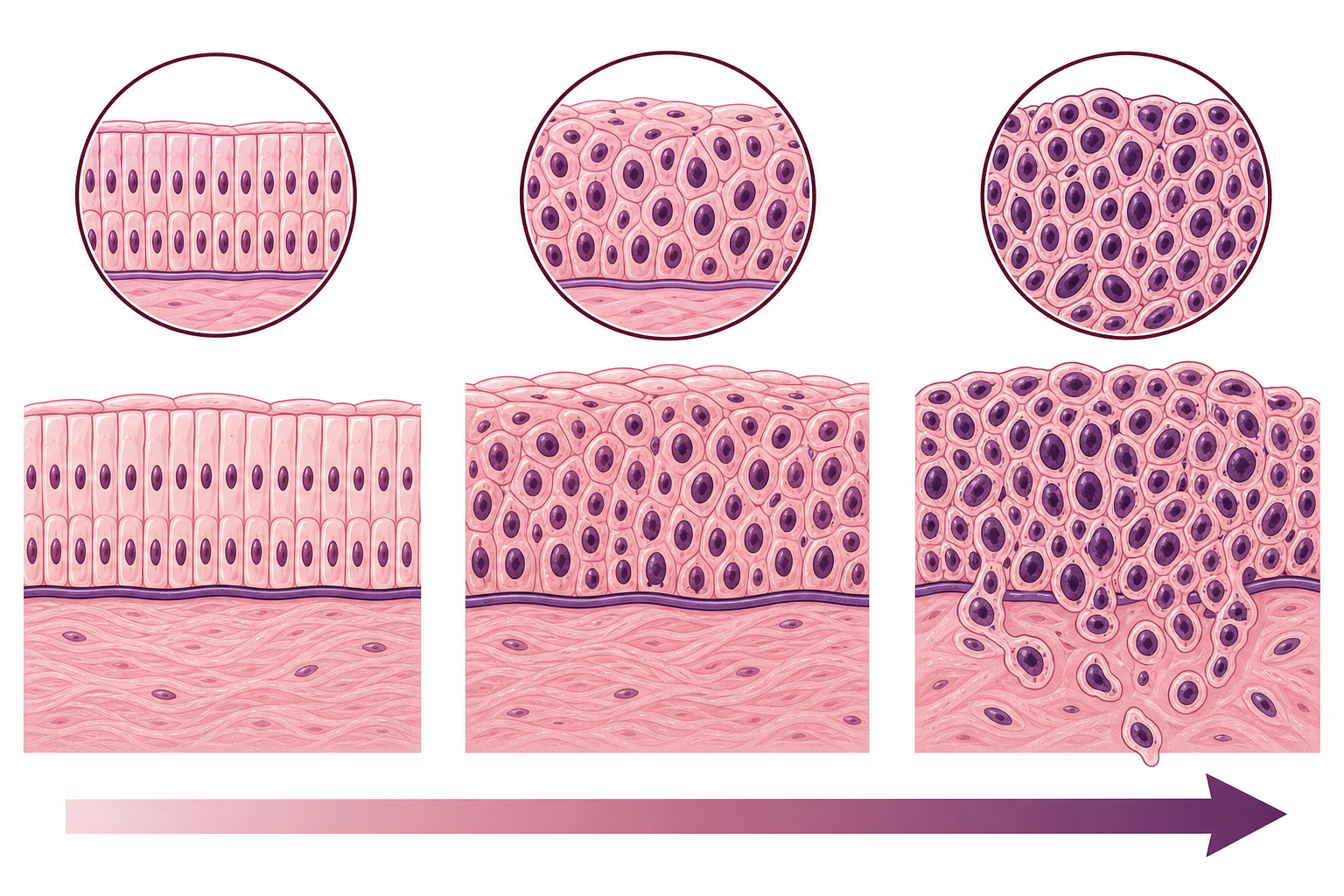
The cancer story applies to a subset of HPV types called high-risk or oncogenic. There are roughly 14 of these, with HPV-16 and HPV-18 responsible for the majority of HPV-related cancers worldwide. When a high-risk HPV infection persists for years rather than clearing, the cellular changes it produces can progress through pre-cancerous lesions to invasive cancer.
According to NCI data, HPV causes nearly all cervical cancers, over 90% of anal cancers, and a large share of oropharyngeal, vulvar, vaginal, and penile cancers (NCI HPV and cancer). Globally, cervical cancer alone causes more than 660,000 new diagnoses each year per WHO surveillance data (WHO cervical cancer fact sheet). Cervical pre-cancer found on a Pap or HPV test is highly treatable, which is why screening is the central prevention lever for this particular cancer.
The cancers HPV is known to cause
Six cancers carry a documented HPV link. They differ by site, by typical age of diagnosis, and by who's affected:
- Cervical cancer. Nearly 100% of cervical cancers involve persistent high-risk HPV infection. About 11,500 cases are diagnosed in the United States each year, almost all preventable with screening (CDC cervical cancer hub).
- Anal cancer. Over 90% of anal cancers are HPV-driven (NCI HPV and cancer). Rates have been climbing, particularly among men who have sex with men and people living with HIV.
- Oropharyngeal cancer. HPV causes roughly 70% of oropharyngeal cancers (back of throat, tonsils, base of tongue). Diagnoses in this group, especially in men, have been rising for two decades.
- Vulvar and vaginal cancer. A meaningful share, though smaller than for cervical cancer, traces to high-risk HPV.
- Penile cancer. Less common overall, but HPV is implicated in a substantial fraction of cases.
The HPV vaccine covers the high-risk types responsible for all six of these cancers, which is why current ACIP guidance applies to both girls and boys (CDC HPV vaccine recommendations).
This article is published by stdrapidtestkits.com, which sells at-home STI testing kits. We recommend products based on fit-for-purpose for the reader's concern, not commercial benefit. Where our kits don't fit (for example, clinical Pap testing for cervical cancer screening), we say so plainly.
HIV raises cancer risk through immune suppression
HIV doesn't transform healthy cells into cancer cells directly. It strips away much of the immune system's ability to clear cells that are already heading in that direction. The result is meaningfully higher rates of several cancers, especially in people who aren't on effective antiretroviral treatment.
Three cancers have historically been classified as AIDS-defining because they appear at much higher rates in advanced HIV: Kaposi sarcoma, aggressive non-Hodgkin lymphoma, and invasive cervical cancer. People living with HIV are more than 200 times as likely to develop Kaposi sarcoma and nearly 20 times as likely to develop anal cancer compared with the general population (National Cancer Institute HIV fact sheet). Several other cancers, including lung, liver, and Hodgkin lymphoma, also occur more often in people with HIV.
Modern antiretroviral therapy has dramatically reduced AIDS-defining cancer rates. People on stable treatment with an undetectable viral load have cancer rates that approach (though don't exactly match) those of the general population.
Effective antiretroviral therapy doesn't just slow HIV. By restoring immune function, it lowers the rates of Kaposi sarcoma, lymphoma, and HPV-related cancers in people living with HIV. Detecting HIV early enough to start treatment before significant immune decline is among the highest-leverage steps for downstream cancer prevention in someone with HIV.
Hepatitis B and C cause most liver cancer worldwide
Liver cancer isn't urogenital, but it's the cancer most strongly tied to a sexually or blood-transmissible infection, so it belongs in this picture. Chronic hepatitis B and chronic hepatitis C are responsible for the majority of hepatocellular carcinoma cases globally. The pattern echoes HPV: years to decades of liver inflammation, scarring (cirrhosis), and then cancer in a subset of patients (WHO hepatitis B fact sheet).
Hepatitis B is preventable with a vaccine that's been part of the routine childhood schedule for decades; CDC now also recommends universal adult vaccination through age 59. Hepatitis C has no vaccine but is curable in more than 95% of patients with 8 to 12 weeks of oral direct-acting antiviral therapy (CDC hepatitis C overview).
Where the evidence is weaker: chlamydia, gonorrhea, and others
Some research has explored whether chronic chlamydia or gonorrhea infection raises the risk of cancers at other sites, particularly ovarian and bladder cancer. The current evidence is mixed and far from definitive. Observational studies have found small associations in some populations and none in others. Mechanistically, chronic pelvic inflammation from untreated chlamydia could plausibly contribute, but the data don't yet show a strong, consistent link.
What the evidence does clearly support: untreated chlamydia and gonorrhea cause pelvic inflammatory disease, which raises the risk of ectopic pregnancy and infertility. Those near-term consequences are well documented and more pressing than any speculative cancer link.
Trichomoniasis, Mycoplasma genitalium, and herpes simplex have all been investigated for cancer associations as well. None has emerged with anything close to the strength of the HPV-cervical cancer link. Be skeptical of articles that present these weaker associations as established fact.
Symptoms that should prompt a clinical conversation
Most HPV-related cancers, and most early-stage urogenital cancers in general, have no symptoms. That's why screening matters more than symptom-watching. When symptoms do appear, they tend to be non-specific. Common signals worth a clinician's evaluation include bleeding between menstrual periods, after sex, or after menopause; unusual vaginal, penile, or anal discharge that doesn't resolve; a new lump, sore, or wart that persists more than a few weeks; persistent pelvic, abdominal, or back pain; blood in urine or stool; difficulty swallowing, persistent sore throat, or a neck mass; and unexplained weight loss.
None of these symptoms by itself means cancer. Most have benign causes. But any of them, especially when persistent for more than a few weeks, deserves an evaluation. The combination of a known persistent HPV infection plus any of these symptoms is a stronger reason to seek prompt care.
Nearly all cervical cancer is caused by HPV. HPV can also cause cancers of the vulva, vagina, penis, anus, and back of the throat, including the base of the tongue and tonsils (oropharynx).
Screening that actually catches these cancers early
Screening recommendations vary by sex, age, and risk factors. Current U.S. guidance from the American Cancer Society and the U.S. Preventive Services Task Force converges on a few clear standards. For people with a cervix, the American Cancer Society recommends starting screening at age 25, while USPSTF guidance begins at age 21 (CDC cervical cancer screening). Acceptable options include primary HPV testing every 5 years, co-testing (Pap plus HPV) every 5 years, or Pap alone every 3 years, continuing through age 65 if prior screening has been adequate.
Anal cancer screening has no universal recommendation, but anal Pap testing is increasingly offered to higher-risk groups, including men who have sex with men and people living with HIV. CDC recommends one-time hepatitis C screening for all adults age 18 and older, and at least one hepatitis B screen in adulthood. For HIV, CDC recommends at least one test for every adult age 13 to 64, and more frequent testing for higher-risk individuals.
Cervical cancer is the only HPV-related cancer with a population-level screening program because the cervix is accessible, the pre-cancerous stage is long and well characterized, and treatment at the pre-cancer stage is highly effective. For the other HPV cancers, prevention happens primarily through vaccination.
| Infection | Recommended test | Who / age | Interval |
|---|---|---|---|
| Cervical (HPV) | Primary HPV, co-test, or Pap | People with a cervix, age 21 (USPSTF) or 25 (ACS) to 65 | HPV/co-test every 5 yrs; Pap alone every 3 yrs |
| Anal cancer | Anal Pap (where available) | MSM and people living with HIV | Per clinician (no universal interval) |
| Hepatitis B | HBsAg + anti-HBc / anti-HBs | All adults | At least once in adulthood |
| Hepatitis C | HCV antibody → RNA if positive | All adults age 18+ | At least once in adulthood |
| HIV | Antibody or Ag/Ab combo | All adults age 13 to 64 | At least once; more often if higher risk |
HPV vaccination: the largest cancer-prevention intervention for STIs
The HPV vaccine (Gardasil 9 in the United States) protects against the seven HPV types responsible for most HPV-related cancers, plus two types that cause genital warts. ACIP recommendations are precise about age windows (CDC HPV vaccine information):
- Routine vaccination through age 26. Two doses for those who start before their 15th birthday, three doses for those who start at age 15 or older.
- Shared clinical decision-making through age 45. ACIP supports HPV vaccination for adults age 27 to 45 based on individual circumstances. The benefit is smaller in adults because many have already been exposed to one or more HPV types, but it is not zero.
Population-level effectiveness data are striking. In countries with high HPV vaccination uptake, cervical pre-cancer rates in young women have dropped substantially, and published cohort studies in vaccinated populations show large reductions in cervical cancer incidence compared with unvaccinated peers (CDC HPV vaccine effectiveness).
If you are under 27 and haven't been vaccinated, talk to a clinician about catching up. If you are 27 to 45 and want to consider it, the same conversation applies, framed around your individual exposure history and risk factors.
STI testing as a long-term cancer prevention step
If chronic, undetected infection is the bridge between an STI and cancer, then routine testing breaks that bridge before it has time to matter. The most useful tests for cancer-relevant infections:
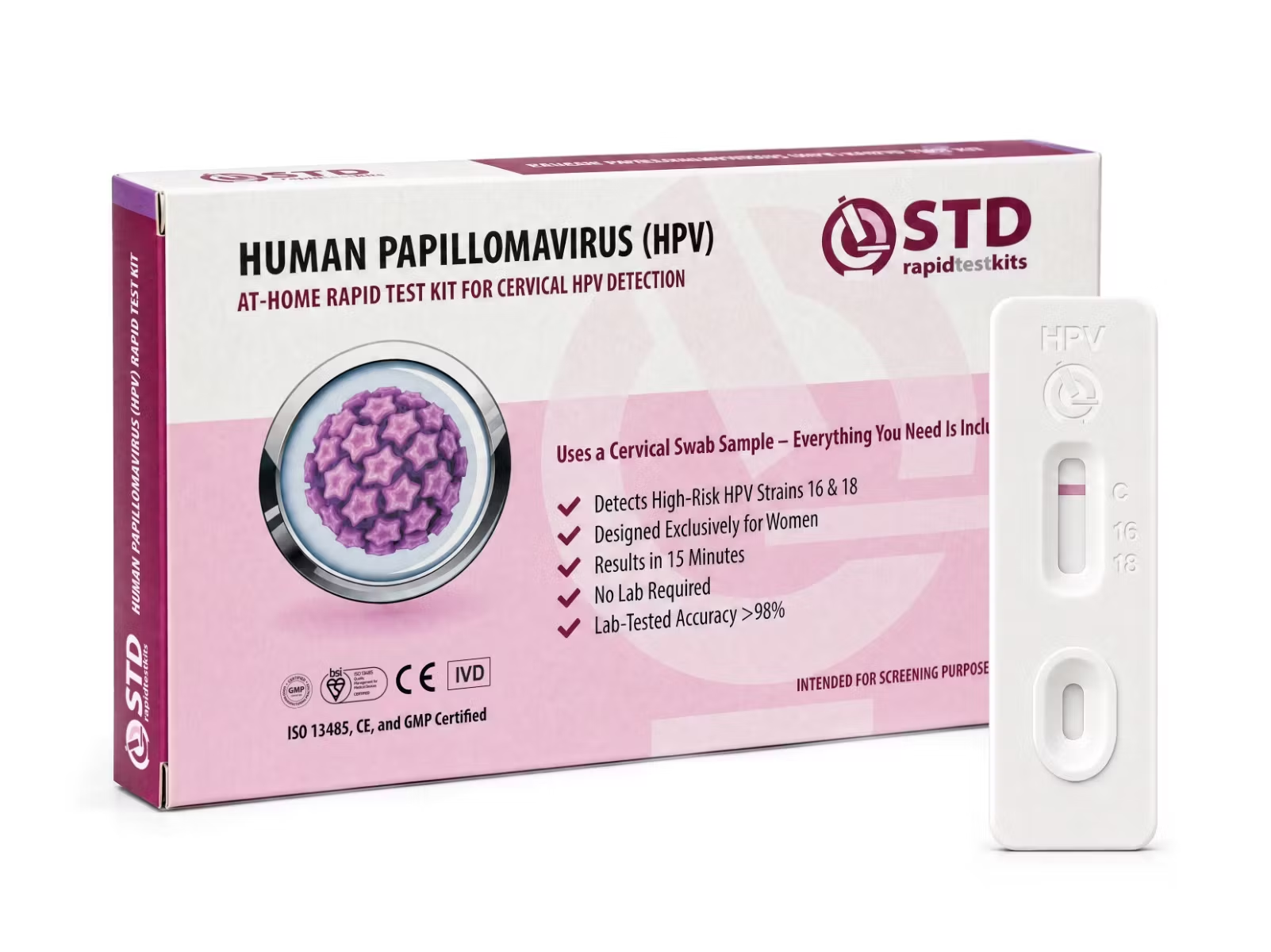
- HPV. Cervical HPV testing is part of routine cervical cancer screening for women. At-home HPV self-collection kits are available and can be a starting point for someone not currently engaged with screening; positive results need clinical follow-up.
- HIV. Rapid blood antibody tests, including at-home fingerstick kits, detect HIV reliably by 12 weeks after exposure, with most cases detectable earlier.
- Hepatitis B and C. Adult one-time screening as described above. Blood-based rapid tests detect both infections.
- Chlamydia and gonorrhea. Routine annual testing is recommended for sexually active women under 25 and for higher-risk individuals of any age. Treatment is straightforward when these are caught early.
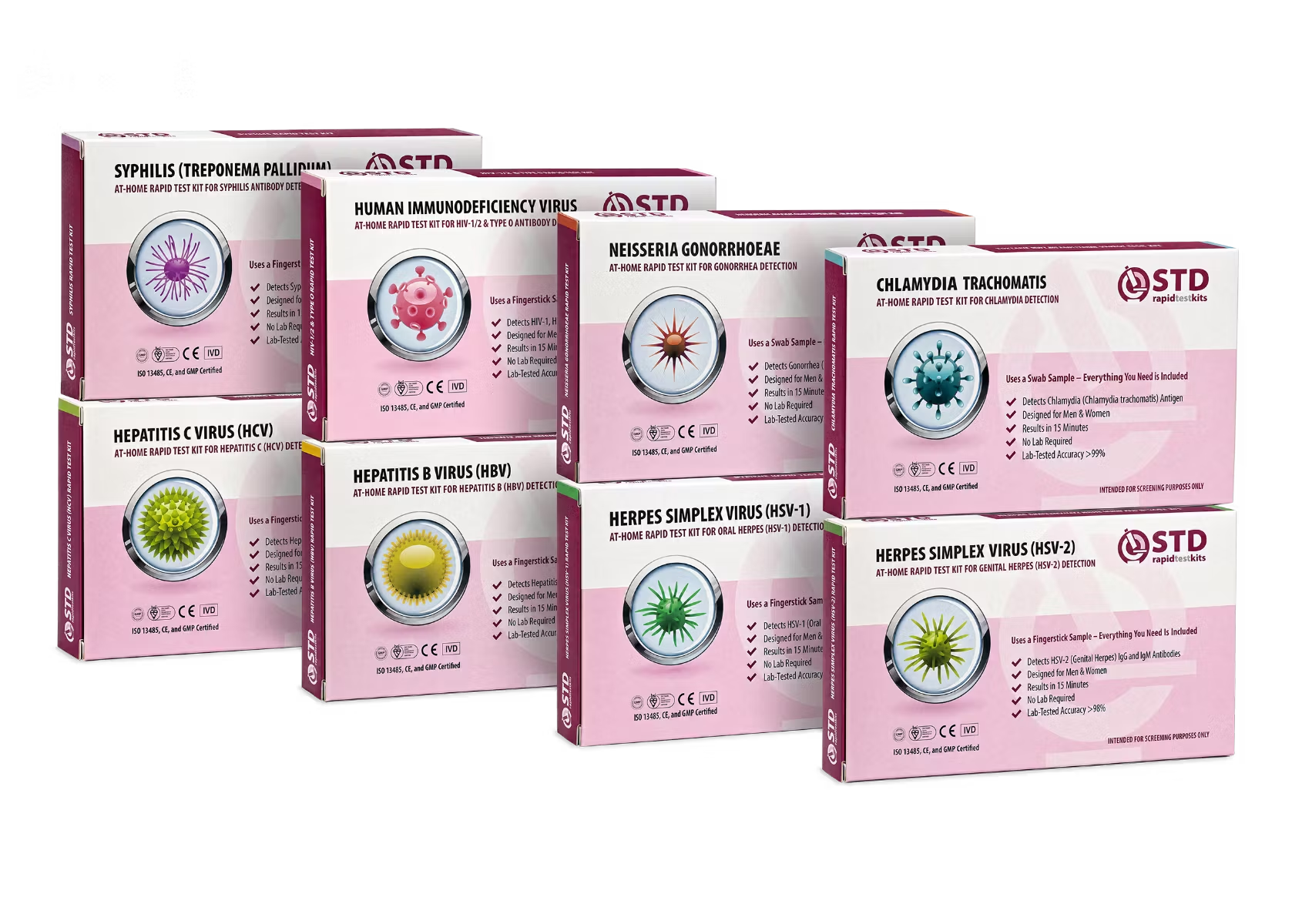
At-home rapid testing lowers the friction for the routine, low-anxiety screening that you might otherwise put off. A positive at-home result is a starting point, not an endpoint; confirm in a clinical setting and follow through with treatment or referral. At-home rapid tests use lateral-flow immunoassay chemistry, not laboratory NAAT or PCR; the two test types are complementary screening tools, not equivalent.
Lifestyle factors that compound (or reduce) the risk
Persistent STI infection is one input into urogenital cancer risk. Several other factors interact with it:
- Smoking. A clear independent risk factor for cervical, bladder, and oropharyngeal cancers. Smoking also reduces the immune system's ability to clear HPV infections, which makes persistence more likely.
- Heavy alcohol use. Compounds liver cancer risk in people with hepatitis B or C and increases oropharyngeal cancer risk independently.
- Immunosuppression. Beyond HIV, conditions like organ-transplant immunosuppression also raise HPV-related cancer rates.
- Number of partners and consistent condom use. Both affect lifetime HPV exposure. Condoms reduce HPV transmission but don't eliminate it, because HPV transmits through skin-to-skin contact in areas a condom doesn't cover.
None of these is destiny. Smoking cessation, alcohol reduction, and consistent condom use lower risk in straightforward, measurable ways, and combined with vaccination and routine screening they shift the odds substantially.
Frequently Asked Questions
- Can chronic STIs really cause cancer, or is that overstated?
- For some STIs, the link is well established. Persistent high-risk HPV infection causes nearly all cervical cancer and most anal, oropharyngeal, vulvar, vaginal, and penile cancers. Chronic hepatitis B and C cause most liver cancer worldwide. Untreated HIV raises rates of several cancers indirectly through immune suppression. For other STIs like chlamydia and gonorrhea, the cancer link is much weaker and not definitively established.
- Which STI carries the highest cancer risk?
- Persistent high-risk HPV infection has the strongest and clearest cancer link of any STI. About 14 HPV types are considered high-risk; HPV-16 and HPV-18 alone cause most HPV-related cancers worldwide.
- If I have HPV, does that mean I'll develop cancer?
- No. CDC data show that 9 out of 10 HPV infections clear on their own within 2 years and never cause symptoms. Cancer develops only when a high-risk HPV type persists for years and produces cellular changes that aren't caught and treated. Routine cervical screening catches almost all of these cases at the reversible pre-cancer stage.
- Does treating an STI lower my long-term cancer risk?
- For bacterial STIs like chlamydia and gonorrhea, prompt treatment fully clears the infection and removes any speculative cancer pathway. For viral STIs like HPV, hepatitis B and C, and HIV, treatment doesn't always eliminate the virus but lowers viral activity, reduces inflammation, and substantially reduces the downstream cancer risk.
- Should I get the HPV vaccine as an adult?
- ACIP recommends routine HPV vaccination through age 26 and supports shared clinical decision-making for adults age 27 to 45. The benefit is largest before sexual debut but isn't zero in adulthood, especially for people with new or multiple partners. Talk to your clinician about whether it makes sense for your situation.
- How often should I screen for cervical cancer?
- Current U.S. guidance differs slightly by organization. The American Cancer Society recommends primary HPV testing every 5 years starting at age 25; USPSTF guidance starts at age 21 with Pap testing every 3 years and adds primary HPV testing as an option from age 30. Both groups recommend continuing through age 65 if prior screening has been adequate. Confirm the schedule that fits your history with your clinician.
- Can men get cancer from HPV?
- Yes. HPV causes the majority of anal cancers, roughly 70% of oropharyngeal cancers, and a portion of penile cancers. Oropharyngeal cancer diagnoses in men have been rising in the United States for two decades, and the HPV vaccine is recommended for boys as well as girls for this reason.
- Can an at-home STI test detect cancer or pre-cancer?
- No. At-home STI tests detect infection (the upstream risk factor), not cancer or pre-cancer (the downstream consequence). They're useful for identifying chronic infections you might otherwise miss, which lets you address the cause. Cancer screening requires clinical tests like Pap testing, colposcopy, cystoscopy, or imaging.
- U.S. Centers for Disease Control and Prevention. HPV basics: prevalence, transmission, and the 9-in-10 clearance within 2 years figure cited in the body.
- National Cancer Institute. HPV and cancer: 'over 90% of anal cancer is caused by HPV' plus the list of HPV-associated cancers and the E6/E7 oncoprotein mechanism.
- U.S. Centers for Disease Control and Prevention. HPV vaccines: ACIP age windows for routine vaccination through 26 and shared-decision vaccination from 27 to 45, plus effectiveness data.
- U.S. Centers for Disease Control and Prevention. Cervical cancer screening: Pap, primary HPV, and co-testing intervals and age windows.
- National Cancer Institute. HIV infection and cancer risk: AIDS-defining and non-AIDS-defining cancer incidence in people living with HIV, including the 200x Kaposi sarcoma and 20x anal cancer figures.
- World Health Organization. Cervical cancer fact sheet: global incidence figure of more than 660,000 new diagnoses per year and prevention guidance.
- World Health Organization. Hepatitis B fact sheet: chronic infection, cirrhosis, and hepatocellular carcinoma pathway.
- U.S. Centers for Disease Control and Prevention. Hepatitis C overview: adult screening recommendations and the more-than-95% cure rate with 8 to 12 weeks of direct-acting antivirals.
