
Published: November 2025 | Last updated: May 2026 | Editorial review and quality control: Martina N.
It is late and you have just typed three words into a search bar: HPV is permanent. The results scroll. Cancer headlines. Forums. Statistics. Your stomach tightens. Somewhere between paragraph two and paragraph seven, the word 'virus' starts feeling like a sentence.
This article exists to slow that spiral down. HPV is one of the most common viruses in the world, and most adults who are sexually active will encounter at least one strain during their lifetime, according to the U.S. Centers for Disease Control and Prevention. That figure reflects biology meeting ordinary human intimacy. Public-health data from the same CDC fact sheet on genital HPV also shows that the immune system clears about 9 out of 10 new infections within two years, often before a person ever realizes they had the virus.
Key Takeaways
- Nearly all sexually active adults encounter at least one HPV strain in their lifetime, and roughly 9 out of 10 of those infections clear on their own within two years.
- 'High-risk' HPV is a strain category linked to future cancer risk, not a cancer diagnosis. Persistence over many years, not a single positive test, is what drives that risk.
The Truth We Rarely Say Out Loud: HPV Is Everywhere
Public-health data is unambiguous on this point. Genital HPV is the most common sexually transmitted infection in the United States, and most sexually active people are exposed to one or more strains at some point in their lives, according to CDC fact-sheet data on genital HPV. That figure describes the general adult population, not a subset of risk-takers.
Transmission happens through skin-to-skin contact, not only through intercourse. Genital-to-genital contact, oral contact, and intimate touching can all transfer the virus. Condoms reduce risk significantly because they cover one of the primary contact surfaces, though they cannot fully prevent transmission because HPV can be present on skin outside the area a condom protects. That is a description of how the virus behaves, not a moral judgment about anyone using protection.
The part that scrambles people emotionally is the silence. Most people who carry HPV have no symptoms, no pain, no discharge, and no visible sign that anything has happened. The virus moves between people during ordinary intimacy, often without leaving anything visible behind for either partner.
HPV spreads through skin-to-skin contact at the genital, oral, and anal mucosa. There is no minimum fluid-transfer threshold and no symptoms in most cases. Condoms reduce but do not fully eliminate the risk, because the virus can be on skin not covered by the condom.
Why HPV Spreads So Efficiently
Picture a virus that moves through one of the most common human behaviors on the planet, usually causes no symptoms, and often clears without treatment. That combination explains a lot of its prevalence.
Unlike infections that need fluid exchange to spread, HPV transfers through microscopic skin contact. There is no minimum dose from a fluid transfer event. The virus does not require penetration or ejaculation. That low threshold for transmission is part of why prevalence is high across populations.
Strain diversity matters too. There are more than 200 known HPV types according to CDC guidance on HPV, and about 40 of those affect the genital and oral mucosal areas. Some types cause visible warts, others are considered high-risk because long-term persistence can contribute to cellular changes that may eventually become cancer, and many produce nothing visible at all. When you combine easy transmission, mostly silent infection, and many strains, the result is a virus that appears in tests for a large fraction of sexually active adults. That figure describes how a small parasitic agent moves through human skin, full stop.
The simplified comparison below shows why HPV reaches more people than many other sexually transmitted infections.
| Factor | HPV | Chlamydia | HIV |
|---|---|---|---|
| Transmission type | Skin-to-skin contact | Fluid exchange | Blood and specific fluid exchange |
| Symptoms common? | Often none | Often none | Sometimes flu-like early |
| Clearance without treatment | Yes, in most cases | No | No |
| Number of strains | 200+ types | Single bacterium | Single virus type |
So If It's So Common, Why Does It Feel Catastrophic?
Consider Jasmine, a composite example pulled from common online conversations about HPV. She is 26, gets a routine Pap test, and a few days later receives a call: high-risk HPV detected. The voice on the phone is calm. She is not. Within an hour she has typed enough into a search bar to be convinced she has cancer, that her partner cheated, and that her body has betrayed her.
The emotional story diverges sharply from the medical one. The word 'high-risk' triggers cancer associations immediately. Awareness campaigns are designed to drive screening uptake by emphasizing what could go wrong, which is appropriate public-health messaging but does not capture the qualifier that matters most: most high-risk infections still clear naturally.
There is also a moral undercurrent attached to sexually transmitted infections. Even in 2026, many people equate STI diagnoses with promiscuity or carelessness. The biology tells a less dramatic story. HPV is so common that ordinary intimacy with very few partners is enough to encounter it. An HPV diagnosis describes a biological event, and biology rarely tracks moral framing.
'High-risk' describes a strain category linked to a higher chance of causing cellular changes if the infection persists over many years. A high-risk positive result is a flag for closer monitoring, not a cancer diagnosis. Most high-risk infections still clear naturally within two years.
Does HPV Go Away? The Immune System Does Most of the Work
This is the part of the conversation that should be louder. In about 9 out of 10 cases, the immune system clears HPV within one to two years, according to CDC fact-sheet data on genital HPV. The immune system does this without medication or surgery, working much the way it handles many other viral exposures.
The mechanism is similar to how the body manages many viral infections. T cells and antibodies identify infected epithelial cells, trigger their removal, and prevent the virus from establishing a long-term reservoir. HPV is sneaky because it hides in skin and mucosal cells, but most strains do not evade the immune response for long.
The timeline varies between people. Some people clear the virus within months, while others take the full two years. Persistence beyond two years is the situation that warrants closer monitoring, especially for high-risk strains, because that is when cellular changes have more time to accumulate. The table below sketches what often happens during that two-year window.
| Time After Exposure | What May Be Happening | Common Experience |
|---|---|---|
| 0–3 months | Virus establishes in skin cells | No symptoms in most cases |
| 3–12 months | Immune response strengthens | Warts may appear or resolve |
| 12–24 months | Majority of infections clear | Often no detectable virus |
| 2+ years | Persistent infection (less common) | Monitoring recommended |
The Cancer Pathway: What Actually Has to Happen
Certain high-risk HPV strains are associated with cervical, anal, penile, vaginal, vulvar, and oropharyngeal (throat) cancers, according to CDC HPV guidance. Association marks elevated long-term risk; progression depends on persistence and on additional factors.
Cancer typically develops after many years of persistent infection by a high-risk strain, often combined with additional factors such as smoking, immunosuppression, or co-infection with other STIs. The biological pathway involves the virus integrating into host cells and progressively disrupting normal cell-cycle controls. The progression unfolds over years, sometimes decades, not over weeks or months.
Two prevention tools dramatically shrink that risk: regular cervical screening (Pap tests and HPV testing per current USPSTF and ACOG guidelines), which catches abnormal cells before they progress, and HPV vaccination, which prevents infection with the most dangerous strains in the first place. Where those two tools are used together, cervical cancer rates have fallen substantially over the past two decades.
In most cases, the immune system clears the virus naturally.
Dormancy, Relationships, and the Cheating Question
One of the most painful searches related to HPV is not about cancer. It is about betrayal: does this mean my partner cheated?
The biology is more forgiving than the suspicion. HPV can stay below detectable levels for months or years before appearing on a test. That means a new positive result, even years into a relationship, does not necessarily indicate recent exposure. A person may have acquired the virus before the current relationship began and only test positive later, after a routine screen flagged it.
The virus does not announce when it arrived; it does not timestamp itself. That uncertainty fuels suspicion, but in clinical practice, late detection from earlier exposure is so common that experienced clinicians counsel patients away from the cheating conclusion as a default explanation.
HPV does not timestamp itself. Late detection in a long-term relationship does not indicate when exposure happened. A positive result years into a relationship is more often explained by earlier acquisition than by recent infidelity.
High-Risk vs Low-Risk HPV: The Distinction That Changes Everything
When people hear 'HPV,' they often imagine a single ominous virus. In reality, HPV is a family of more than 200 related types. Some are considered low-risk, meaning they may cause genital warts but are not associated with cancer. Others are labeled high-risk because persistent infection can contribute to cellular changes that may, over many years, become cancer.
Language matters here. 'High-risk' does not mean high probability in the short term. It signals a higher association with cancer compared to other strains. The difference between informed vigilance and spiraling panic often lives in that single word.
The grounded breakdown below makes the difference clearer. Most high-risk infections still resolve within two years; the closer monitoring exists because persistent infection can slowly alter cells over time. That progression is gradual, measured in years rather than days, and it reframes the inner conversation from 'I am doomed' to 'I need to follow my screening schedule.'
| Feature | Low-Risk HPV | High-Risk HPV |
|---|---|---|
| Common Examples | Types 6 and 11 | Types 16 and 18 |
| Primary Concern | Genital warts | Cell changes that may lead to cancer |
| Clearance Rate | Usually clears naturally | Often clears naturally; monitored if persistent |
| Timeframe for Serious Complications | Rare | Typically years, not months |
| Screening Tools Available | Visual diagnosis if warts appear | Pap tests and HPV DNA testing |
The Psychology of HPV Fear: Why Common Doesn't Feel Safe
There is a strange human instinct that says if something is common, it should feel less threatening. The flu is common. The common cold is common. But sexually transmitted infections sit in a different psychological category.
A virus that spreads through intimacy feels personal in a way that a respiratory virus does not, even when the actual health risk is far smaller. STIs carry a kind of secrecy that respiratory infections never accrue, and they intersect with identity, desirability, and trust rather than just biology. That collision between physical risk and self-image is part of why the diagnostic word lands heavier than the underlying medical reality usually warrants.
Consider the moment a person hears 'your test shows HPV.' Even if the clinician calmly explains that the virus is common and usually clears, the patient often hears only the word 'virus.' The mind leaps to worst-case outcomes because human cognition is wired to prioritize threats over context.
Fear is amplified by partial information. People hear that HPV can cause cancer, but they do not always hear the part about long-term persistence being the key step, or about screening dramatically lowering the risk. When the brain has half a story, it fills in the rest with drama.

Can HPV Come Back After Clearance?
This question keeps people awake. The honest answer has layers.
In most cases, when HPV clears, the immune system has suppressed the virus to undetectable levels. Sometimes what looks like recurrence is actually reactivation of a previously dormant infection. Other times, it may be exposure to a different strain. With more than 200 types in circulation, reinfection with a different strain is biologically possible even after clearing a previous one.
What matters clinically is persistence. If a strain remains active over several years, surveillance increases. If it clears and stays suppressed, the cancer risk drops sharply. The immune system stays active after clearance; it tends to recognize the strain on re-exposure and respond faster than it did the first time.
Clearance vs persistence at a glance
- Cleared infection: the virus is undetectable and the immune system has primed faster recognition on re-exposure to the same strain.
- Persistent infection: the same strain remains detectable over multiple visits, which is the situation that warrants closer monitoring.
- Apparent recurrence after clearance is more often reactivation of a dormant infection or exposure to a different strain than failure of the original immune response.
Vaccination Across Adulthood
One of the most empowering parts of the HPV story is prevention. The HPV vaccine (Gardasil 9 in current U.S. practice) protects against nine HPV types most commonly associated with cancers and genital warts per CDC guidance on HPV vaccination. It does not treat infections a person already has, but it dramatically reduces the risk of acquiring new infection with the targeted strains.
Current guidance recommends routine HPV vaccination for everyone through age 26, with shared clinical decision-making through age 45. 'Shared clinical decision-making' means the conversation belongs with a clinician, not with assumptions. People in the 27 to 45 age range who were not vaccinated earlier may still benefit, depending on previous exposure history and current risk factors.
That timing shifts the framing from reactive fear to proactive control. The question becomes 'how do I lower my long-term risk,' which is a far more useful one to sit with than 'what if this turns into something worse.'
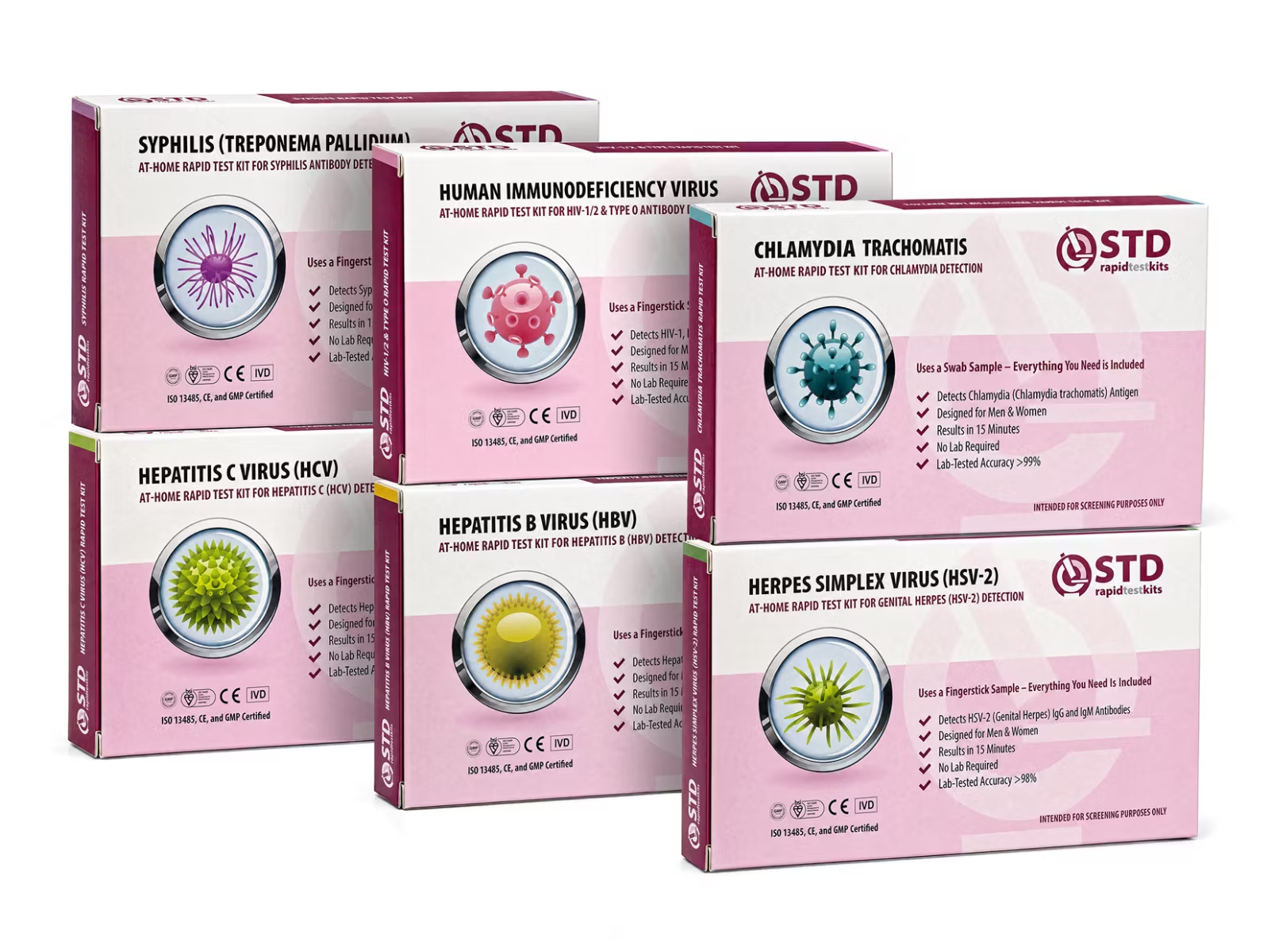
This article is published by stdrapidtestkits.com, which sells the at-home rapid panels referenced below. We recommend products based on fit-for-purpose for the reader's concern, not commercial benefit.
Why We Still Whisper About HPV
Despite how common the virus is, HPV rarely gets discussed casually. Nobody posts on social media 'just tested positive for HPV, feeling fine.' Silence reinforces stigma, and stigma reinforces fear.
Compare this to how mental-health conversations have shifted over the past decade. The more people speak openly about common experiences, the less isolating those experiences feel. Sexual health deserves the same trajectory. When people understand that most sexually active adults will encounter HPV at some point, the diagnosis lands as ordinary biology rather than personal failure.
HPV is so common that nearly all sexually active men and women get the virus at some point in their lives.
What You Can Actually Do Tonight
Come back to that midnight moment. The browser tabs are open. The brain is jumping ten years into the future. Grounded action does more for that state than more reading.
First, understand your screening schedule. For people with a cervix, cervical screening (Pap test or HPV test, depending on age and history) catches cellular changes early per CDC genital HPV guidance. Early detection dramatically improves outcomes, and prevention works best when it is boring and consistent.
Second, get clarity on your broader sexual health. If your anxiety has attached itself to HPV but is really about uncertainty in general, broader screening for the STIs that genuinely require treatment (chlamydia, gonorrhea, syphilis, HIV, hepatitis) gives you actionable information. Discreet at-home rapid panels from STD Rapid Test Kits can offer privacy and speed when going to a clinic feels like a barrier.
Third, remember that most HPV infections clear without progressing to cancer. That fact is worth repeating until the catastrophizing voice quiets down enough for you to act on the boring, effective steps above.

You Deserve Answers, Not Assumptions
If most adults will eventually encounter HPV, why is it still so terrifying? Because fear thrives on incomplete stories. People hear 'virus' and 'cancer' but not 'immune clearance' and 'screening works.' They hear 'sexually transmitted' and not 'statistically expected with adult intimacy.'
The complete story is less dramatic and more empowering. HPV is common because humans connect. It usually clears because the immune system is competent. The smaller percentage of persistent infections are managed through screening and vaccination, two tools that have cut cervical cancer rates substantially over the past two decades.
HPV has a way of turning ordinary people into worst-case-scenario thinkers. A routine screening becomes a spiral. A word like 'high-risk' echoes louder than it should. Most HPV infections clear, most do not become cancer, and most do not change the trajectory of a life. What helps is clarity: screening schedules that confer power instead of dread, vaccination conversations with a clinician, and honest information about how the immune system actually behaves with this virus.
If your anxiety is broader, getting tested across several common STIs can help unwind the rumination. Private, discreet options through STD Rapid Test Kits can give concrete answers across multiple infections in one step. You are navigating biology, and biology is manageable when you face it with information instead of assumptions.
Next steps
- Confirm your cervical screening schedule with a clinician (Pap or HPV test, age- and history-dependent per current USPSTF/ACOG guidelines).
- Discuss HPV vaccination if you are under 45 and have not been fully vaccinated.
- Test for treatable STIs if broader uncertainty is driving the anxiety; rapid at-home panels return results in around 15 minutes.
FAQs
- Does HPV always clear on its own?
- Most of the time, yes. In about 9 out of 10 people, the immune system clears the virus within one to two years without any treatment, per CDC surveillance data. The small percentage that persists is why screening exists, because monitoring keeps things safe long before a problem becomes serious.
- Is HPV permanent?
- For most people, no. When clinicians say HPV 'clears,' they mean the virus becomes undetectable and inactive because the immune system suppresses it. In a smaller subset of cases, certain strains persist longer, which is why follow-up testing matters more than panic.
- Does a positive HPV test mean my partner cheated?
- Usually no. HPV detection can lag actual exposure by months to years, so a positive result that appears years into a relationship is statistically more likely to reflect an earlier acquisition than recent infidelity. Many long-term couples receive a first positive result long after either partner could plausibly point to a recent exposure event.
- How common is HPV really?
- Very common. Nearly all sexually active adults will encounter at least one HPV strain in their lifetime if they are not vaccinated, according to CDC surveillance. The reason it is rarely discussed is that most cases produce no symptoms and resolve on their own. Silence is not the same as rarity; it usually just means no drama.
- Can men get HPV?
- Yes. Men can carry and transmit HPV, often without any visible signs. Some strains can cause genital warts, and certain high-risk strains have been linked to oropharyngeal, anal, and penile cancers. Routine HPV screening for men is not widely available in the U.S., which is why vaccination and partner-level awareness matter.
- If I test positive for high-risk HPV, should I panic?
- No. 'High-risk' means the strain is associated with a higher chance of causing cell changes over many years if it persists. A positive result signals strain category and the need for follow-up monitoring, with cancer typically requiring years of untreated persistence to develop.
- How do I know if HPV is gone?
- Through follow-up testing. If repeat screening shows no detectable virus and no abnormal cells, the infection is considered cleared. There is no dramatic notification from the body; clearance often feels like nothing, which, medically speaking, is good news.
- Can HPV come back after it clears?
- Clearance primes the immune system, so on re-exposure to the same strain the response is typically faster than the first time. What occasionally feels like recurrence is more often reactivation of a previously dormant infection or fresh exposure to one of the other 200-plus strains. In either case the immune system usually steps in again.
- U.S. Centers for Disease Control and Prevention. Fact sheet on genital HPV infection, including prevalence, transmission, and natural-history data (9-out-of-10 clearance within two years).
- World Health Organization. Fact sheet on human papillomavirus and cervical cancer, summarizing immune clearance and the persistence-to-cancer pathway.
- U.S. Centers for Disease Control and Prevention. About HPV, including strain counts, HPV-associated cancer-type list, vaccination guidance, and high-risk vs low-risk distinctions.
- American Cancer Society. HPV-associated cancers and prevention overview.
- Mayo Clinic. HPV infection symptoms and causes, including clearance and persistence patterns.
- Johns Hopkins Medicine. Patient-facing overview of HPV transmission, symptoms, and screening.
