
Published: December 2025 | Last updated: May 2026 | Editorial review and quality control: Martina N.
Can you get HPV in a monogamous relationship without anyone cheating?
Yes. HPV can stay dormant in the body for years and surface on a test long after the original exposure, with no new contact. The CDC notes that nearly everyone who is not vaccinated is infected at some point, and most clear it quietly. A positive result reflects when a test caught the virus, not proof of recent infidelity.
If you are reading this with a knot in your stomach, you are not alone. Maybe a routine Pap test came back HPV positive years into a relationship you trust completely. Maybe your partner just told you they tested positive and the floor seems to shift. Maybe you have never had a single symptom and the result blindsided you. The first instinct, for almost everyone, is the same question: how is this even possible?
This guide is for the person who wants honest answers without panic. We will walk through what HPV actually is, how long it can hide in the body, why a positive test years into a monogamous relationship is biologically ordinary, and what to do next. You do not have to choose between trusting your partner and trusting the test result. Both can be true at once.
Key Takeaways
- HPV can lie dormant in the body for years, sometimes more than a decade, then become detectable with no new sexual contact. A positive test in a long-term faithful relationship does not, on its own, prove infidelity.
- Per CDC consumer guidance, nearly everyone who is not vaccinated will get HPV at some point, and about 9 in 10 infections clear on their own within two years, often with no symptoms at all.
What Is HPV, and Why Is It So Sneaky?
Human papillomavirus, almost always shortened to HPV, is the most common sexually transmitted infection in the world. The U.S. Centers for Disease Control and Prevention states that nearly everyone who is not vaccinated will get HPV at some point, and that about 9 in 10 infections clear on their own within two years. Most people never know they had it.
There are more than 200 known types of HPV, with around 40 that affect the genitals, mouth, or throat. Some types cause genital or anal warts. A smaller group, the high-risk types (HPV-16 and HPV-18 are the best known), can drive cell changes that, over many years, may develop into cervical, anal, throat, penile, or vulvar cancer. According to the WHO cervical cancer fact sheet, HPV-16 and HPV-18 together cause about 76% of cervical cancers worldwide. The large majority of exposures never get close to that point, because the immune system usually clears the virus before any cellular change begins.
Here is why this matters for someone holding an unexpected positive. HPV does not arrive loudly with a fever and a rash. It can sit in the body, undetected, for years before something finally brings it to the surface: a routine screen, an unrelated abnormal Pap, a partner's diagnosis, or a switch from Pap-only testing to Pap-plus-HPV co-testing.
Most HPV infections cause no symptoms, so people rarely know they carry it. Current testing only screens specific sites: a cervical Pap or HPV co-test for people with a cervix, plus clinic-based anal screening for higher-risk groups. There is no FDA-approved blood test for HPV, and no routine penile or oral screen in general use.
The Dormancy Window: How Long Can HPV Hide?
Unlike infections with a tidy incubation period of days or weeks, HPV runs on a much longer and messier timeline. After exposure, the virus enters the basal cells of the skin or mucosa and either causes an active infection, which the immune system usually clears within one to two years, or settles into a kind of biological standby mode.
That standby mode is what people mean by dormant or latent HPV. The viral DNA persists inside cells but produces little or no detectable virus. Immune surveillance keeps it in check. Most people in this state have normal Pap results and negative HPV screens. They feel completely fine, until something shifts.
What can reactivate dormant HPV? Stress, illness, hormonal changes, immune suppression from medication or a medical condition, pregnancy, and the gradual immune changes of aging have all been linked in research to the reappearance of detectable HPV. This is exactly why a positive test cannot pin an exposure to a recent date.
The practical takeaway is simple. Someone can be exposed in their early twenties, test negative for a decade, and then test positive in their thirties. In that case the virus is not new; only the detection is.
| Time after possible exposure | What is likely happening with HPV |
|---|---|
| 0 to 6 months | The virus is establishing infection. Tests may not detect it yet, even when it is present in the body. |
| 6 months to 2 years | The immune system clears the majority of HPV infections in this window without any treatment, often without symptoms. |
| 2 years and beyond | Persistent infections may stay detectable. Cleared infections may go dormant. Either pattern can become detectable later when immune surveillance changes. |
"But I've Only Ever Been With One Person": Is That Possible?
Yes. This is the scenario where people most often assume cheating must be the explanation, and it usually is not. Several biologically straightforward paths lead to a positive HPV test inside a faithful relationship:
- Your partner carried HPV from before you met. They may have had no symptoms, never been tested, and never known. The virus passed to you at some point and has only now surfaced on a screen.
- You carried HPV from earlier in your own history, including a prior partner. It stayed below the detection threshold and is being picked up now.
- One of you was infected during the relationship through a non-penetrative route, such as oral, manual, or close skin-to-skin genital contact, without realizing HPV spreads that way.
- Better screening caught what older or less frequent testing missed. Routine HPV co-testing alongside the Pap is a relatively recent addition for many people who used to get Pap-only screening.
There is one more reason the cheating theory rarely holds: most carriers have no idea they are carriers. There is no routine HPV screen for men in the United States, and HPV in men is usually silent, so a partner can carry a high-risk strain for years with nothing to trigger a test. Statistically, a positive HPV test in a long-term monogamous relationship is far more likely to reflect a dormant exposure than recent infidelity. That is not a guarantee about your specific situation, but it is the most probable explanation.
HPV is so common that nearly all sexually active people will get the virus at some point in their lives. Most people with HPV never know they have it.
"But We Both Tested Clean Before We Moved In"
Plenty of couples in this spot hit the same wall of confusion: we both got tested before we got serious, and we both came back clean. The catch is that a full STI panel almost never includes HPV.
The default panel at most clinics covers chlamydia, gonorrhea, HIV, and syphilis. Some add hepatitis B and C. HPV is not in that bundle, partly because there is no FDA-approved blood test for it, and partly because the only validated screen uses a cervical or vaginal sample analyzed for high-risk DNA. A Pap test, even a normal one, is not specifically an HPV test. It looks for the cell changes that high-risk HPV can cause, not for the virus itself.
So when a couple says they both tested clean, they usually mean clean on the chlamydia, gonorrhea, HIV, and syphilis bundle. HPV was almost certainly never screened. The table below shows what each common test actually does.
| Test | Tests for HPV? | What it does |
|---|---|---|
| Standard STI panel | No | Screens for chlamydia, gonorrhea, HIV, and syphilis. HPV is not included. |
| Pap (cervical cytology) | Indirectly | Looks for abnormal cervical cells, which high-risk HPV can cause, but does not detect the virus directly. |
| HPV DNA test | Yes | Identifies high-risk HPV strains from a cervical sample. Standard for ages 30 and older. |
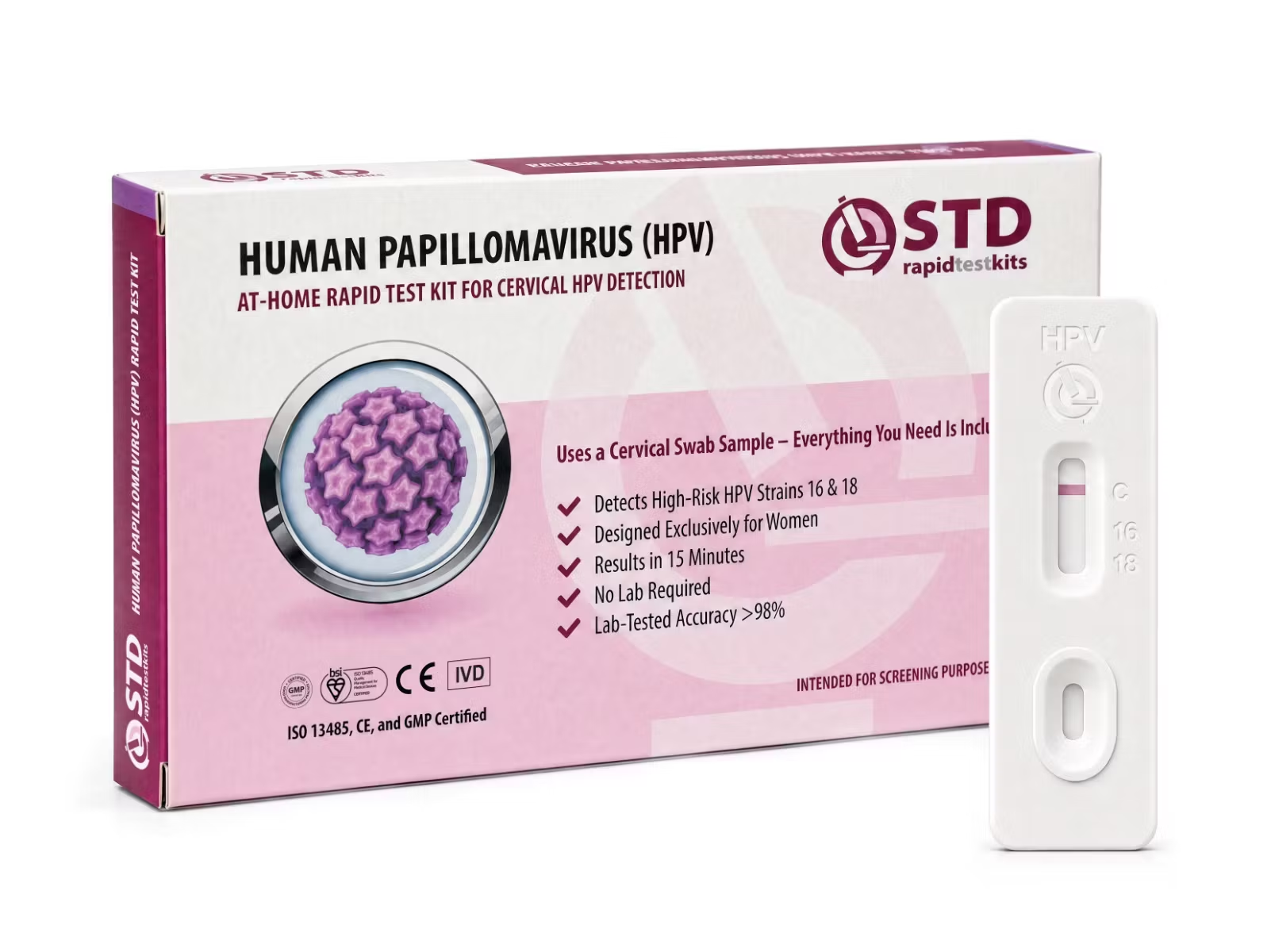
| At-home HPV swab | Yes | A self-collected vaginal swab analyzed for high-risk HPV strains. Available at home for people with a cervix. |
What Shame Gets Wrong (and Why It Hurts)
A surprise HPV diagnosis can land like a betrayal even when no betrayal happened. The questions arrive fast: Am I not enough? Did they lie? What if I exposed someone without knowing? HPV refuses to follow a clean narrative, because it shows up without warning, often causes no illness at all, and rarely makes immediate sense to the person holding the result.
The shame response carries real consequences. Research on HPV stigma links it to relationship strain, depression, and avoidance of follow-up care, and that last one is the worst possible outcome. The infection itself usually clears or stays managed with routine monitoring. The damage from treating it as a moral failure can outlast the virus by years.
Accurate framing helps more than reassurance alone. HPV is a common viral infection, not a verdict on a relationship. Once that lands, the diagnosis can be handled like any other unexpected health result: with information and follow-up rather than interrogation and silence. The most common misconceptions are worth naming directly.
Common Myths About an HPV-Positive Result
Myth: A positive HPV test means my partner must have cheated.
Fact: HPV can stay dormant for years before a test detects it, so a new positive in a long-term relationship usually reflects an old exposure surfacing, not recent infidelity.
Myth: We both tested clean before we got serious, so HPV was ruled out.
Fact: Standard STI panels screen for chlamydia, gonorrhea, HIV, and syphilis. They do not include HPV, and there is no FDA-approved blood test for it, so a clean panel never ruled HPV out.
Myth: You can tell whether someone has HPV.
Fact: Most people with HPV have no symptoms and never know they carry it. Per CDC guidance, there is no routine HPV test for men at all, so a partner can carry it for years undetected.
Myth: A positive HPV test means I will get cancer.
Fact: The large majority of HPV infections clear on their own and never lead to cancer. Cancer develops only when a high-risk strain persists for many years, which is exactly what routine screening is designed to catch early.
How to Talk About HPV Without Ruining Everything
If you just tested positive and have no idea how to raise it, you are not alone. Conversations about STIs in committed relationships are some of the hardest, because they sit right at the intersection of health and trust. The framing matters more than the exact script.
Lead with the result, not the suspicion. Use "I" language. Stay in what you know medically and out of what you fear emotionally. Give your partner room to ask questions, because they may be just as confused as you are. If they get defensive, the defensiveness is usually fear rather than guilt, so try not to read one tense moment as the whole conversation. A simple opener can carry a lot of weight: "I had some routine tests done and one came back positive for HPV. I was surprised, because we have been committed. I have since learned the virus can stay dormant for years, so a positive now does not mean either of us did anything recently. I wanted to talk about it openly instead of sitting with it alone."
If you are on the receiving end, the most useful thing you can do is breathe and listen. Asking when, who, or why almost never leads anywhere productive with HPV, because nobody actually knows. The information that helps is what comes next: which strain was detected, which follow-up makes sense, and whether the HPV vaccine is still worth getting for either of you. If the result raises genuine relationship questions that go beyond HPV, such as a breach of trust you were already wondering about, those deserve their own separate conversation.

When Should You and Your Partner Get Tested?
Most people with HPV never get symptoms, so testing decisions hinge on anatomy, age, and risk factors rather than how you feel. Current guidance from the CDC and the U.S. Preventive Services Task Force breaks down by group:
| Person | Recommended screening | Frequency |
|---|---|---|
| People with a cervix, ages 21 to 29 | Pap test (cervical cytology) | Every 3 years |
| People with a cervix, ages 30 to 65 | Pap + HPV co-test, primary HPV test, or Pap alone | Every 5 years for HPV-based testing (or Pap alone every 3 years) |
| Cis men, no cervix, no high-risk factors | No routine HPV test currently approved | Discuss with a provider if your partner is HPV positive |
| Men who have sex with men, people with HIV, immunocompromised individuals | Anal Pap or HPV testing as a clinical option | Talk to a provider about timing |
At-Home HPV Screening for People With a Cervix
There is no FDA-approved at-home HPV test for men, and no general blood or urine test for HPV in any sex. For people with a cervix, at-home options now exist that use a self-collected vaginal swab to screen for the high-risk HPV strains behind most cervical cancer risk. These are screening tools, not diagnostic confirmation: a positive result is a prompt to follow up with a clinician for a clinic Pap or HPV co-test. If you are weighing a broader baseline at the same time, our at-home STI test kits cover several infections in one self-collected pack.
Our at-home HPV kit is validated for vaginal self-swab only. We do not sell a male-compatible HPV home test, so male partners who want HPV-related screening should ask a clinician about an anal Pap, a visible-lesion exam, or referral if they fall into a higher-risk group.
This article is published by stdrapidtestkits.com, which sells at-home STI testing kits. We recommend products based on whether they fit the reader's specific concern, not commercial benefit.
What If It Was Just Oral Sex or Skin Contact?
This is one of the most common protests after a surprise result: "But we never had penetrative sex, just oral, just hands, just close contact." HPV biology does not require intercourse. The virus spreads through skin-to-skin contact across the genital, anal, and oral areas, which includes oral sex, mutual masturbation, and intimate touching without full penetration.
If your relationship started before either of you thought about HPV traveling these routes, that is completely understandable. The public-health message that HPV is skin-to-skin spread, rather than intercourse-only spread, has only become widely known fairly recently.
Condoms substantially lower HPV transmission risk but do not eliminate it. The virus can infect skin a condom does not cover, including the scrotum, vulva, perineum, and inner thigh. Dental dams help during oral-to-genital contact, though they are not a perfect barrier either.
Can You Pass HPV Back and Forth With the Same Partner?
This worry tends to surface the moment one partner tests positive. The research is murkier than couples would like, but the consensus among public-health agencies is that once both partners have been exposed to the same strain, ping-pong reinfection between them is not the main risk. The more useful questions are whether one partner can clear a strain while the other still carries it, and whether an older dormant exposure in either body could surface as a new strain later.
Condoms and dental dams reduce transmission during an active infection, though they cannot cover every patch of skin the virus can live on.
If one of you tests positive and the other has not been tested, most providers work from the assumption that the untested partner has likely already been exposed to the same strain. New strains can still appear over time, particularly if there is sexual activity outside the relationship at any point.
Smoking has been linked in published research to slower HPV clearance. Cutting back during an active HPV-positive period is one of the few modifiable steps that may support your immune response.
Can You Prevent This From Happening Again?
After a diagnosis, the urge to ask "what now?" is a healthy one. Even if you have already had one strain of HPV, the preventive tools still matter, because HPV is not a single virus. It is a family of more than 200 related viruses, and immunity to one type does not protect against the others.
Gardasil 9, the HPV vaccine used in the United States, protects against nine HPV types responsible for the majority of HPV-associated cancers and most genital warts. Per the CDC's Advisory Committee on Immunization Practices, routine vaccination is recommended through age 26. Adults aged 27 to 45 who were not adequately vaccinated earlier may benefit depending on their individual exposure history; a provider conversation, what ACIP calls shared clinical decision-making, is the right way to decide. Yes, you can still be vaccinated after testing positive for one type. The age guidance is summarized below.
A few other practical steps round it out:
- Keep routine Pap or HPV screening on the schedule above. The goal is not to confirm what you already know, but to catch any cervical cell change early enough to act on.
- Use barrier protection with new partners, especially during outbreaks of other STIs that can affect immune surveillance.
- Support general immune function: sleep, manage chronic stress, and treat conditions that suppress immunity. Blame, panic, and quietly skipping follow-up care do not help.
| Age range | ACIP recommendation |
|---|---|
| 9 to 12 years | Routine HPV vaccination, ideally before any exposure. |
| 13 to 26 years | Catch-up vaccination for anyone not already vaccinated. |
| 27 to 45 years | Shared clinical decision-making with a provider, based on individual exposure history. |
What to Do After an HPV Diagnosis
If you have just tested positive, take a breath. A positive HPV result is not an emergency the way a positive HIV test is. Most infections clear on their own within one to two years, and routine monitoring catches the rare cases that do not. There is no antiviral that eliminates HPV directly; when treatment is needed at all, it targets the cell changes the virus has caused, not the virus itself. Cancer takes years of persistent infection with a high-risk strain to develop, and screening, as the American Cancer Society emphasizes in its cervical-cancer-prevention guidance, is built to flag precancerous changes long before that point. Here is what follow-up usually looks like:
- If you have a cervix: your provider will recommend a repeat Pap or HPV test in about 12 months, or sooner if abnormal cells turned up. Under 30, a watch-and-wait approach is common, because most infections clear without intervention. If atypical or precancerous cells are present, you may be referred for colposcopy, a brief in-office exam that looks closely at the cervix and can biopsy any area of concern. It is routine follow-up, not an emergency, and most people return to normal activity the same day.
- If you do not have a cervix: there is no FDA-approved HPV test for penile or oral sites in the general population. A provider may inspect any visible warts and discuss anal screening if you are in a higher-risk group, such as men who have sex with men or people living with HIV.
- If your positive came from an at-home rapid test: confirm it with a clinician. Bring the result, ask which strain was flagged if that detail was returned, and ask what the follow-up plan looks like. At-home lateral-flow screens are useful for catching things early, while a lab-grade HPV DNA test is the standard for confirming a positive and staging next steps.
- Telling your partner: lead with the medical facts, not the chronology. HPV does not reveal when or from whom it came. Offering to talk it through together with a provider can make a hard conversation feel less like an accusation.

Living with HPV: What Changes (and What Does Not)
HPV does not have to end your sex life, your relationship, or your sense of self. It is a common, manageable infection that millions of people carry at any given moment, very often without knowing it.
If you are dating after a diagnosis, honesty tends to serve you better than apology. A short, factual disclosure, framed as part of your sexual health rather than a warning label, gives a new partner the same information you would want to have.
If you are in a long-term relationship, the diagnosis does not need to define your intimacy. Communication, regular screening, and a shared willingness to treat HPV as a health issue rather than a character issue tend to keep partnerships stronger, not weaker.
- Talk to one person outside the relationship. Choose someone with health literacy if you can: a friend in healthcare, a therapist, or a moderated support group. The point is to pull the conversation out of the what-does-this-say-about-me loop and back toward what comes next.
- Wait seven days before any big decision. The first 72 hours after a positive feel catastrophic; the next 72 feel more workable; by day seven, the question is usually about logistics, not identity.
- Borrow perspective from people who have been through it. Most clear the virus, most stay in their relationship, and most look back on the diagnosis as a hard week or two rather than a turning point.
Take Back Control, Starting Today
A surprise positive does not have to mean the end of trust or the start of panic. The most useful next step is almost always the simplest one: get the right screening on the right schedule, talk honestly with your partner, and ask your provider the questions you have been carrying around. The quick check below maps the three moves that tend to do the most work.
If you have been putting off testing because the result felt too big to face, an at-home screen can be the bridge. For people with a cervix, a self-collected swab can be done privately and checked for the high-risk strains that matter most. For everyone else, a clinic visit and a candid conversation about your specific situation is the most accurate path forward.
Your Next Three Moves After an HPV Result
Is your next Pap or HPV co-test overdue, or do you not have one scheduled?
Yes: Schedule it now. Routine screening is what catches cervical cell changes early enough to act on.
Have you had one honest conversation with your partner about the result?
Yes: Good. Keep it built on the medical facts rather than the timeline, since HPV cannot tell you when or from whom it came.
Are you between 27 and 45 and not fully vaccinated against HPV?
Yes: Ask your provider whether catch-up HPV vaccination fits your exposure history, the shared clinical decision-making ACIP describes for this age range.
No: If you are 26 or younger and unvaccinated, routine HPV vaccination is recommended; raise it at your next visit.
Guidance only. A healthcare provider can advise based on your specific situation.
Frequently Asked Questions
- Can you really get HPV without anyone cheating?
- Yes. HPV can stay dormant in the body for years before it becomes detectable. A positive test in a long-term monogamous relationship is consistent with an earlier exposure that simply was not picked up before, and it does not, on its own, point to recent infidelity.
- How long can HPV stay dormant before showing up on a test?
- It can persist below detection thresholds for months to many years. Detectable HPV sometimes reappears more than a decade after the most plausible exposure, especially when immune surveillance shifts with age, illness, stress, or pregnancy.
- We both came back clean on a full STI panel before we moved in. How did this still happen?
- Standard clinic panels screen for chlamydia, gonorrhea, HIV, and syphilis, and HPV sits entirely outside that set. There is no FDA-approved blood test for HPV, and men have no routine HPV screen at all, so both partners can pass a complete panel while carrying the virus undetected.
- Is HPV only spread through penetrative sex?
- No. HPV transmits through skin-to-skin contact across the genital, anal, and oral areas. Oral sex, manual contact, and close intimate touching can all spread it. Condoms lower the risk substantially but do not cover every area where HPV can live.
- Can men be tested for HPV?
- There is no FDA-approved routine HPV test for men. Clinicians can examine visible warts and may offer anal screening for men in higher-risk groups, including men who have sex with men and people living with HIV. There is no general blood or urine test for HPV in any sex.
- Will my body ever clear HPV?
- For most people, yes. The immune system typically suppresses HPV within one to two years without treatment. The exception is persistent high-risk strains, which is exactly what cervical screening tracks over time, so those appointments still matter after a positive result.
- Should I get the HPV vaccine after testing positive?
- Possibly. The vaccine protects against several strains, so testing positive for one type does not rule out protection against the others you have not met yet. Routine vaccination is recommended through age 26, and adults 27 to 45 should discuss it with a provider as shared clinical decision-making.
- Does a positive HPV test mean I will get cancer?
- No. The vast majority of HPV infections never lead to cancer. Cervical and other HPV-related cancers usually develop only when a high-risk strain persists for many years, and routine screening is designed to catch precancerous changes long before they progress.
- Does HPV affect fertility or pregnancy?
- In the vast majority of cases, no. HPV does not affect the ability to conceive or carry a pregnancy to term. If high-risk strains have caused cervical cell changes, a provider may suggest extra monitoring during pregnancy, but the pregnancy itself is usually unaffected.
- Can we still have sex if I tested positive?
- Yes. By the time one partner tests positive, both have very likely been exposed to the same strain already. Condoms can reduce ongoing transmission and are useful during an active infection, and stopping intimacy entirely is rarely the clinical recommendation.
How we sourced this article: This guide draws on current consumer-facing guidance from the CDC, the World Health Organization, the U.S. Preventive Services Task Force, and the American Cancer Society, alongside background reading on HPV epidemiology and the dormancy and reactivation patterns described in current public-health literature. We focused on the questions people actually search for after an unexpected positive result, and we cross-checked each claim against root-domain pages that are unlikely to shift or disappear. We are a sexual-health testing company, not a clinic, so this guide is informational and is not a substitute for advice from a licensed provider.
- U.S. Centers for Disease Control and Prevention. About HPV: lifetime infection prevalence, the 9-in-10 two-year clearance figure, and the unvaccinated-infection framing cited in this guide.
- U.S. Centers for Disease Control and Prevention. HPV vaccination guidance, including Gardasil 9 coverage, routine vaccination through age 26, and shared clinical decision-making for ages 27 to 45.
- U.S. Centers for Disease Control and Prevention. About genital HPV infection: skin-to-skin transmission routes and the limits of routine screening, including no HPV test for men.
- World Health Organization. Cervical cancer fact sheet: the ~76% HPV-16 and HPV-18 attribution, near-universal exposure framing, and natural clearance.
- U.S. Preventive Services Task Force. Cervical cancer screening recommendation, including age-based Pap, primary HPV, and co-testing intervals.
- American Cancer Society. HPV-related cervical cell changes, vaccination, and cancer-prevention guidance referenced in the follow-up section.
