Published: November 2025 | Last updated: May 2026 | Editorial review and quality control: Martina N.
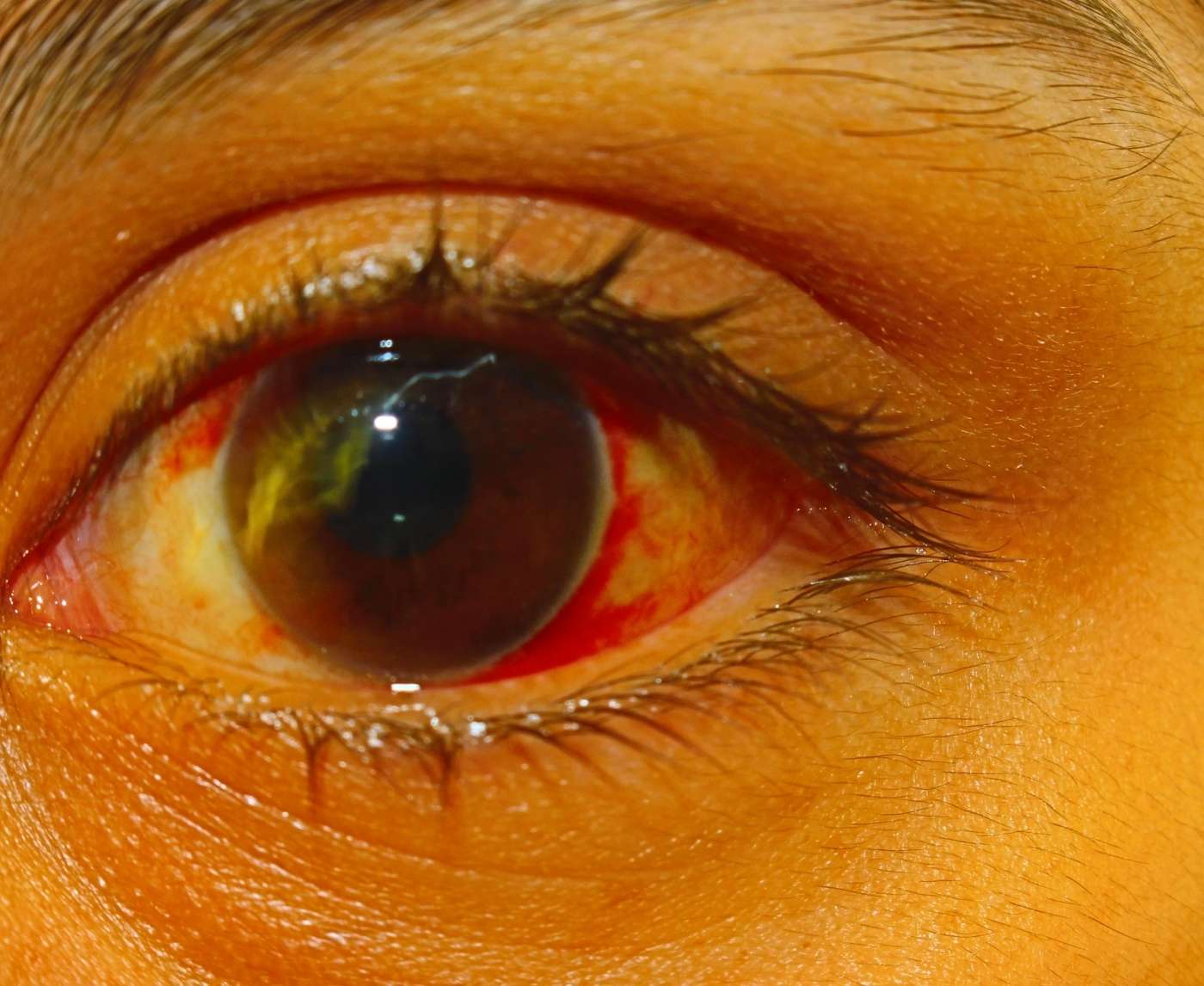
A red eye grabs your attention fast. It is visible, uncomfortable, and pulls focus every time you blink. Most of the time the cause is routine conjunctivitis, the medical name for pink eye, and it clears within a couple of weeks with basic care. Sometimes, though, the cause is different: ocular herpes, a herpes simplex infection of the eye that can affect vision if it goes untreated.
Pink eye and ocular herpes can look similar in the first day or two. Both can cause redness, tearing, and a gritty sensation. Both can start without warning. The difference matters because pink eye is mostly an inconvenience, while untreated herpes keratitis can scar the cornea.
Key Takeaways
- Pink eye typically affects both eyes with redness, itching, and discharge; eye herpes usually affects one eye with deeper pain, light sensitivity, and sometimes blurry vision.
- Suspected ocular herpes needs same-day evaluation by an eye doctor; an at-home HSV antibody test cannot confirm whether your eye symptoms are caused by herpes.
Why These Two Get Confused So Easily
Pink eye and eye herpes can look almost identical at first glance. Both can cause redness, watering, and that lingering feeling that something is stuck in your eye. Both can start suddenly and send you searching online at 2 a.m.
Pink eye, medically called conjunctivitis, is extremely common. It can be viral, bacterial, or allergic. Most cases are uncomfortable but mild, and the Mayo Clinic outlines the typical viral and bacterial patterns as redness, watering, and crusting that often spreads to the second eye within a day or two.
Eye herpes is caused by the herpes simplex virus, usually HSV-1, the same virus that produces cold sores. When that virus affects the cornea, the clear front layer of the eye, the condition is called herpes keratitis. The early signs can mimic viral conjunctivitis, which is why the two get tangled in people's minds. The stakes are different, though. Pink eye is annoying. Herpes in the eye can threaten vision if it is ignored.
Side-by-Side: Pink Eye vs Eye Herpes Symptoms
If you are searching "eye herpes vs conjunctivitis," or wondering whether herpes can really look like pink eye, the table below breaks it down in practical terms rather than textbook language.
| Symptom | Pink Eye (Conjunctivitis) | Eye Herpes (Herpes Keratitis) |
|---|---|---|
| Redness | Common, often in both eyes | Usually one eye at first |
| Discharge | Watery (viral) or thick/yellow (bacterial) | Usually watery, not thick pus |
| Pain | Mild irritation or burning | Can be moderate to severe |
| Light Sensitivity | Uncommon or mild | Common and sometimes intense |
| Blurry Vision | Rare | Possible, especially if cornea is involved |
| Cold Sore History | Not related | Common risk factor |
| Recurrence | Usually a one-time infection | Can recur over time |
How can I tell pink eye apart from eye herpes at home?
Pink eye usually affects both eyes, comes with itching and discharge, and improves within one to two weeks. Ocular herpes typically starts in one eye, brings deeper pain plus light sensitivity, and may blur vision. Pain plus light sensitivity plus any vision change is a same-day reason to see an eye doctor.
What Eye Herpes Actually Feels Like
People who have had ocular herpes rarely describe it as just itchy. They describe it as sharp, achy, sensitive. Some compare it to a bruise felt from the inside of the eye. That throbbing discomfort, especially paired with light sensitivity, is one of the patterns clinicians watch for during a herpes keratitis evaluation.
Blurry vision is the symptom that makes ophthalmologists lean forward in their chair. The American Academy of Ophthalmology notes that herpes keratitis can damage the cornea and cause vision distortion when the surface becomes inflamed or ulcerated. That does not happen with typical pink eye.
Another pattern: eye herpes is often unilateral. One eye, not both. That detail alone does not confirm anything, but combined with pain, light sensitivity, and blurred vision, it shifts the picture.
- Deep pain: sharp, achy, or throbbing rather than itchy or gritty.
- Light sensitivity: ordinary indoor lighting feels harsh enough to make you squint.
- Unilateral pattern: usually only one eye is affected, especially in the first day or two.
How Does Herpes Even Get Into the Eye?
HSV-1 is extraordinarily common worldwide. The World Health Organization estimates that roughly 3.8 billion people under age 50 have HSV-1 infection globally, the vast majority acquired during childhood through non-sexual contact. You do not need to have had "risky sex" to carry HSV-1.
Sometimes the virus reactivates from nerve tissue and travels along the trigeminal nerve to the eye. Other times it spreads through direct contact, like touching a cold sore and then rubbing your eye, or sharing eye makeup or a towel during an active outbreak. An eye infection after oral sex is biologically possible if HSV-bearing secretions reach the eye, though it is uncommon. So is transferring the virus during contact lens insertion when hand hygiene slips.
If you have recently had a cold sore and now have a red, painful eye, that detail is worth mentioning to a doctor. It does not confirm herpes, but it raises the level of suspicion enough to warrant a closer look.
Three ways HSV can reach the eye
- Reactivation: the virus travels along the trigeminal nerve from a prior infection (the most common ocular route).
- Self-inoculation: touching an active cold sore and then rubbing the eye or inserting contact lenses with unwashed hands.
- Direct contact with infected secretions, including rare cases following oral sexual contact.
When It's Probably Just Pink Eye
Most red eyes are not herpes. If both eyes are red, if they itch more than they hurt, if there is thick discharge gluing your lashes together in the morning, and if other people around you also have it, that pattern leans heavily toward conjunctivitis. The NHS notes that infective conjunctivitis usually clears within one to two weeks without specialist treatment.
Viral pink eye is highly contagious but generally self-limited. Bacterial pink eye may need antibiotic drops. Allergic conjunctivitis often comes with sneezing and seasonal triggers. None of those threaten your cornea the way untreated ocular herpes can. Most cases just need supportive care, careful hygiene, and patience.
Red Flags You Shouldn't Ignore
Seek same-day evaluation if any of the following apply. These signs move beyond a wait-and-see situation and into urgent eye-exam territory.
| Symptom | Why It Matters |
|---|---|
| Severe eye pain | May indicate corneal involvement |
| Light sensitivity (photophobia) | Common in herpes keratitis |
| Blurred or decreased vision | Possible corneal damage |
| History of cold sores plus red eye | Raises suspicion for HSV reactivation |
| Symptoms lasting more than a few days without improvement | Needs professional evaluation |
Testing: Does a Red Eye Mean You Need an STD Test?
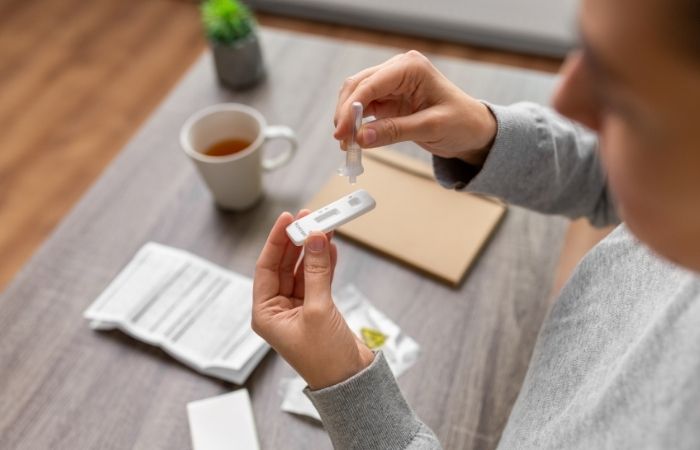
This is where nuance matters. If you are searching "STD in the eye symptoms" or wondering whether you need an at-home herpes test kit because your eye is red, pause for a second. Eye herpes is diagnosed clinically, meaning an eye doctor looks directly at the cornea using magnification, blue light, and fluorescein dye. A blood test for herpes does not confirm that your eye symptoms are caused by HSV. It only shows whether your immune system has been exposed at some point in your life.
That distinction is critical. Many adults test positive for HSV-1 antibodies even though they have never had eye involvement. So if your concern is strictly about a red, painful eye with light sensitivity, your first step is an in-person eye exam, not an at-home antibody test.
Where testing does become relevant is in clarifying your broader sexual-health picture. If eye symptoms followed a new sexual encounter or oral-sex exposure, or an outbreak elsewhere on your body, knowing your HSV status can inform future prevention and partner conversations. A positive HSV-1 result does not automatically mean your eye symptoms are herpes-related, though. Diagnosis still requires clinical evaluation of the eye itself.
A Common Case Pattern
Consider a pattern clinicians describe routinely in urgent-care notes. An adult in their late twenties has a cold sore one week. A few days later, one eye starts to burn. They assume it is fatigue and try over-the-counter pink-eye drops. By day three, light feels harsh and reading their phone screen is painful. Eventually an urgent-care visit and a fluorescein-dye exam reveal a branching corneal lesion, called a dendritic ulcer, the classic sign of herpes keratitis.
Antiviral drops typically clear the infection within two to three weeks when treatment starts early. The risk grows when treatment is delayed, because corneal scarring becomes more likely with each day of unchecked inflammation. Starting antiviral treatment early substantially reduces the risk of corneal scarring, which is why a red eye that worsens instead of slowly improving deserves an in-person look rather than another round of pharmacy drops.
Can You Go Blind From Eye Herpes?
Untreated herpes keratitis can scar the cornea. Recurrent infections raise that risk further. In severe or neglected cases, vision can be permanently affected. That is why ophthalmologists take suspected HSV eye infections seriously and start antiviral treatment quickly.
The reassuring part: when treated promptly with antiviral medication, most cases resolve without long-term damage. A simply itchy, watery, mildly irritated eye, especially in both eyes, does not scream vision loss. That pattern leans far more toward routine conjunctivitis, and the urgent path applies only when pain, light, or vision symptoms dominate.
Herpes simplex keratitis is one of the most common causes of corneal blindness worldwide; recurrent infections cause progressive corneal scarring and visual impairment if left untreated.
How Long Does Each One Last?
If you are Googling "how long does eye herpes last" versus "how long does pink eye last," timelines can offer clues, though duration alone is not diagnostic. The table below summarises typical recovery patterns. Eye herpes typically improves with antiviral drops or oral medication, while pink eye usually improves steadily without threatening vision. If symptoms plateau or worsen after a few days instead of slowly improving, that is another signal to seek evaluation.
| Condition | Typical Duration | Recurrence? | Needs Antivirals? |
|---|---|---|---|
| Viral Pink Eye | 1 to 2 weeks | Uncommon | No |
| Bacterial Pink Eye | Several days to 1 week (with drops) | Uncommon | No (antibiotics used) |
| Eye Herpes (HSV Keratitis) | 2 to 3 weeks (with treatment) | Possible | Yes |
What Doctors Look For That You Can't See
A clinical eye exam catches details no bathroom mirror can. During an eye exam, clinicians may apply fluorescein dye, a bright orange drop that briefly stains the surface of the eye. Under cobalt-blue light, herpes lesions often appear as branching, tree-like patterns called dendritic ulcers. Pink eye does not create that pattern. Clinicians also assess corneal sensation, because HSV infection can reduce sensitivity of the cornea, a clue that is not typical in conjunctivitis.
When pain, light sensitivity, or any vision change show up, the safer move is professional evaluation rather than at-home guessing or another round of over-the-counter drops.
Under cobalt-blue light, fluorescein dye highlights a branching tree-like pattern on the cornea called a dendritic ulcer. This pattern is the single most specific bedside finding for herpes keratitis, and pink eye does not produce it. That is one of the main reasons a same-day eye exam, rather than an at-home antibody test, is the right first move when corneal involvement is suspected.
Is Eye Herpes Contagious?
Active herpes lesions, whether on the lip or in the eye, shed virus, and direct contact can transmit HSV though the route is skin-to-skin rather than airborne. That means avoiding touching the affected area and then touching another person's eye, sharing towels, or inserting contact lenses without thoroughly clean hands.
You do not catch eye herpes the way you catch seasonal pink eye from sitting near someone coughing. The CDC's herpes fact sheet describes HSV as transmitted by skin-to-skin contact with infected secretions or lesions, not by airborne spread. Most ocular HSV cases are reactivation of a virus already in your body, not fresh exposure.
If you have a partner and worry about transmission, broader herpes testing and conversations about oral HSV status can reduce uncertainty. For those wanting privacy and control, at-home HSV antibody testing offers clarity on past exposure without a clinic visit. Red eye alone does not automatically equal STD exposure.
- Skin-to-skin contact with an active lesion or with infected secretions.
- Self-transfer by touching a cold sore and then the eye, or by inserting contact lenses with unwashed hands.
- Reactivation of a virus already living in your nerves, which is the most common ocular route.

The Emotional Spiral: "Did I Do This to Myself?"
This is the part people do not say out loud. If you have had a recent sexual encounter, especially oral sex, and your eye turns red days later, your brain may jump to the worst-case scenario. You may search "eye infection after oral sex" or "STD in the eye symptoms" and convince yourself before any exam has happened.
Most red eyes are not sexually transmitted infections. Most HSV eye cases are reactivation, not new exposure. HSV-1 is so common globally that carrying it says nothing about your character, your choices, or your hygiene. The virus has no relationship to personal choices or character, and the same is true for its rare ocular complications.
Prevention Without Paranoia
You do not need to live in fear of touching your face. A few small habits cut risk meaningfully. During an active cold sore, avoid touching it and then touching your eyes. Wash hands carefully before inserting contact lenses. Replace eye makeup after any eye infection. Do not share towels or pillowcases during active eye irritation.
These hygiene steps reduce transmission risk without requiring anxiety about every casual touch, and the same practices apply during any eye irritation regardless of cause. If you experience frequent cold-sore outbreaks and worry about recurrence reaching the eye, talking to a healthcare provider about suppressive antiviral therapy is reasonable. Daily low-dose antivirals can reduce flare frequency for people who get them often.
Severe eye pain, true light sensitivity that makes you squint indoors, or any change in vision are signals to see an eye doctor that day rather than waiting it out. The combination of pain plus light sensitivity plus blurred vision is the pattern most strongly associated with corneal involvement.
When This Is Definitely Not Pink Eye
If your vision is distorted, if straight lines look wavy, if pain feels deep and sharp, or if light makes you squint even indoors, those are not classic conjunctivitis symptoms. Blurry vision paired with redness is one of the strongest signals pointing toward corneal involvement, which deserves prompt medical care.
If both eyes are pink, discharge is thick and yellow, your biggest complaint is crusted lashes and mild irritation, and several people around you also have it, that pattern overwhelmingly suggests bacterial or viral conjunctivitis. Supportive care, hygiene, and sometimes antibiotic drops resolve the issue quickly. If symptoms linger past a week, worsen, or add pain and light sensitivity, escalation is appropriate.
The Bottom Line
Pink eye is common, contagious, and usually mild. Eye herpes is less common, usually one-sided, more painful, often light-sensitive, and can affect vision. If you remember nothing else, remember this combination: pain plus light sensitivity plus blurred vision equals same-day evaluation.
If your anxiety extends beyond your eye into your broader sexual health, clarity is powerful. Confidential at-home testing options are available, and a positive or negative result on an HSV antibody test can help you map out future prevention and partner conversations. It just is not the same as an eye exam, which is the only way to confirm whether your cornea is involved.
FAQs
- Can herpes really look exactly like pink eye?
- In the first day or two, yes. Both can make your eye red and watery. Eye herpes usually adds something extra: pain that feels deeper than irritation, light that suddenly feels aggressive, or vision that seems slightly off. Eye herpes tends to signal itself with sharper pain and light sensitivity rather than mere irritation.
- If I had a cold sore recently and now my eye is red, should I panic?
- Pause before you spiral. HSV-1 is common, and most red eyes are still just conjunctivitis. But if that redness comes with sharp pain, light sensitivity, or blurred vision, that combination is a same-day reason to be seen by an eye doctor. Seeing an eye doctor that day gets you a real answer, since no search engine can examine your cornea.
- Would an at-home herpes test tell me if this red eye is herpes?
- An antibody test confirms past HSV exposure, not active corneal infection. A blood test can tell you whether you carry HSV antibodies, but it cannot answer whether your current eye symptoms are caused by herpes. Many adults test positive for HSV-1 with no eye involvement at all, which is why the cornea itself has to be examined directly for that question.
- What does eye herpes pain actually feel like?
- People describe it as sharp, achy, or oddly intense, not just itchy. A common description is that it feels bruised from the inside. That kind of pain, especially with light sensitivity, is different from the mild gritty irritation most pink eye causes.
- Can I go blind from eye herpes?
- Most cases treated early resolve without permanent vision loss. Untreated and ignored for too long, recurrent herpes keratitis can scar the cornea, which is why ophthalmologists take suspected cases seriously. Starting antiviral treatment within the first few days substantially reduces the chance of corneal scarring.
- Is eye herpes something I caught from sex?
- Sometimes HSV is transmitted through sexual contact, especially oral sex. More often, ocular herpes is reactivation of a virus you have carried quietly for years, often since childhood. The virus has no relationship to personal choices or character.
- My eye is red in both eyes. Does that make herpes less likely?
- Yes. Eye herpes typically starts in one eye. When both eyes are pink, itchy, and crusty, especially during allergy season or after being around someone with pink eye, conjunctivitis is far more likely.
- Can I wear contact lenses while I wait it out?
- No. If your eye is red, irritated, or painful, take the lenses out immediately. Continuing to wear them can worsen infection and damage the cornea, especially if herpes is involved. Lenses can go back in once the eye has fully cleared; wearing them during an active infection risks worsening corneal damage.
How We Sourced This Article: We reviewed current clinical guidance on conjunctivitis and herpes keratitis from major public health and ophthalmology authorities, including the CDC, WHO, NHS, Mayo Clinic, and the American Academy of Ophthalmology, alongside professional reference materials on HSV recurrence and corneal complications from the Merck Manual. The goal is to make medically accurate guidance readable for someone trying to decide whether a red eye needs the urgent-care line tonight or a calm wait-and-see at home.
- U.S. Centers for Disease Control and Prevention. Genital Herpes (HSV-1 and HSV-2) overview, transmission, and symptoms.
- American Academy of Ophthalmology. Herpes Keratitis patient education, including signs, complications, and treatment.
- Mayo Clinic. Pink Eye (Conjunctivitis) symptoms, causes, and self-care guidance.
- World Health Organization. Herpes simplex virus fact sheet with global prevalence and clinical features for HSV-1 and HSV-2.
- NHS. Conjunctivitis: symptoms, self-care, when to get medical help, and typical course.
- Merck Manual Professional Edition. Herpes Simplex Keratitis: clinical features, diagnosis, and treatment.
