Published: December 2025 | Last updated: May 2026 | Editorial review and quality control: Martina N.
After a possible HIV exposure, the question that matters most is not which test is best in the abstract. It is which test, taken when, gives a result you can trust. The answer depends on three things: how recent the exposure was, what the test is built to detect, and how much follow-up you can stomach. A rapid at-home kit is fast and private but waits longer to see infection. A lab-based fourth-generation antigen/antibody test catches infection sooner but adds days of waiting and a clinic visit. The right choice matches your timeline, not the loudest marketing.
This guide walks through what each test detects, when each becomes reliable, and how to decide whether to retest. The aim is calm clarity, not pressure. If you arrived at 2 a.m. with a knot in your stomach, breathe first. There is a clear path through this, and you do not have to guess at it.
Key Takeaways
- A negative HIV test taken less than 10 days after exposure is not yet reliable on any method. Antibody-only at-home tests reach maximum accuracy around 12 weeks; lab fourth-generation tests reach near-final accuracy by about 45 days.
- Pick a rapid at-home kit for privacy and post-window screening. Pick a lab fourth-generation antigen/antibody test or HIV NAT when the exposure was recent, symptoms have started, or you were on PEP.
What Each HIV Test Detects
HIV testing today is built around three different biological targets, and each one appears in the body on a different timeline after infection. The names sound similar; the timing is not.
Antibody tests measure the immune system’s response to HIV, not the virus itself. Most at-home rapid kits, including the one we sell, are antibody-based. A small fingerstick blood sample reacts with reagents on a lateral-flow strip, and the result becomes visible in about 15 to 20 minutes. The trade-off is that antibodies take weeks to reach a level a rapid strip can detect.
Antigen/antibody combination tests, usually called fourth-generation tests, look for both HIV antibodies and the p24 antigen, a viral protein that appears earlier than antibodies. These are typically run in a clinical laboratory on a venous blood draw, though some rapid fingerstick fourth-generation kits also exist. Per the CDC’s testing overview, a lab-run fourth-generation test can usually detect HIV 18 to 45 days after exposure.
Nucleic acid tests (NAT, also called HIV RNA tests) look directly for HIV genetic material. They are the earliest-detecting option, accurate from roughly 10 to 33 days after exposure according to the same CDC test-type guidance. They are expensive and are usually ordered only when an early exposure was high-risk or when symptoms point to acute infection.
Knowing which target a given test measures is the foundation of reading its result correctly. A rapid antibody result at day 7 is not the same answer as a lab fourth-generation result at day 28, even if both come back negative.
| Test type | What it detects | Sample type | Earliest reliable detection | Best window for a final answer |
|---|---|---|---|---|
| At-home rapid antibody test | HIV antibodies | Fingerstick blood or oral fluid | 23–90 days | About 12 weeks (90 days) |
| Lab fourth-generation (antigen/antibody) | HIV antibodies + p24 antigen | Venous blood draw | 18–45 days | 45 days |
| HIV NAT (RNA test) | HIV genetic material | Venous blood draw | 10–33 days | 33 days |
The Window Period Is Why Early Tests Mislead
The most common reason a recent test feels useless is the window period: the time between the moment of exposure and the moment a test can detect infection. People often assume that a negative test the day after unprotected sex means they are safe. It does not. It means the test could not yet see anything, regardless of true status.
This is not a flaw in the kit. It is biology. After HIV enters the body, viral RNA appears first, then the p24 antigen, then antibodies. Each step happens on a slightly different timeline, and each test technology is built around one of those signals.
The practical takeaway is that any negative taken less than 10 days after a known exposure has not ruled out HIV, and a negative on a rapid antibody strip before 23 days is closer to a “too soon to tell” than a confirmed answer. The CDC’s HIV testing page lays out these ranges directly. If a high-risk exposure happened within the last 72 hours, post-exposure prophylaxis (PEP) may be an option, and a healthcare provider is the right next stop, not a home kit.
A common scenario: someone tests rapid five days after an unprotected encounter, sees a negative, and then develops a fever and swollen lymph nodes two weeks later. The five-day negative was not wrong; it was simply taken before the body had produced anything detectable. The fever was the real signal that a lab follow-up was needed.
Rapid Versus Lab: What Each Route Feels Like in Practice
The two routes are not just clinically different; they feel different. Walking through what each one looks like in your day can help you pick the one you will follow through with.
A mail-in lab test starts with a discreet envelope, a fingerstick or saliva collection kit, and instructions for shipping the sample back. Many providers turn results around in two to three days after the lab receives the sample. The waiting can be the hardest part. The upside: fourth-generation lab assays catch infection earlier than antibody-only rapid kits, and they come with a built-in confirmatory pathway if the screening result is positive.
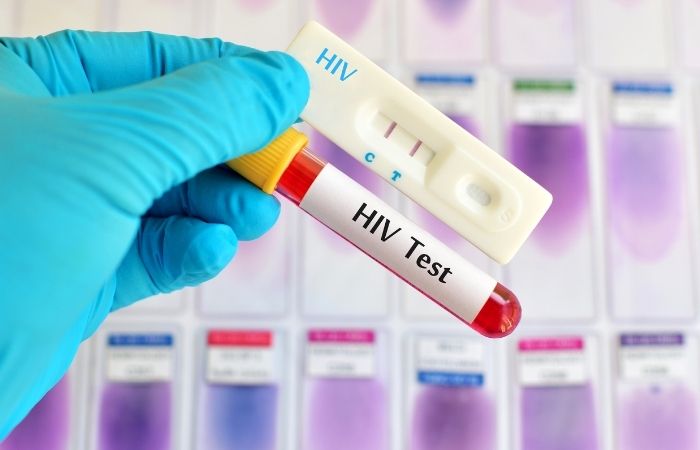
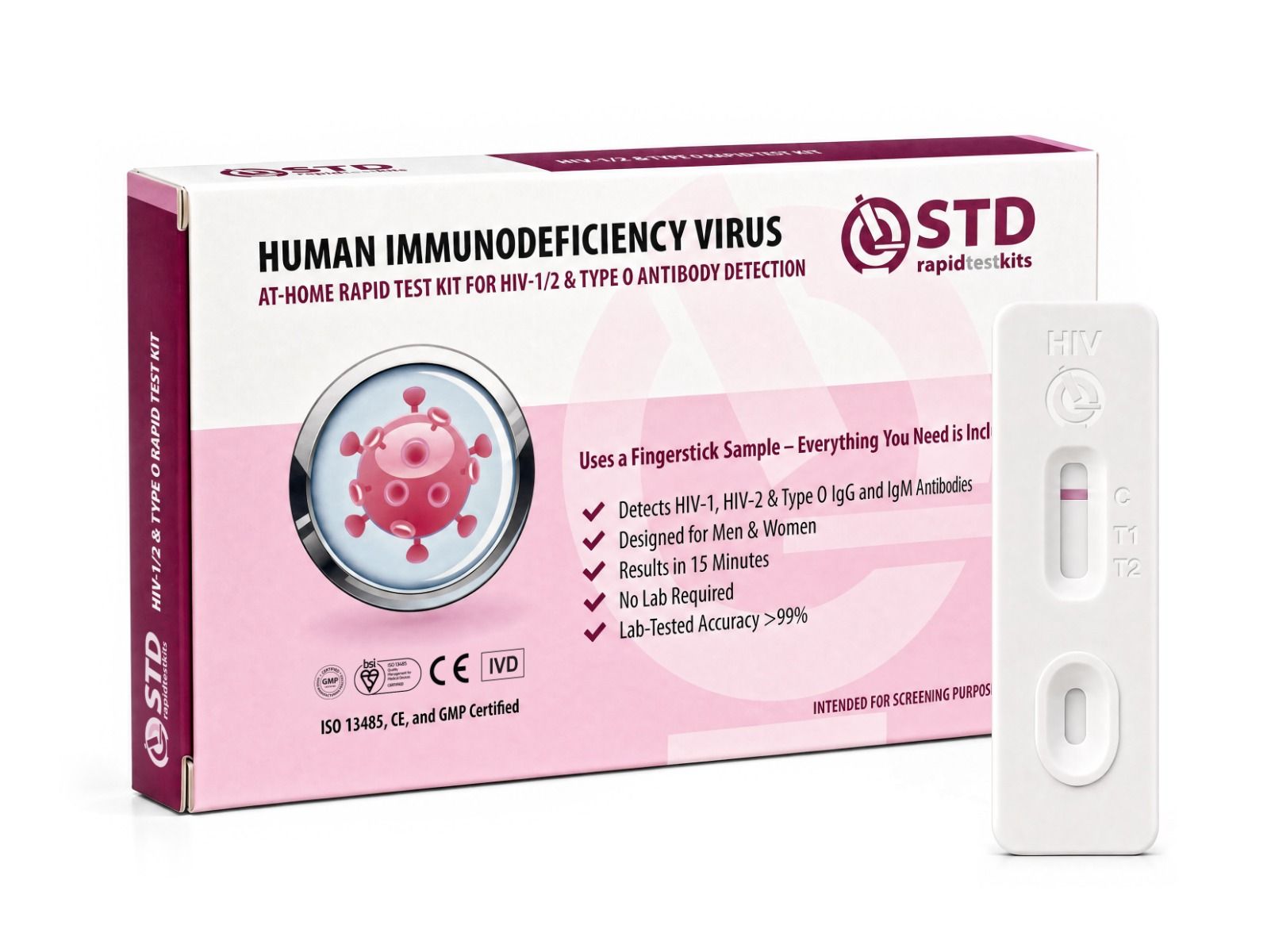
A rapid at-home kit is faster on the clock. You collect a fingerstick blood drop or oral fluid sample, add buffer, and watch a strip develop over 15 to 20 minutes. The result is in your hands without anyone else involved. The trade-off is that the at-home antibody test is most reliable from about 12 weeks after exposure. Tested earlier than that, a single negative is not a final answer; it is a snapshot of where antibody production currently sits.
A note on technology that matters for reading any rapid result: our at-home rapid kits are lateral-flow immunoassays. They share the antibody target with lab antibody tests but use a different chemistry from lab NAT or fourth-generation antigen tests. A positive result on any rapid kit is meant to be screened first, then confirmed in a lab. (Disclosure: stdrapidtestkits.com sells the at-home rapid HIV kit referenced in this article. We recommend it when the exposure-timing math fits the reader’s situation, not as a blanket answer for every scenario.)
| Testing route | Privacy | Result speed | Earliest reliable window | Best fit for |
|---|---|---|---|---|
| At-home rapid antibody test | Very high | 15–20 minutes | 23–90 days after exposure | Privacy, post-window screening |
| Mail-in lab test | High | 2–3 days after lab receipt | 18–45 days (4th-gen) | Earlier detection, light follow-up |
| In-clinic lab test | Moderate | Same-day to 5 days | 10–33 days (NAT) | Symptoms, high-risk exposure, PEP follow-up |
Which HIV test should I take, and when?
For privacy and post-window confirmation, an at-home rapid antibody test is best from about 12 weeks (90 days) after exposure. For earlier detection after a recent exposure, a clinic fourth-generation antigen/antibody lab test (reliable from about 18–45 days) or an HIV NAT (10–33 days) gives a more sensitive answer. Inside 10 days, no test is fully sensitive, so the exposure date matters more than the kit brand.
When Should You Test?
The right test time is tied to the exposure date, not your level of anxiety. A simple framework:
Days 0 to 10 after a known exposure. No test is reliably negative this early. If the exposure was very high-risk (a sexual exposure with a partner known to be HIV-positive and not virally suppressed, sharing of injection equipment, or a needlestick from a known-positive source), contact a clinician or urgent-care provider within 72 hours about PEP. Lab NAT may be offered for very early detection in that same visit.
Days 10 to 45 after exposure. A lab fourth-generation antigen/antibody test or HIV NAT becomes useful here. A negative result is meaningful, but the CDC still recommends a follow-up test at 90 days for full confirmation, particularly in higher-risk scenarios.
Day 45 onward. A lab fourth-generation test is near-final by day 45. A rapid at-home antibody test becomes more reliable from about 12 weeks (90 days). At that point, a negative result, combined with no ongoing exposure, is a strong all-clear.
If you are not sure when the exposure was, or you have had multiple recent exposures, the safer move is to test now and again at 90 days from the most recent one.
Acute HIV symptoms (fever, sore throat, swollen lymph nodes, body aches, fatigue) typically appear 2 to 4 weeks after infection. If you have those symptoms together with a possible exposure history, contact a clinician promptly. A lab NAT or fourth-generation test is the right tool here, not a rapid antibody strip; the antibody window will still be ramping up while the virus is already replicating.
Do You Need to Retest? An Honest Answer
Retesting is not about doubting yourself. It is about respecting the window period. A few specific situations almost always warrant a retest, regardless of how reassuring the first result felt.
Your first test was a rapid antibody test taken earlier than 90 days. Retest at the 90-day mark, even if the first result was negative. This is standard CDC practice for antibody-only screening.
You were on PEP. PEP delays seroconversion, the point at which detectable antibodies appear. After completing the 28-day course, retest at 4 to 6 weeks and again at 3 months post-exposure. Lab tests are preferred over rapid antibody strips for these checks because the antibody response can be slower when PEP has been suppressing viral replication.
Your screening was positive. Always confirm a positive at-home result with a lab test. The screening-then-confirmation pathway is built into how rapid kits are regulated; a positive screening is not a diagnosis on its own. If you see a clear line, even a faint one, contact a clinician or telehealth service for the confirmatory test.
You had a higher-risk exposure since your last negative. A previous negative is not protective against a future exposure. Each new exposure resets the clock.
Knowing your HIV status gives you powerful information so that you can take steps to keep yourself and your partner healthy.
Privacy and Discretion: What At-Home Testing Looks Like in Practice
For many readers, the practical edge of an at-home HIV test is not just speed; it is privacy. There is no appointment, no waiting room, no chart entry tied to your insurance, and no awkward conversation at a pharmacy counter. The kit arrives in plain shipping materials with no clinical branding visible from the outside. The test itself is small enough to fit in a drawer or a glove box.
That privacy comes with two caveats worth naming up front.
First, a positive screening result still needs a confirmatory lab test. The privacy of the at-home stage does not extend to follow-up. Most telehealth services and community clinics handle the confirmatory step with the same confidentiality the home kit promises, but it is not zero-step.
Second, the at-home process places the responsibility on you. There is no nurse to double-check sample collection and no clinician to ask about the rest of your sexual health history. For most people, that trade is exactly the appeal. For readers who would benefit from a broader screening conversation (multiple partners, ongoing symptoms, recent PEP), a clinic visit still has value.

Routine Screening Between Specific Exposures
Most readers come to this article with one specific question after one specific exposure. Once that question is answered, there is a second pattern worth folding in: periodic screening on your own schedule, separate from any single scare. The CDC recommends sexually active adults at risk for HIV get tested at least once a year, with more frequent testing (every 3 to 6 months) for people with multiple partners, shared injection equipment, or partners of unknown status.
A combination panel makes a periodic check less stressful than waiting for the next isolated concern. One sample collection, one wait, one result for several common infections at once. For readers building a regular cadence rather than reacting to a single exposure, a combo kit is usually a better fit than a series of single-infection tests.
What to Do If You Test Positive at Home
A positive at-home HIV result is a screening result, not a diagnosis. That distinction matters. Rapid kits are designed to flag the immune response; the formal diagnosis comes from a confirmatory lab test, usually an HIV-1/HIV-2 differentiation assay or an HIV RNA test run in a clinical lab.
The practical next steps after a positive screening result:
- Pause before assuming the worst. False positives do occur on rapid antibody tests, and the confirmatory lab result is the diagnostic answer, not the home strip.
- Contact a clinician or telehealth service within a few days. Most areas have HIV care navigators who can route you to a confirmatory test and, if it is positive, to antiretroviral therapy (ART). The HIV.gov testing overview links to state-level care navigation.
- Start treatment as soon as a confirmed diagnosis is in hand. Modern ART, taken consistently, can suppress HIV to undetectable levels in most people. Per the CDC’s HIV treatment page, people with HIV who have an undetectable viral load on treatment cannot sexually transmit the virus to partners; this is the basis for the “undetectable equals untransmittable” public-health phrase.
- Notify partners on your own timeline. Many jurisdictions offer anonymous partner-notification services so you do not have to make those calls yourself.
With consistent treatment, HIV is now a manageable chronic condition for most people, and a confirmed positive opens the path to that treatment.
What Gives You Peace of Mind
The honest answer to the title question is that no single test gives universal peace of mind. The combination that does is straightforward: match the test to the exposure timeline, accept that an early negative needs a follow-up, and treat a positive screening as the start of a process rather than a verdict.
A rapid at-home antibody test is the right tool for privacy-first screening once you are past the 12-week mark, or for routine periodic testing on your own schedule. A lab fourth-generation antigen/antibody test or HIV NAT is the right tool when the exposure was recent, when symptoms are present, or when you were on PEP.
If you came to this article in a panic at 2 a.m., the calmest move is usually to wait a few days, identify the right test for your exposure date, and act on a real result rather than a premature one.
FAQs about HIV testing
- How soon after a possible HIV exposure can I trust a negative result?
- It depends on the test. For a rapid at-home antibody test, the CDC considers a negative reliable from about 12 weeks (90 days) post-exposure. For a lab fourth-generation antigen/antibody test, a negative becomes near-final at 45 days. For HIV NAT, the earliest reliable window is about 10 to 33 days. Sooner than 10 days, no test is sensitive enough to fully rule out HIV.
- Is an at-home rapid HIV test as accurate as a lab test?
- Our at-home test is a lateral-flow immunoassay that detects HIV antibodies. After the 12-week window, a well-used at-home antibody test gives a high-confidence screening result, but lab fourth-generation and NAT assays detect infection earlier and are more sensitive in the first 4 to 6 weeks. The at-home test is best understood as a high-quality screening tool, with any positive result followed by a lab confirmation.
- Does the rapid at-home test detect both HIV-1 and HIV-2?
- Yes. The lateral-flow antibody kit referenced in this article is labeled for both HIV-1 and HIV-2 antibodies, which is the standard configuration for U.S.-marketed rapid HIV self-tests. HIV-2 is rare outside parts of West Africa, but the broader label means a single rapid test covers both strains. As with any rapid antibody screen, a positive result still goes to a lab for confirmatory differentiation testing.
- What if the rapid test shows a very faint second line?
- Any visible second line on a properly used rapid test should be treated as a presumptive positive, even if faint, and confirmed in a clinical lab. A faint line is not nothing; the lateral-flow chemistry sometimes produces low-intensity bands right at the detection threshold. Do not retest at home and assume a darker line on the next strip; contact a clinician or telehealth provider for the confirmatory lab test.
- I just finished PEP. When should I test?
- PEP can blunt the antibody response, so the usual window-period logic shifts. The standard schedule is a baseline test before starting PEP, a follow-up at 4 to 6 weeks after the 28-day course finishes, and a final test at 3 months post-exposure. Some providers extend follow-up to 6 months for higher-risk exposures or specific PEP regimens. Lab-based fourth-generation or NAT testing is preferred over rapid antibody strips during this period.
- Can stress, illness, or vaccines cause a false positive HIV test?
- False positives are uncommon with modern rapid antibody tests, but they do happen at low rates. Recent immunizations, certain autoimmune conditions, and some other infections have occasionally been reported to interact with antibody-based assays. This is exactly why a positive rapid result is always confirmed in a clinical lab before any diagnosis is made.
- Is it safe to order an HIV test online?
- Most reputable providers, including stdrapidtestkits.com, ship in plain unmarked packaging with no medical branding visible from the outside. Tracking is usually included so you know when the kit will arrive. The shipping process looks like any consumer product order; the kit itself is the only health-specific item, and it stays inside the box.
- Do I need to retest if I had a clear negative at 3 months?
- For the exposure tied to that test, a negative at 3 months on a rapid antibody test, or at 45 days on a lab fourth-generation test, is considered a final answer for most people. New exposures reset the clock; a 3-month negative does not protect against future exposures. People with ongoing partners or shared injection-equipment use should screen on a regular schedule (every 3 to 6 months) regardless of past negatives.
How we sourced this article. Our editorial team summarized current guidance from public-health and medical organizations (CDC, WHO, NHS, HIV.gov) and translated it into plain-English action items. Detection-window ranges were checked against the CDC’s test-type page on the date of revision. The article was reviewed for clinical accuracy by Aikaterini Maragkou, MD. This article is informational; for any symptom or result that concerns you, see a licensed clinician.
- U.S. Centers for Disease Control and Prevention. HIV testing types and detection-window ranges for antibody, antigen/antibody, and nucleic acid tests.
- U.S. Centers for Disease Control and Prevention. Preventing HIV with PEP: when to start (within 72 hours of exposure) and how long the 28-day course runs.
- U.S. Centers for Disease Control and Prevention. HIV self-testing: what readers should expect from at-home rapid antibody kits and confirmatory testing.
- World Health Organization. HIV/AIDS fact sheet: global epidemiology, transmission, prevention, and testing recommendations.
- HIV.gov. HIV testing overview and care-navigation links for readers receiving a positive screening result.
- U.K. National Health Service. HIV testing and diagnosis information, including window-period guidance for U.K. readers.
- U.S. Centers for Disease Control and Prevention. Treating HIV: antiretroviral therapy and the “undetectable equals untransmittable” evidence base.
