Is That Rash an STD? Why Syphilis Keeps Getting Misdiagnosed
Secondary syphilis earned the nickname the great imitator because its rash blends in with eczema, heat rash, ringworm, and dry skin. Most people see more than one provider before anyone orders the right blood test. This guide walks through what the rash actually looks like, why eczema is the misdiagnosis that comes up most, how it can look different on darker skin, and how to test discreetly at home.
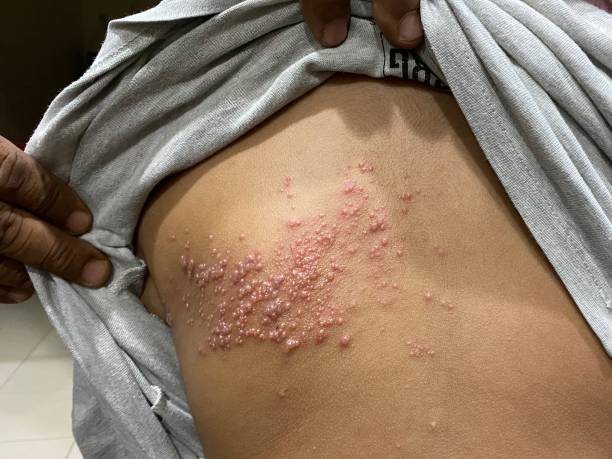



- A secondary syphilis rash usually does not itch, does not hurt, and often appears on the palms or soles. Those three features alone separate it from eczema, heat rash, and most other common causes.
- A fingerstick blood antibody test confirms or rules out syphilis, and the result is reliable from about three to six weeks after exposure.
Published: September 2025 | Last updated: May 2026 | Editorial review and quality control: Martina N.
What does a syphilis rash look like, and how do I tell it apart from eczema or heat rash?
A secondary syphilis rash is usually painless, does not itch, and often appears as faint copper-red spots on the trunk, palms, or soles. Eczema almost always itches and weeps or crusts; heat rash sits in skin folds and clears within days of cooling off.
Syphilis has a reputation among doctors as the great imitator, and the rash it produces in its second stage is the reason why. The rash is faint, often painless, and willing to look like half a dozen ordinary skin problems. Many people see more than one provider before anyone orders the blood test that names it. The visual patterns are not hard to spot once you know them. They are simply unfamiliar to most of us.
If you landed here because of a rash, here is the reassurance first: most rashes are not syphilis. An eczema flare, a heat rash from tight clothing, a reaction to a new detergent, or a passing viral rash are all far more common, and one of those is the likeliest answer for you. Still, if a rash does not itch, does not hurt, and lingers past a week, syphilis belongs on the testing list alongside two or three more-likely causes. This guide exists for the smaller group whose rash really is secondary syphilis, because that group almost never recognizes it. Reported syphilis cases in the United States rose 80% between 2018 and 2022 and reached their highest numbers since the 1950s, according to CDC surveillance data. Caught early, the fix is a single shot of penicillin. Missed for years, the damage can become permanent.
This article is published by stdrapidtestkits.com, which sells at-home rapid STI testing kits. We recommend products based on fit for the reader's concern, not commercial benefit. The medical content here is drawn from CDC, WHO, NHS, and other public-health sources.
Key Takeaways
- A secondary syphilis rash usually does not itch, does not hurt, and often appears on the palms or soles. Those three features alone separate it from eczema, heat rash, and most other common causes.
- A fingerstick blood antibody test confirms or rules out syphilis, and the result is reliable from about three to six weeks after exposure.
Syphilis Earned Its Nickname for a Reason
Clinicians have called syphilis the great imitator since the 1800s. The name stuck because the infection produces visible signs that overlap with at least a dozen other conditions, among them contact dermatitis, drug rash, viral exanthem, pityriasis rosea, eczema, and seborrheic dermatitis. The reason is biological. The bacterium Treponema pallidum travels through the bloodstream and provokes a body-wide immune response, so its skin signs can land almost anywhere. There is no single body area it favors and no signature shape it always makes.
This is why the medical literature is full of case reports of patients who saw several providers before anyone ran a syphilis test. The differential listed by DermNet NZ for the secondary-stage rash includes drug eruptions, pityriasis rosea, psoriasis, and eczema or dermatitis. Each of those is far more common than syphilis, so the rash routinely gets filed under the more familiar diagnosis, and the delay to a correct call is usually measured in weeks rather than days.
Two things have shifted over the last decade. Syphilis case rates in the United States rose sharply through the 2010s and have kept climbing, so a rash that used to be statistically rare is now reasonable to consider. At the same time, home rapid blood testing became widely available, which means a person can rule it in or out with an at-home syphilis test without explaining themselves at a clinic. Home testing brought the cost of an answer down considerably, while the cost of missing the infection has not moved.
Conditions Syphilis Is Most Often Mistaken For
- Eczema or contact dermatitis, the most common misread, especially in people who already live with sensitive skin.
- Pityriasis rosea, which also scatters faint patches across the trunk.
- A drug eruption tied to a medication started in the previous couple of weeks.
- Psoriasis, when the lesions happen to look dry or scaly.
- Seborrheic dermatitis on the face, scalp, or chest.
- A viral exanthem that turns up during an unrelated infection.
What a Syphilis Rash Actually Looks Like
Most people picture an STI rash as bright red, blistering, painful, or oozing. A secondary syphilis rash is the opposite of that mental image. It tends to be quiet rather than dramatic. The lesions are small, roughly two to ten millimeters, flat or only slightly raised, and usually a coppery red or pink-brown. They do not blister, do not weep, and rarely itch.
The distribution is what makes the rash recognizable once you know to look for it. The trunk is the most common location, with scattered spots across the chest, back, abdomen, and flanks. The second telltale pattern is rash on the palms of the hands or the soles of the feet, which is unusual for almost any other common rash. Most rashes spare the palms and soles entirely, so when a rash turns up there, the list of likely causes narrows and syphilis moves up it. The CDC's About Syphilis page calls the palm-and-sole rash a hallmark of the secondary stage, and the NIH's MedlinePlus syphilis page describes it plainly as a non-itchy rash often found on the hands and feet.
Some people also develop moist, flat-topped, wart-like growths called condylomata lata in skin folds such as the groin, under the breasts, or between the buttocks. Some lose patches of hair from the scalp, eyebrows, or beard, a pattern called syphilitic alopecia. Others notice shallow gray-white patches inside the mouth or on the tongue, known as mucous patches, which are among the most contagious features of the secondary stage.
What the rash does not do is informative too. It does not make most people scratch. It does not weep, crust, scale, or peel. It does not raise blisters or pustules. If your rash itches intensely, weeps, shows visible pus, or peels in sheets, syphilis drops down the list and another cause is more likely.
Eczema vs. Syphilis: The Mimic That Trips Up Doctors Too
Of all the conditions secondary syphilis gets confused with, eczema comes up most. Eczema, or atopic dermatitis, is everywhere, and most people who have it have lived with it for years and recognize their own flares. So when faint red patches appear after a possible exposure, the easy explanation is that the eczema is acting up again, especially if the patches look dry or mildly scaly.
That assumption breaks down once you widen the lens. Itch, location, history, and accompanying symptoms separate the two far more reliably than color or texture. Eczema follows a familiar script for each person: the same spots, the same triggers, the same response to the cream you have used before. A rash that turns up where you have never had eczema, especially the palms or soles, deserves a second look. Eczema almost always itches; secondary syphilis rarely does. The difference comes down to mechanism. Eczema is driven by inflammation and a disrupted skin barrier, which fires the itch nerves hard, while secondary syphilis is a bloodstream-spread bacterial infection that seeds the skin without triggering that same itch pathway. The rash can look busy and feel like almost nothing.
The misdiagnosis is a recognized pattern in dermatology, not a rare slip. Case reports describe patients who saw two or three providers, were treated for eczema or contact dermatitis, and only reached a syphilis blood test weeks later when the rash refused to clear or migrated to new spots. The table below lines up the features that tell the two apart.
Eczema vs. Secondary Syphilis Rash
| Feature | Eczema | Secondary syphilis rash |
|---|---|---|
| Itch | Usually intense | Often absent |
| Common locations | Elbow creases, behind knees, hands, neck folds | Trunk, palms, soles, sometimes scalp |
| History | Recurring flares in familiar spots | First-ever rash in new locations |
| Trigger | Allergens, dry skin, irritants, stress | Bloodstream-spread bacterial infection |
| Surface | Scaly, weeping, scratch marks, thickened skin | Smooth, flat or slightly raised, non-weeping |
| Other symptoms | Dryness and itching | Fatigue, swollen lymph nodes, low-grade fever, mouth sores, patchy hair loss |
Itch, location, and history separate the two more reliably than color alone.
How the Rash Can Look Different on Darker Skin
Most online photos of syphilis rashes show lighter complexions, which is part of why the condition goes unrecognized on darker skin. The same infection that looks faint pink on light skin can read as dark brown, purplish, or slightly gray on deeper skin tones. The contrast against the surrounding skin is lower, so the rash can look less like a rash and more like uneven dryness or post-inflammatory pigmentation.
Dermatologists lean on texture and distribution rather than color when assessing these lesions on darker skin. The rash may feel slightly raised or rough even when the color shift is subtle, and people sometimes describe it as sandpapery or velvety to the touch. If the texture pattern fits and the rash includes the palms or soles, the call is the same as on lighter skin: test, do not guess.
The published-photo bias toward lighter skin shapes who gets diagnosed and when, because clinicians and patients alike may not recognize the lesions in their real-world form. On any skin tone, there is one more trap worth naming, and it has to do with how the rash responds to ordinary eczema treatment.
A topical steroid cream can fade the redness of a secondary syphilis rash for a few days, which feels like proof the diagnosis was eczema. The infection underneath keeps progressing. If a flare that quiets down with hydrocortisone keeps returning in unfamiliar places, especially the palms or soles, ask for a syphilis blood test instead of reaching for more cream.
Three Stages, Three Different Traps
Untreated syphilis moves through stages, and each one hides in its own way. Knowing roughly where a person sits in that timeline explains why a rash today can trace back to an exposure two months ago, following the staging described in the CDC syphilis overview.
Primary stage. Around three weeks after exposure, with a range of ten to ninety days, a single painless sore called a chancre appears where the bacterium entered the body. It can show up on the genitals, around the anus, in the mouth, or anywhere skin-to-skin contact happened. The chancre is firm-edged and round, and it is remarkable for what it does not do: it does not hurt, throb, or produce pus. It heals on its own in three to six weeks, which is why most people miss it, especially when it is internal or tucked into a fold of skin.
Secondary stage. Four to ten weeks after the chancre heals, so roughly six weeks to six months after the original exposure, the rash arrives. This is the stage that prompts most diagnoses, because the rash is the first sign many people actually notice. Some also feel mildly flu-like: low-grade fever, swollen lymph nodes, sore throat, fatigue, a dull headache. The symptoms are too mild to send anyone to urgent care, which is part of why the rash gets blamed on detergent, stress, or a recurring eczema flare.
Latent stage. The rash and other secondary-stage symptoms fade on their own within weeks, treated or not. The infection then slips into a latent phase that can last years with no visible signs at all. The person feels fine. The bacteria keep circulating, and a blood test stays positive throughout, which is the only way to catch it during this silent stretch.
Tertiary stage. In a small share of untreated cases, now genuinely rare in countries with widespread testing, syphilis re-emerges years to decades later as cardiovascular damage, neurological problems, or destructive growths called gummas. Treatment can still stop the infection at this point, but it cannot reverse damage already done. That late outcome is exactly what early testing prevents.
Primary: a single painless sore that heals on its own in three to six weeks.
Secondary: the rash stage most people first notice, often with mild flu-like symptoms.
Latent: no visible symptoms, bacteria still circulating, blood test still positive.
Tertiary: rare today, late organ damage; treatment can halt progression but not reverse damage already done.
Telling Syphilis Apart from Other Common Look-Alikes
Eczema is the misdiagnosis that comes up most, but it is not the only one. Several common skin conditions share visual elements with secondary syphilis, and the distinguishing details are usually there if you know what to check. The table below sums up the most frequent mimics beyond eczema. None of these single features settles the question on its own. They are starting points for an honest conversation with a clinician or for a home blood test.
| Condition | Itches? | Typical location | How it differs from syphilis |
|---|---|---|---|
| Secondary syphilis | Rarely | Trunk, palms, soles, sometimes scalp | Painless, copper-pink, often involves palms or soles |
| Heat rash | Sometimes | Skin folds, areas under tight clothing | Clears within days of cooling off |
| Pityriasis rosea | Sometimes mild | Trunk, in a Christmas-tree pattern | Starts with a single herald patch, clears in six to eight weeks on its own |
| Ringworm (tinea) | Yes | Single circular patch, often thigh or trunk | One clear raised ring with central clearing, not multiple lesions |
| Pityriasis versicolor | Mild or none | Upper chest, back, shoulders | Subtle lighter or darker patches that spread slowly |
| Drug rash | Variable | Anywhere | Onset tied to a new medication, usually within two weeks of starting it |
| Viral rash (exanthem) | Variable | Trunk, sometimes face and limbs | Comes with a clear viral illness and clears within a couple of weeks |
When to Test, and What the Test Involves
The standard syphilis blood test is simple. A small fingerstick sample, just a few drops with no vial draw for the rapid version, checks for the antibodies your body makes in response to the infection. Those antibodies are usually detectable three to six weeks after exposure, so that window is also the most reliable time to test.
If you already have a visible rash, antibodies are almost certainly present, because the rash itself signals that the immune system has been responding for weeks. There is no reason to wait longer before testing. If the exposure was recent, within the last two to three weeks, and there is no rash yet, a negative result is not the final word. Because antibodies can take up to six weeks to appear, the standard move is to wait another two to four weeks and retest before treating an early negative as conclusive.
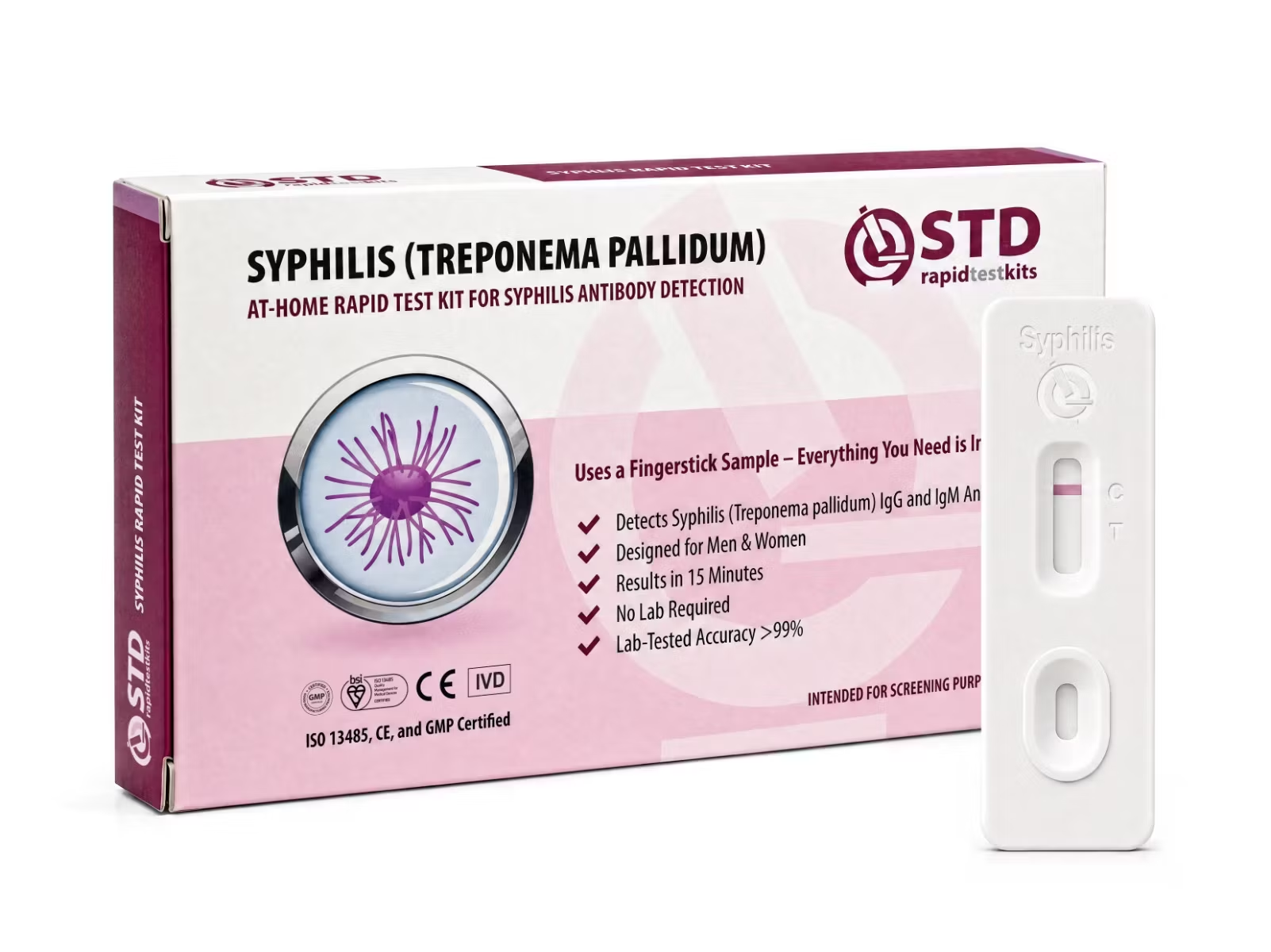
The at-home rapid lateral-flow test gives a result in about fifteen minutes from one fingerstick. It is a screening tool, and a positive result needs confirmation at a clinic. There, providers typically run a treponemal-specific antibody test, such as a TP-PA or enzyme immunoassay, alongside a non-treponemal RPR or VDRL titer to stage the infection and track the response to treatment, in line with CDC STI treatment guidelines. The home test screens; the clinic confirms.
Worth knowing before you test: most people who test for syphilis come back negative, and that negative is real information. It clears one of the easier-to-miss infections off the list and lets the likelier cause, whether eczema, dermatitis, a drug reaction, or pityriasis rosea, move to the front. A few patterns make testing especially worthwhile: any unexplained rash that does not itch and is not clearing, any new partner in the last three months whose status you do not know, any genital sore that healed on its own without explanation, or any mix of swollen lymph nodes, fatigue, and a faint rash. Routine annual STI screening is also reasonable for anyone sexually active outside a long-term mutually monogamous relationship, with or without symptoms.
Treatment Is Simple. The Delay Is the Problem.
Primary, secondary, and early latent syphilis are treated with a single intramuscular injection of long-acting penicillin, benzathine penicillin G. Late latent or unknown-duration infection takes three weekly injections. Penicillin G is the preferred drug for every stage, per the CDC STI treatment guidelines, and syphilis remains a preventable and curable infection, as the WHO syphilis fact sheet states. For people with a penicillin allergy who are not pregnant, an oral doxycycline course is the usual alternative, with the exact dose and duration set by a clinician. In pregnancy, penicillin desensitization is the preferred route rather than a substitute drug, because penicillin is the only treatment shown to reliably protect the fetus.
What treatment cannot undo is damage that has already happened. Cardiovascular and neurological complications from tertiary-stage syphilis can be managed but not reversed. This is the whole reason the testing window matters. Catch the infection at the secondary stage and a single shot resolves it. Catch it after years of latent progression and you live with whatever harm has accumulated.
After treatment, follow-up blood tests over the first year confirm the antibody titer is falling, measured with the non-treponemal RPR or VDRL test. A four-fold drop in titer is the standard sign of cure, consistent with the CDC guidelines, and the NHS syphilis page advises returning several times in the 12 months after treatment to be retested.
Syphilis is a preventable and curable bacterial sexually transmitted infection (STI). If untreated, it can cause serious health issues.
What If the Rash Disappears on Its Own?
This is the most confusing part of syphilis, and the part that makes it dangerous. The secondary-stage rash often fades on its own after several weeks, with no treatment at all. The skin clears. The patches vanish. For someone who assumed it was eczema, the disappearance feels like confirmation that the moisturizer worked and the problem is solved.
The infection has gone nowhere. Treponema pallidum simply enters the latent stage: no visible symptoms, but the organism is still present and still replicating internally. That silent phase can run for months or years, and a subset of people with untreated syphilis eventually develop tertiary disease that damages the heart, brain, eyes, and nervous system.
A blood antibody test taken a few weeks after the rash first appeared is the only practical way to learn whether that rash was harmless irritation or the visible window of an active infection. The test does not depend on the rash being present. The antibodies persist long after the skin clears.
For almost every other condition, a rash that fades on its own is good news. With syphilis, the visible signs of the secondary stage clear while the bacterium keeps replicating internally for months or years. It cleared up is not the same as it is gone. The blood test is the only way to know either way.
What to Do This Week If Something on Your Skin Will Not Go Away
If a rash has been on your skin for more than a week, does not itch, does not hurt, and is not clearing with ordinary moisturizer or hydrocortisone, syphilis testing is reasonable. So is testing for the other infections that can produce a rash, including HIV and herpes. Because more than one infection can be in play after a single exposure, a combined panel often makes more sense than a single-infection test, and a range of at-home STI test kits can cover several at once.
Whether you choose a clinic or a home test, the path is the same: test, confirm, treat. Penicillin works, the lab work is routine, and most clinics ask for nothing beyond what the test order needs.

FAQs
- Can a syphilis rash really look like eczema?
- Yes, often enough that doctors call syphilis the great imitator. The secondary-stage rash can look like dry patches, faint red spots, or rough areas that pass for eczema or dermatitis. The most useful giveaways are that syphilis rashes typically do not itch, frequently involve the palms or soles, and appear in several body regions at once. Eczema almost always itches and tends to flare in familiar spots like elbow creases or behind the knees.
- Why doesn't a syphilis rash usually itch when eczema does?
- Eczema is an inflammatory skin reaction driven by a disrupted skin barrier and immune triggers, which makes the skin's itch nerves fire hard. Secondary syphilis is a bloodstream-spread bacterial infection that seeds the skin without engaging that same itch pathway. The rash can look active and feel like almost nothing.
- How long does a syphilis rash last on its own?
- Untreated, the rash usually fades within four to ten weeks. The infection does not. The bacteria keep circulating through the latent stage that follows, and a blood test stays positive for months and years. A fading rash is not the same as a cleared infection.
- What does a syphilis sore look like in the first stage?
- Picture something closer to a small button-edged ulcer than a typical infected sore. The lesion, called a chancre, sits flat against the skin, has a firm rim you can sometimes feel with a fingertip, and stays dry rather than weeping. Unlike a cold sore or an infected cut, it does not hurt and does not produce pus. It usually closes within a few weeks even without treatment, which is why most people miss it. Common spots are the genitals, around the anus, the lip, or inside the mouth.
- How accurate is a rapid home syphilis test?
- Rapid lateral-flow blood antibody tests for syphilis report high sensitivity and high specificity when used after the right window, about three to six weeks after exposure. A positive home result should be confirmed at a clinic, where a treponemal antibody test plus a quantitative RPR or VDRL titer stages the infection and guides treatment, per <a href="https://www.cdc.gov/std/treatment-guidelines/syphilis.htm" target="_blank" rel="noopener noreferrer">CDC STI treatment guidelines</a>. Exact figures vary by kit and assay, so check each product's data sheet.
- What if I had unprotected sex but have no rash and no sore?
- Test at three to six weeks after the exposure anyway. A lot of syphilis is found in people who never noticed a chancre and have no active rash, because both can be missed or already gone by the time someone tests. The blood test does not depend on visible symptoms.
- Can I get syphilis from oral sex?
- Yes. Oral-to-genital contact transmits syphilis, and the chancre can appear inside the mouth, on the lip, or on the tongue, where it is easy to mistake for a cold sore or a canker sore. Condoms and dental dams during oral sex lower the risk but do not remove it.
- Why is syphilis rising again in the United States?
- Reported cases have climbed for years and reached their highest numbers since the 1950s in 2022. CDC analyses point to several drivers: shrinking clinic-based STI testing, fewer people with regular primary care, and condomless sex outside primary relationships. Higher case counts mean groups that once had low background risk now carry meaningful risk.
- U.S. Centers for Disease Control and Prevention. About Syphilis: stages, transmission, the palms-and-soles rash, primary-sore healing duration, testing, and treatment overview.
- U.S. Centers for Disease Control and Prevention. STI Treatment Guidelines: Syphilis, including treponemal and non-treponemal (VDRL/RPR) testing, benzathine penicillin G as the preferred drug for all stages, and the fourfold-titer change used to gauge cure.
- U.S. Centers for Disease Control and Prevention (NCHHSTP Newsroom). 2022 STI Surveillance Report: reported syphilis cases rose 80% between 2018 and 2022, reaching the highest numbers since the 1950s.
- World Health Organization. Syphilis fact sheet: a preventable and curable bacterial STI, with secondary-stage signs including a non-itchy rash on the palms and soles.
- UK National Health Service. Syphilis condition page covering symptoms by stage, the testing pathway, and post-treatment retesting over the first 12 months.
- MedlinePlus (U.S. National Library of Medicine, NIH). Syphilis: describes the painless primary sore and the non-itchy rash often found on the hands and feet.