
Published: November 2025 | Last updated: May 2026 | Editorial review and quality control: Martina N.
Sex-positive culture has built better testing literacy than most of the general public. People at organized play parties often discuss screening dates, condom etiquette, and disclosure scripts that would make a lot of monogamous couples blush. Yet a quietly persistent gap shows up in every public-health study of group-sex events: window periods. The honor system runs on what people know about their bodies, but the biology of new infections does not always cooperate with last week’s lab result.
This guide is for anyone who has been to a sex party, is planning to go, or just wants to understand the math behind the line ‘everyone tested negative.’ Tested when? With which test? And what counts as exposure when condoms come off for oral sex but stay on for penetration? The answers are less reassuring, and more practical, than most people expect.
Key Takeaways
- A ‘negative’ test from last week may not reflect an exposure from yesterday. Most STIs need 1 to 12 weeks to show up reliably on screening.
- Condoms reduce risk during penetration but do not block skin-to-skin transmission of herpes, HPV, or syphilis from areas they don’t cover.
What Sex Party Safety Actually Looks Like
Walk into a well-organized event space and the safety architecture is obvious. Low lights, ambient music, bowls of condoms and lube at every corner. Sometimes a clipboard at the entrance asks guests to mark whether they have tested in the past two weeks. No names, just dates. It looks organized. It is also, for most events, voluntary. Few hosts check IDs or verify lab results.
This kind of honor system is common in sex-positive communities. Built on trust and mutual care, it works most of the time for most people. But it has structural blind spots. Someone may have tested too early after a previous exposure. Someone else may not know they were exposed at all. Many sexually transmitted infections, including chlamydia, gonorrhea, and herpes, can spread without obvious symptoms or full penetration.
STI risk at multi-partner events is not the same as recklessness. Attendees of organized play parties tend to know more about testing than the general population, and harm-reduction protocols at sex-positive venues often outpace what monogamous couples ever discuss. Knowledge, however, does not cancel biology.
Even well-run events rely on what attendees know about their own bodies. No mechanism at the door verifies whether a guest tested inside or outside their actual exposure window, which infections were on the panel, or whether a new exposure happened between the lab visit and the party.
Why ‘I’m Clean’ Doesn’t Mean What People Think
Imagine a partner at the party says they tested last week. What that statement means depends on three things: what test they took, when their last possible exposure occurred, and which infections were on the panel. The window period is the gap between exposure and the point a test can reliably detect infection. A test taken inside that window can return a true negative on the day of the test and still miss an infection brewing in the body.
For chlamydia and gonorrhea, nucleic acid amplification tests can detect infection within roughly 1 to 2 weeks after exposure. HIV antigen/antibody combination tests usually become reliable around 18 to 45 days, with most people seroconverting by 6 weeks (CDC HIV testing). Syphilis treponemal antibody tests can take 3 to 6 weeks to become positive. CDC guidance notes that herpes antibody tests may take 12 weeks or longer to reliably detect infection (CDC STI overview).
| Infection | Earliest Reliable Detection | Recommended Retest Timing |
|---|---|---|
| Chlamydia (NAAT) | 1 to 2 weeks | 2 to 3 weeks after exposure |
| Gonorrhea (NAAT) | 1 to 2 weeks | 2 to 3 weeks after exposure |
| HIV (Ag/Ab combo) | 18 to 45 days | 6 weeks; confirm at 12 weeks |
| Syphilis (treponemal antibody) | 3 to 6 weeks | 6 to 12 weeks |
| Herpes (HSV-2 antibody) | 3 to 6 weeks | 12 to 16 weeks for full seroconversion |
Skin Contact, Oral Sex, and the Routes Condoms Don’t Cover
One of the most common gaps in sex-positive risk literacy is the assumption that condoms make a scene safe. They are still the single best tool for fluid-borne transmission. Several common infections, though, spread by skin-to-skin contact in areas a condom never touches.
Herpes, HPV, and primary syphilis can transmit through contact with mucosal surfaces or active lesions on the inner thighs, scrotum, vulva, perineum, or lower abdomen. HSV-1, the virus that causes most oral cold sores, transmits readily during kissing and oral sex, even between people who have never had a visible outbreak. HPV spreads through any skin or mucosal contact involving the genital region; the virus does not require fluids and is not blocked by a condom that covers only the shaft (CDC STI overview).
Even contact that doesn’t feel sexual at a party can carry risk. Massage trains, shared toys, and hands moving between partners can each transfer infectious material if anyone in the rotation has an active lesion or shedding viral particles.
Most people who have STIs experience no symptoms, which means screening is the only way to know.
What Counts as Exposure (and Why It’s Murkier Than You Think)
People often picture exposure as something singular and obvious: unprotected penetrative sex with a known-positive partner. The reality at multi-partner events is messier. The CDC’s screening recommendations explicitly note that any new partner counts as a potential exposure, and follow-up testing is reasonable even when the encounter felt low-risk. Common exposure scenarios include:
- Performing or receiving oral sex on a partner with asymptomatic gonorrhea
- Rimming a partner who has a hidden anal herpes outbreak
- Genital grinding without penetration when one person has an active untreated herpes sore
- Sharing toys that were not cleaned or barriered between users
- Hand-to-genital contact after touching another partner’s lesion
When to Test, and When to Retest
Waiting is the hardest part of post-event testing. The instinct is to test the next morning for peace of mind. A next-day test usually returns a negative result regardless of true status, which can be reassuring in the moment and misleading two weeks later when symptoms develop.
The pattern public-health programs use, and the one home-test schedules increasingly mirror, is layered. A baseline test in the first 1 to 2 weeks catches earlier-detectable infections like chlamydia and gonorrhea. A second-round test at 6 weeks captures most HIV seroconversions. A third round at 12 weeks closes the syphilis and herpes antibody window. The second test, not the first, is typically the one that meaningfully rules in or rules out exposure.
| Time After Exposure | What This Window Tells You |
|---|---|
| 0 to 3 days | Too early for almost any STI test. Useful only for HIV PEP eligibility, which must start within 72 hours. |
| 7 to 14 days | Chlamydia and gonorrhea NAAT can detect infection. HIV, syphilis, and herpes still incubating. |
| 3 to 6 weeks | Most chlamydia, gonorrhea, HIV (Ag/Ab), and early syphilis become detectable. The most useful single screening point. |
| 12 weeks | Window for HIV antibody, syphilis, and HSV-2 antibody seroconversion fully closes for most people. |
Why Asymptomatic Infections Slip Through
According to the CDC, the majority of chlamydia and gonorrhea cases are asymptomatic, especially in women, where chlamydia is silent in a substantial share of cases. Pharyngeal gonorrhea, which can develop after oral-genital contact, is symptomatic in fewer than 1 in 10 people. HSV-2 infection often produces only a single mild outbreak that the person attributes to a yeast infection or skin irritation, then never recurs in a recognizable form (CDC STI overview).
Waiting for symptoms before testing is similar to waiting for smoke before checking whether the stove is on. By the time a sign appears, transmission to other partners may have already happened. Asymptomatic transmission is the main reason routine post-event testing matters for everyone involved, not just the people who feel a tingle or notice an unusual discharge. It is also why ‘I feel fine’ is the sentence most likely to delay a useful diagnosis.

Disclosure Without Drama
A positive result after a multi-partner event raises an uncomfortable question: who do you tell? The instinct to apologize, explain, or treat the message like a confession can make disclosure feel worse than the diagnosis. Most people who handle disclosure badly do so because they have rehearsed it as a moral failure rather than a public-health task.
Public-health partner-notification guidance suggests a short factual script: name the infection, name the relevant time window, suggest the partner consider testing. Many local health departments offer anonymous partner-notification services through state-funded programs if direct contact feels unmanageable.
Name the infection. Name the relevant time window. Suggest the partner consider testing. No long apology required, no excessive detail expected.
Sex Party Protocols and What They Actually Cover
Not all sex parties are organized the same way. Some are unstructured social gatherings. Others operate on documented rules, ranging from required testing windows to barrier expectations. Common protocols include:
- Proof of recent testing within 7 to 14 days of attendance
- On-site rapid testing administered by trained volunteers or medical staff
- Mandatory condom use during penetration, with barrier protocols for oral and anal contact
- Sanitation stations for shared toys, surfaces, and hand washing
- Pre-event consent and disclosure scripts so partners can negotiate boundaries clearly
Stigma, Shame, and the Recovery Conversation
Even within sex-positive communities, stigma lingers. Conversations about ‘clean’ results and ‘dirty’ partners reproduce the same stigma the community claims to reject. The language matters: STIs are not moral failures or evidence of carelessness. They are biological outcomes of a fact most adults already accept, that human skin contact carries some viral and bacterial traffic.
The mental-health side of a positive result often takes longer to settle than the infection itself. Most bacterial STIs clear with a short course of antibiotics. The fear, shame, and self-blame can take weeks. Reaching out to a friend who has been through it, a peer-support group, or a counselor familiar with sexual health helps the recovery curve flatten. The first conversation is usually the hardest. After that, most people are surprised by how many friends respond with their own quiet stories.
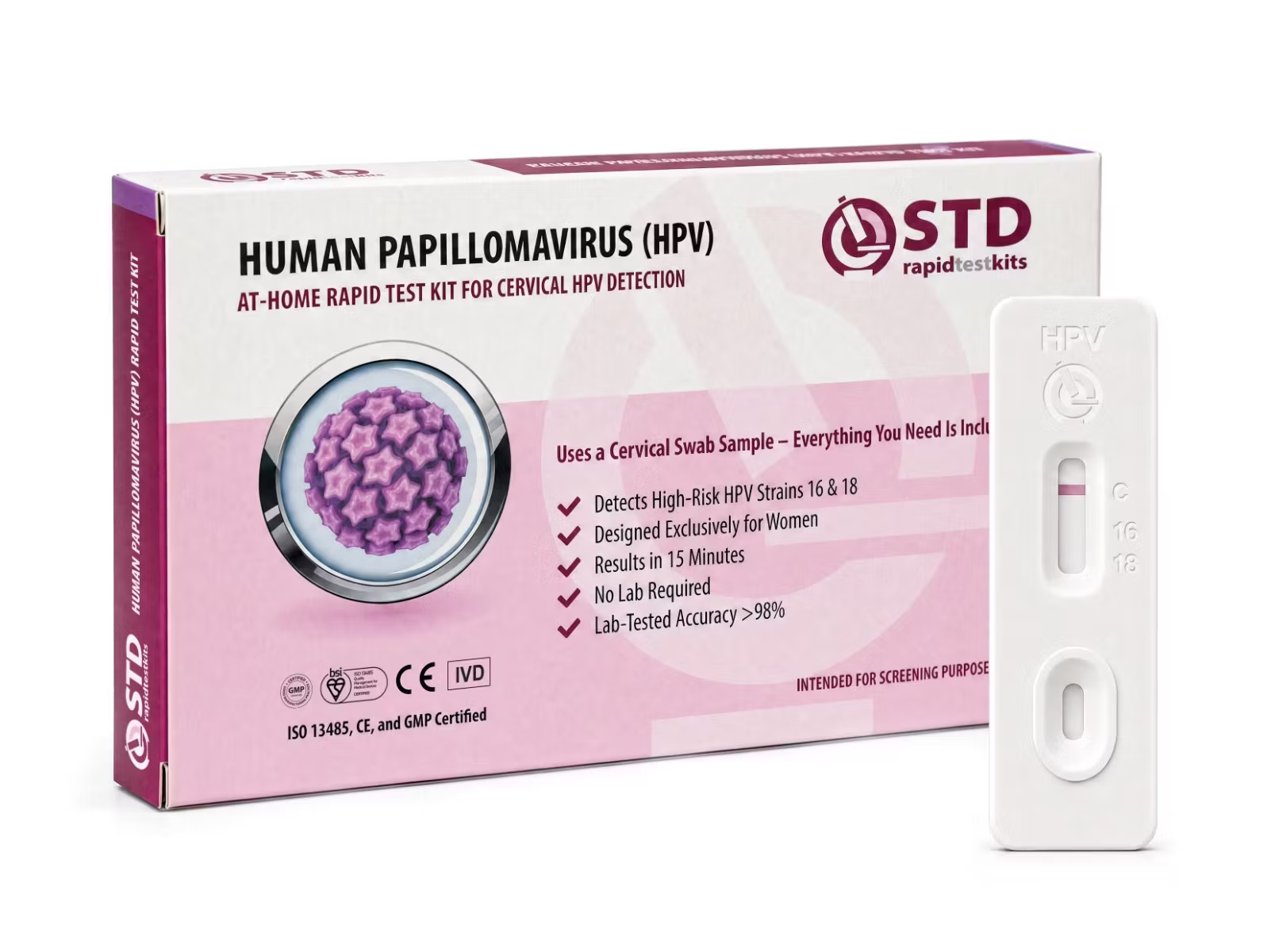
Our at-home HPV kit below is validated for self-collected vaginal swab only. People with male anatomy who want HPV screening should see a clinician, since no validated home HPV test exists for them yet. The disclosure is not buried; the kit is clearly women-only by design.
Building a Safer-Sex Plan You Can Stick With
The most durable safer-sex plans are routine, not reactive. Two questions before a new encounter cover most of the gap: when did you last test, and which infections were on the panel? Bringing personal supplies (condoms, dental dams, gloves, lube, sanitizing wipes) removes the friction of relying on whatever the host has stocked.
For people who attend multi-partner events regularly, public-health programs increasingly suggest testing every 3 to 6 months as a baseline, with shorter intervals during periods of new exposure. The CDC recommends at least annual screening for sexually active people under 25, and more frequent screening (every 3 to 6 months) for men who have sex with men in higher-risk categories (CDC screening recommendations).
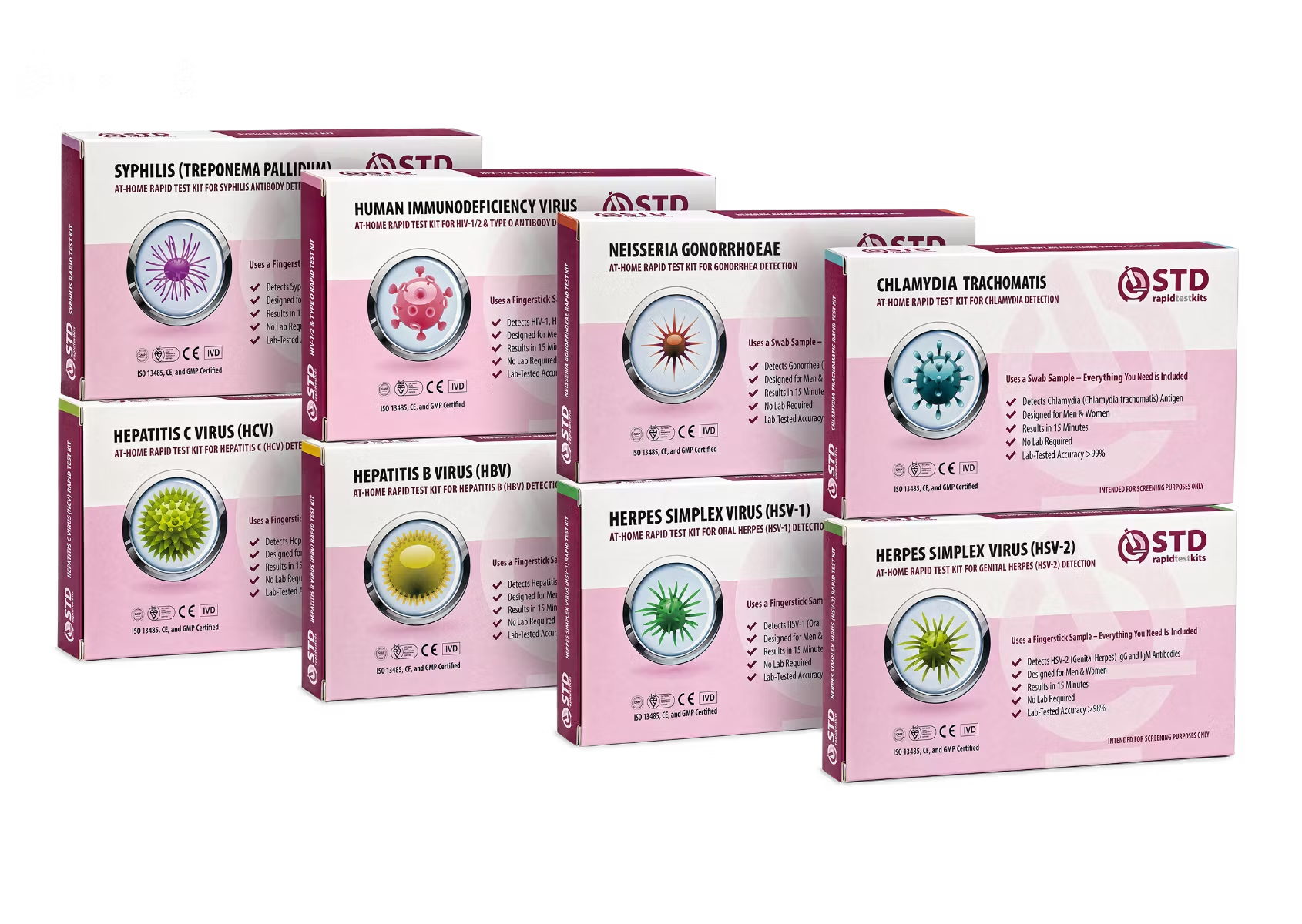
If a recent event has left a question mark, an at-home rapid combination test offers a private screening option that ships discreetly. It does not replace clinic testing for confirmation of positive results, and it does not replace site-specific swabs (throat or rectal) that a clinic can offer. It does answer the first question, which for most people is simply ‘did anything change since last week,’ without the awkward waiting room.
Layered Testing Cadence After Exposure
- 7 to 14 days after exposure: chlamydia and gonorrhea NAAT become detectable.
- 6 weeks after exposure: HIV antigen/antibody combination test captures most seroconversions.
- 12 weeks after exposure: closes the syphilis and HSV-2 antibody window for most people.
FAQs
- Can you actually catch an STI from oral sex at a sex party?
- Yes. Gonorrhea, chlamydia, syphilis, and herpes can transmit through oral-genital contact even without penetration. Pharyngeal gonorrhea and chlamydia are common after oral encounters and are usually asymptomatic. The CDC recommends throat swabs for anyone with oral exposure, and pharyngeal infections are not detected on a urine-only screen.
- If everyone says they tested negative, how risky can it really be?
- More than people think. A negative test from last week reflects what was detectable on the day of testing. If a partner was exposed shortly before testing, the infection may not yet have shown up on the panel. Taking the test honestly does not change the biology of window periods, which range from days to 12 weeks depending on the infection.
- How soon is too soon to test after a sex party?
- Same-day testing rarely catches anything new. Most STIs need at least 7 to 14 days to register on a NAAT, and HIV antibody tests take longer. The most useful single screen is at 3 to 6 weeks after exposure. A second test at 12 weeks closes the syphilis and HSV-2 antibody window for most people.
- Do condoms make sex parties safe?
- Safer, not safe. Condoms substantially reduce risk during penetration but do not block skin-to-skin transmission of herpes, HPV, or syphilis from areas they do not cover. They also slip, tear, or come off during long scenes more often than people remember the next morning.
- I feel fine. Do I really need to get tested?
- Yes. A majority of chlamydia and gonorrhea cases are asymptomatic, especially in women. Pharyngeal gonorrhea is symptomatic in fewer than 1 in 10 people, and HSV-2 infection often produces only a single mild outbreak. Feeling normal is a poor proxy for being infection-free after a multi-partner event.
- Which test should I use after multiple partners in one night?
- A combination panel that covers chlamydia, gonorrhea, HIV, and syphilis is the most efficient screen. Add a herpes antibody test if seroconversion is a concern, and ask a clinic for throat or rectal swabs if oral or anal exposures occurred. Urine-only screening misses pharyngeal and rectal infections, which are common at multi-partner events.
- What if my test is negative but something feels off?
- Trust the symptom. A negative test inside the window period can miss an early infection. If new symptoms appear, see a clinician sooner rather than waiting for a calendar-driven retest. Persistent discharge, sores, painful urination, or unexplained pelvic pain warrant evaluation regardless of recent test results.
- Can you spread an STI without intercourse?
- Yes. Herpes, HPV, and primary syphilis transmit through skin or mucosal contact. Genital grinding, oral-anal contact (rimming), and shared toys can transmit infections without anyone having penetrative sex. This is why ‘we didn’t go all the way’ is not a reliable risk filter.
- U.S. Centers for Disease Control and Prevention. STI Treatment Guidelines, Screening Recommendations. Source for population-based screening frequency and test-type guidance referenced in the safer-sex plan section.
- U.S. Centers for Disease Control and Prevention. HIV Testing landing page. Source for HIV antigen/antibody combination test window-period framing and seroconversion timing referenced inline.
- U.S. Centers for Disease Control and Prevention. STIs overview category page. Source for transmission-route descriptions, condom-coverage limits, asymptomatic-presentation framing, and the herpes antibody window reference.
- U.S. Centers for Disease Control and Prevention. Guide to Taking a Sexual History (clinician resource). Source for the five-Ps clinical history-taking framework referenced in disclosure and exposure-risk framing.
- NHS. Sexually transmitted infections (STIs). Source for plain-English transmission descriptions and screening guidance used to cross-check CDC framing.
- Mayo Clinic. Sexually transmitted diseases (STDs) overview. Source for consumer-facing asymptomatic-presentation framing and test-window descriptions used to cross-check CDC and NHS guidance.
