
Published: September 2025 | Last updated: May 2026 | Editorial review and quality control: Martina N.
The hardest part of an STD test often isn't the swab, the fingerstick, or the trip to the clinic. It's the moment you have to open the result. Search any version of "scared to open STD results" and you'll find tens of thousands of conversations from people doing exactly what you're doing: stalling, refreshing, bargaining with themselves. The anxiety is rarely just about microbes; it's about what a result might mean for a relationship, a sense of self, a sense of control.
Here is the part the panic usually doesn't tell you. The majority of STD tests come back negative. When they don't, most of the common bacterial infections (chlamydia, gonorrhea, trichomoniasis, syphilis) are cured with a short course of antibiotics (CDC STI overview). Even lifelong viral infections like herpes and HIV are highly manageable with modern medicine. People with diagnosed HIV on consistent antiretroviral therapy reach an undetectable viral load and cannot sexually transmit the virus, a principle the CDC summarizes as Undetectable equals Untransmittable (CDC HIV resources).
Key Takeaways
- Most STD test results come back negative, and the wait itself is usually the hardest part. Knowing your result is the only way out of the loop.
- Test accuracy depends on timing. Each infection has a window period; a result is most reliable when the test is run inside that window.
What the Result Will Actually Say
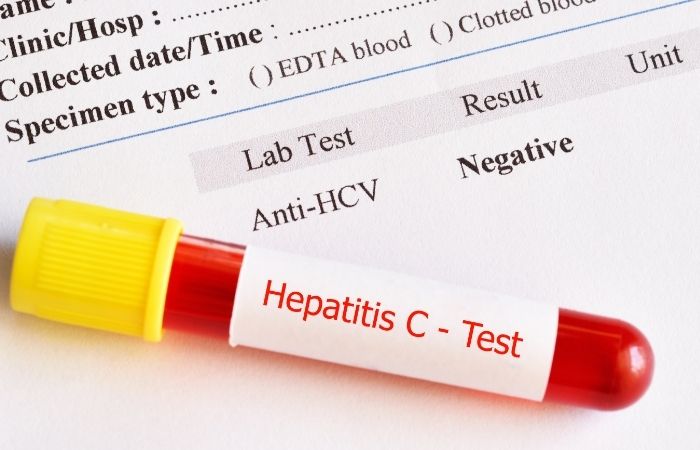
Part of the anticipatory panic comes from not knowing what the result will look like. People often imagine a flashing red label, a phone call from a stricken clinician, or a coded message. In reality, results are administrative. A line of text. A positive or negative band on a cassette. An entry in a patient portal.
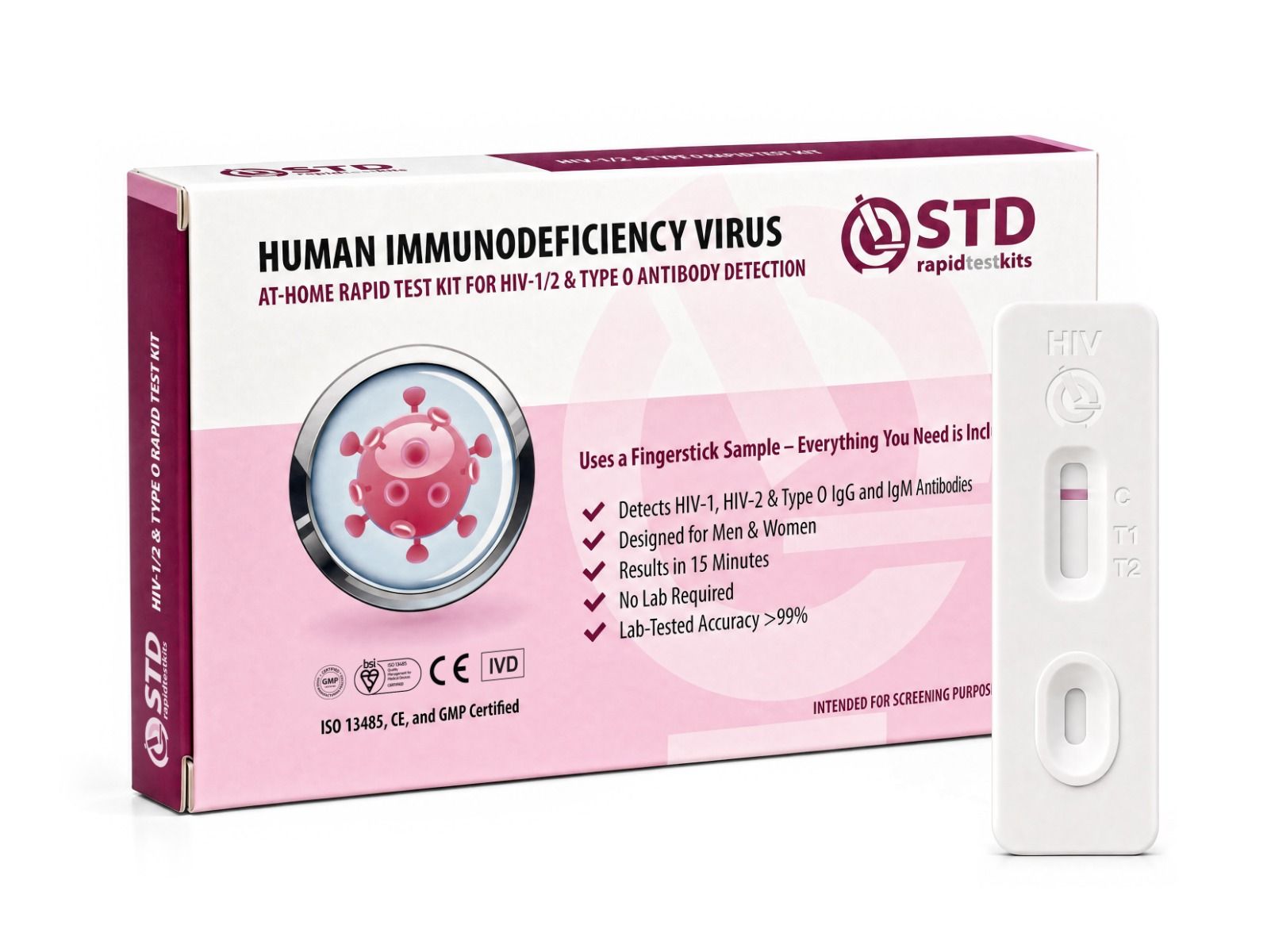
The form also varies by test method. A home rapid lateral-flow kit shows lines on a cassette, similar in appearance to a pregnancy test, with a control line and a test line. A clinic-run lab test typically delivers a written report through a patient portal or a clinician message, often with specific reference ranges or quantitative numbers (titers, viral loads) rather than a single positive/negative band.
| Result | What it means | What happens next |
|---|---|---|
| Negative | No infection detected at the time of testing. | If tested inside the correct window period and you've had no new exposure, no further action is needed. Retest if symptoms develop or exposure continues. |
| Positive | Evidence of infection was detected. | Most bacterial STIs (chlamydia, gonorrhea, syphilis, trichomoniasis) are cured with antibiotics. Viral infections (HIV, herpes, hepatitis) are managed long-term. Confirmatory testing is standard for some infections. |
| Inconclusive or invalid | The test did not give a clear answer. | Retest. This usually means the sample was insufficient, the cassette malfunctioned, or testing happened too early. It is rarely a hidden positive. |
Timing Decides How Trustworthy Your Result Is
One reason people search Google a dozen times during a wait is that the answer to "how soon after exposure can you test?" varies by infection. The gap between exposure and the moment a test can reliably detect infection is called the window period. Testing too early can produce a false negative because the body hasn't yet produced enough of what the test is looking for, whether that's bacterial DNA, viral RNA, antibodies, or antigens (proteins on the surface of the pathogen).
The numbers below summarize current public-health guidance for the most common testing routes (CDC STIs; NHS STIs). Exact windows shift slightly between specific assays; the longer end is the safer one.
| Infection | Earliest reliable detection | Most trustworthy testing time |
|---|---|---|
| Chlamydia (lab NAAT) | About 7 days after exposure | 14 days after exposure |
| Gonorrhea (lab NAAT) | About 7 days after exposure | 14 days after exposure |
| Syphilis | 3 weeks after exposure | 6 to 12 weeks after exposure |
| HIV (4th-generation antigen/antibody lab test) | About 18 days | 45 days, and 90 days for full confidence |
| HIV (rapid antibody test) | About 23 days | 90 days for full confidence |
| HSV-2 antibody (blood test) | About 6 weeks | 6 to 16 weeks, with most assays reliable by 12 weeks |
| Hepatitis B | 3 to 6 weeks | 6 to 9 weeks depending on assay |
| Hepatitis C antibody | 8 to 11 weeks | 12 weeks for high confidence |
What a Negative Result Inside the Window Actually Means
If your test was done well inside its trustworthy window, a negative result is strong medical evidence, not a coin flip. The lab-based NAAT tests used for chlamydia and gonorrhea, and the 4th-generation antigen/antibody tests used for HIV, are designed with built-in tolerances; they perform at very high sensitivity when run inside the window the manufacturer specifies (CDC STIs).
If you tested very early after exposure, the calmer next step is putting a retest date on the calendar rather than spiraling about the current one. Pick the day, save the reminder, and let the calendar carry the worry until then.
If you tested early after exposure, calculate the realistic retest date from the window-period table above and save it as a calendar reminder. A date on the calendar turns abstract worry into a scheduled task you can ignore until the day arrives.
Why the Wait Feels So Much Worse at Night
Waiting for medical results activates the same threat circuitry as waiting for biopsy results, job decisions, or any high-stakes unknown. The nervous system doesn't distinguish between confirmed bad news and imagined bad news; it reacts to uncertainty itself. That's why the loop feels worse at 1 a.m. than at noon: at night, there are no errands, no meetings, no daytime distractions strong enough to drown out the mental rehearsal of worst-case scenarios.
People commonly describe a contradictory pattern, refreshing the portal every fifteen minutes during the day and then closing the browser the moment the result actually posts. The pattern is avoidance coping; it briefly lowers the spike of fear, while stretching the stress response across days. Opening the result collapses the possibility space, turning a story the brain can rewrite into anything into something concrete you can respond to.
Many people describe the waiting period as harder than the test itself, harder than the possible diagnosis, and even harder than a clinic visit. The test gave them something to do. The diagnosis would give them information. The wait gives them neither, which is why the mind fills the empty space with worst-case scenarios.
If It's Negative but You're Still Worried
This pattern is common: relief floods in for a few minutes, then a new worry arrives. What if the test was wrong? What if there's a false negative hiding under the result? False negatives can happen, though the causes are specific rather than random. The two main ones are (1) testing too early in the window period and (2) a sample that wasn't collected correctly. When testing happens inside the trustworthy window for that specific infection, modern lab-based NAAT tests for chlamydia and gonorrhea are among the most analytically sensitive screening tools in medicine; the CDC describes them as the recommended diagnostic standard (CDC STI overview).
It's also worth checking whether the test you took screens for what you're worried about. A combined chlamydia/gonorrhea swab covers those two infections only; it says nothing about HIV, syphilis, herpes, or hepatitis. If your worry is tied to a specific exposure, matching the test to the question often shrinks the anxiety faster than retesting the same panel. If symptoms persist despite a confirmed negative test, the most useful next step is a clinician visit. stdrapidtestkits.com publishes this article and sells the rapid home tests referenced below.
Many genital sensations have non-STI explanations, including:
- Yeast infections (candidiasis)
- Urinary tract infections (UTIs)
- Contact irritation from soaps, detergents, condoms, or lubricants
- Pelvic-floor muscle tension, which often intensifies under stress
If symptoms persist after a negative STI test, a primary-care or sexual-health clinician can sort the cause.
If It's Positive, Here's What That Really Means
This is the scenario the brain keeps replaying. The word positive on a screen, a tight chest, a scattered set of thoughts about what happens next. Pause for a moment. A positive STD result is a medical finding, not a verdict on your worth, your judgment, or your future. Bacterial infections (chlamydia, gonorrhea, syphilis, trichomoniasis) are treated with antibiotics and cleared from the body; the CDC's STI Treatment Guidelines lay out the standard regimens, all of which are short courses (CDC STI Treatment Guidelines). Trichomoniasis often gets left out of the conversation; it resolves with a single course of metronidazole or tinidazole.
Viral infections like HSV and HIV are managed long-term with medication rather than cured outright, and both rank among the most effectively controlled chronic conditions in modern medicine. HIV antiretroviral therapy is a once-daily pill for most patients and brings the virus to undetectable levels, at which point it cannot be sexually transmitted (CDC HIV resources). Genital herpes is episodic; daily suppressive therapy reduces both outbreak frequency and transmission risk to partners. People living with these diagnoses date, marry, have children, and reach later life with health expectancies similar to their peers when their treatment is consistent.
The only way to know your HIV status is to get tested. Knowing your HIV status gives you powerful information to keep you and your partner healthy.
Rapid Tests vs Lab Tests: Why the Wait Feels Different
The emotional shape of the wait changes with how a test is run. An at-home rapid lateral-flow test resolves in 15 to 30 minutes, which compresses anxiety into a tight, intense window. A clinic-run lab NAAT can take 1 to 7 days, which spreads anxiety over a longer period of portal-refreshing and waiting for callbacks. None of these methods is universally "better." Each is a trade-off between speed, sample type, and analytical sensitivity.
The CDC considers laboratory NAAT (nucleic-acid amplification testing) the most analytically sensitive method for chlamydia and gonorrhea (CDC STI guidance). At-home rapid lateral-flow kits use different chemistry. They are designed for fast, private screening rather than lab-level analytical sensitivity, which is why a positive rapid result is often confirmed with a follow-up lab test, especially for HIV and syphilis.
| Test type | How results arrive | Typical timeframe | What the wait feels like |
|---|---|---|---|
| At-home rapid lateral-flow | Visible line on a cassette | 15 to 30 minutes | Intense, short, anxious |
| Mail-in lab kit | Online portal notification | 2 to 5 business days | Prolonged anticipation, repeated portal checks |
| Clinic-run lab NAAT or blood test | Phone call, message, or portal | 1 to 7 days | Uncertainty about when the clinic will reach out |
Inconclusive Results, Confirmations, and Retesting
Sometimes a single test is not the final answer. An inconclusive or invalid result is an empty data point; repeat the test with a fresh sample rather than treating the non-answer as a hidden positive. For some infections, a positive screening result triggers a confirmatory test before a diagnosis is finalized. A reactive HIV rapid result, for example, is typically followed by an HIV-1/2 antibody differentiation assay and, if needed, an HIV RNA (viral load) test (CDC HIV testing). The same is true for some syphilis screens: a positive treponemal test is usually paired with a non-treponemal RPR titer to distinguish active from past, treated infection. This is why a home rapid HIV kit's positive line is technically a "preliminary positive" rather than a finalized HIV diagnosis.
This is protocol. Medicine moves in steps because the cost of a wrongly issued diagnosis is high. If a result is hard to interpret (a faint line, an early test, an unexpected outcome), confirmatory lab testing or a clinician consultation usually shortens the anxiety rather than extending it.
Most inconclusive or invalid results trace back to one of three things:
- Sample volume was too low (not enough blood, urine, or swab material reached the test pad).
- Device malfunction (a faulty cassette, expired kit, or contamination during the run).
- Result read outside the specified time window (too early, or hours after the result should have been read).
None of these mean a hidden positive. Repeat the test with a fresh kit, following the timing instructions exactly.
Practical Things to Do While You Wait
None of the steps below will erase anxiety; they reduce the feedback loop in which every body sensation gets reinterpreted as evidence. Pick one or two to try today rather than tackling all five at once.
If anxiety is severe enough to interfere with sleep, eating, or work, a single visit with a primary-care clinician or therapist is reasonable. Clinicians recognize health anxiety during medical waits as a documented pattern.
Five steps to lower the noise while you wait
- Set a one-time check window for the portal. Decide to check at 9 a.m. and 6 p.m., and close the tab between. Fewer checks per day mean fewer dopamine cliffs.
- Write down the exposure timeline. Date of exposure, date of test, what was tested for. Seeing it on paper makes it easier to judge whether you tested inside the right window and what the realistic retest date is.
- Do something physical. Anxious thinking is a body state as much as a thought state. A walk, a workout, even ten minutes of stretching shifts the stress response measurably.
- Limit search-engine spirals. One reputable source per question (CDC, NHS, or WHO) is usually more accurate than an hour of forum posts.
- Tell one person. Saying out loud, "I'm waiting for a test result and I'm anxious," to one trusted friend, partner, or family member lowers physiological stress markers in most people; isolation amplifies the wait.
The Layer No One Talks About: Shame
For many people, the fear of opening an STD result isn't only the fear of an infection. It's the fear of what an infection might mean: about a partner who was supposed to be exclusive, about a decision in a moment that felt small at the time, about a sexual history that suddenly feels exposed. Public-health framing is clear on this point. Routine STI screening is recommended for sexually active adults, including those who feel "low risk," because many infections are asymptomatic and can transmit unknowingly. The CDC and NHS both treat testing as a baseline behavior of sexual health rather than a confession of recklessness (CDC STIs; NHS STIs).
One useful reframe: a routine STI screen is the sexual-health equivalent of a blood-pressure check or a cholesterol panel. Most adults who get those don't feel they're confessing to anything. The biology is the same; the cultural framing is what differs. What public-health guidance actually asks of sexually active adults is regular screening as part of preventive care.
The CDC's published screening recommendations treat annual STI testing as standard care for sexually active adults, with more frequent testing when there are new or multiple partners. The NHS sexual-health services framework follows the same principle. Neither presents testing as a response to recklessness; both present it as routine preventive care, similar to other annual screens.
Before You Close This Tab
If you're reading this because you're avoiding a portal notification, here's the most useful thing on the page: opening the result will not change the underlying biology. The result is what it is right now. The only variable still in your control is how long you sit with the question instead of the answer.
If it's negative, allow the relief to land. Note whether you tested inside the trustworthy window for the relevant infection; if you didn't, put the realistic retest date on the calendar so it becomes a task rather than a worry. If it's positive, the next step is treatment rather than catastrophe: for bacterial infections, usually a single prescription; for viral infections, a referral to ongoing care. If you're worried about telling a partner about a positive result, most clinics offer partner-notification assistance, in which a trained counselor either coaches you through the conversation or, with your consent, contacts past partners anonymously on your behalf (CDC STI resources). Open the result. Breathe. The next step is usually a phone call or a calendar entry.
The two paths from here
- Negative result, tested inside the window: no further action is needed. Retest only if symptoms develop or you've had a new exposure.
- Positive result: one phone call to a clinic starts treatment. Most bacterial infections clear within days of the first dose; viral infections move into routine long-term management.
FAQs
- Is it normal to feel completely panicked while waiting for STD test results?
- Yes. The waiting period for any medical result activates the same threat response as waiting for biopsy or scan results. Statistical odds don't easily reach the part of the brain that handles uncertainty. A spike of anxiety doesn't mean something is medically wrong; it means the result matters to you.
- Why does the wait feel worse at night?
- At 1 a.m. there are no errands, no meetings, and no daytime distractions strong enough to drown out catastrophic thinking. The mind has more room. Anxiety peaking after dark is a predictable result of silence and fewer external distractions, not a sign that something is medically wrong.
- How soon after exposure can I trust an STD test result?
- It depends on the infection. Chlamydia and gonorrhea are most reliably detected on a lab NAAT about 14 days after exposure. HIV with a 4th-generation antigen/antibody lab test is reliable around 45 days, with 90 days for full confidence. Syphilis usually needs 6 to 12 weeks. HSV-2 antibody blood tests need about 6 to 16 weeks, with most assays reliable by 12 weeks. The CDC and NHS STI pages list the most current, conservative windows for each infection.
- What if it's positive? I don't think I can handle that.
- You can. The first few minutes are the hardest part; the medical pathway after that is usually manageable. Chlamydia, gonorrhea, syphilis, and trichomoniasis are cured with a short course of antibiotics. HIV is treated as a chronic condition with a single daily pill for most people, and those on consistent therapy with an undetectable viral load cannot sexually transmit the virus. Herpes is episodic and is reduced with suppressive therapy. A positive result changes your next steps rather than your worth.
- What if it's negative but I still don't feel relieved?
- Common pattern. The body sometimes stays in alert mode after the mind has gotten good news. If you tested inside the trustworthy window for the relevant infection and have had no new exposure, a negative result is strong medical evidence. Anxiety taking longer to fade than the result took to load doesn't mean the result is wrong.
- Can anxiety actually cause STD-like symptoms?
- Stress can heighten awareness of normal sensations and tighten pelvic-floor muscles, both of which can produce tingling, itching, mild burning, or genital discomfort that feels new. This doesn't mean symptoms should be ignored; persistent or worsening signs deserve clinical evaluation. It does mean a sudden spike in body awareness during a stressful wait isn't, by itself, a diagnostic clue.
- Should I retest even if my result is negative?
- If you tested very early after exposure, repeating the test inside the full trustworthy window gives stronger confidence. If you tested at the recommended time and have had no new exposure, routine retesting outside CDC-recommended screening intervals (generally annual for sexually active adults, more often with new or multiple partners) is usually not necessary.
- How accurate are at-home rapid STD tests?
- When used correctly and inside the trustworthy window for the infection being screened, modern at-home rapid lateral-flow kits perform well as screening tools. They are not identical to laboratory NAAT, which has higher analytical sensitivity. A positive at-home result is usually confirmed by a lab test, especially for HIV and syphilis. Following instructions exactly, including timing and sample collection, matters as much as the kit itself.
- U.S. Centers for Disease Control and Prevention. Sexually transmitted infections overview, screening recommendations, and infection-specific fact sheets used for window periods and result interpretation.
- U.S. Centers for Disease Control and Prevention. HIV testing information, including window periods for screening, confirmatory assays, and the verbatim "only way to know your HIV status" public-health messaging quoted in the article.
- U.S. Centers for Disease Control and Prevention. STI Treatment Guidelines, including standard regimens for chlamydia, gonorrhea, syphilis, and trichomoniasis cited in the "If It's Positive" section.
- U.S. Centers for Disease Control and Prevention. HIV resources, including treatment-as-prevention guidance (Undetectable equals Untransmittable) referenced when discussing modern antiretroviral therapy.
- National Health Service (UK). Sexually transmitted infections overview, used as the secondary source for window periods and routine-screening framing.
- World Health Organization. Sexually transmitted infections fact sheet and global treatment guidance, cited for the prevalence framing on common curable STIs worldwide.
