
Published: December 2025 | Last updated: May 2026 | Editorial review and quality control: Martina N.
Burning when I pee but my UTI test was negative. What's going on?
The usual explanations are an STI causing urethritis (gonorrhea, chlamydia, or trichomoniasis), an early herpes outbreak with sores near the urethra, or a non-infectious cause like interstitial cystitis. A standard UTI panel checks for none of these. If symptoms outlast a 5 to 7 day antibiotic course, the next step is an STI screen for gonorrhea, chlamydia, and trichomoniasis.
Burning urination that lingers for days after a recent sexual encounter is almost always chalked up to a urinary tract infection. A lot of the time that assumption is right. But sometimes the urine culture comes back clean, the antibiotics do nothing, and the pain stays. When that happens, the cause is often a sexually transmitted infection that mimics UTI symptoms so closely that even experienced providers miss it on the first pass.
Gonorrhea is the most common culprit, and it is the one this guide centers on. Chlamydia, trichomoniasis, and a first herpes outbreak can all produce the same burning, and so can a handful of non-infectious conditions that look like a UTI on symptoms alone. We will walk through why these get confused, which tests catch which infection, when each becomes detectable, and what to do when standard UTI care has already run out of answers.
Key Takeaways
- Burning, urgency, and pelvic discomfort can come from gonorrhea, chlamydia, trichomoniasis, or a first herpes outbreak. A standard UTI workup picks up none of these unless a clinician specifically orders STI testing.
- If a urine culture is negative or antibiotics have not relieved symptoms within 5 to 7 days, the next step is an STI panel for gonorrhea, chlamydia, and trichomoniasis, not another round of UTI antibiotics.
Why Gonorrhea Gets Mistaken for a UTI
The overlap in symptoms is not a coincidence. Both gonorrhea and UTIs can cause pain or burning when you pee, frequent urges to go, and pelvic discomfort. UTIs come from bacteria in the urinary tract, usually E. coli climbing into the bladder from nearby skin and the gut. Gonorrhea is a sexually transmitted infection that targets mucous membranes, the urethra among them. Because the inflammation in both cases hits the same tube, the body files the same complaint no matter which organism is behind it.
The pattern repeats in clinic notes. Burning during urination, the urge to go again within minutes, no obvious discharge or sores. A clinician hears the symptoms, prescribes nitrofurantoin or trimethoprim-sulfamethoxazole for a presumed UTI, and sends the person home. The course finishes. The pain stays. A repeat urine culture comes back negative for bacteria. Only on a later visit, sometimes weeks on, does someone order an STI screen and find gonorrhea.
This happens most in people with vaginas, because the urethral opening sits right next to the vaginal opening and infections at either site produce overlapping symptoms. According to the CDC's gonorrhea fact sheet, most women with gonorrhea have no symptoms at all, so a clean clinical exam does not rule infection out. The same holds for chlamydia: the CDC's chlamydia fact sheet notes the infection often causes no symptoms, and when it does, they may not appear until several weeks after sex. None of this is rare. The World Health Organization counted roughly 82 million new gonorrhea infections and 129 million new chlamydia infections worldwide in 2020 (WHO STI fact sheet).
If antibiotics have not relieved your symptoms within 5 to 7 days, the next test is an STI panel for gonorrhea, chlamydia, and trichomoniasis, not another antibiotic course aimed at a UTI that may not be there.
Where the Symptoms Overlap
UTIs and STIs share a frustrating amount of clinical territory. Both can cause burning, urgency, frequency, and pelvic pressure. Both can flare after sex. Neither announces itself with a clear label. The body just hurts in roughly the same way whatever the underlying cause, which is exactly why the table below leans on a handful of distinguishing signs rather than the burning itself.
UTI vs Gonorrhea and Other STIs
| Symptom | UTI | Gonorrhea or other STI | Can it overlap? |
|---|---|---|---|
| Burning during urination | Very common | Very common, especially gonorrhea, chlamydia, and trich | Yes |
| Frequent urge to urinate | Common | Possible | Yes |
| Pelvic or lower-belly pain | Sometimes | Common, especially with PID from gonorrhea or chlamydia | Yes |
| Cloudy or strong-smelling urine | Often | Rare | Usually no |
| Unusual vaginal or penile discharge | Rare | Common with gonorrhea, chlamydia, and trich | Points toward an STI |
| Itching or irritation around the genitals | Rare | Common with trich and herpes | Points toward an STI |
| Visible sores or blisters | No | Possible with herpes, often absent in a first outbreak | Points toward herpes |
UTIs and STIs overlap on burning and urgency; discharge, itching, and sores tilt the picture toward an STI.
Which Signs Tilt the Odds Toward an STI
The comparison above shows how much UTIs and STIs share. A few signs push the odds toward a sexually transmitted infection and are worth flagging to whoever orders your tests. The NHS lists a burning pain when you pee as a core gonorrhoea symptom while stressing that many people get no symptoms at all, so nothing below confirms an STI on its own and nothing rules one out by being absent. These are reasons to test. If a clinic visit is not immediate, an at-home gonorrhea test can start narrowing things down while you arrange follow-up.
Signs That Point Toward an STI Rather Than a Bladder Infection
One or more of these does not confirm an STI, and their absence does not rule one out. Treat them as reasons to add STI testing, not as a diagnosis.
- Unusual discharge from the vagina, penis, or rectum Common
- Burning that persists after a full course of UTI antibiotics Common
- Symptoms that begin 5 to 14 days after sex with a new partner Common
- Itching or irritation around the genitals Less common
- Pelvic or lower-belly pain that lingers Less common
- Tingling or small sores near the genitals or just inside the urethral opening Less common
- Flu-like illness with fever and swollen lymph nodes in the groin Rare
Why UTI Tests Miss Gonorrhea (and the Others)
A standard UTI workup looks for two things: white blood cells in the urine, read by dipstick or microscopy, and a bacterial culture that grows out the organisms behind community UTIs. Both checks are good at catching E. coli and the related gram-negative bacteria responsible for most bladder infections. Neither is built to detect gonorrhea, chlamydia, trichomoniasis, or herpes.
STI tests use different chemistry. The laboratory gold standard is a nucleic acid amplification test (NAAT), which looks for the genetic material of a specific pathogen. Per the CDC's STI treatment guidelines for urethritis and cervicitis, NAATs run on urine samples or self-collected vaginal or urethral swabs and stay highly sensitive even when symptoms are absent. Other STI tests detect bacterial proteins (antigens) or the antibodies your body makes in response. Each method targets something the standard UTI panel never sees.
A clean urine culture, in other words, simply never tested for those pathogens. Unless your provider explicitly ordered chlamydia and gonorrhea NAATs, or asked the lab to add a trichomoniasis test, those infections were not checked. The most common reason a gonorrhea infection gets missed in this scenario is plain: nobody ordered the right test.

When the UTI Antibiotics Don't Touch the Pain
This is the moment most people realize something is off. They did everything they were told. Urgent care visit, full antibiotic course, no sex while treating, plenty of water. The pain is still there, or it eased for a few days and came back.
Standard UTI antibiotics like nitrofurantoin and trimethoprim-sulfamethoxazole are chosen for the gram-negative bacteria behind most bladder infections, where they concentrate in the urinary tract. They do not treat gonorrhea, which current CDC gonococcal guidance treats with a ceftriaxone injection, nor chlamydia (doxycycline) or trichomoniasis (metronidazole), which call for different drug classes entirely. Per the CDC's STI treatment guidelines, these infections are diagnosed with NAAT testing and treated with those targeted regimens, not with a UTI antibiotic. If your symptoms come from an STI, a UTI antibiotic may calm some inflammation for a while, but the infection keeps going.
Untreated STIs cause real complications. In people with vaginas, untreated gonorrhea and chlamydia can climb into the upper reproductive tract and cause pelvic inflammatory disease (PID), which is linked to chronic pelvic pain, infertility, and ectopic pregnancy. In people with penises, untreated gonorrhea can cause epididymitis (painful swelling next to the testicle) and, rarely, a disseminated gonococcal infection with joint pain, skin lesions, and fever. The longer a misdiagnosis runs, the harder it is to trace the timeline back to the exposure, and the longer your partners go without information they need.
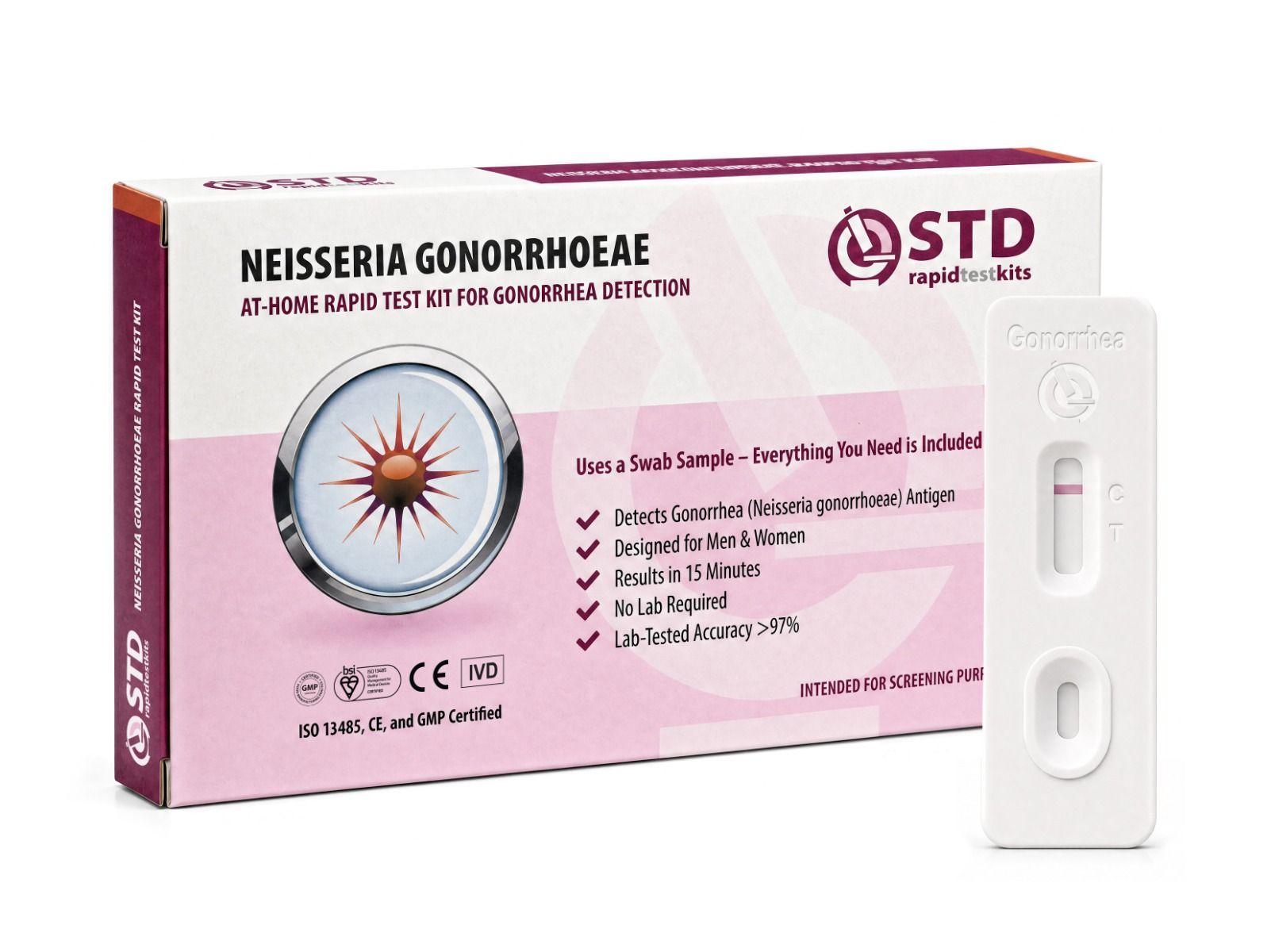
STD Rapid Test Kits, the publisher of this article, sells at-home lateral-flow rapid panels for the infections covered here. We recommend products based on fit for your concern, not commercial benefit.
Timing Matters: When to Test, and When to Retest
One of the most common reasons an STI test comes back negative early on is that the person tested too soon. Every infection has a window period, the time between exposure and when a reliable test can detect the pathogen or your body's response to it. Testing inside the window can give a false sense of security, while waiting too long lets symptoms and complications build.
If you have had unprotected sex or a condom break and symptoms show up within a week, testing is still worth doing. Just plan to retest after the full window passes if the first result is negative. This is not paranoia; it is how the chemistry works.
The same window logic applies after treatment. If you test positive, complete the prescribed course, and want confirmation that the infection has cleared, your provider may recommend a test of cure at a set interval. Three weeks is common for chlamydia and gonorrhea NAATs, because residual genetic fragments can produce a false positive earlier than that. Retesting at 3 months is also a CDC recommendation for chlamydia and gonorrhea, given how often reinfection from an untreated partner happens.
| Infection | Earliest reliable window | Best accuracy window |
|---|---|---|
| Gonorrhea | 5 to 7 days after exposure | 14 days or later |
| Chlamydia | 5 to 7 days after exposure | 14 days or later |
| Trichomoniasis | 7 to 10 days after exposure | 14 to 21 days |
| Herpes (HSV-2 blood antibody) | 10 to 14 days if symptomatic | Up to 16 weeks or more to detect reliably |
| Syphilis | 3 to 6 weeks | 6 to 12 weeks |
| HIV (4th-gen lab antigen/antibody) | 2 to 3 weeks | 45 days |
Is It Herpes or a UTI?
Genital herpes is one of the more under-discussed UTI mimics. Most people associate herpes with visible blisters, but the first sign of a primary outbreak is sometimes painful urination caused by sores near the urethra rather than a urinary tract problem. Urine running over a small lesion produces a stinging burn nearly indistinguishable from cystitis on symptom alone.
First outbreaks can also produce flu-like symptoms (fever, body aches, swollen lymph nodes in the groin) and tingling or itching that precedes any visible sore by hours or days. Some people never see a sore at all, because the lesion is internal: on the cervix, on the vaginal wall, or just inside the urethral opening.
If your UTI workup has come back clean and you have noticed any of those secondary symptoms, an HSV test is reasonable. The most accurate test during an active outbreak is a swab PCR taken directly from a sore. Once outbreak symptoms are gone, type-specific blood antibody testing can detect HSV-2 antibodies, but per the CDC's herpes testing guidance, current blood tests can take up to 16 weeks or more after exposure to reliably detect infection. Home rapid HSV-2 antibody tests are correspondingly most useful several months after a suspected exposure, to confirm seroconversion, not to diagnose an active sore.
If you have a visible sore right now, ask for a swab PCR taken from the lesion. It is the most sensitive test during an active outbreak and tells HSV-1 from HSV-2. If the sore has healed or you are testing because of a known partner exposure, the type-specific blood antibody test is the right tool, with the caveat that you may need to wait several months for antibodies to build before it reliably turns positive.
When the Tests Are Negative but the Pain Stays
A negative test does not always mean nothing is wrong. Sometimes it means you tested too early, used a test that was never designed to detect what is bothering you, or have a non-infectious cause that mimics both UTIs and STIs.
The one worth knowing about is interstitial cystitis (IC), also called bladder pain syndrome. IC is a chronic inflammation of the bladder lining that produces burning, urgency, and pelvic pressure that read like a recurring UTI, yet no infection grows on culture and antibiotics do not help. The NIH's NIDDK explains that clinicians diagnose IC by ruling out other conditions with similar symptoms, sometimes after a cystoscopy and urodynamic studies, and that documented treatments include bladder-specific medications, pelvic floor physical therapy, and dietary changes.
The general rule holds: if negative tests keep stacking up but the pain is real and persistent, push for a referral. A urologist or gynecologist who sees these cases routinely can move the workup faster than another round of empirical antibiotics.
Non-Infectious Causes of UTI-Like Burning Worth Raising With a Specialist
- Interstitial cystitis (bladder pain syndrome): chronic bladder-lining inflammation that produces UTI-pattern symptoms with no infection on culture.
- Pelvic floor muscle dysfunction: tight or uncoordinated pelvic floor muscles that cause urethral burning and urgency, often alongside painful intercourse.
- Genitourinary syndrome of menopause: thinning of vaginal and urethral tissue after menopause that causes irritation and burning, often eased by topical estrogen.
- Bladder stones: small stones can cause intermittent painful urination, urgency, and visible blood in the urine.
- Chemical irritation: spermicides, scented soaps, lubricants, and douches can produce a burning urethral feel that clears once the trigger is removed.
Men Get Misdiagnosed Too
UTIs in men are uncommon enough that most clinicians' first thought when a man presents with burning urination or discharge is actually an STI, often gonococcal or chlamydial urethritis. Misdiagnosis still happens, though, especially when the initial workup is anchored on prostatitis or a presumed male UTI without an STI panel attached.
For people with penises, the high-yield infections to test for when burning urination shows up are gonorrhea, chlamydia, and trichomoniasis. Trichomoniasis in particular gets missed in men, because the parasite tends to cause only mild urethral irritation that gets blamed on something else, and many routine STI panels skip it unless asked. The CDC's trichomoniasis fact sheet notes that about 70% of people with the infection have no symptoms at all, which is part of why it slips through.
If you have been told you have prostatitis without a urine culture, an STI panel, or a digital rectal exam, that is worth a follow-up question. Treatment for bacterial prostatitis is a long antibiotic course, often 4 to 6 weeks, so confirming the diagnosis before committing matters. A urethral swab or first-catch urine NAAT for gonorrhea and chlamydia is quick to add and rules out the most common STI causes of painful urination in one step.
If a clinician is about to start a long antibiotic course for presumed prostatitis or a male UTI without these tests, ask for them first. (1) Urine culture to confirm bacterial growth. (2) First-catch urine or urethral-swab NAAT for gonorrhea and chlamydia. (3) Trichomoniasis testing, which routine panels often skip. (4) Digital rectal exam if prostatitis is the working diagnosis. Adding these takes minutes; missing them often costs weeks of unhelpful antibiotics.
You Can Have Both a UTI and an STI at the Same Time
UTI and STI are not mutually exclusive. Sex is a known mechanical risk factor for UTI in women, because intercourse can push gut and skin bacteria into the urethra. Sex can also transmit STI-causing pathogens in the same encounter. So the symptoms you are feeling can come from a real bacterial UTI and a coexisting gonorrhea or chlamydia infection at once, each contributing its own piece of the discomfort.
For unexplained painful urination after sex, a workup that covers both possibilities reaches an answer faster than treating one cause at a time. A urine culture catches the UTI piece. A NAAT panel for gonorrhea and chlamydia catches the STI piece. If both come back positive, both get treated, with antibiotics matched to each pathogen.
Gonorrhea can also infect the throat and rectum after oral or anal sex. Those infections are often silent, with no burning and no warning, which is why your sexual history matters. It helps decide where to test, even when the genital workup is clean.
Most people who have chlamydia have no symptoms. If you do have symptoms, they may not appear until several weeks after exposure. Even when chlamydia causes no symptoms, it can damage your reproductive system.
Privacy, Honest Testing, and What Home Kits Can and Can't Do
If sitting in a clinic waiting room is the obstacle keeping you from the next test, at-home rapid kits can shorten the path to an answer. They are useful as screening tools when symptoms point toward a specific infection, when you want a private way to check after a recent exposure, or when you have already done the standard UTI workup and want to add an STI panel without another appointment. If you would rather screen for several infections at once, our at-home STI test kits bundle the common ones into a single pass.
At-home rapid tests are lateral-flow immunoassays that screen for the same infections clinic NAATs detect, but the chemistry is different. Lateral-flow tests deliver a result in about 15 minutes from a self-collected swab or fingerstick blood sample. Lab NAATs are the gold standard for analytical sensitivity, especially in asymptomatic infections, so a positive home test is worth confirming with a clinic NAAT, and a negative home test taken inside the window period should be repeated after the full window passes.
One scope note worth flagging clearly. Our at-home trichomoniasis and HPV swab kits are validated for vaginal self-swab only. We do not sell a male-compatible trichomoniasis or HPV home test, so men who need a trich or HPV test should see a clinic. We also do not sell pharyngeal (throat) or rectal swab tests; if your exposure was oral or anal and you suspect a non-genital site infection, those samples need clinic-based collection.

You're Paying Attention, Not Overreacting
Sex, shame, and pain often get tangled up, especially when symptoms keep returning and the standard answer has not worked. The smartest thing to do when something feels off is exactly what you are already doing: questioning the first label, asking for the right tests, and not waiting for the pain to escalate before taking it seriously.
Whether the next step is a repeat urine culture, a NAAT panel for gonorrhea and chlamydia, an HSV PCR from an active sore, or a referral to a urologist for persistent pain with negative testing, you have options. Start with whichever test best fills the gap in your existing workup, follow up on the results, and keep the conversation with your provider open until the cause is identified.
Next Steps If Your UTI Workup Keeps Coming Back Clean
Has a NAAT panel for gonorrhea, chlamydia, and trichomoniasis not yet been run?
Yes: Ask your provider to order one now. It is the highest-yield next test when burning urination has outlasted a UTI antibiotic course.
Do you have a visible sore right now?
Yes: Request a swab PCR for HSV from the lesion before it heals, because PCR sensitivity drops sharply once a sore starts closing.
Has a partner tested positive for an STI since your last screen?
Yes: Retest at the right window for that specific infection, regardless of how you feel.
Is the pain persisting after two clean rounds of testing?
Yes: Ask for a urology or gynecology referral. Conditions like interstitial cystitis or pelvic floor dysfunction need a specialist workup, not another antibiotic course.
No: Keep following up with your provider, and if you tested early, retest after the full window passes, until the cause is identified.
Guidance only. A healthcare provider can advise based on your specific situation.
FAQs
- Can gonorrhea actually feel exactly like a UTI?
- Yes. The sharp burn during urination, the urge to go again within minutes, and the pelvic pressure are classic UTI signs, and they are also classic gonorrhea signs. The body uses the same pain pathways regardless of the organism behind it. Symptoms do not identify which pathogen it is. A test does.
- I took antibiotics for a UTI. Why am I still in pain?
- Standard UTI antibiotics do not cover the bacteria that cause STIs. If your symptoms come from gonorrhea, chlamydia, or trichomoniasis, those medications may calm inflammation briefly but will not clear the infection. If pain has not improved within 5 to 7 days of starting antibiotics, ask for an STI panel or a broader workup.
- How soon after sex can gonorrhea symptoms show up?
- Burning, stinging, or discharge from gonorrhea or chlamydia usually appears 5 to 7 days after exposure, though it can show sooner or take several weeks; the NHS notes gonorrhoea symptoms typically appear around two weeks after infection. Trichomoniasis usually takes 7 to 10 days, and a first herpes outbreak 2 to 14 days. Symptoms can also be delayed for weeks or never appear at all, which is why a clean exam is no substitute for testing.
- What if all my tests come back negative but I still feel pain?
- Several possibilities. You may have tested inside the window period and need to retest after the full window. You may have a non-infectious cause like interstitial cystitis, pelvic floor dysfunction, or genitourinary syndrome of menopause that does not show on infection tests. Persistent unexplained pain is worth a urology or gynecology referral rather than another empirical antibiotic course.
- Could this be herpes even if I haven't seen any sores?
- Yes, and more often than people expect. A first outbreak can include flu-like symptoms and tender groin lymph nodes before any blister appears, and sometimes there is no visible blister at all because the lesion is internal. The most accurate test when you suspect an active outbreak is a swab PCR taken from a current sore. If no sore is present, a type-specific blood antibody test is the appropriate tool, with the caveat that current blood tests need time to turn reliably positive after a recent exposure.
- I have a penis but no discharge. Am I in the clear for gonorrhea?
- Not necessarily. Discharge is common in men with gonorrhea, but it is not guaranteed. Some men have only mild burning or no symptoms at all. UTIs in men are uncommon, so if you have a penis and feel burning when you urinate, the higher-probability cause is an STI, especially gonorrhea or chlamydia. If a clinician offers a prostatitis or male UTI diagnosis without ordering a urine culture or an STI panel, it is reasonable to ask for both before starting a long antibiotic course.
- Can I really test for gonorrhea at home?
- Yes. At-home lateral-flow rapid tests for gonorrhea use a self-collected swab and deliver a result in about 15 minutes. They work as screening tools, with a positive result worth confirming via a lab NAAT and a negative result taken inside the window period worth repeating after the full window passes. Pharyngeal and rectal samples still need clinic-based collection.
- When should I retest if my first gonorrhea test was negative?
- If exposure was less than 2 weeks ago and your first test was negative, retest at the 14-day mark for gonorrhea and chlamydia. For HSV antibody and syphilis, retest after the full window. The CDC also recommends retesting positive cases of gonorrhea and chlamydia about 3 months after treatment, because partner-related reinfection is common.
How We Sourced This Article: We built this guide from current guidance issued by the most prominent public-health and medical bodies, then translated it into the situations people actually face. The clinical claims here draw on the CDC's STI Treatment Guidelines and its gonorrhea, chlamydia, trichomoniasis, and herpes-testing fact sheets, the World Health Organization's STI fact sheet, the NIH's NIDDK guidance on interstitial cystitis, and the NHS gonorrhoea overview.
- U.S. Centers for Disease Control and Prevention. Gonorrhea basic fact sheet, including the statement that most women with gonorrhea have no symptoms and that burning urination is a common sign.
- U.S. Centers for Disease Control and Prevention. Chlamydia basic fact sheet, including the statement that chlamydia often causes no symptoms and that symptoms may not appear until several weeks after exposure.
- U.S. Centers for Disease Control and Prevention. Trichomoniasis basic fact sheet, including transmission, the trichomonas vaginalis parasite, and the statement that about 70% of infected people have no symptoms.
- U.S. Centers for Disease Control and Prevention. STI Treatment Guidelines: Gonococcal Infections among adolescents and adults, including the recommended ceftriaxone 500 mg intramuscular single-dose regimen for uncomplicated urethral, cervical, or rectal infection.
- U.S. Centers for Disease Control and Prevention. STI Treatment Guidelines: Urethritis and Cervicitis, covering NAAT-based diagnosis and treatment regimens for chlamydia (doxycycline) and trichomoniasis (metronidazole).
- U.S. Centers for Disease Control and Prevention. Herpes testing guidance, including the statement that current blood tests can take up to 16 weeks or more after exposure to reliably detect infection.
- World Health Organization. Sexually transmitted infections fact sheet, including global incidence figures (roughly 82 million gonorrhea and 129 million chlamydia infections in 2020) and the point that most STIs are asymptomatic.
- U.S. National Institute of Diabetes and Digestive and Kidney Diseases (NIH/NIDDK). Interstitial cystitis (bladder pain syndrome), including that it is diagnosed by ruling out other conditions and the documented treatment options.
- UK National Health Service. Gonorrhoea overview, including burning pain when urinating as a core symptom, the typical two-week symptom onset, and the note that many people have no symptoms.
