
Published: October 2025 | Last updated: May 2026 | Editorial review and quality control: Martina N.
Most sexually transmitted infections do not announce themselves. There is no obvious sore, no clear-cut symptom that points straight at the cause. Many readers who land on this page arrived after weeks or months of small, off-feeling things: fatigue that will not lift, joint pain that comes and goes, an unusual skin change, eye trouble, or a quiet worry that something untested might be tied to it.
This article covers which untreated STIs can reach internal organs, what early signs are worth taking seriously, how testing windows work, and what to do next. Catching an infection early is the single biggest factor in preventing the kind of long-term damage the headline points to. Most STIs are highly treatable when found in time, and many are fully curable. The point of this article is not to alarm you. It is to make sure that, if a quiet symptom is in fact tied to an old infection, you find out while there is still time to act.
Key takeaways
- Most chlamydia infections and roughly half of gonorrhea infections in women cause no symptoms, which gives bacteria time to climb beyond the genital tract.
- When STIs go untreated for weeks to years, complications can affect the reproductive organs, joints, liver, kidneys, brain, and heart. The vast majority of those complications are preventable with timely testing and treatment.
When Silent Infections Stop Being Silent
The cultural picture of an STI is dramatic: burning, visible sores, obvious discharge. The reality reported by the CDC is the opposite. The majority of chlamydia infections cause no symptoms at all, and a large share of gonorrhea infections in women stay quiet until a complication appears.
That quiet is exactly the problem. Without a symptom that triggers a clinic visit, a bacterial STI has time to travel. Chlamydia trachomatis can climb from the cervix into the uterus and fallopian tubes within weeks. The spirochete that causes syphilis (Treponema pallidum) can enter the bloodstream from a painless chancre the person never noticed. HIV replicates inside immune cells for years before the consequences become obvious in another organ system.
Without a triggering symptom, a bacterial STI can travel for weeks before detection.
Any of these signs alongside a recent or suspected exposure warrants testing and clinical care:
- Joint swelling without an injury
- Yellowing of skin or eyes (jaundice)
- Persistent or recurring fever
- Vision or hearing changes
- Severe pelvic pain
Fever combined with pelvic pain or severe abdominal tenderness warrants same-day evaluation, not a wait-and-see approach.
Which STDs Can Reach Other Organs
Not every STI is equally likely to cause systemic damage. Five infections are responsible for almost all serious organ-related complications when caught late.
Chlamydia. It can travel up the reproductive tract within weeks, causing pelvic inflammatory disease (PID). PID can leave scar tissue that compromises fertility. A significant share of women with untreated chlamydia develop PID, per the CDC's PID overview. In a smaller share of cases, the infection ascends further to cause perihepatitis (Fitz-Hugh-Curtis syndrome), an inflammation of the capsule around the liver that produces right upper-quadrant pain.
Gonorrhea. It can move from the genital tract into the bloodstream, a state called disseminated gonococcal infection (DGI). DGI typically presents as joint pain, tenosynovitis, or a sparse rash, and in rare cases affects the heart valves (gonococcal endocarditis) or the membranes around the brain (gonococcal meningitis). DGI develops in a small proportion of untreated cases, with the CDC's gonorrhea overview noting that untreated gonorrhea can rarely spread to the blood or joints.
Syphilis. It progresses through stages over months to years if untreated. Primary syphilis is a painless chancre that often goes unnoticed. Secondary syphilis can produce a rash on the palms and soles, swollen lymph nodes, and patchy hair loss. Late-stage (tertiary) syphilis can affect the cardiovascular system and the central nervous system, with documented effects on memory, vision, hearing, and gait per the CDC's syphilis pages.
HIV. It attacks immune cells over years. As CD4 counts decline, the body loses the ability to fend off opportunistic infections such as pneumocystis pneumonia, tuberculosis, and cryptococcal meningitis. HIV is also independently associated with kidney disease per NIH HIVinfo's kidney disease fact sheet.
Hepatitis B. It is often acquired sexually and can become a chronic infection. Years of low-grade liver inflammation may produce cirrhosis or liver cancer. Hepatitis B can run silently for decades before liver enzymes or imaging show changes.
The table below collapses the same information into a quick-reference format.
| STI | Possible complication when untreated | Tissues or organs affected | Typical timeframe to complication |
|---|---|---|---|
| Chlamydia | Pelvic inflammatory disease, perihepatitis, infertility | Reproductive tract, fallopian tubes, liver capsule | Weeks to months |
| Gonorrhea | Disseminated gonococcal infection, septic arthritis | Joints, skin, bloodstream, occasionally heart valves | Weeks to months |
| Syphilis | Cardiovascular and neurosyphilis | Brain, eyes, ears, aorta, heart valves | Months to years (stage-dependent) |
| HIV | Opportunistic infections, kidney disease | Immune system, lungs, kidneys, central nervous system | Years without antiretroviral therapy |
| Hepatitis B | Chronic hepatitis, cirrhosis, hepatocellular carcinoma | Liver | Years to decades for end-organ damage |
Early Internal Signs People Miss
Internal STI complications rarely arrive as a single dramatic symptom. They tend to start small and easy to attribute to something else: a few weeks of unexplained fatigue, joint pain that comes and goes, swelling that does not fit a recent injury, a vision change in one eye, or a low-grade fever that returns. These signs are often blamed on stress, dehydration, or overuse before testing connects the dots.
The table below pairs the symptom a person typically notices with the underlying complication that can produce it, and the STI most often responsible.
| Symptom | Possible underlying complication | STIs commonly associated |
|---|---|---|
| Joint pain or swelling without injury | Disseminated gonococcal infection or reactive arthritis | Gonorrhea, chlamydia |
| Yellowing of skin or eyes (jaundice) | Chronic liver inflammation | Hepatitis B, hepatitis C, sometimes HIV co-infection |
| Persistent fatigue with night sweats or weight loss | Systemic inflammation or advanced infection | HIV, late-stage syphilis |
| Headaches, confusion, vision or hearing change | Neurosyphilis or HIV-related CNS involvement | Syphilis, HIV |
| Pelvic pain or unusual cycle changes | Pelvic inflammatory disease | Chlamydia, gonorrhea |
Common Misdiagnosis Patterns
STI symptoms blur into other everyday issues. Burning urination is often blamed on a urinary tract infection. Cramping reads as a cycle issue. Discharge gets attributed to a yeast overgrowth. A primary care visit usually does not include routine STI testing unless the patient asks for it, especially when the headline complaint sounds like a UTI.
A presumed-UTI antibiotic course can suppress surface symptoms while the actual infection keeps climbing. A short course of nitrofurantoin, for example, has no activity against Chlamydia trachomatis or Neisseria gonorrhoeae. The bacteria continue to climb. By the time someone returns for follow-up, the picture has shifted: pelvic pain, persistent fatigue, joint swelling, or a fever that is not from a cold. The original infection has had weeks to embed.
Clinicians regularly see UTIs that fail antibiotics trace back to chlamydia or gonorrhea; persistent yeast-like symptoms after antifungals turn out to be trichomoniasis; and recurrent sore throat in a sexually active adult can represent pharyngeal gonorrhea, which is often asymptomatic but transmissible. Asking directly for an STI panel removes the guesswork. So does an at-home rapid test taken before the next clinic visit, which gives a same-day starting point if the result is positive.

Home Testing vs Clinic Testing
Both clinic-based testing and at-home rapid testing have a place. The two approaches answer different questions and run on different timelines.
Clinic visits give access to lab-grade nucleic acid amplification testing (NAAT or PCR), the highest-sensitivity method for chlamydia, gonorrhea, and trichomoniasis. They also allow same-visit treatment when the result is positive, plus blood draws for HIV antibody/antigen testing and syphilis serology. A clinic is the right setting for confirmatory testing, for staging an infection, and for situations where a clinician needs to evaluate symptoms in person.
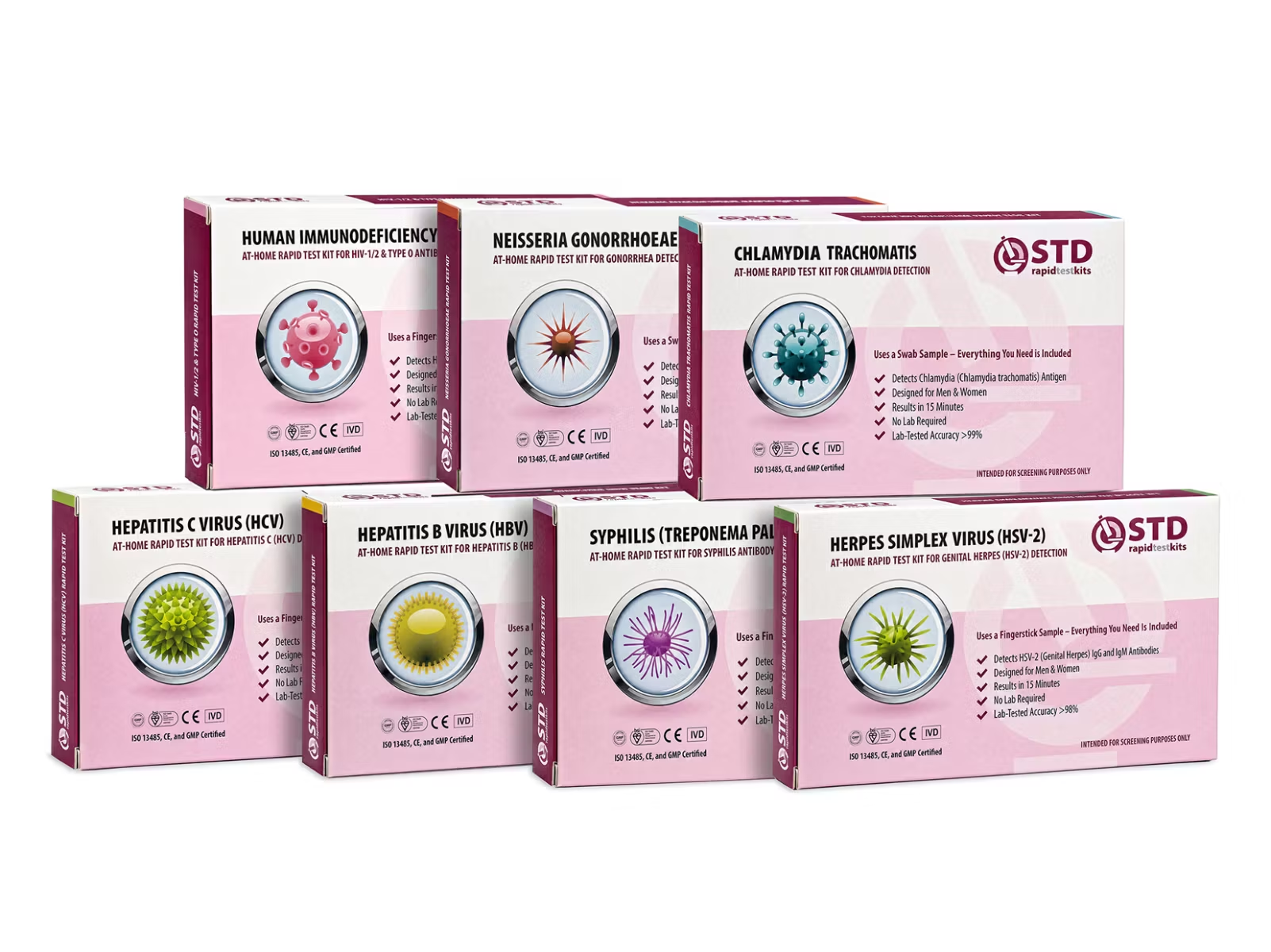
At-home rapid tests use lateral-flow chemistry, the same format as a pregnancy test or a COVID-19 rapid test. They are designed for screening and for situations where waiting on a clinic appointment is not practical, including a recent risky exposure that is keeping someone awake at night. A positive at-home result is worth confirming with a lab NAAT or treponemal test (for syphilis) before treatment. A negative result inside the testing window means a retest after the window closes.
The two methods are complementary, not equivalent. Lab NAATs have higher analytical sensitivity, especially for asymptomatic infections. Rapid tests deliver speed, privacy, and immediate clarity for the most common infections that benefit from early identification. stdrapidtestkits.com, which publishes this article, sells the at-home rapid kits described below.
What Damage Reverses, What Doesn't
One of the more frustrating realities of advanced STIs is how unevenly they heal. Inflammation without structural damage often resolves with treatment. Once scar tissue forms, the timeline is different.
Early chlamydia, caught before pelvic inflammatory disease (PID) develops, usually does not leave permanent scarring. Once scar tissue forms in the fallopian tubes or epididymis, fertility may be compromised even after the infection itself has been cleared. Disseminated gonococcal infection generally responds to intravenous antibiotics, though severe joint involvement can leave residual stiffness.
Neurosyphilis is similar in shape. Prompt antibiotic therapy can stop further nerve damage, but neurological deficits already established may not fully reverse. Chronic hepatitis B can be controlled with antiviral therapy, but cirrhosis already laid down by years of inflammation persists. HIV taken to a fully suppressed viral load with antiretroviral therapy lets the immune system rebuild over months to years, although certain co-morbidities like kidney disease can require ongoing management.
PID can permanently damage the reproductive system, leading to infertility, ectopic pregnancy, and chronic pelvic pain.
After a Positive Result
A positive STI result is hard to read calmly, and that is normal. The next steps are well-defined and almost always lead to a successful outcome. Most bacterial STIs (chlamydia, gonorrhea, syphilis, trichomoniasis) are curable with antibiotics. HIV and viral hepatitis are not curable, but they are highly manageable with daily antiviral therapy that suppresses viral replication and protects the immune system or liver.
The first move after a positive at-home result is confirmation. For chlamydia and gonorrhea, the confirmation step is a NAAT test followed by an antibiotic course (doxycycline 100 mg twice daily for seven days for chlamydia per current CDC guidance, intramuscular ceftriaxone for gonorrhea). For syphilis, both treponemal and non-treponemal blood tests are run together to confirm and stage the infection, then benzathine penicillin G is given. For HIV, an antibody/antigen blood test confirms a reactive rapid result, after which an HIV care provider starts antiretroviral therapy.
Retesting roughly three months after treatment is the recommended check for re-infection from an untreated partner, especially for chlamydia and gonorrhea. If symptoms have suggested possible internal involvement (joint pain, fatigue, jaundice), the care provider may add bloodwork or imaging to evaluate organ status. Most positive results never need that step, because most are caught before complications appear.
Talking to a Partner
Telling a current or former partner that they should test is awkward and often dreaded. It is also one of the most consequential things a positive person can do, both for the partner's health and for breaking the silent-spread chain that allowed the infection to travel in the first place.
A direct, low-drama message tends to land best. Something close to: "I just tested positive for [infection name]. You should get tested too. Most STIs are easy to treat once caught." That is the entire conversation in many cases, and most partners respond with appreciation, not anger.
If a direct message is not possible, U.S. state and local health departments offer anonymous partner notification, where the health department contacts past partners on the positive person's behalf without naming them. Online tools such as Tellyourpartner.org provide a similar service via text or email. Anonymity is a real option, and choosing to use it does not reduce the medical effectiveness of the notification.
None of this is about blame. Most people who pass an STI to a partner had no idea they were carrying anything. Notification is the part of the cycle a positive person can actually change.
"I recently tested positive for [infection name]. You should get tested too, most STIs are easy to treat once caught."
Direct, factual, no apology needed. If a direct conversation feels too hard, anonymous tools through state health departments and Tellyourpartner.org let the message reach a partner without naming you.
Bottom Line
The longer an STI goes untreated, the more parts of the body it can affect. That is the simplest way to summarize the medical literature on this topic. The encouraging side of the same fact is that early detection, whether through routine screening, a clinic visit triggered by a symptom, or a rapid test ordered after a known exposure, prevents the great majority of complications described in this article.
If something has felt off for a while and an STI has crossed your mind, that suspicion is enough reason to test. A negative result is the reassurance many readers came here looking for.
Next steps
- Test within the CDC's recommended window for each infection (HIV: about 4 weeks for antigen/antibody tests; chlamydia and gonorrhea: 2 to 3 weeks).
- Confirm any positive at-home result with a lab NAAT or treponemal blood test before starting treatment.
- Retest roughly three months after treatment for chlamydia or gonorrhea to check for re-infection from an untreated partner.
Frequently asked questions
- Can an untreated STI really cause organ damage?
- Yes. Untreated chlamydia, gonorrhea, syphilis, HIV, and hepatitis B can affect tissues well beyond the genital tract over time. The CDC documents specific complications for each: pelvic inflammatory disease and tubal scarring with chlamydia; disseminated infection with gonorrhea; cardiovascular and neurological involvement with late-stage syphilis; opportunistic infections and kidney disease with untreated HIV; cirrhosis and liver cancer with chronic hepatitis B. The vast majority of these complications are preventable when the infection is caught early.
- What are the earliest signs an STI may have spread beyond the genital area?
- Common signs include joint pain or swelling without an injury, persistent fatigue with night sweats, jaundice (yellowing of skin or eyes), unexplained vision changes, pelvic pain that does not fit a cycle pattern, and a low-grade fever that returns. These signs are non-specific and have many other causes, which is why testing is the only reliable way to connect them to a possible STI.
- How quickly can damage start after exposure?
- It varies. Pelvic inflammatory disease from untreated chlamydia or gonorrhea can develop within a few weeks. Disseminated gonococcal infection has been documented within four to eight weeks of exposure. Cardiovascular and neurological syphilis usually take months to years. Liver damage from hepatitis B typically takes years to decades. The more important variable is whether the infection is detected and treated before the timeline runs out, which is why early testing is the single biggest lever.
- If I have no symptoms, do I still need to test?
- Yes, especially after a new partner, a known exposure, or a long gap since your last test. The CDC recommends annual chlamydia and gonorrhea screening for sexually active women under 25 and for men who have sex with men, and HIV testing at least once for everyone aged 13 to 64. Most people who pass an STI to a partner had no symptoms when they did so, which makes routine screening the main tool for stopping silent transmission.
- Can at-home rapid tests catch these infections before they become serious?
- For most users, yes. Rapid lateral-flow tests for HIV, syphilis, chlamydia, gonorrhea, and hepatitis are designed for early screening. The main caveat is testing windows: testing too soon after exposure can produce a false negative because antibodies or bacterial load have not yet reached detectable levels. The CDC notes a four-week window for HIV antigen/antibody tests and a two- to three-week window for chlamydia and gonorrhea NAATs. Retesting after the window closes catches the small share of early-window false negatives.
- If I test positive, does that mean my organs are already damaged?
- Almost never on its own. A positive test means the infection is present, not that it has spread. Most positive results are caught well before any organ-level complication. If you also have specific symptoms that suggest spread (persistent joint pain, jaundice, vision changes, severe fatigue), the care provider may add bloodwork or imaging during follow-up. Most positive cases never need that step.
- Can I get the same STI again after being treated?
- Yes. Curing a bacterial STI does not create immunity. Re-infection from an untreated partner is common, which is why the CDC recommends retesting around three months after treatment for chlamydia and gonorrhea, and why notifying partners matters as much as treating yourself.
- How do I tell a partner without it becoming a dramatic conversation?
- A short, direct, factual message works best. Something close to: "I tested positive for [infection name]. You should get tested too, treatment is straightforward." If the conversation feels too hard to have directly, U.S. state and local health departments offer anonymous partner notification, and online tools such as Tellyourpartner.org provide a text or email option. Telling a partner is the one part of the transmission chain still within reach. Most partners respond with appreciation, not frustration.
- Is organ damage from a late-detected STI reversible?
- Sometimes. If caught before structural damage sets in, most STI complications clear fully with treatment. Scar tissue in the fallopian tubes or liver, once formed, persists even after the infection is cleared, which is why catching an infection early determines the outcome more than the treatment itself. Early-stage neurosyphilis usually responds to penicillin, but established neurological damage may not fully recover.
Our article was constructed based on current advice from the most prominent public health and medical organizations, then translated into plain language for the situations real readers describe. We prioritized CDC, WHO, and NIH HIVinfo guidance for clinical claims; numerical figures (percentage of asymptomatic infections, timing of complications) were verified against the cited source page before being included. Reader-facing case patterns describe what is documented in the medical literature, not real individual patients. This article is published by stdrapidtestkits.com, which sells at-home STI testing kits; product mentions are limited to fit-for-purpose recommendations, not promotional padding.
- U.S. Centers for Disease Control and Prevention. STD information overview, including the share of asymptomatic chlamydia and gonorrhea cases that drive silent transmission.
- U.S. Centers for Disease Control and Prevention. About Chlamydia, including pelvic inflammatory disease and infertility risks when untreated.
- U.S. Centers for Disease Control and Prevention. Pelvic Inflammatory Disease (PID) information page, including reproductive-system damage from untreated chlamydia and gonorrhea.
- U.S. Centers for Disease Control and Prevention. About Gonorrhea, including the rare spread of untreated infection to blood and joints.
- U.S. Centers for Disease Control and Prevention. About Syphilis, including stage progression, neurosyphilis, and cardiovascular involvement.
- World Health Organization. Sexually transmitted infections (STIs) fact sheet, with global incidence and complication data.
- NIH HIVinfo. HIV and Kidney Disease fact sheet describing the renal effects of untreated and advanced HIV.
