
Published: July 2025 | Last updated: April 2026 | Editorial review and quality control: Martina N.
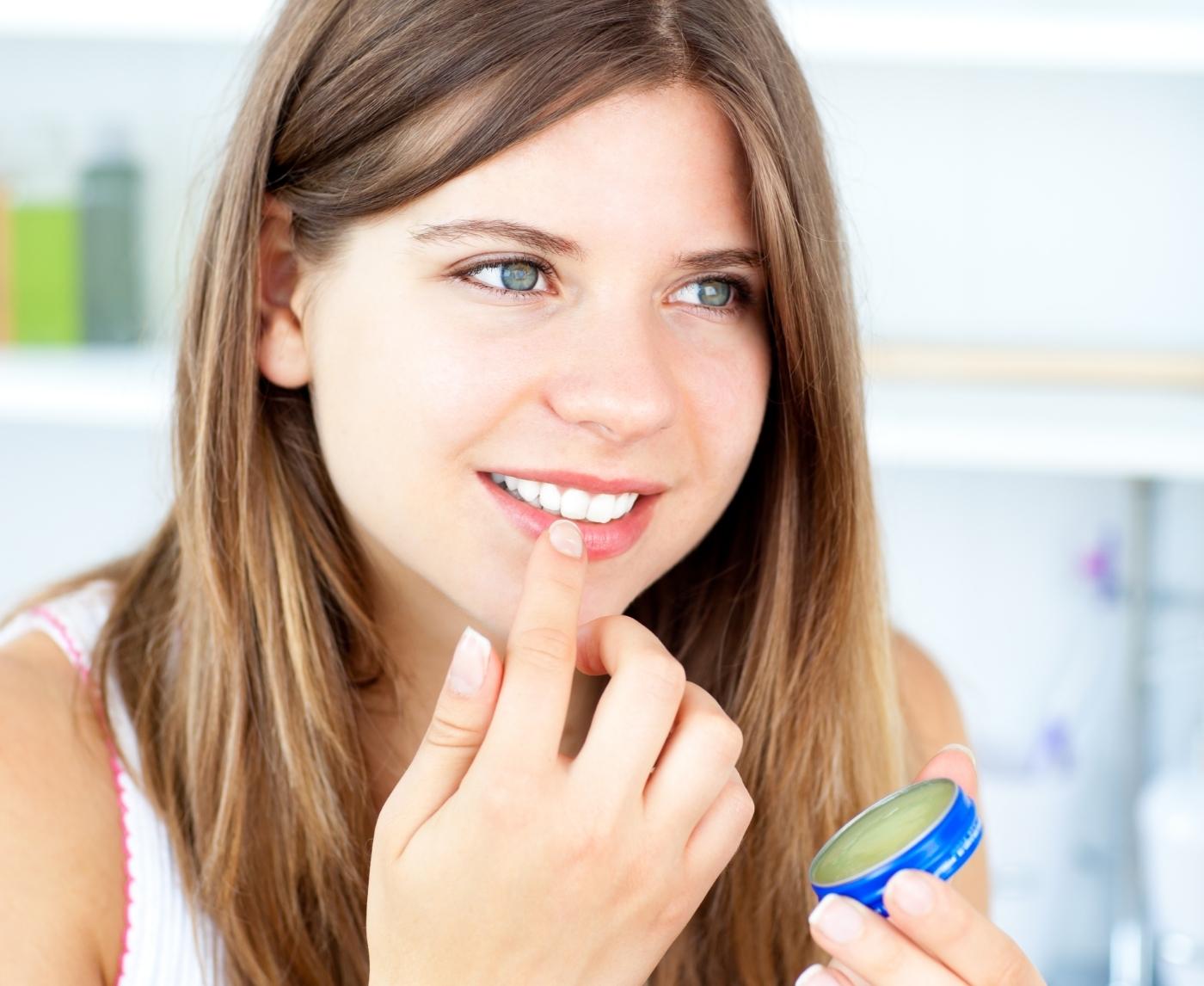
You feel that telltale tingle on your lip, you reach for the Vaseline, and you wonder if this is the night you finally outsmart a cold sore. Sort of, but probably not the way you hope. Petroleum jelly is a useful comfort tool, but it does not interfere with HSV-1, and it does not shorten the outbreak. What it can do is keep the skin from cracking and bleeding while your body and any antiviral product you use do the actual healing. This guide walks through what Vaseline does, what shortens a cold sore for real, how to tell a cold sore from a pimple or canker sore, and when an at-home herpes test answers a useful question.
Does Vaseline help cold sores heal faster?
No. Petroleum jelly has no antiviral activity, so it does not kill HSV-1 and it does not shorten the typical 7 to 14 day healing window. It is genuinely useful as a barrier: it keeps the scab supple so the sore does not split open, soothes the tight crust stage, and shields the area from sun, wind, and food. To genuinely shorten the outbreak, you need an antiviral product (over-the-counter docosanol, or a prescription pill like acyclovir, valacyclovir, or famciclovir) started at the very first tingle. Vaseline can sit on top of the antiviral as a comfort layer.
Key Takeaways
- Vaseline soothes the skin around a cold sore but has no antiviral effect; the typical 7 to 14 day healing window does not change.
- Antivirals (over-the-counter docosanol, or prescription acyclovir, valacyclovir, or famciclovir) shorten outbreaks when started at the first tingle, before the blister forms.
How Cold Sores Form: The HSV-1 Cycle Behind Every Outbreak
A cold sore is not a pimple, a stress bump, or a dry-skin reaction. It is a flare of herpes simplex virus type 1 (HSV-1), a virus that lives quietly in the trigeminal nerve cluster behind your face for the rest of your life once you catch it. Most people pick it up in childhood from a kiss on the cheek. According to the World Health Organization, an estimated 3.8 billion people, roughly 64 percent of those under age 50, carry HSV-1 globally, the majority without realizing it.
When something nudges the virus awake (sun exposure, stress, illness, hormonal shift, lip injury), it travels back down the nerve and replicates in the skin. By the time you see the blister, the virus has already done most of its damage to the local skin cells. Treatment timing is everything.
A typical outbreak runs through four overlapping stages, per Mayo Clinic:
- Prodrome (day 0 to 1): tingling, itching, or burning before anything is visible. This is the only window where antivirals make a meaningful difference.
- Blister (day 1 to 3): a cluster of small fluid-filled vesicles on or near the lip. Maximum viral shedding happens here.
- Ulcer or weeping (day 3 to 5): the blisters break open into a shallow painful sore that oozes clear fluid.
- Crust and heal (day 5 to 14): the sore scabs over, dries, and the scab eventually flakes off without scarring in most cases.
Total recovery typically lands between 7 and 14 days. The window matters because every treatment that shortens an outbreak works best when started in the prodrome stage, before the blister forms.
Prodrome (day 0 to 1): tingling, no visible bump. Blister (day 1 to 3): cluster of clear vesicles. Ulcer (day 3 to 5): blisters break and weep. Crust and heal (day 5 to 14): scab forms, dries, and flakes off. Antivirals do their best work during the prodrome; Vaseline earns its keep during the crust stage.
What Vaseline Does to a Cold Sore
Petroleum jelly is a 100 percent mineral-based occlusive: it sits on top of the skin and forms a moisture-trapping film. It does not absorb, it does not medicate, and it has no ingredient that interferes with viral replication. That makes it a comfort barrier, not a treatment.
Where it earns its place in your cold-sore kit:
- Moisture seal: keeps the crust supple so it does not split open every time you smile or eat.
- Friction shield: reduces rubbing from clothing, masks, food, drinking glasses, and pillowcases.
- Mild pain reduction: a softer scab is a less painful scab, especially in cold or dry weather.
- Sunlight buffer: a thin layer adds a little protection from UV, though a dedicated SPF lip product is better.
Where it does nothing useful:
- It does not kill HSV-1 particles inside the sore or in the surrounding skin cells.
- It does not block transmission to a partner. Viral shedding continues right through the petroleum jelly layer.
- It does not shrink the blister or speed scab loss.
| Approach | Affects HSV-1? | Reduces pain? | Shortens outbreak? | Best stage to use |
|---|---|---|---|---|
| Vaseline (petroleum jelly) | No | Mildly | No | Crust or scab stage |
| Abreva (docosanol 10%) | Yes (blocks viral entry into healthy cells) | Yes | Often by 1 to 2 days when started at first tingle | Prodrome or early blister |
| Prescription acyclovir, valacyclovir, famciclovir (oral) | Yes (inhibits viral replication) | Yes | Yes; can cut a day or more if started in prodrome | Prodrome |
| Cold compress or ice | No | Yes (numbing, brief) | No | Any stage, for pain |
| Lip balm with SPF 30+ | No (preventive only) | No | Reduces UV-triggered recurrences | Daily, between outbreaks |
Cold Sore vs Pimple vs Canker Sore: How to Tell Them Apart
A meaningful share of "cold sores" people show up with at clinics turn out to be something else. Three look-alikes are the most common source of confusion, and treating the wrong condition wastes time at best and irritates the skin at worst.
Cold sore (herpes labialis): always on or near the vermillion border (the edge where lip meets skin), or on the lip itself. Starts with a tingle, becomes a tight cluster of small clear vesicles, then ulcerates and crusts. Recurs in the same spot.
Pimple on the lip: sits on the skin around the lip, not on the vermillion border itself. A single bump with a visible white or yellow head, no preceding tingle, no clustering. Usually painless until pressed.
Canker sore (aphthous ulcer): exclusively inside the mouth on the cheek, tongue, gum, or inside of lip. Round white or yellow ulcer with a red border. Painful but not viral and not contagious.
Angular cheilitis: red, cracked, sometimes crusted patches at the corners of the mouth. Often fungal or due to vitamin deficiency. Does not blister. Tends to be bilateral, affecting both corners.
If your sore is on the vermillion border, started with a tingle, and looks like a cluster of small blisters, it is almost certainly a cold sore. If you are uncertain or this is your first outbreak, seeing a clinician for a definitive diagnosis is worthwhile, since first HSV-1 outbreaks are sometimes more severe and may come with fever or swollen lymph nodes. The NHS advises seeing a GP if a cold sore has not begun to heal within 10 days.
What Genuinely Speeds Up Healing
Real shortening of a cold-sore outbreak comes from two product categories, both of which need to start in the prodrome stage to deliver their full benefit.
Over-the-counter docosanol (Abreva). The only OTC topical cleared by the U.S. Food and Drug Administration to shorten cold sores. It works by blocking HSV-1 from entering healthy skin cells, so it cannot stop a sore that has already blistered, but applied at the first tingle it can shave one to two days off the average outbreak. Apply five times a day until the sore is gone.
Prescription oral antivirals. Acyclovir, valacyclovir, and famciclovir all interrupt HSV-1 replication. Started at the prodrome, a single one-day course of valacyclovir can reduce outbreak duration meaningfully according to the Mayo Clinic. People who get more than four to six outbreaks a year are often candidates for daily suppressive therapy, which can drop outbreak frequency substantially.
Helpful supporting moves:
- Cold compress for 10 to 15 minutes at a time during the painful early stages. Reduces inflammation and numbs the area.
- Pain relief with acetaminophen or ibuprofen as needed.
- Petroleum jelly on top of the antiviral product once it has absorbed, to keep the area from cracking.
- Sun protection with an SPF 30 or higher lip balm during and between outbreaks. UV is one of the most reliable triggers.
Lysine supplements get mentioned a lot online. Evidence is mixed and the effect, if real, is small. Worth trying as an add-on if other approaches are not enough.
Best results: apply your antiviral product first (docosanol or a prescription cream), let it fully absorb, then add a thin layer of Vaseline on top. The antiviral does the viral work; the Vaseline keeps the area from cracking. Wash hands before and after every application.
What Slows Healing or Makes It Worse
The internet is full of cold-sore home remedies that range from useless to genuinely harmful. The honest list of what to skip:
- Toothpaste: commonly suggested as a drying agent. Most modern toothpastes contain sodium lauryl sulfate, menthol, and abrasives that irritate broken skin and prolong healing.
- Rubbing alcohol or hydrogen peroxide: kills surface bacteria and damages healthy skin cells trying to rebuild the barrier. Slower healing, more scabbing, more pain.
- Undiluted essential oils (tea tree, peppermint, eucalyptus): highly concentrated. Can cause chemical burns on already broken skin. If you choose to use tea tree at all, dilute it heavily in a carrier oil and patch-test first.
- Lemon juice or apple cider vinegar: acidic. Burns the open sore and can lead to secondary cracks.
- Picking, popping, or peeling the scab: the single fastest way to extend an outbreak by several days and increase scarring risk.
- Sharing the same Vaseline jar with the same fingers: contaminates the jar with HSV-1, which can survive briefly on the surface and re-infect another part of your skin (notably the eye, which is a true medical emergency).
- Applying makeup directly over an open blister: traps bacteria, contaminates the applicator, and can spread the virus to other areas of the face.
If you are tempted to experiment because nothing seems to be working, the better move is a video appointment with a primary-care or telehealth clinician for a quick antiviral prescription, not a deeper dive into untested remedies.
If a sore feels stuck and you are reaching for the medicine cabinet, the better moves are: a same-day telehealth visit for a single-day course of valacyclovir, an OTC docosanol product if you have not already started one, a 10 minute cold compress for pain, and acetaminophen or ibuprofen as needed. Skip toothpaste, alcohol, peroxide, vinegar, and undiluted essential oils entirely.
When Vaseline Helps and When to Skip It
Vaseline is most useful in the back half of an outbreak. Here is a stage-by-stage breakdown that lines up with how the virus progresses.
Prodrome (tingling, no blister yet). Skip Vaseline. Reach for an antiviral product. A cold compress helps with inflammation. Vaseline at this point has nothing to seal in.
Blister stage (vesicles visible, possibly weeping). Use sparingly, with washed hands or a single-use cotton swab. The blister fluid is highly contagious. If you must touch the area, do it once, do it carefully, and wash before and after.
Better yet: do not double-dip into the family Vaseline jar at this stage. Squeeze a small amount onto a clean tissue, or use a separate travel-size tube reserved for the cold sore.
Crust and scab stage. This is where Vaseline earns its keep. A thin layer keeps the scab from cracking when you laugh, eat, drink, or yawn. Less cracking means less re-injury, less bleeding, and less temptation to pick. Apply two to three times a day, in a thin layer, with clean hands.
Final flake-off. Light continued moisture is fine. Stop when the new skin is fully formed, usually around day 10 to 14.
One firm rule across every stage: never apply Vaseline near your eye while you have an active outbreak. HSV-1 transferred to the eye can cause herpetic keratitis, a serious corneal infection that can damage vision. Wash your hands before touching your face anywhere above the cold sore line.
Cold Sores Stay Contagious Even Under Vaseline
This is the single biggest myth worth busting. Petroleum jelly does not block viral particles, does not neutralize HSV-1, and does not act as any kind of biological barrier. A cold sore covered in Vaseline is just as contagious as a cold sore that is bare.
According to the Centers for Disease Control and Prevention, herpes simplex virus transmits primarily through direct skin-to-skin contact with the active sore, the saliva, or the surrounding skin. Viral shedding is highest during the blister and ulcer stages, but it can continue even when the sore looks like it is mostly healed, and a meaningful percentage of HSV-1 carriers shed virus from the lips at random times without any visible sore at all.
Practical implications during an active outbreak:
- No kissing on the mouth or face until the sore has fully scabbed, dried, and the scab has come off naturally.
- No oral sex. HSV-1 transmits readily to a partner's genitals through oral contact. Genital HSV-1 from oral sex now accounts for a significant share of new genital herpes cases in younger adults.
- No sharing of cups, utensils, lip balm, towels, razors, or food.
- Wash your hands after every time you touch the area, even briefly.
Telling a partner "it is fine, I have Vaseline on it" is one of the most common transmission scripts in long-term couples. The kindest move during an active outbreak is to pause physical contact above the neck for a few days.
Herpes simplex virus is contagious. Even when sores are not visible, viral shedding can transmit the virus to others.
Triggers and Preventing the Next Flare-Up
Once HSV-1 is in you, it stays for life. The virus parks itself in the trigeminal nerve cluster and reactivates when conditions are favorable. The good news: the conditions are partially under your control. Most people who track their outbreaks can identify two or three reliable triggers and reduce their flare frequency significantly by managing them.
Common triggers, per Mayo Clinic:
- UV exposure (sunlight on the lip): the most consistent trigger across the population.
- Acute physical or emotional stress: cortisol suppresses the immune response that normally keeps HSV-1 dormant.
- Illness, fever, or any viral infection that taxes the immune system. The original nickname "fever blister" comes from this trigger.
- Hormonal shifts: menstruation, pregnancy, perimenopause.
- Lip injury: chapping, biting, lip filler, dental work.
- Fatigue and sleep deprivation.
Practical prevention steps that genuinely help:
- SPF 30+ lip balm every day you go outside, year-round. The single most evidence-backed daily prevention move.
- Sleep, hydration, and stress management: not glamorous, demonstrably effective at reducing recurrence frequency.
- Track your triggers in your phone notes for a few outbreaks. Patterns emerge fast.
- Discuss daily suppressive antiviral therapy with your clinician if you get more than four to six outbreaks a year, or if outbreaks are severe.
- Take a short antiviral course right before known triggers (sun-heavy vacation, big surgery, important event), if your clinician agrees.
If you only adopt one prevention habit, make it daily SPF 30 or higher lip balm. UV exposure is the most consistent cold-sore trigger across the population, and a lip balm with broad-spectrum sun protection used year-round (not just at the beach) measurably lowers recurrence frequency for most people.
When to Test: What an HSV-1 Blood Test Can (and Cannot) Answer
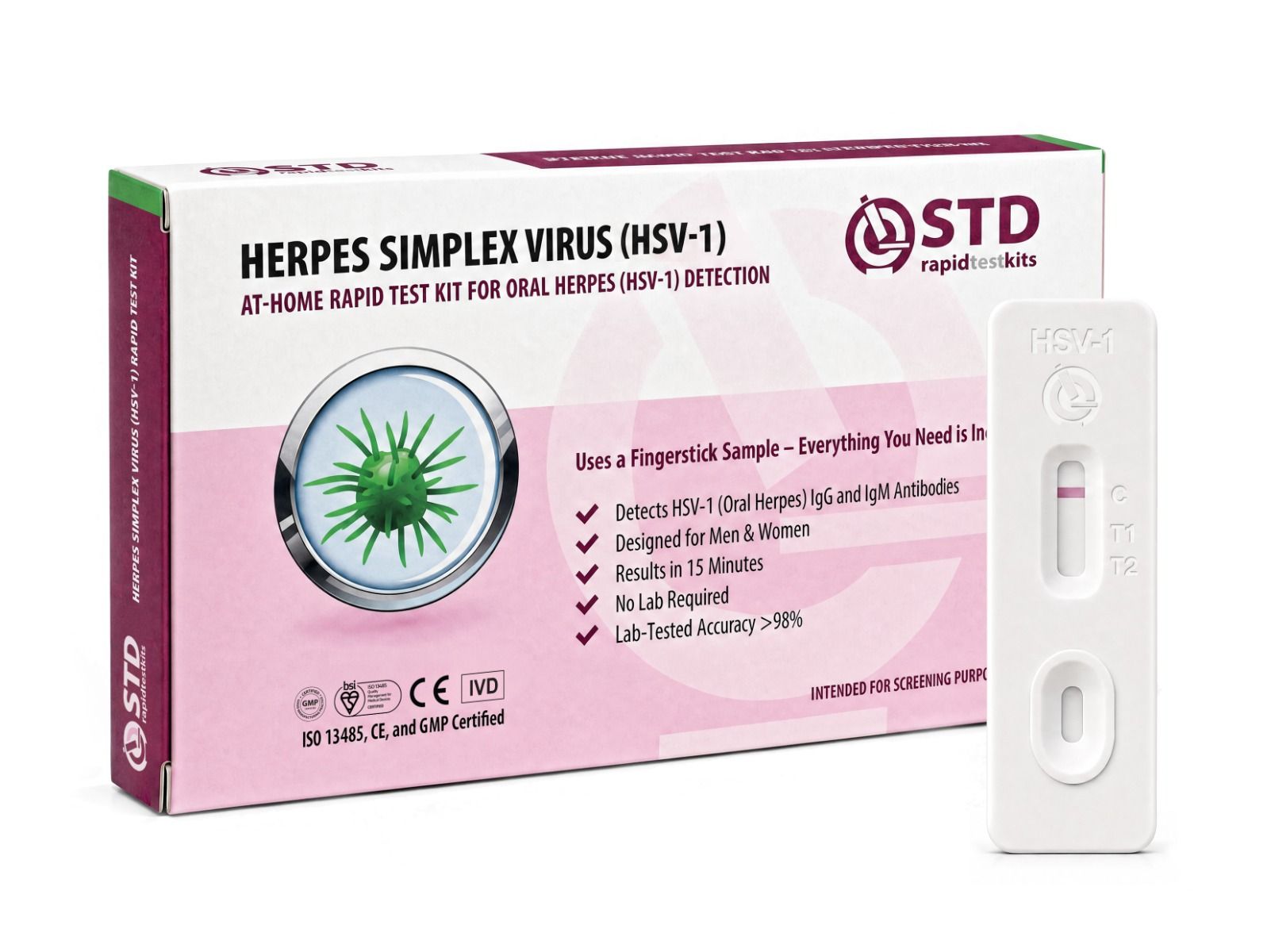
An at-home rapid HSV-1 test, including the one this site sells, is a fingerstick blood antibody test, not a swab of the lesion. It tells you whether your immune system has produced antibodies to HSV-1, meaning you have been exposed to the virus at some point. It does not test the active sore on your lip, and it does not produce a useful result during the prodrome stage of an outbreak.
What that means in practice:
- If your only goal is to confirm "is this thing on my lip a cold sore?": a clinician's visual exam, or a swab-PCR done at a clinic during the active outbreak, is the right tool. We do not sell a lesion swab kit for oral herpes.
- If your goal is "have I been exposed to HSV-1?": the at-home blood antibody test is appropriate, with one important caveat. Antibodies take time to develop after a first infection. Test at least 12 weeks after a suspected exposure for a reliable result. Earlier than that, a negative result might just mean your body has not seroconverted yet.
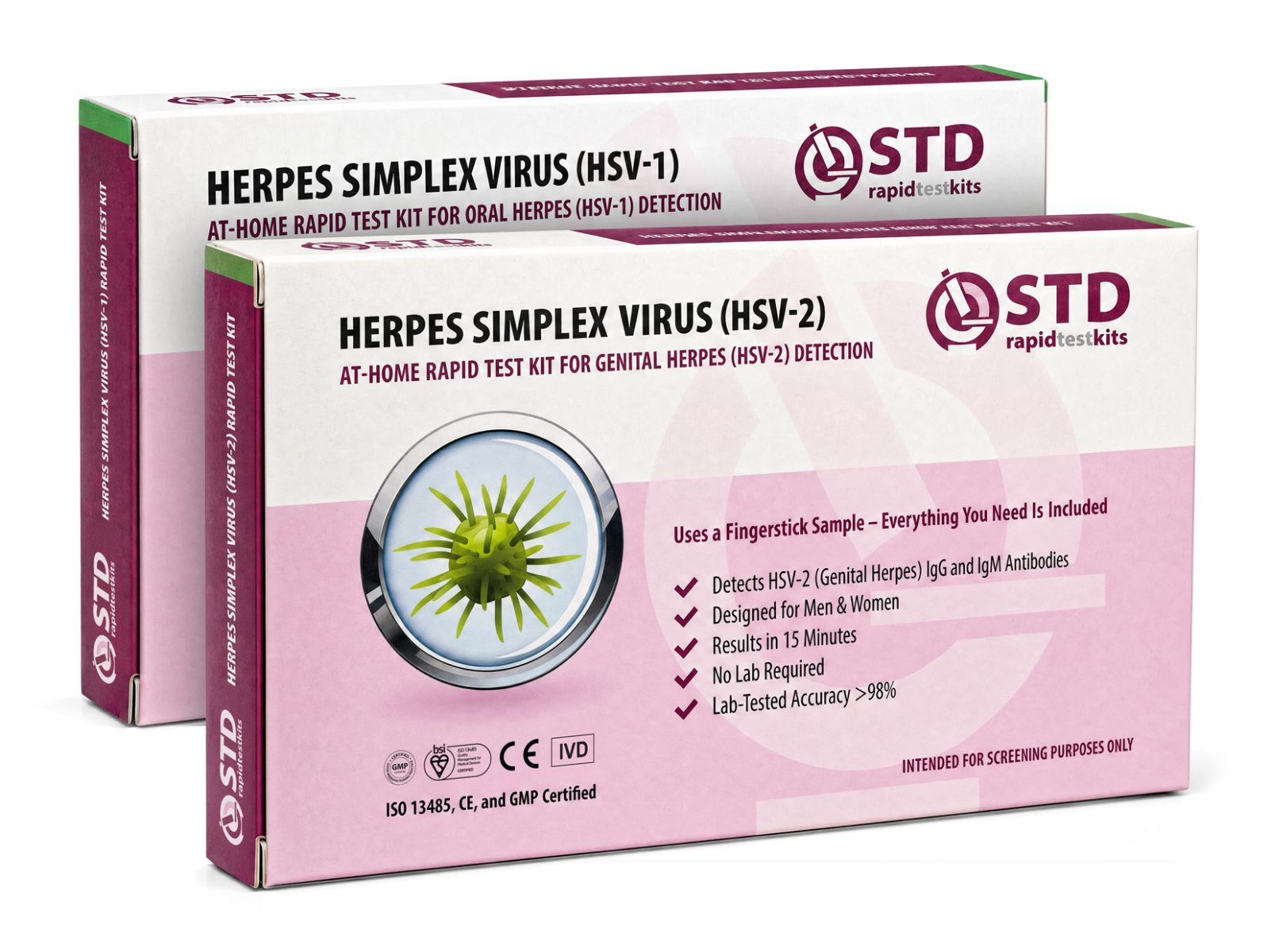
- If this is your first cold sore in your life and you also want to know whether you carry HSV-2 (the virus more commonly responsible for genital herpes): a combined HSV-1 plus HSV-2 blood antibody test gives you both numbers in one kit.
The lateral-flow chemistry in our home test is designed for screening, so a positive result is worth confirming with a clinician for treatment planning, especially if you are pregnant or trying to conceive.
The Honest Cold-Sore Game Plan
If you take one practical thing from this guide, take this: Vaseline is comfort, antivirals are treatment, and avoidance during the active phase is what protects the people you care about. Pick the tool that matches the stage you are in, and resist the urge to layer in unproven remedies that mostly damage healthy skin.
If this is your first outbreak, or if you are unsure whether what you have is a cold sore at all, a clinician visit is worth the time. If you want to confirm whether HSV-1 has been with you long-term, and whether HSV-2 is in the picture as well, a home blood antibody test gives you private answers without a clinic visit.
For the next outbreak, keep three things in your bathroom drawer:
- An OTC docosanol product, or a prescription antiviral pill if your clinician has set you up with on-demand dosing.
- A dedicated small tube of petroleum jelly used only on the cold sore, never the family jar.
- A daily SPF 30 lip balm, used year-round.
FAQs
- Does Vaseline kill the herpes virus?
- It does not. Petroleum jelly is a mineral-based occlusive with no antiviral chemistry, which means it cannot kill HSV-1, slow viral replication, or prevent viral shedding. Killing or suppressing the virus is the job of antivirals: docosanol over-the-counter, or acyclovir, valacyclovir, and famciclovir by prescription.
- Can I use Vaseline at the same time as Abreva?
- Yes, and layering them is the recommended approach. Apply Abreva (docosanol) first and let it fully absorb. Then add a thin layer of Vaseline on top to keep the scab from cracking and to reduce friction. Wash your hands before and after each application.
- Should I keep a cold sore moist or dry?
- Moist, but not wet. A scab that dries out completely tends to crack open, restart the bleeding, and extend the outbreak. A scab that stays sopping wet can trap bacteria. The middle is best: a thin layer of petroleum jelly during the crust stage, applied two to three times a day.
- Can I kiss someone if I cover my cold sore with Vaseline?
- No. Vaseline does not block viral particles and does not neutralize HSV-1. The cold sore stays contagious until it has fully scabbed, dried, and the scab has come off naturally. Kissing, oral sex, sharing utensils, and sharing lip balm should all be paused during an active outbreak.
- How long does a cold sore take to heal?
- Without antiviral treatment, most cold sores resolve in 7 to 14 days, regardless of whether you use Vaseline. Antivirals started at the very first tingle can shorten that window by one to two days with OTC docosanol, and meaningfully more with a prescription oral antiviral. Picking the scab can extend healing by several days.
- Why do I keep getting cold sores in the same spot?
- HSV-1 lives permanently in a specific part of your trigeminal nerve cluster. When the virus reactivates, it travels back down the same nerve fibers it used the first time and replicates in the same patch of skin. That is why outbreaks tend to recur on or near the same area of the lip every time.
- Is a cold sore the same thing as genital herpes?
- Both are herpes simplex, but two different types. HSV-1 typically causes cold sores on the lips, although it can also cause genital herpes through oral-to-genital contact. HSV-2 typically causes genital herpes and is rarely the cause of oral lesions. A blood antibody test can tell you which type or types you carry.
- Should I get tested if this is my first cold sore?
- It is reasonable, especially if you want to confirm the diagnosis or check whether HSV-2 is also present. For an active first lesion, a clinician swab-PCR done at a clinic gives the fastest definitive answer. For longer-term clarity about HSV-1 and HSV-2 antibody status, a home fingerstick blood test taken at least 12 weeks after suspected exposure is appropriate.
- Mayo Clinic. Cold sore symptoms, causes, and stages of an HSV-1 outbreak.
- Mayo Clinic. Cold sore diagnosis and treatment, including OTC and prescription antiviral options.
- American Academy of Dermatology. Cold sores: diagnosis and treatment, including the role of docosanol and prescription antivirals.
- U.K. National Health Service. Cold sores overview, including the 10-day healing guidance for when to see a GP.
- World Health Organization. Herpes simplex virus fact sheet, including HSV-1 global prevalence estimates.
- U.S. Centers for Disease Control and Prevention. Genital herpes overview page covering HSV-1 oral-to-genital transmission and asymptomatic viral shedding.
