Published: October 2025 | Last updated: May 2026 | Editorial review and quality control: Martina N.
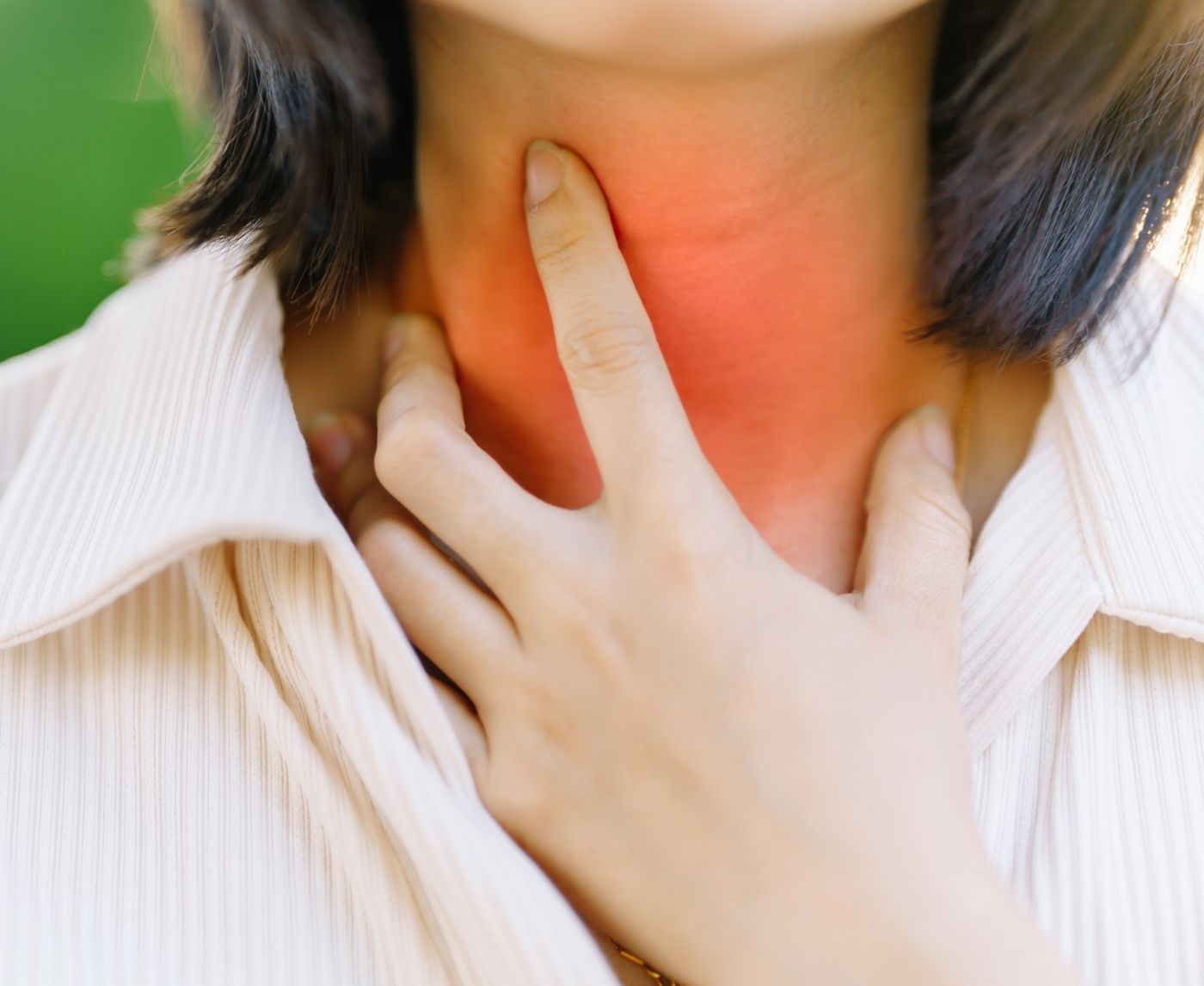
A scratchy throat after a recent hookup can spiral into hours of search-bar panic. The connection feels intuitive: oral sex, throat, sexually transmitted infection. So the brain jumps to HPV. The honest answer is that the timing almost never works out. Oral HPV behaves differently from a cold-style sore throat, and the kind of sore throat that shows up two days after oral sex is rarely an HPV story at all.
This article walks through what oral HPV does in the throat, how to read the difference between irritation that resolves on its own and a symptom worth a clinic visit, and which other infections from the same exposure event are far more likely to be behind a fresh sore throat. The goal is not to dismiss the worry. It is to put the worry next to the actual biology.
Key Takeaways
- Most oral HPV infections cause no throat symptoms at all and clear within one to two years. A sore throat that started two days after oral sex is far more likely irritation, a common virus, or another bacterial infection than HPV.
- Duration matters more than intensity. A mild throat sensation that persists three weeks or longer warrants a clinician check; a painful sore throat that fades within a week is following the normal viral pattern.
Why This Feels Like an HPV Question Even When It Probably Is Not
Most sore throats are unremarkable. They come from seasonal viruses, dry air, allergies, post-nasal drip, or even sleeping with the mouth open during a cold spell. They show up fast, feel rough for a few days, and clear without much help.
HPV in the throat, what clinicians call oral or oropharyngeal HPV, works differently. The U.S. Centers for Disease Control and Prevention notes that most people with HPV never develop symptoms or health problems from it, and most infections clear without ever being noticed. When oral HPV does produce symptoms, the pattern tends to be subtle and persistent rather than sudden and painful. That mismatch is what makes the topic confusing: people expect sexually transmitted infections to feel obvious, and oral HPV refuses to follow that script.
A sore throat that announces itself dramatically and then fades within a week is, almost by definition, not oral HPV. It is the throat doing its usual thing in response to one of the dozens of more ordinary triggers that can irritate it.
HPV infection in the throat is usually silent and slow. A typical sore throat is loud and brief. When the two are confused, it is almost always because the brain reaches for the most threatening explanation, not the most likely one. The shape of the symptom matters more than the timing of the encounter that triggered the worry.
What Oral HPV Actually Looks Like
When oral HPV does produce visible or felt changes, the pattern is consistent across clinical references. There may be a persistent rough patch in the throat, a small wart-like growth on the soft palate or base of the tongue, one-sided tonsil swelling, or a sensation that something is stuck on swallowing. Pain, if present, is usually mild and dull, not the sharp burning of a viral pharyngitis or strep throat. None of these are diagnostic on their own.
The image gallery below shows the visual difference between a healthy throat, the most common cause of a sudden sore throat (viral pharyngitis), classic strep throat, and a persistent oropharyngeal lesion of the kind a clinician would investigate further. These are reference images. Self-diagnosis from photos is not reliable, and the most important signal in your own throat is not appearance, it is duration.
The Timing Problem: HPV Does Not Show Up Two Days Later
One of the most common anxiety patterns around this topic is trying to draw a straight line from a specific sexual encounter to a specific sore throat that started a few days later. The biology does not support that line.
The CDC's genital HPV fact sheet describes the typical course: most infections clear on their own without symptoms, and when changes do persist, they typically develop over months or years rather than days. The table below covers the actual short list of causes that produce throat symptoms within days of an exposure event. Almost every entry either resolves on its own within a week or has a treatment path that has nothing to do with HPV.
| Cause | How it feels | Typical timeline |
|---|---|---|
| Viral pharyngitis (cold or flu virus) | Scratchy, sometimes painful, often with congestion or low fever | 3 to 7 days, peaks day 2 to 3 |
| Allergies or post-nasal drip | Itchy or irritated, worse on waking | Days to weeks, tracks pollen or trigger exposure |
| Acid reflux | Burning or a lump sensation, worse lying down | Ongoing, fluctuates with diet and posture |
| Dry air or dehydration | Tight, scratchy, no other symptoms | Hours to days, improves with fluids and humidity |
| Friction or trauma from oral sex | Mild local soreness, no systemic symptoms | 1 to 3 days, then resolves |
| Streptococcal pharyngitis | Sudden severe pain, white tonsillar patches, fever, no cough | Worsens over 1 to 3 days, needs antibiotics |
When a Throat Symptom Stops Being Routine
The single most useful question to ask is not how intense the discomfort is. It is how long it has been there. CDC guidance on HPV-related oropharyngeal disease is consistent on this point: persistent changes are the pattern that warrants medical evaluation, not transient irritation. A throat that hurts hard for four days and then quietly resolves is following the normal viral pattern, regardless of what happened sexually the week before. A throat that stays mildly off for three weeks is the one a clinician wants to see.
Book an appointment if any of the following persists for three weeks or longer: a sore throat that does not improve, persistent pain on swallowing, one-sided ear pain or throat pain, a noticeable lump in the neck, hoarseness or voice changes, or unexplained weight loss. These are not HPV-specific. They are the general red flags for any persistent oropharyngeal concern that deserves a clinician's eyes on it.
Other STIs That Can Cause Throat Symptoms (and Behave Differently from HPV)
If the worry is genuinely about a sexually transmitted cause for a fresh throat symptom, HPV is one of the least likely candidates. Other STIs are far more capable of producing throat symptoms quickly after oral exposure. The table below summarizes how each presents and how the timing distinguishes them. This is why clinicians focus on when symptoms started before assuming a cause: a sore throat four days after an oral-sex encounter is much more compatible with primary HIV seroconversion (if other systemic symptoms are present) or pharyngeal gonorrhea than with HPV. None of those need to be the conclusion either, but they reframe what testing can answer.
| Infection | Throat symptoms | Typical onset |
|---|---|---|
| Pharyngeal gonorrhea | Often no symptoms; sometimes mild sore throat with redness | Within days to a week of exposure |
| Pharyngeal chlamydia | Usually no throat symptoms, occasionally mild discomfort | 1 to 3 weeks if symptomatic |
| HSV-1 (oral herpes) | Painful clustered ulcers in the mouth or throat, often with fever during a first outbreak | 2 to 12 days |
| Primary HIV (acute retroviral syndrome) | Sore throat as part of a flu-like illness with fever, swollen lymph nodes, rash | 2 to 4 weeks after exposure |
| Oral HPV | Usually no symptoms; rarely a persistent painless lesion | Months to years if it presents at all |
What Testing Can and Cannot Answer Here
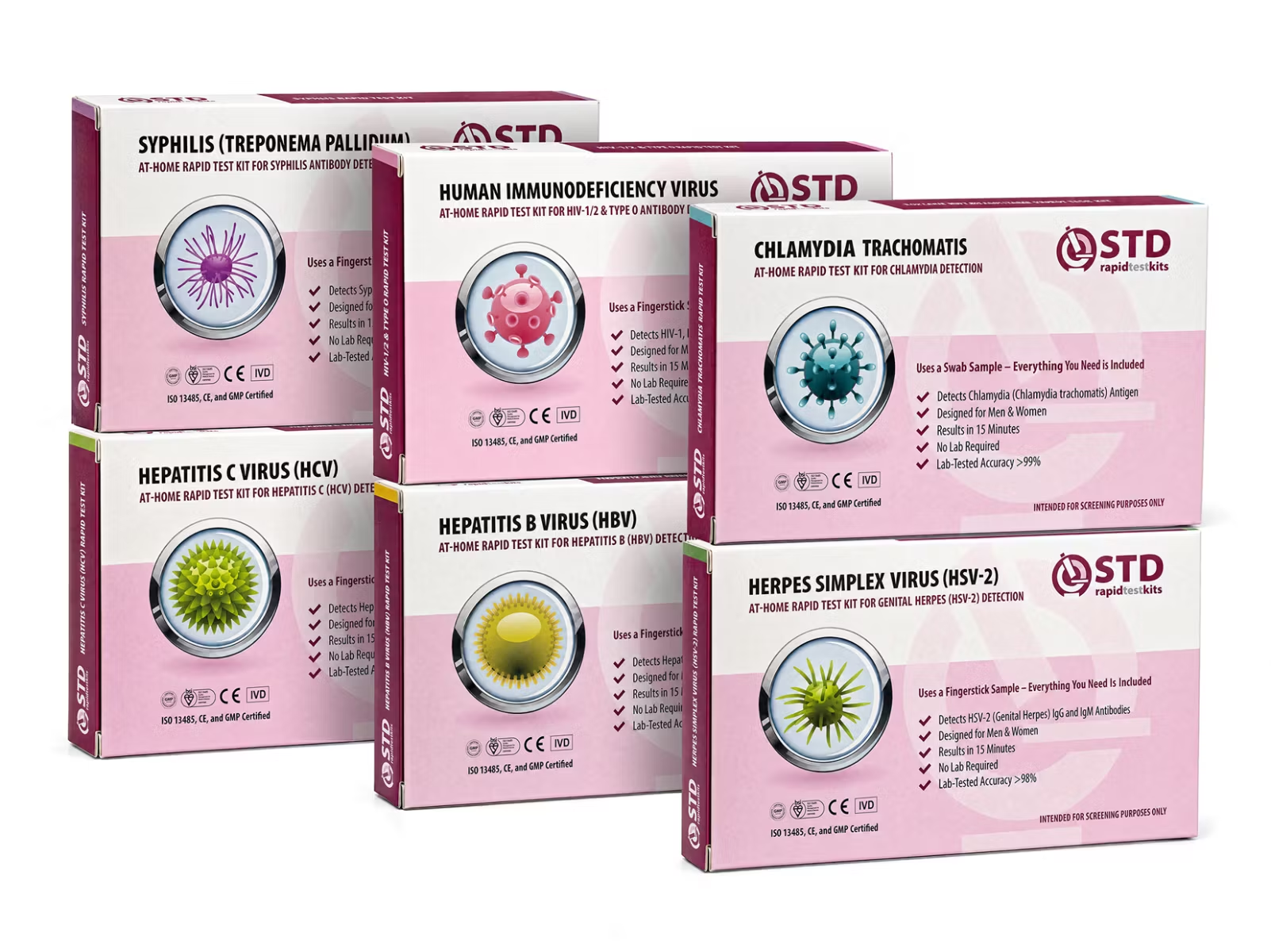
Here is the honest version that many search results gloss over. There is no validated at-home test for oral HPV at any retailer, including this one. This site sells rapid lateral-flow at-home STI tests, and this section explains honestly what those panels cover and where they fall short. Diagnosis of oropharyngeal HPV requires direct visual inspection by a clinician and, if anything looks abnormal, a biopsy of the affected tissue. No swab, blood test, or rapid panel sold for home use can tell anyone whether they have oral HPV right now.
What home testing can do is rule out the other STIs that may have come from the same exposure event. Home rapid panels for gonorrhea and chlamydia use a genital sample, not a throat swab, so they screen for genital infection rather than pharyngeal infection. Blood-based panels for HIV, syphilis, and hepatitis detect systemic infection that started anywhere, including from oral exposure. For the throat itself, a clinician swab is the only reliable check; for the bloodborne and genital risks from the same exposure event, a home panel is a reasonable first step.

HPV and Throat Cancer: Real, But Slow
The thought sitting in the back of every search like this one is cancer. It is worth treating directly rather than dancing around. The CDC reports that HPV is thought to cause 60 to 70 percent of oropharyngeal cancers in the United States, with high-risk types driving the majority of cases. That association is real and the public-health concern is genuine.
The timeline matters, though. HPV-related oropharyngeal cancer does not develop in days, weeks, or even months after exposure. The biology is slow. Persistent infection with a high-risk type may, over many years, lead to cellular changes that eventually become cancerous in a small subset of cases. A sore throat that started last week is not how this presents. The early signs of oropharyngeal cancer are persistent throat or ear pain lasting weeks, a painless lump in the neck, unexplained voice changes, or trouble swallowing that does not improve. These warrant a clinic visit.
Most HPV infections cause no symptoms and go away on their own within one to two years. Some types, however, can cause cancers of the cervix, vagina, vulva, penis, anus, and back of the throat.
Vaccination and Long-Term Risk Reduction
HPV vaccination is one of the only durable interventions for the underlying risk a reader is trying to control. Per Advisory Committee on Immunization Practices guidance, routine HPV vaccination is recommended through age 26, with shared clinical decision-making available through age 45 for adults not previously vaccinated. The vaccine targets the high-risk HPV types most associated with anogenital and oropharyngeal cancers.
Lifestyle factors stack on top. The combination of persistent high-risk HPV with tobacco or heavy alcohol substantially increases oropharyngeal cancer risk over decades. Neither vaccination nor reducing tobacco and alcohol changes anything about a throat sensation right now, but both shape the underlying long-term risk that the worry in this search is ultimately about.
HPV vaccination ages at a glance
- Routine HPV vaccination is recommended through age 26.
- Available through age 45 via shared clinical decision-making with a provider.
What To Do This Week
A useful sequence when a throat symptom is making someone anxious about a recent encounter:
- Day 1 to 3: Hydrate, rest, and let the body do what it usually does. Most throat irritation resolves on its own in this window.
- Day 4 to 10: If a sore throat is severe, has fever, or has visible white tonsillar patches, see a clinician for a strep test. That pattern is bacterial, not HPV.
- Week 2: If general throat discomfort persists with no improvement, this is the right time to consider a home STI panel for the other infections that may have come from the same exposure event (gonorrhea and chlamydia genitally, HIV and syphilis through blood), and to book a clinician check if a throat exam is wanted.
- Week 3 and beyond: If anything about the throat still feels off, book an ENT or primary-care appointment. This is the threshold where persistent symptoms genuinely matter, regardless of the cause.
How to Read Your Own Throat
The pattern that matters is not what a throat looks like once, but what it does over time:
- Symmetry. A throat that feels equally sore on both sides usually has a viral or systemic cause. A throat that hurts only on one side, or where one tonsil clearly looks different from the other for more than two weeks, is the unusual pattern that deserves a closer look.
- Trajectory. Is it getting better, staying the same, or slowly worsening? Improvement at any rate is reassuring. A flat or slowly worsening trajectory across three weeks is the signal worth acting on.
- Companion symptoms. A lump in the neck, voice change, ear pain on the same side as the throat pain, or unexplained weight loss alongside a persistent sore throat shifts the picture from routine irritation toward something worth a focused exam, regardless of whether HPV is the suspected cause.
Frequently Asked Questions
- Could a sore throat that started two days after oral sex really be HPV?
- Almost certainly not. HPV does not produce acute throat symptoms days after exposure. It either causes nothing at all (which is the most common outcome) or, in a small subset of cases, produces slow persistent changes that develop over months. A throat symptom that started two days after a hookup is much more compatible with irritation, a common virus, or another bacterial infection.
- What does oral HPV actually feel like when it does cause symptoms?
- Most people with oral HPV feel nothing. When symptoms do appear they tend to be subtle and persistent: a rough patch, a feeling that something is stuck on swallowing, a small painless lump or growth, or a one-sided tonsil change. The hallmark is duration. Anything that resolves within a week is following a different pattern.
- When should a sore throat warrant a clinic visit?
- When it does not improve. The CDC and other public-health bodies converge on the same threshold: a throat symptom that persists for three weeks or longer warrants a clinician check. Persistent one-sided pain, a neck lump, voice changes, or pain that does not improve on standard care also warrant earlier evaluation.
- Is there an at-home test for oral HPV?
- No. There is no validated at-home test for oropharyngeal HPV at any retailer, including ours. Diagnosis requires direct examination by a clinician and, if anything looks abnormal, a biopsy. Home STI panels can rule out other infections from the same exposure event, but they cannot answer the oral HPV question.
- After an oral-sex encounter with a new partner, what is reasonable to test for at home?
- A reasonable at-home panel covers HIV, syphilis, hepatitis B and C through blood testing, plus a swab-based genital test for gonorrhea and chlamydia if there was also genital contact. Pharyngeal gonorrhea and chlamydia specifically need a clinic-administered throat swab, not a home kit. The home panel handles the systemic and genital risks; a clinic handles the throat itself.
- Does the HPV vaccine still help adults?
- Yes, with caveats. Per ACIP guidance, routine HPV vaccination is recommended through age 26 and available through age 45 via shared clinical decision-making with a provider. It is most effective before exposure, but it can still protect against high-risk HPV types not previously encountered. Discuss timing with a clinician.
- How common is oral HPV in the general adult population?
- CDC surveillance shows oral HPV is present in a meaningful share of the adult population, with most infections clearing within one to two years without symptoms. Persistent infection with a high-risk type is far less common, and progression to oropharyngeal cancer is rarer still.
- If a sore throat is rarely HPV, why does the internet make it feel like it is?
- Search results overweight worst-case framings because anxiety drives clicks. The base rates do not match the visibility. A realistic ranking of causes for a sudden sore throat after oral sex is, in order, viral irritation, friction, allergies, another bacterial infection, another STI such as pharyngeal gonorrhea, and only at the bottom of the list, HPV. Most search engines invert that ranking.
How we sourced this article: We drew on current public-health guidance from the U.S. Centers for Disease Control and Prevention, the National Cancer Institute, and MedlinePlus on oral HPV, oropharyngeal cancer, sore-throat differential diagnosis, and HPV vaccination ages. Where home-testing claims are made, we are explicit about what at-home rapid panels can and cannot detect: we sell rapid lateral-flow STI tests and do not sell an oral HPV test, so the article names that limit rather than substituting other products as if they were equivalent.
- U.S. Centers for Disease Control and Prevention. HPV and oropharyngeal cancer overview, including the share of oropharyngeal cancers attributable to HPV.
- U.S. Centers for Disease Control and Prevention. Genital HPV infection fact sheet covering natural history, clearance rates, and asymptomatic prevalence.
- U.S. National Library of Medicine, MedlinePlus. Human papillomavirus (HPV) overview, including symptoms, transmission routes, and progression to cancer.
- U.S. National Cancer Institute. HPV and cancer fact sheet, covering high-risk HPV types and oropharyngeal cancer.
- U.S. Centers for Disease Control and Prevention. HPV vaccination recommendations from the Advisory Committee on Immunization Practices.
- U.S. Centers for Disease Control and Prevention. STI treatment guidelines, including pharyngeal gonorrhea and chlamydia screening recommendations.
- U.S. National Library of Medicine, MedlinePlus. Sore throat causes, expected duration, and when to seek medical attention.
