
Published: July 2025 | Last updated: May 2026 | Editorial review and quality control: Martina N.
Trichomoniasis is the most common curable sexually transmitted infection in the United States, and it is also the one most people have never heard of. The U.S. Centers for Disease Control and Prevention estimates more than 2 million trichomoniasis infections in the U.S., and roughly 70% of infected people have no signs or symptoms. That silent portion of the picture is what makes trichomoniasis so persistent: it gets passed back and forth between partners, missed at routine STI panels that do not include it by default, and treated late, if at all.
If you have just tested positive, or you suspect you might be carrying trich, this guide walks through what an at-home treatment plan looks like in practice. The short version is that yes, you can do almost all of this from your living room. The prescription medication has to come from a licensed provider, though. Below we cover which medications work, why the CDC updated its guidelines for women in 2021, how to handle partner treatment, when to retest, and what to avoid even if a wellness site swears by it.
This article is published by stdrapidtestkits.com, which sells at-home rapid STI test kits. Product mentions reflect the test that fits the topic, not commercial preference.
Key Takeaways
- Trichomoniasis is curable with prescription metronidazole or tinidazole. No over-the-counter cream, oral supplement, or herbal remedy will clear the parasite.
- The 2021 CDC guidelines updated the recommended regimen for women to metronidazole 500 mg twice daily for 7 days; men still get the 2 g single dose. Treating partners at the same time is the single biggest factor preventing reinfection.
First, What Is Trichomoniasis, Really?
Trichomoniasis is caused by a single-celled protozoan parasite called Trichomonas vaginalis. It is not a bacterium, not a virus, and not a yeast, which is why standard yeast-infection creams, bacterial vaginosis antibiotics, and broad-spectrum oral antibiotics will not touch it. The parasite lives in the lower genital tract and is transmitted almost exclusively through sexual contact: penis-to-vagina, vagina-to-vagina, and shared sex toys that have not been disinfected between uses.
Symptoms, when they appear, look different in different anatomies:
- In people with vulvas: itching, burning, frothy yellow-green discharge, fishy odor, pain or burning during urination, and discomfort during sex.
- In people with penises: usually nothing, but occasionally itching inside the penis, mild urethral discharge, or a brief burning sensation after ejaculation or urination.
Here is the part that catches most people off guard. About 70% of infected people have no symptoms whatsoever, according to CDC data on trichomoniasis. Trich routinely spreads between partners who feel completely fine and would never think to test. Symptomatic or not, the infection still raises the risk of contracting HIV from an infected partner, contributes to pregnancy complications like preterm delivery and low birth weight, and feeds ongoing inflammation in the lower tract.

Testing at Home: What to Look For Before Treatment
The treatment side of trich is straightforward, but only if you genuinely have trich. The symptoms above overlap heavily with bacterial vaginosis, yeast infections, gonorrhea, chlamydia, and irritation from a new soap or laundry detergent. Treating yourself based on a guess wastes weeks and can mask the real cause.
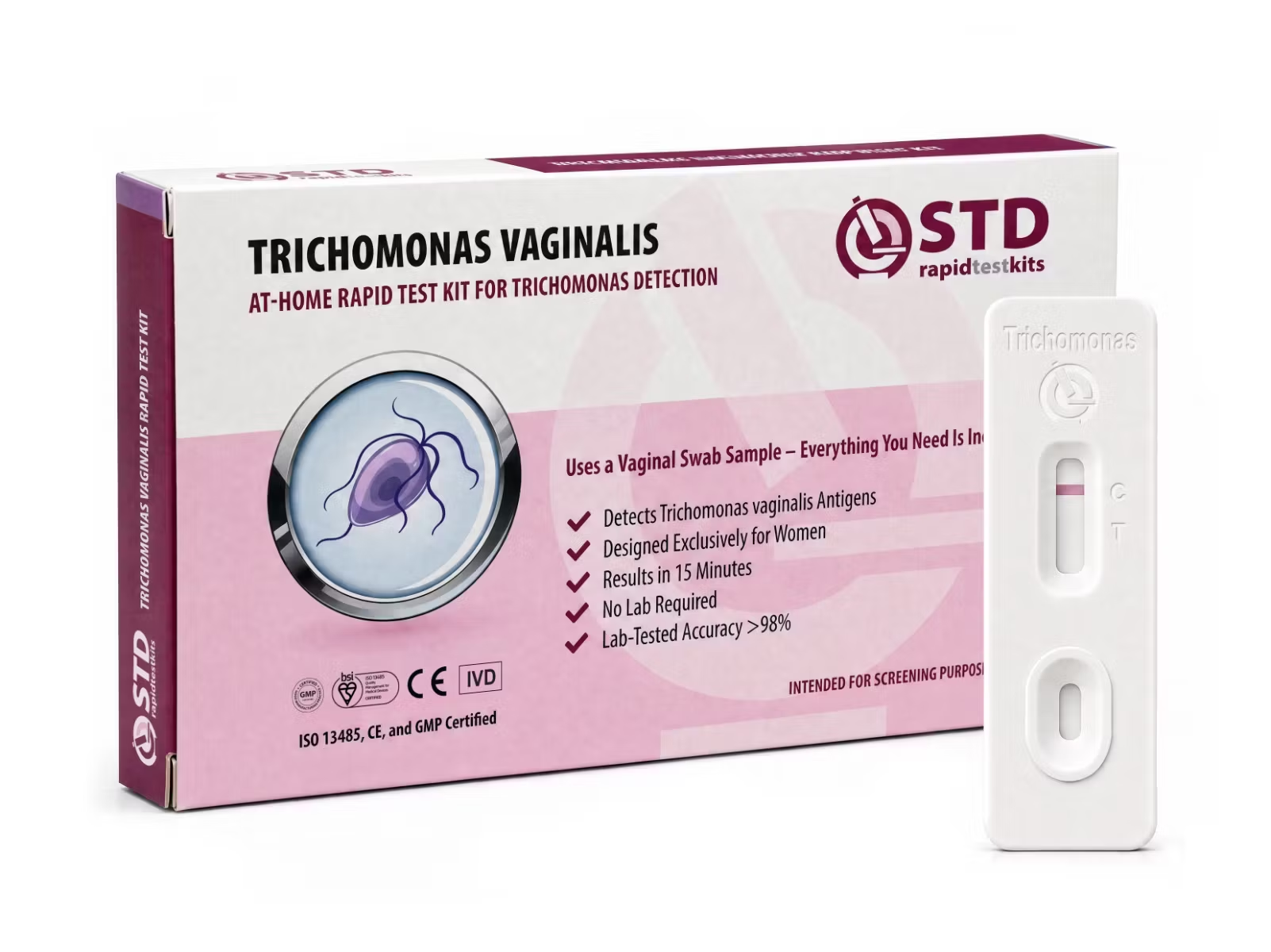
A reliable at-home rapid test can confirm the diagnosis in roughly 15 minutes using a self-collected vaginal swab. A few things worth checking in any at-home kit:
- The kit explicitly tests for trichomoniasis (some general STI panels skip it).
- Plain-English instructions and a clearly labeled positive and negative result window.
- A control line that confirms the test ran correctly.
- A reputable seller with published sensitivity and specificity figures, ideally validated against laboratory NAAT.
If the at-home test comes back positive, the next step is getting a prescription, which is where telehealth comes in.
Our at-home rapid trichomoniasis test is a lateral-flow swab kit validated for self-collected vaginal samples. It is not validated for the male urethra. If you have a penis and want a trich test, that currently requires a clinic visit and a urethral swab or urine NAAT. Many men with trich get diagnosed indirectly when a partner with a vulva tests positive and both partners are treated.
The Only Medication That Actually Cures Trich
Home remedies do not cure trichomoniasis. We have to be direct about that. Tea tree oil, apple cider vinegar douches, garlic suppositories, and vinegar baths might temporarily ease itching, but they do not kill Trichomonas vaginalis. In many cases they make things worse by disrupting the vaginal microbiome and increasing inflammation.
The only treatments with strong clinical evidence for curing trich are two FDA-approved prescription antibiotics in the nitroimidazole class:
- Metronidazole (brand name Flagyl). For women, the 2021 CDC STI Treatment Guidelines now recommend 500 mg orally twice daily for 7 days. For men, the recommended regimen is a single 2 g oral dose. The longer course for women replaced the old single-dose approach after a 2017 randomized trial found the 7-day regimen cleared the infection significantly more reliably.
- Tinidazole (brand name Tindamax). A single 2 g oral dose. It is an effective alternative for both men and women, and many people find the side-effect profile milder than metronidazole, particularly less nausea and metallic taste.
Both medications come as oral tablets. There is no topical or vaginal-only version that reliably cures the infection on its own. Intravaginal metronidazole gel reaches the lower tract but does not penetrate the urethra and adjacent glands well enough to clear the parasite, which is why monotherapy with the gel is explicitly discouraged.
Getting the prescription at home means one of three routes:
- A telehealth STI service that prescribes after reviewing your test result.
- Your primary-care provider via a virtual visit.
- A pharmacy-based clinical service in U.S. states where pharmacists can prescribe for confirmed STIs.
The prescription itself runs roughly $10 to $40 with insurance, or $15 to $50 cash-pay at most U.S. pharmacies. There are no over-the-counter equivalents. The CDC strongly discourages self-medicating with leftover antibiotics or anything sold as a trich cure outside the two regimens above.
What is the right at-home treatment for trichomoniasis?
Take prescription metronidazole or tinidazole, as directed by a licensed provider. For women, the CDC currently recommends metronidazole 500 mg orally twice daily for 7 days. For men, a single 2 g oral dose. Skip alcohol during treatment and for at least 24 to 72 hours after. Make sure any sexual partners are treated at the same time, abstain from sex for at least 7 days after finishing meds, and retest approximately 3 months later to confirm the infection cleared.
Partner Treatment Is Not Optional
This is the part many people want to skip, and it is the single most common reason a successfully treated trich infection comes back a month later. Even if your partner has no symptoms (statistically likely), they can carry the parasite and re-transmit it the moment you have sex again. Treating yourself without treating partners is closer to pausing the infection than curing it.
Practical ways to handle partner care without a clinic visit for them:
- Share your result and offer a kit or referral. A vulva-having partner can use the same at-home rapid test. A penis-having partner needs a clinic test, or in many U.S. states they can simply be treated empirically based on your positive result.
- Ask your provider about Expedited Partner Therapy (EPT). The CDC trichomoniasis treatment guidelines note that EPT "might have a role in partner management for trichomoniasis and can be used in states where permissible by law," letting providers write a prescription for your partner without seeing them.
- Use a telehealth STI platform. Most modern telehealth STI services have a partner-prescription workflow built in.
- Hold off on sex (even with condoms) until both of you have finished the full course. Condoms reduce transmission, they do not eliminate it.
One more honest framing: this is not just fairness, it is protecting your own treatment, since reinfection within three months tends to track directly with whether partners were treated.
1. Share a kit or a referral. A partner with a vulva can use the same at-home rapid trichomoniasis test. A partner with a penis needs a clinic visit (urethral swab or urine NAAT), or empiric treatment based on your positive result.
2. Ask about Expedited Partner Therapy. In states where EPT is permitted, your provider can prescribe for your partner without seeing them in person.
3. Use a telehealth STI platform. Most modern services have a partner-prescription workflow built in.
Sex After Trich: When Is It Safe?
You finished the antibiotics, the symptoms are gone, you feel like yourself again. When is it safe to have sex again?
The CDC recommendation is to wait at least 7 days after the last dose of the antibiotic before resuming sex, even with a steady partner who is being treated alongside you. There are two reasons. First, the parasite needs that window to fully clear; the medication kills active organisms within days, but residual shedding can continue briefly. Second, your partner needs that same window to clear their own dose if they took the single 2 g treatment. Resuming sex too early is the surest way to bounce the infection back and forth.
Other useful guardrails for the post-treatment window:
- Confirm both partners completed the full course and are symptom-free.
- Schedule a retest if your symptoms were severe, you have had trich before, or you are not 100% confident your partner finished their meds.
- If you use sex toys, clean them with soap and warm water (or follow the manufacturer's instructions for non-porous materials) before reusing. Trich can survive briefly on moist surfaces.
Wait at least 7 full days after your last antibiotic dose before resuming sex, and only resume after every recent partner has also completed treatment. Skipping either side of that rule is the most common cause of immediate reinfection.
Home Remedies: What Helps, What Backfires
Some people want to explore natural support before reaching for antibiotics. That impulse is understandable. With trich, though, the parasite has zero meaningful response to anything sold in a wellness aisle. Nature can support recovery alongside antibiotics. It does not replace them.
Useful supportive habits during and after treatment:
- Probiotics (oral or vaginal): may help rebalance the vaginal microbiome after a course of antibiotics. Look for strains with documented urogenital data, such as Lactobacillus crispatus and Lactobacillus rhamnosus.
- Hydration: easier urination, less burning, fewer urinary side effects from the medication.
- Breathable cotton underwear and loose clothing: reduces irritation while inflammation settles.
- Plain unsweetened yogurt as a food (not as a vaginal insert): supportive for gut and vaginal flora during antibiotics.
What to avoid even though the internet suggests it:
- Inserting garlic, tea tree oil, vinegar, or yogurt into the vagina or urethra. These disrupt the microbiome and can cause chemical irritation severe enough to mimic a worsening infection.
- Douching of any kind, scented wipes, or fragranced washes.
- Stopping the antibiotic course early because you feel better. The parasite can persist after symptoms clear.
- Cranberry juice, cranberry capsules, or apple cider vinegar drinks as a cure. Useful for some urinary-tract issues, useless against Trichomonas.

Follow-Up Testing: The Step Most People Skip
You took the antibiotics, your symptoms cleared, you feel fine. Do you still need to retest? In most cases, yes.
Per CDC trichomoniasis treatment guidance, retesting for T. vaginalis is recommended for all sexually active women approximately 3 months after initial treatment, because of the high reinfection rate even in correctly treated cases. If the 3-month window is not practical, the CDC suggests retesting whenever you next seek medical care within 12 months of treatment.
Situations where the retest is especially important:
- Your symptoms lasted more than a week before you started treatment.
- You had multiple sexual partners during the exposure window.
- Your partner was not tested or did not finish their full course.
- You took the older 2 g single-dose regimen as a woman (the regimen the CDC moved away from in 2021).
- You are pregnant, immunocompromised, or living with HIV, since these groups have higher rates of persistent infection.
A repeat rapid swab at home is a low-friction way to handle the retest. If it comes back positive again, that does not necessarily mean treatment failed in the clinical sense. Far more often it means a reinfection from an untreated partner. Either way, a second treatment course is the answer; in genuine resistant cases, your provider can order a longer high-dose regimen.
Set a calendar reminder for roughly 12 weeks after your last antibiotic dose. The CDC's 3-month retest window is long enough to catch a true reinfection from an untreated partner, but short enough to catch persistent infection before symptoms return. Putting it on the calendar the day you start treatment is the single best way to make it happen.
Side Effects, Alcohol, and What to Do When Treatment Fails
Most people tolerate metronidazole and tinidazole well. A few side effects show up often enough to be worth knowing about:
- Metallic taste in the mouth. Common with metronidazole, less so with tinidazole. Disappears after the course.
- Nausea, sometimes vomiting. Taking the dose with food helps.
- Mild headache, dizziness, or fatigue for a day or two after starting.
- Dark or red-brown urine. Harmless, caused by metronidazole metabolites.
- Yeast infection after a course of antibiotics, which is treatable with the usual over-the-counter antifungals.
Side effects that warrant a call to a provider: hives or other allergic skin reactions, tingling or numbness in hands or feet (rare but serious peripheral neuropathy), severe nausea that prevents you from keeping the dose down, or fever with a rash.
The alcohol issue is real
Combining alcohol with metronidazole or tinidazole can trigger a disulfiram-like reaction: flushing, nausea, vomiting, headache, racing heart. Not everyone gets hit equally hard, but the risk is high enough that the CDC, the NHS, and the medication labels themselves advise avoiding alcohol entirely during treatment and for at least 24 hours after the last metronidazole dose, or 72 hours after the last tinidazole dose. Skip the wine with dinner, skip the cocktail, and read the labels of cough syrups, mouthwashes, and topical sanitizers (which can contain enough alcohol to provoke a reaction in highly sensitive people).
When treatment fails
If your symptoms persist or your retest comes back positive, your provider will usually:
- Confirm that you and your partner both completed the full course.
- Switch you from the single-dose to the 7-day regimen if you started on the single dose.
- If the 7-day course also fails, prescribe a higher-dose regimen, typically tinidazole 2 g orally daily for 7 days.
- In confirmed resistant infections (uncommon but documented), order susceptibility testing through the CDC and consider intravaginal tinidazole or paromomycin under specialist supervision.
Nitroimidazole-resistant trichomoniasis is uncommon but clinically concerning, per the CDC treatment guidelines, because few alternatives to standard therapy exist. Most apparent treatment failures are reinfection from an untreated partner.
| Attribute | Metronidazole (Flagyl) | Tinidazole (Tindamax) |
|---|---|---|
| Standard regimen (women) | 500 mg twice daily for 7 days | 2 g single oral dose |
| Standard regimen (men) | 2 g single oral dose | 2 g single oral dose |
| Metallic taste | Common | Less common |
| Nausea | Moderate, helped by food | Generally milder |
| Alcohol avoidance window | During treatment + 24 hours after last dose | During treatment + 72 hours after last dose |
| Pregnancy use | Recommended; strongest safety data | Generally avoided in first trimester |
| Typical cash price (U.S.) | $15-$50 for full course | $25-$80 for full course |
What Happens If You Don't Treat It
Trichomoniasis is one of the curable STIs that people most often shrug off, because the symptoms are mild or absent and the consequences feel abstract. The data are not abstract.
- HIV risk. Untreated trich raises the risk of acquiring HIV from an infected partner. Per the CDC trichomoniasis information page, the inflammation it causes in genital tissue makes it easier to get HIV or to pass HIV to a sex partner. People living with HIV who have untreated trich are more likely to transmit HIV.
- Pregnancy complications. Trich during pregnancy raises the risk of preterm rupture of membranes, preterm birth, and low birth weight. Treatment during pregnancy is safe and is explicitly recommended.
- Pelvic inflammatory disease. Trich is associated with PID in women, though the link is less established than for chlamydia and gonorrhea.
- Cervical cell changes. Some research has linked persistent untreated trich with higher rates of cervical cell abnormalities, though the parasite is not directly oncogenic.
- Ongoing transmission. Because it is usually asymptomatic, untreated trich silently transmits to every new partner.
Trichomoniasis is considered the most common curable sexually transmitted infection. About 70% of people with the infection do not have any signs or symptoms.
Reinfection Prevention: Staying Cured
Once you have completed treatment and confirmed it worked, the goal shifts to staying clear. Per the CDC trichomoniasis information page, reinfection occurs in about 1 in 5 people within 3 months of treatment, almost all of it driven by reinfection from an untreated partner rather than by treatment failure.
The protective habits are not glamorous:
- Make sure every recent sexual partner is treated. This is the highest-yield intervention by a wide margin.
- Use condoms consistently with new or non-monogamous partners. Condoms cut trich transmission significantly, though not to zero.
- Clean shared sex toys between uses and between partners, especially for porous materials.
- Retest approximately 3 months after treatment, and again any time you change partners or have a new symptomatic episode.
- Get screened for other STIs alongside the retest. A positive trich exposure usually means there were other transmission opportunities in the same window. Chlamydia, gonorrhea, and syphilis are reasonable add-ons.
The Emotional Weight of an STI Diagnosis
Treating trichomoniasis at home is not just a logistics problem. For most people who land on a guide like this, the medical question is wrapped in a layer of shame, secrecy, anxiety about what to tell a partner, and worry that this somehow says something bad about them. None of that is true, but it matters to name it.
A pattern shows up over and over in the inbox at any sexual-health publication. Someone notices a smell or an itch, brushes it off, treats it as a yeast infection, gets more frustrated as the meds do not work, eventually orders an at-home test, gets a positive result, and quietly orders a prescription without telling anyone. The treatment works. A month later the symptoms come back, because the partner was never tested. The second round is harder than the first one would have been, because the awkward conversation that did not happen the first time now has to happen anyway.
Silence is not the safer choice. It just delays the same conversation. The disclosure can be short and matter-of-fact, and most partners receive it better than the worst version playing in your head.
"I tested positive for trich. It is treatable, the meds work, and you should get tested too. Until we both finish a full course, we should hold off on sex." Three sentences. No drama, no apology, just the practical information your partner needs to act on.
FAQs
- Can I really treat trichomoniasis entirely at home?
- Almost entirely. Confirm the diagnosis with an at-home rapid swab test, get the prescription through a telehealth provider, take the antibiotics, abstain from sex for the recommended window, and retest at home around 3 months later. The only step that is not technically at-home is the prescription, which requires a licensed provider.
- Is there an over-the-counter cure for trich?
- No. Trich requires prescription metronidazole or tinidazole. Over-the-counter yeast-infection creams, BV antibiotics, and herbal remedies will not cure the infection. Anything sold online as an OTC trich cure is not legitimate.
- Why did the CDC change the metronidazole dosing for women?
- The 2021 guidelines switched women from a one-time 2 g dose to a 7-day course because clinical trials found the shorter regimen missed the infection roughly 50% more often. Men still get the single dose because the cure-rate gap was not observed in male patients.
- What if my partner refuses to get tested or treated?
- Ask your provider about Expedited Partner Therapy (EPT), which lets them prescribe medication for your partner without an in-person visit in many U.S. states. If EPT is not available where you live and your partner still refuses, the practical options are to use condoms consistently, abstain until they reconsider, or step away from the relationship if their refusal puts your health at ongoing risk.
- How long after treatment until I can have sex again?
- At least 7 days after the last dose, and only after both you and your partner have completed the full course. The medication kills active organisms within days, but residual shedding and the partner's own clearance window mean earlier sex is the surest way to reinfect each other.
- Can trichomoniasis go away on its own?
- It can persist for months or even years without symptoms, but it does not reliably clear on its own. Untreated trich continues to transmit, raises HIV acquisition risk, and during pregnancy raises the risk of preterm birth. The cure is short, cheap, and worth taking.
- Is metronidazole safe during pregnancy?
- Yes. The CDC explicitly recommends treating trichomoniasis during pregnancy because the infection raises preterm-birth and low-birth-weight risk. Metronidazole has the strongest safety record in pregnancy. Tinidazole is generally avoided in the first trimester. Always coordinate with your prenatal provider on the regimen.
- Why do I have trich symptoms but a negative test?
- Trich symptoms overlap heavily with bacterial vaginosis, yeast infections, gonorrhea, and chlamydia. A negative trich test usually means something else is going on. A broader STI panel and a BV/yeast workup are reasonable next steps, ideally with a provider who can examine the discharge directly.
- U.S. Centers for Disease Control and Prevention. About Trichomoniasis, including U.S. prevalence, the approximately 70% asymptomatic figure, the about 1-in-5 reinfection rate within 3 months, and the HIV-transmission risk relationship.
- U.S. Centers for Disease Control and Prevention. 2021 STI Treatment Guidelines, trichomoniasis section (recommended regimens, retest timing, treatment failure protocol, EPT guidance, nitroimidazole resistance context).
- NHS. Trichomoniasis: symptoms, diagnosis, and treatment (UK public-health reference).
- World Health Organization. Fact sheet on sexually transmitted infections, including global trichomoniasis prevalence and treatment context.
- Mayo Clinic. Trichomoniasis diagnosis and treatment, including patient-friendly medication and side-effect detail.
