
Published: August 2025 | Last updated: May 2026 | Editorial review and quality control: Martina N.
You opened a test result. It said positive for chlamydia. Now you are staring at your phone or your bedroom ceiling, trying to figure out how to tell someone you care about, used to care about, or barely know. This article is the calm walk through that conversation.
You will get scripts that sound like you, timing guidance grounded in public-health advice, and a frame that keeps the talk about shared care instead of blame. None of this requires you to over-apologize, over-explain, or absorb shame that was never yours to begin with.
Chlamydia is treatable with a short course of antibiotics. It is also one of the most commonly diagnosed bacterial infections worldwide, which means more people have had this exact conversation than you think. The first one is usually the hardest, and the rest get easier as you build the words.
Key Takeaways
- Tell partners as soon as you can after a positive test, ideally before any further sexual contact. Calm, blame-free language works better than detective work.
- Chlamydia can sit silently for weeks or months, so figuring out who passed it to whom is usually impossible. Focus on testing, treating, and waiting seven days post-treatment before resuming sex.
Why Talking About It Matters More Than You Think
Chlamydia is consistently among the most commonly reported bacterial sexually transmitted infections in the United States, and the real count is understood to be higher because so many people never test at all (CDC, About Chlamydia).
The infection is silent in most people who carry it. The CDC notes that most chlamydia infections are asymptomatic, which is why so many cases go undiagnosed for long stretches (CDC, STI Treatment Guidelines: Chlamydia). A partner can pass it on without ever knowing they have it, and you can carry it for weeks or months without a single physical sign.
When you test positive, the result does not mean you did something wrong. It means you have information now. With information comes a choice: keep it to yourself, or share it with anyone who might be affected. Sharing it gives them the chance to test, treat, and stop the chain from moving further. The practical reason is straightforward. The emotional one is simpler: people you have been close to deserve the same heads-up you would want.
The CDC notes that most people with chlamydia have no symptoms at all, which is why routine screening matters more than waiting for something to feel off. A partner who feels fine is not proof of a negative status, and your own lack of symptoms before the positive test is not unusual.
The Blame Game Is a Dead End
After a positive result, the mind goes detective. Who gave it to whom? When? How? Those questions feel urgent, but they almost never resolve cleanly with chlamydia. The infection can sit in the body asymptomatically for months. A negative test from a partner four weeks ago does not prove they were uninfected, only that the swab they took that day did not detect the bacteria at that point. Tests have window periods, bodies have variability, and memory has gaps.
You could have been exposed before this partner ever existed. They could have been carrying it from a prior relationship. Or, yes, either of you could have had contact with someone else. Most of the time, certainty is not available. What is available is the next step: test, treat, retest, and have honest conversations about what comes after.
Open the talk from a place of collaboration. Something like, “I do not know how this happened, but I do know I care about us,” moves the energy out of cross-examination and into shared problem-solving. The table below shows the most common blame-coded thoughts that come up after a positive result, why they backfire, and language that lands better.
| Common Thought | Why It Backfires | Better Approach |
|---|---|---|
| “You gave this to me.” | It assumes facts you cannot verify and puts the other person on the defensive immediately. | “I am not sure where it came from, but I wanted you to know so we can both stay healthy.” |
| “You must have cheated.” | Ignores that chlamydia is often asymptomatic and can sit dormant for months. | “I am still wrapping my head around this, but I care about us and want to handle it openly.” |
| “This ruins everything.” | Centers shame instead of the practical next step. | “I know this is hard to hear. It was hard for me too. We can work through it.” |
Timing the Chlamydia Talk: Sooner Is Kinder
You do not have to send a text the second the test cassette shows two lines. Take some time first, an hour, an evening, whatever you need to get your own head straight. But waiting more than a few days starts to add real cost, both to your partner and to you. Untreated chlamydia in women can ascend to the uterus and fallopian tubes and cause pelvic inflammatory disease (a painful infection of the uterus and fallopian tubes that is a leading preventable cause of infertility), according to CDC clinical guidance (CDC). In men it can cause epididymitis (inflammation of the tube behind each testicle, with pain and swelling), which the CDC lists as a complication of untreated chlamydia in its STI treatment guidelines (CDC, STI Treatment Guidelines: Chlamydia). Earlier treatment lowers the chance of structural harm.
The CDC also gives a clear notification window. Patients should refer their sex partners from the prior 60 days for evaluation, testing, and treatment (CDC, STI Treatment Guidelines: Chlamydia). Sixty days is the rule of thumb. Stretch it longer if your last test was more than two months before this positive.
If immediate in-person conversation is not possible, that is fine. Text works, a phone call works, and anonymous notification through a public-health tool works too. The CDC's national prevention information network points patients to services like TellYourPartner.org for exactly this situation (CDC NPIN). The medium matters less than the message arriving. If you are dealing with safety concerns, an abusive ex, or someone whose number you no longer have, an anonymous tool is built exactly for that case.
CDC guidance is to notify any sex partners from the 60 days before your symptoms started or before your positive chlamydia result so they can be evaluated, tested, and treated. If your last clean test was longer ago than that, stretch the notification window back to that test.
Scripts That Actually Work (And Sound Like You)
Some people want a word-for-word script. Others need only a frame. The goal is the same in both cases: communicate the facts with calm, compassion, and clarity. You do not need to over-explain. You do not need to apologize for something you did not know. You do need to be honest.
Texting works well for partners you cannot reach in person quickly. A clean message looks like this:
“Hey. Wanted to let you know I tested positive for chlamydia. No idea when it started or from whom. I am getting treated this week. Hope you can get checked too.”
In person or on the phone, take a breath before starting. Something like this lands without drama:
“I got some test results back. It turns out I have chlamydia. I was honestly surprised, because I did not have symptoms. I am starting treatment, and I wanted to tell you so you can take care of yourself too.”
If you sense they may react defensively, name it first to deflate it:
“I do not know where this came from either. I just care about your health, and I thought you would want to know.”
The pattern in all three: you state what you know, you say you are getting treated, you invite them to do the same, you do not assign blame. Keep the talk pointed forward: test, treat, move on.
One more useful sentence to have ready, for the moment when you do not know what to say next: “I do not have all the answers. I just have the information, and I wanted you to have it too.”
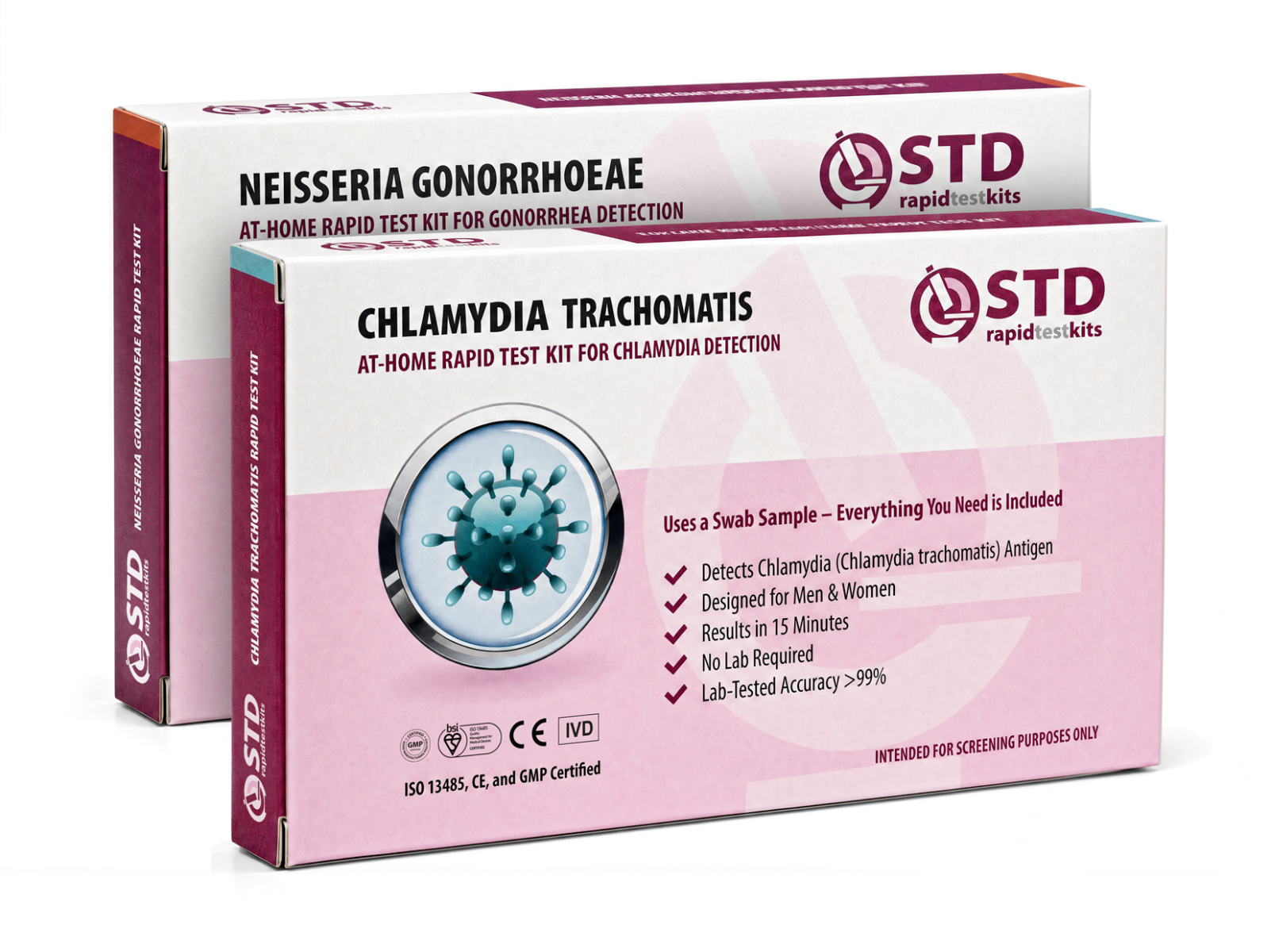
Editorial note: this site sells at-home rapid STI test kits, and relevant products are linked in the article where they may help. The guidance throughout is the same regardless of whether a reader buys anything.
What If You Are Not Exclusive or Not Together Anymore?
This is the part that feels grey. What do you owe to a one-night stand? A former partner? Someone you ghosted, or who ghosted you? The honest answer is the same as always: if there is a real chance they could be infected and not know, they deserve the heads-up.
For short-term partners, especially those you are no longer in contact with, anonymous notification is the cleanest path. You do not have to reopen an emotional door. Send the facts, let them decide. CDC partner-services guidance recognizes anonymous internet-based notification tools as one option for STI notification when direct contact is not possible (CDC, Internet Partner Services).
For an ex with whom you had a real connection, the conversation is harder, but the math is the same. Chlamydia can linger asymptomatically. If you test positive months after a relationship ended, your ex may still be carrying it. A kind, factual text is enough. You do not owe a reunion.
For poly or open relationships, you may need to tell more than one person. Several notifications reflect honest accounting of shared exposure within an open network. Many polycules normalize group testing schedules and shared notification practices for exactly this reason. Use anonymous tools to lighten the lift if direct conversations feel overwhelming.
Handling Their Reaction (Even If It Is Not What You Hoped)
Not everyone responds well. Some people get angry. Others freeze. A few go silent. Their reaction is not your job to manage. It is your job to share clear information and hold steady.
If your partner lashes out, do not get sucked into a defensive spiral. Stick to the facts. You tested positive, you are getting treated, you wanted them to have the same chance. Anything beyond that is theirs to process on their own time.
You might hear, “Are you saying I gave this to you?” or “So you think I cheated?” A calm, single-sentence response works better than a paragraph: “I am not making any accusations. I just wanted you to have the info.”
You are not there to argue. You are there to deliver information. A defensive reaction in the first hour does not predict the response a day later. Many people come back with a thank-you message after the first wave of fear lifts. The table below shows common reactions and grounded responses you can use.
| Their Reaction | What Is Likely Happening | How to Respond |
|---|---|---|
| “You are blaming me.” | They feel defensive or ashamed, even if you did not accuse them. | “I am not blaming anyone. I just want us both to be safe.” |
| “I have never had symptoms.” | They believe being symptom-free means they are not infected. | “Same here. Most chlamydia infections show no symptoms, which is exactly why I did not know either.” |
| Silence, no reply | They are shocked, scared, or unsure how to respond. | Follow up once a day later: “Just wanted to give you the heads-up. Hope you are okay.” |
| Anger or hostility | They are processing fear by externalizing it. | Step back. Use an anonymous tool, or ask a clinic partner-services worker to make the contact instead. |
Retesting, Reinfection, and the Truth About Getting It Again
This is where things get emotionally messy. You both treated, you got back together, you tested positive again weeks later. Did someone cheat? Did the medication fail? Did you give it to each other again?
Most of the time, the answer is the boring one: reinfection happens because the timeline did not line up. The CDC's STI treatment guidelines specifically advise that all sex partners should be evaluated, tested, and treated, and that patients should refrain from sexual intercourse for seven days after single-dose therapy or until completion of a multi-day regimen (CDC, STI Treatment Guidelines: Chlamydia). If either partner has unprotected sex during that window, or before the other partner has finished their own treatment, the bacteria can pass back and forth.
Reinfection is common enough that the CDC recommends retesting at three months after treatment for all chlamydia patients, regardless of whether you think your partners were treated (CDC). Repeat positives turn up at the three-month mark across many populations, often because of timing rather than trust.
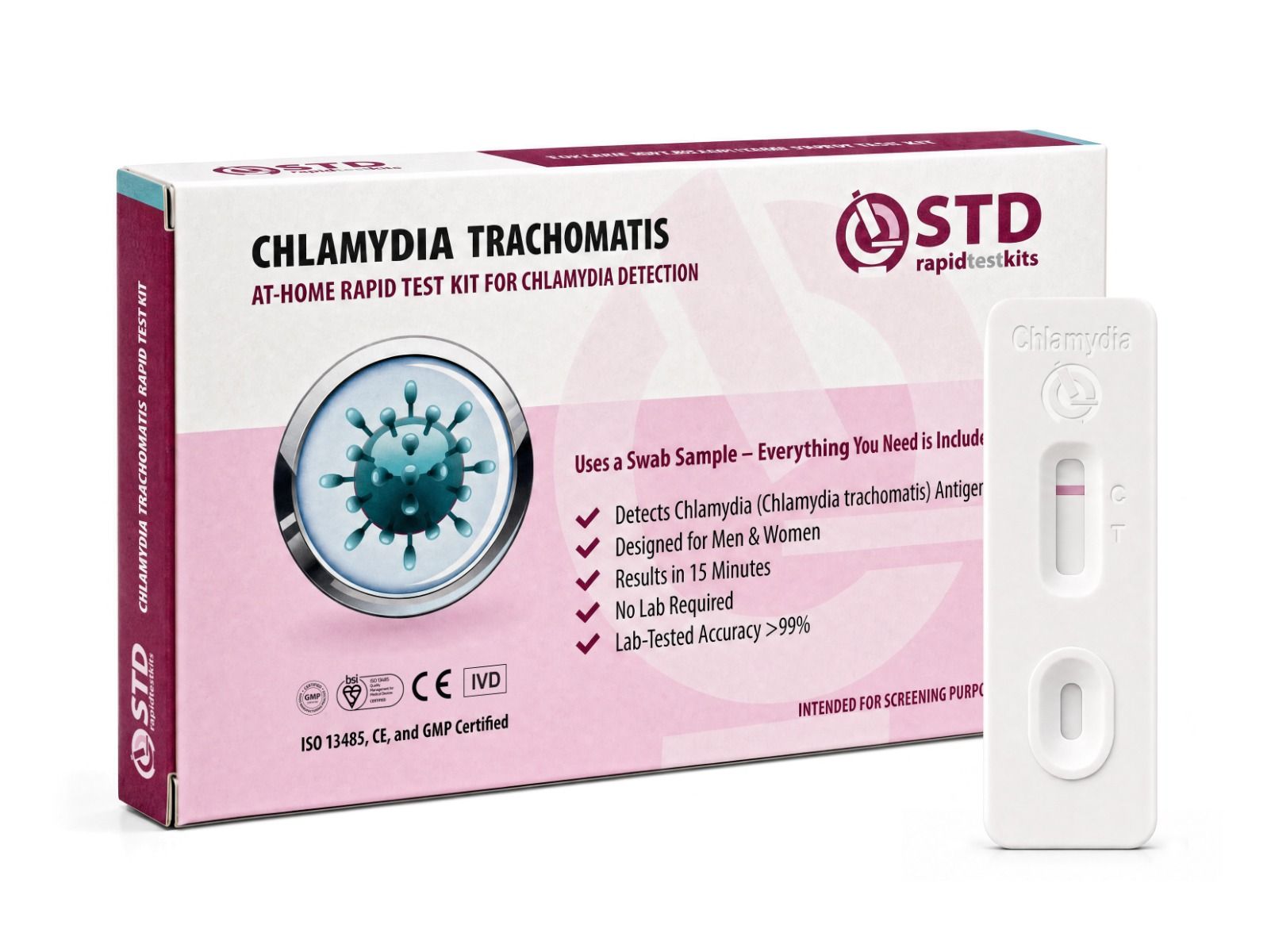
If you are not sure whether your partner took the full course, you have the right to ask. It is a logistics question that protects both of you. If you would rather skip another clinic visit for the three-month retest, an at-home swab kit offers the same screening from your home.
Both you and any partners need to finish treatment before resuming any sexual contact, oral, anal, or vaginal. Current CDC guidance specifies seven days after a single-dose regimen, or until a multi-day course is complete. Resuming early is the most common cause of ping-pong reinfection between partners.
When Fear Says Stay Silent, But You Speak Anyway
That voice in your head asking, “What if they leave?” is fear, and it is loud. It gets louder when the social script you absorbed about STIs framed them as dirty, shameful, or proof of moral failure. None of those frames are accurate, but they show up anyway.
A chlamydia diagnosis is a bacterial event. Your body interacted with bacteria that travel through sex. That is biology, not morality. Talking about the result is what responsible people do, and it makes you the kind of person who closes a loop rather than letting it spread.
For many couples, disclosure becomes a turning point in the direction of more trust. It opens up conversations about boundaries, past partners, testing habits, and how the two of you want to handle future situations. None of those conversations were going to happen on their own. The diagnosis gave them a reason to start.
The pattern we hear often: a person braces for an explosion, gets a quiet “thanks for telling me, let us figure this out” instead, and discovers the conversation cracked open a deeper level of honesty that had been postponed for years. Not everyone will meet you there, and how someone responds to truthful information tells you something useful about the relationship rather than something diminishing about you.
Try this internal one-liner before you reach out: “I have information that protects them. Sharing it is care, not confession.” Repeat until you press send.
Queer, Non-Monogamous, and Hookup Dynamics
If you are part of a community whose sexual culture is more open than the traditional mainstream script, the disclosure rules are the same, and the tools you have access to are often better.
Queer spaces have done more visible work normalizing routine testing and status conversations than most heterosexual spaces, but that does not make a positive result less awkward to communicate. Casual play partners deserve the same factual heads-up. Many will respect the transparency. If your community values active consent, then full health information is part of that consent.
For poly or open relationships, notify everyone in the relevant exposure window. The CDC's 60-day partner window applies to chlamydia regardless of relationship structure (CDC). Notifying more than one person can feel like a lot. Some networks use a shared message template, or designate one person to send the same neutral text to everyone affected. The goal is that the information reaches everyone who could be carrying it; protocol matters less than coverage.
For people who hook up through apps, especially in casual or group contexts, you will sometimes only have a profile handle, no real name, no number. Anonymous notification tools were built for exactly that situation. Use what you have.
If you have had several partners in the past two months, a single neutral message sent to each is enough. Word it once, send it many times: “Hey, I tested positive for chlamydia. You may want to get tested too.” The information matters more than the prose, and the people on the other end will appreciate the heads-up regardless of how it is phrased.
Your Emotions Matter, Too
This is not only about physical health. A positive STI result, especially a first one, or one tied to a betrayal or breakup, can shake the story you thought you were living. The feeling fades over time, and the information you have now stays useful long after the initial shock.
You may feel angry. You may blame yourself for not testing sooner. You may feel disgust at your own body. All of those reactions are common, and none of them describe anything permanent about who you are.
Chlamydia is fully treatable with antibiotics. Current CDC guidance recommends a seven-day course of doxycycline as the preferred regimen, with azithromycin available as an alternative when doxycycline is not suitable (CDC, STI Treatment Guidelines: Chlamydia). The bacteria leaves. The shame, if it lingers, is the part that needs care, and that care often looks like a conversation with a friend, a therapist, or a sexual-health hotline rather than another internet search.
Your body is healthy and capable of healing. Your worth has not changed. Your future, sexually and emotionally, is still yours to design. The only piece that needs movement is the information: from you, to the people who could be affected, to whatever next step they want to take.
Patients should be instructed to refer their sex partners for evaluation, testing, and treatment if they had sexual contact with the patient during the 60 days preceding the patient's onset of symptoms or chlamydia diagnosis.
Can You Keep It Private? And Should You?
You are not legally required to broadcast your diagnosis. In most U.S. states, partner notification is a moral obligation rather than a legal one, unless you knowingly expose someone without their consent, which can be criminalized in a handful of jurisdictions. Beyond the legal landscape, there is the ethical one.
Privacy means choosing who knows. Silence means keeping people who could already be infected outside that choice. If you are sexually active with someone and you have tested positive, keeping the news to yourself puts them at risk, and it may prolong your own exposure if they are unknowingly reinfecting you. Keep your circle tight, and let your partner be inside it.
At-home testing helps here. Confidential shipping, no name on the outside of the package, no clinic waiting room, no insurance code on a chart shared across a household account. If those are barriers, at-home rapid kits remove them.
Whether you tell your partner in person, by phone, by text, or through an anonymous tool, the act of telling is what matters. The exact method is your call. Some situations call for a text. Others deserve a sit-down.
U.S. law generally treats partner notification for chlamydia as a moral responsibility rather than a legal one. The exceptions involve knowing exposure without consent, which is criminalized in some states. The ethical case for telling is simpler: people you have been close to deserve the same information you wanted when the result came back.
You Deserve Answers, Not Assumptions
Testing positive for chlamydia is not the end of your sex life, your relationship, or your confidence. It is a moment, a very human one, that you can move through with honesty and care.
Blame keeps people stuck where they are. Silence lets infections move quietly to the next person. A short conversation, no matter how awkward in the moment, protects you, your partner, and anyone you might be close to in the future.
Frequently Asked Questions
- Do I really have to tell them?
- Legally, only in narrow circumstances where knowingly exposing someone is criminalized. Ethically, yes. The CDC recommends notifying any sex partners from the past 60 days so they can get tested and treated. If the roles were reversed, you would want the same heads-up.
- What if I have no idea who passed it to whom?
- That is the most common scenario. Chlamydia can sit in the body without symptoms for weeks or months, so pinning down who had it first is almost never possible unless both people tested on the exact same day. Drop the detective work. Focus on testing, treating, and waiting the seven days post-treatment before resuming sex.
- Can I just send a text?
- Yes. A respectful, no-drama text is much better than ghosting or staying silent. It does not have to be poetic. Something like, “Hey, I tested positive for chlamydia. Wanted to give you a heads-up so you can get checked too,” gets the job done.
- What if they react badly?
- Some people externalize fear as anger. Their first reaction is rarely their final one. Hold your line, do not absorb blame, and do not over-explain. Many partners come back hours or days later with a calmer response once the news has settled.
- Do I have to tell people I am no longer seeing?
- Ideally yes, especially within the prior 60 days, which is the CDC's recommended chlamydia partner-notification window. If you do not have contact information or do not feel safe reaching out directly, anonymous tools like TellYourPartner.org let you notify discreetly.
- After I have been treated, do I still need to say something?
- Yes. Treatment clears the infection from your body, but it does not retroactively protect anyone you had sex with while you were positive. If they are not treated too, you can pass it back and forth, or they can pass it to someone else. Break the loop by telling them.
- How long should we wait before having sex again?
- Resuming too early is the leading reason couples bounce the infection back and forth, so both partners need to complete the full prescribed course before any sexual contact resumes. The clinical clock is seven days after a single-dose regimen, or completion of any multi-day course. Ask your partner directly where they are in their meds if you are not sure.
- Will a positive chlamydia result show up on any permanent record?
- No. Test results do not appear on your credit report or your résumé. Clinics report case counts to public-health departments for population surveillance, but personal results are protected health information. If you tested at home, the result stays between you and your account.
How we sourced this article: Our editorial team combined current guidance from the U.S. Centers for Disease Control and Prevention (STI treatment guidelines, partner services, partner-notification policy) with the National Prevention Information Network's anonymous notification resources. We translate public-health guidance into plain-English action items. We do not provide clinical diagnosis. For symptoms that concern you, please see a licensed provider.
- U.S. Centers for Disease Control and Prevention. About Chlamydia. Background on prevalence, asymptomatic infection rates, and complications including pelvic inflammatory disease.
- U.S. Centers for Disease Control and Prevention. STI Treatment Guidelines: Chlamydial Infections. Source for the seven-day post-treatment abstinence recommendation, the three-month retesting recommendation, the 60-day partner-notification window, partner referral guidance, the doxycycline-preferred treatment regimen, and epididymitis as a complication of untreated chlamydia in men.
- U.S. Centers for Disease Control and Prevention. Partner Services Clinical Guidance. Background on how public-health departments support partner notification for STIs.
- U.S. Centers for Disease Control and Prevention. Expedited Partner Therapy Clinical Guidance. Background on partner-treatment access where in-person clinical evaluation is not feasible.
- CDC National Prevention Information Network. TellYourPartner.org publication record. Source for the anonymous partner-notification tool referenced for short-term or out-of-contact partners.
- U.S. Centers for Disease Control and Prevention. Internet Partner Services components. Background on internet-based partner-notification frameworks recognized by public-health departments, including anonymous third-party tools as one option when direct contact is not possible.
- U.S. Centers for Disease Control and Prevention. STI Treatment Guidelines (index). Hub for clinical guidance and protocols across sexually transmitted infections.
