
Published: August 2025 | Last updated: May 2026 | Editorial review and quality control: Martina N.
An STI diagnosis often hits the mind harder than the body. Antibiotics or antivirals can clear or manage the infection in days to weeks. The shame, anxiety, and self-blame can linger for months or years if there is nowhere safe to put them down. Therapy is one of the few rooms built specifically for that work.
This guide walks through how to start the conversation when the words feel stuck, what therapists are trained to do with sensitive sexual-health disclosures, and why the stigma you are carrying is almost always heavier than the diagnosis itself.
Search trends back this up. Every month, thousands of people search terms like "STD depression," "herpes therapy," or "shame after STI diagnosis." The questions are not medical, they are emotional. People know what an infection is. What they do not know is how to carry the panic, isolation, or self-disgust that often arrives with it.
If you are wondering whether your reaction is too much, it is not. The CDC's national STI program notes that on any given day, about 1 in 5 people in the United States has a sexually transmitted infection, roughly 68 million people. The mental-health fallout is documented too: people newly diagnosed with chronic STIs report higher rates of anxiety, depression, and in some cases suicidal thoughts than peers without a diagnosis, a pattern consistent with the broader research on acute health stressors summarized by the National Institute of Mental Health. These responses are common but not universal, and they ease for most people with time and support. If thoughts of suicide or self-harm have surfaced for you, please contact the 988 Suicide and Crisis Lifeline (call or text 988 in the U.S.) right now, or visit findahelpline.com for local crisis services outside the U.S. Untreated emotional fallout can stall recovery long after the body has healed, and the therapist's chair is built for exactly this kind of overflow.
Key Takeaways
- An STI diagnosis is a mental health event, not just a medical one. Therapists are trained, ethically bound to confidentiality, and unlikely to be shocked by anything you bring in.
- You do not have to name the infection to start the conversation. Leading with feelings like shame, panic, or fear of disclosure is enough to open the door.
When the mind reacts harder than the body
Most people prepare for the physical side of an STI: the medication, the follow-up test, the partner conversation. What catches them off guard is the part nobody mentions, the days or weeks afterward when the diagnosis keeps replaying in the mind even though the body has moved on. People with cleared chlamydia describe crying nightly for months. People with managed herpes describe avoiding mirrors for a year. The infection is gone or contained; the mental aftermath is just getting started.
Researchers studying this disconnect consistently find a pattern: STI diagnoses produce a stress response disproportionate to the medical risk. A diagnosis of a curable bacterial infection can land emotionally like a chronic, life-altering one. Part of that is the social meaning attached to STIs over decades of public-health messaging that conflated infection with morality. Part of it is the loneliness of having to carry it alone.
Therapy is one of the few places where that disproportion gets named and worked with directly. Most clinicians who do this work have already supported clients through the same gap between a routine medical fact and a flooded emotional response, and they tend to recognize it within the first session.
A short-course antibiotic can clear a bacterial STI in roughly a week. The shame around it can persist for months or years. That mismatch is not a personal failure, it is the predictable outcome of a medical event arriving wrapped in cultural stigma. Closing that gap is one of the things therapy is specifically good at.
Why your nervous system reacts this way
The body's threat-response system does not distinguish between a tiger and a positive test result. When the news lands, cortisol and adrenaline flood the system the same way they do during any acute stressor. That is why diagnoses are often followed by insomnia, nausea, racing thoughts, obsessive symptom-checking, chest tightness, and appetite changes. These are not signs of weakness. They are a nervous system in overdrive doing exactly what evolution programmed it to do.
Public research summarized by the National Institute of Mental Health documents that acute stressors, especially those tied to identity and social standing, can produce trauma-pattern responses: intrusive thoughts, hypervigilance, and avoidance. People newly diagnosed with HIV often show profiles similar to survivors of other acute stressors. The diagnosis registers as an existential threat regardless of whether the infection is actually life-threatening, and the brain reacts accordingly. Over time, without intervention, those reactions can settle into chronic anxiety or depression patterns that long outlast the active illness.
This is also why physical and psychological symptoms blur together after a diagnosis. People obsessively check their skin for new lesions and end up perceiving sensations that are not there. People feel "flu-like" symptoms that turn out to be the panic response, not the infection. The clinical term is somatization, when emotional or psychological stress produces genuine physical sensations in the body, and it is well-documented in the medical literature on stress.
Therapy creates a regulated environment for that nervous-system storm to quiet. The work is not just talking it out. It is learning to recognize what the body is doing, naming the emotional weight, and slowly disentangling the infection itself from the meaning the brain has stitched onto it.

How to start the conversation when the words feel stuck
The hardest part is not the disclosure. It is the anticipation. People rehearse opening lines for days, then arrive at the session and freeze. The good news is that there is no required script, and starting with the feeling rather than the diagnosis works better for most people anyway.
Useful openers people have used in real sessions:
- "Something happened recently that has been wrecking my self-image, and I do not know how to talk about it yet."
- "I want to bring something up that I am scared to say out loud. Can we slow down for a few minutes?"
- "I had a health scare, and I am carrying a lot of shame around it."
- "I tested positive for something, and I have not told anyone."
You do not have to name the infection in the first session. You do not have to name it in the fifth, either. The goal is to open the door enough that your therapist can walk through it with you. Once they know there is a sensitive topic in the room, the work of getting there together can begin at whatever pace feels safe.
If saying it in person feels impossible, there are workarounds. Many therapists accept a written note handed across the desk. Some respond to a short message in the patient portal before the appointment, so the topic is already named when you sit down. These are normal accommodations, not awkward ones, and clinicians often suggest them themselves when a client looks stuck.
Write the diagnosis on a piece of paper and slide it across the desk at the start of the session. Or send a single sentence through the patient portal the day before: "I want to talk about a recent STI test result tomorrow." Both are common, both work, and most therapists actively appreciate them.
What is the simplest way to bring up an STI with my therapist?
Lead with the emotion, not the diagnosis. Say something like "I am carrying a lot of shame after a recent health issue" or "I tested positive for something and do not know how to talk about it." That gives your therapist permission to follow you in slowly. You can name the specific infection later, in the same session or a different one, once you feel steadier. Most people find the anticipation harder than the disclosure itself.
What therapists actually think, and why they will not flinch
The most common pre-session fear is judgment. The reality, both ethically and statistically, is the opposite. Licensed mental health professionals operate under codes such as the American Psychological Association's Ethical Principles of Psychologists and Code of Conduct, which explicitly require nonjudgment, confidentiality, and competence with sensitive topics including sexual health. Therapists who cannot sit with sexual-health disclosures are not doing their job. That is a professional fit problem, not a problem with you.
Practically, your therapist has heard a lot. Sexual content is one of the most common topics that comes up in therapy, alongside grief, conflict, and identity. Affairs, kinks, sexual trauma, abortion, abuse histories, sex work, fetishes, the disclosures that feel uniquely shocking to the person bringing them in are usually adjacent to things their clinician has already supported other clients through. "I have herpes" or "I tested positive for chlamydia" is unlikely to register as anything more than important clinical information to be worked with.
Confidentiality is also stronger than many people realize. With narrow exceptions, therapists are legally and ethically prevented from disclosing anything you say. Your sexual history does not go in a record an employer can pull. It does not go to your partner. It does not go to anyone. If, despite all of this, a session leaves you feeling judged or moralized at, take that information seriously and consider finding a different clinician whose stance fits.
A licensed therapist may break confidentiality in only a few specific situations:
- Imminent serious risk of harm to yourself or another identifiable person.
- Suspected abuse or neglect of a child, dependent adult, or elder (mandated reporting).
- A valid court order or subpoena that compels disclosure.
Sexual-health disclosures, including STI diagnoses, are not on this list. They stay in the room.
The stigma trap, and why a diagnosis triggers shame
STIs are extraordinarily common. The CDC estimates that on any given day in the United States, about 1 in 5 people has a sexually transmitted infection, equivalent to roughly 68 million people. The infections themselves are part of the everyday medical landscape. The shame around them is what is culturally manufactured.
That cultural framing matters because it is the part that does most of the psychological damage. The words still attached to STIs in casual conversation, "clean," "unclean," "damaged goods," are not medical descriptors. They are moral ones, and they map onto the diagnosis quickly when there is nowhere safer to put it. Therapy is often where that mapping gets undone, sentence by sentence, until the infection feels more like any other treatable medical condition and less like a verdict on character.
One reframe that often surfaces in session: if a close friend confided the same diagnosis, the response would almost always be compassion, not contempt. The harder question, asked in a safe room, is why the response to oneself is so different. That gap is where the therapeutic work happens. Most people find that they are running a moral framework against themselves that they would never apply to anyone they love, and seeing the asymmetry out loud is often what loosens it.
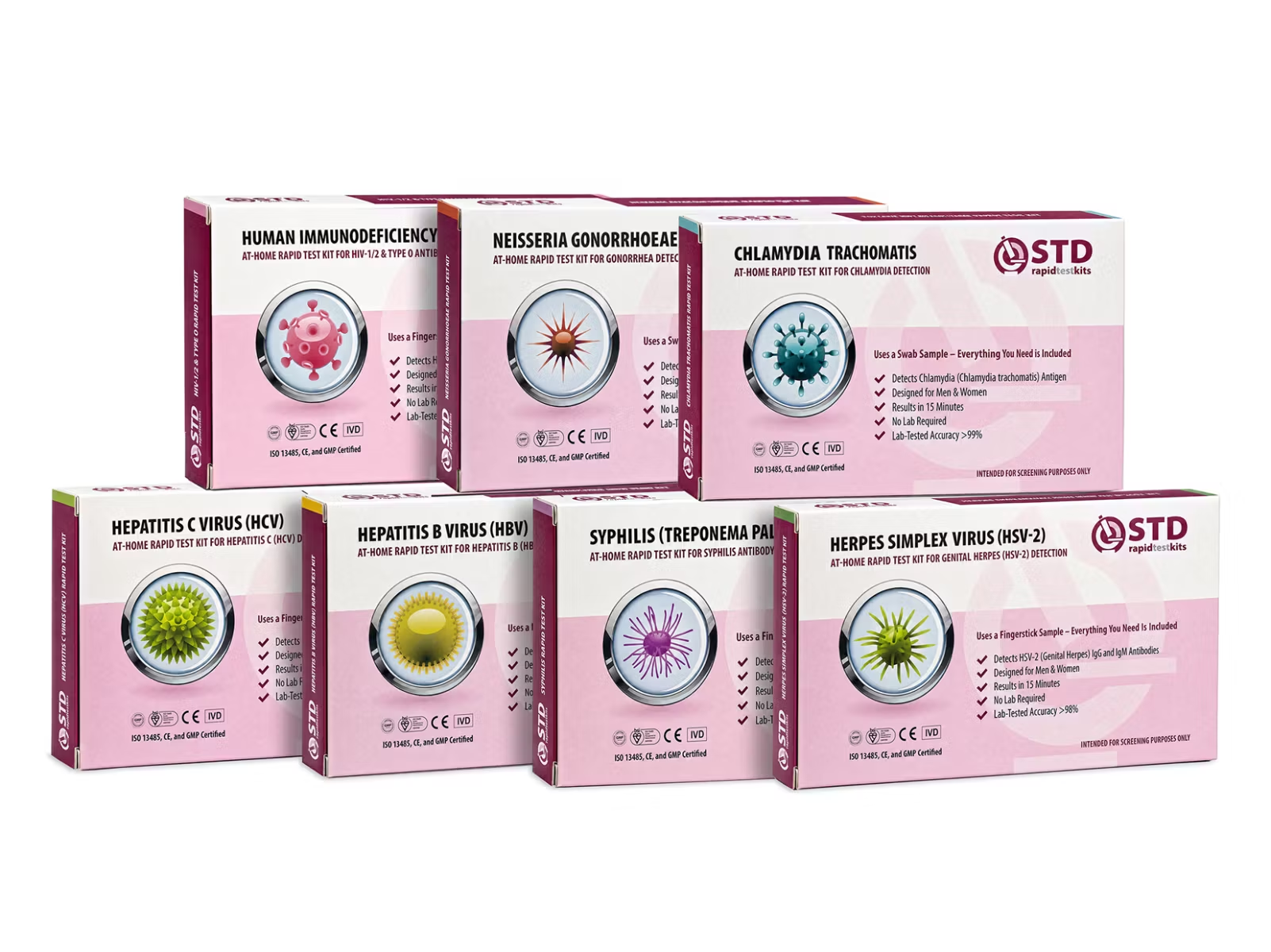
A note on what we sell: where a rapid at-home test is genuinely relevant to the topic, we link to options from our own store. Our editorial position on testing does not change based on which product fits, and the recommendation only appears when it answers a real reader question.
What changes once you tell your therapist
Most people brace for catastrophe and find relief instead. The first session that includes the disclosure is usually less dramatic than imagined and more useful than expected. Once it is said, the energy that was being spent on hiding is freed up for the actual work: processing fear of rejection, untangling guilt about past choices, examining what the diagnosis means for identity and future relationships.
From there, therapy tends to move into practical territory. Therapists working with clients post-diagnosis often introduce grounding exercises for panic spikes, journaling prompts to surface buried beliefs about worthiness, and role-playing future disclosure conversations with partners or close friends. Cognitive-behavioral techniques are useful for catching the looping thought "I am damaged." Acceptance and commitment therapy is useful for noticing the thought and not following it. Trauma-informed approaches help when the diagnosis intersects with past assault or coercion. None of this erases the diagnosis. It changes the position the diagnosis occupies in someone's mental landscape, from a defining secret to one fact among many.
Many people report that therapy after disclosure is more honest, more useful, and more transformative than therapy before. Once the worst-feeling thing has been said and survived, smaller things stop feeling unspeakable. Sessions that previously skirted around sex, intimacy, or self-image suddenly have somewhere to go.

Sex-positive therapy and reimagining intimacy
A sex-positive therapist will not just absorb the disclosure. They will actively support the rebuilding of a sexual self that includes the diagnosis without being defined by it. That can mean practical conversations about prevention strategies (condoms, lube, suppressive antiviral therapy for herpes, daily PrEP for HIV-negative partners of HIV-positive people), communication scripts for new partners, and reframing exercises that address the "my sex life is over" intrusive thought.
The data does not support that thought. People living with manageable infections, including herpes, HPV, and well-controlled HIV, are statistically common and live full sexual lives. CDC genital herpes guidance notes that suppressive therapy substantially reduces transmission risk and that most people living with HSV-2 do so without major impact on long-term partnerships, especially with consistent precautions. The therapist's role is not to recite those statistics. It is to make space for the client's nervous system to actually believe them, which usually takes time and repetition.
For couples already in a relationship when a diagnosis lands, couples or sex therapy can be a useful adjunct to individual work. Disclosure to a partner sits alongside disclosure to oneself, and many people find that a clinician in the room makes the conversation more navigable than handling it alone at the kitchen table.
STIs are extremely common. CDC estimates 1 in 5 people in the U.S. has an STI on any given day, totaling nearly 68 million infections.
Testing as a way of taking back the story
For people still in the limbo of "I think something happened, but I have not tested," the anxiety is almost always worse than knowing. Avoidance feels protective in the short term and corrosive over weeks. The single most reliable way to start lowering the noise is to find out what is true.
For people already living with one diagnosis, periodic re-testing for other STIs is part of standard care. The CDC's STI program recommends annual testing for sexually active people in many categories, and more frequent testing for higher-risk patterns. Routine testing is not a punishment, it is the closest thing to a maintenance plan for sexual health, and most clinicians frame it that way.
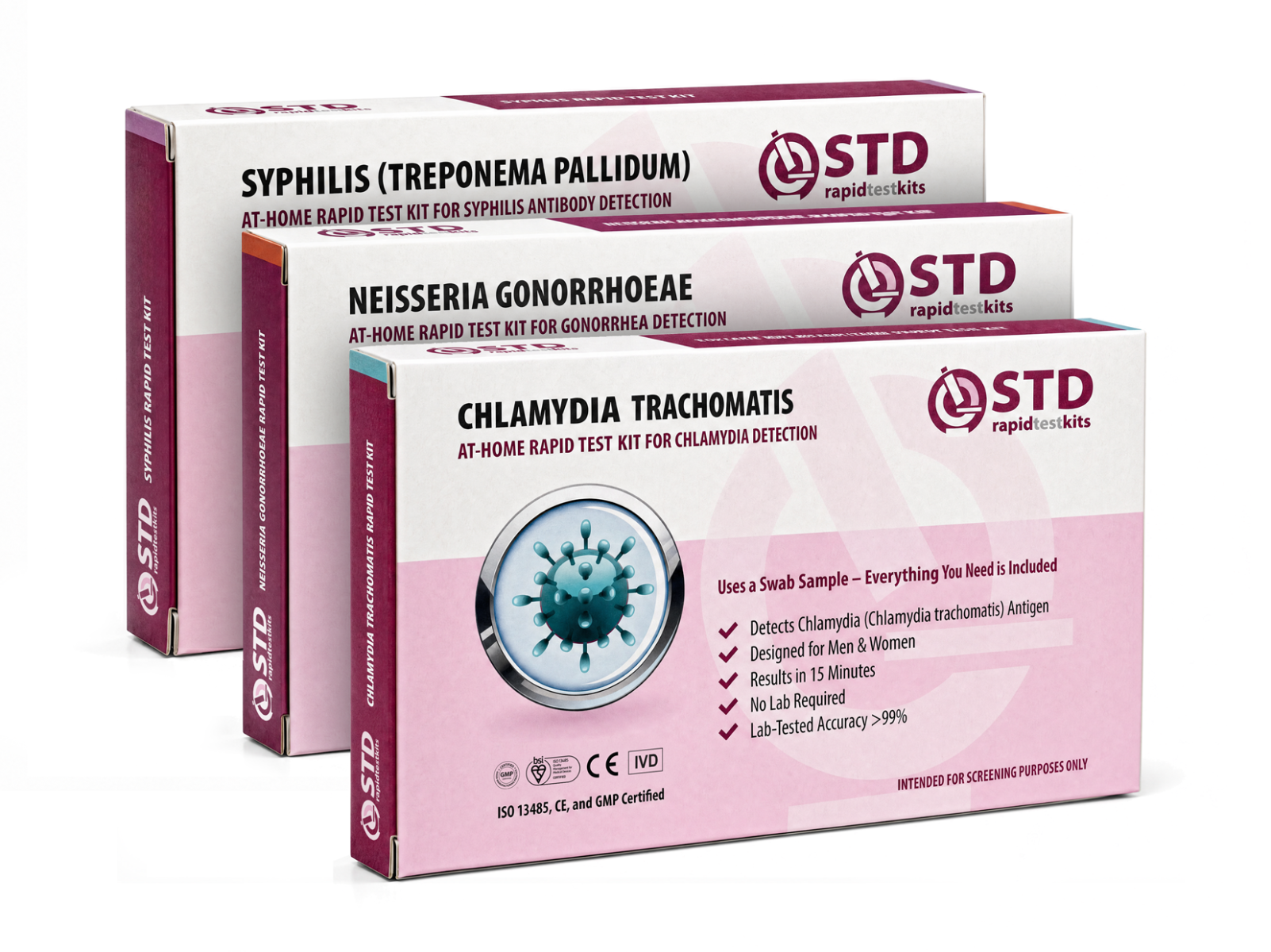
At-home rapid kits are a useful adjunct, not a replacement for clinical care. They are lateral-flow immunoassays, not laboratory NAATs, so a positive at-home result is best confirmed with a clinician. What they do well is remove logistical friction (waiting rooms, scheduling, insurance billing) and let results stay private until a clinician needs to be involved. For people whose anxiety is partially about being seen at a clinic, that privacy is therapeutic in itself. Bringing the result, positive or negative, into the next therapy session gives the work somewhere concrete to land.
FAQs
- Do I have to tell my therapist about my STI?
- No. There is no obligation. But if the diagnosis or the shame around it is occupying mental real estate, therapy is one of the few places designed to take that weight off. You can choose what to share and when. Saying that something significant has happened, without going into detail, is enough to start with.
- What if my therapist judges me?
- Licensed therapists are ethically bound to remain nonjudgmental, and the vast majority have supported clients through sexual-health disclosures before. If you genuinely feel judged in a session, that is useful information about fit, not about you. It is reasonable to find a different therapist if the working relationship does not feel safe.
- Can an STI actually cause depression, or am I overreacting?
- You are not overreacting. Studies show people newly diagnosed with chronic STIs like herpes or HIV experience higher rates of anxiety and depressive symptoms than peers without a diagnosis. The infection plus the social stigma plus disclosure stress is a heavy combined load on the nervous system, and it shows up in mental health metrics.
- How should I bring it up in a session?
- Start with the emotion, not the diagnosis. Lines like "I have been carrying a lot of shame about something" or "a recent health issue is affecting how I see myself" are enough to open the door. Your therapist will follow your lead on pace and detail, and most clinicians appreciate when a client signals that a sensitive topic is in the room.
- Do I have to name the specific infection?
- The clinical label is optional indefinitely. Many people work through the emotional weight for months using only phrases like "the test result" or "what happened," and therapists trained in trauma-informed care will follow that framing without pushing for specificity. The therapeutic value comes from processing the meaning attached to the diagnosis, not from naming the pathogen.
- The infection cleared months ago, but I still feel terrible. Is that normal?
- Yes, and this is one of the most common reasons people seek therapy after an STI. Bacterial infections like chlamydia or gonorrhea can clear in days to weeks; the mental fallout, particularly shame, can persist for months or years without intervention. That is exactly the gap therapy is built to close.
- Can therapy actually help me date again?
- Yes. Many therapists incorporate disclosure rehearsal, where you practice saying the words you will eventually say to a partner in the safety of the session. Hearing yourself say it out loud, in front of someone who does not flinch, makes the real conversation later substantially less terrifying. Plenty of people with herpes, HPV, or other STIs are in long, healthy partnerships.
- Is what I tell my therapist confidential?
- In nearly all circumstances, yes. Therapists are legally and ethically bound to confidentiality with very narrow exceptions: imminent serious harm to self or others, suspected abuse of a child or vulnerable adult, or a court order. Routine sexual-health disclosures do not fall into any of these categories. Your diagnosis stays in the room.
You are not broken, you are processing
The shame attached to STIs is one of public health's most stubborn cultural inheritances, and a single article cannot undo decades of it. What therapy can do, what testing can do, what choosing honesty over silence can do, is shrink the diagnosis back to its actual size: a medical event, manageable, common, and not the final word on who you are.
The hardest sentence is usually the first one. Once it is out, the next one gets easier. Eventually the diagnosis stops being the thing that defines the room you walk into and becomes one fact among many in a fuller story, the kind that includes you continuing to date, work, love, and laugh. The first appointment is where that quieter version of the story starts.
- U.S. Centers for Disease Control and Prevention. STI program homepage with national prevalence and incidence context, including the often-cited daily prevalence figure of about 1 in 5 people in the United States.
- U.S. Centers for Disease Control and Prevention. HIV basics, including data on transmission risk, testing windows, and emotional impact of an HIV diagnosis.
- U.S. Centers for Disease Control and Prevention. Genital herpes facts, including transmission, suppressive therapy options, and impact on partners.
- American Psychological Association. Ethical Principles of Psychologists and Code of Conduct, including standards for confidentiality and nonjudgmental care.
- National Institute of Mental Health. Information on anxiety disorders and their relationship to chronic stress and significant medical diagnoses.
- Mayo Clinic. Overview of common sexually transmitted infections, including symptoms, treatments, and recommendations for emotional support after a diagnosis.
- 988 Suicide and Crisis Lifeline. Free, confidential 24/7 support for people in suicidal or emotional crisis in the United States.
