
Published: September 2025 | Last updated: May 2026 | Editorial review and quality control: Martina N.
Antibiotics are one of the most important tools in modern medicine, and most courses are safe and necessary. The friction starts when courses are frequent, broad-spectrum, or taken without a clear bacterial cause. Each round can thin the population of Lactobacillus species that keep the vagina acidic and inhospitable to invading microbes. When that protective layer thins, the conditions for bacterial vaginosis, yeast overgrowth, and several sexually transmitted infections become easier.
The link is not that antibiotics cause STIs directly. They remove a natural barrier that ordinarily slows an infection from taking hold. This article walks through the mechanism, names the infections most consistently connected with a disrupted microbiome, and offers a practical plan if you have just finished a course of antibiotics or expect one soon.
Key Takeaways
- Recurrent or broad-spectrum antibiotic use can deplete vaginal Lactobacillus, raising the per-exposure odds of bacterial vaginosis and several STIs including HIV, chlamydia, gonorrhea, and trichomoniasis.
- You can lower the risk by reserving antibiotics for confirmed bacterial infections, supporting recovery with probiotic-rich foods and evidence-backed Lactobacillus strains, and testing after any new sexual exposure rather than waiting for symptoms.
How antibiotics shift the vaginal microbiome
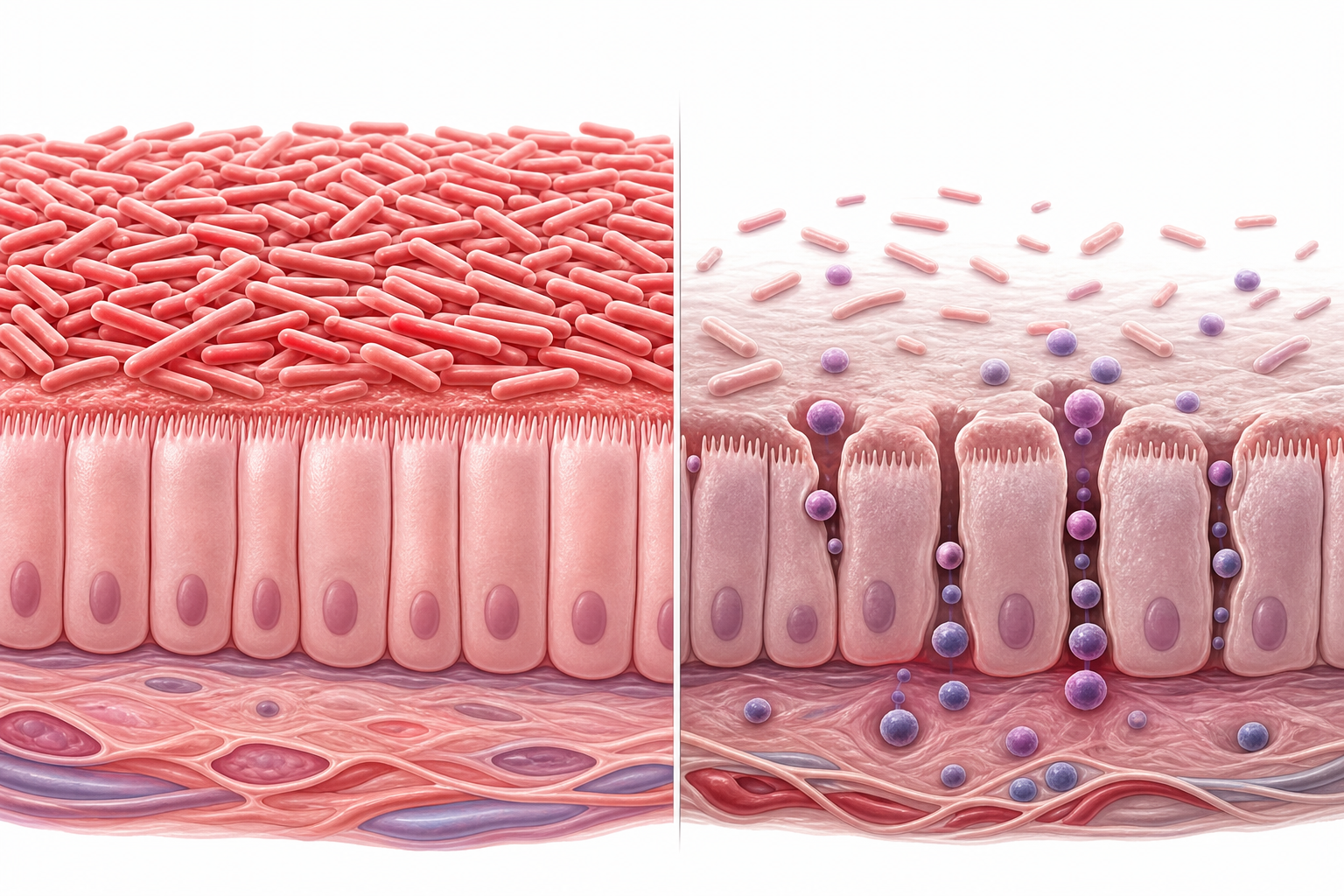
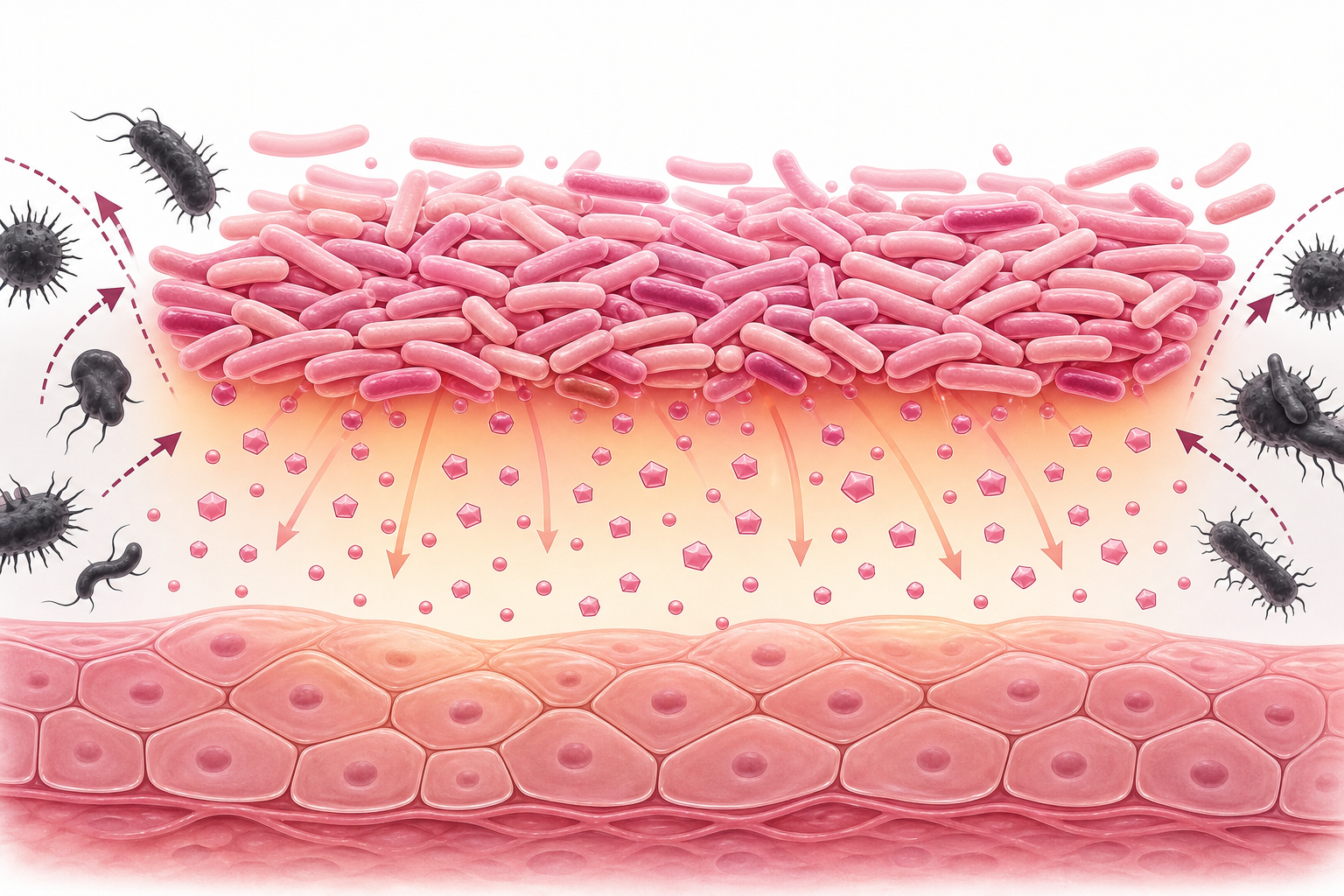
A healthy vagina contains a dense community of bacteria, dominated in most reproductive-age women by Lactobacillus species. These rod-shaped bacteria do two important things. They ferment glycogen from the vaginal epithelium into lactic acid, which keeps vaginal pH in a narrow acidic range of roughly 3.8 to 4.5. They also produce hydrogen peroxide and small antimicrobial peptides. Together, these create an environment that most invading bacteria, parasites, and viruses do not survive in well.
Oral or intravenous antibiotics travel through the bloodstream and reach every tissue, including the vaginal mucosa. Broad-spectrum agents such as clindamycin, certain cephalosporins, and fluoroquinolones suppress a wide range of bacteria, not just the pathogen the prescription is targeting. Lactobacillus, being bacteria themselves, take a hit. The visible result, when there is one, is often a temporary yeast overgrowth or a bacterial vaginosis (BV) flare. The invisible result is a window of reduced microbial defense, even when nothing feels wrong.
Recovery is variable. The CDC's overview of bacterial vaginosis notes that BV can return even after treatment. Separately, observational studies and clinical reviews identify broad-spectrum or repeated antibiotic courses, diabetes, douching, and hormonal shifts such as the early postpartum window as factors that can raise the chance of a return.
This is not an argument against antibiotics. When a clinician prescribes one for a confirmed bacterial infection, take the full course. The argument is against unnecessary antibiotics: insisting on a prescription for a viral cold or flu, repeated empiric courses for symptoms that have not been worked up, or saving a leftover from a previous prescription for a different problem.
A useful frame is that antibiotics reset the local ecology rather than just clearing a single target. A healthy ecology returns on its own most of the time, the way a forest regrows after a small burn. Repeated burns in close succession do not give the forest enough time. The same logic applies to the vaginal microbiome.
Why a depleted microbiome makes STIs more likely
When Lactobacillus numbers fall, three things change at once.
The first is pH. Lactic acid production drops, vaginal pH rises toward 5.0 or higher, and pathogens that prefer a less acidic environment, notably Trichomonas vaginalis and Gardnerella vaginalis, find it easier to grow. The same shift can make it easier for sperm and any pathogens carried with them to survive and reach the cervix.
The second is the mucosal surface itself. Healthy Lactobacillus communities help reinforce the epithelial barrier. When that barrier is thinner or more inflamed, HIV has an easier path across it during exposure. The CDC's BV page states that bacterial vaginosis is associated with an increased risk of acquiring other STIs including HIV, consistent with the mucosal-vulnerability mechanism. Mucosal-biology research from outside the CDC's BV summary has documented similar barrier-disruption mechanisms for other viral and bacterial pathogens, but those are inferences from separate sources rather than statements on the CDC page.
The third is local immunity. Lactobacillus-dominant flora produce signals that tune the immune response. When that flora shifts, local levels of pro-inflammatory cytokines rise. Some inflammation is part of an immune defense, but chronic low-grade inflammation also recruits the very immune cells, CD4 T cells, that HIV uses to establish infection. This is one mechanism that researchers cite to explain the consistent association between BV and HIV acquisition.
Put simply, a healthy microbiome is not just a passive layer. It is an active part of the immune system. When antibiotics disrupt it, the body loses one of its first lines of defense, and an STI exposure that might have failed before is now more likely to succeed.
Bacterial vaginosis is a shift in your own vaginal bacteria, not an infection passed between partners. You can develop BV without ever having had sex. What BV does is raise the per-exposure odds that a real STI takes hold during contact. That is why treating recurrent BV is a sexual-health issue even if BV itself is not an STI.
Which STIs are most affected
The research is strongest for bacterial vaginosis itself, HIV, and trichomoniasis. The connection is also reported for gonorrhea, chlamydia, HSV-2, and HPV persistence, though those links come from research outside the CDC's BV summary. The table below summarizes what current sources say about each.
BV is not an STI. You can develop BV without ever having had a sexual partner. What BV does is raise the odds that a real STI exposure leads to infection. The CDC's BV page states this plainly: BV is associated with an increased risk of getting other STIs, including HIV.
The HIV link is the most studied. Pooled analyses of cohort studies have estimated a substantially elevated per-exposure risk in women with BV compared with women whose flora is Lactobacillus-dominant; some pooled analyses cite an increase of approximately 60 percent, though estimates vary across populations. The CDC's BV page confirms the elevated acquisition association without committing to a single figure. This is a per-exposure increase, not a guarantee. Condom use, partner status, and the viral load of any HIV-positive partner all matter more in absolute terms.
For HPV, the story is slightly different. A disrupted microbiome does not seem to make initial infection meaningfully more likely. What it does is slow viral clearance, allowing infections that would otherwise resolve within 12 to 24 months to persist. Persistent high-risk HPV is the precursor to cervical disease.
Disclosure: stdrapidtestkits.com sells the at-home rapid tests referenced in this article. Product mentions are placed where the surrounding section's topic supports them; we do not recommend tests outside their fit-for-purpose.
| Infection | Pathogen type | How a disrupted microbiome contributes |
|---|---|---|
| Bacterial vaginosis | Polymicrobial | BV is the microbiome shift itself; recurrence rises after frequent antibiotics. |
| Chlamydia | Bacterial | Lactobacillus depletion is linked with higher acquisition risk in observational studies. |
| Gonorrhea | Bacterial | Healthy Lactobacillus-dominant flora inhibits Neisseria gonorrhoeae in laboratory studies. |
| Trichomoniasis | Protozoan | Trichomonas vaginalis grows more readily in the less acidic conditions that follow flora loss. |
| HSV-2 (genital herpes) | Viral | Mucosal inflammation and pH change can make viral entry easier during exposure (mechanism inferred from mucosal-biology research, not from the CDC BV summary). |
| HIV | Viral | Pooled studies link BV with substantially higher acquisition risk in women. |
| HPV | Viral | Disrupted flora is associated with slower viral clearance and higher persistence. |
Who is at higher risk
Not every antibiotic course meaningfully shifts STI risk; the pattern matters more than any single dose, and several factors stack together.
People with three or more antibiotic courses in the past year, a history of recurrent BV or recurrent yeast infections, or recent treatment for a urinary tract infection (nitrofurantoin, trimethoprim-sulfamethoxazole, and fluoroquinolones all affect vaginal flora as well as the bladder) tend to show greater Lactobacillus depletion on testing. Pregnancy and the early postpartum window already alter the microbiome through hormonal and immune shifts, so an antibiotic course layered on top takes longer to recover from. Smoking and douching independently reduce Lactobacillus levels and raise vaginal pH, compounding the effect of any recent antibiotic. A new sexual partner in the past three months matters less because it shifts the microbial mix, and more because the opportunity for an STI exposure is higher during the same vulnerability window.
If two or more of these apply to you, the practical implication is not to panic. It is to treat any new antibiotic course as a deliberate decision, ask about narrower options when reasonable, and consider testing proactively after an exposure rather than waiting for symptoms.
The factors above stack. A woman in the early postpartum window who smokes and has just finished a fluoroquinolone for a UTI is in a meaningfully different microbiome state than someone who took a single course of amoxicillin five years ago. If three or more of the risk factors apply to you at once, treat that period as a higher-vulnerability window: avoid new condomless exposures while the flora recovers, and test on standard windows after any exposure that does happen.
How to restore vaginal flora after antibiotics
Most people do not need an elaborate protocol. The vaginal microbiome usually rebounds on its own within a few weeks if nothing else is working against it. A handful of measures speed recovery and reduce the chance of a BV flare.
The simplest changes are about not adding to the disruption. Skip douching and scented washes; douching reduces Lactobacillus and raises pH on its own, and combined with a recent antibiotic the effect amplifies. Plain water on the vulva is sufficient, and the vagina is self-cleaning. Wear breathable cotton underwear and avoid sitting in damp swimsuits or workout clothes for long periods, because yeast prefers warm, moist environments and is the most common opportunistic overgrowth after a course of antibiotics.
Beyond those, the measures that actively support recovery are dietary and supplemental. Oral probiotics with strains studied for vaginal benefit can help: the two with the most cohort and small-trial data are Lactobacillus rhamnosus GR-1 and L. reuteri RC-14, usually sold together in a single capsule. They are not a treatment for active BV, but they are a reasonable supportive measure for two to four weeks after a course of antibiotics. Vaginal probiotic suppositories also exist, with a thinner evidence base. Eating fermented foods regularly (yogurt with live cultures, kefir, sauerkraut, kimchi, miso) supports the gut microbiome more directly than the vaginal microbiome, but the broad pattern of evidence supports it as part of a recovery diet.
Watch for BV symptoms. A thin gray or white discharge, a fishy odor (particularly after sex), and mild irritation can all signal BV. The NHS guidance on BV recommends seeing a clinician if symptoms appear rather than self-treating. Avoid the assumption that more antibiotics will fix it. Repeated metronidazole or clindamycin courses for recurrent BV are sometimes necessary but should be used under a clinician's plan, with attention to the underlying pattern rather than a reflex prescription each time symptoms return.
The strains with the most evidence for vaginal benefit are Lactobacillus rhamnosus GR-1 and L. reuteri RC-14, usually paired in a single oral capsule. Most studies used them for two to four weeks after a triggering event such as a course of antibiotics. Look for those specific strain identifiers on the label; generic Lactobacillus on a yogurt label is less likely to colonize the vagina from the gut.
When to test for STIs after antibiotic use
Antibiotic use by itself is not a reason to test for STIs. An exposure is. After any new exposure, the two questions to ask are simpler than the calculus around microbiome timing.
Was there a possible exposure event? A new partner, condomless sex, a partner with a known diagnosis, or symptoms suggestive of an STI all qualify. If yes, follow standard testing windows, which depend on the specific infection.
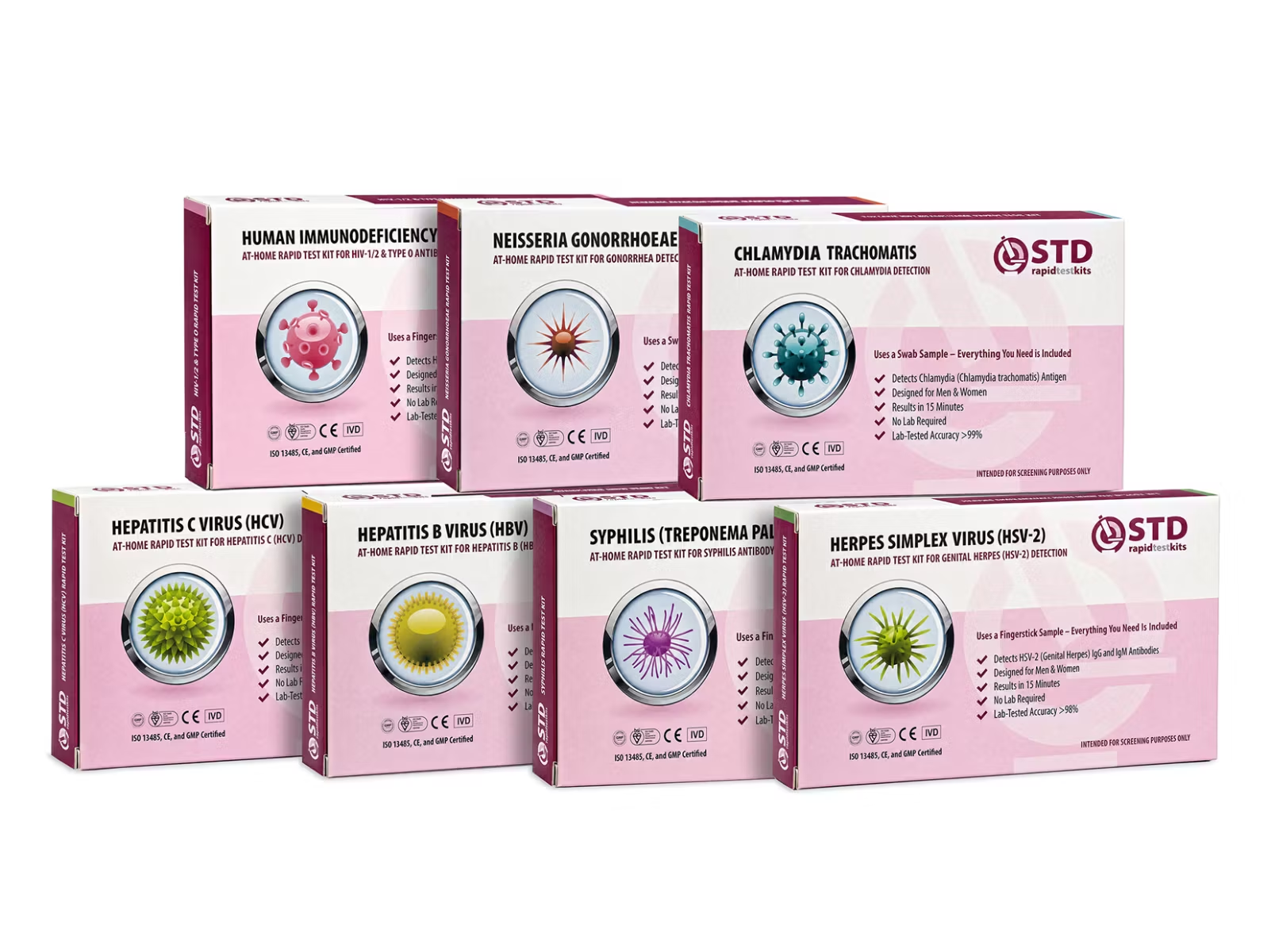
What infections should be on the panel? For most exposure events the practical panel is chlamydia, gonorrhea, syphilis, and HIV. Hepatitis B and hepatitis C are added for higher-risk events. Trichomoniasis is added for symptomatic women.
The general window periods below reflect CDC STI Treatment Guidelines; consult the full guidelines for pathogen-specific detail. Chlamydia and gonorrhea become detectable from roughly 1 to 2 weeks after exposure on laboratory NAAT testing, with at-home rapid swab tests typically performing best from day 14 onward. Syphilis antibody tests reach reliability at 3 to 6 weeks. HIV fourth-generation antigen and antibody tests are reliable from about 18 to 45 days; at-home rapid antibody tests are typically reliable from about 3 months. Hepatitis B surface antigen is detectable from 3 to 6 weeks, and hepatitis C antibody from 6 to 8 weeks, with confirmatory testing often at 6 months.
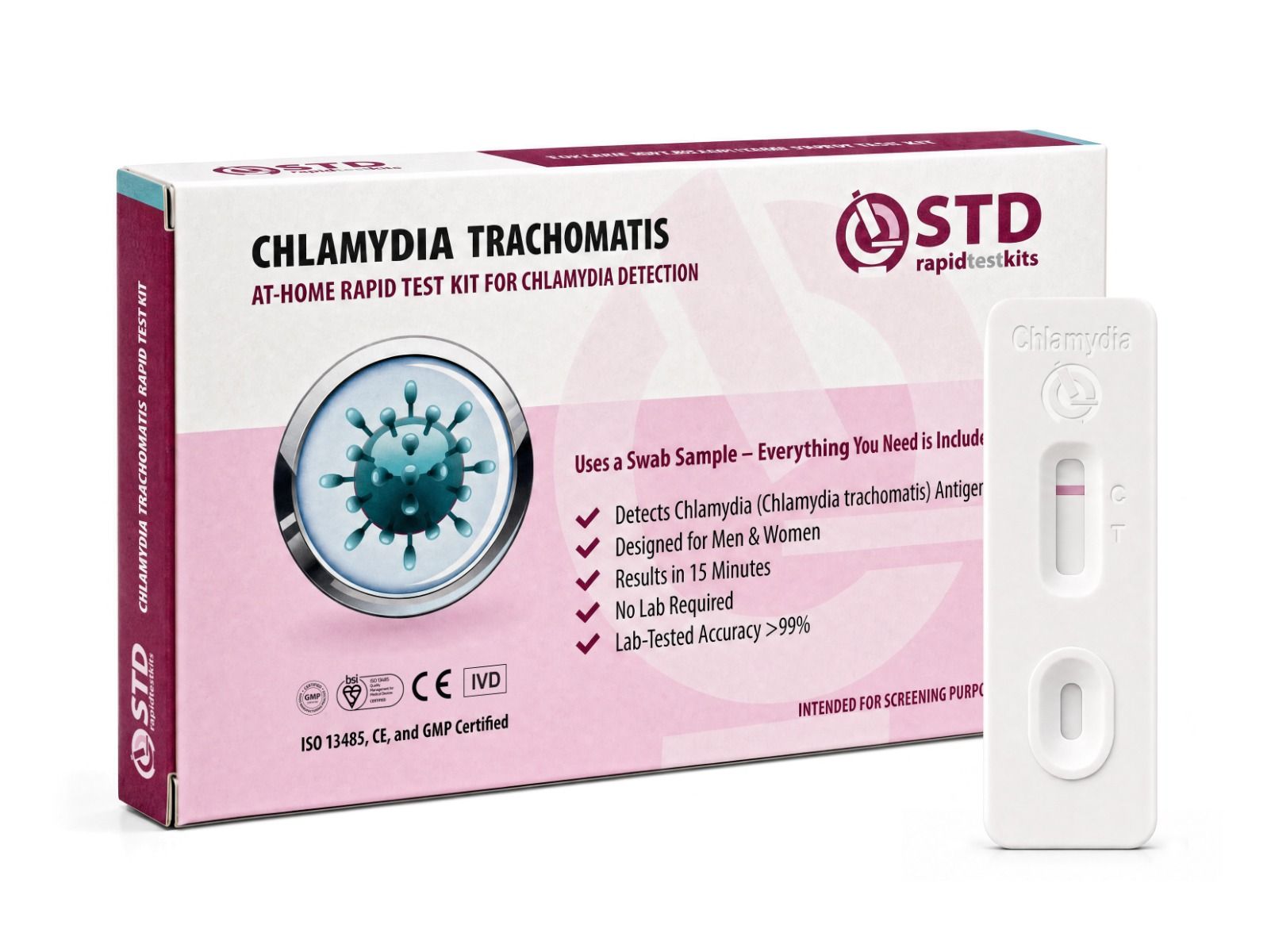
At-home rapid lateral-flow testing is a reasonable screening tool once the relevant window has passed. A positive home result should be confirmed by laboratory testing. The advantages are privacy and speed; the limitation is that home rapid tests are less analytically sensitive than laboratory NAATs for very early or low-burden infections.
Having BV can increase your chances of getting other STDs.
Practical takeaways
The condensed plan, in order of impact.
Use antibiotics when indicated, not on demand. If you have a viral upper respiratory infection, antibiotics will not help and will cost you some microbiome resilience. The CDC's antibiotic stewardship pages make this case more thoroughly.
When a course is needed, ask whether a narrower agent will work. Not every infection requires a broad-spectrum option, and a competent clinician will usually be willing to discuss the choice if you raise it.
After a course, give the microbiome support: skip douching, eat fermented foods, consider an evidence-backed probiotic for two to four weeks, and watch for symptoms of BV or yeast overgrowth.
Treat any new sexual exposure on its own terms. Use condoms where the situation supports it. Test on standard windows. Do not wait for symptoms; many of the most consequential STIs (chlamydia, early HIV, syphilis) are silent for months.
Take recurrent BV seriously. It is not just a nuisance. Recurrent BV is a marker of an unstable microbiome and a documented co-factor for STI risk. Working with a clinician on a recurrence plan is worth the time, even if your symptoms feel manageable.
Ask for the narrowest effective antibiotic when a course is needed. Take L. rhamnosus GR-1 and L. reuteri RC-14 for two to four weeks after each course. Test after any real STI exposure on standard windows, not just because you have taken antibiotics.
FAQs
- Can I get an STI directly from antibiotics?
- No. Antibiotics do not transmit STIs and do not create new pathogens. What they can do is reduce the protective Lactobacillus bacteria in the vagina, which raises the odds that an actual STI exposure leads to a successful infection. The exposure still has to happen.
- How long does it take for vaginal flora to recover after antibiotics?
- Most women see their Lactobacillus communities return within two to eight weeks after a short course. After repeated or longer courses, recovery can take longer or be incomplete. Avoiding douching, taking evidence-backed probiotic strains such as L. rhamnosus GR-1 and L. reuteri RC-14 for two to four weeks, and treating any underlying BV recurrence with a clinician's guidance all help.
- Do probiotics actually help restore vaginal balance?
- The evidence is mixed but cautiously supportive for specific strains, particularly Lactobacillus rhamnosus GR-1 and L. reuteri RC-14, in women with a history of BV. General probiotic yogurt may help digestion, but the vaginal effect is less clear. Probiotics are not a treatment for diagnosed BV; they are a supportive measure.
- Should I test for STIs after a course of antibiotics?
- Only if you have had an exposure that meets standard testing criteria: a new partner, condomless sex, a partner with a known diagnosis, or symptoms. Antibiotic use alone is not a reason to test. If you do test, follow the standard window periods for each infection.
- Is bacterial vaginosis an STI?
- No. BV is a shift in your own vaginal flora rather than an infection passed between partners. That said, BV is more common in sexually active women and is consistently associated with higher acquisition risk for several true STIs, including HIV.
- Are some antibiotics harder on vaginal flora than others?
- Yes. Broad-spectrum antibiotics, including certain cephalosporins, fluoroquinolones, and clindamycin, tend to suppress more commensal bacteria than narrow-spectrum agents. Your clinician can usually choose the narrowest effective option if you raise the concern at the time of prescription.
- Should I avoid antibiotics if I have a history of recurrent BV?
- No. Necessary antibiotics still matter more than the BV risk. Talk with your clinician about narrower agents, supportive probiotic use, and a recurrence plan, but never skip a clinically indicated course.
- Can men experience similar microbiome shifts that affect STI risk?
- Men have a less well-studied genital microbiome, but disrupted gut and genitourinary flora can affect immune signaling. The mechanism is less direct than in women. Either way, condom use, partner communication, and routine testing remain the primary STI prevention tools for any gender.
- U.S. Centers for Disease Control and Prevention. About Bacterial Vaginosis. Source for BV ecology, the observation that BV can return after treatment, and the elevated risk of acquiring other STDs in women with BV.
- U.S. Centers for Disease Control and Prevention. Sexually Transmitted Infections Treatment Guidelines. General reference for testing-window guidance and recommended STI panel composition after exposure.
- World Health Organization. Sexually transmitted infections (STIs) fact sheet. Source for general STI transmission and global incidence context.
- National Health Service (UK). Bacterial vaginosis. Source for symptom recognition and clinical-consultation guidance for suspected BV.
- U.S. Centers for Disease Control and Prevention. About Antibiotic Use. Source for antibiotic stewardship rationale and the distinction between viral and bacterial infections.
- U.S. Centers for Disease Control and Prevention. About HIV. Source for general HIV transmission routes and prevention context.
