Published: November 2025 | Last updated: May 2026 | Editorial review and quality control: Martina N.
Antibiotics are everywhere. Doctors prescribe them for strep throat, UTIs, skin infections, and dental work. They save lives. But they do not discriminate between the bacteria causing your problem and the bacteria already protecting you. When you swallow that pill, it often wipes out the helpful microbes too, especially the Lactobacillus species that keep the vagina acidic and resistant to invaders.
For people with vaginas, this commonly shows up as a rebound yeast infection or a flare of bacterial vaginosis (BV). Underneath those familiar complaints sits a quieter vulnerability. A disrupted microbiome means less acid, less mucosal immune defense, and more opportunity for sexually transmitted pathogens like Neisseria gonorrhoeae, Chlamydia trachomatis, and Trichomonas vaginalis to take hold, even when sex is safer, even when testing is regular.
This article is for anyone caught in that cycle. You treated one thing and got hit with another. You thought you were in the clear, and yet symptoms keep returning. You have searched “why do I keep getting BV” at 2 a.m. We are going to break down what is actually happening in the body, what current public-health guidance and peer-reviewed research say about microbiome disruption and STD risk, and what you can do to stop the loop.
Key Takeaways
- Broad-spectrum antibiotics can deplete protective vaginal Lactobacillus, raising vaginal pH and making it easier for BV-related bacteria and certain STIs to colonize.
- The right next step is rarely “wait and see.” If symptoms appear after a course of antibiotics, test, restore flora deliberately, and time sexual activity around the recovery window.
What Antibiotics Actually Do to Your Vaginal Flora
The vagina is a microbiome-rich ecosystem. When healthy, it is dominated by strains of Lactobacillus, which produce lactic acid and hydrogen peroxide and keep the vagina in a protective acidic range. A vaginal pH greater than 4.5 is one of the standard diagnostic criteria for bacterial vaginosis (NIH StatPearls, Bacterial Vaginosis). That acidic environment helps deter overgrowth of opportunistic bacteria and creates a hostile entry point for many STD pathogens.
Broad-spectrum antibiotics like amoxicillin, ciprofloxacin, doxycycline, and metronidazole hit a wide range of bacterial species. They do not single out the bug causing your sinus infection, UTI, or dental abscess. Many of them also reduce Lactobacillus in the vagina, which raises pH and shifts the local environment.
In that altered environment, anaerobic bacteria like Gardnerella vaginalis, Atopobium vaginae, and Prevotella species multiply more easily. That overgrowth is what clinicians call bacterial vaginosis. Without the acidic gatekeepers, pathogens introduced during sex have a friendlier landing pad. Public-health summaries have documented this association: people with vaginal dysbiosis or recurrent BV show measurable increases in the risk of acquiring chlamydia, gonorrhea, and HIV (CDC, Bacterial Vaginosis fact sheet). The disruption is not just uncomfortable. It changes how the body defends its mucosa.
| Healthy Vaginal Flora | After Broad-Spectrum Antibiotics |
|---|---|
| Lactobacillus dominant | Depletion of protective bacteria |
| Acidic vaginal pH (typically at or below 4.5) | Elevated pH (often above 4.5) |
| Acidic environment deters pathogens | Higher pH allows pathogen survival |
| Stable mucosal immunity | Increased inflammation and susceptibility |
The Cycle of Reinfection: BV, Yeast, STD, Repeat
Many people fall into a frustrating loop. They treat BV with metronidazole or clindamycin, then develop a yeast infection, then test positive for chlamydia, then take doxycycline or azithromycin, and BV returns. This is not coincidence. Each treatment alters the vaginal environment a little more, and each disruption opens the door for the next.
There is also growing research that BV itself raises susceptibility to HIV, trichomoniasis, herpes simplex virus type 2, and other infections, partly because of mucosal inflammation and partly because of changes in local immune cell behavior. So if antibiotics for one infection trigger BV, and BV in turn raises STI susceptibility, you have a medical domino effect, one that disproportionately affects people already navigating reproductive health challenges.
You are not powerless against this. Understanding the timing and the strategy behind your treatment makes a real difference. That is where testing, microbial recovery, and partner conversations come in.
If recurrent BV has overlapped with a positive STD test, talk to your sexual partners about testing too. Reinfection from an untreated partner is one of the most common reasons people bounce in and out of treatment. Per the CDC, treating partners for some STIs (chlamydia, gonorrhea, trichomoniasis) is a standard part of breaking the cycle.
Can You Really Catch an STD After Taking Antibiotics?
If antibiotics treat infections, how can you catch one while taking them, or right after? The answer comes down to two facts. Most antibiotics target a narrow set of bacteria. And they do not block new pathogens from entering.
Picture a common scenario. Someone takes doxycycline for acne or a urinary infection. The drug clears up the original problem, but it also knocks down resident Lactobacillus. A few days later, sex with a new partner introduces a fresh batch of bacteria. Even with a condom, there is some skin-to-skin contact and some fluid exchange. Without the usual acidic defense, those new bacteria are more likely to stick around long enough to establish an infection. Two weeks later, symptoms appear and look like a “rebound BV” or a yeast infection, when the actual cause is a newly acquired chlamydia or gonorrhea.
That leads to the common search query: “Can antibiotics cause STD symptoms?” Antibiotics do not cause STDs. They can change the body’s terrain in ways that make a new infection more likely to take hold, and they can mask early symptoms that get blamed on side effects. As a working policy, this site recommends tests based on fit for the reader’s concern, not commercial benefit.
Symptoms That Overlap With Post-Antibiotic Side Effects
One reason readers delay testing is that early STD symptoms look similar to ordinary side effects. Antibiotics commonly cause loose stools, fatigue, mild vaginal itching, and a pH shift that brings on yeast or BV symptoms. Early STD symptoms (when present at all) can be nearly identical.
Consider the overlapping signs:
| Possible STD Symptom | Can Also Occur After Antibiotics? |
|---|---|
| Itching or burning | Yes (especially with yeast imbalance) |
| Unusual discharge | Yes (can mimic yeast or BV rebound) |
| Odor change | Yes (due to pH shifts) |
| Cramping or pelvic pressure | Sometimes (more common with STIs) |
| No symptoms at all | Yes (STDs can also be silent) |
When Should You Test After a Course of Antibiotics?
If you have taken antibiotics recently and you are now experiencing new genital symptoms, or even a vague sense that your body is off, testing is one of the most protective steps you can take for your long-term sexual health. Some people choose to wait until symptoms become “clearer,” but that often means waiting too long.
Testing windows depend on the infection. Per CDC STI screening recommendations, lab-based NAATs are the diagnostic standard for chlamydia and gonorrhea (CDC STI Treatment Guidelines). At-home lateral-flow swab tests are a useful screening step, though laboratory NAAT offers higher analytical sensitivity, so a negative rapid result paired with persisting symptoms still warrants lab confirmation. HIV antibody testing has its own window. Syphilis is screened with blood antibody tests, and timing matters because the antibodies need time to develop after exposure; ask your clinician (or check your kit’s product page) for the assay-specific window before relying on a single negative result.
A practical rule of thumb: test about 14 days after a suspected exposure if you are asymptomatic, test immediately if symptoms are present, and retest one to two weeks later if you tested negative but symptoms persist. The table below summarizes the common scenarios.
| Scenario | Recommended STD Testing Timeline |
|---|---|
| Took antibiotics, no recent sex | No immediate test needed unless symptoms develop |
| Sex during the antibiotic course | Test 14+ days after sex, or earlier if symptoms start |
| Sex shortly after finishing antibiotics | Test 14 days post-exposure, consider retest at 28 days |
| BV or yeast infection returned post-antibiotics | Consider an STD panel, since recurrence can mask infections |
How to Restore Vaginal Flora After Antibiotics
There is no single miracle cure for a disrupted microbiome, but there are evidence-supported steps that help. The first is time. Flora often bounces back on its own after short courses of antibiotics, especially if the rest of your routine (sleep, hydration, balanced diet) is steady. For frequent infections, repeated antibiotic exposure, or post-treatment BV, deliberate restoration is often necessary.
Probiotics may help. Studies have looked at strains like Lactobacillus rhamnosus, Lactobacillus reuteri, and Lactobacillus crispatus, and have found that they can support recolonization of the vagina and reduce the risk of BV recurrence in some patients. They can be taken orally or as vaginal suppositories. Diet supports microbial health too: prebiotic-rich foods, lower added sugar, and good hydration all matter.
For those with recurring issues, ask a clinician about flora-preserving options. In some cases, providers co-prescribe vaginal probiotics or low-dose antifungals alongside systemic antibiotics to cut down collateral damage. The CDC BV treatment guidelines outline approaches for managing recurrent BV.
Restoration Steps at a Glance
- Probiotic strains with vaginal-health evidence: Lactobacillus rhamnosus, L. reuteri, L. crispatus (oral or vaginal).
- Space probiotic doses a few hours apart from each antibiotic dose so the antibiotic does not kill the live cultures.
- Support recovery with prebiotic-rich foods, reduced added sugar, and steady hydration.
- If BV returns within weeks of finishing treatment, ask your clinician about additional therapy options and a full STD panel.
Reducing STD Risk During and After Antibiotic Courses
You cannot fully control how your body reacts to antibiotics. You can make strategic choices that reduce your risk. Think of it as harm reduction for the vaginal microbiome.
Time sexual activity carefully. If you are mid-course or just finished, your defenses are likely weakened. Giving the body a few extra days to rebuild flora can lower the chance of post-sex complications. Using condoms consistently becomes especially important during this window, and not just for fluid exchange. Some STDs (notably herpes and HPV) can transmit through skin contact even without penetration.
If you are scheduled for a non-urgent course of antibiotics, ask whether vaginal probiotics can be added in real time. Some people who frequently develop yeast or BV after antibiotics pre-load with probiotics before, during, and after treatment. The approach is imperfect, and it does shift the terrain meaningfully in your favor.
Finally, test early and test often. If symptoms persist beyond a few days after treatment, or if you have had sex with a new partner since starting antibiotics, check for the infections you might not feel until they have been around for a while. The NHS guidance on bacterial vaginosis recommends seeing a GP to confirm BV and rule out an STI, advice worth following again if symptoms return after treatment.

Women with bacterial vaginosis are more likely to acquire some sexually transmitted infections, including HIV, herpes simplex virus type 2, gonorrhea, and chlamydia.
This Isn’t Your Fault, and Why That Matters
It is easy to feel shame when infections keep coming back, especially after you have done “everything right.” Microbiomes do not care about intentions, and infections do not mean you are dirty, reckless, or unlucky. They mean your body was in a vulnerable state and now it needs your support.
Blame has no place in this conversation. What helps is understanding how vaginal flora works, recognizing when symptoms point to something more than another yeast flare, and asking for a test when your gut says something is off, even if a previous provider has dismissed the concern.
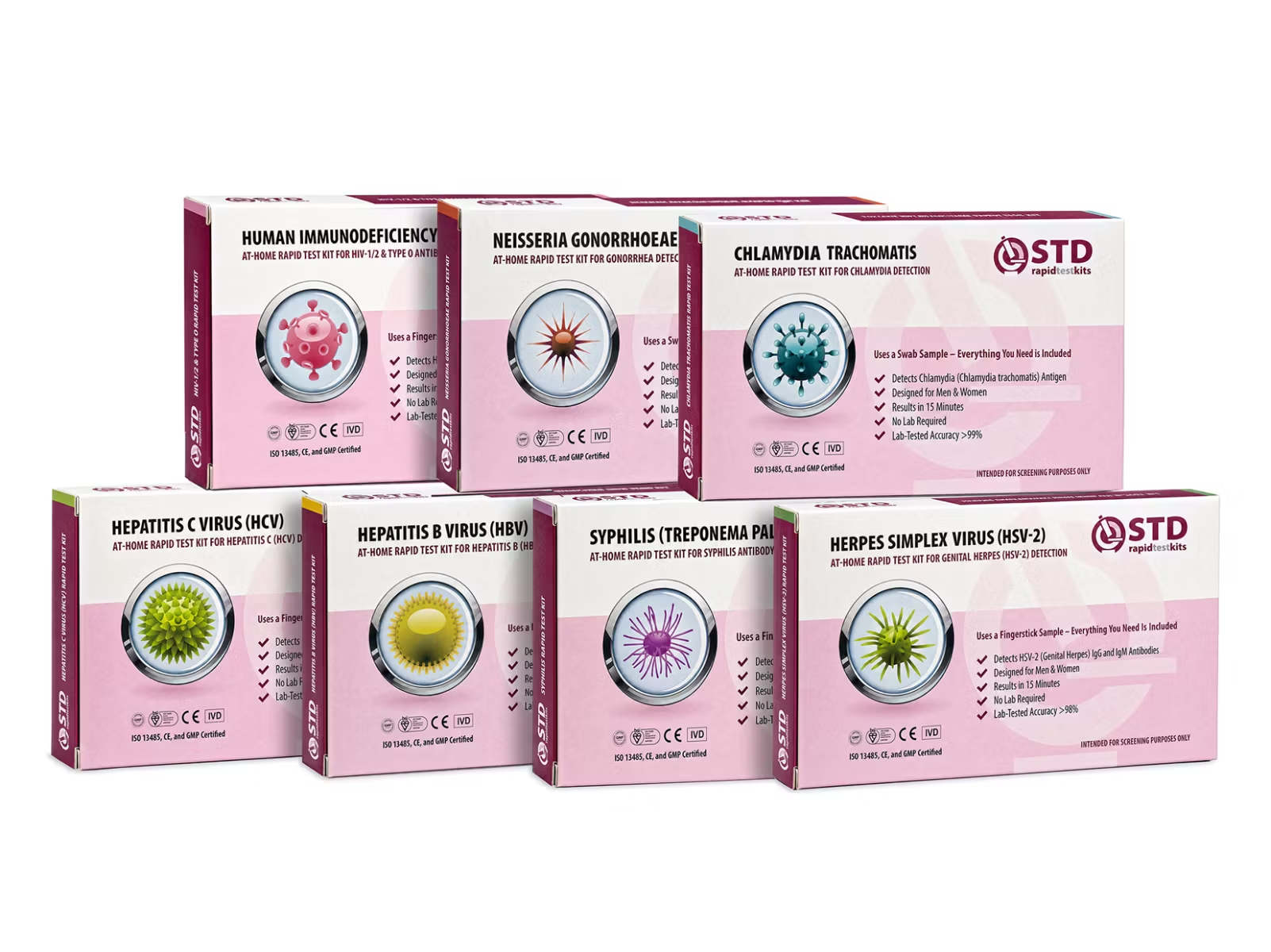
When you take your health seriously, even if that means testing more than once in a month, you are not overreacting. You are paying attention. If you are ready for clarity, an at-home rapid test gives you a quick, private starting point. The result tells you whether the next call is to a clinician or simply to your probiotics shelf. As a triage rule, screen for chlamydia and gonorrhea once you are at least 14 days past a possible exposure, and screen for HIV and syphilis with blood-based tests once enough time has passed for antibodies to develop, per the assay’s instructions.
Rapid lateral-flow panels turn around in about 15 minutes. Spending those 15 minutes ruling out an STI beats another week of self-treating yeast that was actually trichomoniasis or chlamydia.
FAQs
- Can antibiotics directly cause BV or an STD?
- Not directly. Antibiotics tip the vaginal environment toward conditions that favor BV-causing bacteria and reduce the body’s natural resistance to certain STIs. The infection still requires the bacteria or virus to be introduced, and a disrupted microbiome makes successful colonization more likely.
- Why does my BV keep coming back after treatment?
- Recurrent BV is well documented in the medical literature. If vaginal Lactobacillus does not fully recover after treatment, the pH stays elevated and BV-related anaerobes can return. Recurrence is also linked to untreated partners (in some sexual relationships), to certain hygiene practices, and to repeated antibiotic exposure for other reasons.
- How do I tell yeast apart from a possible STD?
- Classic yeast: thick, white, curd-like discharge with intense itching and minimal odor. BV: thin, off-white discharge with a strong fishy odor. STIs like trichomoniasis or chlamydia can mimic both, sometimes with cramping, spotting, or no symptoms at all. If symptoms keep coming back, do not self-treat indefinitely. A test rules out the things over-the-counter products will not fix.
- I used condoms. How could I still get an STD?
- Condoms substantially lower the risk of fluid-borne STIs without eliminating it. They also offer only partial protection against skin-to-skin transmission (herpes, HPV, syphilis chancres outside the covered area). Add a disrupted microbiome to that, and the residual risk goes up further.
- Can I take probiotics while on antibiotics?
- Yes. Many clinicians recommend it. Just space the doses by a few hours so the antibiotic does not kill the probiotic at the same moment you take it. Strains that have specific evidence in vaginal health include L. rhamnosus, L. reuteri, and L. crispatus. Use them alongside prescribed antibiotic therapy; they support recovery without replacing the prescription.
- Something feels off after my antibiotic course. Should I wait it out?
- If symptoms persist for more than a few days after finishing the course, do not wait. New odor, persistent itching, unusual discharge, or pelvic discomfort all merit a test. Testing is faster than guessing, and most rapid panels turn around in about 15 minutes.
- Will the antibiotic I am already taking treat an STD if I happen to have one?
- Only if it happens to be the right antibiotic for that infection. Doxycycline treats chlamydia. Amoxicillin does not treat gonorrhea. Metronidazole treats trichomoniasis and BV without covering chlamydia or gonorrhea. Do not assume crossover coverage. Test for the specific infection so the right treatment is given.
- How long does vaginal flora typically take to recover?
- It varies. Some people are back in balance within a week. Others feel off for a month. Stress, diet, hormone shifts, sex, and additional antibiotic courses all play a role. If symptoms persist two weeks after the antibiotic course ends, it is worth checking both vaginal flora and an STD panel.
How we sourced this article: Our editorial team summarized current public-health guidance from the CDC, NHS, and the National Library of Medicine, alongside peer-reviewed research on vaginal microbiome disruption and STI susceptibility. The article is reviewed for clinical accuracy by a licensed medical doctor before publication. We do not provide diagnosis, and we recommend tests based on fit for the reader’s concern, not commercial benefit.
- U.S. Centers for Disease Control and Prevention. Bacterial Vaginosis fact sheet, including the documented association between BV and increased STI susceptibility (HIV, HSV-2, gonorrhea, chlamydia).
- U.S. Centers for Disease Control and Prevention. STI Treatment Guidelines, Bacterial Vaginosis section, covering recurrent BV management approaches.
- U.S. Centers for Disease Control and Prevention. STI Treatment Guidelines landing page, used for the general principle that NAATs are the lab diagnostic standard for chlamydia and gonorrhea.
- National Institutes of Health, NLM Bookshelf. Bacterial Vaginosis (StatPearls), used solely for the BV diagnostic criterion that vaginal pH greater than 4.5 is part of the standard BV diagnosis (Amsel criteria).
- National Health Service (UK). Bacterial vaginosis overview, symptoms, and clinician follow-up guidance.
