

Quick Answer: Talking about repeated STDs starts with removing shame from the equation. Focus on facts, boundaries, and safety. Most STDs are treatable, and reinfection is common. Clear, compassionate conversations protect both people.
“You Again?”: The Internalized Shame of Recurrence
Let’s start with a scene that might feel familiar: You’re sitting on the edge of your bed, phone in hand, a test result glowing back at you, positive, again. This isn’t your first rodeo. Maybe it’s chlamydia. Maybe it’s herpes. Maybe you thought you did everything right. And now you’re wondering, “How the hell do I tell them this time?”
Repeat infections stir up emotional sludge. People internalize STDs as moral failures rather than medical events. But the truth is, getting an STD more than once is common, especially if your partner hasn’t been tested, or you’re in a cycle of reinfection. According to the CDC, reinfection rates for chlamydia alone can reach 20% within a few months.
We don’t shame people for getting the flu again. Or for having high blood pressure twice. So why do we frame repeated STDs as a character flaw? This article is about breaking that pattern, for yourself, and for the person you’re about to talk to.
“It Came Back”, Or Did It Never Leave?
Here’s what makes the conversation even messier: most people can’t tell whether a repeated positive result means reinfection, relapse, or a test error. Let’s break that down.
If you’ve already been treated for an infection like gonorrhea or trichomoniasis, a new positive test could mean:
You never fully cleared the infection. Or your partner wasn’t treated. Or you were exposed again. Sometimes, test residue or sample contamination gives you a false-positive scare. Without accurate timelines or partner testing, you can’t always know for sure.
What matters in your conversation is not assigning blame, but sharing facts and creating space for a response. “This came up on my test. I’m still figuring out what it means, but I care about your health too.” That’s a sentence that holds room for ambiguity without fear-mongering.
| Scenario | What It Could Mean | What to Say to a Partner |
|---|---|---|
| Positive test after treatment | Possible reinfection, false positive, or untreated partner | “I tested again and it’s still showing up, let’s both get checked to be safe.” |
| Symptoms return months later | Reinfection from current partner or new exposure | “Something’s going on again, I want to be honest and figure it out together.” |
| New infection with a different STD | Different strain or exposure; not a ‘repeat’ technically | “It’s not the same one, but I did test positive again. We should both look at options.” |
Table 1. What repeated STD results can mean, and how to phrase the conversation to prioritize care over blame.

Case Story: “I Didn’t Want to Tell Him I Had It Again”
Nora, 28, thought she’d done everything right after her first bout with chlamydia. She took her meds. She waited the full seven days before resuming sex. But she never asked her partner to get tested. Two months later, she started noticing the same low belly ache, and the same discharge.
“I almost didn’t go back to the clinic because I didn’t want it to be true again,” she says. “And when it was, I froze. Like… how do you say, ‘Hey, you gave this back to me’ without starting a fight?”
She ended up sending him a message: direct, but neutral. “Hey, I tested positive for chlamydia again. I don’t want to assume anything, but I’d really like if you could get checked too. It might help both of us.” He responded the next day. He was embarrassed, admitted he’d skipped testing, and got treated the following week. Their relationship didn’t last, but her confidence grew.
The takeaway: The first conversation sets the tone. The second one proves your values. Repeating the STD doesn’t make your message weaker. It makes it more necessary.

Why Repeat Infections Happen (And Why It's Not Always Someone's Fault)
Here’s the clinical reality: STDs are incredibly common, highly transmissible, and often asymptomatic. People can carry gonorrhea in the throat, rectum, or genital area without knowing. Some strains of herpes shed even when there are no visible sores. Reinfection is not a sign that someone’s “promiscuous”, it’s a sign that our conversations, testing habits, or protection use might need an update.
There’s also test sensitivity to consider. A rapid syphilis test, for example, can miss early antibodies or give false positives from past infections. Timing matters. So does the type of test. If you’re testing often (which is great), you might catch things others miss, and that doesn’t make you “dirty.” It makes you diligent.
We’ve included a comparison of reinfection dynamics and test retesting strategies below to show why this isn’t about moral failure, it’s about biology and human behavior.
| STD | Can You Get It More Than Once? | Asymptomatic Risk | Reinfection Common? |
|---|---|---|---|
| Chlamydia | Yes | High | Very common if partner untreated |
| Gonorrhea | Yes | High | Common with oral/anal exposure |
| Herpes | Not “again,” but flare-ups recur | Yes (viral shedding) | Recurring outbreaks, not reinfection |
| Trichomoniasis | Yes | Often missed in men | Very common due to undiagnosed carriers |
Table 2. Reinfection realities across common STDs, why recurrence isn’t rare, and what factors contribute to it.
If you’re dealing with repeated positives, your story fits the data. You’re not failing. You’re just living in a world where testing, treating, and talking all require effort, and support.
What to Say When It Happens Again
No one wants to feel like the messenger of bad news, especially not twice. But having “the talk” again doesn’t have to be humiliating. It can be clear, mature, and even relationship-strengthening when handled with care. The key? Ditch the guilt trip. Pay attention to shared responsibility, health for everyone, and the right to know. Here’s how that looks in action.
Start with timing. Don’t wait until your partner is mid-shift or out with friends. Choose a moment where you both have privacy, emotional capacity, and time. If you’re not ready to speak out loud, starting with a text is okay, but plan for a follow-up.
Now comes tone. Frame the conversation around care, not fear. Try:
“Hey, I just got my test results and they were positive again. I know this isn’t easy to talk about, but I want us both to be safe. Can we check in together about it?”
Or, “This isn’t about blame, I just want us both to have all the info. I tested positive again and I think we should both get checked, even if you feel fine.”
Leading with honesty protects your credibility. Framing with care protects their dignity. You don’t need all the answers before you talk. You just need to be real.
When They React Poorly: Defensiveness, Denial, or Ghosting
Not every partner responds well. Some deflect. Some deny. Some disappear. If that happens, remember: it’s not your responsibility to carry their shame or manage their reactions. Your job is to communicate facts and protect your health.
Dane, 33, had this happen after telling a hookup that he’d tested positive for gonorrhea, twice.
“The first time, she was really cool about it. Got tested and said thank you. The second time, she said, ‘Well, maybe you should stop sleeping around.’ It stung because I wasn’t, I was just testing regularly. She blocked me a day later.”
Reactions like that say more about their internalized shame than your worth. If a partner can’t have a conversation without attacking you, they likely weren’t a safe partner to begin with. You still did the right thing.
And if you're in a committed relationship where reactions turn to gaslighting or accusations, seek outside support. You deserve to feel safe even in uncomfortable conversations.
When You're Not Sure Who It's From (And It Doesn’t Matter)
Repeat this with me: you don’t need to know who “gave it” to you to talk about it. STDs don’t work like a game of tag. Most of the time, you can’t pinpoint the exact moment, person, or act that led to infection.
This is especially true for viral infections like herpes or HPV, which have latency and shedding that make the timeline more complicated. Even for bacterial infections like chlamydia, someone may be a silent carrier for months.
What matters isn’t the blame, it’s the action. Telling a partner you tested positive again opens the door for both of you to test, treat, and update your prevention game. Framing the conversation around shared care instead of detective work keeps it from turning toxic.
If you’re worried they’ll demand answers you can’t give, it’s okay to say: “I don’t know where it came from, and I’m not trying to point fingers. I just know I tested positive and I want us both to be okay.”
When They Say “But I Don’t Have Symptoms”
One of the most common responses you’ll hear is: “I feel fine, though.” It’s natural, they’re trying to make sense of invisible risks. But up to 70% of people with chlamydia and 50% with gonorrhea have no symptoms at all. Same goes for trichomoniasis in men, where it often goes completely unnoticed.
Use that moment as an opening to educate, not lecture. "I didn't have any symptoms the first time, but I still tested positive." These things are sneaky. "That's what makes it hard." Some people carry without knowing. Getting tested just makes sure we’re both covered.”
By keeping your tone informative and grounded in your own experience, you invite your partner to view testing as a normal part of intimacy, not an accusation.
When You’re Tired of Having This Conversation
Maybe you’ve been here before, too many times. Maybe you’re the “responsible” one in your group, the one who always brings up testing, who always takes the hit emotionally. And maybe you’re just... tired.
We hear that. STD fatigue is real. So is the emotional labor of educating partners, managing testing schedules, and carrying the cultural shame of “catching something.” Especially if you’re queer, non-monogamous, sex-working, or in any group more likely to be pathologized, that weight can feel unfairly heavy.
This is your reminder that you don’t owe perfection. You’re allowed to feel exhausted. You’re allowed to want easier conversations. And you’re allowed to pause, breathe, and say: “I don’t have all the answers today, but I’m still showing up for my health and yours.”
And if you need backup? You can always point your partner to testing resources. The STD Rapid Test Kits homepage offers discreet, fast options that don’t require clinics or confrontation. Testing isn’t just for after exposure, it can be a tool for peace of mind and partnership.
When it feels like too much, remember: testing is care, not confession. Every time you bring it up, you make the world a little less shameful, and a lot more honest.
Should You Keep Sleeping with Someone Who Keeps Reinfecting You?
This is where the personal meets the political. If you keep testing positive, and you’re pretty sure it’s coming from the same partner, you have every right to pause and reconsider. But this doesn’t always mean cutting ties. It might mean renegotiating protection. It might mean joint testing. It might mean creating a boundary: “We don’t have sex unless we’ve both been tested this month.”
Jess, 25, stayed with a partner who repeatedly gave them trichomoniasis until they finally demanded a treatment timeline.
“He kept saying he felt fine, but I kept getting symptoms after we hooked up. I told him I wouldn’t have sex again unless I saw the treatment script. He finally admitted he hadn’t taken the meds. That was it for me.”
You’re not being “dramatic” for setting health boundaries. If you’re doing your part and someone else isn’t? That’s a red flag, and one worth taking seriously.
There’s a difference between being understanding and being unsafe. You can offer grace and still protect your body.
Reinfection Timelines: When to Test Again After Treatment
If you’ve tested positive more than once, timing matters. Not just for telling your partner, but for when to test again. Most STDs have what’s called a “retesting window”, a recommended gap after treatment to ensure the infection is truly cleared and hasn’t come back.
Testing too soon after treatment can pick up leftover genetic material, especially with PCR or NAAT tests, leading to false positives. Wait too long, and you might miss a reinfection. Here's how long to wait after treatment before you can trust a negative result:
| STD | Recommended Retest Timing | Why It Matters |
|---|---|---|
| Chlamydia | 3 weeks post-treatment | NAAT can detect dead DNA earlier, causing false positives |
| Gonorrhea | 2–3 weeks post-treatment | To confirm treatment success and avoid repeat exposure |
| Trichomoniasis | 2 weeks post-treatment | High reinfection rate if partner not treated simultaneously |
| Syphilis | 3 months (blood antibody test) | Treponemal antibodies may remain for life, look for titer drop |
Table 3. How long to wait before retesting after STD treatment, based on CDC guidelines and clinical accuracy data.
If you’re unsure whether your partner was treated, or if you’ve resumed sex since treatment, schedule a follow-up test at the window that makes the most sense for the infection you had. And yes, getting tested together is still one of the most intimate things two people can do.

Making Testing a Normal Part of the Relationship
Imagine this: instead of hiding test results or waiting for symptoms to show up, you and your partner talk about testing like you talk about dinner plans. Casual. Routine. Respectful.
That’s not a fantasy. It’s how people in sexually active relationships stay connected and reduce drama. For couples who’ve dealt with repeat infections, turning testing into a shared ritual (once every 3–6 months) can transform the vibe completely.
It doesn’t have to be awkward. Try: “Hey, let’s both test before that weekend trip.” Or, “Want to make it a ‘Netflix and swab’ night?” Humor and honesty go a long way. So does having access to tools that make testing easy.
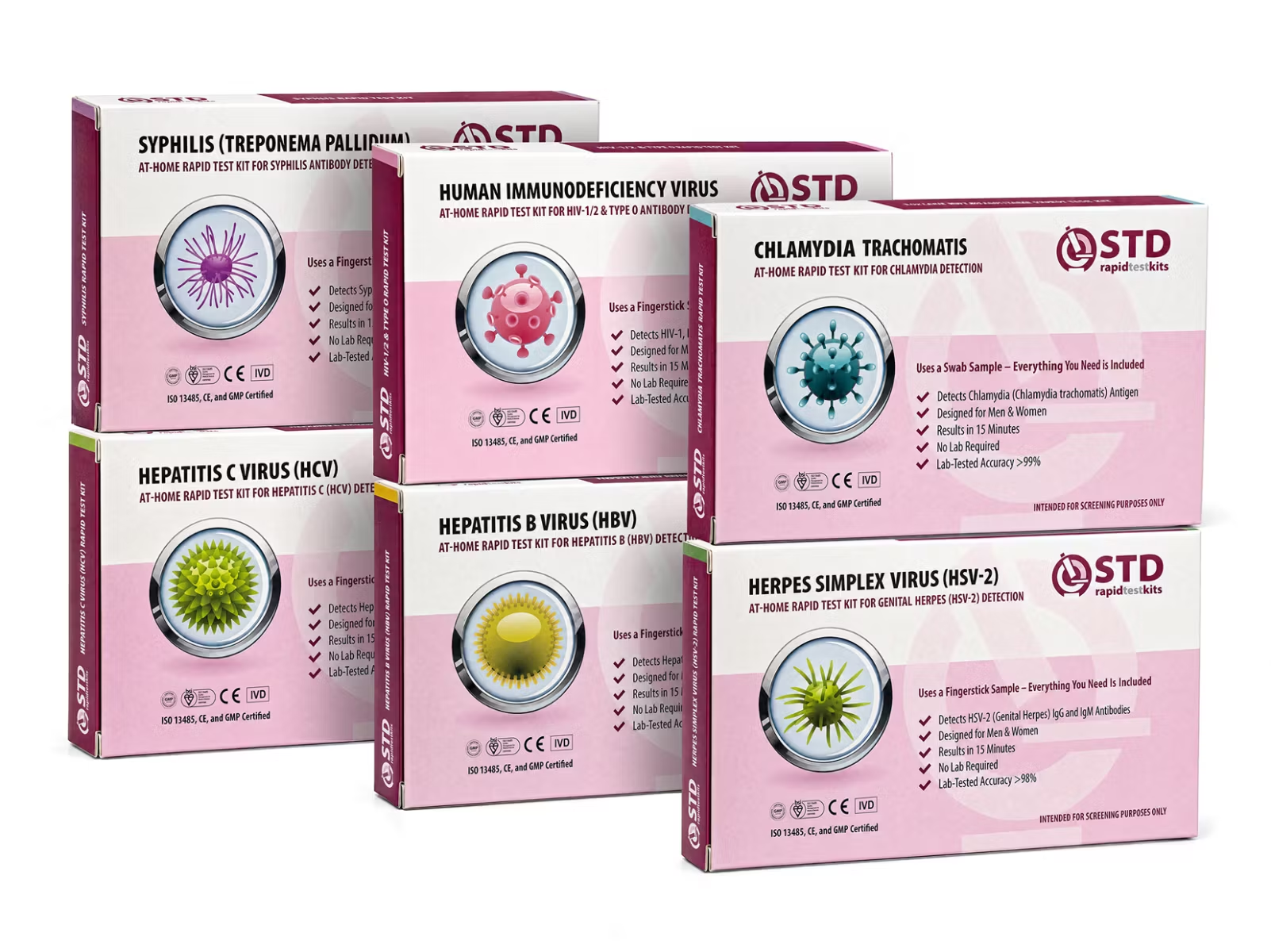
This at-home combo test kit covers the most common STDs with discreet delivery and easy-to-read results. No clinic. No awkward waiting room. Just you, your health, and the power to know what’s going on in your body.
If your partner seems hesitant, frame it like this: “It’s not about not trusting you. It’s about having peace of mind together.” That’s how you build intimacy that lasts beyond the infection.
When You’re Starting Something New (And Carrying Old Luggage)
Starting a new relationship after you’ve had repeated infections can feel like walking on a tightrope. When do you bring it up? What if they react badly? What if they think you’re high-risk or “unclean”?
Here’s the truth: your past doesn’t make you unworthy. If anything, it makes you more informed, more honest, and more ready to have real conversations. Being able to say, “I’ve had STDs in the past, and I take testing seriously now,” is a strength, not a liability.
Lead with ownership. Say, “Before we get more physical, I want to be open. I’ve tested positive for some STDs before, and I’ve learned a lot about how to stay safe. I’d love if we could both test before we go further.”
If they get weird? That’s data. If they thank you? That’s partnership. Either way, you’re modeling the kind of sexual health culture we all deserve.
How to Keep the Conversation Going (Without Killing the Mood)
Let’s be honest: talking about STDs can feel like pouring cold water on a hot moment. But it doesn’t have to kill the vibe. It can actually build trust and deepen intimacy, if you approach it with confidence and clarity.
Instead of waiting until clothes are halfway off, introduce testing early. Over dinner. On a walk. In a meme. Find your style. Use humor. Use stats. Use your story. “I’ve learned the hard way that testing isn’t optional for me anymore. Want to grab a kit together?”
Making it sexy is a bonus, but making it normal is the real win. And if you’re someone who’s dealt with repeat infections, you don’t owe silence to protect someone else’s ego. You deserve honesty in return.
If you want to make it easier, link them to resources. Our homepage includes risk tools, shipping timelines, and test explanations that remove guesswork. Testing together can be part of foreplay, not a buzzkill.
And remember: you’re not asking for favors. You’re offering clarity, care, and consent. That’s hot.
FAQs
- 1. Can you actually get the same STD more than once?
- 100% yes, and it's way more common than people think. Imagine it like catching strep throat from the same classmate over and over: if they never treated it, and you kept sharing a drink, of course it comes back. Same idea. Chlamydia and gonorrhea are especially sneaky this way. Getting it again doesn’t mean you’re careless, it means the infection is good at hiding and coming back if both partners aren't treated at the same time.
- 2. What if I don't know who I got it from this time?
- Totally normal. Most people can’t trace a specific moment or person, because STDs don’t always show up right away, and many people carry them without symptoms. You don’t need detective work to have a real conversation. Saying, “I tested positive again, I want us both to be safe” is enough. You don’t owe a suspect list to justify getting treated.
- 3. Do I really have to tell them again?
- Yeah, you do, but hear this: that doesn’t make you a problem. It makes you a grown-up. You’re protecting your partner’s health, and that matters more than how awkward it feels in the moment. The truth? Most people respect honesty, even if it catches them off guard. And if they don’t? That’s information, too.
- 4. How long should I wait to test after treatment?
- Depends on the infection, but for most bacterial STDs like chlamydia or gonorrhea, wait about 2 to 3 weeks. That gives your body time to clear out any leftover DNA that could confuse the test. Too early and you might see a “positive” even when you're cured. Think of it like hitting snooze on your phone, sometimes waiting a bit gives you a clearer wake-up call.
- 5. My partner says they’re fine because they don’t feel anything. Is that real?
- It’s real that they feel fine, but that doesn’t mean they’re in the clear. Most STDs are asymptomatic in the beginning. You could walk around with trichomoniasis for months and never know. That’s why regular testing is a love language, not an accusation. Feeling okay isn’t the same as being negative.
- 6. What if they react badly when I tell them?
- That sucks, and it happens. You might get deflection, silence, or even blame. But that’s about their shame, not your worth. You’ve done your part by speaking up. If someone turns it into a character judgment, you’re seeing their emotional maturity (or lack of it) in real time. You deserve a partner who listens, not one who lashes out.
- 7. I’ve had a few STDs now. Does that make me “high-risk”?
- It makes you tested. Let’s be real: people who never test often walk around with undiagnosed infections for years. You most likely get tested frequently and are concerned about your health if you have experienced multiple sexually transmitted diseases. That's not dangerous; it's responsible.
- 8. Can I still have sex while waiting for test results?
- Technically? You can. But ethically, you want to think about risk and transparency. If you’ve had symptoms or a known exposure, it’s smart to hold off until results come back, or use protection and communicate openly. Saying, “I’m waiting on a result, just FYI,” is a vibe. It shows care, not drama.
- 9. How do I bring up testing without killing the mood?
- Timing is everything. Don’t wait until you’re naked. Try saying something low-key: “I usually test every couple months, want to do it with me?” Or even send them a link to STD Rapid Test Kits and say, “This is how I keep peace of mind.” Normalize it like ordering sushi. It doesn’t have to be a TED Talk.
- 10. Is at-home testing still accurate after I’ve had an STD before?
- Yes, as long as you’re following the timing rules. At-home tests work well when used at the right windows (usually 2–3 weeks after treatment). They’re especially good for privacy, speed, and repeat testing without the clinic hassle. If something looks off or symptoms linger, follow up with a clinic test just to be sure. Think of home tests as your first line, not your last resort.
You Deserve Honesty, Not Embarrassment
Testing positive again doesn’t make you reckless. It makes you human. And how you handle the conversation with your partner? That’s where your power lives. Whether it’s your second infection or your fifth, you’re not alone, and you’re not broken.
STD recurrence happens. Silence makes it worse. Honesty makes it better. With the right words, the right timing, and the right resources, you can turn a dreaded talk into a moment of real connection, and maybe even a turning point in how you care for each other.
Don’t wait and wonder, get the clarity you deserve. This at-home combo test kit checks for the most common STDs discreetly and quickly.
How We Sourced This Article: We combined current guidance from leading medical organizations with peer-reviewed research and lived-experience reporting to make this guide practical, compassionate, and accurate.
- Chlamydia: Symptoms, Treatment, and How to Avoid Getting It Again (CDC)
- How STDs Are Diagnosed and Treated—And What to Tell Your Partner (Mayo Clinic)
- NCBI/StatPearls – Sexually Transmitted Infections Overview
- The Role of Shame, Stigma, and Family Communication in STI Disclosure (PMC)
- Shame and STIs: Exploration of Stigma and Disclosure (PMC)
- NP Women’s Healthcare – STDs Retesting and Reinfection Prevention
- Guttmacher Institute – Reducing STIs Through Better Sexual Health Information
