
Published: October 2025 | Last updated: May 2026 | Editorial review and quality control: Martina N.
An STD diagnosis is more than a clinical result. It carries weight that shows up in everyday conversations, in physical intimacy, and in the basic question every couple ends up asking afterward: can we still trust each other? The honest answer is that many couples come through this stronger, but the path requires more than reassurance. It takes accurate information, an unguarded conversation, and a shared plan for what to do next. This guide walks through how partners can rebuild trust after a positive test, what current public health guidance says about how infections spread, how to talk about results without blame, and when it makes sense to retest together. If you are reading this in the middle of that moment, you are not alone, and the relationship is not automatically over.
Key Takeaways
- A positive STD test does not automatically mean infidelity. Many infections stay dormant or asymptomatic for months or years, so the timing of detection rarely lines up with the timing of exposure.
- Couples who get tested together, share results honestly, and complete treatment as a team tend to recover trust faster than couples who avoid the conversation.
Understanding the emotional impact of an STD diagnosis
An STD diagnosis is rarely just a medical issue. For most couples it lands as an emotional event first, with the clinical follow up happening underneath. The shape of that emotional weight is different for each partner, and naming it directly is the first step toward moving through it instead of around it.
For the partner who received the positive result, the dominant feelings are usually shame, guilt, and a sharp fear of rejection. If the diagnosis arrived without warning symptoms, there is also a layer of confusion about timing, because most sexually transmitted infections do not present in a clean window that tells you exactly when transmission happened. People often replay months of their own history looking for an answer that the biology does not actually provide.
For the partner who tested negative, or who has not been tested yet, the dominant feelings are usually closer to betrayal and insecurity, especially when the relationship has been monogamous on the surface. That reaction is understandable, but it is also where a lot of relationships get stuck. The leap from "you have a positive result" to "you must have cheated" skips over the actual transmission science and turns a medical conversation into a courtroom one.
The reality public health agencies report is more layered. Some infections can stay dormant or asymptomatic (carrying the infection with no symptoms) for years before any test picks them up, and many are spread by people who genuinely did not know they were infected (CDC overview of sexually transmitted infections). That is not an excuse for anyone, and it does not mean infidelity never happens, but it means a positive result alone is not proof of recent betrayal.

Have an honest conversation, on purpose
Most couples have one version of the disclosure conversation in their head and a very different one in practice. The version in your head is calm, careful, and over in five minutes. The version in practice tends to land in a hallway after a long day, when someone is already tired and the words come out as accusation rather than information.
The fix is to schedule the conversation, not stumble into it. Pick a private space where neither of you has somewhere to be in the next hour. Sit down. Put the phones face down. Lead with what you actually know, in the order you learned it: the test, the result, the date, and what you have done about it so far. Then stop talking and let your partner ask.
Three structural moves help during this conversation:
- Use "I" statements. Saying "I tested positive last week and I wanted you to hear it from me first" lands very differently than "you need to go get tested." The first invites a conversation; the second invites a fight.
- Stay transparent about what you do not know. If you genuinely do not know when you contracted the infection, say so. Pretending to know creates a false story that falls apart later, which is worse for trust than the original uncertainty.
- Validate what your partner is feeling before defending yourself. Saying "I understand why this feels like a betrayal" is not an admission of guilt. It is acknowledgement that their reaction makes sense.
Avoiding the conversation does not buy time. It usually makes the eventual disclosure harder, because by the time the truth comes out the other partner has often already noticed something is off and started building their own theory about what is happening. The version of the conversation you initiate at a moment of your choosing will almost always go better than the version that ends up forced.
Lisa had been with Mark for a year when she tested positive for chlamydia. Instead of avoiding the topic, she sat down with him that evening and said something close to: I just got tested and the result was positive. I do not know exactly when I got it, but I wanted you to hear it from me first and I am here for whatever questions you have. Mark was upset at first, but he later said the way she opened the conversation made the difference. They retested together, completed treatment, and worked through the harder questions over the following weeks.
Educate yourself, and each other
One of the biggest obstacles to rebuilding trust is plain misinformation about how STDs spread. The story most people carry around is that an infection equals infidelity, and that the timing of detection equals the timing of transmission. Both assumptions are often wrong.
A few facts worth getting clear on as a couple:
- Many infections are silent. Most people who carry chlamydia or gonorrhea, for example, have no symptoms at the time of transmission, which means a partner can pass an infection on without ever knowing they had it.
- Some viral infections stay dormant for years. Herpes (HSV-1 and HSV-2) and HPV can sit in the body for months or even years before any visible sign or detectable antibody appears, so a new diagnosis is not always a recent infection (CDC herpes overview).
- STDs are common. The CDC's national prevalence and incidence work consistently shows STIs as widespread across the U.S. adult population, which puts these conversations closer to routine health topics than to rare events (CDC sexually transmitted infections overview).
- Condoms reduce risk, they do not eliminate it. Barrier methods cut transmission substantially for bacterial infections, but herpes and HPV can spread through skin to skin contact outside the area a condom covers (CDC HPV overview).
Couples who sit down and read this information together, instead of one person trying to explain it from memory to the other, tend to rebuild faster. The shared reading does two things at once: it gets both partners on the same factual page, and it signals that this is being treated as a shared health issue rather than a one sided accusation. Asking a clinician these questions together, in the same appointment, has the same effect.

Take responsibility without falling into blame
Blame and accountability look similar from the outside but do very different things to a relationship. Blame assigns guilt and demands punishment. Accountability acknowledges what happened and looks for the next right action. Rebuilding trust requires the second one and almost never benefits from the first.
If you are the partner who tested positive, accountability looks like a few concrete actions. Complete the treatment your clinician prescribed, on the schedule they gave you, without skipping doses because you are feeling better. Be open about your sexual health history to the extent your partner needs to make informed decisions. Commit to a regular retesting cadence appropriate for the infection and for your shared situation. And if you have other recent partners who deserve a heads up, contact them. Most clinics will support partner notification anonymously if direct contact is too uncomfortable.
If you are the partner who has not tested positive, accountability looks different but is equally important. It means separating the feeling of betrayal from the question of whether betrayal actually occurred. It means getting tested yourself, even when you do not think you need to, because asymptomatic transmission is common enough that a clean assumption is not the same thing as a clean test result. It also means resisting the urge to use the diagnosis as a permanent leverage point in future arguments. A relationship cannot rebuild if every disagreement gets routed back through "but remember when you gave me chlamydia."
The pitfall to avoid on this side is the moralistic question. Phrases like "if you really loved me, you would have told me sooner" assume the diagnosed partner had information they did not have. People who carry asymptomatic infections often genuinely do not know. Punishing a partner for not telling you something they themselves did not know is a path that goes nowhere useful, and it makes future honesty less likely, not more.
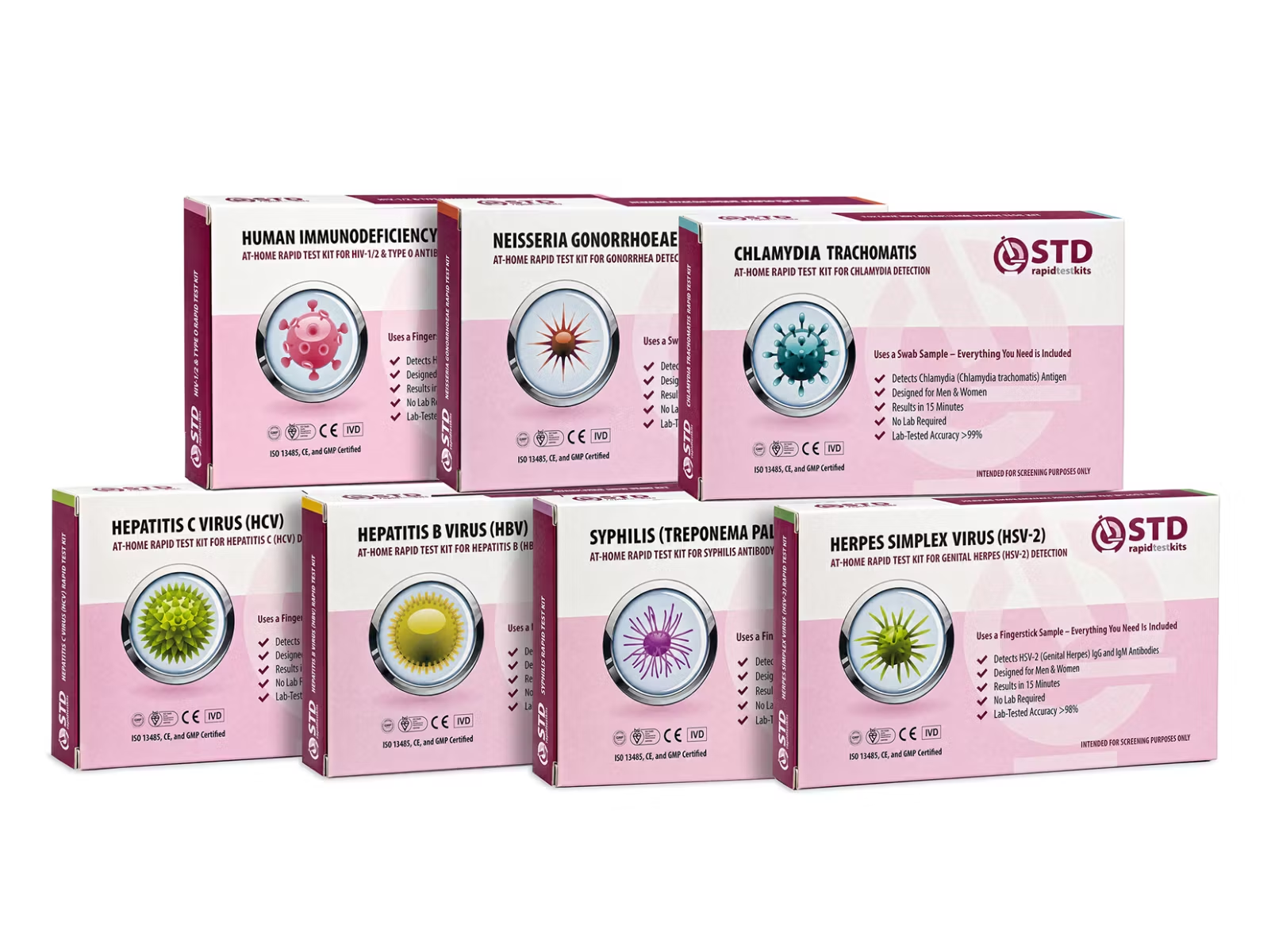
If a retest is the next concrete step, the kit referenced below is sold by this site, and the description reflects the actual lateral-flow chemistry the product uses.
Rebuild emotional and physical intimacy at your own pace
Physical intimacy after a positive test is one of the more complicated parts of recovery, and the standard advice to just take it slow is too vague to be useful. Some couples stop sex entirely out of fear and end up resenting each other for the silence. Others rush back into it to prove the relationship is fine and find themselves anxious afterward. Neither pattern actually rebuilds intimacy. The middle path is intentional: discuss what feels right, agree on protective steps, and let the timeline answer to the couple, not to anyone else.
A few practical anchors help during this period:
- Give yourselves time. Emotional wounds need space, and a forced back to normal timeline tends to feed resentment rather than resolve it. Two weeks, two months, or longer can all be reasonable depending on the infection and the couple.
- Retest together. Knowing both partners' current status, after treatment where applicable, removes a major source of unspoken anxiety. At home rapid kits make this practical without scheduling two separate clinic visits.
- Use protection consistently while you rebuild. Condoms and dental dams do not eliminate every transmission route, especially for skin to skin viral infections, but they cut risk for most bacterial infections substantially and they signal a shared commitment to the other partner's health.
- Talk to a clinician about suppressive therapy when relevant. For herpes specifically, daily antiviral medication can reduce the risk of transmission to a partner, and most clinicians are happy to discuss this in a normal appointment (CDC STD treatment guidelines).
- Consider a relationship counselor. A few sessions with a therapist who works with couples can move things along, especially when the disclosure conversation has surfaced harder underlying issues than the diagnosis itself.
One pattern clinicians commonly notice is that couples who treat the recovery as a shared project, with shared appointments and shared decisions, tend to rebuild intimacy faster than couples who outsource the medical side to one partner and the emotional side to the other.
Most people with a sexually transmitted infection do not know they are infected. Many infections cause no symptoms, which is why testing is the only reliable way to know your status.

Address the myths that get in the way
Myths around STDs cause more damage to relationships than the infections themselves in many cases. Three are worth pulling apart directly, because they show up in almost every disclosure conversation.
Myth: STDs only happen to people with a lot of partners. The data does not support this. Public health surveillance consistently shows STDs in long term and monogamous relationships, in people with one lifetime partner, and across every demographic and behavioral profile. A single exposure is enough for transmission of most STDs, and asymptomatic carriage means the exposing partner does not need to know they had it. Treating diagnosis as a referendum on a person's character is bad ethics and bad epidemiology at the same time.
Myth: a positive result means someone cheated. Sometimes infidelity is the explanation, but often it is not. Herpes can stay dormant for years before any test or visible outbreak. HPV can sit asymptomatic for years before any test or visible sign. Chlamydia can be carried for months without symptoms. A positive test today is not a timestamped record of when transmission happened, and the math of asymptomatic carriage means many people transmit infections without knowing they had them (CDC STD overview). Couples who jump from positive result to infidelity accusation often discover later that the timeline does not match, and by then the conversation has already done damage.
Myth: if you use condoms, you will never get an STD. Condoms substantially reduce transmission risk for chlamydia, gonorrhea, HIV, and most bacterial infections when used consistently and correctly. They reduce, but do not eliminate, risk for skin to skin viral infections like herpes and HPV, which can spread from areas a condom does not cover (NHS guide to sexually transmitted infections). "We always used condoms" is meaningful but not absolute proof.
Naming these out loud, together, gives both partners a shared vocabulary so the next decisions feel grounded in facts.
- Myth: only people with many partners get STDs. Fact: a single exposure is enough, and surveillance shows STDs across every demographic.
- Myth: a positive test proves someone cheated. Fact: some infections stay dormant or silent for months to years, so the test date is not the transmission date.
- Myth: condoms make you immune. Fact: condoms cut risk substantially but do not block skin-to-skin viral spread outside the area they cover.
How to move forward together
Trust is built in small, repeated decisions rather than in one big conversation. The first conversation matters, but the weeks that follow matter more. Couples who recover well tend to share a few practical habits.
- Treat regular testing as routine. An annual or twice yearly retest, depending on infection and risk profile, takes the topic from high stakes conversation to scheduled appointment. Some couples do it together; some do it on the same week. The shared cadence reduces ambiguity.
- Keep a judgment free space for the harder conversations. The diagnosis is not the only difficult topic this relationship will face. The habit of being able to raise something hard without it turning into accusation is worth more than any single test result.
- Stay current with the science. Treatment guidelines, prevention options like PrEP for HIV, and HPV vaccination eligibility all change over time (CDC treatment guidelines). Checking in once or twice a year keeps both partners on the same factual footing.
- Be patient with each other. Trust does not rebuild on the timeline the calmer partner would prefer. Healing is uneven, with good days and harder days, and the willingness to hold space for that unevenness is itself a trust signal.
Couples who do these things tend to come through a diagnosis with a relationship that is more open about uncomfortable topics, not less.
FAQs
- How do I tell my partner I have an STD without ruining the relationship?
- Lead with the facts, in the order you learned them: which infection, when you tested, what your clinician said, and what you have done about it. Pick a private setting with no time pressure. Acknowledge that the news is unwelcome and that questions are fair. Most relationships that recover well do so because the disclosure was direct rather than carefully managed.
- Can a relationship survive an STD diagnosis?
- For most couples, yes. The diagnosis itself rarely ends relationships that were otherwise healthy. What tends to determine the outcome is whether both partners can have an honest conversation, agree on a plan for treatment and retesting, and avoid using the diagnosis as a permanent grievance.
- Does a positive test mean my partner cheated?
- Not necessarily. Many STDs are asymptomatic for months or years, and some viral infections like herpes or HPV can stay dormant well before any test detects them. A positive result today is not a timestamp of when transmission occurred. Some couples find on closer review that the timeline supports a non infidelity explanation; others do not. Either way, the test alone is not the answer.
- Should we still have sex after an STD diagnosis?
- In most cases yes, with adjustments. For bacterial infections like chlamydia and gonorrhea, sex can resume after treatment is completed by both partners and a clinician confirms it is appropriate. For viral infections like herpes or HIV, ongoing safer sex practices and, when relevant, suppressive or antiretroviral medication reduce transmission risk substantially. A clinician can tell you what is appropriate for your specific situation.
- How can I rebuild self-esteem after testing positive?
- An STD does not change your worth as a partner, a friend, or a person. Most adults will have at least one STD in their lifetime, and the diagnosis is treated as a medical event by clinicians, not a moral one. Time, accurate information, and a willingness to be open with trusted people in your life are the main inputs. If the diagnosis has triggered persistent shame or low mood, a therapist who works with sexual health concerns can help.
- Should we break up if an STD is involved?
- Not by default. The diagnosis itself rarely justifies ending a relationship. If the diagnosis has surfaced deeper trust issues that were already present, or if one partner refuses to engage with the situation at all, those underlying issues are worth taking seriously. Separation as a response to the infection itself, though, is usually not the healthiest call.
- Can couples test together at home?
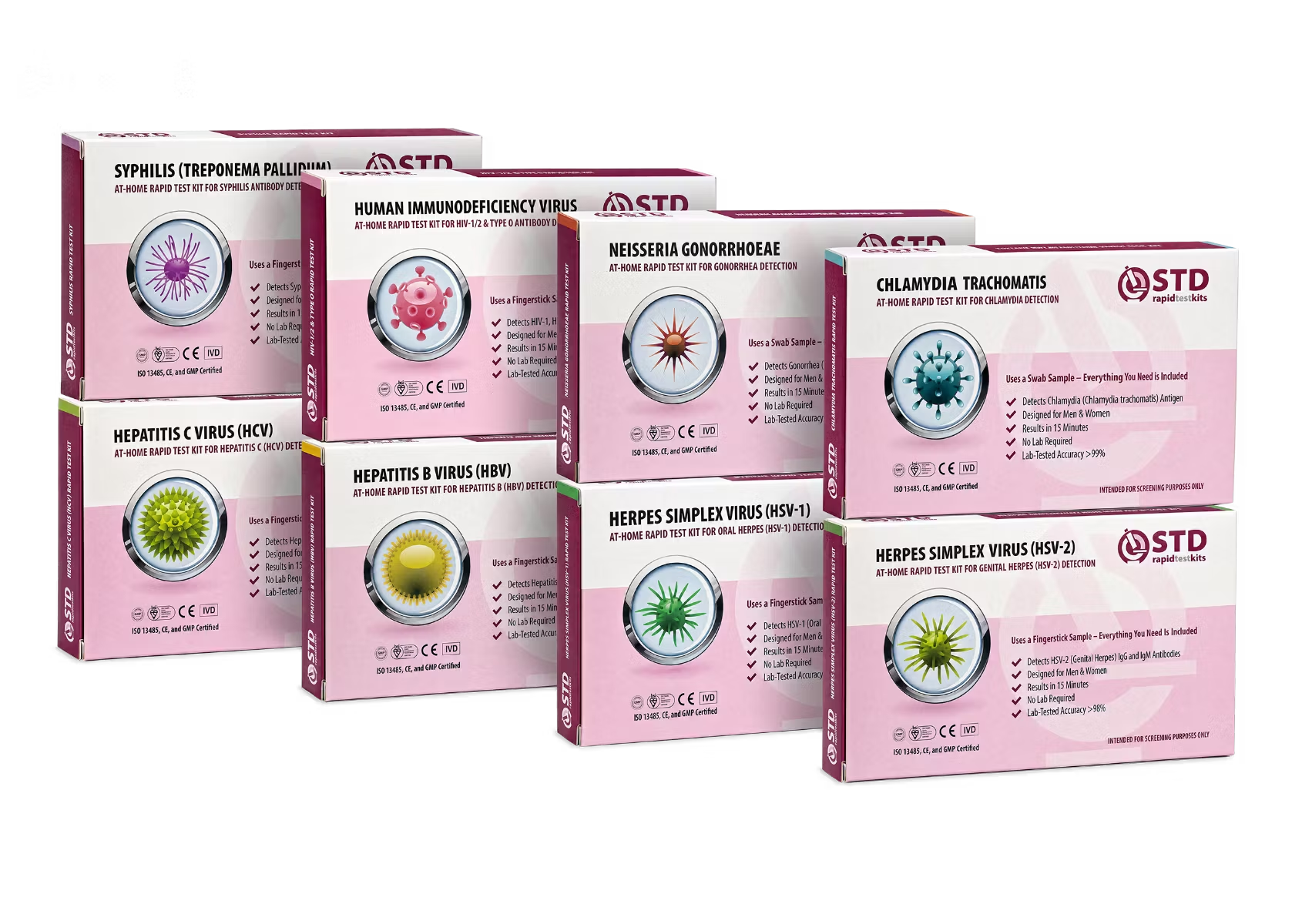
- Yes. Most at home rapid kits are sold as single use cassettes, and couples often buy two and test side by side. The shared timing removes a lot of unspoken anxiety, especially after a positive result for one partner. For some couples, the at home format also feels more private than a clinic visit.
- How do I stop feeling guilty about transmitting an STD?
- Self blame is common after passing an infection unknowingly. The productive response is to focus on what you can do now: complete treatment, support your partner through theirs, retest on the schedule your clinician recommends, and use barrier protection in the meantime. Persistent guilt that interferes with sleep or daily functioning is a reason to talk to a therapist.
- U.S. Centers for Disease Control and Prevention. Sexually transmitted infections overview, including transmission, dormancy patterns, asymptomatic carriage, and national context for STI prevalence.
- U.S. Centers for Disease Control and Prevention. Herpes simplex virus information, including asymptomatic shedding and suppressive antiviral therapy.
- U.S. Centers for Disease Control and Prevention. Human papillomavirus (HPV) overview, including skin to skin transmission, latency, and vaccination guidance.
- U.S. Centers for Disease Control and Prevention. STD treatment guidelines for clinicians, including partner notification, suppressive therapy, and retesting recommendations.
- UK National Health Service. Sexually transmitted infections information for the general public, including condom efficacy and protection guidance.
