
Published: October 2025 | Last updated: May 2026 | Editorial review and quality control: Martina N.
You ran the test. You can see a line. Maybe two. Maybe one of them is so faint that you have been moving the cassette between three different light sources trying to decide if it is really there.
Hepatitis B rapid tests are simple in principle. Blood goes in, two lines mean positive, one line means negative, no lines means the test failed. In practice, the fifteen minutes between sample and result can feel longer than it should, especially when the line that appears looks more like a smudge than a verdict. This guide walks through every reading scenario, what a faint test line really means, when to retest, and how to confirm a positive without panic.
Key Takeaways
- If both the control (C) and test (T) lines appear inside the 10-to-20-minute read window, treat that as a positive, even when the T line is faint. Faint does not mean false; it usually means antigen levels are low or detection is early.
- A single C line is a negative result, but only if you tested at least four to six weeks after possible exposure. No C line at all means the test is invalid; discard the kit and run a new one.
What's Inside a Hepatitis B Rapid Test Kit
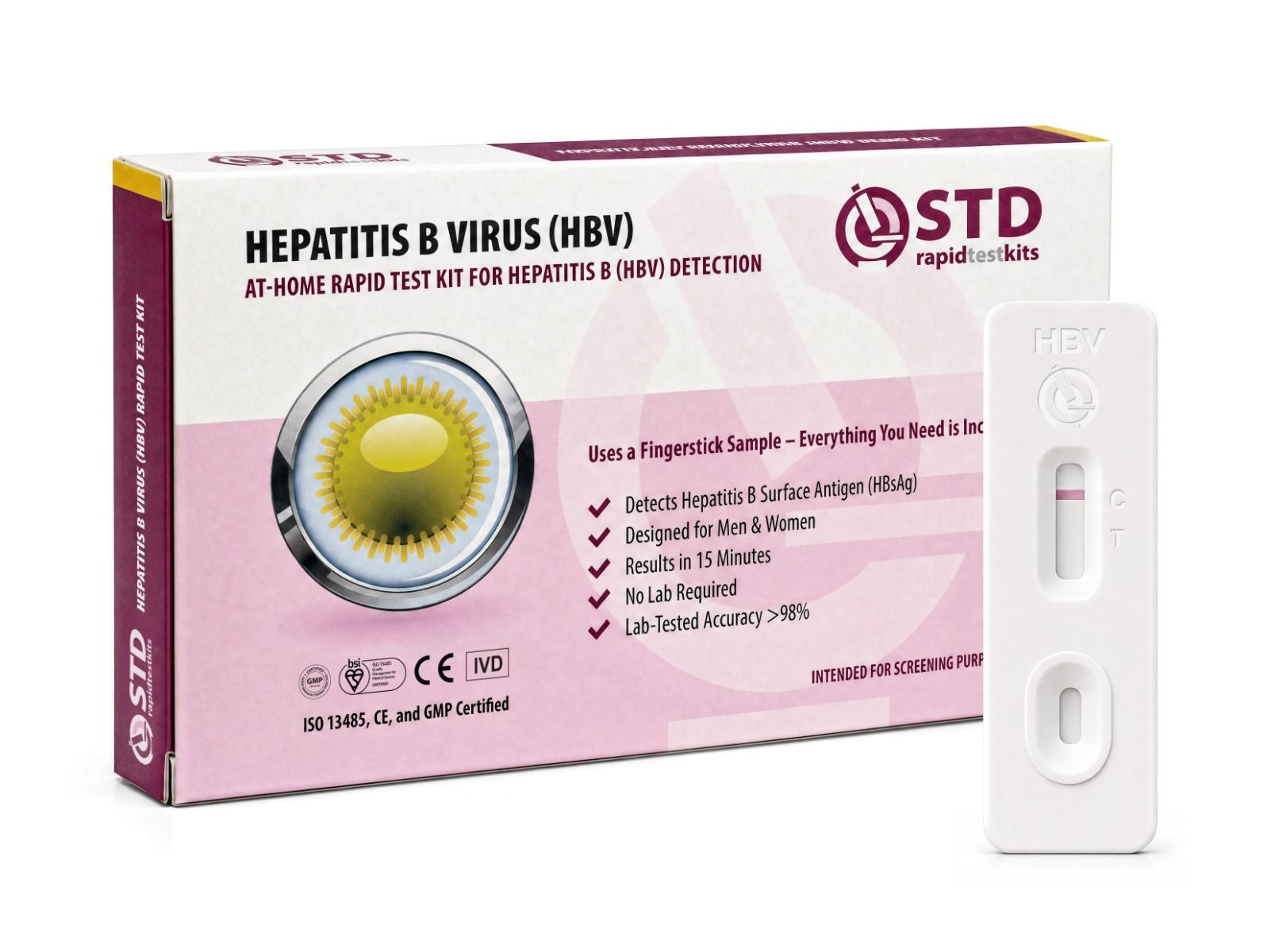
Most home Hep B kits use lateral flow technology, the same chemistry that powers a pregnancy test or a COVID rapid test. Inside the box you typically find a sealed cassette with a small sample well and a viewing window, a sterile lancet for the fingerprick, a capillary tube or dropper for transferring blood, a vial of buffer solution, and an alcohol swab.
The cassette looks for hepatitis B surface antigen, abbreviated HBsAg, a protein on the virus's outer coat. When HBsAg is in your blood, it triggers a colored line at the T position. The C position has a built-in antibody trap that lights up whenever the buffer flows through correctly, so a missing C line tells you something went wrong with the test rather than something about your blood.
According to the WHO Hepatitis B fact sheet, around 254 million people globally were living with chronic hepatitis B in 2022. Most acute infections in the United States now occur in unvaccinated adults exposed sexually or through shared injection equipment. A rapid kit detects only active infection; for vaccination status, immunity from a past infection, or chronic carrier status, a clinic needs to run a fuller serology panel.
| Item | Purpose |
|---|---|
| Test cassette | Detects HBsAg through colored lines at the C and T positions |
| Lancet | Sterile fingerprick to collect a small blood sample |
| Capillary tube or dropper | Transfers the blood drop to the cassette's sample well |
| Buffer solution | Pulls the sample across the strip so antibodies can bind |
| Alcohol swab | Cleans the fingertip before pricking |
| Instruction sheet | Read window, sample volume, and storage requirements per manufacturer |
Your Reading Window: When the Test Is Trustworthy
Once your blood and buffer are in the cassette, biology takes over. The fluid wicks across the test strip and antibodies start binding. The read window for a reliable result sits between roughly 10 and 20 minutes, depending on the manufacturer. Some kits specify a tighter 10-to-15-minute window. Whatever your kit says, follow that range.
The first minute or two is liquid travel and not a result. Around minute three to five, the C line should appear, confirming that the buffer reached the antibody trap. The T line, if it is going to appear at all, usually develops between minutes five and fifteen. After 20 minutes, ignore anything new. Drying salts can leave gray streaks that look like real test lines but are not. This is the same phenomenon that fools people on pregnancy tests.
Read the cassette in good light, with the sample well facing you and the strip flat. Hold it level rather than tilted. Bright bathroom lighting or daylight from a window is better than dim overhead bulbs, which can wash out a faint line. If you are unsure what you are seeing, take a photo on your phone with the flash on; a photo captures contrast more accurately than a stressed brain at minute twelve.

What One Line, Two Lines, or No Lines Mean
This is where most readers panic. You see one line and you cannot remember if it is the C or the T. You see two and one of them looks like a whisper of pink. Or there is nothing at all. The result depends on which positions light up, and when.
One clear line at the C position, nothing at the T position. This is a valid negative for HBsAg in this sample. The test ran correctly and did not detect surface antigen. The result is reliable only if you have waited the full window after possible exposure, usually four to six weeks for a useful read and six to twelve weeks for a confident one.
Lines at both the C and T positions, even if the T line is faint. This is a positive. The line will appear at T whenever the strip detects HBsAg in your blood during the valid window. A faint line carries the same clinical weight as a bold one; intensity reflects how much antigen is currently circulating, which can vary across early infection, peak infection, and late-stage clearance.
No line at the C position. The test is invalid. It does not matter if there is anything at T. Without a working control line, the test did not run properly. Causes include not enough blood, too much or too little buffer, an expired or heat-damaged kit, or a defective strip. Discard the cassette and run a new one. Do not interpret an invalid test as either positive or negative.
So how do I read my Hep B rapid test?
Inside the 10-to-20-minute read window: two lines (C and T) means positive, even if the T line is faint. One line at C means negative, assuming you tested at least four to six weeks after possible exposure. No C line means the test failed; discard and retest. Lines that appear after 20 minutes are usually drying artifacts and should be ignored.
When a Faint Line Is Still a Positive
The line that haunts most test takers is the faint one. Almost ghostly. Barely visible. The cassette is biochemistry, though, and it does not grade on color intensity. If a faint test line shows up alongside a clear control line during the read window, treat it as a positive until a clinic test says otherwise.
Faint lines happen for a few reasons. The amount of HBsAg in your blood may be low because you tested early, while antigen levels were still climbing toward their peak. The kit may have been stored slightly above room temperature, which reduces line intensity for many lateral flow brands. You may be in the late stage of resolving an infection, when antigen is dropping but is still detectable. None of these scenarios make the line less real.
CDC HBV treatment guidance recommends follow-up serology to confirm any positive HBsAg screening result before a clinical diagnosis is made. Confirmatory testing typically uses an enzyme immunoassay or PCR run at a lab; both pick up the virus at much lower levels than a rapid strip can. If your home test shows a faint line, that confirmatory step is the next move, not a second home test in the next room.
False Positives, Evaporation Lines, and Reader Errors
Not every line is a real line. Hepatitis B rapid tests can produce evaporation lines, the gray streaks that show up after the strip dries, usually 30 minutes or more after the test was started. They are the same phenomenon that fools people on pregnancy tests. Three signs you are looking at a false reading: the line appeared after the manufacturer's read window closed, the line is gray or colorless rather than pink, red, or purple, or the line is uneven and does not span the full strip width.
Real false positives, where an actual colored line shows up but is not from HBsAg, are rare in modern lateral flow tests. Manufacturers report sensitivity and specificity figures in the high 90s for most CE-marked or FDA-registered HBsAg rapid kits, with each kit's specific figures listed on its own product insert. Interference can still occasionally happen with rheumatoid factor, certain autoimmune conditions, or contamination from another sample. The right response to any positive home test is the same: confirm with a clinic-run lab serology before drawing conclusions.
Most invalid results trace back to user error rather than a bad kit. Too much buffer floods the strip and smears lines; too little blood means the antigen never reaches the C zone in detectable quantity. Skin oils from touching the sample pad can disrupt the chemistry, and an expired or heat-damaged kit compromises the antibodies on the strip. The table that follows summarises how each of these failure modes shows up at read time and what to do about it.
| Result | Likely meaning | What to do |
|---|---|---|
| C line only, no T line | Negative for HBsAg in this sample | Reliable if you tested 6 to 12 weeks after exposure; otherwise retest after the window closes |
| Faint T line plus clear C line | Positive, low or early-stage antigen detected | Confirm with a clinic-run serology test; do not assume false positive |
| Bold T line plus clear C line | Positive, antigen clearly present | Confirm with a clinic-run serology test and arrange follow-up care |
| No C line | Test failed (insufficient sample, bad buffer, damaged strip) | Discard and run a new kit |
| T line that appears after 20 minutes | Likely an evaporation artifact | Ignore; rerun with a fresh kit during the proper read window |
Should You Retest? When and Why
Hep B has a window period like every other antigen-based test. Surface antigen typically becomes detectable 4 to 10 weeks after exposure, with most people seroconverting by week 6, per CDC hepatitis B guidance. Test before that window and a negative result does not tell you much.
A retest schedule that works for most people: take a first test at 4 weeks for early reassurance, knowing that a negative result is preliminary. Repeat at 6 to 12 weeks for a confident read. If your initial result was positive at any intensity, the next step is a confirmatory clinic test, not a second home test. Clinic confirmation also tells you whether the infection is acute or chronic, which a rapid strip cannot distinguish.
Many people with new hepatitis B infection feel completely normal in the first weeks. Vague fatigue, mild nausea, a feeling of being off; these are nonspecific symptoms that are easy to write off. Symptom-driven testing alone leaves a lot of infections unfound. If you had a known exposure, schedule a first test at 4 weeks and a confirmatory read at 6 to 12 weeks rather than waiting for symptoms that may never appear.

Other Bloodborne Tests Worth Pairing With Hep B
Hepatitis B shares transmission routes with several other bloodborne infections. Sexual contact, shared injection equipment, and exposure to blood or other body fluids put a person at risk for hepatitis C and HIV in addition to hepatitis B. Public-health screening guidance from the CDC's hepatitis B information pages and the Hepatitis B Foundation recommends testing for the full bloodborne panel after a higher-risk exposure rather than only the infection that prompted the worry.
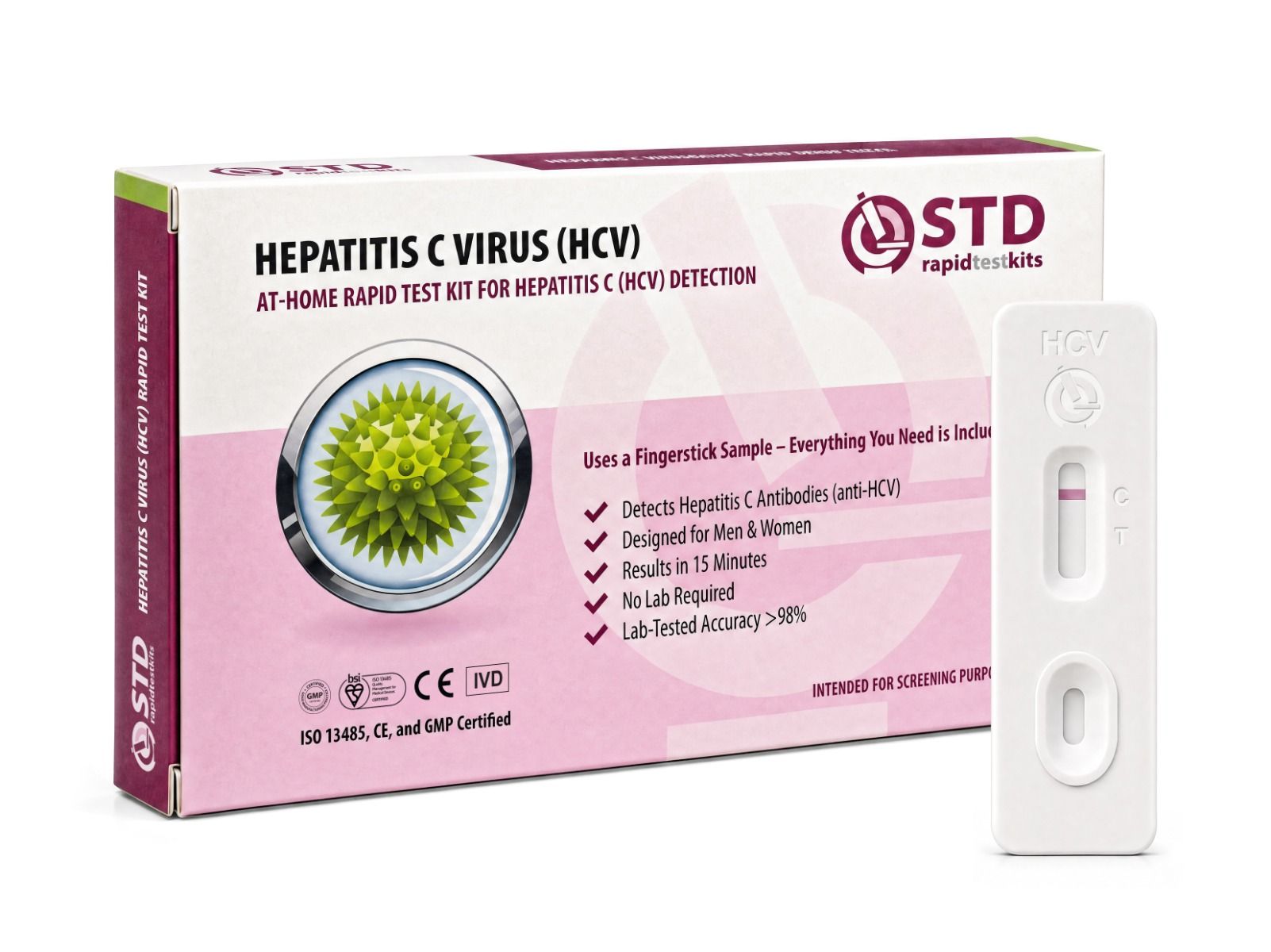
For at-home testing, this often means pairing a Hep B rapid test with a Hep C rapid test (and, depending on circumstances, an HIV test). Each looks for a different marker; a Hep B kit cannot pick up Hep C, and the reverse is also true. The cassettes look similar, but the antibody traps inside are tuned to specific antigens. If you are working through one possible exposure, running parallel tests for the other relevant infections is a more useful starting point than one in isolation.
After Your Result: Privacy, Disposal, and Next Steps
Whatever your result, the next 24 hours matter more than the next 24 minutes. If the test is negative and you are past the window, the immediate fear loop can come down. If the test is positive, even faintly, the priority is a confirmatory clinic test. Most hospitals and sexual-health clinics offer this same-day or within a few days. Many acute hepatitis B infections resolve on their own, and chronic infections are now managed effectively with antiviral medication.
For disposal: wrap the cassette, lancet, and any blood-touched components in tissue, place them in a small sealed bag, and discard with regular household trash. The lancet is technically a sharp, so a puncture-resistant container (a clean medication bottle works) is safer than loose disposal. Privacy is one of the underrated benefits of at-home testing. The cassette does not transmit data, your insurance company gets no claim filed, and your name appears on no lab requisition unless you choose to bring the result to a clinician for confirmation.
If you tested because of a known exposure, this is also the moment to think about partner notification. Hepatitis B is preventable with vaccination, and a partner who learns about a possible exposure can talk to a clinician about post-exposure prophylaxis (PEP) within 24 hours, which substantially reduces transmission risk after a needle-stick or sexual exposure.
Hepatitis B Rapid Test: Frequently Asked Questions
- Does a faint line on a Hep B rapid test really count as positive?
- Most of the time, yes. If the faint line shows up at the T position alongside a clear C line during the 10-to-20-minute read window, the test has detected hepatitis B surface antigen. The intensity does not measure how serious the infection is; it reflects how much antigen is in your blood at that moment, which can be low for several reasons. Treat it as a positive and confirm with a clinic-run serology panel.
- How long should I wait before reading the test?
- Most kits specify 10 to 15 minutes, with 20 minutes as the outer limit. Reading too early can miss a slowly developing T line. Reading after 20 minutes risks misinterpreting drying lines as real results. Set a phone timer and read once during the manufacturer's window. If your kit's instructions specify a different range, follow that range exactly.
- What does it mean if there is only one line?
- A single line at the C position with nothing at T is a valid negative, assuming you tested at least four to six weeks after possible exposure. A single line at T with no C line is invalid; the test failed and neither zone can be trusted. If you cannot tell which position is which on your cassette, check the labels on the kit's instruction sheet.
- Can the hepatitis B vaccine cause a positive rapid test?
- No. Rapid tests detect HBsAg, an active-infection marker. The vaccine teaches your immune system to make antibodies against HBsAg, but the antigen itself is not present after vaccination. If you are vaccinated and your test shows a clear or faint T line, the result is not coming from vaccine antibodies, and a clinic confirmation is the right next step.
- Is a faint line that appears one hour later still meaningful?
- No. Lines that appear after the manufacturer's read window are usually evaporation artifacts caused by the strip drying. Real test lines develop within 10 to 20 minutes. If you only saw the faint line at the one-hour mark, run a fresh kit during the proper read window before drawing any conclusions.
- Should I retest if my first one was negative but I still feel off?
- Yes, especially if you were less than six weeks past possible exposure when you tested. HBsAg can take 4 to 10 weeks to become detectable. A negative result during the early window does not rule out infection. Retesting at the 6-to-12-week mark gives a much more reliable read. Persistent symptoms are also worth a clinic visit regardless of test results.
- What if I touched the sample pad with my finger?
- Skin oils, lotion residue, or sweat can interfere with how the sample moves through the strip. Light contact before any blood or buffer is added is usually fine. Contact after the sample is on the strip can compromise the result. If you touched the pad mid-test, treat the cassette as questionable and run a new one with clean, dry hands.
- How accurate are at-home Hepatitis B rapid tests compared to lab tests?
- Manufacturers report sensitivity and specificity figures in the high 90s for most CE-marked or FDA-registered HBsAg rapid kits, but these are screening figures, not diagnostic ones. A positive home result should be confirmed with a clinic-run serology panel, which can also tell you whether the infection is acute or chronic. Lab PCR can detect viral DNA earlier and at lower levels than any rapid antigen test, so it remains the standard for definitive diagnosis.
How We Sourced This Article: Our article was constructed based on current advice from the most prominent public-health and medical organizations, and then molded into simple language based on the situations that people actually experience when reading a hepatitis B rapid test at home. CDC, WHO, and the Hepatitis B Foundation are the primary references; the citations below cover the specific guidance pages that informed the read-window, retest, and confirmatory-testing recommendations.
- World Health Organization. Hepatitis B Fact Sheet, including 2022 prevalence figure (254 million chronic infections globally) and screening overview.
- U.S. Centers for Disease Control and Prevention. Hepatitis B information pages, including transmission, testing, and adult window-period guidance referenced in the retest schedule above.
- U.S. Centers for Disease Control and Prevention. Viral hepatitis section of the STI Treatment Guidelines, with the recommendation that any positive HBsAg screening result be confirmed by follow-up serology.
- Hepatitis B Foundation. Patient-facing guidance on testing, treatment options, and living with hepatitis B.
