Published: July 2025 | Last updated: May 2026 | Editorial review and quality control: Martina N.
Sex toys can absolutely carry sexually transmitted infections from one use to the next, including gonorrhea, chlamydia, trichomoniasis, and herpes. The reassuring part is that proper cleaning takes about sixty seconds, and most readers who landed here because of a vague symptom or a passing worry are already doing the right thing by asking the question.
This guide breaks down what actually transmits via toys, how long the bacteria stay viable on a surface, and the cleaning routine that matches each material in your drawer. There is also a short section near the end on when an at-home rapid test makes sense, for the smaller group of readers who need a clear answer rather than reassurance.
Key Takeaways
- Bacteria that cause gonorrhea and chlamydia can survive on toy surfaces for minutes to a few hours, so a quick rinse is not the same as cleaning a toy properly between uses.
- Warm water and unscented soap after every use, plus a deeper sanitize between partners or body areas, prevents almost all toy-related transmission. The right method depends on the toy's material.
Yes, Sex Toys Can Transmit STIs (Even During Solo Use)
The bacteria and viruses that cause sexually transmitted infections do not need a body to stay alive for a short window after contact. Once a toy has touched genital tissue or fluid, it is contaminated for the same reason any other surface would be. The clock then starts ticking on how long the pathogen survives.
According to the U.S. Centers for Disease Control and Prevention, the bacteria that cause gonorrhea (Neisseria gonorrhoeae) and chlamydia (Chlamydia trachomatis) transmit primarily through direct contact with infected mucous membranes and bodily fluids. A toy that picks up either pathogen during use can pass it on if it touches another person's mucosa, or if it touches yours again before being cleaned.
The pattern most often missed is solo transmission. If you were previously exposed to an STI and the infection is still active or partially treated, a toy used during that period can hold viable bacteria and reintroduce them on the next use. People assume solo means safe; for an untreated infection, that assumption is wrong.
None of this is a reason to panic about every toy you own. It is a reason to keep the cleaning step in the routine, the same way you keep washing your hands in the routine.
If you had a low-grade or asymptomatic infection during the time a toy was in use, the toy can hold viable bacteria and reintroduce them on the next session. Cleaning after every use breaks that chain.
Symptoms That Might Point to Toy Hygiene
Most of the time, vague pelvic discomfort or unusual discharge has a non-STI cause: a yeast infection, an irritation reaction to soap or lube, normal flora shifts, or cycle-related changes. The reassuring 80 percent rule applies here. Read the symptom list, see what fits, and only escalate to testing if more than one of these has shown up after a session with a toy you have not cleaned recently.
Signs worth taking seriously, especially when a toy has been in use without cleaning:
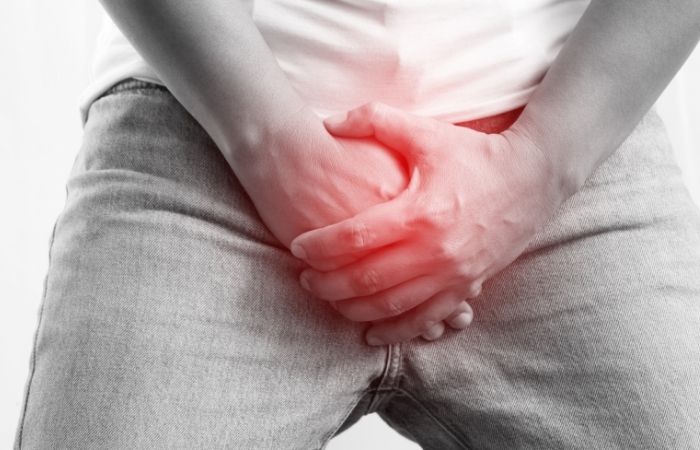
- Burning or pain when you urinate, which is a classic early sign of urethral gonorrhea or chlamydia.
- Discharge that is yellow, green, or carries a sharp foul odor, particularly different from your usual baseline.
- Pelvic cramping that is deeper than period pain and does not track with your cycle.
- Itching or redness that does not improve with over-the-counter yeast infection treatment.
- Rectal pain or discharge after a toy was used anally.
None of these on their own confirm an STI. They do justify either a clinic visit or an at-home rapid test, particularly when a toy has gone through several uses without a proper clean.
The Cleaning Method Depends on the Material
Match your method to the toy. Cheaper porous materials (rubber, jelly, vinyl, thermoplastic elastomer) absorb fluids into microscopic pores and cannot be fully sanitized. Nonporous materials (medical-grade silicone, glass, stainless steel, ABS plastic) can be cleaned to a much higher standard. Using the wrong method damages the toy and, worse, gives you false confidence that something has been disinfected when it has not.
Here is the breakdown by material:
- Silicone, non-motorized: wash with warm water and unscented mild soap after each use. For a deeper clean, boil for 3 to 5 minutes, or run through a top-rack dishwasher on a soap-free cycle.
- Silicone, motorized: wipe with a damp cloth and mild soap, or use a fragrance-free toy cleaner. Do not submerge anything with a battery compartment or a charging port.
- Glass and stainless steel: boil or run through a dishwasher with no detergent. Both materials are nonporous, durable, and the easiest to fully sanitize.
- Aluminum and other coated metals: wash with soap and warm water. Check the manufacturer guidance before boiling, since some coatings degrade with heat.
- Rubber, jelly, vinyl, thermoplastic elastomer: do not boil. Wash with warm water and mild soap, then wipe with 70 percent isopropyl alcohol. Replace these toys every six to twelve months, sooner if the surface becomes sticky, tacky, or smells off.
If a porous toy is going to see shared use, cover it with a fresh condom every time and change the condom between bodies or body areas. The condom creates a reliable barrier on a surface that cannot itself be fully sanitized.
How do you clean sex toys to prevent STIs?
Wash with warm water and unscented mild soap after every use. Boil non-motorized silicone, glass, and stainless steel for 3 to 5 minutes between partners or between body areas. Use 70 percent isopropyl alcohol on porous materials like rubber or jelly. Cover shared toys with a fresh condom and change it between bodies or orifices.
The Five-Step Cleaning Routine
This is the version most people can actually keep up with. It takes about a minute, and the math (clean now or clean later) always works out in favor of cleaning immediately.
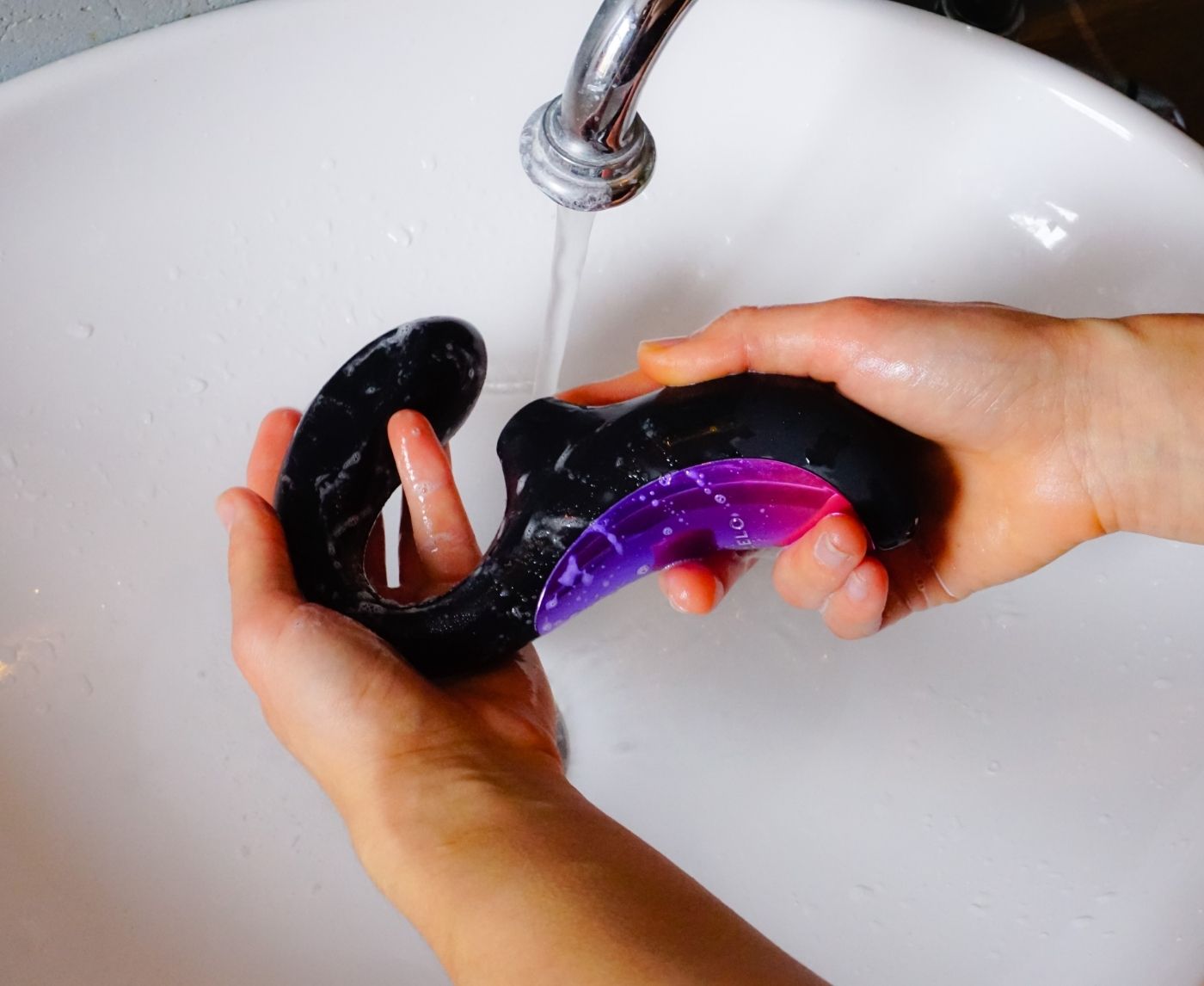
- Clean immediately after use. Fluids dry into seams and grooves within minutes. Rinse the toy under warm water before doing anything else.
- Wash with unscented, mild soap. Fragrance-free hand soap is fine. Use your fingers to work the suds into ridges and seams. Scented soaps and harsh detergents can irritate genital tissue on the next use.
- Sanitize between partners or between body areas. If a toy has just been used anally and is about to be used vaginally, that calls for a full disinfect, not just a rinse. Same for partner switches. Toy-safe disinfectant spray, 70 percent isopropyl alcohol, or boiling (when the material allows) all work.
- Dry completely. Bacteria need moisture. A lint-free towel, or air-dry on a clean surface, keeps biofilm from setting in. Storing a damp toy in a sealed bag is one of the more common mistakes.
- Store in a clean, dry, breathable pouch. Different materials should not touch each other in storage; silicone can react with other silicone over time, and porous-on-nonporous contact can transfer residue. A cloth pouch per toy is the simple fix.
Thirty seconds of routine after each use is the lowest-friction long-term fix available.
How Long Do STI Pathogens Survive on a Toy?
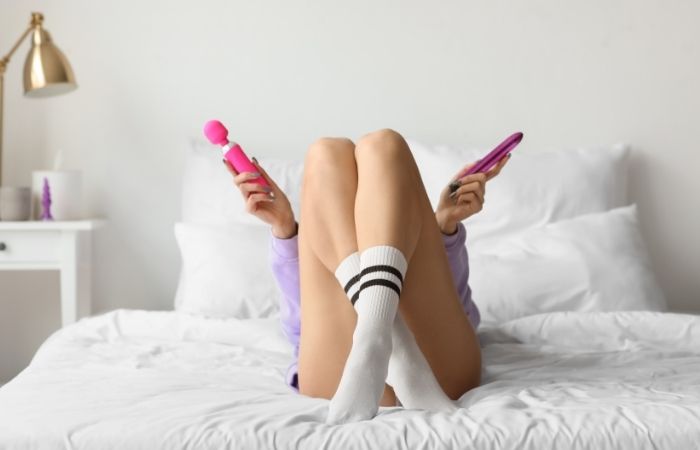
Survival time varies by pathogen, surface type, moisture level, and temperature. Guidance from major public-health bodies converges on a few practical numbers.
Neisseria gonorrhoeae dies relatively quickly outside the body, but viable bacteria have been recovered from shared damp surfaces within a window of minutes to a few hours. Moisture extends that window. A toy left wet in a drawer is a friendlier surface than one fully dry on a counter.
Chlamydia trachomatis has shorter surface viability than gonorrhea in most settings, but the practical window for shared toys is similar. Warm, moist, porous surfaces favor survival.
Trichomonas vaginalis, the parasite that causes trichomoniasis, can survive on damp surfaces for several hours under the right conditions. The CDC's STI guidance notes that shared damp objects (including toys) are a recognized transmission route for trichomoniasis even without direct sexual contact.
Herpes simplex (HSV-1, HSV-2) has short surface viability outside the body, usually minutes to a couple of hours on dry surfaces. Active shedding from a visible or invisible lesion is the higher risk, not residual contamination on a toy used hours ago.
HPV is unusually resistant to drying compared with other STI pathogens, which is one reason public-health guidance recommends not sharing porous toys at all when there is any HPV concern in the relationship.
HIV has very short viability outside the body, on the order of seconds to minutes on a dry ambient-temperature surface, making toy-mediated HIV transmission a theoretical rather than practical risk when standard cleaning is followed.
Treat any toy that has touched genital tissue or fluid as contaminated until you have actively cleaned it.
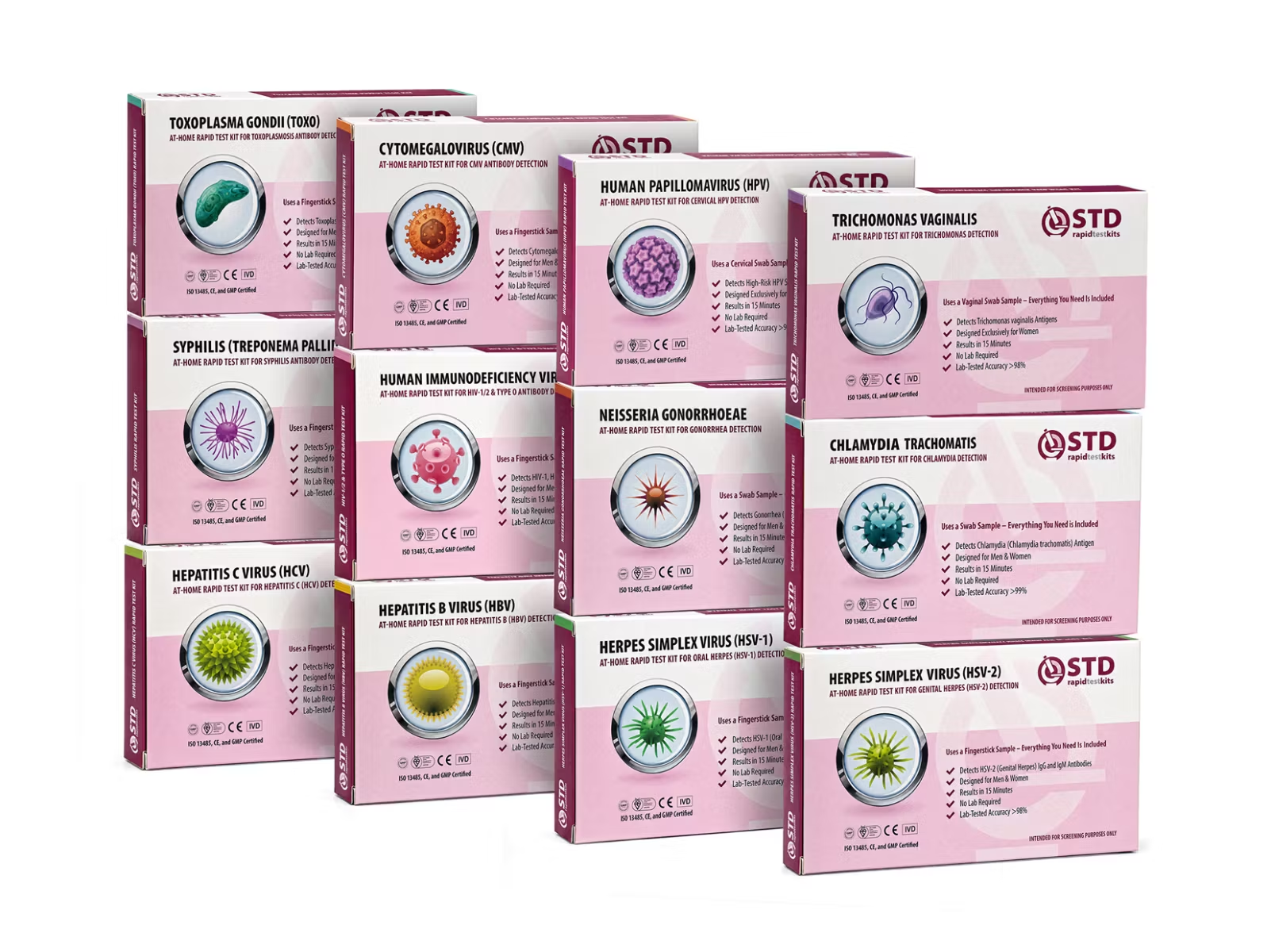
If you want a baseline check after a stretch of inconsistent cleaning, we sell at-home rapid STI test kits; the kits below are from our own catalog, recommended for fit with the article's topic rather than commercial preference.
Can You Catch Gonorrhea From Solo Toy Use? The Mechanism
This is the most common misunderstanding about toy hygiene. The belief: if no one else has used my toy, there is nothing on it that could infect me. The mechanism that breaks this assumption is reinfection from a prior exposure you might not even know about.
The chain goes like this. You had an encounter weeks or months ago. That encounter passed a low-grade, often asymptomatic infection (most chlamydia infections and many gonorrhea infections in women have no early symptoms, per CDC surveillance data). You use a toy during that infectious period. The toy holds bacteria and viable cells in seams or microscopic surface defects long enough to dry. The infection clears partially or fully, but you keep using the same toy without sanitizing it. Bacteria reintroduced into the same tissue can restart the cycle.
The same logic applies to bacterial vaginosis, urinary tract infections, and yeast overgrowth. None of these are STIs in the strict sense, but all of them respond to reintroducing what you just got rid of by flaring back up.
The fix is the one described elsewhere on this page: clean immediately after each use, and sanitize deeply between body areas. If a toy was in regular use during a known infection and was never disinfected, replacing it costs less than a course of antibiotics and saves the recurring frustration of bouncing the same symptoms back and forth.
Prior exposure leads to an often asymptomatic infection. The toy used during that period picks up bacteria. The infection clears, but the toy is never sanitized. The next use puts those bacteria back where they came from. Cleaning after every use breaks the chain at step three.
Toy Cleaner Versus Soap: Does the Spray Bottle Actually Help?
Unscented mild soap and warm water handles most routine cleaning. The branded spray bottles labeled "toy cleaner" are useful in three specific cases:
- Toys you cannot submerge or boil. Motorized silicone, app-controlled toys with sensors, and anything with a charging port falls into this category.
- Shared toys with a partner, where an extra dedicated disinfecting step adds a layer of confidence above the soap routine.
- Porous toys, where 70 percent isopropyl alcohol or a fragrance-free quaternary ammonium spray can reach deeper into the surface than soap and water alone.
Read the label before buying. Some "toy cleaners" contain fragrances, parabens, or surfactants that irritate genital tissue. Fragrance-free and alcohol-free formulations made for sensitive skin are the safest defaults; if the smell is strong out of the bottle, the formula is probably wrong for genital contact.
Bleach, hydrogen peroxide, and aggressive household cleaners do not belong on sex toys. They damage silicone, strip finishes off coated metal, and leave residue that can irritate mucosa even after rinsing. Planned Parenthood's sexual-health guidance covers the simple version: soap and water is fine for solo silicone toys; a condom on shared porous toys handles the rest.
Sharing With Partners: Barriers, Pauses, and Logistics
Once a toy enters a partnered context (or a non-monogamous, queer, or kink-inclusive context with multiple partners or multiple body areas in a single session), hygiene gets harder to keep up with on willpower alone. The protocols that actually hold up under real conditions are short, mechanical, and rehearsed.
What works in practice:
- Put a condom on every shared toy. Change the condom between bodies. Change it when switching from one orifice to another (vaginal to anal, for example, where the bacterial load and risk profile change completely).
- Keep separate toys for separate uses where possible. A dedicated anal toy that never goes vaginal removes a category of cross-contamination risk entirely.
- Build a sanitize break into the script. Five minutes with warm water and soap mid-session is not a mood killer if it is part of the routine; pretending no break is needed is what creates problems later.
- Use nitrile or latex gloves for manual play that involves insertion, particularly with longer fingernails. Same principle: a clean physical barrier between an infectious surface and a mucosal one.
The CDC's STI prevention guidance covers the general principle. Anything that creates a fresh barrier between an infectious surface and a mucosal one reduces transmission risk substantially. Toys are surfaces; condoms and gloves are barriers; the math holds regardless of who is involved.
If a toy has been in active use without barriers, or if symptoms have shown up after a session, an at-home test gives you a baseline quickly. The combined kits cover the most common bacterial STIs in one round.
What to Do If You Have Been Skipping Cleaning
Most readers who find a guide like this one have already skipped a step somewhere. That is normal. The question is what to do next, not whether the past version of you should have done better.
A practical reset:
- Deep-clean every toy in your drawer using the material-appropriate method described above. Replace anything porous that smells off, looks sticky, or has visible damage.
- If symptoms have shown up in the last few weeks, test. An at-home rapid kit gives clarity in about fifteen minutes; a clinic visit gives you a treatment path the same day if anything is positive.
- If you are between partners or about to start a new sexual relationship, test as a baseline. Most STIs are asymptomatic in the early phase, and a clean baseline makes future conversations much simpler.
- Reset the routine going forward. The thirty seconds it takes to wash a toy after use is the lowest-friction long-term fix you have.
Cleaning falls below the threshold of conscious decisions once the routine is in place.
FAQs
- Can you really get gonorrhea from a vibrator?
- Yes. If the toy was contaminated during a prior use and is not properly cleaned, the bacteria can transfer on the next use. This applies both to shared toys and to solo toys used during an existing untreated infection, since bacteria can survive on the surface for minutes to a few hours.
- Do I need to clean a toy if only I use it?
- Yes. Toys hold residual bacteria, fungi, and viral particles between uses. Even without a partner, an untreated STI, a yeast overgrowth, or a urinary tract infection can be reinforced by a toy used repeatedly without cleaning.
- What is the best way to clean a silicone toy?
- Boil non-motorized silicone for three to five minutes after any shared use; that is the disinfect standard. Routine solo use needs only unscented soap and warm water. Motorized toys take a fragrance-free wipe with no submerging.
- How long can STI bacteria survive on a toy?
- Gonorrhea and chlamydia bacteria typically survive minutes to a few hours on toy surfaces, longer on moist or porous materials. Trichomonas can survive several hours on damp surfaces. HPV is unusually resistant to drying. Treat any toy that has touched genital tissue as contaminated until you have actively cleaned it.
- Is toy cleaner better than soap?
- For routine cleaning, unscented mild soap and warm water is enough. Dedicated toy cleaner is more useful for motorized toys you cannot submerge, for porous materials, and for shared partner use. Avoid cleaners with fragrances or harsh ingredients that can irritate mucosal tissue.
- Should I use condoms on my sex toys?
- Yes for shared toys, for porous toys, and any time you are switching between body areas (vaginal to anal, partner to partner). Change the condom each time the toy moves to a new body or a new orifice; that is the entire point of using one.
- What symptoms should I watch for after using an unwashed toy?
- Burning during urination, unusual discharge (yellow, green, or strongly odorous), pelvic cramping that does not match your cycle, itching or redness, and rectal pain after anal toy use. Any combination of these warrants either an at-home rapid test or a clinic visit.
- How often should I deep-clean toys I use regularly?
- Wash after every single use. Deep-sanitize (boil, dishwasher, or isopropyl alcohol wipe depending on material) at least once a week for actively used toys, and always between partners or between body areas in one session.
- U.S. Centers for Disease Control and Prevention. STI overview, transmission routes, and screening recommendations.
- U.S. Centers for Disease Control and Prevention. STI prevention strategies and barrier-method guidance.
- World Health Organization. Sexually transmitted infections fact sheet, including transmission, symptoms, and prevention.
- UK National Health Service. Gonorrhoea symptoms, transmission, and testing guidance.
- UK National Health Service. Chlamydia overview and screening recommendations.
- Planned Parenthood. Sexual health and safer-use guidance (root domain).
