Published: November 2025 | Last updated: May 2026 | Editorial review and quality control: Martina N.
You had sex, you are worried, and you want a test that gives you an answer by morning. For most STIs, one becomes reliable inside a couple of weeks. For HPV in men, there usually isn't an equivalent. That sounds bad. It usually isn't. Most HPV infections in men cause no symptoms at all, clear on their own inside one to two years, and never produce the cancers or warts people fear most when they start searching at 2 a.m.
The goal here is to replace the late-night spiral with information that holds up under daylight. We will walk through what HPV does in the days after exposure, why men don't get screened the way women do, when an in-person clinical visit makes sense, what you can usefully test for while HPV does whatever it is going to do quietly in the background, and what the vaccine changes if you have had it. None of this is medical advice for your specific situation. It is the version of CDC and WHO guidance translated into something you can act on tonight without overcorrecting.
Key Takeaways
- There is no routine HPV test for asymptomatic men. When low-risk strains do produce visible warts, the timing is variable and unpredictable; a clinician can then diagnose visually or by biopsy.
- Most HPV infections in men clear naturally within one to two years per the CDC. The HPV vaccine prevents the strains responsible for nearly all HPV-related cancers and most genital warts, and is the single biggest lever you control.
What Happens in the Days After Exposure
Anxiety after a new sexual encounter rarely tracks with biology. Your brain wants resolution in hours. HPV operates on a scale of weeks, months, or even years. After exposure, the virus needs time to enter skin or mucosal cells and replicate enough to either produce visible changes or trigger an immune response that suppresses it before anything visible happens at all. In the first few days, neither of those processes has played out yet.
That is why the question "can I test now?" almost always has the same answer for HPV: there is nothing useful to detect yet, even if a test existed. Visible lesions, the only thing a clinician can reliably diagnose in most men, take a minimum of several weeks to appear and often much longer. The shower-mirror inspection on day four does not produce data; it produces reassurance loops.
If something visible does appear within seventy-two hours of sex, it is almost certainly not HPV. Friction marks, ingrown hairs, irritation from latex or lubricant, mild folliculitis, and pre-existing skin tags all become more noticeable when you are looking for trouble.
Anything visible within three days of sex is almost certainly something else: friction or razor irritation, an ingrown hair, mild folliculitis, latex or lubricant sensitivity, or a skin tag you only noticed because you started looking. HPV moves on a scale of weeks or longer, not hours.
Why the Window Period Is Different for Men
The phrase "window period" gets used loosely. For something like HIV or chlamydia, it has a precise meaning: the gap between exposure and when a specific test becomes accurate. For HPV in men, that definition does not really apply, because there is no routine FDA-approved screening test for asymptomatic men in the general population (CDC About Genital HPV Infection).
Two timelines are worth understanding. The biological incubation: how long until visible signs could appear if they are going to. And the immune response: how long until the body either suppresses the virus quietly or, less often, fails to and allows persistent infection. When genital warts from low-risk strains do develop, the timing is variable; the CDC notes symptoms can appear years after having sex with an infected partner, and many infections never produce visible signs at all. High-risk strains linked to cancers may produce no early visible signs and progress over years rather than weeks.
The table below is the practical version of what is happening biologically against what a man can do about it.
| Phase After Exposure | What Is Happening Biologically | Can You Test? | What You Might Notice |
|---|---|---|---|
| 0 to 7 days | Virus may begin entering skin cells | No reliable test available | No symptoms |
| 1 to 4 weeks | Early cellular changes possible | Testing still limited unless visible lesions | Usually nothing noticeable |
| Weeks to many months | Possible wart development from low-risk strains | Visual diagnosis possible if warts appear | Small flesh-colored bumps; timing varies widely |
| Months to years | High-risk strain persistence possible; symptoms can appear years after exposure | Specialized anal screening for certain high-risk groups | Often asymptomatic |
Why There Isn't a Routine HPV Test for Most Men
This is the part that frustrates people who want certainty. The medical community is not ignoring men. The screening logic is just different.
Cervical screening exists for women because persistent high-risk HPV strains are the cause of nearly all cervical cancers, and routine sampling of cervical cells catches early changes that can be treated before cancer develops. Outcomes from that screening program are dramatic. For men, there is no equivalent anatomical sampling site that would change outcomes the same way for the general population (CDC About Genital HPV Infection). The virus infects skin and mucosal surfaces, not the bloodstream in a useful screening-marker form, and most infections clear on their own within one to two years.
Routine HPV testing of asymptomatic men would, on current evidence, generate many positive results that would never become illness. The recommended management would be the same in either case: watchful waiting. Testing without a downstream action is rarely good medicine, especially when the test itself is not standardized for the population in question.
The exception is men in higher-risk groups. Men who have sex with men, particularly those living with HIV, may be offered anal cytology screening at their clinician's discretion. That is a different pathway based on risk factors and not driven by one-time exposure anxiety.
Routine HPV testing of asymptomatic men would identify many infections that resolve without intervention, with no change in clinical management. That is why the test is not recommended for this population. The absence of a screen reflects how the virus behaves, not indifference from your clinician.
Exposure Scenarios: What Actually Happened
Generic biology only helps so much. The real questions are scenario-specific, and the right answer changes with the scenario.
If a condom broke during vaginal sex, the risk depends on whether your partner was carrying an active HPV infection and which strain. HPV transmits through skin-to-skin contact, not through fluids alone, so condoms reduce risk substantially, especially against high-risk strains, but they do not cover all genital skin. After oral sex with a partner of unknown status, transmission is possible but less common than genital-to-genital transmission for many strains, and there is no routine throat HPV screen for men in the general population. After receptive anal sex with a new partner, the risk of anal HPV infection is higher, though most infections still clear naturally; some clinicians recommend anal cytology for higher-risk patients, but that is a conversation to have at a sexual-health appointment over the coming weeks, not a same-day demand on day three.
None of these scenarios produce overnight symptoms, and none of them are testable in the way a chlamydia exposure becomes testable around day fourteen.
In most cases (9 out of 10), HPV goes away on its own within two years without health problems.
Testing Options That Exist for Men
A reasonable question is: if there is no routine HPV screen for men, what does exist?
The first is visual diagnosis. If warts appear, a clinician can usually identify them on inspection. Sometimes acetic acid is applied to make subclinical lesions more visible. This is symptom-driven, not exposure-driven, which means it is the right answer when something is there to look at.
The second is biopsy. If a lesion looks unusual, atypical, or persists, a small tissue sample can be tested. This confirms what the visual exam suggests and rules out other diagnoses like molluscum contagiosum (a common viral skin infection that produces small round bumps) or seborrheic keratosis (a benign, rough-textured skin growth common in adults), which can look similar on first glance.
The third is anal cytology, sometimes called an anal Pap. This is offered to specific higher-risk groups, often men who have sex with men, particularly those living with HIV. It samples cells from the anal canal the same way a cervical Pap samples cells from the cervix. It is not a routine test for the general male population.
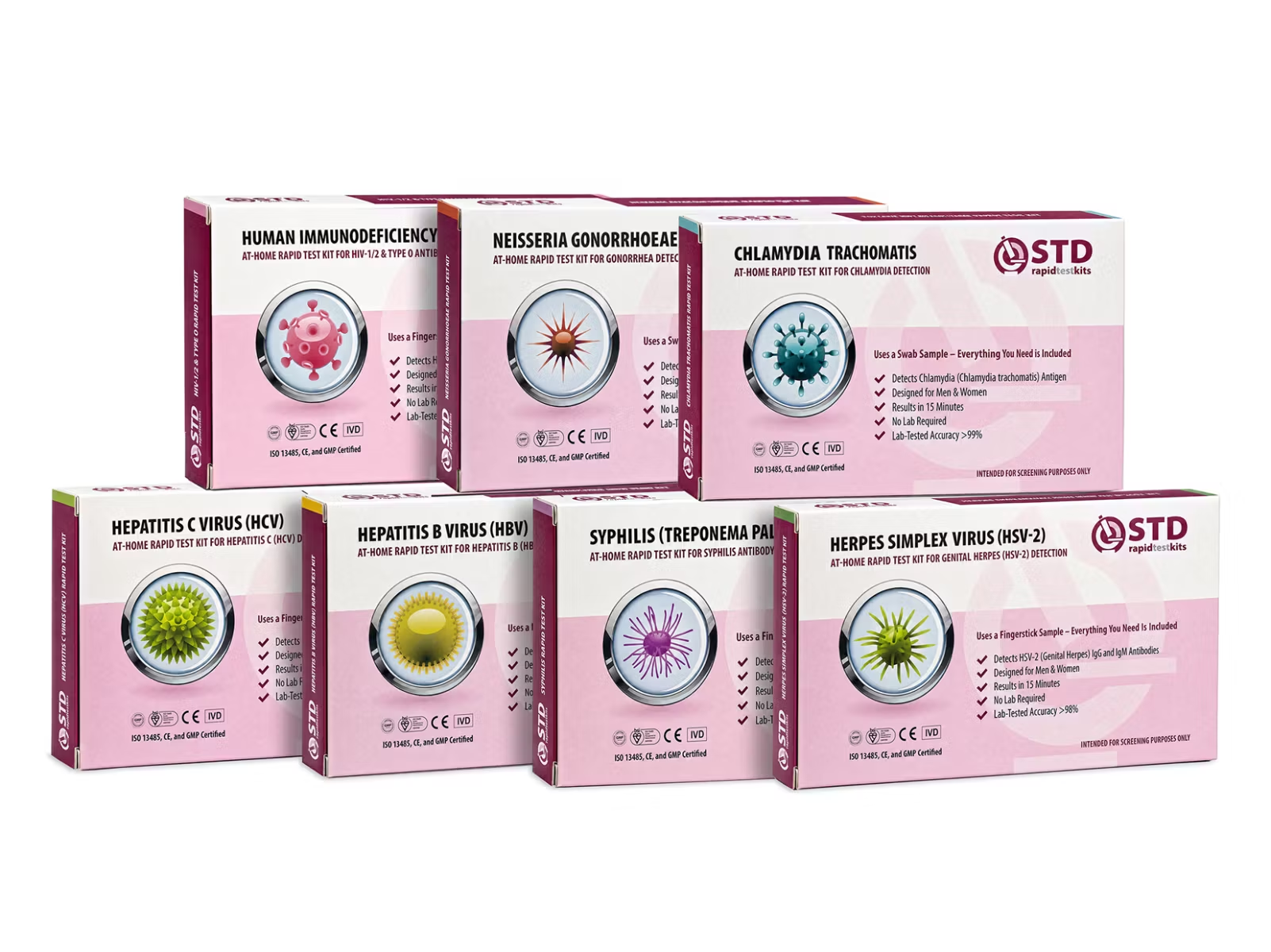
What is not on this list, and gets searched constantly online: a simple HPV blood test for men. No validated serum HPV test is recommended for asymptomatic men, and the CDC notes that no general HPV screening test exists for men (CDC About Genital HPV Infection). At-home rapid kits exist for many other STIs, but HPV is not currently among the standard at-home screening targets.
| Testing Method | Who It Is For | When It Is Useful | Limitations |
|---|---|---|---|
| Visual exam | Men with visible genital lesions | If warts or atypical lesions are present | Cannot detect asymptomatic infection |
| Anal Pap test | Higher-risk groups (MSM, men living with HIV) | Routine screening per provider guidance | Not recommended for the general male population |
| Biopsy | Men with suspicious or persistent growths | When a lesion needs confirmation | Invasive and symptom-based, not a screen |
Will HPV Go Away on Its Own?
Yes, in most cases. The immune system suppresses and clears the virus within about one to two years for the majority of men (CDC About Genital HPV Infection). That fact does not erase the experience of waiting, but it does change what the wait represents.
When a clinician says "let's monitor it," the word "monitor" can sound dismissive. The clinical meaning is closer to: "the most likely outcome from here is that your body handles this without intervention, and any intervention now would chase a problem that resolves on its own." That is a different sentence than "we don't care." It reflects a deliberate choice based on how the virus tends to behave.
If visible warts develop, treatment options remove them: topical medications, cryotherapy, electrocautery, or minor excision. Treating warts treats the visible problem; it does not always eliminate the virus from skin cells, but recurrence becomes less common as immunity builds against the specific strain.
The harder cases are persistent high-risk infections that do not clear. Those are rarer, harder to identify in men because of the screening gap discussed above, and the reason vaccination has the impact it does. Long-term cancer risk concentrates in that small population of persistent infections, not in the general post-exposure population. As a brief commercial note, this site sells at-home rapid test kits for several of the infections discussed below; we do not offer an HPV kit because no validated at-home HPV screen for men exists, and we recommend products based on fit-for-purpose, not commercial benefit.
Does the HPV Vaccine Change Your Risk?
If you have completed the HPV vaccine series, your risk profile is genuinely different. The current vaccine, Gardasil 9, protects against nine HPV types, including the high-risk types responsible for the vast majority of HPV-related cancers and the two low-risk types responsible for most genital warts, per the CDC HPV vaccine page.
The CDC recommends routine HPV vaccination through age 26, with shared clinical decision-making for some adults aged 27 through 45 based on individual risk factors. If you are eligible and have not completed the series, that is a conversation worth having with your provider this month rather than next year; it remains one of the most effective preventive tools in modern medicine.
Vaccination does not eliminate the need for awareness. A vaccinated person can still acquire a strain not covered by the vaccine, and the vaccine does not treat existing infection, only future exposure to its target types.
Gardasil 9 targets nine HPV types: the high-risk strains responsible for the great majority of HPV-related cancers, and the two low-risk strains responsible for most genital warts. It is preventive, not therapeutic: it does not clear an existing infection, but it dramatically reduces the chance of acquiring the strains that cause the worst outcomes.
What to Test for While You Wait
This is the productive redirect. If recent sex has you anxious, HPV is unlikely to be the most useful thing to chase, because there is no reliable timely test. The infections that do have clear window periods and reliable detection are the ones to focus on.
Chlamydia and gonorrhea become detectable approximately two weeks after exposure using swab-based tests, including at-home kits. HIV antibody and antigen testing becomes reliable from around eighteen to forty-five days depending on the test type. Syphilis blood testing becomes reliable from roughly three weeks post-exposure. Hepatitis B and C have their own windows, both detectable from several weeks onward. Specific timing varies by assay, and the CDC STI Treatment Guidelines are the best authoritative reference for matching a test to your exposure date.
The mental model is simple. HPV is a slow virus that resolves quietly for most men. The other infections in the post-sex anxiety cluster are faster, more testable, and the ones worth acting on at the right time.
When to Stop Watching and Move On
The end of an HPV monitoring period is anticlimactic by design. There is no test that delivers a clean negative. What replaces a test is time, plus the absence of symptoms.
If several months pass after a single exposure with no visible warts, no persistent anal discomfort, no unexplained bleeding, no new growths, and no throat changes that do not resolve, there is typically nothing further to do about that specific exposure. The immune system has done what it needed to do, quietly. The CDC frames this as the typical outcome for most HPV infections in men.
If something visible appears later, schedule an evaluation when you notice it. The day-three panic version of the worry and the week-eight-bump version are not the same situation. One is anxiety running ahead of biology; the other is biology presenting something to look at, and clinicians are good at that conversation.
Four steady habits worth more than one perfect test
- Get the HPV vaccine if you are eligible; it is the single biggest lever you control.
- Use condoms even though they are imperfect: they substantially reduce risk against high-risk strains.
- Test for the infections with reliable windows (HIV, chlamydia, gonorrhea, syphilis, hepatitis) at the correct dates after a new exposure.
- Have a provider you can call without rehearsing the conversation. For symptoms that appear later, evaluation is straightforward.
FAQs
- Can men get tested for HPV right after sex?
- No reliable HPV test exists for asymptomatic men in the first days after exposure. Even if one existed, biology has not produced anything to detect yet at that point. The wait is biological, not bureaucratic, and a test on day three would not change management.
- How long does HPV take to show up in men?
- When visible symptoms do appear, the timing is variable. Genital warts can show up weeks, months, or even years after exposure, per the CDC. Many infections never produce visible symptoms at all. High-risk strains linked to cancers usually produce no early signs and progress over years.
- Is there an HPV blood test for men?
- Men searching for an equivalent of the rapid HIV fingerprick test will not find one for HPV. The kit you are picturing does not exist in standard use; HPV lives in skin and mucosal cells rather than circulating in blood in a way a screening test can read. Visual exam, biopsy if something is there, and anal cytology for specific risk groups are the tools clinicians use.
- If I do not see anything after a month, am I in the clear?
- Probably moving in that direction, but "clear" with HPV is rarely a single moment. Several months without symptoms is reassuring. If something appears later, that is when an exam makes sense. The immune system most often clears the virus within one to two years.
- Can I get HPV even if we used a condom?
- Yes, but the risk is meaningfully reduced. HPV transmits through skin-to-skin contact and condoms do not cover all genital skin. Condoms remain one of the strongest single-act reductions available, especially for high-risk strains, second only to vaccination.
- Does HPV always cause genital warts?
- No. Most HPV infections produce no visible signs at all. Warts are caused by specific low-risk strains; the high-risk strains linked to cancers are usually silent. Finding nothing in the mirror is the common outcome, not the suspicious one.
- What if a bump appears months later?
- Get it examined without assuming what it is. Ingrown hairs, molluscum contagiosum, friction blisters, skin tags, and benign sebaceous spots all look similar in casual inspection. A clinician can usually tell visually, with a biopsy if needed.
- I am anxious right now. What should I do?
- Stop chasing HPV today; focus on what is actionable. If you are eligible, get the HPV vaccine. Schedule testing for the infections that do have reliable windows (chlamydia, gonorrhea, HIV, syphilis, hepatitis) at the right dates. Talk to recent partners honestly. Most of what you are worried about either resolves on its own or is testable at the correct window, just not on day three.
How We Sourced This Article: This guide combines current public-health guidance from the CDC, WHO, and NHS, the National Cancer Institute's reviews on HPV and cancer, and CDC HPV vaccine recommendations. We focused on what the evidence supports for asymptomatic men specifically, because much of the publicly available HPV information is written for women undergoing cervical screening and does not translate directly to male anatomy or screening pathways.
- U.S. Centers for Disease Control and Prevention. About Genital HPV Infection Fact Sheet, used for clearance rates, variability of symptom timing, and the absence of a routine HPV screen for asymptomatic men.
- U.S. Centers for Disease Control and Prevention. HPV Vaccine information, used for Gardasil 9 coverage and adult vaccination guidance.
- U.S. Centers for Disease Control and Prevention. STI Treatment Guidelines hub, used for testing windows of other STIs referenced in the productive-redirect section.
- World Health Organization. Human Papillomavirus (HPV) and Cervical Cancer fact sheet, used for global epidemiology context.
- NHS. Human Papillomavirus (HPV) overview, used for plain-English UK clinical framing on HPV transmission and management.
- National Cancer Institute. HPV and Cancer overview, used for persistent high-risk strain context and cancer associations.
