How Hepatitis B Spreads: Transmission Routes, Risks, and Prevention
Hepatitis B is one of the most infectious viruses on the planet, around 50 to 100 times more contagious per exposure than HIV per the CDC. Yet it spreads through a small number of well-understood routes: blood, sex, and mother-to-child during birth. This guide walks through each route in plain English, what raises or lowers the risk, and where vaccination plus home testing fit in.



- HBV is around 50 to 100 times more infectious per exposure than HIV (CDC), but it spreads through only three main routes: blood exposure, sexual contact, and mother-to-child during birth. It does NOT pass through casual touch, sharing food, or breathing the same air.
- A complete hepatitis B vaccine series is roughly 98 to 100% protective in healthy adults (CDC). A fingerstick at-home HBV blood test can screen for current infection in about 15 minutes; positive results need lab confirmation.
Published: November 2025 | Last updated: April 2026 | Editorial review and quality control: Martina N.
Hepatitis B (HBV) is a viral liver infection that ranges from a short illness lasting a few weeks to a lifelong condition that can lead to cirrhosis, liver failure, or liver cancer decades after infection. The World Health Organization estimates that around 254 million people worldwide live with chronic hepatitis B, and the virus contributes to roughly 1.1 million deaths every year (WHO hepatitis B fact sheet).
Most of those infections trace back to a small number of transmission routes that public-health agencies have studied for decades. Understanding how the virus actually moves between people lets you separate real risk from the myths that still drive a lot of unnecessary worry, and it tells you exactly where prevention works. This guide walks through each route in plain English, what raises or lowers the risk, and how vaccination plus at-home testing fit in.
How is hepatitis B transmitted?
Hepatitis B passes from one person to another through blood, semen, vaginal fluid, and other body fluids, not through saliva alone, casual contact, sharing food, sneezing, or breastfeeding (per CDC). The three main transmission routes worldwide are mother-to-child during birth, unprotected sex with an infected partner, and exposure to infected blood through shared needles, tattoo or piercing equipment that was not properly sterilized, or contaminated medical instruments. A complete hepatitis B vaccine series gives roughly 98 to 100% protection in healthy adults (CDC), and a fingerstick blood test can screen for current infection at home in about 15 minutes.
How hepatitis B actually moves between people
Hepatitis B is a bloodborne virus, which means it spreads when infectious fluid from someone with HBV reaches the bloodstream of someone who is not protected by the vaccine or by past natural immunity. The CDC describes HBV as one of the most infectious viruses known, around 50 to 100 times more infectious per exposure than HIV, and notes that the virus can survive on surfaces outside the body for at least 7 days while staying capable of causing infection (CDC: About Hepatitis B).
The highest viral concentrations are in blood. Lower but still infectious amounts are present in semen and vaginal fluid. Saliva can carry the virus but is far less infectious unless mixed with blood from an open sore, dental work, or a shared toothbrush. Tears, urine, feces, and sweat from an infected person are not considered routes of transmission in routine settings.
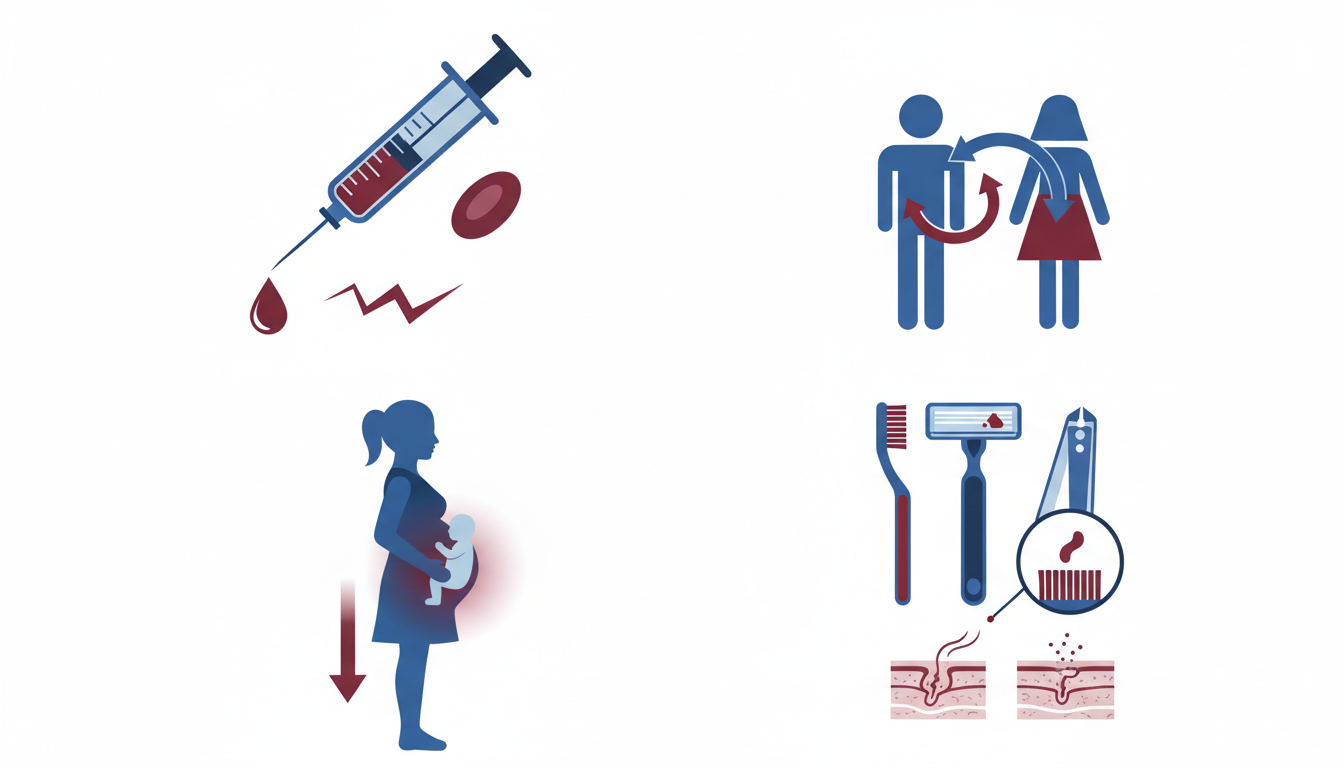
The entry point on the receiving side matters as much as the source fluid. A microscopic mucosal tear during sex, the shared inner channel of a reused needle, a cut from a contaminated razor, or the placental and birth-canal contact that a newborn experiences during delivery all give the virus a path into the bloodstream. Intact skin without breaks is a strong barrier. Broken skin or mucous membranes are not.
Most viruses degrade quickly outside a host. HBV is unusual: dried blood on a surface can remain infectious for at least a week (<a href="https://www.cdc.gov/hepatitis-b/">CDC</a>). That is why universal precautions in healthcare, careful disposal of sharps, and not sharing items that could carry microscopic blood between people (razors, toothbrushes, glucose-monitor lancets) are emphasized in public-health guidance.
Sexual transmission and what raises the risk
Sex is one of the most common adult routes for hepatitis B transmission in countries with low overall HBV prevalence, including the United States and most of western Europe. Both vaginal and anal sex can transmit the virus when one partner has HBV in their bloodstream and the other is not vaccinated. Oral sex is a lower-risk route, but it is not zero, particularly when bleeding gums, mouth ulcers, or genital sores are involved (CDC).
Risk goes up with the number of sexual partners, with sex without barrier protection, and with concurrent sexually transmitted infections that cause inflammation or open sores (herpes, syphilis, gonorrhea). It also goes up if a partner has high-level viremia, which is common in untreated chronic HBV. The CDC and WHO both recommend correct and consistent condom use as the primary barrier method for adults at risk, alongside vaccination of partners who have not been immunized.
People at higher sexual-route risk include anyone with multiple recent partners, men who have sex with men, sex workers and their partners, and the household and sex partners of people known to have chronic HBV. The CDC's guidance is that all of these groups should be vaccinated and screened. Vaccination ahead of any potential exposure is the single most reliable preventive step; it shifts the conversation from "how do I avoid HBV during sex" to "I'm already protected."
Consistent condom use plus hepatitis B vaccination of any unvaccinated partner is the combined preventive package recommended by both the CDC and WHO. Either step alone helps; both together close most of the residual risk for adults who are sexually active and not yet immune.
Mother-to-child transmission during birth
Vertical transmission, meaning HBV passing from mother to baby (most commonly during birth itself rather than during pregnancy), is the leading cause of chronic hepatitis B worldwide. The WHO notes that perinatal infection is responsible for the largest share of chronic HBV cases globally because infants and young children who acquire HBV develop chronic infection in about 95% of cases, compared with less than 5% of adults who acquire HBV (WHO hepatitis B fact sheet).
Without intervention, transmission rates from a mother with high-level HBV viremia (HBeAg-positive) to her newborn can exceed 90%. With the standard newborn protocol, that number drops dramatically. The CDC and WHO both recommend that every newborn receive the first dose of the hepatitis B vaccine within 24 hours of birth, and that babies born to mothers known to be HBV-positive also receive hepatitis B immune globulin (HBIG) within the same window. Combined birth-dose vaccine plus HBIG cuts perinatal transmission to under 5% in most cases (CDC).
Pregnant people are screened for HBsAg (the surface antigen indicating active infection) at their first prenatal visit in the U.S. and in most other high-income healthcare systems. If the result is positive, the obstetric and pediatric teams plan delivery and newborn prophylaxis accordingly. Antiviral therapy in late pregnancy may also be offered to mothers with very high viral loads to further reduce the risk.
Importantly, breastfeeding is not a transmission route for hepatitis B. The CDC explicitly states that breastfeeding by an HBV-positive mother is safe for the infant, particularly when the standard birth-dose vaccine and HBIG have been given. The virus is present in breast milk at very low levels, and the protective effect of the standard newborn protocol far outweighs any theoretical risk.
| Birth scenario (HBV-positive mother) | Perinatal transmission rate |
|---|---|
| HBeAg-positive mother, no intervention | Up to ~90% |
| Birth-dose vaccine + HBIG within 24 hours | Under 5% in most cases |
Blood and needle exposures
Direct blood-to-blood contact is the most efficient way for hepatitis B to spread. The biggest categories of blood-route transmission today include shared injection-drug equipment, occupational needlestick injuries in healthcare, and tattoo or body-piercing services that reuse equipment without proper sterilization. Less commonly in the modern era, transfusions and organ transplants from inadequately screened donors can transmit HBV, although routine donor screening has made this rare in countries with regulated blood supplies.
People who inject drugs are at very high risk if they share needles, syringes, cookers, cottons, or rinse water, because even a residual amount of blood inside a needle's lumen can carry enough HBV to cause infection in an unvaccinated person. The CDC recommends hepatitis B vaccination plus syringe-services-program participation for everyone who injects drugs (CDC).
Healthcare workers face occupational HBV risk through needlesticks, sharps injuries, and mucosal blood splashes. The CDC's standard practice is universal hepatitis B vaccination of all healthcare personnel, post-vaccination antibody-titer testing, and a clear post-exposure protocol (HBIG plus vaccine if needed) for any exposure event.
For tattoos, piercings, acupuncture, and any procedure that breaks the skin, the rule is simple: equipment must be either single-use disposable or autoclave-sterilized between clients. Reputable studios have written protocols for this. Travel-medicine guidance from the NHS and CDC both flag tattoos and piercings in low-resource settings as a real HBV risk if you cannot verify the sterilization process (NHS hepatitis B).
| Body fluid | HBV concentration | Routine transmission risk |
|---|---|---|
| Blood | Highest | Very high |
| Semen / vaginal fluid | Moderate | Moderate to high during unprotected sex |
| Saliva (no visible blood) | Low | Very low to negligible |
| Breast milk | Very low | Not considered a transmission route |
| Tears, sweat, urine, feces | Trace or none | Not considered a transmission route |
Healthcare workers, dental settings, and shared everyday objects
Beyond the main routes above, hepatitis B can move through any object that has microscopic amounts of infected blood on it and that breaks the skin or contacts a mucous membrane. In healthcare and dental settings, this includes endoscopes, dental drills, blood-glucose meters shared between patients, and hemodialysis equipment. The CDC's universal-precautions framework treats every patient's blood as potentially infectious, which is why gloves, sterile single-use equipment where practical, and rigorous cleaning of reusable instruments matter.
Outside healthcare, the everyday items most associated with possible HBV transmission within households are shared razors, toothbrushes (when gums bleed), nail-care tools that can draw blood, and personal glucose-monitor lancets. The CDC recommends that household members of someone with chronic HBV avoid sharing these items and complete the HBV vaccine series themselves. The shared-object risk is real but small in practice; the broader lesson is that any item that can carry blood between people is a potential vector.
Casual household contact, sharing meals, hugging, holding hands, sneezing, coughing, and using the same toilet are not transmission routes for hepatitis B. Public-health guidance from the CDC, WHO, and NHS is consistent on this point, and the consistent message is meant to reduce stigma around people living with chronic HBV.
Anything that may carry microscopic blood between people is a potential vector. In a household with chronic HBV, do not share: razors, toothbrushes (especially when gums bleed), nail-care tools that can draw blood, and personal glucose-monitor lancets. Vaccinated household members should still avoid sharing these as a general hygiene practice (per CDC).
What does NOT transmit hepatitis B
Misconceptions about hepatitis B transmission still drive avoidable stigma and bad decisions, particularly around employment, schooling, and household relationships. The following are NOT routes of HBV transmission, per CDC and WHO guidance:
- Hugging, kissing on the cheek, or holding hands.
- Sharing meals, utensils, drinking glasses, or food.
- Coughing, sneezing, or breathing the same air.
- Using the same public toilet or swimming pool.
- Mosquito or insect bites (no scientific evidence supports this route).
- Breastfeeding by a mother with HBV when the infant has received the standard birth-dose vaccine and, where indicated, HBIG.
If you live or work with someone who has chronic hepatitis B and you have completed the vaccine series, your day-to-day household risk is functionally zero. The vaccine protects against the routes that matter (blood and sexual contact), and the items in the list above don't transmit HBV regardless of vaccination status.
Vaccination: the strongest single prevention step
The hepatitis B vaccine is one of the most effective vaccines in routine use anywhere in the world. The CDC reports that a complete HBV vaccine series produces protective antibody levels in roughly 98 to 100% of healthy adults and infants who complete it, and protection is believed to last for decades, possibly for life, in immunocompetent people (CDC: About Hepatitis B).
The standard adult schedule is either 3 doses given over 6 months (Engerix-B, Recombivax HB) or 2 doses given a month apart (Heplisav-B, a newer adjuvanted vaccine). Infants receive a birth dose plus 2 to 3 follow-up doses as part of the routine childhood vaccination schedule in the U.S. and most other countries. The WHO has recommended universal infant HBV vaccination since 1992, and that policy has driven a steady decline in new chronic infections globally.
If you've never been vaccinated, the practical question is straightforward: get the series. Your primary care physician, most pharmacies in the U.S., and most travel-medicine clinics offer it. The CDC currently recommends HBV vaccination for all adults age 19 to 59, and for adults 60 and older with risk factors. Adults traveling to high-prevalence regions (sub-Saharan Africa, Southeast Asia, parts of the Pacific) who lack documented vaccination should complete the series before departure, per CDC and NHS travel-health guidance (NHS). Post-vaccination titer testing is recommended for healthcare workers, hemodialysis patients, infants of HBV-positive mothers, and immunocompromised people; everyone else generally does not need it.
If you've been exposed to HBV recently and you're not sure of your vaccination status, post-exposure prophylaxis with HBIG plus the vaccine started within 24 hours (and ideally within 7 days for sexual exposures, 14 days for percutaneous exposures) can dramatically reduce the chance of infection. This is a clinic visit, not a home decision. If you think you've had a high-risk exposure, contact a clinic, urgent care, or emergency department promptly.
Hepatitis B testing: what to test for and when
Hepatitis B testing usually means one of three labs, and you'll see them grouped together on lab orders or rapid kits:
- HBsAg (hepatitis B surface antigen): a positive result means current HBV infection, either acute or chronic. This is the screening test most home rapid kits and clinic panels run.
- Anti-HBs (hepatitis B surface antibody): a positive result means immunity, either from vaccination or from clearing past infection.
- Anti-HBc (hepatitis B core antibody): a positive result means past or current infection. It does not develop from vaccination.
For practical screening of someone who wants to know "do I have hepatitis B right now," the HBsAg test is the answer. The CDC's standard window guidance is that HBsAg becomes detectable about 4 to 10 weeks after exposure, with most cases detectable by 9 weeks. If you've had a possible exposure within that window, a test taken too early can come back negative even if the virus is present. The standard advice is to test at the 9 to 12 week mark and again at 6 months for full reassurance (CDC).
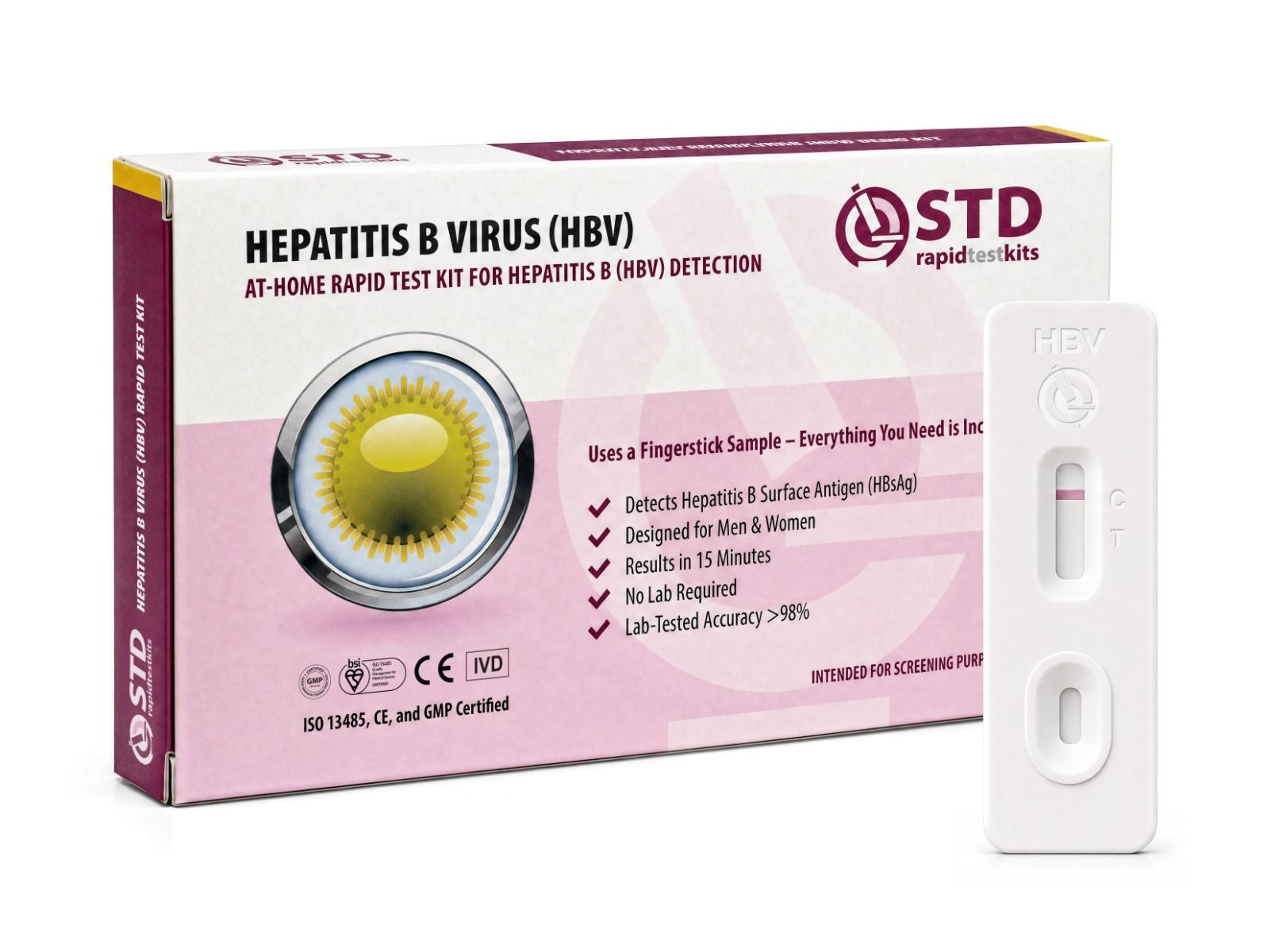
At-home HBV rapid tests are lateral-flow immunoassays that detect HBsAg from a fingerstick blood sample in about 15 minutes. They are screening tools, not diagnostic tests. A positive result needs lab confirmation through a clinic visit. A negative result during the window period does not rule out infection. Used appropriately (after the window has passed, with confirmatory follow-up if positive), they're a useful, private, fast option for people who would otherwise put off testing.
Disclosure: this article is published by stdrapidtestkits.com, which sells the rapid test kits referenced in this section. We recommend products based on fit-for-purpose for the reader's concern, not commercial benefit.
When to test for both hepatitis B and hepatitis C
Hepatitis B and hepatitis C share several transmission routes, particularly blood exposure (shared needles, tattoo equipment, transfusions before donor screening, dialysis), and the CDC recommends combined screening for several specific populations including everyone born between 1945 and 1965, people who have ever injected drugs, and people with chronic liver disease of unclear cause (CDC hepatitis testing guidance).
If you're testing because of a potential blood exposure (a shared needle, an inadequately sterilized tattoo, an old transfusion in a country without routine donor screening, or an occupational sharps exposure), it usually makes sense to test for both viruses at once rather than doing them sequentially. Hepatitis C is detected through anti-HCV antibody testing, which becomes positive about 4 to 10 weeks post-exposure (a similar window to HBV), with confirmatory HCV RNA testing if the antibody is positive.
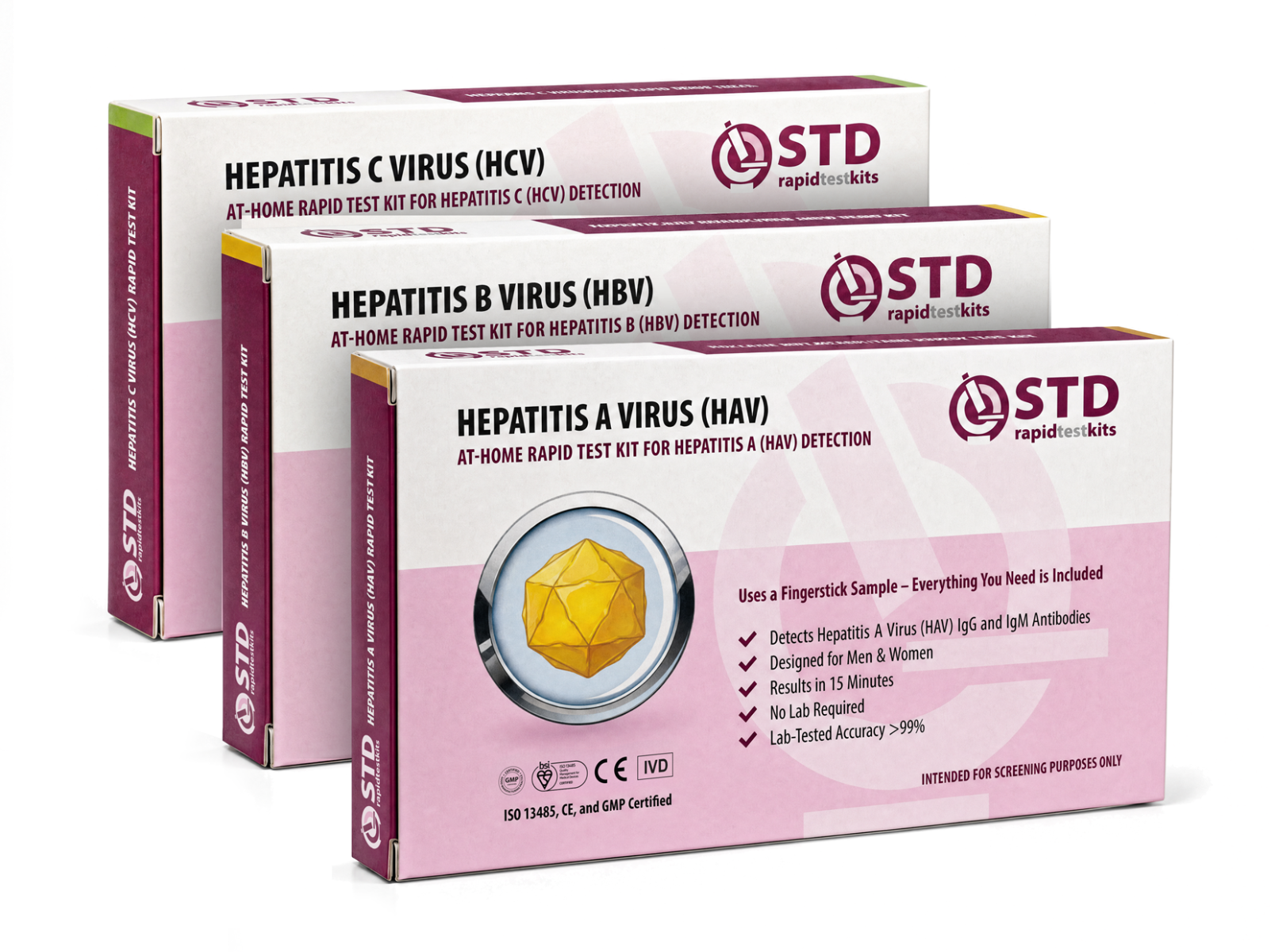
The combined home rapid panel below screens for both infections from a single fingerstick. Like the single-infection HBV test, it is a screening tool; positive results need lab confirmation. The combined option saves the time and cost of running two separate tests when both are clinically indicated.
Hepatitis B virus is 50 to 100 times more infectious than HIV. The virus can survive outside the body for at least 7 days, and during that time the virus can still cause infection if it enters the body of a person who is not vaccinated.
FAQs
- Can I get hepatitis B from kissing?
- Routine kissing on the cheek or closed-mouth kissing is not considered a hepatitis B transmission route. Deep kissing where both partners have bleeding gums or open mouth sores is a theoretically very low-risk scenario; the CDC does not list it among standard transmission routes. The routes that matter are blood, sex, and mother-to-child during birth.
- Is hepatitis B curable?
- Acute hepatitis B clears on its own in roughly 90 to 95% of healthy adults within 6 months. Chronic hepatitis B (infection lasting longer than 6 months) is generally not "cured" with current treatments, but it can be effectively suppressed long-term with antiviral medications like tenofovir or entecavir, which dramatically lower the risk of cirrhosis and liver cancer (per CDC and WHO).
- How long does the hepatitis B vaccine protect me?
- For healthy adults and children who complete the vaccine series, protection is believed to last for decades, possibly for life. The CDC does not currently recommend routine booster doses for immunocompetent people. Healthcare workers, dialysis patients, and immunocompromised people may need post-vaccination titer testing and possible boosters.
- How soon after exposure can I test for hepatitis B?
- 9 to 12 weeks post-exposure is the reliable testing window for an HBsAg test. The antigen can appear as early as 4 weeks, but a test taken before 9 weeks risks a false negative. A confirmatory test at 6 months gives full clearance for someone with a known high-risk exposure.
- Can I get hepatitis B from a tattoo or piercing?
- Yes, if the equipment was not properly sterilized between clients. Reputable studios use single-use disposable needles or autoclave-sterilized equipment, which makes the risk very low. Travel-medicine guidance flags tattoos and piercings in lower-resource settings as a real HBV concern when sterilization protocols cannot be verified.
- Is breastfeeding safe if I have hepatitis B?
- Yes. Breastfeeding is considered safe when the infant has received the birth-dose vaccine and, where indicated, HBIG. Breast milk carries very low HBV levels, and the standard newborn immunization protocol is protective against that route per CDC guidance.
- What if my home test comes back positive?
- A positive at-home HBV test is a screening result, not a diagnosis. The next step is a clinic visit for confirmatory lab testing (HBsAg confirmation, anti-HBc, HBV DNA viral load, liver-function panel). If the lab confirms infection, your provider will determine whether it is acute or chronic and discuss antiviral treatment if needed.
- Should my partner and household get tested too?
- Yes, if you test positive for HBV. The CDC recommends testing of sex partners, needle-sharing partners, and household contacts of anyone with chronic HBV, and vaccinating any of them who are not already immune. This is a standard public-health step that protects the people closest to you.
- U.S. Centers for Disease Control and Prevention. About Hepatitis B: transmission routes, infectivity, surface-antigen testing windows, vaccination efficacy, and prevention guidance for the U.S. public.
- World Health Organization. Hepatitis B fact sheet, including global prevalence (around 254 million people with chronic infection), annual mortality, age-specific chronicity rates (about 95% in infancy/early childhood, less than 5% in adults), and perinatal transmission rates without and with intervention.
- U.S. Centers for Disease Control and Prevention. Hepatitis B vaccination guidance for adults age 19 to 59, post-exposure prophylaxis with HBIG plus vaccine, and birth-dose protocol for newborns of HBV-positive mothers (covered on the same About Hepatitis B page).
- U.K. National Health Service. Hepatitis B overview, transmission, treatment, and travel-related exposure guidance, written for U.K. patients.
- Mayo Clinic. Hepatitis B symptoms, causes, and risk factors, written for patients.