






Can You Trust Your HIV Rapid Test? What That Faint Line Really Means
Knowing Hepatitis B Transmission
Hepatitis B is a serious liver infection. It can result in chronic health complications if left untreated or poorly managed on time. Hepatitis B virus is transmitted through various modes, which mainly include unprotected sex, transfusion of blood, and vertical transmission.
Unprotected Sexual Intercourse: A Primary Route of Transmission
The most prevalent mode of transmission of the virus, Hepatitis B, is through unsafe sex. The virus may be transmitted by way of genital secretions from the infected individual to their partner during sexual activity. The WHO strongly recommends protection in sexual relations by wearing a condom. It not only reduces the chances of Hepatitis B infection but also other sexually transmitted infections.
Mother to Child Transmission: The Risk in Womb
Another important mode of transmission of Hepatitis B is in utero, from the infected mother to the fetus. With the virus in circulation in the blood of the mother, it can be transmitted to the developing fetus. A child born to a woman with Hepatitis B will thus be born with the viral infection. It is worth noting that there should be an administration of Hepatitis B Immune Globulin and a Hepatitis B vaccine to the newborn within the first 24 hours after birth in order to enhance the baby's immune system against the virus.
The Risks from Blood Transfusion and Exposure to Contaminated Body Fluids
Blood transfusion can also be a mode of acquiring Hepatitis B infection due to the infectious virus present in blood. Other body fluids that the Hepatitis B virus can be found in include semen, vaginal discharges, saliva, mucus, and even sweat. Although the quantity of the virus in these body fluids is less than in the blood, contamination may still lead to an infection.
Risk of Contaminated Needles and Shared Sharps
The risk of reusing needles in treating several patients has medical practitioners being highly vulnerable in the spread of Hepatitis B and other infectious diseases. Sharing non-sterilized sharp objects, such as razors, that can tear through the protective outer layer of skin may also transmit Hepatitis B.
This understanding of the modes of transmission plays a very important role in preventing the spread of the dangerous virus. Safe sex, observance of Universal Precautions with blood and body fluids, vaccination, and responsible use of sharp instruments are just some of the public health strategies that are crucial steps in the fight against Hepatitis B transmission.
Healthcare Professionals-A Close-Up Examination of Shared Items
It is here that medical professionals, especially those who frequently work with needles, have to be very careful in order not to spread Hepatitis B. One mistake in sterilization or needle exchange may lead to the transmission of this dangerous virus between patients. This is why it is strictly necessary to follow all universal precautions and routine sterilization practices.
Moreover, it is not only in healthcare settings; the trend of transmitting Hepatitis B is high. Everyday objects we share, like razors, toothbrushes, or even manicure tools, also have the potential to spread the virus if they come in contact with virus-infected blood. It has to be realized that anything that can prick or tear the skin can potentially become a carrier for Hepatitis B infection.
Vaccination: A Potent Preventive Weapon
Among the various preventive measures against Hepatitis B, vaccination remains one of the most potent. According to the CDC, as high as 95% protection among those who have completed the series is afforded by the Hepatitis B vaccine. Vaccination against Hepatitis B is a very effective tool in the prevention and control of the disease.
Hepatitis B infection is such a virulent and life-threatening one, with its preventive measures requiring involvement in raising awareness among the general public. Some of the routes to transmission can be described as via unprotected sexual intercourse, from mother to child, through blood transfusions, exposure to infected body fluids, the use of infected needles, and sharing sharp objects. The better we are educated about the routes of transmission of the virus, the better prepared we will be in attempting to prevent and control the disease.
Public health campaigns must continue to educate, promote safe sex, advocate for responsible medical use and sterilization of needles used in medical treatment, and encourage the widespread use of the Hepatitis B vaccine. Each person's commitment to these practices can go a long way in helping the rest of the world combat the Hepatitis B virus.
Hepatitis B and C Testing: Using Home Use Rapid Test Kits
With the advancement of medicine, home-use rapid test kits have provided more convenience in taking control of one's health. Primarily, these kits are designed to show the positive presence of the Hepatitis B and C viruses in your system.
The mechanism by which a home-use rapid test kit works involves identifying antigens or antibodies within a sample-usually blood-obtained with a simple finger prick. You clean your finger, prick it with the lancet provided, and draw a few drops of blood. This blood is then placed on the test device. A buffer solution is added to the sample-which also comes with the kit-and it moves upwards into the test strip.
Check Your STD Status in Minutes
Test at Home with RemediumHepatitis B & Hepatitis C Test Kit
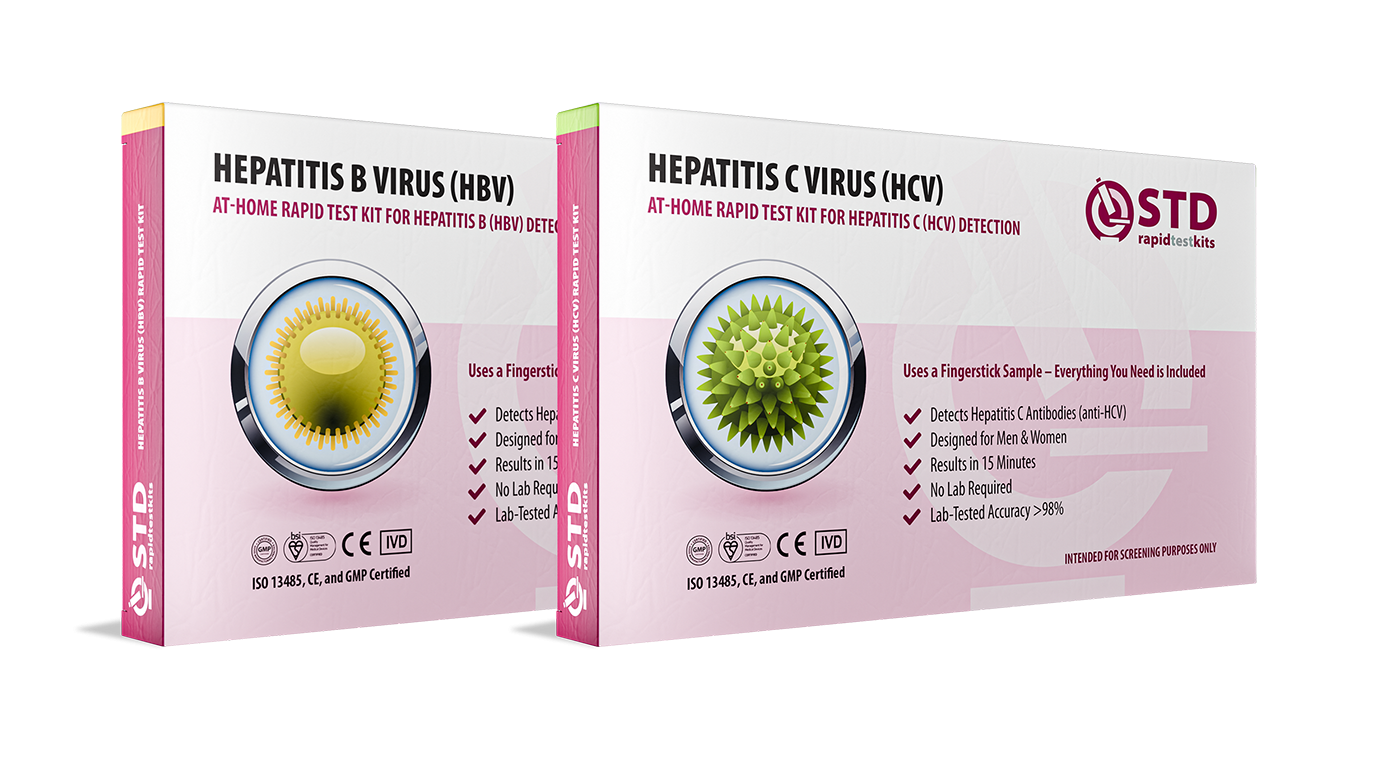
Claim Your Kit Today
Save 50%
 For Men & Women
 Results in Minutes
 No Lab Needed
 Private & Discreet
Order Now $49.00 $98.00
For all 2 tests
Following the required time to wait, usually about 15-20 minutes, one can read the result. Two lines give a positive result, meaning that the tested virus is present. One line, usually a control line, means the result is negative. If no lines appear at all, the test is invalid, and the process must be carried out afresh with a new kit.
Let us not forget, however, that these home test kits provide just a convenient initial screening but are by no means a diagnosis. Whenever the result shows positive, confirmation by a more precise test conducted by a medical professional is always necessary. Similarly, medical attention must be sought when symptoms persist, even if the result is negative.


