Published: November 2025 | Last updated: May 2026 | Editorial review and quality control: Martina N.
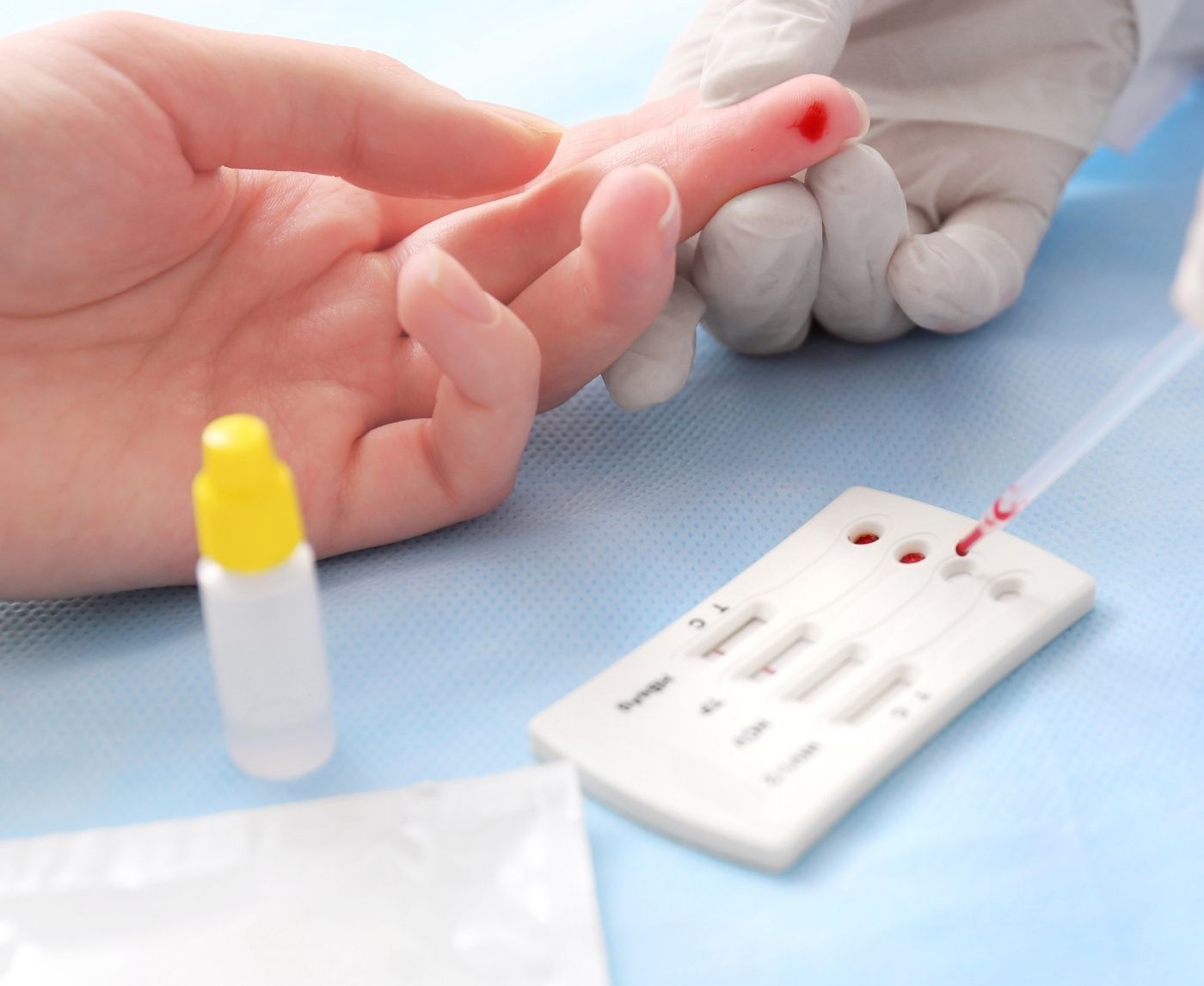
A faint second line on an HIV rapid test sends most people into a quiet panic. Is that a positive result, a reading error, or a reason to drive to the nearest clinic? At-home rapid tests are now widely available, FDA-cleared, and accurate enough to function as real screening tools. They only work as well as the timing and technique you bring to them. This guide covers what at-home HIV rapid tests actually detect, what a faint line means, why the window period makes early results unreliable, and what to do next when something looks off. The science is on your side. Interpretation is what most people get wrong.
Key Takeaways
- FDA-approved at-home HIV rapid tests can be highly accurate, but only after enough time has passed for antibodies to build. Most kits reach reliable detection 23 to 90 days after exposure.
- Any visible second line, even a faint one, should be treated as a presumptive positive and confirmed with a laboratory antigen/antibody (4th-generation) test.
What HIV Rapid Tests Actually Look For (And What They Miss)
Most at-home HIV rapid tests are antibody tests. They detect the immune-system proteins your body produces in response to HIV infection. The most common FDA-approved at-home option in the United States, OraQuick, uses an oral swab and shows a result in about 20 minutes (FDA-cleared for home use (FDA.gov)). It is private, easy to perform, and well-validated when used at the correct time after exposure.
What the test does not measure is the trade-off. Antibody-only rapid tests cannot detect the virus directly. They can only detect your body's response to it. That response takes time. During the window period, the gap between infection and detectable antibodies, the test can return a negative result even though the virus is present.
Lab-based testing fills this gap with two additional tools. Fourth-generation antigen/antibody tests detect both antibodies and the p24 antigen, a viral protein that appears earlier than antibodies. Nucleic acid tests (NAATs) detect HIV RNA itself and can confirm infection within roughly two weeks of exposure (CDC HIV testing guidance). Each test type answers a slightly different question. Choosing the right one depends on how much time has passed since the exposure you are worried about.
How accurate is an at-home HIV rapid test?
FDA-approved at-home HIV rapid tests typically report 91% to over 99% sensitivity and over 99% specificity when used correctly and after the recommended window period (about 23 to 90 days for antibody-only tests). A test taken too early can return a false negative. A faint test line at any intensity should be treated as a presumptive positive and confirmed with a laboratory antigen/antibody test.
The Window Period (Why Timing Decides Accuracy)
The window period is the most misunderstood concept in HIV testing. It is the gap between exposure and the moment a particular test can reliably detect infection. Test before the window closes, and a negative result is not the all-clear it appears to be. Wait the right amount of time, and the same test becomes accurate enough to act on.
The window depends on the test type. Antibody-only tests have the longest window because the body needs roughly three to twelve weeks to produce enough antibodies for the test to register. Antigen/antibody combo tests close the gap by also detecting the p24 antigen, which appears earlier. NAATs detect viral RNA and have the shortest window of all (CDC).
Here is how the common HIV test types compare:
| Test Type | What It Detects | Sample Type | Window Period | Most Reliable After |
|---|---|---|---|---|
| At-home rapid (oral fluid) | HIV antibodies | Oral swab | 23 to 90 days | 3 months |
| At-home rapid (fingerstick) | HIV antibodies | Drop of blood | 23 to 90 days | 3 months |
| Lab antigen/antibody (4th-gen) | p24 antigen + antibodies | Blood draw | 18 to 45 days | 4 to 6 weeks |
| Lab NAAT (RNA) | HIV RNA | Blood draw | 10 to 33 days | 3 to 4 weeks |
Reading Your Result, Including That Faint Line
The line that triggers the most anxiety is the one that is barely there. You see the bold control line, exactly where the instructions promised. Right next to it sits a second line that is faint, blurry, almost smudged. That is enough to make most people stop breathing for a moment.
Interpreting the result is simpler than it feels. Any visible second line, regardless of intensity, counts as a positive on most FDA-approved tests. Color depth varies based on how much antibody is present in the sample, but a faint line still means the test detected HIV antibodies. Reading the strip and seeing two lines, even one that is far paler than the control, is a presumptive positive that needs lab confirmation.
Other things can change how a result looks. Reading the result before or after the kit's specified window can produce evaporation lines or fading. Saliva contamination on oral swabs, brief exposure to high heat, or improper storage can all distort the strip. Following the kit's directions exactly matters more than people expect: set a timer, use clean dry hands, and avoid eating, drinking, or brushing teeth in the 30 minutes before an oral swab.
Here is how the most common result patterns map to next-step action:
| What You See | What It Likely Means | What To Do Next |
|---|---|---|
| One control line, no test line | Negative, but only reliable if the test was taken after the window period | If exposure was recent, retest 4 to 12 weeks later |
| Two lines (one faint, one bold) | Presumptive positive | Schedule a lab antigen/antibody confirmatory test |
| Two clear bold lines | Presumptive positive | Schedule a lab confirmatory test |
| No control line | Invalid result | Discard and retest with a fresh kit |
If the test looks confusing, take a clear photo, note the exact time you read it, and call a healthcare provider or HIV support line. Trying to second-guess a faint line on your own usually makes the anxiety worse without changing the next step, which is always lab confirmation.
The Mistakes That Quietly Undermine Your Result
Even an FDA-approved test gives bad answers when it is used badly. Most rapid-test failures are not flaws in the chemistry. They are user errors that cluster around timing, technique, and storage.
The most common mistakes:
- Reading the result outside the valid time window. Most tests show a result within a fixed range, often 20 to 40 minutes. Reading earlier can miss a slowly developing line; reading later can show evaporation lines that mimic positives.
- Skipping pre-test prep. For oral-fluid tests, eating, drinking, or brushing teeth in the 30 minutes before the swab can dilute or contaminate the sample.
- Touching the swab tip with fingers. Skin oils transfer onto the test pad and can interfere with the reaction.
- Not swabbing thoroughly. Oral-fluid tests require a complete pass along the upper and lower gum lines. A shallow swipe may not collect enough of the natural fluid along your gum line to produce a reliable result.
- Storing the kit poorly. Heat (a hot car, a sunny windowsill, a humid bathroom) can damage the reagents inside an unopened kit and cause invalid results when you eventually use it.
- Testing too early. Testing during the window period causes more false negatives than any other error.
None of these mistakes are exotic. They are the kind of small slips that happen when someone is anxious, rushing, or testing in a moment of stress. Reading the kit instructions before you start, setting a phone timer, and giving yourself the full result window are the highest-leverage things you can do for accuracy.
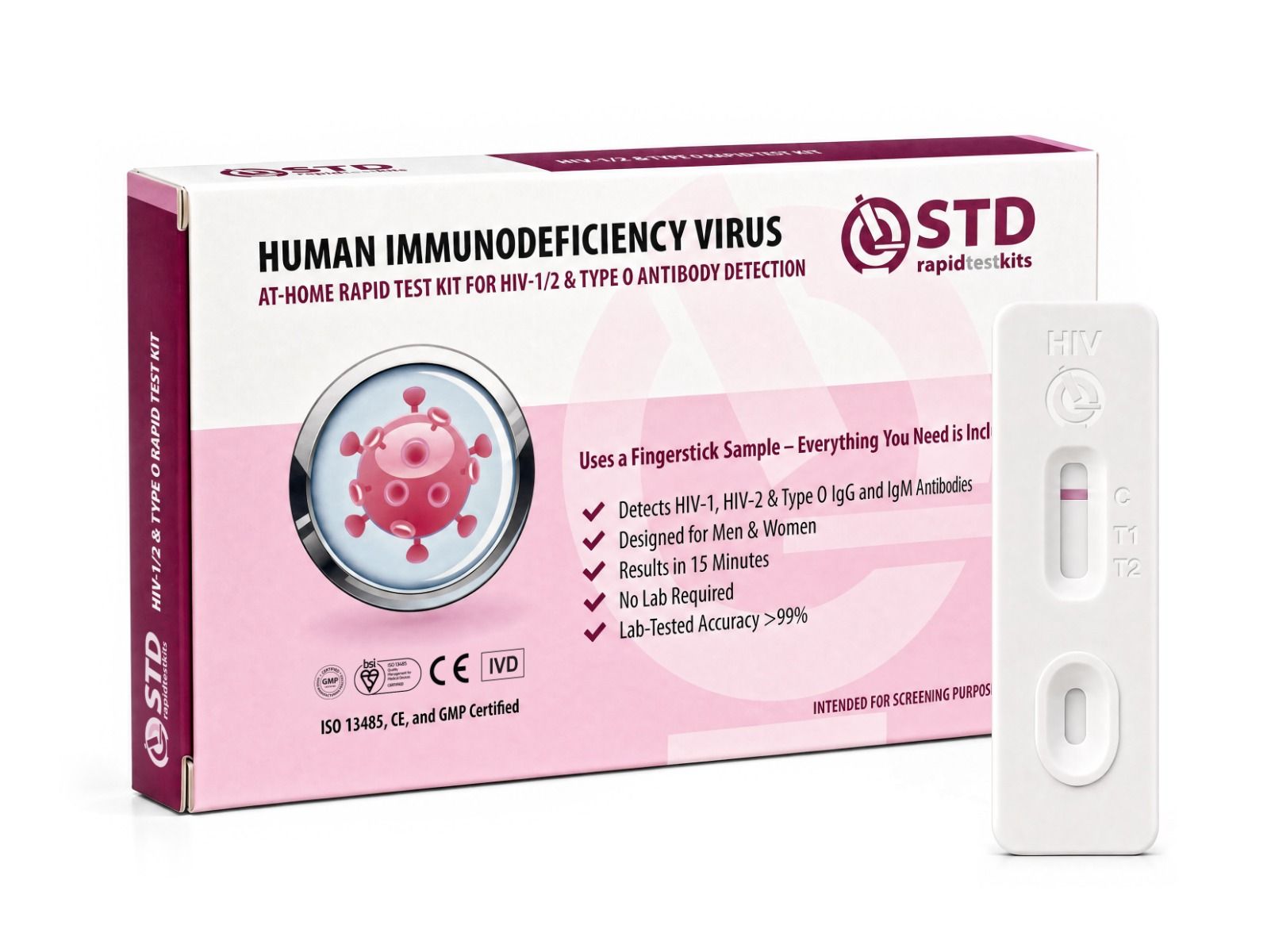
Disclosure: this site sells at-home rapid test kits; the kit linked below is our own product.
Can a Rapid Test Be a False Positive?
Yes, false positives can happen on a rapid HIV test. They are uncommon, but they exist, and the chance of one is the reason every positive rapid result needs lab confirmation before any treatment decisions.
Cross-reactivity with other antibodies is the usual cause. Recent vaccinations, certain autoimmune conditions, and some other viral infections can occasionally produce a faint test line in someone who is not actually HIV-positive. False positives on a properly used FDA-approved rapid test are uncommon, which is exactly why no clinician treats a positive rapid result as a diagnosis on its own. So if your test shows a faint line, the safest assumption is that it is reacting to HIV antibodies, and you need a confirmatory test.
Two practical takeaways follow. First, a faint line is statistically far more likely to reflect real HIV antibodies than a cross-reaction, so treat it seriously and confirm with a lab. Second, a confirmatory antigen/antibody test corrects almost every false positive, which is why two-step testing is the standard of care.
The most common cross-reactivity triggers are recent flu or other vaccinations, certain autoimmune conditions (such as lupus or rheumatoid arthritis), some other viral infections, and pregnancy. Each of these can occasionally produce a faint test line that looks like a positive. None of them are reasons to ignore a positive rapid result. They are reasons the confirmatory lab test exists.
What to Do With a Positive, Negative, or Invalid Result
Take a breath, then act on what you see.
Two lines (presumptive positive). Schedule a confirmatory test as soon as possible. The standard follow-up is a lab antigen/antibody (4th-generation) test, available through clinics, telehealth services, urgent-care centers, sexual-health clinics, and many primary-care offices. You do not need to explain or justify the home result. A clear request works: "I had a positive HIV rapid test at home and need a confirmatory lab test." While waiting for the result, avoid unprotected sex with partners.
If the lab confirms HIV, modern antiretroviral therapy is highly effective. People who reach an undetectable viral load on treatment cannot sexually transmit HIV (the principle clinicians and public-health agencies refer to as Undetectable equals Untransmittable, or U=U), and life expectancy on consistent treatment is comparable to HIV-negative peers. Starting treatment early gives the best long-term outcomes for both your own health and your partners'.
One line (negative). Read the result against the timing of the exposure. If less than the full window period has passed, the negative result is preliminary. Plan a follow-up test 4 to 12 weeks after the suspected exposure. If the exposure was high-risk (a known HIV-positive partner, a needle-stick injury, condom failure with an unknown-status partner), do not wait through a long window. A clinic visit for a 4th-generation lab test or NAAT will give a much earlier reliable answer.
No control line (invalid). The kit failed. Do not try to interpret what you see. Discard it and retest with a fresh kit, or, if you want certainty without another at-home attempt, switch to a clinic or mail-in lab test. Common causes are improper sample collection, kit damage from heat or moisture, or storage past the printed expiry date.
While you are waiting for a confirmatory result, see a healthcare provider quickly if you develop fever, rash, sore throat, or unusual fatigue. These can be signs of acute (very recent) HIV infection, and acting fast on them gives the best window for early treatment.
When to Retest (And Why It Is Not Overkill)
Many people stop after one negative result. For some situations that is the right call. For others, retesting is the difference between a real reassurance and a false one.
If you tested less than three weeks after a possible exposure, the result is preliminary. HIV antibodies take time to build, and the test may not have caught them yet. Retest 4 to 6 weeks after the event for a strong intermediate read, and again at 12 weeks for definitive antibody-test reassurance (CDC HIV testing).
If you are sexually active and not in a mutually monogamous relationship with someone whose status you know, retesting every 3 to 6 months is the routine the CDC recommends for ongoing risk. People taking PrEP (pre-exposure prophylaxis) are typically retested every 3 months as part of follow-up monitoring; the schedule is built into the prescription.
Retesting schedule at a glance
- After a recent exposure: retest at 4 to 6 weeks for an intermediate read, and again at 12 weeks for definitive antibody-based reassurance.
- Sexually active and not in a mutually monogamous relationship: retest every 3 to 6 months.
- On PrEP: HIV testing every 3 months is built into the standard follow-up schedule.
- Known high-risk exposure (HIV-positive partner, needle-stick): ask a clinic about a 4th-generation antigen/antibody test or a NAAT instead of waiting through the antibody window.
At-Home Rapid vs Lab Testing (What Each One Is For)
The choice between an at-home rapid test and a lab-based test is not really about which is better. Each one fits a different situation. Knowing the difference saves anxious time and unnecessary spending.
At-home rapid tests are the right tool when speed and privacy matter most: a recent low- or moderate-risk exposure that has cleared the window period, a baseline check before a new partner, or a periodic screen for someone with limited clinic access. They are not the right tool for very recent exposures, where the window period would render the result unreliable, or for any positive result that needs treatment-grade confirmation.
Lab-based testing is the right tool when timing matters and you cannot wait through the antibody-only window. Fourth-generation antigen/antibody tests can detect HIV days to several weeks earlier than antibody-only rapid tests, depending on how far past exposure the test is taken, and up to 45 days earlier at the far end of the antibody window. NAATs (RNA tests) detect even earlier and are the standard of care after a known high-risk exposure such as a needle-stick or sexual contact with someone known to be HIV-positive. Lab tests also remain the standard for confirming any positive rapid result.
If your concern goes beyond HIV alone, the at-home option that fits broader screening is a multi-STI panel rather than a single-infection kit. The comparison below covers the trade-offs:
| Test Path | Time to Result | Privacy | Reported Sensitivity | Best Use Case |
|---|---|---|---|---|
| At-home rapid | 20 to 40 minutes | Very high (no clinic visit) | About 91% to 99% (post-window) | Periodic screening, post-window peace of mind |
| Mail-in lab | 2 to 5 days | High (discreet shipping) | About 99% | Combination STI screening with lab-grade accuracy |
| Clinic lab (4th-gen) | Same day to 3 days | Lower (visit required) | About 99.9% | Recent high-risk exposure, confirmatory testing |

Most HIV tests are antibody tests, which look for antibodies your body makes against HIV. It can take 23 to 90 days for a person's body to make enough antibodies for an antibody test to detect HIV.
Privacy, Shipping, and What "Discreet" Actually Means
One of the biggest reasons people delay testing is the fear that someone will see the package, ask questions, or read meaning into a return address. Reputable at-home test kit providers anticipate that. The kits ship in plain, unbranded packaging with no medical wording or logos on the outside. Shipping labels do not name the condition or mention testing.
Most providers allow alternative shipping addresses (a PO box, a parcel locker, a friend's house) and let buyers choose tracked or untracked delivery. Inside, the kit contains the test device, sample-collection materials (an oral swab or a fingerstick lancet, depending on the test), instructions, and often a sealed disposal bag for the used materials.
Results are not sent to your phone, an app, or a cloud service unless you explicitly opt in. The result lives on the test cassette and ends up wherever you discard it.
What to expect on the privacy side
- Outer packaging shows no brand name, condition, or medical wording.
- Shipping label does not reference testing or the product type.
- Alternative delivery accepted: PO box, parcel locker, or a friend's address.
- Result lives only on the test cassette unless you opt in to a separate app or service.
Frequently asked questions
- Does a faint second line mean I have HIV?
- On most FDA-approved rapid tests, any visible second line is a presumptive positive, regardless of how faint it looks. Color intensity varies with the amount of antibody present, but the test is designed to register a result, not grade it. Confirm with a laboratory antigen/antibody (4th-generation) test before drawing any conclusions about your status.
- I tested negative one week after possible exposure. Am I in the clear?
- No, one week is too early for an antibody-only rapid test to give a reliable answer. Plan a follow-up at 4 to 6 weeks for a strong intermediate result and again at 12 weeks for definitive antibody-based reassurance. If the exposure was high-risk and you cannot wait, ask a clinic about a 4th-generation antigen/antibody lab test or a NAAT, both of which close the window much earlier.
- What if there is no control line at all?
- The control line is the kit's way of confirming that the chemistry worked. If it is missing, the result is invalid regardless of what else is on the strip. Discard the kit and retest with a fresh one, or switch to a clinic test if you want certainty without another at-home attempt. Common causes are heat damage, moisture, expired kits, or insufficient sample collection.
- Can stress or anxiety change the test result?
- Stress does not change your antibody levels or affect the chemistry of the test, so it cannot create a false positive or false negative. What it can change is how you read the result, with anxious readings more prone to seeing lines that are not there or missing real ones. If the result is unclear, photograph it, note the time, and ask a healthcare provider or HIV support line to help interpret it.
- I have no symptoms. Should I still test?
- Yes. HIV often produces no symptoms in the early months, and the only way to know your status is to test. Acute HIV can also cause flu-like symptoms that are easy to mistake for unrelated viral illnesses. Routine screening based on risk factors and exposure events, not on symptoms, is the standard CDC recommendation.
- How accurate are at-home HIV tests compared with lab tests?
- FDA-approved at-home rapid tests typically report 91% to 99% sensitivity and over 99% specificity when used after the recommended window period. Lab antigen/antibody tests are slightly more sensitive overall and detect HIV earlier because they also pick up the p24 antigen. For very early exposure or known high-risk situations, the lab route is the better call. For routine post-window screening, at-home tests perform reliably.
- Are at-home HIV test kits really discreet?
- Yes. The outer packaging shows no brand name, product type, or medical wording, and shipping labels do not reference what is inside. Most providers also accept alternative delivery addresses such as a PO box, parcel locker, or a friend's address. Results stay on the test cassette and are not sent to any app or database unless you opt in to one separately.
- I got a positive rapid result and I am panicking. What now?
- First, the rapid result is a screening flag, not a diagnosis. Schedule a confirmatory lab test as soon as you can. If confirmation is positive, modern HIV treatment is highly effective: people who reach an undetectable viral load on antiretroviral therapy live full healthy lives and cannot transmit HIV through sex. Treatment access is broader than it has ever been, and starting early gives the best long-term outcomes.
The Bottom Line
An at-home HIV rapid test is a screening tool, not a diagnostic verdict. Used at the right time, with the right technique, after the appropriate window period, it gives a reliable answer most of the time. Used too early or read incorrectly, it gives an answer you cannot act on. The two highest-leverage habits are reading the kit instructions before you start and waiting the full window after possible exposure before drawing conclusions.
If the result is unclear, get lab confirmation. If the timing was too early, retest. If the exposure was high-risk, do not rely on antibody-only testing, because the lab tools that close the window faster exist for exactly this reason.
Testing is care. Knowing your status, whatever the result, is the first step in protecting your own health and the health of your partners. Order an HIV rapid test kit here, or, if you want broader screening in one go, the 7-in-1 panel covers HIV alongside the most common other STIs.
Two-line decision rule
- Faint or bold, any visible second line is a presumptive positive. Schedule a lab antigen/antibody confirmation.
- Tested less than three weeks after exposure? Treat the result as preliminary and retest at 4 to 6 weeks, then again at 12 weeks.
- Known high-risk exposure (HIV-positive partner or needle-stick)? Skip the antibody-only window and ask a clinic about a 4th-generation lab test or NAAT.
- No control line on the cassette? The kit failed. Discard it and retest with a fresh one or switch to a clinic test.
This article summarizes guidance from the U.S. Centers for Disease Control and Prevention, the U.S. Food and Drug Administration, and the World Health Organization. We translate published clinical guidance into practical decision points for people testing at home. We do not provide individual medical advice; for symptoms, recent high-risk exposures, or test results that need confirmation, see a licensed healthcare provider.
- U.S. Centers for Disease Control and Prevention. HIV testing methods, window periods, and self-testing guidance, including the 23 to 90 day antibody window cited in this article.
- U.S. Food and Drug Administration. HIV home-test approval and consumer guidance (fda.gov).
- World Health Organization. HIV and AIDS fact sheet, with global testing recommendations and rapid-test policy guidance.
- U.S. Centers for Disease Control and Prevention. About HIV: virology, transmission, and acute infection signs.
- U.S. Centers for Disease Control and Prevention. Clinical Guidance for PrEP, including the 3-month HIV retesting interval for people on pre-exposure prophylaxis.
