Published: November 2025 | Last updated: May 2026 | Editorial review and quality control: Martina N.
What are the four stages of HIV?
The four stages are: (1) the window period right after exposure, when the virus is replicating but no test can yet detect it reliably; (2) acute HIV infection at roughly 2 to 4 weeks, often with flu-like symptoms and the highest contagiousness of the entire course; (3) clinical latency, which on antiretroviral therapy can last decades with the person feeling well; and (4) advanced HIV or AIDS, defined by a CD4 count below 200 cells/mm³ or specific opportunistic infections. Modern treatment keeps most people from ever progressing past stage three.
Understanding HIV in 2026 means understanding a virus that behaves very differently in week one than in year ten. The four stages of HIV (window period, acute infection, clinical latency, and advanced HIV or AIDS) each carry different testing strategies, different symptoms, and very different long-term outcomes. This guide walks through each stage with current CDC and WHO guidance, plus what at-home rapid testing can and cannot do at each step.
Key Takeaways
- Most new HIV infections are transmitted by people who do not yet know they are positive, which is why testing during the asymptomatic stages matters more than waiting for symptoms.
- On consistent antiretroviral therapy an undetectable viral load means HIV cannot be sexually transmitted (U=U), a position endorsed by the CDC and WHO.
How HIV Moves Through Four Stages
HIV is a single virus, but it does very different things at different points in the infection. The CDC's three-stage clinical model (acute, chronic, AIDS) covers the same biology that the four-stage framing in this article expands. The added stage at the front is the window period, the first 10 to 45 days after exposure when the virus is replicating but blood tests cannot yet detect it reliably (CDC HIV testing guidance).
HIV is transmitted through specific bodily fluids: blood, semen, pre-seminal fluid, rectal fluids, vaginal fluids, and breast milk. Knowing which stage you might be in is the difference between a test that gives you accurate information and one that gives you false reassurance. Each section below covers what is happening biologically, what symptoms (if any) tend to appear, and which tests can detect HIV at that point. If you want to skip ahead to the practical part, an at-home HIV test becomes reliable from day 23 after a possible exposure. This guide is published by stdrapidtestkits.com, which sells at-home rapid HIV tests; the medical guidance here draws on CDC, WHO, and NIH sources, and we point readers to whichever test fits their situation rather than recommend for commercial benefit.
The Four Stages at a Glance
- Window period (days 1 to 45): the virus is replicating, but markers have not built up enough for a test to detect HIV reliably yet.
- Acute infection (weeks 2 to 4): flu-like symptoms are common, and contagiousness is at its highest of the whole course.
- Clinical latency (months to decades): the person usually feels well; on consistent ART this stage can last a normal lifetime.
- Advanced HIV or AIDS: defined by a CD4 count below 200 cells/mm³ or by specific opportunistic infections, and largely preventable with treatment.
Stage 1: The Window Period (Days 1 to 45)
The window period is the gap between exposure and the moment a test can reliably detect HIV. The virus is already replicating inside CD4 T-cells, but levels of detectable markers (antibodies, p24 antigen, or viral RNA) have not yet built up to the test's detection threshold.
Different tests have different windows. Per CDC testing guidance:
- Nucleic acid tests (NAATs) detect HIV RNA as early as 10 to 33 days after exposure. NAATs are lab-only and not used for routine screening.
- Fourth-generation antigen/antibody lab tests detect HIV between 18 and 45 days after exposure. This is the standard clinic test in most US sexual-health settings.
- Antibody-only rapid tests, including most at-home self-tests, detect HIV between 23 and 90 days after exposure.
A test taken too early can return a falsely negative result even if HIV is present. A single early-window negative is therefore not enough on its own. CDC recommends a follow-up test outside the window period (typically at the 90-day mark) to confirm a negative result after a known exposure.
Most people feel completely well during the window period. The body is starting an immune response, but the symptoms of acute HIV (covered next) usually do not appear until the virus has replicated enough to trigger a systemic reaction. If a recent exposure is high-risk and within 72 hours, post-exposure prophylaxis (PEP) is also a window-period option worth raising with a clinician right away.
Within 72 hours of a high-risk exposure: ask a clinician about post-exposure prophylaxis (PEP); it is more effective than any test at this point.
Day 10 to 33: only a lab-based NAAT can detect HIV reliably; request one if symptoms or a known exposure justify the visit.
Day 23 onward: at-home rapid antibody tests become reliable for most people.
Day 90: a confirming negative test rules out HIV after any specific known exposure.
Stage 2: Acute HIV Infection (Weeks 2 to 4)
Acute HIV infection is the body's first major response to the virus. Many people, though not all, experience symptoms during this stage, often described as the worst flu they have ever had (NIH HIVinfo, Stages of HIV Infection). Others have mild symptoms or none at all, which is why acute infection is so easy to overlook.
Common acute HIV symptoms include:
- Fever, often the first sign and frequently above 100.4°F
- Fatigue and muscle aches
- Sore throat
- Swollen lymph nodes (lymphadenopathy), especially in the neck and armpits
- A non-itchy rash, typically on the chest, back, or upper torso
- Headache
- Mouth ulcers or oral thrush
- Night sweats and chills
- Joint, muscle, or bone aches
These symptoms typically last one to two weeks and then fade on their own as the immune system temporarily catches up to the viral load. The body is producing HIV antibodies during this period, a process called seroconversion. Because acute symptoms look like other viral illnesses (flu, mononucleosis, early COVID-19), acute HIV is frequently misdiagnosed or dismissed as a passing bug.
Viral loads during acute infection commonly reach millions of copies per milliliter, and the person is often unaware they are infected. Research consistently shows that a substantial share of all new HIV infections originate from people in this acute phase, when viral loads are highest and most people do not yet know their status. Same-day testing after a known recent exposure with symptoms is the right call.
Stage 3: Clinical Latency or Chronic HIV (Months to Decades)
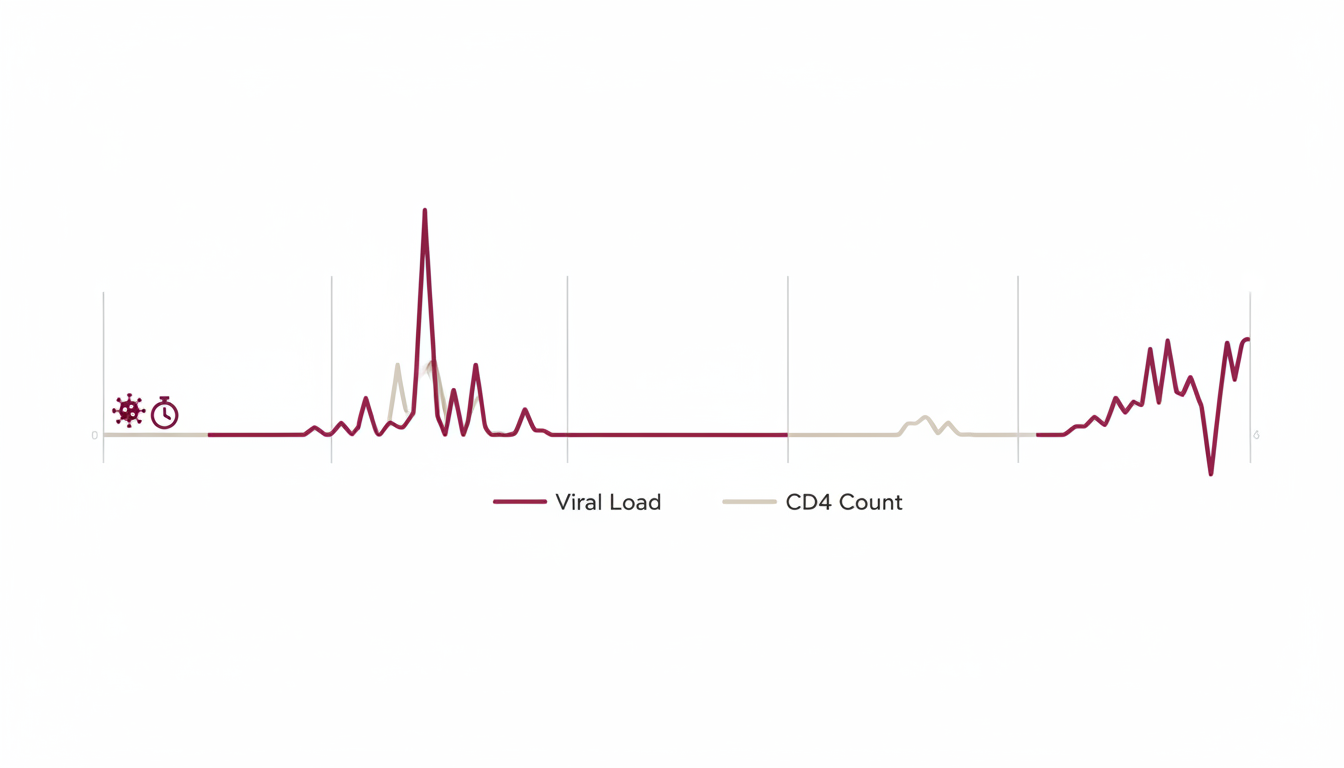
After the acute phase, the body and the virus reach an uneasy equilibrium. The viral load drops, the immune system rebounds partially, and the person typically feels well. This is clinical latency, sometimes called chronic HIV infection or the asymptomatic phase. Older patient education materials sometimes label it a "honeymoon period," but that wording undersells what is actually happening underneath.
Without treatment, latency lasts typically 10 years or longer, though it can be shorter or much longer depending on individual immune function and viral subtype (NIH HIVinfo). The virus is still replicating, just at much lower levels, and the immune system is still being slowly worn down. CD4 counts decline gradually without treatment, typically reaching AIDS-range levels within a decade.
With consistent antiretroviral therapy started during this stage, the picture changes completely. Viral load drops to undetectable levels (typically below 200 copies/mL), the immune system rebuilds, and progression to AIDS effectively stops. People who start ART early in latency have life expectancies approaching the general population average.
Without testing, a person can transmit HIV during sex or pregnancy for years without symptoms.
People in clinical latency often feel completely well, which is why CDC recommends a one-time HIV screening for everyone aged 13 to 64 as part of routine medical care, and every 3 to 6 months for people with multiple partners or other risk factors. The point of routine screening is not to find symptoms; it is to find infections that have not yet caused any.
Stage 4: AIDS (Advanced HIV Disease)
AIDS is not a separate disease. It is what untreated HIV becomes when CD4 T-cell counts fall below 200 cells/mm³ (a normal range is 500 to 1,500), or when a person develops one of the specific opportunistic infections or cancers that define the syndrome (CDC About HIV).
Common AIDS-defining illnesses include:
- Pneumocystis jirovecii pneumonia (PCP)
- Tuberculosis, including drug-resistant strains
- Esophageal candidiasis (severe thrush)
- Kaposi sarcoma
- Cytomegalovirus (CMV) retinitis
- Cryptococcal meningitis
- Toxoplasmosis of the brain
- Invasive cervical cancer
- Wasting syndrome with significant unintentional weight loss, chronic diarrhea, and prolonged cough
Without treatment, life expectancy after an AIDS diagnosis is roughly three years (NIH HIVinfo). With ART started even at this stage, many people recover meaningful immune function and add years or decades of healthy life.
Globally, late diagnosis remains common. WHO data indicate that a meaningful share of new HIV diagnoses still occur with CD4 counts already below 200, particularly where stigma or healthcare access keeps people from routine testing.
Reaching stage four does not mean treatment has run out of options. Starting antiretroviral therapy even after an AIDS diagnosis suppresses the virus, allows CD4 counts to rebuild over months to years, and substantially improves life expectancy. Same-week ART initiation is now the standard of care in most US clinics regardless of CD4 count.
When to Test Based on Your Timeline
Pick the test by counting back from the moment of possible exposure, not from the moment you started worrying. Different tests have different earliest reliable windows.
Less than 10 days since exposure. No current test can reliably detect HIV this early. Wait. Testing now usually gives you a number that does not actually mean anything. If the exposure was very recent (within 72 hours) and high-risk, ask a clinician about post-exposure prophylaxis instead of testing.
10 to 33 days. Only a lab-based NAAT can detect the virus during this period. NAATs are not standard screening tools (they cost more and require a clinic visit), but they can be requested if a high-risk exposure has just occurred.
18 to 45 days. A fourth-generation antigen/antibody lab test (sometimes called a 4th-gen combo) can reliably detect HIV. This is the standard clinic test in most US sexual-health clinics.
23 to 90 days. An antibody-based rapid test, the kind used in most at-home kits including ours, becomes reliable. CDC recommends a confirming negative test at the 90-day mark for full reassurance after a known exposure.
For routine screening with no recent specific exposure, testing at least once a year is the baseline. Every 3 to 6 months is the standard for sexually active people with multiple partners or other risk factors, per CDC HIV testing recommendations.
Rapid Test vs Lab Test: Choosing the Right Tool
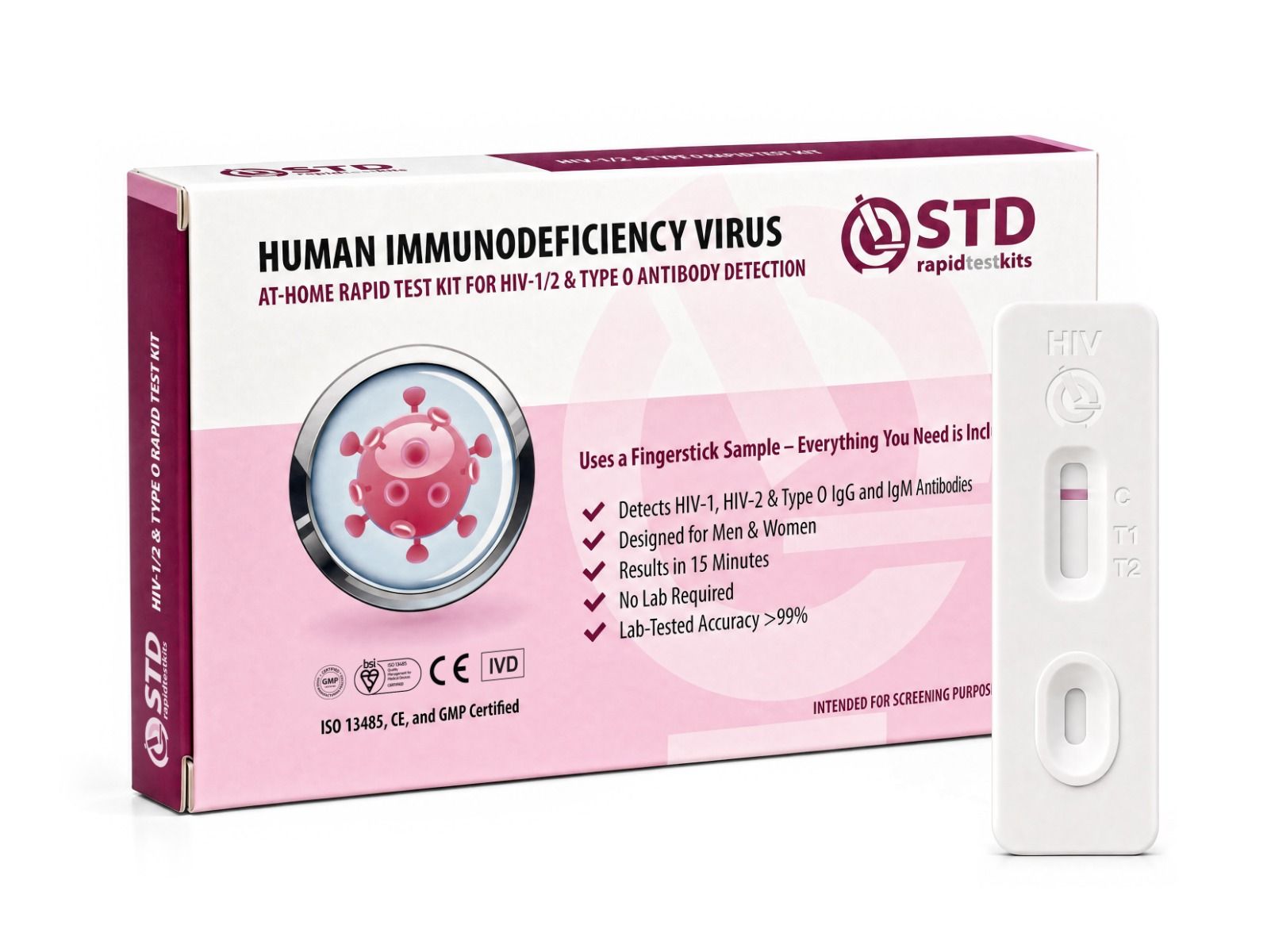
At-home rapid antibody tests, mail-in lab combo kits, clinic 4th-generation tests, and clinic NAATs are not interchangeable. They serve different purposes at different points in the timeline. The right choice depends on how recent the exposure was, how much privacy you need, and whether you are screening or confirming. Our at-home kit uses lateral-flow chemistry; lab NAAT and PCR offer higher analytical sensitivity in very early infection. The two are complementary tools rather than equivalent ones, and a positive result on a rapid screen always benefits from a lab confirmatory.
| Test | Earliest reliable window | Result speed | Privacy | Best for |
|---|---|---|---|---|
| At-home rapid (antibody) | 23 days post-exposure | 15 to 20 minutes | Very high | Privacy, fast retest cycle |
| Mail-in lab kit (4th-gen combo) | 18 days | 2 to 5 days | High | Lab-grade accuracy without a clinic visit |
| Clinic 4th-gen test | 18 days | Same day to 1 week | Moderate | Full STI panel; insurance often covers |
| Clinic NAAT | 10 to 33 days | 1 to 3 days | Moderate | Recent high-risk exposure or PEP evaluation |
PrEP, PEP, and Lowering Your Risk Before You Test
Testing is downstream of prevention. The CDC frames HIV prevention around three pillars: pre-exposure prophylaxis (PrEP), post-exposure prophylaxis (PEP), and consistent everyday risk reduction. Each one matters at a different point in the timeline.
PrEP (Pre-Exposure Prophylaxis). A daily oral medication, or a long-acting injectable in some cases, taken by people who are HIV-negative but at higher risk of exposure (sexual partners of people living with HIV, people with multiple partners, people who inject drugs). PrEP is highly effective at preventing HIV when taken as prescribed; see the CDC PrEP page for current efficacy figures for sexual exposure and for people who inject drugs.
PEP (Post-Exposure Prophylaxis). A 28-day course of antiretroviral medication started within 72 hours of a possible exposure. The earlier it begins, the more effective it is. PEP is an emergency intervention designed for one-off exposures (a condom break, a needlestick, a sexual assault); it is not a substitute for ongoing PrEP.
Everyday risk reduction. Consistent condom or dental dam use during sex, knowing your own and your partner's status before sex, testing regularly for other STIs, treating any existing STIs promptly, and avoiding shared injection equipment all lower the risk of HIV transmission. Untreated STIs are particularly important because open sores and inflammation make HIV transmission easier in both directions.
Before exposure: daily oral or long-acting injectable PrEP for people at higher risk.
Within 72 hours of a possible exposure: a 28-day PEP course; the sooner started, the better.
Ongoing: condoms or dental dams, mutual status awareness, prompt treatment of any other STIs, and no shared injection equipment.
What Happens If You Test Positive
A reactive (positive) result on a rapid HIV test is a screening result, not a diagnosis. It needs confirmation with a lab test, usually a fourth-generation antigen/antibody panel followed by a viral load measurement. False positives are uncommon but do occur, especially in low-prevalence populations and in the presence of certain autoimmune conditions or recent vaccinations.
If the lab confirms HIV, the next steps are clear and time-sensitive:
- Same-week start of antiretroviral therapy. Current US and WHO guidelines recommend starting ART as soon as possible after diagnosis, regardless of CD4 count. Many clinics now offer same-day ART initiation.
- Baseline labs. CD4 count, viral load, drug-resistance testing, and screening for hepatitis B, hepatitis C, and other STIs.
- Partner notification. Health departments offer anonymous partner notification services in most US states. Sexual partners from the past 6 to 12 months should be tested.
- Linkage to support. The Ryan White HIV/AIDS Program, federally qualified health centers, and HIV-specific case management programs can cover most or all of the cost of HIV care for uninsured patients.
The single biggest predictor of a normal life expectancy after an HIV diagnosis is how quickly ART is started and how consistently it is taken. The medication itself, in 2026, is typically a single pill once a day, with very few side effects for most patients (HIV.gov, HIV Treatment Overview). Regimens are individualized, so a clinician can switch the combination if a side effect appears, and most early side effects are mild and settle within the first few weeks. Because ART can interact with other prescriptions, it helps to tell the prescribing clinician about every other medication and supplement you take.
Living with HIV in 2026: U=U and the Treatment-as-Prevention Era
The most important shift in HIV care over the last fifteen years is captured in three letters: U=U, or Undetectable equals Untransmittable. After about six months on consistent antiretroviral therapy, most people with HIV reach an undetectable viral load. At that point, HIV cannot be sexually transmitted to a partner, even without condoms.
U=U is endorsed by the CDC, WHO, the International AIDS Society, and HHS. It is the conclusion of multiple large prospective studies (PARTNER, PARTNER2, Opposites Attract, HPTN 052) that found zero linked transmissions across thousands of mixed-status couple-years where the partner with HIV was virally suppressed (CDC, Treating HIV).
What this means in practice for someone newly diagnosed:
- Sexual transmission is preventable with treatment.
- Pregnancy with an HIV-negative outcome for the baby is the standard expectation when ART is started early and continued through delivery.
- Life expectancy with consistent care approaches the general population average.
According to WHO data for the end of 2024, an estimated 40.8 million people globally were living with HIV, and 77% were receiving antiretroviral therapy. The WHO has flagged several regions where new-infection rates continue to rise as priority areas for expanded testing and treatment access.
If you have an undetectable viral load, you will not transmit HIV through sex.
Take the Next Step
HIV in 2026 is a chronic, controllable condition for almost everyone who finds out early and starts treatment. The single most important variable in that outcome is whether the test gets taken at all. Privacy concerns, stigma, or the assumption that nothing is wrong can delay testing for years, which is exactly the gap routine and at-home screening exists to close.
An at-home rapid antibody test is reliable from 23 days after a possible exposure, with a confirming negative test at the 90-day mark for full reassurance. For broader screening after a higher-risk event, a multi-STI kit covers HIV alongside the other infections that frequently travel with it.
If a result comes back reactive, the path forward is well established: confirmatory lab test, same-week ART, and connection to one of the many programs that exist to make care accessible regardless of insurance status. Use the quick check below to match your timeline to the right test.
Which HIV Test Fits Your Timeline?
Was the possible exposure within the last 72 hours and high-risk?
Yes: Contact a clinician or clinic about post-exposure prophylaxis (PEP) today. Started within 72 hours, it can prevent infection and matters more than any test right now.
Has it been fewer than 23 days since the exposure?
Yes: It is still too early for an at-home rapid antibody test. Wait until day 23, or ask a clinic about a NAAT (reliable from day 10) or a 4th-generation lab test (reliable from day 18).
Has it been 23 to 89 days since the exposure?
Yes: An at-home rapid antibody test is reliable now. Test, then plan a confirming retest at the 90-day mark for full reassurance.
No: It has been 90 days or more: test now for a fully confirming result, which rules out HIV from that exposure. If any result is reactive, arrange a lab confirmatory test the same week and ask about same-week ART.
Guidance only; a clinician can advise based on your specific situation.
FAQs
- How accurate is an at-home HIV rapid test?
- At-home rapid antibody tests typically report sensitivities and specificities in the high 90s when used at the right point in the window period (23 days or more after exposure). Per CDC, all reactive rapid results should be confirmed with a lab antigen/antibody combo test or a viral load test, since false positives can occur in low-prevalence settings.
- Can I get HIV from oral sex?
- The risk is substantially lower than for vaginal or anal sex but not zero. Per CDC, the risk goes up when there are open cuts or sores, bleeding gums, or another untreated STI in the mouth or genitals of either partner. The receptive partner during ejaculation in their mouth carries the highest risk in this category, and the risk drops considerably without ejaculation.
- What is the difference between HIV and AIDS?
- HIV is the virus. AIDS (Acquired Immunodeficiency Syndrome) is the most advanced stage of HIV infection, defined by a CD4 count below 200 cells/mm³ or by the development of certain opportunistic infections and cancers. Most people with HIV who are on consistent treatment never develop AIDS.
- How long after exposure should I test for HIV?
- Day 23 is the earliest reliable window for the at-home rapid antibody test. In clinic, fourth-generation lab tests are reliable from day 18 and NAATs from day 10. After any known exposure, plan a confirming retest at the 90-day mark for full reassurance.
- How effective is PrEP at preventing HIV?
- PrEP is highly effective at preventing HIV when taken as prescribed, both for sexual exposure and for people who inject drugs. Long-acting injectable PrEP, taken every two months, is also approved for adults at risk. PrEP only works if it is taken consistently, and it does not protect against other STIs. See the CDC PrEP page for current efficacy figures.
- Do antiretroviral drugs have bad side effects?
- For most people in 2026, modern ART is well tolerated. Any side effects that appear are usually mild (such as short-term nausea or headache) and tend to settle within the first few weeks. Regimens are individualized, so a clinician can switch the combination if something does not suit you. Because ART can interact with other medicines, tell your prescriber about everything else you take, including over-the-counter drugs and supplements.
- What does U=U actually mean?
- U=U stands for Undetectable equals Untransmittable. After about six months on consistent ART most people reach an undetectable viral load (typically below 200 copies/mL). At that point HIV cannot be sexually transmitted, even without condoms. This is endorsed by CDC, WHO, and HHS based on multiple large studies (PARTNER, PARTNER2, HPTN 052) that found zero linked transmissions in serodifferent couples where the partner with HIV was virally suppressed.
- Can HIV be cured?
- There is no widely available cure. A small number of patients have achieved long-term remission after stem-cell transplants for unrelated cancers, where the donor cells happened to carry an HIV-resistant CCR5 mutation. This is not a generalizable treatment. For practical purposes in 2026, HIV is managed as a chronic condition with daily ART, and many people on treatment live with no detectable virus and a normal life expectancy.
- U.S. Centers for Disease Control and Prevention. About HIV, including the three-stage clinical model and the CD4-below-200 AIDS definition.
- U.S. Centers for Disease Control and Prevention. HIV testing overview, including window-period figures for NAAT (10 to 33 days), antigen/antibody (18 to 45 days), and antibody tests (23 to 90 days).
- U.S. Centers for Disease Control and Prevention. Preventing HIV with PrEP, including effectiveness for sexual exposure and for people who inject drugs, plus long-acting injectable options.
- National Institutes of Health, HIVinfo. The Stages of HIV Infection fact sheet (acute, chronic, AIDS), the 10-years-or-longer untreated latency estimate, and the roughly 3-year untreated post-AIDS survival figure.
- World Health Organization. HIV and AIDS fact sheet, with the end-of-2024 estimate of 40.8 million people living with HIV and 77% on antiretroviral therapy.
- U.S. Centers for Disease Control and Prevention. Treating HIV, including the Undetectable equals Untransmittable (U=U) statement.
- HIV.gov. HIV Treatment Overview, including once-daily combination pills, individualized regimens, and adherence guidance.
