
Published: October 2025 | Last updated: April 2026 | Editorial review and quality control: Martina N.
The rash showed up two weeks after the hookup. It is on the chest, slightly red, not itchy, not painful. The internet says it could be an HIV rash. It also says it could be a syphilis rash. Or shingles. Or heat rash. Now you cannot sleep.
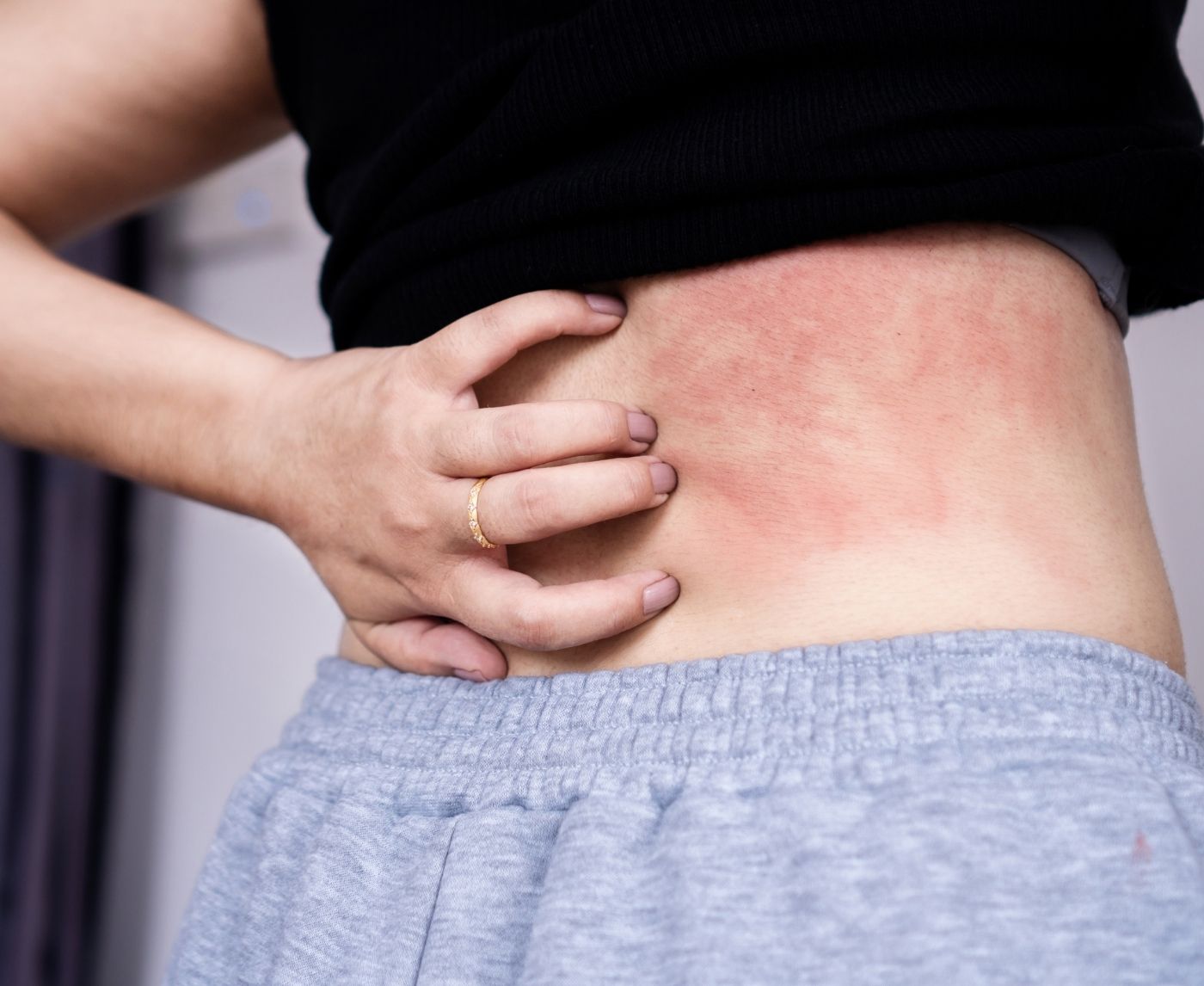
That spiral is common, and it is rarely useful. The skin is one of the first places the body shows that something internal is going on, and a handful of sexually transmitted infections do produce visible rashes in the early weeks. Many other conditions look almost identical, and the existence of a rash by itself does not tell you what caused it.
This guide walks through what the acute HIV rash and the secondary syphilis rash actually look like, how timing and location narrow the answer, the conditions that mimic both, and how to use testing to convert anxiety into information instead of running another image search at 2 a.m.
Can you tell HIV apart from syphilis just by the rash?
Skin alone cannot confirm either infection, though timing and location are strong narrowing clues. The acute HIV rash usually appears 2 to 4 weeks after exposure on the chest, back, or upper arms, looks flat or slightly raised, is pink to violet (or darker than surrounding skin on darker tones), and rarely itches. The classic secondary syphilis rash typically appears 8 to 24 weeks after exposure (after the initial chancre has healed), often shows up on the palms and soles, and is copper-colored, sometimes scaly. A rapid blood test is the only way to know for sure.
Key takeaways
- Both rashes are non-itchy and can fade on their own, which is why the rash going away does not mean the infection has cleared. The body is moving from acute to chronic infection, not healing.
- If you have had a possible exposure, a fingerstick blood test for HIV and syphilis is the fastest way to get clarity. Most home rapid tests reliably detect HIV from 4 to 6 weeks after exposure and syphilis from 3 to 6 weeks; a 12-week retest clears residual doubt for both.
What the early HIV rash actually looks like
The acute HIV rash, sometimes called the seroconversion rash, shows up during the first stage of HIV infection, when the immune system is recognizing the virus and producing antibodies in response. According to the CDC's overview of HIV, this acute phase happens in most people within 2 to 4 weeks after exposure. Some people develop symptoms as early as 10 days, others as late as 6 weeks, and some people with acute HIV develop a visible rash while others notice no skin changes at all.
When the rash does appear, it has a fairly consistent set of features:
- Location: upper trunk, chest, back, neck, sometimes the face and arms. It rarely starts on the palms or soles.
- Appearance: small flat to slightly raised macules and papules, pink, red, or violet on lighter skin tones; on darker skin the rash often reads as brown, dusky purple, or simply darker than the surrounding skin, and is more easily missed.
- Texture: not scaly, not vesicular, not crusted. Skin feels normal to the touch.
- Symptoms: usually does not itch. Most people present with fever, fatigue, swollen lymph nodes, sore throat, mouth ulcers, or muscle aches first, and the rash is one of several findings the clinician notes.
- Course: fades on its own in roughly 1 to 2 weeks even without treatment, because the immune system is shifting from the acute phase into chronic infection.
Two important caveats. First, the absence of a rash provides no reassurance, since many people with acute HIV develop no skin changes at all. Second, antiretroviral medications (including PrEP and post-exposure prophylaxis) can themselves cause a hypersensitivity rash that looks similar. If you started a new prescription around the time the rash appeared, raise that with your prescriber before assuming the worst.
What the secondary syphilis rash looks like
Syphilis progresses through stages, and the rash everyone fears appears in the second stage. The first stage is a single painless ulcer (a chancre) at the site where the bacterium entered the body, usually on the genitals, anus, or in the mouth. According to the CDC's syphilis overview, that primary sore heals on its own within 3 to 6 weeks even without treatment. Secondary syphilis then begins, on average, 4 to 10 weeks after the chancre has healed, which puts the rash anywhere from 2 to 6 months after the original exposure.
Typical features of the secondary rash:
- Location: often starts on the trunk, but the most diagnostic finding is involvement of the palms and soles. Few other rashes target this thicker skin, which is why a palmar or plantar rash plus a recent possible exposure is one of the strongest single signals a clinician will look for.
- Appearance: round, flat to slightly raised macules, copper-colored, brown, or dusky red. Some are smooth, some have fine scale. Lesions are usually 5 to 20 millimeters across.
- Symptoms: the rash is not painful, and most people say it does not itch (though mild itching has been reported).
- Course: can come and go over weeks to months. The rash often fades, then returns, which is one reason syphilis used to be called the great imitator.
- Other findings: patchy hair loss in the scalp, eyebrows, or beard; mucous patches inside the mouth or on the genitals; broad moist warty growths in skin folds called condylomata lata; flu-like symptoms including low-grade fever, sore throat, swollen lymph nodes, fatigue, and headache.
If untreated, the rash and other secondary symptoms eventually go away on their own. The infection does not. It enters a latent phase that can last for years before progressing to late-stage syphilis, which damages the heart, brain, nerves, and bones. Untreated syphilis moves into latency once the rash fades, hiding inside the body while the bacteria continue to spread, which is why people often feel they have recovered when they have only crossed into the next stage.
The same secondary-stage rash has been confused with pityriasis rosea, drug eruption, eczema, viral exanthems, and even psoriasis. Clinicians often order syphilis testing on patients with otherwise unexplained generalized rashes precisely because the visual pattern is so deceptive. If your rash has been called something else and is not clearing, syphilis is one of the things worth ruling out with a blood test.
HIV rash vs syphilis rash, side by side
The differences come down to four things: when after exposure each rash appears, where on the body it lands, what it looks and feels like, and what other symptoms come with it.
| Feature | Acute HIV rash | Secondary syphilis rash |
|---|---|---|
| Timing after exposure | 2 to 4 weeks (sometimes up to 6) | 8 to 24 weeks (after the chancre has healed) |
| Most common location | Chest, back, upper arms, face | Trunk plus palms and soles |
| Appearance | Flat or slightly raised pink to violet macules | Copper-colored, sometimes scaly, round macules |
| Itch | Usually does not itch | Usually does not itch |
| Other symptoms | Fever, sore throat, swollen glands, fatigue, mouth ulcers | Patchy hair loss, mouth sores, swollen glands, fatigue |
| Resolves on its own | Yes, in 1 to 2 weeks (infection persists) | Yes, but recurs (infection persists) |
Timing is the most reliable clue you have
If you know roughly when a possible exposure happened, the calendar will narrow your differential faster than any image search. Both HIV and syphilis have a window period, the time between exposure and when an infection becomes detectable. Testing too early can produce a falsely negative result, and that false reassurance is one of the most common reasons people miss treatment-window opportunities.
For HIV, according to the CDC's HIV testing guidance, a fourth-generation antigen/antibody lab test (venous draw) detects most infections by 18 to 45 days after exposure. The equivalent rapid antigen/antibody fingerstick test has a wider window of 18 to 90 days, which makes the 6-week retest the more reliable checkpoint for home testers. Nucleic acid amplification tests (NAATs, lab-only) can detect HIV as early as 10 to 33 days, while antibody-only rapid tests need a longer window, often 23 to 90 days.
For syphilis, blood tests look for antibodies the body produces against the bacterium. Clinical guidelines generally indicate syphilis antibody tests become reliably positive within 3 to 6 weeks of infection, though individual seroconversion timing varies and some people produce detectable antibodies sooner.
| Infection | Test type | Earliest detection | Recommended testing window |
|---|---|---|---|
| HIV | Antigen/antibody combo (venous lab draw) | 18 days | 4 to 6 weeks (most reliable at 12 weeks) |
| HIV | Antigen/antibody combo (rapid fingerstick) | 18 days | 6 to 12 weeks |
| HIV | NAAT (lab only) | 10 days | 2 to 4 weeks |
| HIV | Antibody-only rapid | 23 days | 6 to 12 weeks |
| Syphilis | Treponemal/non-treponemal antibody | 3 weeks | 6 weeks (repeat at 12 weeks if rash persists) |
Other rashes that look like an STI rash
Several common skin conditions produce patterns that get mistaken for HIV or syphilis. Some are connected to immune-system stress (and therefore really do appear more often in people with untreated HIV), but most are not sexually transmitted at all.
Shingles (herpes zoster). The reactivation of the chickenpox virus, shingles produces a painful, blistering rash in a single dermatomal stripe on one side of the body. It does not cross the midline. The pain often comes before the rash. Shingles in someone under 50 with no obvious trigger is sometimes the first clue of an underlying immune problem, including untreated HIV, although most cases of shingles in younger adults are unrelated. DermNet NZ catalogs shingles among the common HIV-associated skin findings and notes that many of these presentations require investigation beyond visual inspection alone.
Seborrheic dermatitis. A chronic, scaly, slightly greasy red rash on the scalp, eyebrows, sides of the nose, behind the ears, and sometimes the chest. People with HIV have higher rates of severe or widespread seborrheic dermatitis, but it is also extremely common in people who do not have HIV. It responds to over-the-counter antifungal shampoos (ketoconazole) and mild topical steroids.
Pityriasis rosea. A self-limited rash that often starts with a single oval patch (the herald patch) on the trunk, followed a few days later by a wider crop of smaller oval patches in a Christmas-tree pattern across the back. It is thought to be triggered by viruses and is not sexually transmitted. It can mimic secondary syphilis closely enough that clinicians sometimes order syphilis blood tests on these patients precisely to rule that out.
Drug eruption. Antibiotics (especially sulfonamides), anticonvulsants, and several other medications can cause a generalized red rash, often within 1 to 2 weeks of starting the drug. The timing is the clue: a new prescription started in the recent past is the more likely cause than a sexual exposure several months earlier.
Heat rash, contact dermatitis, allergic reactions. A new detergent, a new fabric, a new sunscreen, or a hot sweaty week can produce a red, sometimes bumpy rash, particularly in friction zones. These tend to itch (HIV and syphilis rashes usually do not), and they tend to follow the contact pattern (the line of the strap, the shape of the waistband).
Stress alone can flare hives, eczema, and seborrheic dermatitis, all of which are red, sometimes raised, and easy to misread. When the cause is not obvious from pattern and timing, a blood test is the fastest way forward.
If the rash is blistering, painful, and confined to one side of the body, shingles is far more likely than HIV or syphilis. Neither STI produces grouped vesicles, and neither follows a single-side dermatomal stripe. That pattern alone narrows the differential before a blood test is even drawn.
When testing makes sense and which kit to use
If you have had an exposure that worries you and a rash that does not match an obvious benign cause, testing is the only way to convert anxiety into information. The right test depends on what you are looking for and how much time has passed since the exposure event.
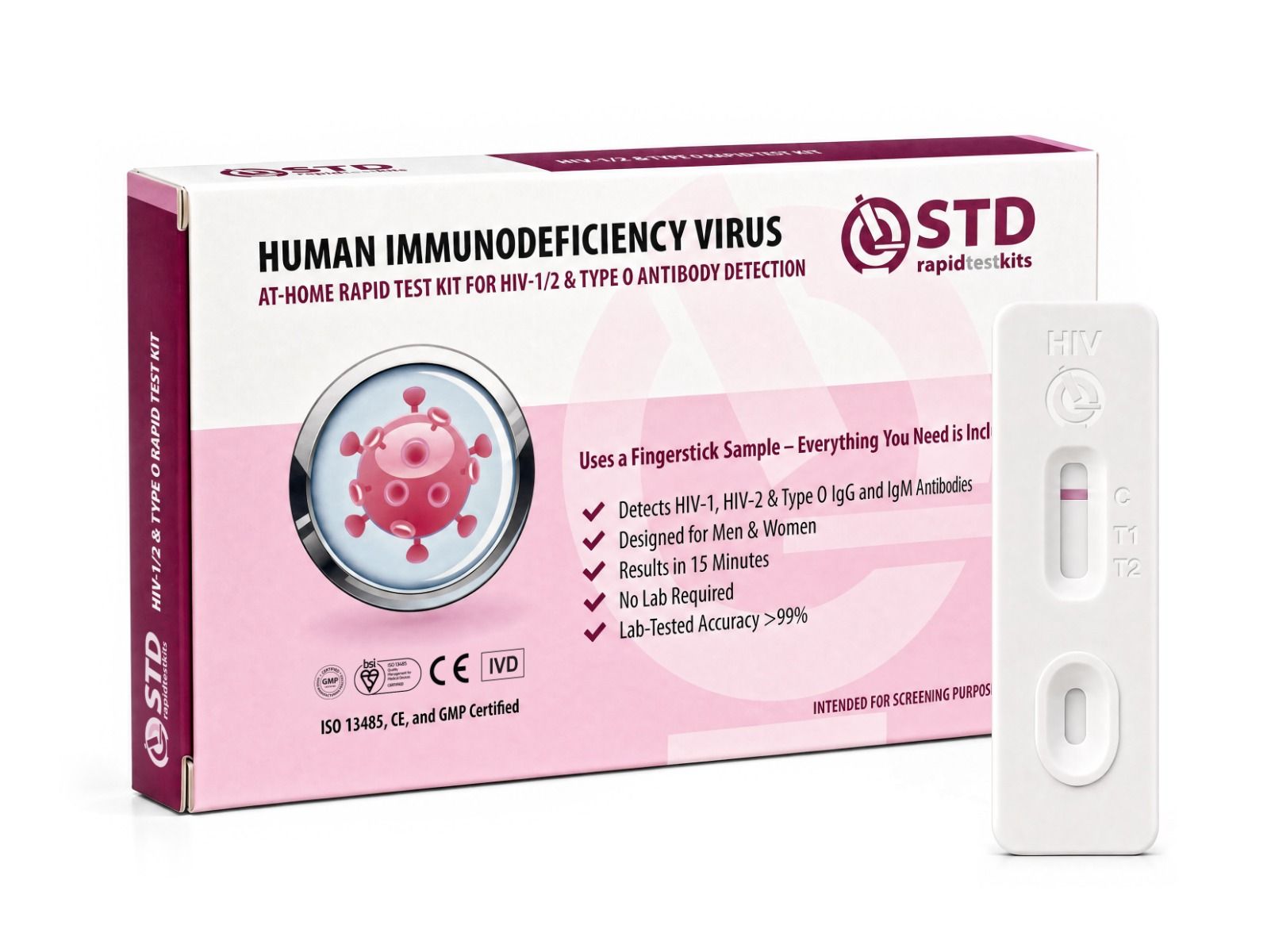
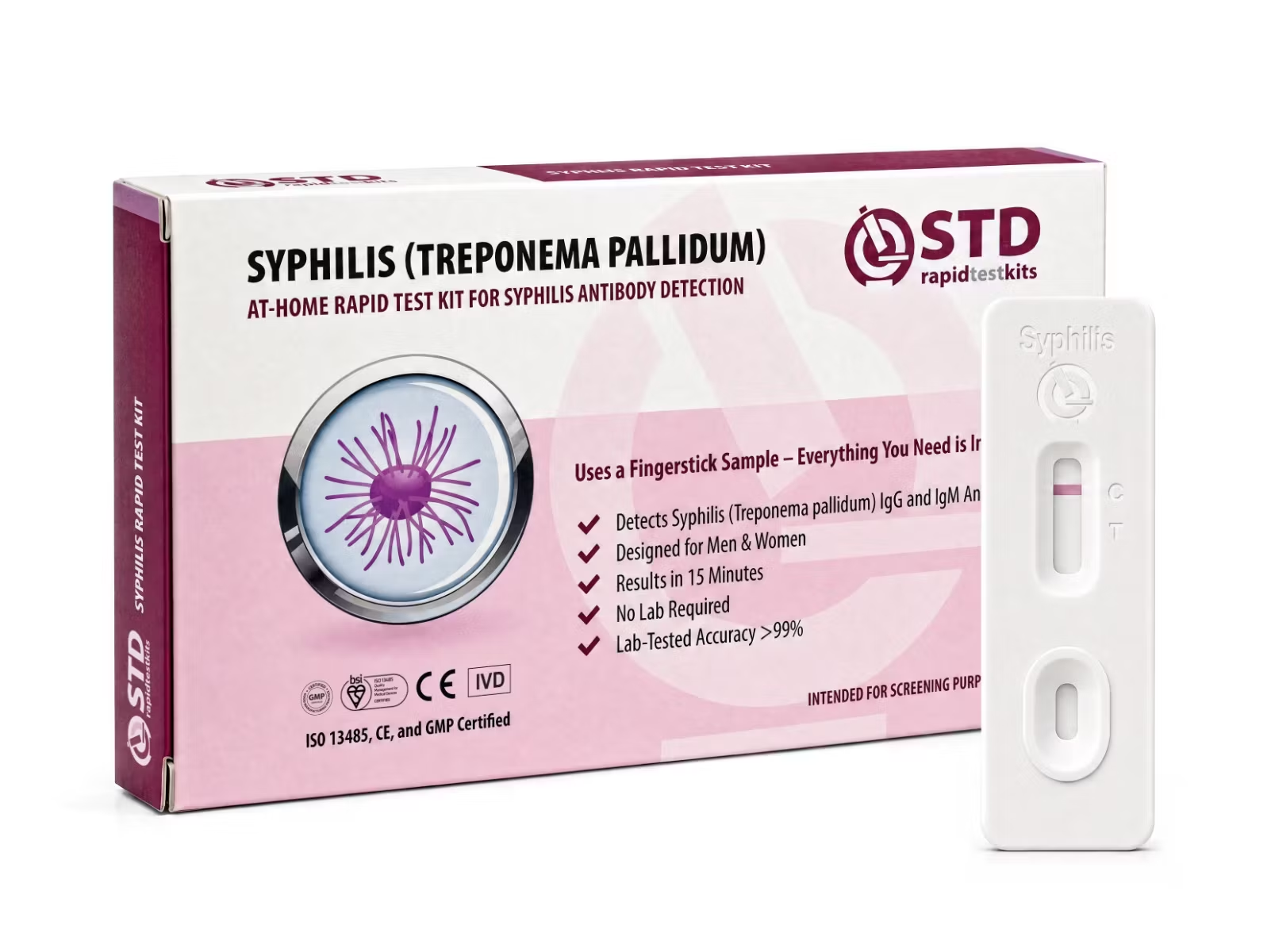
For a single-infection screen, an HIV-only or syphilis-only fingerstick rapid test gives you a result in about 15 minutes. These are most useful when the exposure event is well-defined (one partner, one approximate date) and the timing has crossed the relevant window period.
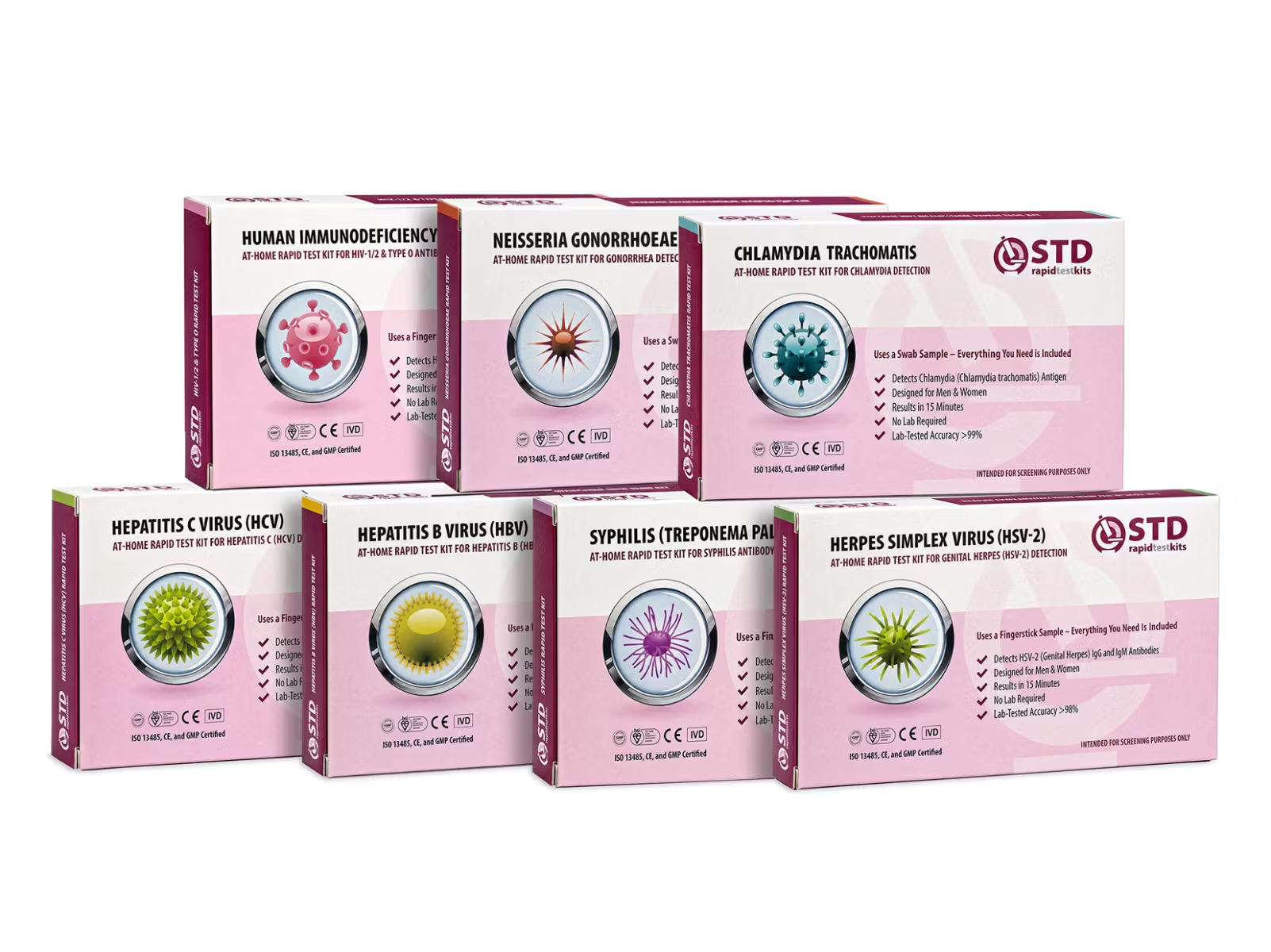
For a multi-infection screen, a combination kit covering HIV, syphilis, hepatitis B, hepatitis C, and the most common bacterial STIs is more practical. A rash with sore throat and swollen glands could be acute HIV, secondary syphilis, or acute hepatitis, and the symptoms overlap enough that screening for several at once is reasonable.
Home rapid tests use lateral-flow chemistry, the same technology behind home pregnancy and rapid COVID tests. They are good first-pass screens, not laboratory NAATs. A positive on any home rapid test should be confirmed at a clinic with a lab-based confirmatory test, and a negative inside the window period should be repeated later. Used that way, home tests are a fast, private way to get an early answer without sitting in a waiting room.
What if the test comes back positive?
Take a breath. A positive result is information that you can act on. It is not a verdict on your worth, your future, or your sex life.
Syphilis is curable. A single intramuscular injection of long-acting penicillin treats early-stage (primary, secondary, or early latent) syphilis in most people. The CDC has had this regimen for decades and it works. Late-stage syphilis takes longer to treat but is still treatable.
HIV is no longer a death sentence. People who start antiretroviral therapy promptly and stay adherent reach an undetectable viral load, often within 6 months of starting treatment. Undetectable means untransmittable, the basis of the U=U public-health message: someone with sustained suppression on treatment cannot transmit HIV through sex. Life expectancy on modern antiretroviral therapy approaches that of HIV-negative peers, according to the CDC's Living with HIV guidance.
What to do after a positive home test:
- Confirm at a clinic with a venous blood draw. Home tests are screens; the formal diagnosis is made on a second sample run on a different platform.
- Bring a partner list. Both HIV and syphilis are reportable in most jurisdictions, and contact tracing is how chains of transmission are stopped.
- Start treatment. For syphilis, that is usually same-week. For HIV, current guidelines recommend starting antiretroviral therapy as soon as the diagnosis is confirmed, sometimes the same day.
Some people experience flu-like symptoms 2 to 4 weeks after they get HIV. These symptoms can include fever, rash, sore throat, swollen lymph nodes, and fatigue, and may last for a few days or several weeks.
Testing privately, without anyone knowing
For many people the biggest barrier to testing is not the test itself, it is the act of being seen testing. Home rapid tests sidestep this entirely. A small package arrives in plain shipping packaging with no medical branding, the test takes about 15 minutes from the fingerstick, and the result is yours alone to act on.
This article is published by stdrapidtestkits.com, which sells at-home STI testing kits. We recommend kits that match the reader’s specific concern, not whichever product carries the highest margin. If your concern is HIV alone, the single-infection rapid is the right tool. If you have multiple risk factors or a constellation of symptoms, the combination kit below covers more ground in one sitting.
When to see a clinician instead of testing at home
Home testing is appropriate for routine screening and for follow-up after a possible exposure. There are a few situations where a clinic visit is the better starting point:
- Suspected exposure within the last 72 hours. You may be a candidate for HIV post-exposure prophylaxis (PEP), which has to be started within 72 hours of exposure and taken for 28 days. PEP is more effective the sooner it starts. A clinic, sexual-health service, or emergency department can prescribe it. The NHS HIV prevention page outlines this clearly.
- An open painless sore on the genitals, anus, or in the mouth. This is the primary syphilis chancre, and a swab from the sore can produce a faster, more definitive answer than an antibody blood test (which can be falsely negative this early).
- Severe rash with high fever, mouth ulcers, eye involvement, or trouble breathing. Drug reactions and certain viral illnesses can be serious enough to need in-person evaluation rather than a home test.
- Pregnancy or planning pregnancy. In-clinic confirmatory testing is the standard, since both HIV and syphilis are screened routinely during prenatal care, and treatment regimens during pregnancy differ from those for non-pregnant adults.
Frequently asked questions about HIV and syphilis rashes
- How soon after exposure can an HIV rash appear?
- The window that rules HIV out fastest is same-day. If the rash appeared within 24 to 48 hours of exposure, the immune response has not had time to react and HIV is implausible as the cause. Two weeks in is the earliest plausible signal; anything under 10 days points to irritation, contact dermatitis, or a coincidental viral illness as more likely explanations.
- Why does the secondary syphilis rash show up on the palms and soles?
- Most rashes spare the palms and soles because that skin is much thicker than skin elsewhere on the body. Treponema pallidum, the bacterium that causes syphilis, has a particular affinity for the small blood vessels of palmar and plantar skin during the secondary stage. Few other infections share that pattern, which is why a non-itchy palmar rash plus a recent possible exposure is one of the strongest single clues a clinician will look for.
- Does the HIV rash itch?
- Usually not. Most people describe the acute HIV rash as visible but not particularly uncomfortable. If a rash is intensely itchy, an allergic reaction, eczema, or contact dermatitis is far more likely than HIV. That said, a small minority of people with acute HIV do report mild itching, and any new rash with a recent possible exposure is worth testing for.
- My HIV test was negative but the rash is still there. What should I do?
- Two possibilities. Either the rash is not HIV (the most common explanation), or you tested inside the window period and the test was simply too early. If the exposure was less than 4 weeks ago, retest at the 6-week mark; if still negative and you remain concerned, retest at 12 weeks. While you wait, consider what else the rash could be: a new detergent, a recent medication, seborrheic dermatitis, or pityriasis rosea are all more common than acute HIV.
- Can stress alone cause a rash that looks like an STI rash?
- Yes, indirectly. Stress can flare hives, eczema, and seborrheic dermatitis, all of which can look red, raised, and alarming. The pattern usually differs (stress-related rashes tend to itch, follow contact lines, or sit on the scalp and face), but the way to be sure is to combine timing, exposure history, and a blood test rather than try to read the skin alone.
- I read shingles can be a sign of HIV. Should I worry?
- Shingles in young adults with no obvious trigger is sometimes the first sign of an underlying immune compromise, including untreated HIV, but it is far more often caused by ordinary stress, illness, or aging. Shingles produces a painful, blistering, one-sided rash that follows a single nerve dermatome and does not cross the body midline. If you have shingles and are under 50 with risk factors for HIV, getting tested is a reasonable extra step; if you are over 50 with no recent exposures, it is rarely needed.
- How fast can I get a syphilis result?
- From 3 weeks after a possible exposure, a rapid syphilis fingerstick test can give a result in about 15 minutes at home. Lab-based syphilis tests typically come back within 1 to 3 days. A positive rapid test should be confirmed at a clinic with a treponemal-specific test (FTA-ABS or TP-PA) and a non-treponemal titer (RPR or VDRL) to stage the infection and guide treatment.
- Will the rash go away if I do nothing?
- Yes, and that is the reason people miss the treatment window. The immune system is not defeating the infection; it is shifting from acute to chronic phase, where HIV and syphilis become harder to detect symptomatically. Untreated HIV progresses silently for years before causing symptoms again, and untreated syphilis can damage the heart, brain, and nerves decades later.
The takeaway
A rash on its own is not a diagnosis. It is a prompt to think clearly about timing, location, and exposure, and to make a calm decision about whether to test. For most people, the rash they are worried about will turn out to be heat, irritation, eczema, or a viral exanthem, none of which need an STI workup. For a smaller group, it is the first signal of an infection that is straightforwardly treatable when caught early.
Testing is cheap and fast. The wait while you guess is what costs you. A fingerstick test delivered to your door takes 15 minutes; the result tells you whether to move on or move forward.
- U.S. Centers for Disease Control and Prevention. About HIV: overview of HIV transmission, the acute infection phase, and the timing and character of acute HIV symptoms including the seroconversion rash.
- U.S. Centers for Disease Control and Prevention. About Syphilis: stages of syphilis infection, including the primary chancre and secondary-stage rash on the palms and soles.
- U.S. Centers for Disease Control and Prevention. HIV Testing: testing methods (NAAT, antigen/antibody combo, antibody-only rapid) and their corresponding window periods, including the distinction between venous and fingerstick antigen/antibody windows.
- National Health Service (UK). HIV and AIDS: symptoms, transmission, prevention, and the role of post-exposure prophylaxis in the first 72 hours after a possible exposure.
- National Health Service (UK). Syphilis: stage-by-stage symptoms of primary and secondary syphilis including palmar rash, and the antibiotic treatment options available.
- U.S. Centers for Disease Control and Prevention. Living with HIV: information on antiretroviral therapy, achieving and maintaining an undetectable viral load, the U=U public-health message, and life expectancy on modern HIV treatment.
- NIH HIVinfo. HIV and Rash: patient-oriented summary of acute HIV rash, the kinds of skin changes seen during seroconversion, and medication-related rashes including PrEP and antiretroviral hypersensitivity reactions.
- DermNet NZ. Skin conditions relating to HIV infection: clinical reference catalog of HIV-associated skin findings including seborrheic dermatitis and herpes zoster, and guidance on investigating these presentations beyond visual inspection.
