
Published: November 2025 | Last updated: May 2026 | Editorial review and quality control: Martina N.
The go-to herpes medications, acyclovir and valacyclovir, do their job for most people. They shorten outbreaks, reduce viral shedding, and let life keep moving. But for a smaller group of patients whose immune systems cannot keep HSV in check, those same drugs sometimes stop working. Lesions linger for weeks. New ones appear before the previous ones finish healing. Hospital stays, kidney-stressing infusions, and missed work pile up.
Pritelivir, an investigational oral antiviral from the German biotech AiCuris, is the first drug in years to offer this group a credible new option. In the Phase 3 PRIOH-1 trial in immunocompromised adults with acyclovir-resistant HSV, it outperformed investigator-chosen standard care on lesion healing. Regulatory submission is the next step. This article walks through what the data actually says, what it might mean for daily life with refractory HSV, and what to do while approval is still pending.
Key Takeaways
- Pritelivir is an oral helicase-primase inhibitor that works against acyclovir-resistant HSV by blocking viral replication at an earlier step than nucleoside antivirals like valacyclovir.
- In the Phase 3 PRIOH-1 trial of 158 immunocompromised adults (102 randomized 1:1), pritelivir beat investigator-chosen standard care on lesion healing (p=0.0047 at 28 days, p<0.0001 at 42 days) per the sponsor's announced results.
Why standard antivirals fall short for some patients
Herpes simplex virus, both HSV-1 and HSV-2, is a lifelong infection for nearly everyone who acquires it. Most people manage flare-ups with acyclovir, valacyclovir, or famciclovir. These belong to a class called nucleoside analogues. They work by jamming the viral DNA copy machine, but only after the virus itself activates them with its own enzyme, viral thymidine kinase (TK). That dependency is the catch. If the virus mutates its TK or stops producing it, the drug never gets switched on. The infection keeps replicating while the antiviral sits inert.
This kind of resistance is uncommon in people with healthy immune systems, per the CDC's STI treatment guidelines, which describe acyclovir resistance as a clinically rare event in otherwise-healthy adults. In immunocompromised populations the picture changes. Solid-organ transplant recipients on calcineurin inhibitors, people receiving chemotherapy or stem-cell transplants, and adults with advanced HIV are described in the same CDC guidance as the populations where acyclovir-resistant HSV is most commonly encountered and where salvage regimens are most often needed.
When acyclovir fails, options narrow quickly. Intravenous foscarnet is the usual fallback, with cidofovir as a second-line agent. Both work, but at a real cost. Foscarnet is hard on the kidneys, causes electrolyte disturbances, and requires central-line access for twice-weekly infusion-clinic visits. Cidofovir is similarly nephrotoxic (damaging to the kidneys) and is itself often given in a clinic. Patients describe cycling between brief healing windows and new outbreaks while bouncing between home and the hospital.
- Solid-organ transplant recipients on long-term calcineurin inhibitors or other immunosuppression.
- Patients undergoing chemotherapy or recovering from stem-cell or bone-marrow transplants.
- Adults with advanced HIV, particularly when CD4 counts are low or viral load is uncontrolled.
- People on prolonged systemic corticosteroids or biologics that blunt cellular immunity.
How pritelivir works differently
Pritelivir is the first helicase-primase inhibitor (HPI) to reach late-stage trials for HSV. Instead of waiting on viral TK to switch the drug on, it goes after a different machine entirely: the helicase-primase complex, a set of viral proteins (UL5, UL52, and UL8) that pries open the HSV genome and prepares it for copying. By blocking that complex, pritelivir stops replication earlier in the viral life cycle and bypasses the TK-dependency problem that creates acyclovir resistance.
Two practical consequences follow. First, strains that are resistant to acyclovir, valacyclovir, and famciclovir typically remain susceptible to pritelivir, because TK mutations do not affect the helicase-primase target. Second, pritelivir is oral and absorbed well enough that it reaches steady plasma levels with once-daily dosing in studies to date. Someone whose virus has stopped responding to standard pills should not be forced into an IV regimen just to get back to clearance.
A useful way to picture the difference: nucleoside antivirals are the patrol guard who only spots the intruder after the break-in is underway. Pritelivir is the lock on the front door.

Inside the Phase 3 PRIOH-1 trial
The pivotal Phase 3 PRIOH-1 trial enrolled 158 immunocompromised adults total across multiple countries whose HSV lesions were not responding to standard antiviral therapy. Of those, 102 participants were randomized 1:1 to oral pritelivir or to an investigator-chosen standard of care, with the remaining patients followed in separate non-randomized cohorts. Standard of care typically meant intravenous foscarnet, topical cidofovir, or another salvage regimen at the treating clinician's discretion. The trial design reflects how care is actually delivered today: no two refractory HSV cases get treated identically, so the comparison was against whatever the doctor judged best for that patient.
The primary endpoint was lesion healing, the percentage of participants whose HSV lesions fully resolved within a defined treatment window. According to AiCuris's announced top-line results from the 102-patient randomized comparison, pritelivir met that endpoint with statistical significance at 28 days (p=0.0047), and the advantage widened with continued treatment up to 42 days (p<0.0001). In plain terms: at both checkpoints, more patients on pritelivir reached complete healing than patients on standard care, and the gap was unlikely to be a chance finding.
Safety data, as reported by the sponsor, leaned in pritelivir's favor as well. The most common side effects were mild, with headache and gastrointestinal symptoms most often noted. The drug was generally well tolerated relative to comparators like foscarnet, which routinely cause kidney injury and require lab monitoring. For a population already managing transplant medications, chemotherapy, or HIV regimens, a once-daily oral pill with low organ-toxicity is a meaningful change from the status quo.
| Result | What the trial showed |
|---|---|
| Trial enrollment | 158 immunocompromised adults total; 102 randomized 1:1 to pritelivir vs. investigator-chosen standard of care |
| Primary endpoint at 28 days | Superior lesion healing vs. standard of care in the randomized arm (p=0.0047) |
| Extended treatment at 42 days | Healing gap widened further (p<0.0001) |
| Safety profile | Generally well tolerated as oral therapy; fewer organ-toxicity events than intravenous comparators |
| Mechanism | Helicase-primase inhibition; active against acyclovir-resistant strains |
What this could mean for people with refractory HSV
Trial endpoints are only part of the story. The clinical population pritelivir was designed for, immunocompromised adults with stubborn HSV, lives with a daily burden that is hard to capture in a p-value. Clinicians who treat transplant recipients and people with advanced HIV describe a recurring pattern: lesions that drag on for weeks rather than days, outbreaks that recur before the previous one heals, and treatment regimens that increasingly require infusion-clinic visits or hospitalization. Foscarnet courses can run two to three weeks at a stretch, often during the same months a transplant patient is rebuilding from surgery or fighting off other infections.
The non-clinical burden is just as real. Open lesions interfere with intimacy, sleep, and basic comfort. Repeated hospitalizations mean canceled work, lost income, and missed family events. Stigma around herpes, even within healthcare settings, can delay the conversation that gets a patient onto a salvage regimen in the first place. An oral therapy that works against the resistant virus and can be taken at home meaningfully reduces that friction, even if it cannot remove the underlying infection.
Pritelivir is not a cure. HSV remains a lifelong infection, and even in the trial, suppression depended on continued dosing. Long-term suppression data is still being gathered from follow-on studies that AiCuris and academic groups are now running in this patient population.
- Intimacy and sleep disruption from open lesions that take weeks to heal.
- Lost income and missed family events from repeated multi-day hospital admissions for IV salvage therapy.
- Delayed care when stigma around herpes slows the conversation with a primary clinician or transplant team.
- Compounding immunosuppression when extended antiviral courses interact with transplant or oncology medications already on board.
Comparing suppression strategies for resistant HSV
Most discussions of HSV suppression focus on daily valacyclovir for healthy adults. The conversation looks different when the virus has stopped responding. Below is a side-by-side of the main options used today and how pritelivir compares on paper. Pritelivir is still investigational; the dosing and access details will be finalized in the regulatory label once approved.
| Therapy | Route and dosing | Activity against resistant HSV | Practical access |
|---|---|---|---|
| Valacyclovir | Oral, 1 to 2 times daily | Low when TK-mediated resistance is present | Widely available; ineffective if the virus is resistant |
| Foscarnet | Intravenous, multiple infusions weekly | Moderate to high | Requires IV access, clinic visits, kidney monitoring |
| Cidofovir (topical or IV) | Topical or intravenous | Moderate | Limited availability; nephrotoxicity concerns |
| Pritelivir (investigational) | Oral, once-daily in studies to date | High; mechanism is independent of viral TK | Pending approval; some access via compassionate-use programs |
How to talk with your clinician about pritelivir
If standard antivirals have stopped controlling your outbreaks and you are immunocompromised, the conversation about new options is one to have early, not after the next hospital admission. A few questions worth bringing to the appointment:
- Is there documented evidence my HSV is resistant to acyclovir or valacyclovir, and have we cultured a sample to confirm it?
- Given my current immunosuppression or HIV regimen, what are my realistic salvage options between now and pritelivir's approval?
- Are there compassionate-use, expanded-access, or open-label-extension pathways for pritelivir at your institution or through AiCuris?
- If I am hospitalized for an outbreak in the meantime, what is the plan for transitioning off IV foscarnet or cidofovir as soon as I am able?
Documentation matters. Insurance reviewers tend to require proof of failure on standard therapy before authorizing newer or specialty drugs. Keep records of which antivirals you have tried, at what doses, and what happened on each. That paper trail shortens the time between an approval announcement and a prescription in your hand.
Looking ahead: the regulatory path
With the PRIOH-1 results in hand, AiCuris has signaled it will pursue a New Drug Application with the U.S. Food and Drug Administration and equivalent submissions with the European Medicines Agency and other regional regulators. The drug has already received Breakthrough Therapy designation from the FDA in immunocompromised adults with acyclovir-resistant HSV, which can shorten review timelines.
Approval is not the same thing as availability. Even after a positive regulatory decision, formulary placement, specialty-pharmacy distribution, and insurance coverage take additional months. Patients enrolled in trial extensions or expanded-access programs may continue receiving the drug during that transition. For everyone else, the realistic timeline from approval to in-pharmacy access is generally six to twelve months for a specialty antiviral. Asking your transplant team, oncology service, or infectious-disease specialist to flag your case for review the moment pritelivir clears regulatory hurdles can shave weeks off that wait.
Antiviral medicines commonly given include acyclovir, famciclovir and valacyclovir. They can decrease how long symptoms last and how severe they are, but they can't cure the infection.
Why getting tested matters first
Before any conversation about pritelivir, foscarnet, or even standard suppression, the clinical question is the same: do you actually have HSV, and if so, which type? Many people who think they have refractory genital herpes have never had a confirmed type-specific diagnosis. The treatment decisions, the prognosis discussion, and the partner-notification conversation all depend on having that confirmation on paper.
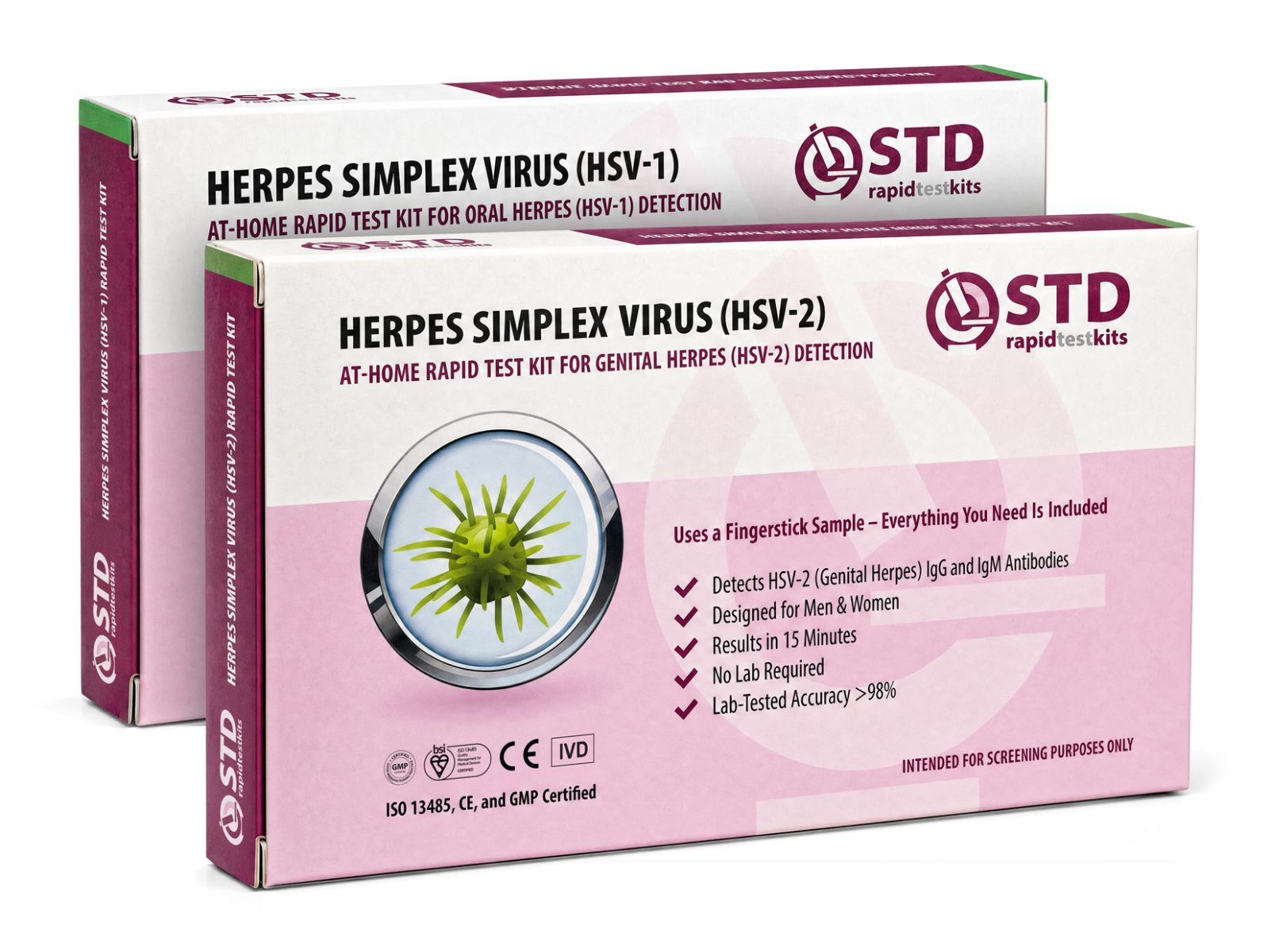
An at-home antibody test for HSV-1 and HSV-2 is not a substitute for swabbing an active lesion at a clinic during an outbreak, but it is a reasonable first step when no outbreak is present and the question is whether you have ever been exposed. A positive antibody result then guides what to ask your provider about: type-specific suppression, eligibility for newer therapies if outbreaks turn refractory, and how to approach disclosure with sexual partners.
This site sells at-home STI test kits, and the product links below go to our own product pages. We recommend kits that fit the reader's clinical question, not on commercial grounds.
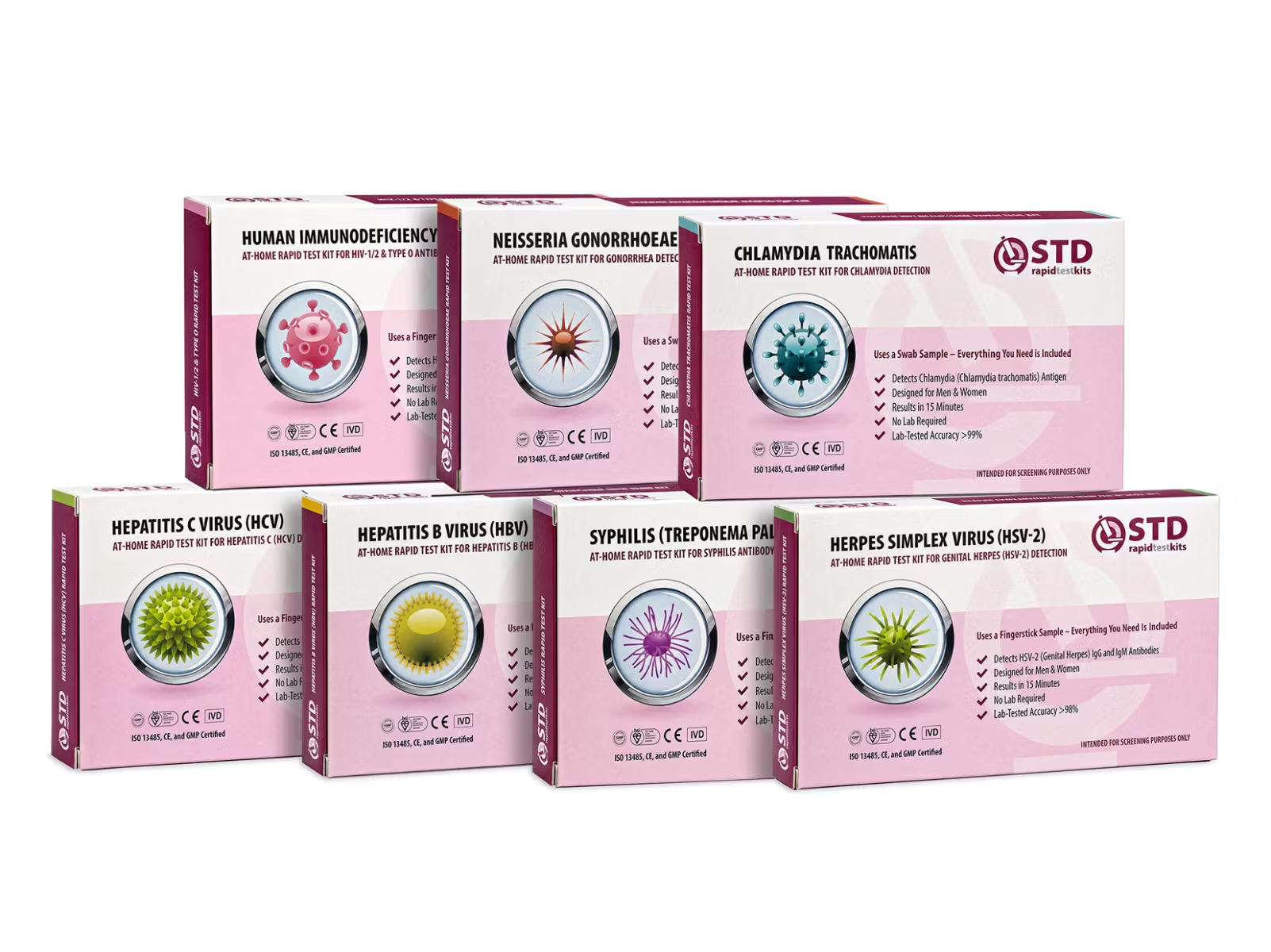
If your question is broader than herpes alone, a multi-infection screening panel may make more sense as a starting point. Refractory HSV often shows up alongside other untreated or undiagnosed STIs, particularly in patients whose immune status has slipped in recent years. A wider baseline check rules out coinfections that could be contributing to outbreak frequency and that would otherwise need to be addressed separately with your clinician.
Frequently asked questions
- Is pritelivir for me, or only for the most extreme refractory cases?
- The PRIOH-1 trial enrolled immunocompromised adults whose HSV lesions were not healing on standard antivirals. If you have had documented failures of acyclovir or valacyclovir and are managing an immunosuppressed condition, you are exactly the population this drug is being developed for. People with intact immune systems and intermittent outbreaks usually do well on existing oral antivirals and would not be the early target group.
- How is pritelivir different from acyclovir or valacyclovir?
- Acyclovir, valacyclovir, and famciclovir need to be activated by a viral enzyme called thymidine kinase. When the virus mutates that enzyme, the drug never gets switched on. Pritelivir attacks a different protein complex (helicase-primase) that does not depend on thymidine kinase, so resistance through TK mutations does not affect it. Mechanistically, it acts earlier in the viral replication cycle.
- When could pritelivir actually be available?
- A positive Phase 3 result is not the same thing as a drug on shelves. AiCuris is preparing submissions to the FDA and EMA now; once regulators clear it, formulary negotiations and specialty-pharmacy distribution typically add several more months before a prescription can be filled. Patients enrolled in trial extensions or expanded-access programs may have bridge access during that gap.
- Does pritelivir work for both oral and genital HSV?
- The PRIOH-1 trial included immunocompromised patients with various lesion sites. The drug's mechanism is type-agnostic at the molecular level, meaning it targets a viral protein common to both HSV-1 and HSV-2 regardless of where the lesion is. The critical factor in the trial was the resistance pattern of the patient's virus, not the lesion location.
- What are the side effects I should know about?
- In the announced safety data, the most commonly reported adverse events were mild, including headache and gastrointestinal symptoms. Severe organ-toxicity events were less frequent than with intravenous comparators like foscarnet, which routinely causes kidney injury and electrolyte disturbances. Full prescribing information will accompany regulatory approval; talk with your clinician about any medication interactions specific to your transplant or HIV regimen.
- Can I access pritelivir before it is approved?
- Compassionate-use and expanded-access programs are sometimes available for patients with no remaining treatment options. Eligibility is case-by-case and usually requires documentation of failure on standard therapies. Your infectious-disease specialist or transplant team is the right starting point for that request. AiCuris's website and clinical-trial registries also list ongoing studies that may be enrolling.
- Will my insurance cover pritelivir after approval?
- Pritelivir will almost certainly land on a specialty tier, which means out-of-pocket costs before insurance kicks in can be substantial and prior authorization will be required. Patient-assistance programs from the manufacturer often blunt that for eligible patients; AiCuris has not yet announced its US program because the drug is not approved, but most specialty-antiviral launches include one. Ask your specialty pharmacy or transplant social worker about copay-assistance enrollment as soon as the drug becomes available.
- Does pritelivir cure herpes?
- No. HSV remains a lifelong infection. Pritelivir suppresses replication and helps lesions heal in patients whose virus has stopped responding to standard antivirals; it does not eliminate the latent virus that sits in nerve ganglia between outbreaks. Any product or claim marketed as a herpes cure is not supported by current evidence. The realistic goal of pritelivir is better suppression and faster healing in a population that has run out of working options.
- AiCuris. Announcement that pritelivir met its primary endpoint in the PRIOH-1 Phase 3 trial in immunocompromised patients with refractory HSV, including reported p-values for lesion healing at 28 and 42 days and the 158-enrolled / 102-randomized study design.
- U.S. Centers for Disease Control and Prevention. About Herpes (HSV-1 and HSV-2), with background on transmission, lifelong infection biology, and typical course.
- U.S. Centers for Disease Control and Prevention. Sexually Transmitted Infections Treatment Guidelines, herpes section, covering standard antiviral therapy and the management of acyclovir-resistant HSV in immunocompromised adults.
- World Health Organization. Herpes simplex virus fact sheet, including global epidemiology and the role and limitations of current antiviral medications (source of the WHO pull-quote in this article).
- U.S. Centers for Disease Control and Prevention. STI Treatment Guidelines, special populations section on managing HSV in people with HIV and other immunocompromising conditions.
