Published: September 2025 | Last updated: May 2026 | Editorial review and quality control: Martina N.
You're standing at the mirror with a fresh bump on your lip, and one question keeps looping. Is this a cold sore, or just a stress pimple? In the first 24 hours, the two can look almost identical. What they are underneath, and what comes next, is very different.
This guide walks through the visual and behavioral differences between facial herpes (HSV-1) and acne, when the overlap is most confusing, and how at-home testing fits in if you want a real answer without booking a clinic visit.
Key Takeaways
- Cold sores from HSV-1 typically tingle or burn one to two days before a visible blister appears, and they cluster as clear fluid-filled vesicles. Acne pimples appear without warning and form solid white or yellow heads.
- Recurrence in the same exact spot is one of the strongest signals of facial herpes. Per the WHO, about 64% of people under 50 globally carry HSV-1, and most don't know it.
When It's Not 'Just a Pimple'
Both acne and facial herpes can show up as small red bumps, both can hurt, and both can ruin your week. The reason they get confused so often is that they share a lot of surface features in the early hours of an outbreak.
Acne is a skin condition. Facial herpes is a viral infection. According to the CDC, herpes simplex virus type 1 (HSV-1) is the strain most often responsible for cold sores on or near the mouth, though HSV-2 can also infect the face through oral contact. Once HSV-1 is in your body, it lives quietly in your nerve cells and reactivates from time to time, traveling back along the same nerve to the same patch of skin.
Acne, by contrast, comes from clogged pores, hormone shifts, and skin bacteria. It doesn't usually announce itself with a tingle or a burning sensation, and it doesn't follow a predictable nerve pathway. It just clogs and inflames wherever the conditions are right that week.
The CDC notes that mild herpes outbreaks are often missed because they look so much like other skin issues. The fact sheet explicitly says symptoms can be mistaken for a pimple or an ingrown hair, which is exactly why so many cold sores get popped, ignored, or mislabeled as adult acne.
Acne: a clogged pore plus hormone-driven inflammation, with no warning sensation.
Facial herpes: a viral reactivation that travels along the trigeminal nerve back to the same skin site, usually preceded by tingling or burning.
How They Compare in Real Life
When you're trying to decode your skin in the mirror, three clues do most of the work: timing, sensation, and progression. Here's how facial herpes and acne stack up on each one.
| Feature | Facial herpes (HSV-1) | Acne |
|---|---|---|
| Onset | Tingling, itching, or burning 1 to 2 days before sore appears (the prodrome) | No warning; bump appears without prodrome |
| Appearance | Cluster of clear or yellowish fluid-filled blisters, often grouped tightly | Single pus-filled pimple or clogged pore with white or yellow head |
| Pain | Often painful, stinging, or itchy even before visible | Sore to touch or inflamed, but not tingling or electric |
| Common location | Vermillion border of lips, corners of mouth, nostrils, chin | Anywhere with pores: forehead, cheeks, jawline, T-zone |
| Healing time | 7 to 14 days through blister-weep-crust-heal cycle | Days to weeks, varies by lesion type and severity |
| Recurrence | Often returns in the same exact spot | Can recur but typically in different follicles each time |
What Cold Sores and Pimples Actually Look Like
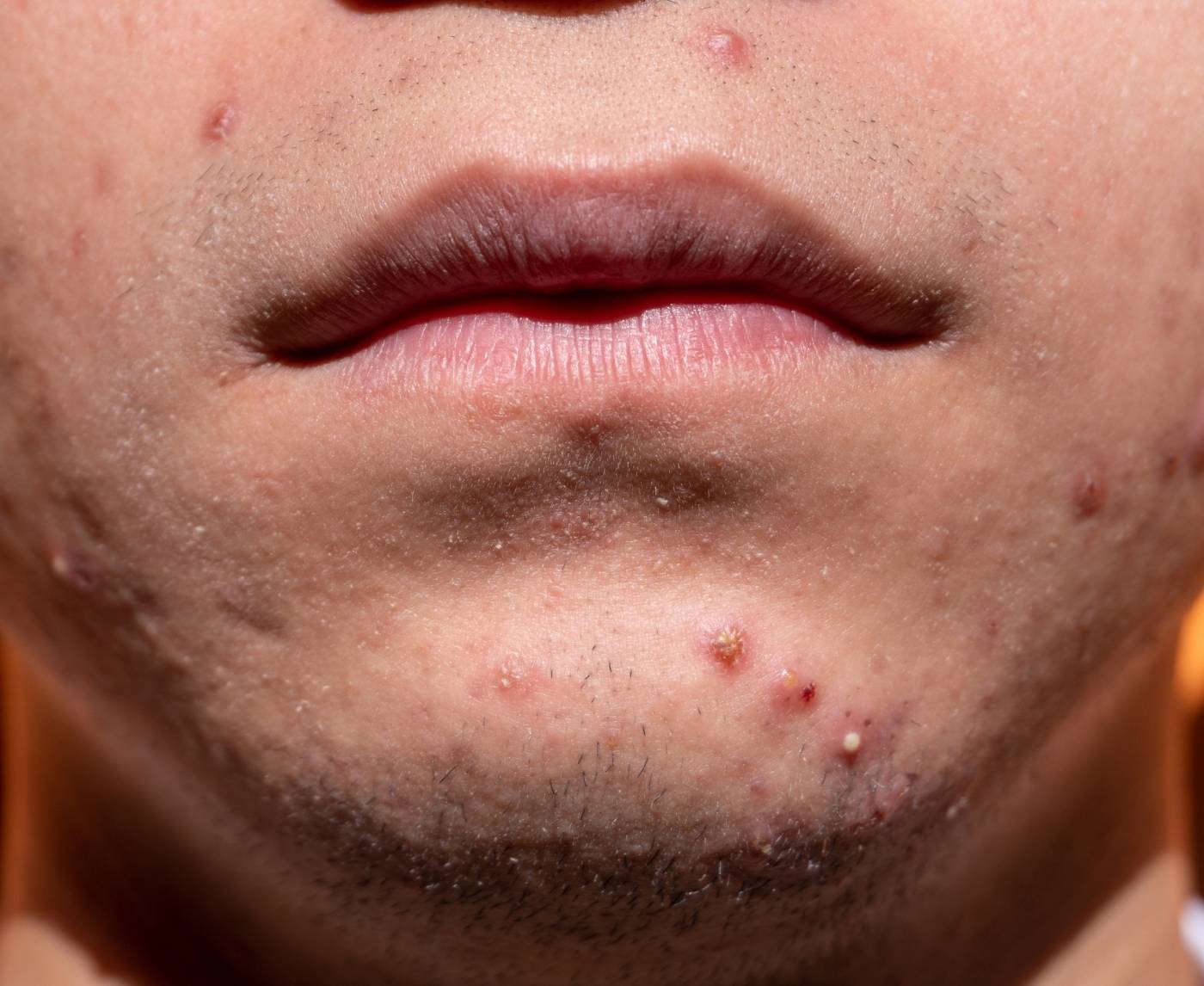
The clearest visual signal is the surface texture as the bump develops. A cold sore goes through a wet stage: small clear fluid-filled vesicles that cluster, then burst, then crust over in a honey-colored scab. A pimple stays mostly dry on the surface, with a single white or yellow pustular tip if there's any discharge at all.
The figures below show the two conditions at the stages where they look most distinct from each other.
Recurrence Is the Loudest Clue
If a bump keeps coming back to the exact same patch of skin, especially when you're stressed, run-down, sun-exposed, or hormonal, it deserves a closer look. The repeat-in-the-same-spot pattern is a hallmark of facial herpes.
HSV-1 lives dormant in the trigeminal nerve ganglion, the same nerve cluster that supplies sensation to the face. When the virus reactivates, it travels back along that nerve to the same area of skin, often within a few millimeters of where it landed last time. The WHO fact sheet on HSV describes these recurrences as a defining feature of HSV outbreaks.
Acne does cluster in oily zones like the T-zone, jawline, and forehead. But it rarely picks the same exact follicle over and over. Hormonal acne, for example, tends to drift across the lower face during menstrual cycles, not lock onto a single 3-millimeter patch. If you've got one specific spot that flares the night before a big presentation and shows up again three months later in the exact same place, that's worth testing for.
It also helps to think in terms of pattern memory. Most people with recurrent cold sores can point to their own typical site (the corner of one lip, the right side of the chin, just under the nose) because the virus has been using the same nerve route for years. Acne doesn't develop that kind of muscle memory.
- Illness or fever
- Sun exposure to the lips or face
- Menstrual cycles and hormonal shifts
- Physical or emotional stress
- Recent surgery or other tissue injury
How Long Each One Lasts
Time is another giveaway. A cold sore moves through a predictable sequence: tingling, blister, weep, crust, heal. Most outbreaks resolve within seven to fourteen days. A pimple is messier and less predictable. A shallow whitehead might fade in a few days. A cystic nodule can sit under the skin for weeks before it does anything visible. The chart below maps the typical day-by-day arc.
| Stage | Facial herpes | Acne |
|---|---|---|
| Day 1 to 2 | Tingling or burning begins; skin may feel tight at the spot | Pore clogs form under skin; usually no visible signs yet |
| Day 3 to 5 | Vesicles form and may leak clear fluid | Red bump appears, may become inflamed, may form a head |
| Day 6 to 10 | Vesicles scab over and begin to dry | Pimple may shrink or rupture, healing begins |
| Day 11 to 14 | Scabs fall off, skin appears nearly normal again | Skin may have post-inflammatory dark mark or temporary scar |
How can I tell a cold sore from a pimple in the first 24 hours?
Three quick signals: a cold sore usually starts with a tingling, burning, or itching sensation a day or two before anything is visible, then forms small clear fluid-filled blisters in a tight cluster. A pimple shows up without that warning, has a solid white or yellow head if anything, and stays mostly dry on the surface. Recurrence in the exact same spot strongly favors facial herpes; if it's truly a first-ever bump and not in a lip area, acne is more likely.
Triggers, Stress, and Why People Mix These Up
One of the trickiest parts of telling cold sores from acne is that they share a major trigger: stress. A bad week of sleep, a deadline, a viral cold, even a sunburn or a long weekend of partying can flare both. Stress raises cortisol, which suppresses immune function and increases skin oil production. Both effects open the door to a herpes reactivation and to a fresh acne breakout at the same time.
That's why the casual self-diagnosis of 'stress acne' is sometimes wrong. The skin is reacting to stress, but the mechanism is viral reactivation, not a clogged pore. Many people first acquire HSV-1 in childhood from a relative kissing them on the lips and never see a symptom for years. The first visible outbreak shows up later in life, often during a tough stretch, and gets misread as an adult acne flare.
Per the WHO HSV fact sheet, about 3.8 billion people under age 50 globally (roughly 64%) carry HSV-1, with most infections acquired in childhood. So if you've never had a positive herpes test before, that doesn't mean you're definitely not carrying the virus. It may simply mean it hasn't reactivated visibly yet, or your previous outbreaks were mild enough to assume they were stress acne.
Can You Have Both at the Same Time? Yes.
Acne and facial herpes are not mutually exclusive. If you're prone to breakouts, you can absolutely also carry HSV-1, and a stressful week can include one of each. Worse, irritated skin from acne (cystic lesions, picked-at pimples, raw shaving nicks) can give the herpes virus an easier landing if you're newly exposed to it.
Someone with facial herpes who mistakes their sore for a pimple is likely to pop it, shave over it, or share lip balm. That spreads the virus to other parts of their own face, to their eyes, where it can cause herpes keratitis (a sight-threatening corneal infection documented by the American Academy of Ophthalmology), or to a partner. Knowing what you're dealing with isn't only cosmetic. It changes whether you should be touching that spot at all.
Irritated or open skin from acne lesions, picked pimples, or shaving nicks can lower the barrier to HSV infection at that exact site. That's another practical reason not to pop a sore you can't confidently identify, especially around the lips, nostrils, or chin.
Don't Pop What You Can't Identify
This is the practical takeaway: if a bump on your face hurts more than expected, leaks clear fluid (not pus), or has shown up in the same spot before, treat it as possible herpes until proven otherwise. Don't squeeze it. Don't shave directly over it. Wash your hands carefully if you've touched it, and avoid sharing lip products, towels, or razors until it heals.
If it turns out to be acne, you've cost yourself nothing by being cautious. If it turns out to be herpes, you've avoided spreading the virus to your eyes and to people you live with. The CDC's STI treatment guidelines note that early antiviral treatment shortens outbreak duration and can reduce shedding, so getting a real answer matters for both healing speed and transmission risk.
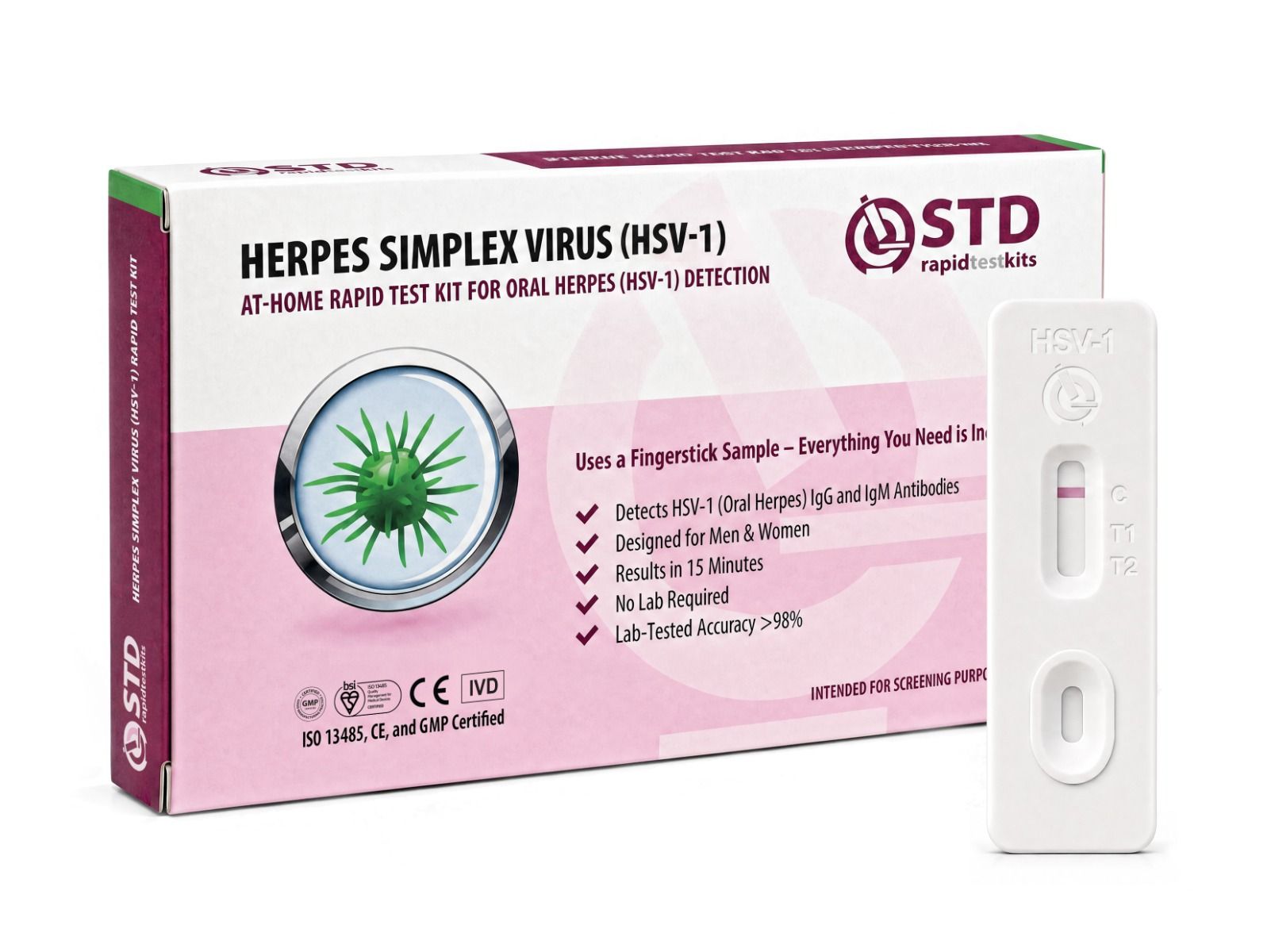
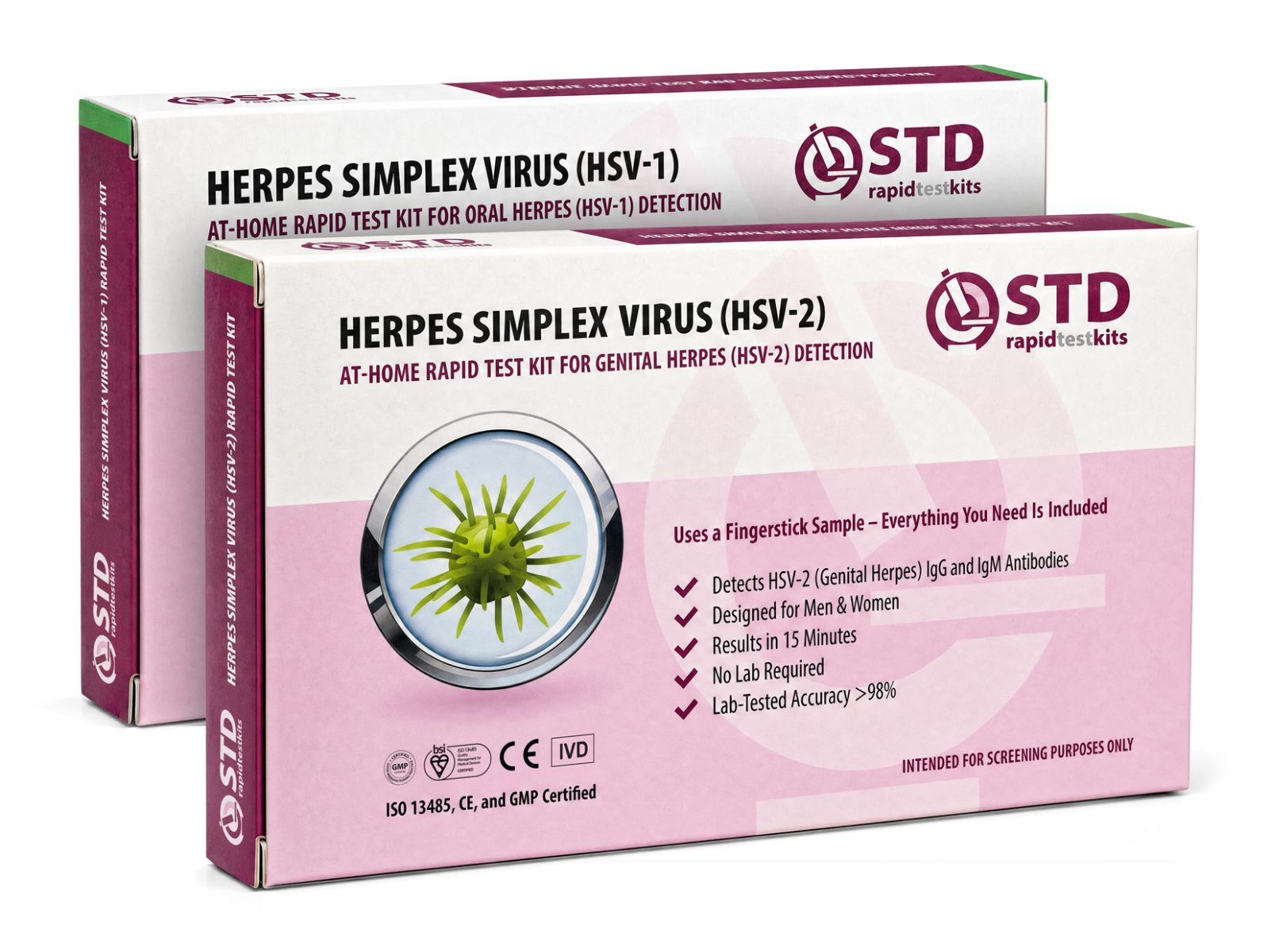
This site sells at-home rapid herpes antibody tests; the option below is relevant if you want to check your exposure history privately, without booking a clinic appointment.
How Herpes Testing Actually Works
There are two clinical paths to a herpes diagnosis, and they answer slightly different questions.
The first is a swab test (PCR or viral culture) taken from an active blister within the first 48 hours, before the lesion crusts over. This is what clinics use when there's a fresh sore. The CDC's herpes testing page states that swab samples from a blister or sore that is not already crusted or healing work best. A swab tells you what virus is causing this specific sore.
The second path is an antibody blood test, which detects whether your body has produced HSV-1 or HSV-2 antibodies in response to past exposure. The CDC notes that after exposure, it can take up to 16 weeks or more for current tests to detect infection reliably. For practical scheduling, most at-home and lab antibody tests use 12 weeks as the standard window; 16 weeks covers late seroconverters. The blood test answers a different question: have you been exposed to herpes at any point, even when you don't have a visible sore right now.
At-home rapid kits are antibody-based. They're useful for clarifying exposure history and for people who haven't had access to a clinic during an active outbreak. They are lateral-flow tests, not the same technology as a lab PCR swab, and the CDC notes that false positives are more common in herpes blood testing than in tests for chlamydia or gonorrhea. So a positive home result is worth confirming with a clinician for treatment planning. For a private, accessible first answer (especially for people who would otherwise put off testing entirely) at-home kits fill a real gap.
Mild symptoms may go unnoticed or be mistaken for other skin conditions like a pimple or ingrown hair.
Living With Either Diagnosis
If your test comes back negative, you've got reassurance and probably some new information about your skin. A recurring chin breakout might be hormonal acne, perioral dermatitis, or a reaction to a comedogenic moisturizer; a dermatology consult can sort it out from there.
If your test comes back positive for HSV-1, you've joined the majority of adults who carry the virus. There's no cure for herpes, but there are well-tested antivirals (acyclovir, valacyclovir, famciclovir) that shorten outbreaks and can reduce transmission to partners when taken consistently. Most people manage flares with episodic treatment (a short course at the first tingle) rather than daily suppression, but daily suppression is an option for people with frequent outbreaks or partners who would benefit from lower viral shedding.
Managing outbreaks is usually easier than people expect. Daily life, dating, and work are not disrupted in the way the cultural stigma implies. The American Sexual Health Association notes that most people with HSV-1 manage the virus with antiviral options and informed partner conversations. Tracking your triggers (stress, sleep debt, sun exposure, illness) helps you anticipate flares and start antivirals at the prodrome stage, which is when they work best.
You Deserve a Real Answer, Not a Mirror Guess
What shows up on your face affects how you feel about yourself, how you show up at work, and what you do next about it. Whether the bump is a cold sore, an inflammatory pimple, a cyst, or something else, you deserve to know which one. Guessing in the mirror isn't a medical strategy.
If recurring face bumps have been confusing you, an at-home herpes antibody test gives you a private starting point. Pair the result with a clinician visit for treatment planning if it's positive, and for ruling out other skin conditions if it's negative. An informed answer beats months of squinting at the same spot wondering what it really is.
Your next three steps
- Note the specifics: where the bump is, whether you felt a tingle or burn first, and whether it has appeared in this exact spot before. These details matter for any clinician you talk to.
- If there's no active sore right now, take an at-home herpes antibody test 12 weeks or more after your last suspected exposure to clarify whether you're carrying HSV-1 or HSV-2.
- If the result is positive (or you have an active blister), see a clinician. They can run a swab on a fresh sore for confirmation and prescribe an antiviral that works best when started at the first tingle.
FAQs
- Can a herpes sore really look like a regular zit?
- Yes, especially in the first 12 to 24 hours. The clearest distinguishing signs come once the bump develops further: cold sores form clear fluid-filled vesicles that cluster, while pimples have a solid white or yellow head. Tingling, burning, or itching one to two days before the bump appears is also a strong herpes signal that acne does not produce.
- How would I get HSV-1 on my face if I've never had a partner with cold sores?
- Most people pick up HSV-1 in childhood, usually from a family member kissing them on the lips, and never see a symptom for years. Per the WHO, about two-thirds of people under 50 globally carry HSV-1. So a first visible outbreak in adulthood doesn't mean a recent exposure; it usually means a long-dormant childhood infection just reactivated for the first time.
- What does the prodrome (the warning) actually feel like?
- Most people describe it as tingling, burning, or itching at a specific spot on the lip or around the mouth. Some say it feels like a faint electric current under the skin. It typically lasts a few hours to two days before the visible blister appears. If you can recognize your prodrome, you can start antiviral medication at that stage, which often makes the outbreak shorter and milder.
- If a bump keeps coming back in the same exact place, is that proof of herpes?
- It's a strong signal but not proof on its own. Other conditions can also recur in similar areas: perioral dermatitis (often around the mouth from steroid creams or fluoride toothpaste), an ingrown hair from shaving, or contact dermatitis from a specific lip product. A swab during an active flare or an antibody blood test gives a definitive answer.
- I want to pop it to see if it's a pimple. What's the harm?
- If it's herpes, popping spreads the virus to other parts of your face, to your eyes (where it can cause herpes keratitis, a sight-threatening corneal infection), or to anyone you touch afterward without washing your hands. Even if it's just acne, popping a deep lesion can leave a dark spot or scar. When you can't tell, leave it alone and consider testing.
- Can I have HSV-1 and never get a visible cold sore?
- Yes, and this is actually the more common pattern. Many carriers either have no outbreaks or such mild ones they assume the bump was stress acne, a bitten lip, or a chapping spot. Asymptomatic shedding still occurs, which is why partner transmission can happen without a visible sore present.
- How long does an at-home herpes antibody test take, and how reliable is it?
- Most rapid lateral-flow blood tests give a result in about 15 minutes from a fingerstick sample. They detect antibodies, so they're most reliable 12 weeks or more after suspected exposure. They are screening tools; the CDC notes that herpes blood tests have a higher false-positive rate than tests for chlamydia or gonorrhea, so a positive home result should be confirmed with a clinician for treatment planning.
- Can I still kiss and date if I have HSV-1?
- Yes. Most people with HSV-1 manage their dating and intimate lives with minimal disruption. Daily or episodic antiviral treatment reduces both outbreak frequency and shedding. The standard advice is to avoid kissing and oral contact during an active sore (from prodrome through full crusting), and to have a disclosure conversation with new partners so they can make informed choices.
How we sourced this article: We combined current guidance from the CDC, WHO, the American Sexual Health Association, and the American Academy of Ophthalmology with general dermatology principles for distinguishing inflammatory acne from herpes simplex lesions. Visual references for the image gallery are based on standard clinical dermatology atlas descriptions of cold sore stages and acne lesion types. This article was written by editorial staff and reviewed for clinical accuracy by a licensed medical doctor.
- U.S. Centers for Disease Control and Prevention. About Genital Herpes fact sheet. Source for the statement that mild herpes symptoms can be mistaken for a pimple or ingrown hair.
- U.S. Centers for Disease Control and Prevention. Herpes Testing. Source for swab vs antibody testing methodology, the up-to-16-weeks antibody window, and false-positive rates in herpes blood testing.
- World Health Organization. Herpes Simplex Virus fact sheet. Source for global HSV-1 seroprevalence (3.8 billion people under 50, ~64%), childhood acquisition, and recurrence triggers.
- U.S. Centers for Disease Control and Prevention. Sexually Transmitted Infections Treatment Guidelines: Herpes. Source for antiviral treatment options and reduction in shedding.
- Mayo Clinic. General reference for cold sore staging (prodrome, blister, crust, heal) and typical 7 to 14 day healing timeline. See the cold sore disease overview on the Mayo Clinic website.
- Mayo Clinic. General reference for acne lesion morphology (papules, pustules, cysts) and underlying causes. See the acne disease overview on the Mayo Clinic website.
- American Academy of Ophthalmology. General reference for herpes keratitis as a sight-threatening corneal complication of HSV spread to the eye. See the eye health condition library on the AAO website.
- American Sexual Health Association. Herpes overview. Source for practical management framing and partner-disclosure context.
