Can I Test for Hepatitis B at Home, or Do I Need a Clinic?
A fingerstick kit can tell you in about 15 minutes whether hepatitis B surface antigen shows up in your blood. It cannot tell you whether you are immune, and it cannot help after an exposure that happened yesterday. Here is how to pick the right route for your situation, and what to do with the result either way.
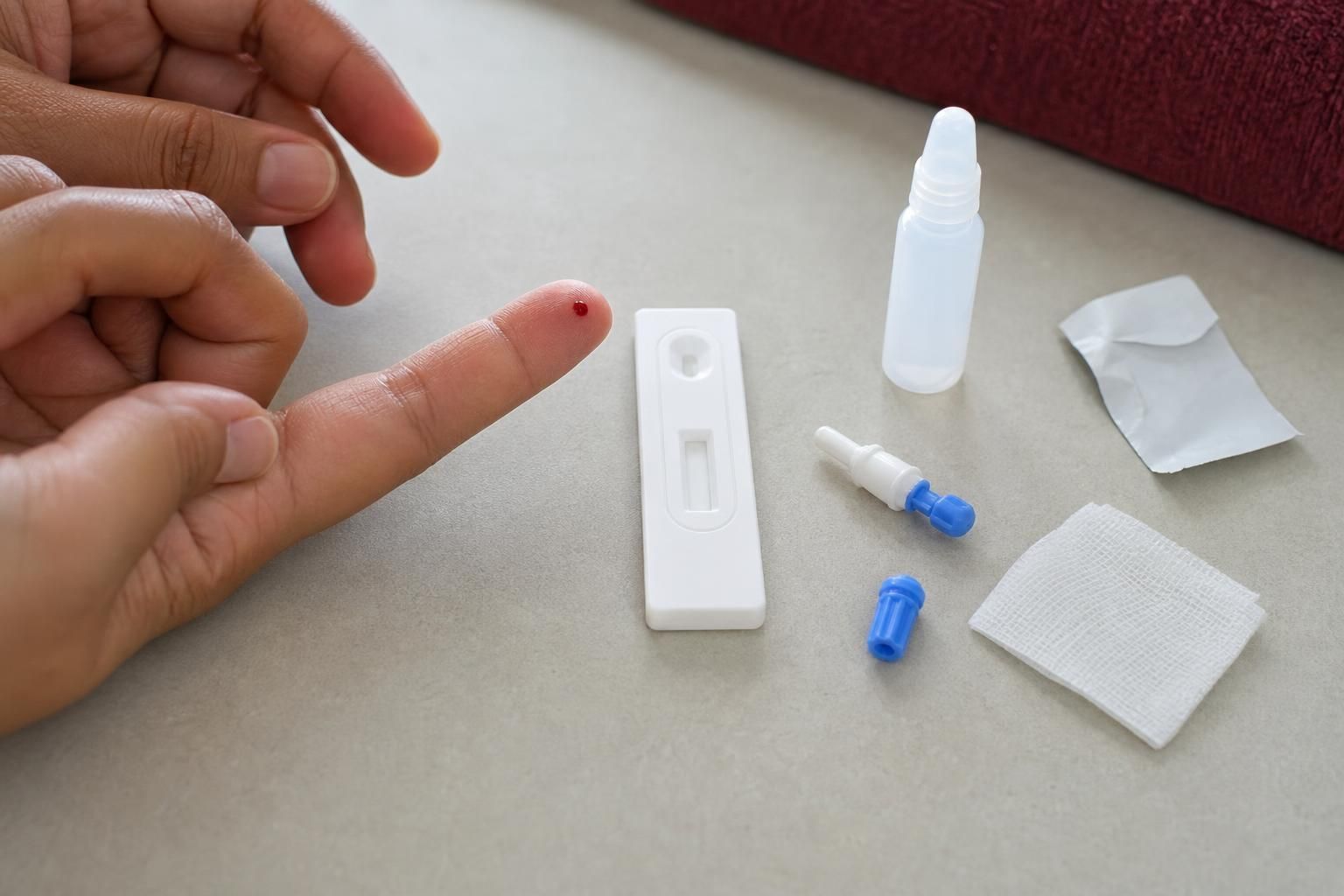



- The home kit answers one question: is hepatitis B surface antigen (HBsAg) in your blood now? Read any result as a first screen. A positive goes to a clinician for lab confirmation, and a negative can miss an infection picked up recently.
- Start at a clinic after a recent exposure while not fully vaccinated, with symptoms, during pregnancy, or when you need to know whether you are immune. Those questions need prompt preventive treatment or the lab triple panel.
Published: October 2026 | Last updated: October 2026 | Editorial review and quality control: Martina N.
Can you test for hepatitis B at home?
Yes, as a first screen. A fingerstick rapid test looks for hepatitis B surface antigen (HBsAg), a marker of current infection. A positive needs lab confirmation and a negative does not rule out recent infection. Go to a clinic instead after a recent exposure if you are not fully vaccinated, with symptoms, in pregnancy, or to check immunity.
For many adults with no symptoms and no recent exposure, a home test is a reasonable preliminary screen; a positive needs confirmation by a clinician, and a negative does not rule out recent infection or show immunity. The home kit answers one narrow question, whether hepatitis B surface antigen is in your blood right now, and several common situations need a different question answered or need treatment within a day.
Hepatitis B is easy to carry without knowing. In the U.S., about 1 in 2 people with hepatitis B do not know they are infected (CDC), and worldwide only 27% of the estimated 240 million people living with chronic hepatitis B were aware of it in 2024 (WHO). If you are still working out whether you were exposed at all, our guide to how hepatitis B spreads covers the routes and risks.
What the home kit measures, and what the clinic panel adds
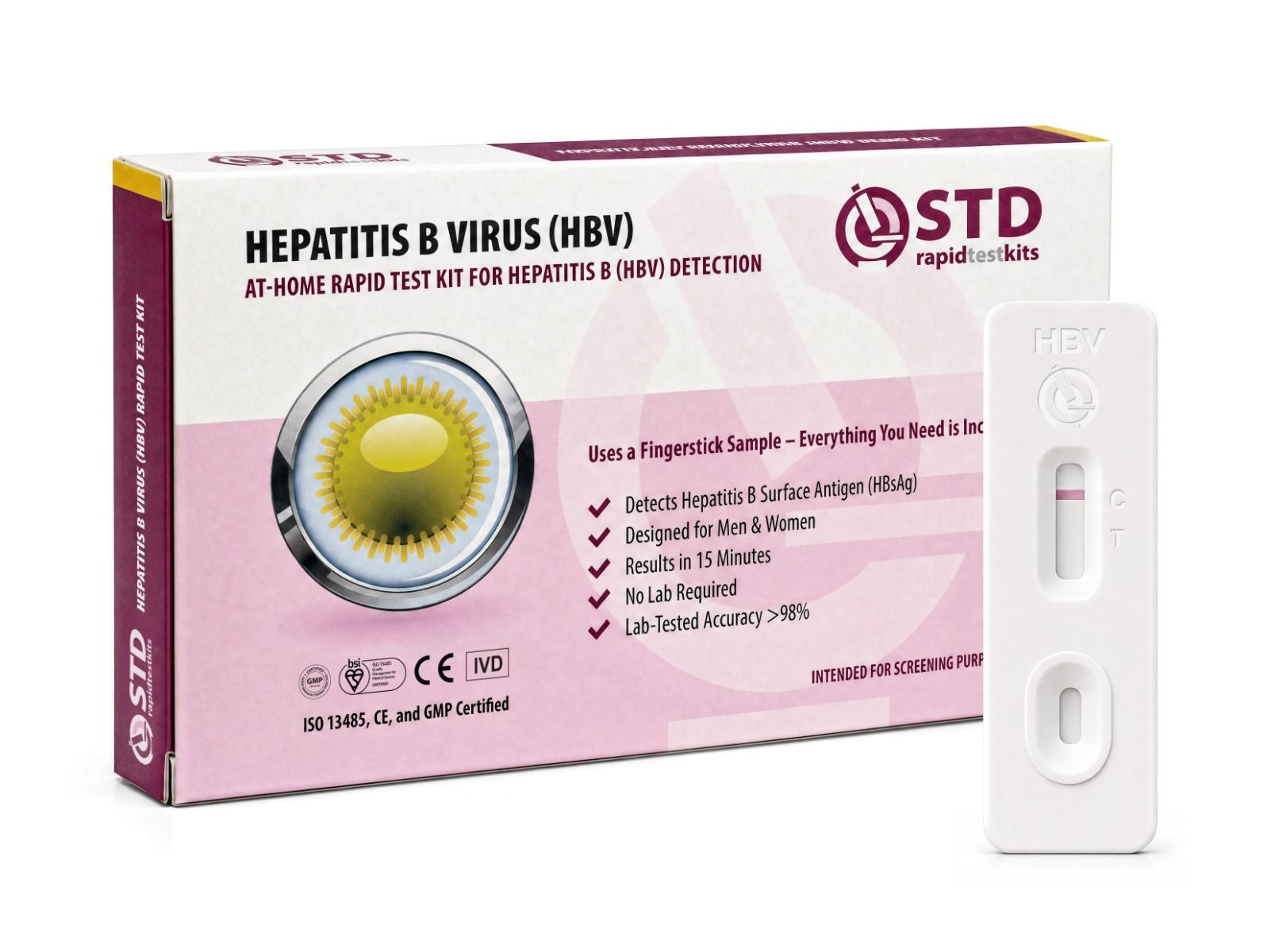
Our at-home hepatitis B test is a lateral-flow cassette that detects hepatitis B surface antigen (HBsAg), a protein from the virus itself. You prick a finger, add the blood and buffer, and read the result at 15 minutes, and never after 20 minutes. It does not look for antibodies of any kind.
Clinics now use a broader test. Since 2023 the CDC has recommended screening all adults 18 and older for hepatitis B at least once in their lifetime using a triple panel: HBsAg, anti-HBs and total anti-HBc (CDC clinical testing guidance). Each marker answers something different. HBsAg means the person is currently infectious. Anti-HBs indicates immunity, either from recovering from an infection or from successful vaccination. Total anti-HBc shows a previous or ongoing infection without saying when it happened.
So the home kit covers one of the three. That is enough to screen for a current infection, but a negative home result cannot tell you whether you are protected or whether you should get vaccinated. Someone who was never infected and never vaccinated gets the same negative line as someone with full vaccine immunity.
Home HBsAg Rapid Test vs Clinic Triple Panel
| Feature | Home HBsAg rapid test | Clinic triple panel |
|---|---|---|
| What it looks for | Hepatitis B surface antigen (HBsAg) only | HBsAg, anti-HBs and total anti-HBc |
| Sample | Fingerstick blood, collected yourself | Blood drawn at a clinic or lab and processed by the lab |
| Current infection | Preliminary screen; positives go for lab confirmation, and an early negative can miss it | Detects it; follow-up markers help tell a new infection from a long-standing one |
| Immunity from vaccine or recovery | Cannot show it | Anti-HBs shows it |
| Past infection | Cannot show it | Total anti-HBc shows previous or ongoing infection |
| Time to result | Read at 15 minutes | Returned after the visit; timing depends on the lab |
| Cost and privacy | Flat kit price, no appointment, done in private | Visit and lab costs depend on your clinic and insurance |
The home kit screens for current infection only; immunity and past infection need the lab panel.
Situations where a clinic should come first
A recent possible exposure while not fully vaccinated. This is the most time-sensitive case, and you should not wait for a test window to pass. If you are not fully vaccinated and had sex with a partner who has hepatitis B, shared a needle, or had a needlestick, the CDC's STI treatment guidelines advise hepatitis B vaccine and hepatitis B immune globulin (HBIG) as soon as possible, preferably within 24 hours, when the source is known to have hepatitis B, and a first vaccine dose within the same window when the source's status is unknown (CDC STI treatment guidelines). The NIDDK puts it simply: see a doctor right away. A test cannot show whether you were infected this early, and waiting for one should not delay vaccine or HBIG. Go to a clinic, urgent care or emergency department.
Symptoms. Yellowing of the skin or the whites of the eyes, dark urine, pale stool, unusual tiredness or pain in the upper belly can all come from hepatitis B (NHS). They can also come from other liver problems. Either way they need an examination and blood tests ordered by a clinician, not a single rapid cassette.
Pregnancy. The CDC advises screening every pregnant patient for HBsAg during each pregnancy, preferably in the first trimester, regardless of vaccination status or earlier results (CDC perinatal hepatitis B overview). That test belongs in your prenatal bloodwork, because a positive result changes how the baby is protected at birth.
A partner with hepatitis B, or a vaccine decision. If someone you live with or have sex with has hepatitis B, or you simply want to know whether you need the vaccine, the useful answer is your immunity status. Only the triple panel gives it. People with an ongoing risk, such as those who inject drugs, people with HIV and men who have sex with men, are advised to keep testing periodically while that risk continues if they are not immune.
To ensure increased access to testing, anyone who requests HBV testing should receive it regardless of disclosure of risk. Many people might be reluctant to disclose stigmatizing risks.
When starting at home makes sense
A home screen fits a narrower but common situation: you have no symptoms, you are not pregnant, your last possible exposure was weeks or months ago, and you want a private first check without booking a visit. For that reader the kit's strengths are real. It costs a flat kit price with no clinic visit or separate lab fee, it takes about 15 minutes, and nobody else needs to know you tested.
Know what the numbers behind it mean. In the manufacturer's package insert, the kit agreed with a leading commercial laboratory HBsAg immunoassay (EIA) on 820 of 821 positive clinical specimens and 2,134 of 2,135 negative ones. That is agreement with another test, not a measure of clinical accuracy. The insert does not say how its study specimens were collected, it gives no detection limit for low antigen levels, and the manufacturer publishes no figure for fingerstick samples collected and read at home.
This article is published by stdrapidtestkits.com, which sells at-home STI test kits.
Home test or clinic: a quick check
Answer the questions in order and stop at the first yes. The first one matters most. After a recent exposure, preventive treatment works best when it starts quickly, so it should come before any test.
Home Test or Clinic for Hepatitis B?
Have you had a recent possible exposure (sex with a partner who has hepatitis B or unknown status, a shared needle, a needlestick) while not fully vaccinated?
Yes: Go to a clinic, urgent care or emergency department now; do not wait for a test window to pass. The CDC advises vaccine, plus HBIG when the source has hepatitis B, as soon as possible, preferably within 24 hours. A test cannot show infection this early.
Do you have symptoms such as yellow skin or eyes, dark urine or upper-belly pain, are you pregnant, or has a partner been diagnosed with hepatitis B?
Yes: See a clinician for lab testing rather than starting at home. Symptoms need an exam and blood tests, pregnancy screening is a prenatal lab test, and a partner's diagnosis makes your immunity status the key question.
Is your main question whether you are immune or need the hepatitis B vaccine?
Yes: Ask a clinic for the triple panel (HBsAg, anti-HBs, total anti-HBc). The home kit detects only HBsAg and cannot show immunity.
Has it been at least 12 weeks since your last possible exposure, with no symptoms, and you want a private check?
Yes: A home HBsAg rapid test is a reasonable preliminary screen. A positive needs lab confirmation with a clinician, and a negative does not rule out infection or show immunity.
No: If you are not fully vaccinated and the exposure was recent, a partner has hepatitis B, you are pregnant, or you have symptoms, see a clinician now instead of testing at home. Otherwise you can screen at home now as a preliminary check, but a negative before 12 weeks does not rule out infection: repeat at 12 weeks, and confirm any positive with a clinician.
Guidance only. A clinician can advise on your specific situation, and anyone can ask a clinic for hepatitis B testing.
How long after an exposure a test can pick it up
Hepatitis B surface antigen takes time to reach a detectable level. The manufacturer product information recorded in our catalog puts detection at 1 to 9 weeks after exposure and advises retesting at 12 weeks; neither the package insert nor the instructions state a window, so treat those numbers as a guide, not a guarantee. A negative result inside that range is not an all-clear.
Symptoms, when they happen, come later still. The CDC gives an average of 90 days from exposure to symptoms, with a range of 60 to 150 days (CDC clinical overview), and many people never have any. Waiting for symptoms before testing is not a strategy.
Hepatitis B Testing Timeline After an Exposure
- Day 0 Exposure
No test can detect infection yet
- Day 1 Preventive treatment window
Vaccine, and HBIG if the source has hepatitis B, preferably within 24 hours
- Week 1 Earliest detection
HBsAg may start to show in some people
- Week 9 End of detection range
Upper end of the catalog's 1-9 week range
- Week 12 Retest point
Repeat an earlier negative screen here
- Day 90 Average symptom onset
CDC average; range 60-150 days, and many people have none
Detection and retest points come from catalog product information; symptom timing comes from the CDC.
What to do with a positive or negative result
If the line is positive, book a clinician visit rather than treating the result as a diagnosis. A positive home result means the cassette detected surface antigen; the lab repeats HBsAg and adds markers such as IgM anti-HBc and HBV DNA to tell a new infection from a chronic one and to judge whether treatment is needed. How likely a positive is to be real also depends on how common hepatitis B is among people with your exposures, which is another reason to confirm. If it is confirmed, the outlook for adults is better than many people expect: about 95% of adults infected with hepatitis B recover completely and do not develop chronic infection, compared with about 90% of infected infants who do (CDC). A clinician will also advise on testing and vaccinating your partners and household.
If the line is negative, check the timing first. Before the 12-week retest point, repeat the test then. After 12 weeks with no new exposure, a negative makes current infection less likely but does not rule it out, and says nothing about immunity. If exposure continues, the CDC advises periodic testing for people who are not immune. If you have never been vaccinated, or do not know, the vaccine is the next step: hepatitis B can be prevented by vaccines that the WHO describes as safe, available and effective. A clinic can check your anti-HBs or simply vaccinate you.
Testing for hepatitis B alongside other infections
Hepatitis B spreads through blood, semen and other body fluids, so the same exposure can carry other infections. Hepatitis B is also easy to miss in routine screening; our piece on why hep B testing is often left out of STD panels explains the gap and what to ask for. Several of our at-home STI test kits include the same HBsAg cassette next to tests for other infections, and each component keeps its own limits. If hepatitis C is part of the same worry, the hepatitis C version of this decision works differently, because a hepatitis C test looks for antibodies rather than the virus's own antigen.
FAQs
- Can I take the home test soon after a hepatitis B vaccine dose?
- Wait at least 30 days. The CDC notes that HBsAg can be briefly positive within 30 days after a vaccine dose, so an early test can show a line that reflects the vaccine rather than an infection. Any positive should still be confirmed by a clinician.
- I was diagnosed with hepatitis B years ago. Can a home kit show whether it has cleared?
- No. A rapid HBsAg screen cannot stage or monitor hepatitis B. Whether an infection has cleared, and whether it needs treatment, is judged from lab markers such as HBV DNA and liver tests that your clinician orders and repeats over time.
- Does it matter whether the exposure was sexual or through a needle or tattoo?
- Not for the test itself. The kit looks for the same surface antigen whatever the route, and the same timing applies. The route matters for urgency: any recent blood or sexual exposure while not fully vaccinated is a reason to seek preventive treatment as soon as possible, preferably within 24 hours.
This article summarizes current guidance from the U.S. Centers for Disease Control and Prevention (CDC), the World Health Organization (WHO), the NHS and the U.S. National Institutes of Health (NIH). Each specific figure or recommendation links to the page that states it, and every page used is listed under Sources with what it supports. It is general health information written by our editorial staff, not a diagnosis or a treatment plan; how we choose topics and use sources is described in our editorial policy.
- U.S. Centers for Disease Control and Prevention. Clinical Testing and Diagnosis for Hepatitis B (reviewed August 2026): lifetime triple-panel screening for adults 18+, meaning of HBsAg, anti-HBs and total anti-HBc, transient HBsAg after vaccination, periodic testing for ongoing risk, testing on request regardless of disclosed risk.
- U.S. Centers for Disease Control and Prevention. Hepatitis B Basics: about 1 in 2 people with hepatitis B in the U.S. do not know they are infected; spread through blood, semen and other body fluids.
- U.S. Centers for Disease Control and Prevention. Clinical Overview of Hepatitis B: average 90 days (range 60-150) from exposure to symptoms; about 95% of infected adults recover and about 90% of infected infants remain chronically infected.
- U.S. Centers for Disease Control and Prevention. Clinical Overview of Perinatal Hepatitis B: HBsAg screening of all pregnant patients during each pregnancy, preferably in the first trimester.
- U.S. Centers for Disease Control and Prevention. STI Treatment Guidelines, 2021: Viral Hepatitis. Post-exposure HBIG and hepatitis B vaccine as soon as possible, preferably within 24 hours.
- World Health Organization. Hepatitis B fact sheet: 240 million people living with chronic hepatitis B worldwide in 2024, 27% aware of their status; vaccines safe, available and effective.
- NHS. Hepatitis B: symptoms including yellowing skin and eyes, tiredness, upper-tummy pain, darker urine and pale stool.
- National Institute of Diabetes and Digestive and Kidney Diseases (NIH). Hepatitis B (reviewed December 2024): see a doctor right away after contact with the virus; vaccine and, if needed, HBIG preferably within 24 hours.