
Published: August 2025 | Last updated: May 2026 | Editorial review and quality control: Martina N.
Bright red blood on toilet paper after anal sex is one of those moments that makes you stop everything. Most people land on the same first guess: hemorrhoids. Hemorrhoids are extremely common, and they really do bleed. Two other causes can look almost identical at first glance, though, an anal fissure (a small tear in the lining of the anus) or a rectal sexually transmitted infection like chlamydia or gonorrhea.
The differences are real, but they are subtle. They show up in what comes alongside the bleeding (mucus, discharge, internal urgency, or none of those), how long the symptoms last, and how recent sexual activity fits into the timeline. This guide walks through how to recognize each pattern, when at-home testing makes sense, when a clinic visit is the right call, and what current CDC, WHO, and NHS guidance say about the most common causes of post-sex rectal bleeding.
Key Takeaways
- Hemorrhoids usually bleed bright red after a bowel movement with no mucus and no internal urgency; rectal infections more often add mucus, discharge, or a persistent feeling of needing to pass stool when nothing is there.
- If bleeding follows receptive anal sex in the past few weeks, testing is reasonable even when symptoms are mild, because rectal chlamydia and gonorrhea are often subtle or fully silent.
What Hemorrhoids Usually Feel Like
Hemorrhoids are swollen veins inside or just outside the anal canal. Internal hemorrhoids tend to bleed; external ones tend to itch, ache, or throb. The NHS notes that piles are very common in adults, which is part of the reason most people assume any anal bleeding must be from them.
The classic hemorrhoid pattern looks like this. The bleeding is bright red, usually noticed on toilet paper or as streaks in the bowl after a bowel movement. The discomfort is more pressure or itch than sharp internal pain. It is often triggered by straining (constipation, heavy lifting, long sitting, late pregnancy) and tends to come and go in flares rather than persist for weeks.
If you have a personal history of hemorrhoids, your body usually repeats the same pattern: same location, same kind of discomfort, same timing around bowel movements. The bleeding often settles on its own with a few days of more fiber, more water, and less straining. The NHS recommends warm baths, gentle topical treatments, and avoiding prolonged sitting on the toilet for mild cases.
The single most important thing to know about hemorrhoids is what they do not usually do. Hemorrhoids do not produce mucus or pus, do not cause persistent rectal urgency when the bowel is empty, and do not trigger systemic symptoms like low-grade fever or fatigue. Those are the differentiators that matter when something more is going on.
| Feature | Hemorrhoids |
|---|---|
| Blood Color | Bright red, usually after bowel movement |
| Pain Type | Dull ache, pressure, itching |
| Discharge | Rare |
| Linked to Sex? | Not typically, unless friction triggered swelling |
| Systemic Symptoms | None |
When It Is an Anal Fissure Instead
Anal fissures are small tears in the lining of the anus. They are common after rough or under-lubricated anal sex, and they are also a frequent cause of bleeding in people with chronic constipation or hard stools. The defining feature is sharp, immediate pain. Many people describe it as a paper-cut sensation that flares during or right after a bowel movement and can linger as a stinging ache for several minutes.
The bleeding from a fissure is bright red, small in volume, and limited to the surface. There is usually no mucus, no discharge, no internal urgency, and no signs of a deeper infection. Most acute fissures heal within a couple of weeks with sitz baths, stool softeners, and topical care.
The thing to watch for: if the pain was sharp at the moment and is gradually fading, fissure is a reasonable working assumption. If the bleeding is paired with mucus, the urge to pass stool when nothing is there, or symptoms that arrive a week or two after exposure, the picture has shifted toward infection rather than a tear.
- Sharp, paper-cut pain during or immediately after a bowel movement, often lingering as a sting.
- Surface-only bright-red bleeding, small in volume.
- No mucus, no discharge, no internal urgency.
- Typically heals within one to two weeks with sitz baths, stool softeners, and topical care.
What a Rectal STD Can Look Like
Rectal chlamydia and rectal gonorrhea are infections of the lining of the rectum, caused by the same bacteria that cause genital chlamydia and gonorrhea. The CDC's STI Treatment Guidelines report that both infections are common in people who have receptive anal sex, and that many cases are asymptomatic. That is one of the reasons routine screening is recommended for sexually active people with anal exposure regardless of how they feel.
When symptoms do appear, the picture is usually different from a hemorrhoid flare. The bleeding may still be bright red, but it is often mixed with mucus or pus-like discharge, and it can show up at times unrelated to bowel movements. People report a sensation that feels internal rather than at the opening: a deep soreness, a low burn, or a persistent feeling of needing to pass stool even when the rectum is empty. That feeling has a clinical name, tenesmus, and it is one of the most reliable signals of rectal inflammation.
Other common features include mild rectal pain, anal itching that is harder to soothe than typical hemorrhoid itch, and occasional spotting in underwear from discharge rather than from the wiped surface. Gonorrhea tends to be the louder of the two, often producing more obvious discharge and urgency. Chlamydia is often quieter, sometimes producing only intermittent spotting that is easy to dismiss.
Rectal syphilis is a different presentation entirely. The classic finding is a chancre, a painless firm ulcer that appears around the anus or just inside the anal canal roughly 10 to 90 days after exposure (per the CDC's STI Treatment Guidelines). The chancre heals on its own even without treatment, which is part of why early-stage syphilis is often missed; the infection persists in the body and progresses if untreated.
| Feature | Rectal STD |
|---|---|
| Blood Color | Bright red, sometimes mixed with mucus |
| Pain Type | Internal soreness, burning, urgency (tenesmus) |
| Discharge | Mucus or pus-like discharge common |
| Linked to Sex? | Often follows recent anal exposure |
| Systemic Symptoms | Possible mild fever or fatigue (gonorrhea more often than chlamydia) |
The Overlap That Confuses Everyone
Here is the genuinely confusing part. Hemorrhoids, fissures, and rectal infections can all produce bright red anal bleeding. They can all cause discomfort after sex. They can all feel awkward enough to mention that many people simply do not, hoping the issue resolves on its own.
The overlap is the reason guides like this one exist. A single symptom (blood on toilet paper) does not carry enough information to identify what is happening. The pattern around the bleeding is what tells the story: what other symptoms are present, how recent sexual activity fits in, whether the discomfort is at the surface or feels deeper, and whether the symptoms improve over a few days or persist.
The good news: across all three causes, the conditions are treatable. Hemorrhoids and fissures usually resolve with conservative care. Rectal chlamydia and gonorrhea respond well to antibiotics when caught early, and untreated infections cause more harm than the testing process does.
How do I tell if rectal bleeding is from a hemorrhoid or a rectal STD?
Hemorrhoid bleeding is usually bright red, follows a bowel movement, and is not paired with mucus, discharge, or internal urgency. Rectal STD symptoms more often include mucus or pus-like discharge, internal soreness or burning, a persistent feeling of needing to pass stool when nothing is there (tenesmus), and timing that lines up with receptive anal sex in the past few weeks. If your symptoms match the second pattern, or if mild symptoms persist for more than a few days, testing for rectal chlamydia and gonorrhea is reasonable.
Proctitis: The Deeper Kind of Irritation
Proctitis is the clinical term for inflammation of the lining of the rectum, and it is the mechanism that makes rectal STD symptoms feel different from hemorrhoid symptoms. Inflamed tissue is fragile tissue. Fragile tissue bleeds with normal contact, like passing stool. It produces extra mucus as part of the immune response. And it sends nerve signals to the brain that feel like persistent urgency.
When chlamydia or gonorrhea bacteria attach to the rectal lining, the immune system responds with local inflammation. The body is trying to clear the infection, but in the process the tissue becomes more sensitive, more permeable, and more prone to bleeding from low-grade friction that healthy tissue would shrug off. This is why proctitis discomfort feels deep and persistent rather than localized at the anal opening the way hemorrhoid discomfort does.
Proctitis has other causes too: inflammatory bowel disease, radiation therapy, certain medications, and other infections. So a proctitis-type pattern does not automatically mean a sexually transmitted infection. It is, however, a strong signal that the cause is more than swollen veins or a small tear, and that a clinical evaluation or at least a screening test is appropriate.
- Where it feels: proctitis feels internal and deep; hemorrhoid discomfort sits at the anal opening.
- Mucus: consistently present with proctitis; uncommon with hemorrhoids.
- Urgency: persistent feeling of needing to pass stool when the bowel is empty (tenesmus) with proctitis; absent with hemorrhoids.
How Rectal Infections Develop After Exposure
Rectal infections do not happen because anyone was reckless. They happen because chlamydia and gonorrhea bacteria are transmitted through direct contact with infected genital secretions or rectal tissue. Condoms substantially reduce risk but do not eliminate it, especially if there is skin-to-skin contact before the condom is applied or if the condom slips or breaks.
After exposure, the bacteria attach to the rectal lining and begin to multiply. There is an incubation period during which there is detectable bacterial DNA in the rectum but no symptoms yet. For rectal gonorrhea, that window is typically two to seven days. For rectal chlamydia, it is more often one to two weeks. Symptoms, when they appear, follow the incubation period; testing accuracy follows it too, which is why very early tests can read negative even when infection is present.
Syphilis follows a much longer arc: the primary chancre can appear anywhere from 10 to 90 days after exposure, with three weeks as a common average. Window periods for the antibody-based blood tests that detect syphilis are correspondingly longer, generally three to six weeks for most assays.
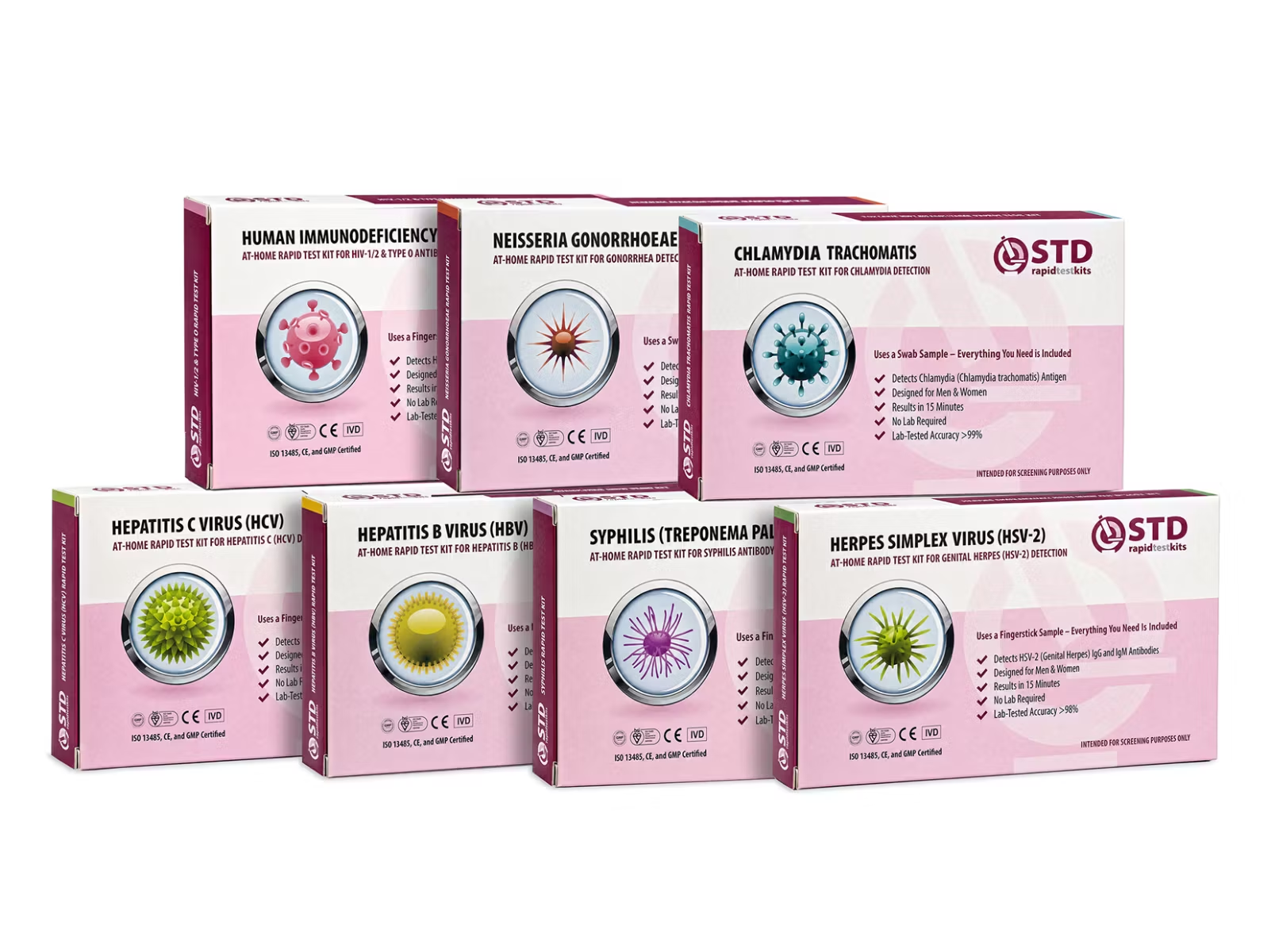
The timing matters because it tells you when a test result is trustworthy. The table below summarizes the typical patterns reported by the CDC and reflected in standard test-kit instructions. STD Rapid Test Kits sells rapid at-home lateral-flow STI panels; the kit below covers the systemic and genital screening picture that often travels alongside a possible rectal exposure, while a clinic handles any rectal-specific NAAT.
| Infection | Typical Incubation | When Symptoms May Appear | Most Reliable Testing Window |
|---|---|---|---|
| Chlamydia (Rectal) | 7–14 days | Often mild or none | 14 days after exposure for highest accuracy |
| Gonorrhea (Rectal) | 2–7 days | Pain, mucus discharge, bleeding | 7–14 days after exposure |
| Syphilis | 10–90 days | Painless chancre, later rash | 3–6 weeks after exposure (antibody test) |
Symptom Patterns That Point Toward Infection
A few patterns shift the picture from probable irritation toward probable infection. When the bleeding is accompanied by mucus or pus-like discharge, infection moves up the list, because mucus is unusual with simple hemorrhoids. When the discomfort feels internal and burning rather than itchy or pressure-like at the anal opening, that points toward proctitis rather than hemorrhoids. When the urge to pass stool persists even when the bowel is empty, that is tenesmus, a classic sign of inflammation rather than a vascular issue.
The timing matters too. If symptoms started within the standard incubation window after receptive anal sex, infection should be on the list. If you have had multiple partners, a new partner, or any partner whose recent test status is unknown, the prior probability of a rectal STI is higher than the population baseline, and screening makes sense even without symptoms.
For readers worried specifically about HIV after receptive anal sex, fourth-generation antigen/antibody tests (the type used in most clinics and in many at-home rapid kits) become reliable roughly 18 to 45 days post-exposure. The CDC recommends a repeat test at 90 days for a definitive negative if the earlier test is negative.
Hemorrhoids do not produce systemic symptoms; they do not cause low-grade fevers, swollen lymph nodes in the groin, or fatigue. If you notice any of those alongside rectal bleeding, that is a stronger signal to test and, if the systemic symptoms are pronounced, to see a clinician in person.
Screening for chlamydia and gonorrhea at extragenital anatomic sites of exposure is recommended in persons who have receptive anal or oral sex, because most rectal and pharyngeal infections do not cause symptoms.
The Testing Window: Accuracy Matters More Than Speed
One of the hardest parts of dealing with rectal symptoms is the urge to test the same day you notice blood. Same-day testing is reasonable if the exposure was at least a week ago, but if the exposure was very recent (a few days), the test may not yet detect the bacteria even when infection is present. A negative result during the incubation period is a real source of false reassurance, and it is one of the most common reasons people get a clean result and then find out weeks later that they were positive after all.
For rectal chlamydia and gonorrhea, the highest accuracy window for laboratory nucleic-acid amplification testing (NAAT) of a rectal swab is approximately 7 to 14 days after exposure. The CDC notes that NAATs can detect lower bacterial loads earlier than older antigen-based methods, but earlier-than-window tests still carry a real false-negative rate. If symptoms start before the window closes, retesting in the back half of the window is a sensible approach.
For syphilis blood testing, the window is longer. Three weeks is roughly the earliest reliable detection point, and six weeks is when most antibody tests reach their published sensitivity. Earlier negative syphilis blood tests do not rule out infection.
How Rectal Testing Works (and What This Site Sells)
The standard test for rectal chlamydia and gonorrhea uses a swab inserted a short distance into the rectum, swept against the rectal lining, and sent to a laboratory for nucleic-acid amplification testing (NAAT). NAAT looks for the bacterial genetic material directly rather than relying on culture growth, and the CDC's STI Treatment Guidelines identify it as the recommended testing method for rectal infections. The procedure itself takes seconds and is usually mildly uncomfortable rather than painful.
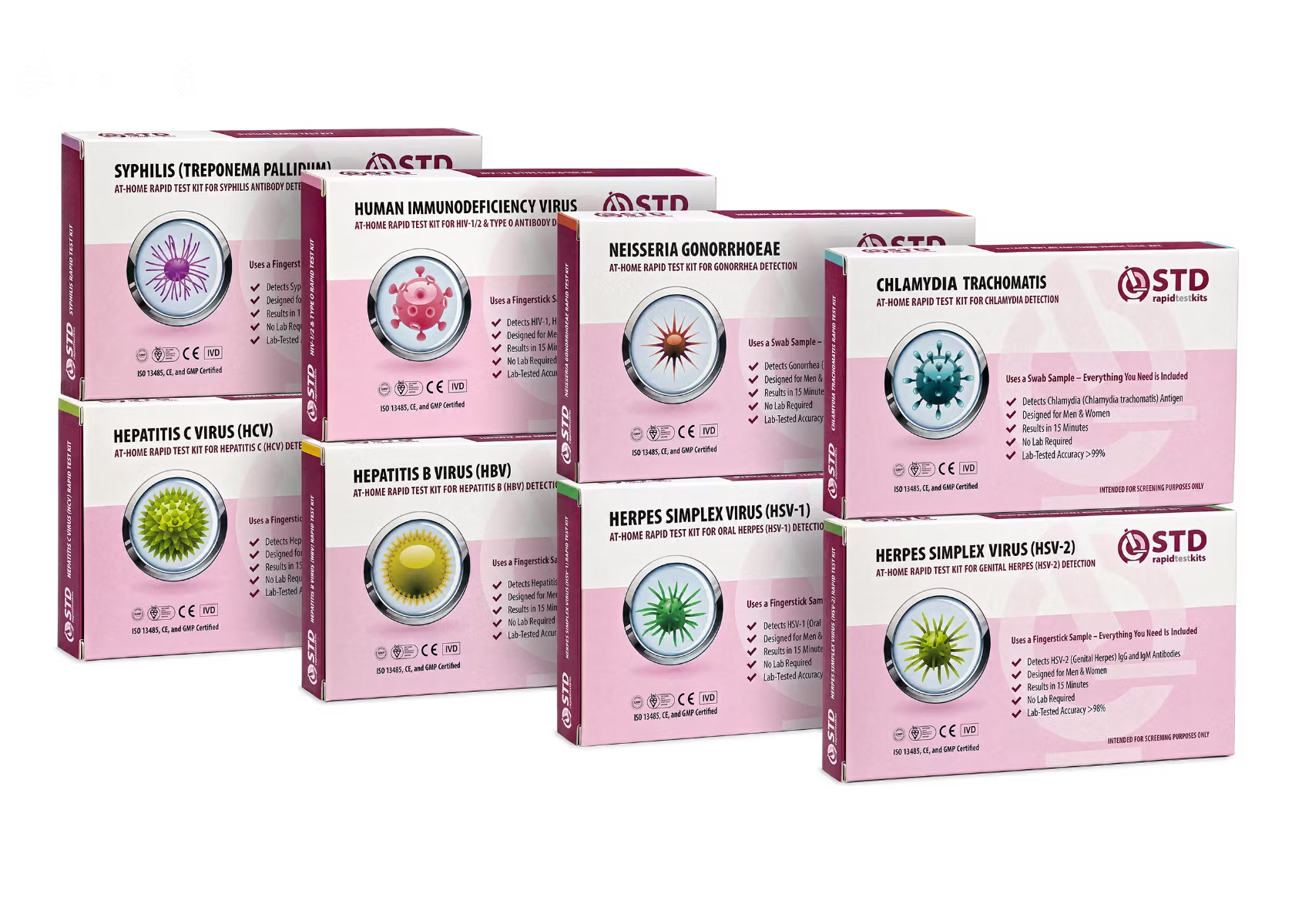
What our at-home kits do cover well is the broader screening picture around a possible rectal exposure: blood-based rapid tests for HIV, syphilis, hepatitis B, and hepatitis C, plus genital lateral-flow swabs for chlamydia and gonorrhea. People with a rectal exposure often want clarity on the systemic infections that can co-travel; an at-home blood panel handles that piece while the rectal-specific NAAT happens at a clinic.
Rapid lateral-flow tests are screening tests, not laboratory NAAT. A positive home result on a blood-based panel for HIV or syphilis is a reason to seek a confirmatory laboratory test, which is also generally available through clinics and public-health services at little or no cost.
Our at-home rapid kits are lateral-flow tests validated for genital sampling (vaginal or penile swab) and fingerstick blood, not for rectal sampling. If you specifically need a rectal swab NAAT for chlamydia or gonorrhea, that requires either a clinic visit or a mail-in laboratory service that explicitly supports rectal sampling. Our panels cover the systemic and genital screening picture that often travels alongside a rectal exposure; we do not sell a rectal swab product.
Hemorrhoids, Fissures, and Rectal STDs: At a Glance
When you are trying to identify a pattern, side-by-side comparison helps more than reading three separate descriptions. The table below brings the most useful differentiators together. The goal is to look for a cluster of features that fit, not to diagnose from any single symptom.
If your pattern aligns mostly with the rectal STD column and you have had a relevant exposure in the past few weeks, testing is reasonable. If your pattern lines up with hemorrhoid or fissure features and improves with a few days of conservative care, watching and waiting is often appropriate. If you are genuinely uncertain, testing settles it faster than another round of internet searches.
| Symptom Pattern | Hemorrhoids | Anal Fissure | Rectal STD |
|---|---|---|---|
| Bleeding Timing | After bowel movement | During and after bowel movement | Anytime, often with discharge |
| Pain Quality | Dull pressure or itch | Sharp, cutting pain | Internal soreness, burning, urgency |
| Mucus or Pus | Uncommon | Rare | Common |
| Recent Anal Exposure | Not required | Possible trigger | Often present |
| Improves Without Treatment? | Often yes | Often yes | Usually no |
What Happens If a Rectal STI Test Is Positive
Most rectal chlamydia and rectal gonorrhea infections are treatable with a single course of antibiotics. The CDC's current STI treatment guidelines recommend doxycycline for rectal chlamydia and an injection of ceftriaxone for gonorrhea, with adjustments depending on local resistance patterns and any allergies. Symptom relief usually begins within a few days of starting treatment, although the antibiotic course itself is several days long.
Partner notification matters because rectal infections are commonly asymptomatic, which means an untreated partner can transmit without knowing they are infected. Most jurisdictions support anonymous partner notification through health departments if you would prefer not to do it directly; many local public-health services will help with the logistics.
Follow-up testing after treatment (test of cure) is recommended in some situations, particularly for pregnant patients, persistent symptoms, or concerns about antibiotic resistance. Standard re-screening at three months after a positive result is also commonly recommended, because reinfection from an untreated or undiagnosed partner is common.
When Rectal Bleeding Needs Urgent In-Person Care
At-home testing and conservative care are reasonable for most causes of post-sex rectal bleeding. A few features push the situation into urgent-care territory, though. They point to causes that need clinical evaluation rather than home testing: deeper anal or colorectal disease, severe ulcerative proctitis, or complications from an untreated infection. An emergency department or a same-day primary-care visit is the right channel for those.
Red flags that warrant urgent in-person care
- Heavy bleeding pooling in the bowl or repeatedly saturating toilet paper.
- Severe abdominal pain or high fever alongside rectal bleeding.
- Black or tarry stool, which can signal bleeding from higher in the digestive tract.
- Bleeding that persists for more than two weeks despite conservative care.
- Any rectal bleeding in an adult over 45 who has not had a recent colonoscopy.
You Deserve Clarity, Not Guesswork
Anal bleeding after sex triggers a recognizable mix of worry, embarrassment, and the temptation to label it as nothing and move on. Most of the time the cause turns out to be a hemorrhoid or a small fissure. Sometimes it is a rectal infection that responds well to a short course of antibiotics. In both cases the path forward is the same: pay attention to the pattern around the bleeding, take advantage of the testing options that fit your situation, and escalate to a clinician if symptoms do not resolve or if any of the urgent-care features appear.
For at-home screening of the systemic and genital infections that often travel alongside a rectal exposure, the rapid panels above are practical. For a rectal-specific swab test, plan a clinic visit or a mail-in laboratory service that supports rectal NAAT. Either way, the information you get back is more useful than the worry of not knowing.
Frequently Asked Questions
- I saw bright red blood after anal sex. How worried should I be?
- Most of the time bright red anal bleeding after sex is from a hemorrhoid or a small fissure, and a single small episode that goes away in a day or two is rarely dangerous. Worry escalates if the bleeding keeps happening, comes with mucus or discharge, is paired with internal urgency, or follows receptive anal sex in the past few weeks. Those features make at-home screening or a clinic visit the right call.
- If it were a rectal STI, would not it hurt more?
- Not always. Rectal chlamydia is often subtle or fully silent, and even rectal gonorrhea can present mainly as discharge or mild urgency rather than pain. Pain level is not a reliable filter, which is why CDC screening recommendations explicitly cover asymptomatic rectal infections in people with receptive anal sex.
- What does mucus from a rectal infection look like?
- Cloudy, slippery, sometimes yellow-tinged discharge that is clearly not stool. People often notice it on toilet paper, in underwear, or coating the surface of stool. Hemorrhoids and fissures do not typically produce mucus, so its presence shifts the picture toward infection.
- The bleeding stopped after a couple of days. Should I still test?
- Rectal infections can quiet down before they have actually cleared, and asymptomatic infections still transmit. If you had receptive anal sex in the past few weeks and have not been screened recently, book a test at the 14-day mark regardless of how things feel now.
- What is tenesmus, and is it really a sign of infection?
- If you feel like you need to pass stool but nothing comes, and the urge keeps returning, that persistent false urgency points toward rectal inflammation rather than a hemorrhoid. The clinical term is tenesmus, and it is caused by inflamed rectal lining making local nerves send false-urgency signals. It is one of the most useful differentiators between hemorrhoids (which do not produce tenesmus) and rectal proctitis (which often does).
- Can hemorrhoids flare up right after anal sex?
- Yes. Friction, pressure, and dehydration can all aggravate existing hemorrhoids, and people with a personal history of hemorrhoid flares can see a familiar pattern repeat after sex. If the current episode feels identical to past flares (same itch, same pressure, same timing around bowel movements), hemorrhoid recurrence is plausible, but it does not rule out a co-occurring infection.
- Is rectal STI testing painful or invasive?
- The swab procedure itself takes seconds. A swab is inserted a short distance into the rectum, rotated against the lining, and removed. Most people describe it as mildly uncomfortable rather than painful. Our at-home rapid kits are validated for genital sampling, so for a rectal-specific test you will need a clinic or mail-in laboratory service that supports rectal NAAT.
- If a rectal STI test is positive, what happens next?
- Most rectal chlamydia and gonorrhea infections are treated with a short course of antibiotics, with symptom relief beginning within days. Partner notification matters because many rectal infections are asymptomatic and partners may not know they are infected. Follow-up screening several months later is often recommended to check for reinfection.
- U.S. Centers for Disease Control and Prevention. STI Treatment Guidelines, 2021 (referenced for rectal chlamydia and gonorrhea screening, treatment regimens, the recommendation to screen asymptomatic people with receptive anal sex, and primary syphilis chancre timing and testing windows).
- U.S. Centers for Disease Control and Prevention. Chlamydia information for the public (used for incubation, symptom patterns, and rectal site of infection notes).
- U.S. Centers for Disease Control and Prevention. Gonorrhea information for the public (used for incubation period, symptom patterns, and treatment regimens).
- NHS. Piles (haemorrhoids) (used for prevalence framing, hemorrhoid bleeding pattern, and conservative-care guidance).
- World Health Organization. Sexually transmitted infections (STIs) fact sheet (used for the global picture on chlamydia, gonorrhea, and syphilis burden and the case for routine screening).
- U.S. Centers for Disease Control and Prevention. HIV testing information (used for fourth-generation antigen/antibody test window and the 90-day repeat-test recommendation).
