Gray Discharge With a Fishy Smell: Causes and What to Do
Gray vaginal discharge paired with a fishy odor is one of the most-searched sexual health symptoms, and the answer is reassuring more often than not. This guide walks through what gray discharge usually means, when it points to bacterial vaginosis versus trichomoniasis, when testing genuinely helps, and how to bring the vaginal microbiome back into balance without making things worse.




- Gray vaginal discharge with a fishy odor most often signals bacterial vaginosis, a bacterial imbalance that is not classified as a sexually transmitted infection.
- When the odor or discharge persists, worsens after sex, or comes with itching or pelvic pain, a quick test rules out trichomoniasis and the other infections that look similar on the surface.
Published: August 2025 | Last updated: May 2026 | Editorial review and quality control: Martina N.
Does gray discharge with a fishy smell mean I have an STI?
Usually not. The most common cause is bacterial vaginosis, a treatable imbalance of vaginal bacteria rather than a sexually transmitted infection. Trichomoniasis is the main STI that can mimic it. If the smell lasts more than a few days, worsens after sex, or comes with itching, a swab or home test tells them apart.
A sudden change in discharge color, especially a new gray or grayish tint paired with a smell that was not there last week, sends people straight to a search bar. It is one of the most common reasons women in their twenties and thirties call a sexual health line or book a same-week clinic visit. Most of those visits end with the same diagnosis: bacterial vaginosis, a microbial imbalance that is common, treatable, and almost never the catastrophic STI people fear before they walk in.
Bacterial vaginosis (BV) is the most common vaginal condition in women of reproductive age, according to the U.S. Centers for Disease Control and Prevention. Less often, gray or greenish discharge with odor points to trichomoniasis, a treatable parasitic STI. Less often still, it reflects a retained tampon, a cervical infection, or a temporary pH swing after antibiotics or new sexual activity. The same starting symptom has several possible causes, which is why a short conversation with a clinician or a home test usually does more than another hour of reading forums.
What Gray Discharge Usually Signals
Healthy vaginal fluid is rarely a single color. It shifts across the menstrual cycle, responds to arousal, hydration, and stress, and can move from clear and stretchy around ovulation to thicker and creamier in the second half of the cycle. Most healthy discharge sits somewhere on the spectrum of clear, milky white, or pale off-white, with a faintly tangy odor that comes from the lactic acid produced by Lactobacillus bacteria. That same chemistry keeps the local environment acidic (around pH 3.8 to 4.5), which holds opportunistic bacteria in check.
A true gray tint is different. It signals that the dominant bacterial population in the vagina has shifted, letting other organisms multiply. Public-health guidance is consistent on this point: a thin gray discharge paired with a fishy smell is the classic presentation of bacterial vaginosis. Color on its own is not diagnostic, and odor on its own is not diagnostic, yet the combination is one of the more specific symptom pairs in sexual health.
Every vagina has a smell. The idea that a working body part should smell like nothing, or like something synthetic and floral, is a marketing invention rather than a clinical reality. Useful concern starts when the scent changes noticeably from your personal baseline and stays changed.
| Discharge color | What it usually means | When to pay attention |
|---|---|---|
| Clear or milky white | Normal cycle variation | Concerning only if it comes with itching, irritation, or odor |
| Yellow or yellow-green | Possible trichomoniasis or other infection | Especially if thick, frothy, or foul-smelling |
| Gray | Most often bacterial vaginosis | Almost always paired with a fishy odor |
| Brown or rust | Old menstrual blood | Persistent brown discharge between periods warrants a clinical check |
| Cottage cheese white | Likely yeast infection | Usually itchy, rarely smells fishy |
Why Bacterial Vaginosis Is Almost Always the Answer
BV is what happens when the vaginal microbiome tips out of balance. Normally Lactobacillus species dominate, producing lactic acid that keeps the vaginal environment slightly acidic. That acidity works as a defense system, suppressing opportunistic anaerobic bacteria such as Gardnerella vaginalis, Atopobium vaginae, and Mobiluncus, all of which sit at low levels in many healthy vaginas without causing trouble.
When Lactobacillus numbers drop, those anaerobes multiply. As they grow, they release short-chain amines (notably putrescine, cadaverine, and trimethylamine) that produce the distinctive fishy odor people notice on underwear, on toilet paper, or right after sex. The discharge thins out and takes on its characteristic gray, watery look because the protective mucus layer has changed in composition.
According to the CDC's BV overview, bacterial vaginosis is the most common vaginal condition in women ages 15 to 44. Many people with BV have no symptoms at all, which is part of why it often goes undiagnosed until something noticeable, like a gray discharge or a fishy smell, finally appears.
Sexual activity does not transmit BV the way it transmits chlamydia or gonorrhea. But new partners, multiple recent partners, and unprotected sex all change the bacterial mix in the vagina, which can tip a sensitive microbiome out of balance. This is why BV often appears a week or two after a new sexual relationship begins, and why male partners are not routinely treated.
The Symptoms Women Notice First
BV does not always announce itself loudly. For many women the changed smell is the only clue, with no itching and no pain to go with it. That quiet presentation is part of why it is so often missed at first. MedlinePlus describes the typical picture as a thin white or gray discharge with a fish-like odor that is strongest after sex (MedlinePlus vaginitis overview). The checklist below covers what BV usually feels like, and which signs hint that trichomoniasis, rather than plain BV, may be in play.
Signs of BV, and Clues It Might Be Trichomoniasis
Having one or more of these does not confirm anything. Only a test can separate BV from trichomoniasis, since the two overlap.
- Thin, grayish or off-white discharge that lightly coats the vaginal walls Common
- A fishy odor that is strongest after sex or just after a period Common
- Little or no itching, which helps separate BV from a yeast infection Common
- No symptoms at all, with a changed smell as the only noticeable clue Common
- Yellow-green or frothy discharge, which points more toward trichomoniasis Less common
- Burning during urination or marked irritation, also more typical of trichomoniasis Less common
Why the Fishy Smell Gets Worse After Sex
One of the most telling features of BV is an odor that intensifies right after intercourse. There is a clean biological explanation for that pattern, and clinicians use it as a quick bedside clue.
Semen is alkaline, sitting around pH 7.2 to 8.0. The vagina is acidic at baseline, typically in the 3.8 to 4.5 range. When semen enters, it neutralizes vaginal pH for several hours. In a vagina where BV-associated bacteria are already present, that alkaline shift makes the amines they produce more volatile, so more of them evaporate into the air where the nose can detect them. The pH shift makes existing amines noticeable; sex changes the chemistry of an already-disrupted environment for a few hours rather than introducing a new infection. In a vagina without BV, the same alkaline shift produces, at most, a brief and very mild scent change that the Lactobacillus population corrects within hours.
Clinicians reproduce the post-sex odor pattern in the office by adding a drop of potassium hydroxide (KOH), which is strongly alkaline, to a sample of vaginal discharge. If BV-associated amines are present, the fishy smell becomes immediately stronger. It is one of four diagnostic criteria, alongside vaginal pH greater than 4.5, thin gray discharge, and the presence of "clue cells" (vaginal epithelial cells coated in a film of bacteria) under the microscope.
When Trichomoniasis Is the Cause Instead
Trichomoniasis is the one sexually transmitted infection that consistently produces symptoms in the same neighborhood as BV. The two get confused on symptoms alone often enough that clinicians rarely diagnose either by looking, and home testing has become a popular way to tell them apart without an in-person visit.
Trichomoniasis is caused by Trichomonas vaginalis, a single-celled parasite that lives in the lower genital tract and spreads through vaginal sex. It is also extremely common worldwide; the World Health Organization estimated 156 million new infections in 2020, more than any other curable STI (WHO STI fact sheet). According to the CDC's trichomoniasis fact sheet, about 70 percent of people infected develop no symptoms at all, which is exactly why a fishy odor or unusual discharge in a recently sexually active woman is worth testing rather than waiting to see what else turns up. When symptoms do appear, the discharge leans yellow-green or frothy rather than thin gray, irritation is more pronounced, and burning during urination is far more common than in BV.
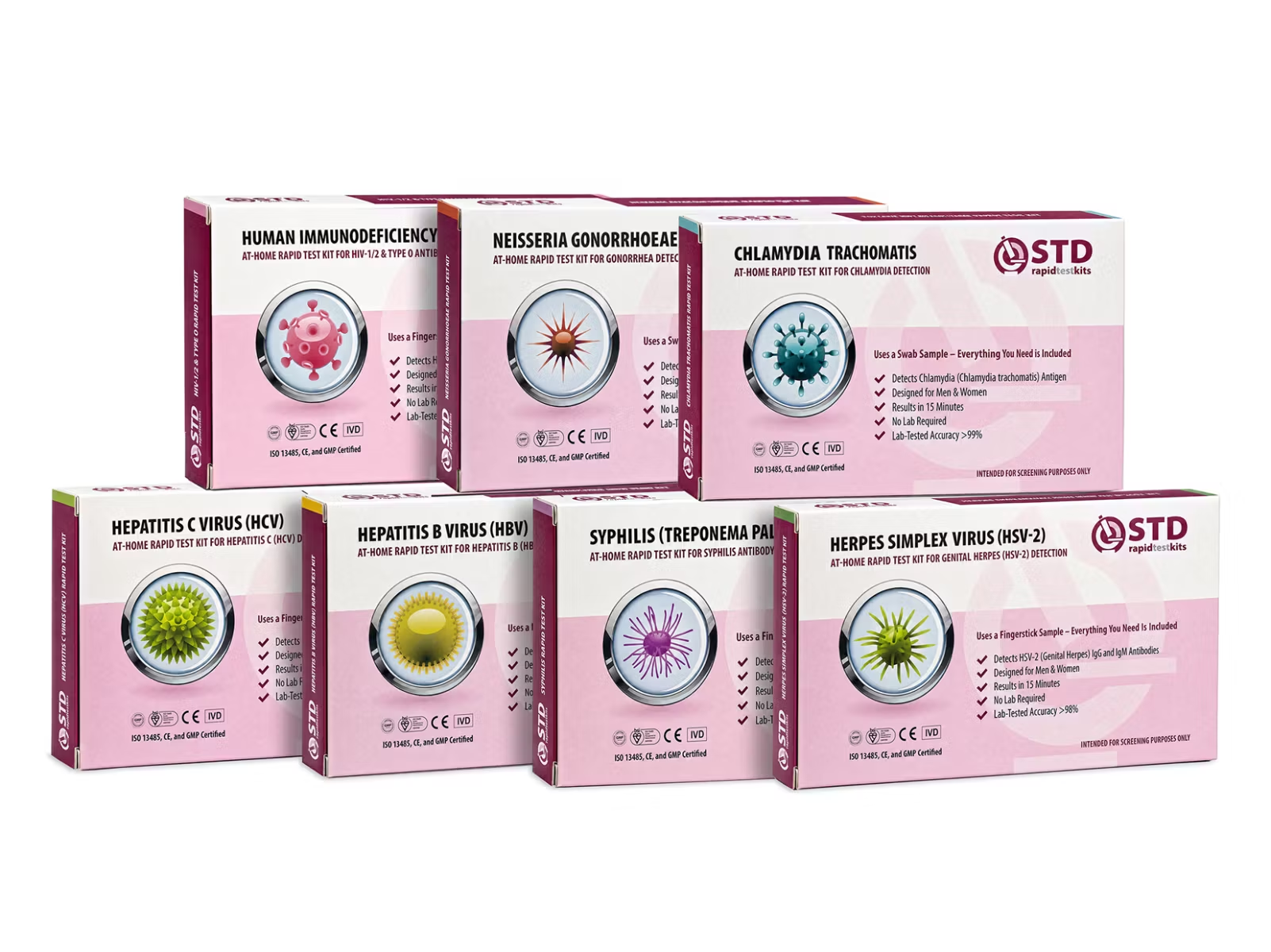
This article is published by stdrapidtestkits.com, which sells at-home STI testing kits. We recommend products based on what fits the reader's symptom pattern, not on commercial benefit. For trichomoniasis specifically, our rapid vaginal swab is validated for self-collection at home. Readers needing a different sample type (for example, male testing) should see a clinic, since this kit is validated for female anatomy only.
Bacterial Vaginosis vs Trichomoniasis
| Feature | Bacterial Vaginosis | Trichomoniasis |
|---|---|---|
| Discharge color | Thin gray, sometimes milky white | Yellow-green, sometimes frothy |
| Odor | Distinct fishy smell, worse after sex | Strong odor possible, less specifically fishy |
| Itching or irritation | Often mild or absent | Common, sometimes intense |
| Burning during urination | Rare | Common |
| Underlying cause | Bacterial imbalance (overgrowth of anaerobes) | Parasitic infection, sexually transmitted |
| Partner treatment | Not routine | All sexual partners need treatment |
| First-line treatment | Metronidazole or clindamycin | Single oral dose of metronidazole or tinidazole |
Bacterial vaginosis versus trichomoniasis at a glance

Sometimes the Cause Is Not an Infection at All
Not every odor change reflects an infection that needs antibiotics. The vagina is part of the body's larger ecosystem, and ordinary things can shift the smell for a short time. Hormones move across the cycle, sweat collects in the groin after exercise, antibiotics taken for an unrelated illness shrink the Lactobacillus population, and even what you ate yesterday can be excreted through sweat glands hours later. Duration is what separates a passing scent shift from an infection worth investigating.
| Cause | Why it happens | How long it usually lasts |
|---|---|---|
| Sweat and exercise | Moisture and skin-bacteria buildup in the groin | A few hours, resolves with showering |
| Menstrual cycle | Estrogen shifts change vaginal flora; menstrual blood adds an iron-rich note | Two to seven days |
| Recent antibiotics | Antibiotics reduce protective lactobacilli alongside the target infection | Until the microbiome rebalances (one to four weeks) |
| Tight or synthetic clothing | Reduced airflow, trapped moisture | Temporary, resolves with breathable fabric |
| Diet (garlic, onions, asparagus, alcohol) | Sulfur compounds excreted through sweat glands | 12 to 48 hours |
Other Causes Worth Ruling Out
BV and trichomoniasis cover the large majority of cases, but a handful of other conditions can produce gray or unusually colored discharge with odor. Clinicians screen for these when symptoms do not fit the textbook BV pattern, or when they fail to respond to first-line treatment.
- Retained tampon or foreign object. The odor can be extreme and the discharge can take on a gray or brownish cast. The source is usually obvious once a pelvic exam happens.
- Cervicitis from chlamydia or gonorrhea. These infections can change the volume and consistency of vaginal discharge even when the infection itself sits in the cervix rather than the vagina proper.
- Yeast infection (mixed picture). Yeast on its own makes thick white discharge that does not smell fishy, but mixed infections (yeast plus BV) do occur and can confuse the picture.
- pH-disrupting products. A new soap, a flavored lubricant, or a course of broad-spectrum antibiotics can shift discharge color and smell without there being any true infection underneath.
When Testing Is Genuinely Worth It
Many mild BV cases settle on their own within a few weeks as the Lactobacillus population recovers. Most clinicians still recommend testing and treatment when symptoms are clear, because untreated BV slightly raises the risk of picking up some STIs, complicates pregnancy outcomes, and tends to return if the underlying ecosystem is not addressed.
The NHS vaginal discharge guidance advises seeking help when discharge changes color, smell, or texture, when bleeding happens between periods, or when there is pelvic pain. Standard clinical practice adds one more trigger: a possible STI exposure within the past few weeks, even without classic symptoms.
- Gray discharge that has persisted more than a few days without improving
- Fishy odor that gets noticeably worse after sex or during a period
- Burning during urination, redness, or pelvic discomfort alongside the discharge
- A new sexual partner or recent unprotected sex within the last few weeks
- BV that has come back twice or more in the past year
- Symptoms during pregnancy, since BV in pregnancy needs treatment
How Clinicians Diagnose the Cause
The clinic workup for gray, fishy discharge is short and usually answered the same visit. The clinician's job is to identify which organism is responsible. Vaginal pH testing comes first, often with a simple strip applied to vaginal fluid; a pH above 4.5 is one of the strongest hints toward BV or trichomoniasis. Microscopy on a sample of discharge then looks for clue cells, motile trichomonads (small swimming organisms), or yeast forms. A potassium hydroxide drop reproduces the whiff test described earlier.
If trichomoniasis is on the differential, a nucleic acid amplification test (NAAT) on a vaginal swab is the most sensitive lab confirmation. When the picture suggests broader STI exposure, screening for chlamydia, gonorrhea, syphilis, and HIV is often added in the same visit.
At-home rapid kits run on the same swab sample type a clinic would use. Home lateral-flow tests and lab NAATs work as complementary tools: the home kit gives a same-day screen, while a clinic NAAT adds the analytical sensitivity that matters when a result drives a treatment decision. A positive home result is worth confirming with a clinician before starting treatment, and a negative result with persistent symptoms still warrants a clinic visit. For people who cannot reach a sexual health service quickly, or who want privacy first, home testing fills a real access gap.
Many people with BV do not have symptoms.
What Treatment Looks Like Once the Cause Is Known
Treatment is straightforward once the diagnosis is in hand. For bacterial vaginosis, the CDC's first-line options are oral metronidazole for seven days, intravaginal metronidazole gel for five days, or intravaginal clindamycin cream for seven days. Most patients notice the odor fade within two to three days of starting treatment, with the gray discharge clearing soon after.
For trichomoniasis, the CDC recommends a single oral dose of metronidazole or tinidazole. (Pregnant patients should follow their clinician's guidance, since current CDC recommendations differ from the standard single-dose regimen during pregnancy.) All sexual partners need treatment too, since reinfection from an untreated partner is the most common reason trichomoniasis returns. Sex should pause until both partners finish treatment and symptoms resolve, and the CDC advises rescreening about three months later because reinfection rates are high.
BV recurrence is common. Many people experience more than one episode, and studies cited by the Cleveland Clinic report lifetime recurrence rates as high as 80 percent. The vaginal ecosystem rebuilds slowly, and anything that disrupted it the first time can disrupt it again. Some clinicians prescribe extended suppressive courses, intermittent metronidazole gel, or topical boric acid for recurrent cases.
First-line treatment at a glance
- BV oral option: metronidazole 500 mg twice daily for 7 days.
- BV intravaginal option: metronidazole gel 0.75% once daily for 5 days, or clindamycin cream 2% at bedtime for 7 days.
- Trichomoniasis: single oral dose of metronidazole or tinidazole, with all sexual partners treated too.
- Recurrent BV: extended suppressive metronidazole or specialist follow-up may be appropriate.
Everyday Habits That Protect Vaginal Balance
The vagina is self-cleaning. Cervical mucus flushes the canal continuously, and Lactobacillus bacteria maintain the acidic environment that keeps opportunistic organisms in check. Fragrance in soaps or sprays applied near the vulva strips Lactobacillus and raises pH, which is the opposite of what the vaginal environment needs to recover. The simplest cleaning routine is also the safest: warm water on the external vulva, mild unscented soap if you want it, and nothing inserted internally for cleaning purposes.

Small Changes That Reduce BV Risk
Clinicians who treat recurrent BV often focus on what a patient stops doing as much as on what they start. The habit changes below have reasonable evidence behind them and show up consistently in clinical guidance for preventing recurrence.
Habit changes with the strongest evidence
- Skip douching entirely. It is the single most strongly associated risk factor for BV in clinical studies.
- Avoid scented soaps, body washes, sprays, or wipes near the vulva. Plain water or a gentle unscented cleanser on the external skin is enough.
- Wear breathable cotton underwear, and change out of damp swimsuits or workout clothes promptly.
- Use condoms with new partners. Reducing semen exposure during the first weeks of a new relationship lets the microbiome adapt without large pH swings.
- If you smoke, know that smoking is independently associated with higher BV rates.
- Probiotics with Lactobacillus crispatus or rhamnosus strains show modest evidence for reducing recurrence, especially as an adjunct after antibiotic treatment.
When Symptoms Need Same-Day Medical Attention
Most gray-discharge cases are not emergencies. A few are. The red flags below can point to pelvic inflammatory disease, a retained foreign object that needs removal, or another condition that will not wait for an at-home test result. If pregnancy is possible and any of these appear, an in-person evaluation is the right next step rather than a home kit.
Gynecologists hear odor and discharge questions every single day, and BV alone affects millions of women each year. If embarrassment has kept a symptom unchecked for weeks, that is common, and it is not a reason to keep waiting. The stakes are highest in pregnancy, where untreated BV has been linked to higher rates of preterm birth and low birth weight, which is why current guidance treats symptomatic BV in pregnancy promptly instead of watching to see whether it clears on its own.
- Severe pelvic or lower abdominal pain
- Fever above 38 °C (100.4 °F)
- Foul-smelling discharge that gets dramatically worse over 24 to 48 hours
- Unusual vaginal bleeding alongside the discharge
- Any of the above during pregnancy
Deciding Your Next Step
If you have read this far, the practical question is usually simple: handle this at home for now, or go straight to a clinic. The quick guide below sorts the most common situations. Most readers with a mild, recent scent change can start with a private test and only escalate if symptoms persist, while a smaller group should be seen in person without delay.
Test at Home or See a Clinic?
Do you have severe pelvic pain, a fever, unusual bleeding, or are you pregnant with any of the symptoms above?
Yes: See a clinician in person the same day. These red flags need a physical exam, not a home kit.
Has the smell or discharge lasted more than a few days, worsened after sex, or appeared after a new sexual partner?
Yes: Use an at-home trichomoniasis swab or a multi-STI kit to screen privately, then confirm any positive result with a clinic NAAT and a prescription before stopping there.
No: A short-lived scent change with no other symptoms often settles on its own. Re-check after a few days and test if it persists or new symptoms appear.
Guidance only. A clinician can advise based on your specific situation.
Frequently Asked Questions
- Why does my discharge suddenly smell fishy?
- The most common reason is bacterial vaginosis. When the bacterial balance in the vagina shifts and anaerobes outnumber Lactobacillus, those bacteria release amines (putrescine, cadaverine, trimethylamine) that produce a fishy odor. The smell often becomes more noticeable after sex because semen temporarily raises vaginal pH, making the amines more volatile.
- Does gray discharge mean I have an STI?
- Usually no. Gray discharge with a fishy smell is most often bacterial vaginosis, which is a microbial imbalance rather than a sexually transmitted infection. Trichomoniasis is the one STI that can produce similar symptoms, and the only reliable way to tell them apart is a quick swab or home test, since the symptom overlap is real.
- What does bacterial vaginosis smell like?
- Most women describe a BV odor as fishy, sharp, or sour. It tends to be more obvious after sex, after menstruation, or during sweaty days. BV does not always cause itching or pain, so the smell is sometimes the only symptom and is often what prompts testing in the first place.
- If there is a smell but no discharge, should I still get tested?
- Yes. Bacterial vaginosis often shows up as odor alone, especially in early or mild cases, with no change in discharge and no itching. Many women simply notice their scent has shifted from its usual baseline. If that change lasts more than a few days, a swab or pH test from a clinic or an at-home kit gives a clearer answer than guessing.
- Can BV go away on its own without treatment?
- Some mild cases do resolve as the Lactobacillus population recovers, but many do not. Untreated BV can persist for weeks or recur. The CDC recommends treatment for symptomatic BV because it relieves symptoms faster and slightly reduces the risk of acquiring other STIs while the microbiome is disrupted.
- Do I need to tell my partner if I have BV?
- BV is not transmitted between partners the way chlamydia or gonorrhea is, so partner treatment is not routine for male partners. Female partners can sometimes share BV-like microbiome shifts, and concurrent treatment is occasionally recommended in those cases. Trichomoniasis is different: all sexual partners need treatment, since reinfection from an untreated partner is the main reason it comes back.
- Why does BV keep coming back?
- BV recurrence is the rule rather than the exception. The vaginal ecosystem rebuilds slowly after antibiotic treatment, and the same disruptions that triggered it originally can trigger it again: new partners, douching, antibiotics, hormonal shifts. For people with two or more episodes in a year, a clinician can consider extended suppressive therapy rather than repeating the same short course.
- Is at-home testing reliable enough to act on?
- Lateral-flow rapid tests are reliable screens, but they are not the same as laboratory NAAT testing. A positive home result is worth confirming with a clinician before starting prescription treatment. A negative result with persistent symptoms still warrants a clinical visit, since no single test is perfectly sensitive. Home testing solves a real access problem for people who want privacy or cannot reach a sexual health service quickly.
How We Sourced This Article: This guide synthesizes current public-health guidance from the CDC, the NHS, the World Health Organization, and MedlinePlus, alongside clinical literature on the vaginal microbiome, bacterial vaginosis, and trichomoniasis. Quantitative claims are tied to a named source and were checked against the live page during editing. Our editorial team translates that source material into plain language for the reader making an at-home health decision, and our medical reviewer checks the result against current clinical guidance before publication. We do not provide individual diagnosis. For symptoms that persist or concern you, see a licensed clinician.
- U.S. Centers for Disease Control and Prevention. About Bacterial Vaginosis: that BV is the most common vaginal condition in women ages 15 to 44, that many cases are asymptomatic, and the thin gray/white discharge with fishy odor presentation.
- U.S. Centers for Disease Control and Prevention. About Trichomoniasis: the roughly 70 percent asymptomatic rate, discharge profile, partner treatment, and three-month rescreening guidance.
- U.K. National Health Service. Vaginal discharge guidance covering normal variation and when to seek help for changes in color, smell, texture, bleeding, or pelvic pain.
- World Health Organization. Sexually transmitted infections fact sheet, including the estimated 156 million new trichomoniasis infections in 2020 and its status as a curable STI.
- MedlinePlus, U.S. National Library of Medicine. Vaginitis topic page covering the causes and symptoms of bacterial vaginosis, trichomoniasis, and yeast infection.
- Cleveland Clinic. Bacterial vaginosis overview, including the up-to-80-percent lifetime recurrence figure, the whiff test, and vaginal pH assessment.